REVIEW · BARCELONA
Barcelona City Highlights Private Tuk Tuk Tour
Book on Viator →Operated by Tuk-Tuk Barcelona · Bookable on Viator
Stepping into Barcelona is easy with a tuk tuk loop of icons. This private 90-minute city highlights route strings together major Gaudí architecture and the historic-to-modern city center in a tight, fun format. I especially like how the guides (Isaac, Pablo, and Aina are named in past tours) explain what you are seeing in plain language, and how you get a fast orientation of the city layout without slogging between far-flung neighborhoods.
The main tradeoff is time: with only about 1 hour 30 minutes, you are seeing façades and key viewpoints more than going deep into interiors or lingering for long photo sessions at every stop.
In This Review
- Key Highlights at a Glance
- Private Tuk Tuk Comfort: 90 Minutes That Fit Your First Day
- Meeting at Carrer de la Diputació: Getting There Without Stress
- The 1914 Bullring Façade: Moorish-Byzantine Drama Without the Crowds
- Sagrada Família: How to See the Unfinished Work Like a Pro
- Diagonal Avenue and Josep Puig i Cadafalch: Medieval Flair by Design
- Casa Milà and Casa Batlló: Two Gaudí Icons, Two Very Different Moods
- Casa Milà (La Pedrera) for Undulating Stone
- Casa Batlló for Mosaic Color and Organic Lines
- Plaça de Catalunya: Barcelona’s Heart Between Old and New
- Arc de Triomf: A Red-Brick Gateway With 1888 Energy
- Parc de la Ciutadella: Fountain, Lake, and a Breathing Pause
- Port Olímpic: Sea Breeze and Olympic-Era Barcelona in 5 Minutes
- Price and Value: Is $36.12 Worth It?
- Who This Tuk Tuk Tour Fits Best
- Should You Book This Barcelona City Highlights Private Tuk Tuk Tour?
- FAQ
- How long is the Barcelona City Highlights Private Tuk Tuk Tour?
- What is the price per person?
- Is the tour private?
- What language is the tour offered in?
- Where does the tour start and end?
- Is there an admission cost for Port Olímpic?
- How do I get the ticket?
- What should I know about the meeting point location?
- What is the cancellation policy?
Key Highlights at a Glance
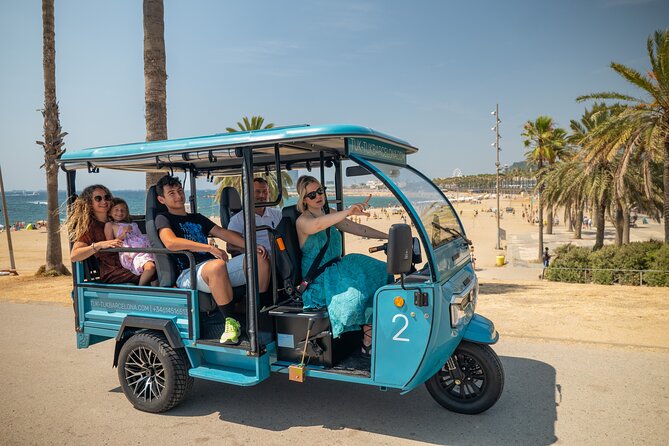
- Private tuk tuk for your group: no waiting around for strangers
- English-speaking guides: Isaac, Pablo, and Aina have been praised for their storytelling
- Prime Gaudí stops: Sagrada Família plus both Casa Milà and Casa Batlló
- City-center connectors: Plaça de Catalunya and Arc de Triomf on the same loop
- Green and sea breaks: Parc de la Ciutadella and Port Olímpic close out the tour
- Mostly exterior viewing: you’ll focus on what’s easiest to see fast
Private Tuk Tuk Comfort: 90 Minutes That Fit Your First Day
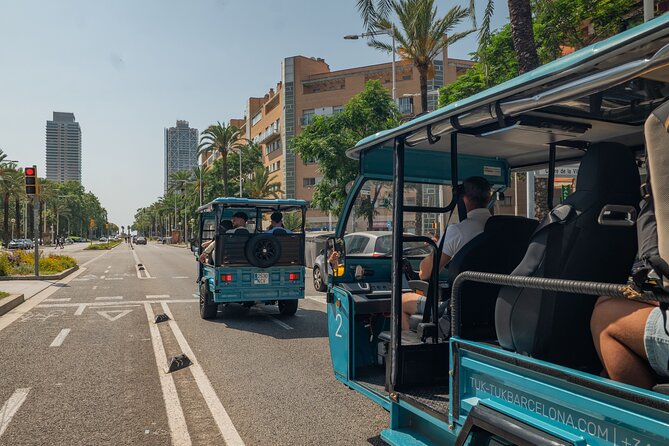
A Barcelona highlight tour can either feel like a checklist or like a guided stroll. This one aims for the sweet spot: getting you oriented fast, with enough stops to make the city feel coherent, not chaotic.
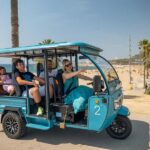
The format matters. A tuk tuk keeps you moving while you stay fresh for photos and explanation time. And because it is private, you avoid the common group-tour problem of losing minutes to mismatched pace. Your guide can also tailor what they emphasize, like architecture details or city context.
You should still know the limit up front. Ninety minutes is a quick hit. If you want long indoor time at Sagrada Família or deep museum-style reading at every site, you’ll probably treat this as your warm-up, then schedule ticketed visits afterward.
You can also read our reviews of more tours and experiences in Barcelona.
Meeting at Carrer de la Diputació: Getting There Without Stress
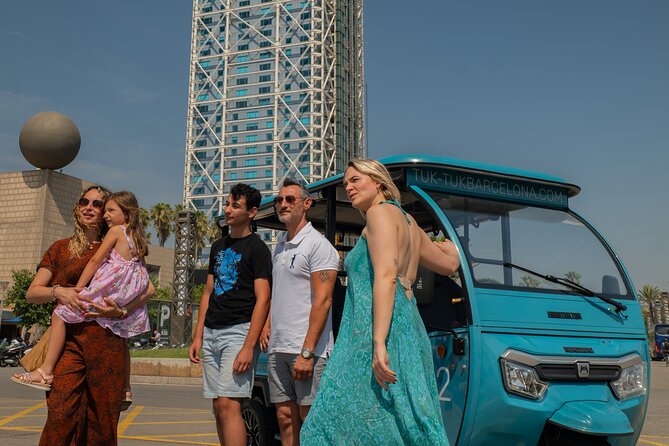
The meeting point is Carrer de la Diputació 338, Eixample (08009). The upside: Eixample is central, and the tour notes that it is near public transportation. The downside: if your hotel is tucked into the most touristy clusters, this start can feel a bit out of the way.
Still, it is manageable. I suggest you plan to arrive a few minutes early and give yourself time to find the exact spot on the street. Past comments mention that the meeting point is farther from the main hotel/tourism drag, but the experience itself was considered worth the walk or transit hop.
Tip: if you are using a taxi or rideshare, ask for the exact address. For public transit, aim for a station in the Eixample area and then do the last short stretch on foot.
The 1914 Bullring Façade: Moorish-Byzantine Drama Without the Crowds
You start by eyeing Barcelona’s last bullring, a building opened in 1914. Even though it is no longer used for bullfighting, the façade still dominates the neighborhood with a striking mix of Moorish and Byzantine-style design.
What I like about this stop is that it widens your Barcelona lens. Most first-day tours shout Gaudí. This one reminds you that Barcelona also has layers of older style influences, including the kind of ornamental design you don’t notice at a quick glance.
Practical note: this is a look-from-outside kind of stop. The value is in the architecture read-your-eye experience, not in an indoor visit.
Sagrada Família: How to See the Unfinished Work Like a Pro
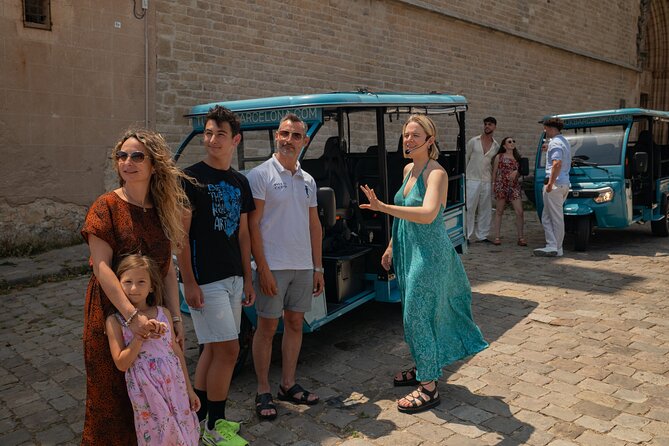
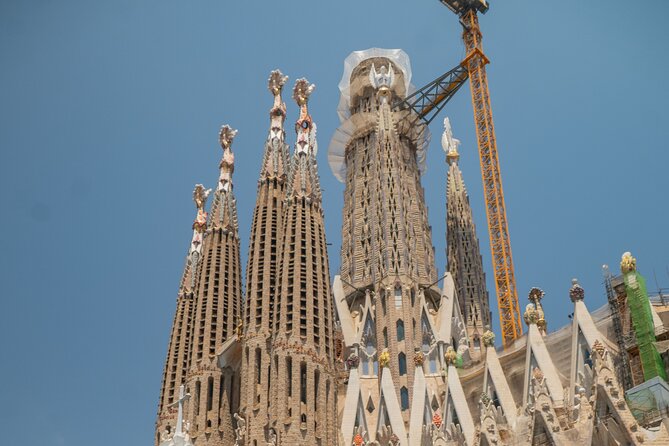
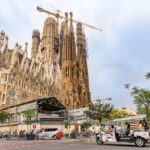
Then comes the star of the show: Sagrada Família, Gaudí’s most famous basilica and still unfinished. From the outside, you can see the spiraling towers and intricate façades that make people stop mid-step. You also get the bigger idea: this is not just a building, it is a long-term project shaped by evolving work.
In a 90-minute tour, your goal is to walk away with a stronger sense of what you are looking at. A good guide will point out how the forms feel both structured and organic, and how the detailing is part of the emotional effect, not just decoration.
One more thing: because time is limited, plan your expectations. This stop is likely a highlight-viewing moment, not a slow, deep interior experience. If you want to go inside, you will probably need to add a separate timed ticket visit later. Think of this stop as building the context so your later visit makes more sense.
Diagonal Avenue and Josep Puig i Cadafalch: Medieval Flair by Design
Next you reach a fairytale-like building with pointed towers by Josep Puig i Cadafalch, placed along Diagonal Avenue. The description alone hints at the mood: it looks like it belongs in a storybook, with a medieval-leaning silhouette that feels different from Gaudí’s more signature curves.
This is a smart stop for first-time visitors. Barcelona architecture is not one style. It is a city where different designers and different eras talk to each other across blocks. Diagonal Avenue itself is also a useful visual anchor. You see how the city’s grand main avenues connect toward the center.
Downside: again, this is mostly about what you can take in quickly. If you love photo detail, you may want a second pass later on a separate day when you can slow down.

Casa Milà and Casa Batlló: Two Gaudí Icons, Two Very Different Moods
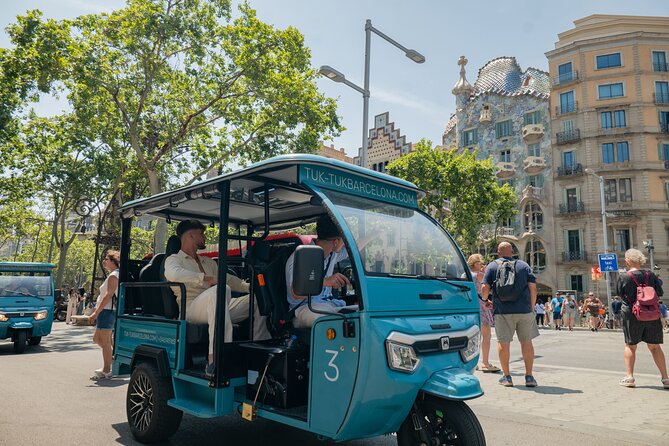
Gaudí fans get two major hits here, and they are a great pairing.
Casa Milà (La Pedrera) for Undulating Stone
One stop focuses on Gaudí’s bold creation with an undulating stone façade and wrought-iron balconies, a UNESCO World Heritage site and modernist icon. This is the kind of building you understand with your eyes first. The façade looks like it is moving, even when you stand still.
In a short tour, the trick is to learn what to look for: how the curves change perspective as you walk, how the windows and balconies shape the rhythm of the surface, and how the building feels sculpted rather than stacked.
Casa Batlló for Mosaic Color and Organic Lines
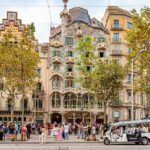
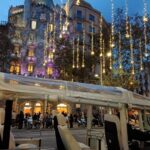
Then you shift gears to Casa Batlló, famous for its colorful mosaic façade and organic shapes. This is one of the most photographed buildings along Passeig de Gràcia, and for a reason. The design feels playful but intentional, like nature and design got together and refused to compromise.
If you are trying to make your first Barcelona architecture day feel coherent, this pairing helps. Casa Milà leans into sculptural movement; Casa Batlló leans into color and fantasy. Seeing both in the same loop gives you a better sense of Gaudí’s range.
Time consideration: these are popular exteriors. Even if you are not going inside, the streets around them can be busy. Keep your photo expectations realistic and treat quick angles as part of the fun.
Plaça de Catalunya: Barcelona’s Heart Between Old and New
After the Gaudí hits, the tour swings into the city’s central connector: Plaça de Catalunya. This square is described as the beating heart that connects the old and new parts of Barcelona, surrounded by shops, cafés, and major avenues.
Why this stop is valuable: it gives you a mental map. Once you understand where Plaça de Catalunya sits, it becomes easier to plan your next day on foot or by metro. You also get a reset from architecture close-ups into city rhythm—people moving, storefronts, and that classic Barcelona street energy.
Practical suggestion: if your next stop is on the far side of the city, this is also a good place to orient your timing for how you will get there without wasting time.
Arc de Triomf: A Red-Brick Gateway With 1888 Energy
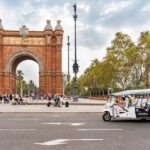
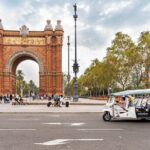
Then it is the Arc de Triomf, an iconic red-brick arch built as the grand entrance to the 1888 Barcelona Universal Exposition. Today it functions as a symbolic gateway to the city’s historic heart.
What makes this stop work on a highlights tour is contrast. You go from modernist façades and expressive design into something more monumental and civic. The arch also gives you a clean photo moment because it is visually bold and easy to frame.
This is a quick stop, but a memorable one. If you like architecture that feels like a story of a city’s ambitions, you’ll enjoy this.
Parc de la Ciutadella: Fountain, Lake, and a Breathing Pause
A break is built in at Parc de la Ciutadella, one of Barcelona’s best-loved green spaces. It includes a majestic fountain, a small lake, sculptures, and the Catalan Parliament.
In a tour packed with stone and façades, this park stop is a smart reset. You get shade, greenery, and the kind of slower walking that makes the earlier stops feel less rushed. Even if you do not stop for long, the change of pace helps you absorb the day.
If you are photographing, you’ll have better variety here than in tight city streets: open views near water, sculpture angles, and the parliament area that gives the park a civic feel.
Port Olímpic: Sea Breeze and Olympic-Era Barcelona in 5 Minutes
You finish at Port Olímpic, a lively waterfront area built for the 1992 Summer Olympics. You get Mediterranean marina life, sailboats, and a view that helps Barcelona feel connected to the sea.
The stop is short—around 5 minutes—and it is exactly the right length if you are trying to avoid tour fatigue. Think of it as a breath of fresh air and a final scenic photo frame rather than a long hangout.
Note: the tour lists admission ticket free here, which is handy if you just want to stroll and look.
Price and Value: Is $36.12 Worth It?
At $36.12 per person for roughly 1 hour 30 minutes, the value comes from three things: private pacing, transportation included, and a guide who can point out what you would miss on your own.
This price is not just for sitting in a vehicle. You are paying for condensed interpretation of multiple major landmarks, especially the Gaudí trio of experiences: Sagrada Família, Casa Milà, and Casa Batlló. If you have limited time in Barcelona, that’s where the math starts to work.
Also, the tour mentions group discounts and a mobile ticket, which can help if you are traveling with people who split costs. And because it is private, it can feel like a tailor-made first overview of the city, not like a rushed ride.
What you should consider before booking: if your priority is deep time at one site—especially Sagrada Família—you may feel the time is tight. In that case, treat this as your orientation. Combine it with a separate longer visit where the ticketing and your own pace can take over.
Who This Tuk Tuk Tour Fits Best
This tour is a great match if you want:
- A first-day orientation that ties neighborhoods and landmarks together
- An easy way to see major Gaudí highlights without planning a complicated route
- A private, guided format if you hate group-tour logistics
- A mix of architecture and atmosphere, ending with sea views
It is less ideal if:
- You want lots of indoor ticket time at top sites
- You prefer wandering slowly without a set sequence
- Your schedule allows for a self-guided architecture day and you want zero structure
Should You Book This Barcelona City Highlights Private Tuk Tuk Tour?
Yes, if you want a fast, guided “get your bearings” day that hits the big icons in an easy, fun way. The strongest reason to book is the guide quality described across different named guides—Isaac, Pablo, and Aina—especially the way explanations connect architecture to city life. You also get practical city context at Plaça de Catalunya and a nice pace break at Parc de la Ciutadella.
If you do book, do one smart thing: pair it with a longer follow-up visit to the site that matters most to you, likely Sagrada Família. That way, you get both the quick guided context now and the slow, personal time later.
FAQ
How long is the Barcelona City Highlights Private Tuk Tuk Tour?
It’s about 1 hour 30 minutes.
What is the price per person?
The price is $36.12 per person.
Is the tour private?
Yes. It is a private tour/activity, so only your group participates.
What language is the tour offered in?
It is offered in English.
Where does the tour start and end?
The tour starts at Carrer de la Diputació, 338, Eixample, 08009 Barcelona and ends back at the meeting point.
Is there an admission cost for Port Olímpic?
Port Olímpic is listed as admission ticket free and includes about 5 minutes there.
How do I get the ticket?
You get a mobile ticket.
What should I know about the meeting point location?
The meeting point is near public transportation, but it can be farther from the most central hotel/tourism areas.
What is the cancellation policy?
You can cancel for a full refund up to 24 hours in advance of the experience start time.