REVIEW · BARCELONA
Barcelona Historical Tour with Local Guide in Eco Tuk Tuk Private
Book on Viator →Operated by Eco Tuk Tuk - Spain · Bookable on Viator
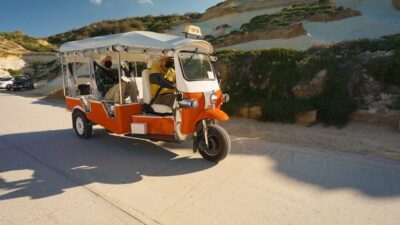
Barcelona can feel huge fast, especially on your first day. This private, 100% electric eco tuk-tuk tour helps you get your bearings quickly while still learning what you’re seeing. You’ll glide past major landmarks and pause at pre-selected photo stops, so you’re not stuck hunting for viewpoints on your own.
I like how the tour starts in a spot that’s easy to reach (and easy to park near), so you spend more time sightseeing and less time figuring out logistics. I also like that you’re in a private vehicle for your group only, which makes the guide’s explanations feel personal instead of rushed.
One thing to consider: some durations are designed for movement and quick photo moments, not long stops or long indoor visits—so if you want lots of time inside major sights, you’ll need to plan that separately.
In This Review
- Key highlights you’ll actually feel during the ride
- Why this private eco tuk-tuk is a smart first-day plan
- Getting to the meeting point and understanding the photo-stop rhythm
- Plaza Monumental de Barcelona: history before the Gaudí highlights
- Sagrada Familia from the outside: icon views and the construction reality
- La Pedrera (Casa Milà): why this façade earns the stop
- Passeig de Gràcia’s modernism landmark: Casa Batlló and the Batlló family story
- Plaça de Catalunya: the city’s nerve center in one quick pass
- Josep Puig i Cadafalch Square and Plaça d’Espanya: two squares, one big visual lesson
- Montjuïc: a hill stop that pays back later
- Port Vell: old harbor atmosphere with modern leisure
- Ciutadella Park and Arc de Triomf: 1888 Exposition leftovers that still work
- Price and value: what $28.66 really buys you
- Who this tour suits best (and who should skip it)
- A quick checklist so the day goes smoothly
- Should you book this private Barcelona eco tuk-tuk tour?
- FAQ
- How long is the Barcelona Historical Tour by eco tuk-tuk?
- What language is the guide available in?
- Is this tour private?
- How many passengers fit in each tuk-tuk?
- Does the tour stop for photographs at every duration?
- Do you get tickets to enter Sagrada Familia?
- Where do I meet the driver-guide?
- Are hotel pickup and drop-off included?
- What’s the cancellation policy?
Key highlights you’ll actually feel during the ride
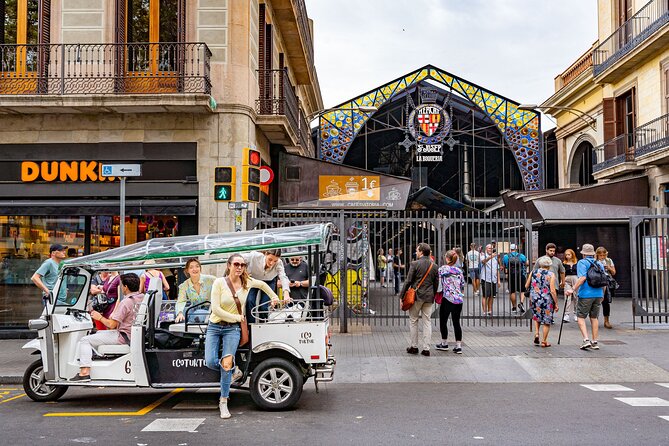
- Private eco tuk-tuk ride with your group only, in a quiet, low-emissions vehicle
- Photo-focused stops in prime spots, so you can take pictures without scrambling
- Gaudí heavy hitters like Sagrada Familia, La Pedrera, and Passeig de Gràcia façades
- Views with less walking, including Montjuïc areas depending on your chosen duration
- Local guide storytelling, and you may meet guides like Miguel, Dianna, or Roger
Why this private eco tuk-tuk is a smart first-day plan
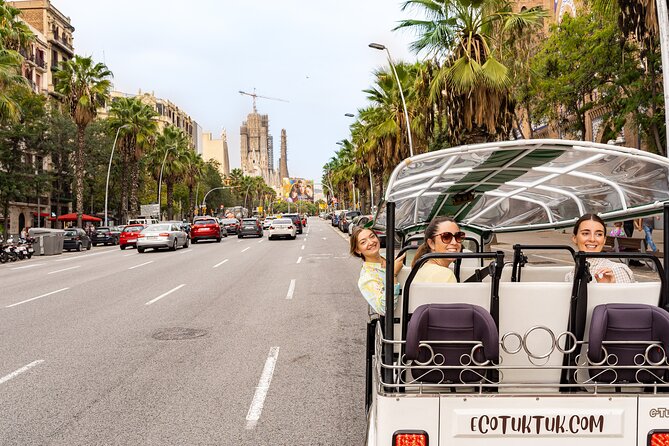
If Barcelona is your first stop of the trip, you need two things early on: orientation and context. This tour does both by stitching together the city’s big neighborhoods—Eixample, Ensanche, Ciutat Vella connections, Montjuïc direction, and the port area—without tiring you out.
Because it’s private, you’re not fighting for position at a curb or waiting for strangers to decide what they want to see. The guide can also tailor the pacing to your group’s style within the fixed route and set stops, which is a big deal when you’re trying to keep a tight schedule.
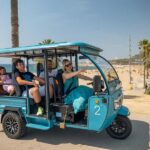
The vehicle matters too. It’s electric and sustainable, and it’s designed for real-world comfort: blankets and protective layers are included for rain or wind, and drivers help older guests get on. You’re still exposed a bit to weather (you’re outside in a tuk-tuk), but the setup is clearly meant to keep you warm and moving.
You can also read our reviews of more tours and experiences in Barcelona.
Getting to the meeting point and understanding the photo-stop rhythm
The meeting point is Carrer de Casp, 13 (Eixample), opposite the ME Barcelona hotel entrance. You should wait in front of the entrance elevator to the Interparking Novedades car park at street level, and your driver-guide comes to that spot.
Why this matters: people often waste their first day just locating where a tour actually starts. Here, you start from an area designed for pickup, and that’s a real time-saver.
Also, keep expectations aligned with how the tour is built. The stops are pre-selected for photographing, and you can’t change the order or add your own detours for extra photo time. On shorter options, you may spend more time riding and less time stepping out. If you want more standing around for photos and brief viewpoint time, choose a longer duration.
Plaza Monumental de Barcelona: history before the Gaudí highlights
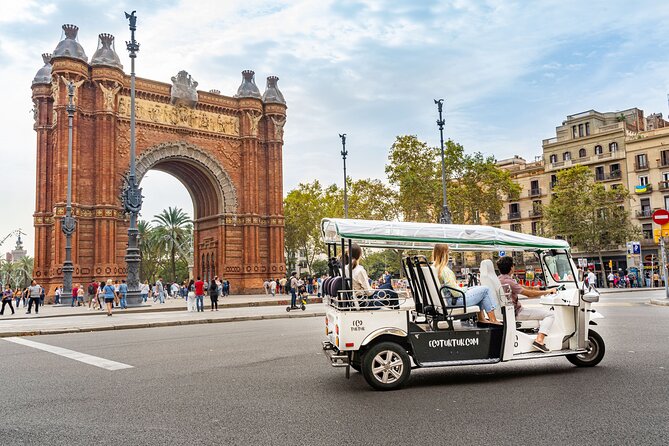
Before you hit the big-name masterpieces, you pass by Plaza Monumental, Barcelona’s bullring. It opened in 1914 as Plaza de El Sport, then it was enlarged and renamed in 1916 to the Monumental name you’ll hear today.
Even if you don’t plan to attend events, this kind of stop is useful. It grounds the city beyond art tourism and reminds you that Barcelona’s identity has layers: sport, spectacle, neighborhood life, and architecture all moving through the same streets.
A practical tip: treat this as a quick orientation moment. This tour is built around seeing a lot from the vehicle and at selected stops, so don’t expect a long discussion period here—think of it as a historical sidebar that helps you read the city better as you move on.
Sagrada Familia from the outside: icon views and the construction reality
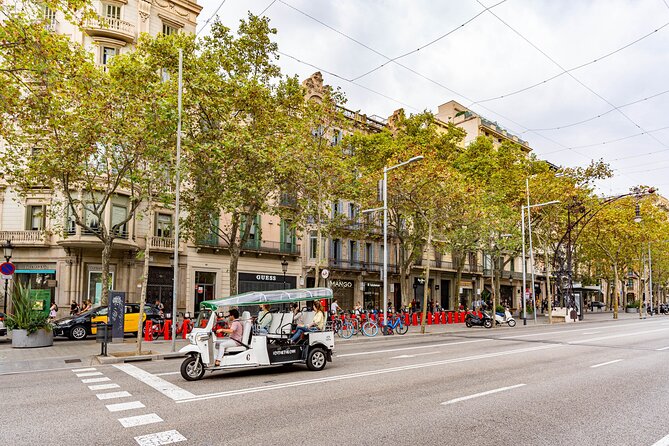
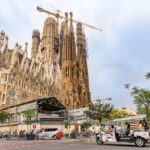
The Basilica de la Sagrada Familia is the Barcelona icon most visitors recognize instantly. From the road, you’ll see its towers reaching upward and the sense of scale that makes it feel like a landmark even when you’re not right next to it.
There’s also a key detail you should know ahead of time: it’s still under construction, with completion scheduled for 2026. That affects the vibe of the visit. You’ll see the building as a living project, not a finished museum piece.
About entry expectations: Sagrada Familia is listed with an admission ticket as free in the provided info, but the tour itself is positioned as a tuk-tuk tour with stops for photos and guidance. If what you really want is guaranteed time inside, confirm the entry details before you book, because this experience is built around viewing and photographing rather than serving as a full ticketed entry tour.
Either way, even a short exterior moment here is worth it. It gives you a mental anchor for the rest of Gaudí’s work you’ll see later in the ride.
La Pedrera (Casa Milà): why this façade earns the stop
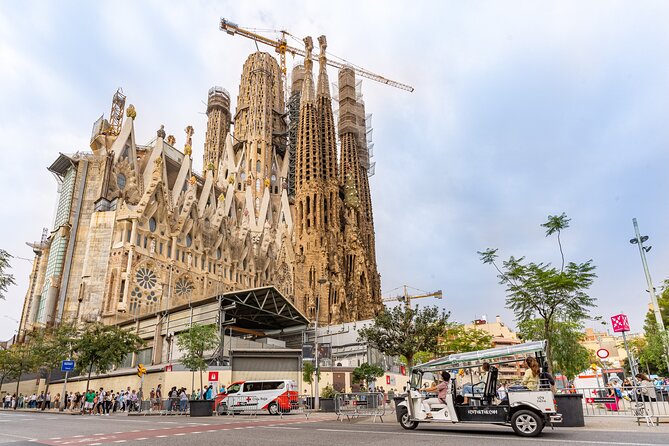
Next comes Casa Milà, also known as La Pedrera. It’s famous for a quarry-like exterior that looks sculpted in stone waves rather than built in straight, rigid lines. You can’t miss it once you’re on the right street.
The timing adds extra meaning. Casa Milà was built between 1906 and 1910, and it was declared a UNESCO World Heritage Site in 1994. In other words, it’s not just popular—it’s protected as a major work of modernism.
When the tuk-tuk stops for the photo moment, you’ll get the best of both worlds: you can appreciate the outside from a distance and also orient yourself so the building makes sense once you’re walking around Passeig de Gràcia later. If you’re doing Barcelona in a hurry, this is the kind of stop that pays off again when you revisit by foot.
One consideration: the stop is designed for photographing, not for a long indoor session. If your dream is a full interior tour, plan it as a separate add-on.

Passeig de Gràcia’s modernism landmark: Casa Batlló and the Batlló family story
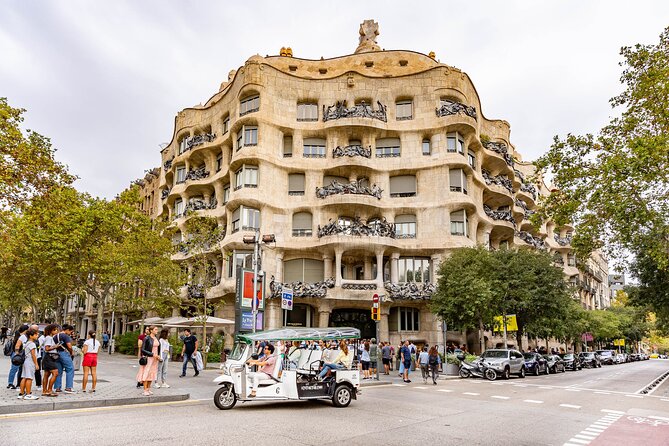
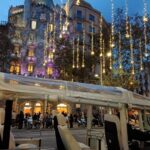
On Passeig de Gràcia, the tour also targets another Antoni Gaudí standout: the Casa Batlló building, designed at the height of modernism for the Batlló family. The façade is the headline, but the interior is part of the reason it’s famous.
Even if you only see the exterior, you’ll learn to look differently. Gaudí’s Barcelona isn’t just decorative. The curves, textures, and the overall feel of the buildings are meant to make you see architecture like a piece of art you can walk around.
This is also a practical checkpoint for your trip. Once you’ve seen the face of Casa Batlló from the street, you’ll better understand why the area is so heavily photographed—and you’ll know where to slow down later.
Plaça de Catalunya: the city’s nerve center in one quick pass
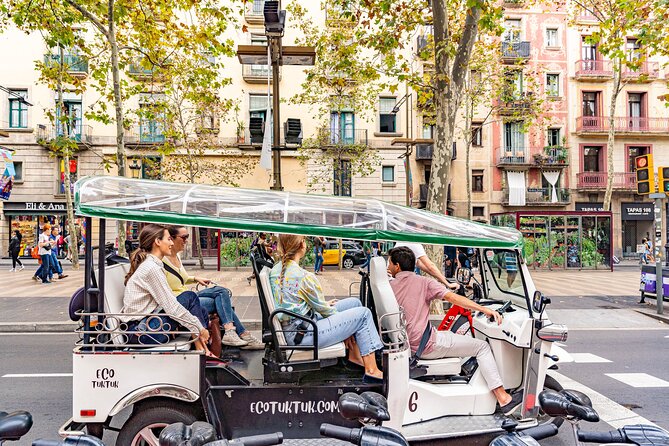
Hard to imagine Barcelona without Plaça de Catalunya, the connection point between Ciutat Vella and the Ensanche neighborhood. It’s also a convergence spot for public transport and some of the city’s major streets.
What you gain from seeing it on a tuk-tuk is simple: you get the big picture without getting stuck in the middle of crowds and crosswalk chaos. You’ll feel the city’s layout. Then, later, when you walk between neighborhoods, you’ll understand the compass direction much faster.
This stop is less about a single monument and more about geography. It’s the kind of view that helps you plan your next day with less guesswork.
Josep Puig i Cadafalch Square and Plaça d’Espanya: two squares, one big visual lesson
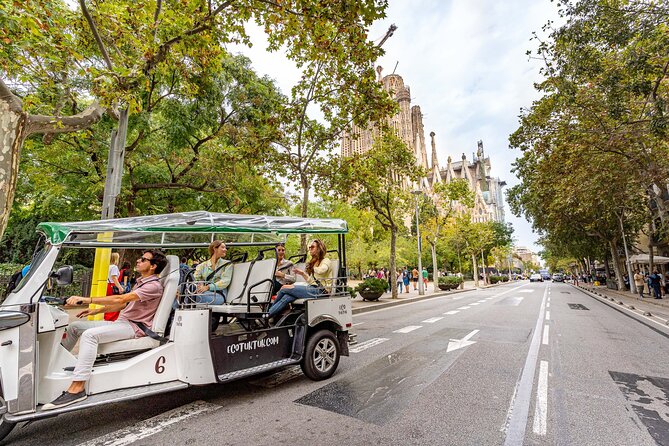
The route includes Josep Puig i Cadafalch Square, described as a link between Montjuïc, Sants, and Poble-sec, sitting at the intersection of important roads. This is the sort of place that helps you understand how Barcelona connects its hills, neighborhoods, and main arteries.
Then comes Plaça d’Espanya, which acts like a gateway toward Montjuïc and was built for the 1929 Universal Exposition. The layout is partially inspired by St. Peter’s Square in the Vatican, which is a wild and useful tidbit if you like seeing the influences behind city design.
In the center, you’ll spot Font dels Tres Mars, a monumental fountain by Josep Maria Jujol, a Gaudí disciple. The fountain symbolizes the three seas surrounding the Iberian Peninsula, giving you a myth-and-geography mix that makes the square feel more meaningful than just a transit hub.
If you love photos, this section tends to deliver. Wide views, strong lines, and architectural storytelling make it an easy stop to remember.
Montjuïc: a hill stop that pays back later
Montjuïc is a mountain in Barcelona, about 177 meters above sea level, with a neighborhood of the same name in Sants-Montjuïc district. Even if your tuk-tuk stop is brief, you’re getting a key piece of context: Barcelona’s terrain and skyline aren’t flat, and Montjuïc is part of the city’s character.
Which matters here is your chosen duration. The info says on the 120-minute tour, you stop in Montjuïc. On longer options, you also add other areas like the Olympic Port and Pedralbes. So if Montjuïc views are high on your list, don’t pick the shortest option expecting the same timing.
Also, don’t assume Montjuïc will feel like one single viewpoint. It’s more like a direction. Once you’ve seen it on the route, you’ll be able to pick which nearby spots you want to explore on foot later, when you have more time.
Port Vell: old harbor atmosphere with modern leisure
Around the oldest part of Barcelona’s port, you’ll pass Port Vell, which now focuses on leisure and culture. Think sports boats, cruises, and a waterfront built for spending time rather than just moving cargo.
On this tour, the highlights described include monuments and museums along the banks, shopping centers, a large aquarium, and a sailing ship from 1918. Even if you don’t enter any of these places, seeing the mix helps you understand how the waterfront has shifted into a visitor-friendly zone.
For photo lovers, port areas can be hit or miss if you’re not sure where to look. A guided route helps you avoid the dead ends and points you toward where the views are worth your time.
Ciutadella Park and Arc de Triomf: 1888 Exposition leftovers that still work
The tour also includes Ciutadella Park, a huge urban green space that’s described as the largest in Barcelona after Montjuïc. With more than seventeen hectares, it’s treated like an outdoor museum, with an extensive collection of public art and sculptures.
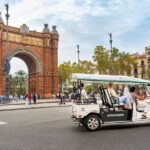
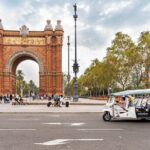
Then you’ll reach Arc de Triomf, a monument at the confluence between Paseo de Lluís Companys, Paseo de San Juan, and Ronda de San Pedro. It was designed by architect José Vilaseca as the main entrance to the Barcelona Universal Exposition of 1888.
These two stops work well together because one is about open space and sculpture, and the other is about ceremonial architecture. Even a quick stop gives you a sense of how Barcelona built itself for world attention in the late 1800s, then kept those structures as part of everyday life.
Price and value: what $28.66 really buys you
At $28.66 per person, this is positioned as an accessible way to cover a lot of ground. The real value isn’t just the route—it’s the combination of a local guide, private vehicle time, and the fact that you start from a point that avoids the usual parking-and-milling-around struggle.
You also get a 100% electric vehicle, group discounts, and a mobile ticket. And there’s a practical promise that the tour starts without queues or waiting, which matters when your goal is to see more in less time.
One more value angle: this is built as a photo-stop tour, not a museum pass. So if you’re expecting ticketed interior experiences at every stop, you may feel shortchanged. On the other hand, if your goal is to learn the city while grabbing strong viewpoints fast, the price starts to make sense quickly—especially for first-day orientation.
Who this tour suits best (and who should skip it)
This private eco tuk-tuk experience is ideal if you:
- Want a guided overview without a lot of walking
- Prefer stepping out only at high-value viewpoints
- Like photo stops more than long indoor ticket lines
- Travel with a group that wants private time, not a shared bus vibe
It’s less ideal if you:
- Need guaranteed, long time inside major attractions
- Want a tour that you can customize freely (stops can’t be modified)
- Choose the shortest duration and still expect frequent, extended stops for pictures
If you like doing a big first-day orientation and then returning later to your favorite areas, this fits that rhythm well.
A quick checklist so the day goes smoothly
- Pick the right duration for your expectations. The info notes the 60-minute option does not stop, while longer tours include additional areas and stops.
- Bring a light layer and plan for weather. Blankets and protective layers are included, but you’ll still be outside.
- If Sagrada Familia entry matters to you, confirm the ticket/entry details in advance. This tour is built around photographing stops, not a full entry package at every stop.
- Pack for photos. You’ll have pre-selected photo moments, so charge your phone and clear space on your camera.
- Remember the safety rules: minimum age two, minimum weight 9 kg, and pets aren’t allowed.
Should you book this private Barcelona eco tuk-tuk tour?
Yes, if you want fast city orientation with a local guide and strong photo stops, this tour is a very workable choice. It’s also a great fit when your itinerary is tight and you don’t want to waste energy on transit between far-apart viewpoints.
Before booking, be honest about what you want from Sagrada Familia and other big sights: if you’re hoping for long interior time or guaranteed entry, verify that separately. If you’re mainly after exterior views, neighborhood context, and an efficient route, the value at this price is easy to understand—and you’ll likely come away knowing where to go next day without guessing.
FAQ
How long is the Barcelona Historical Tour by eco tuk-tuk?
It runs from about 1 to 4 hours, depending on the duration you select.
What language is the guide available in?
The tour is offered in English.
Is this tour private?
Yes. This is a private tour/activity, and only your group participates.
How many passengers fit in each tuk-tuk?
The tuk-tuks are reserved privately, and the legal maximum is 4 passengers per tuk-tuk.
Does the tour stop for photographs at every duration?
The stops are pre-selected for photographing, and the info notes that the 60-minute tour does not stop. The 120-minute tour includes a stop in Montjuïc, and longer tours add additional areas.
Do you get tickets to enter Sagrada Familia?
Sagrada Familia is listed with admission ticket information, but the experience is described as a tuk-tuk tour with set photo stops. If entry is essential for you, confirm the entry/ticket details when booking.
Where do I meet the driver-guide?
Meet at Carrer de Casp, 13 (Eixample), opposite the ME Barcelona hotel entrance, in front of the elevator entrance to the Interparking Novedades car park.
Are hotel pickup and drop-off included?
No. The info says hotel pickup and drop-off are not included (and not legal).
What’s the cancellation policy?
You can cancel free of charge up to 24 hours in advance for a full refund. Tours can only be cancelled under extreme conditions.