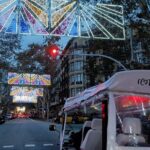
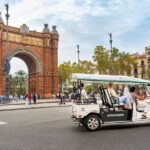
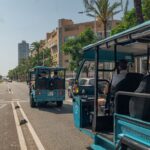
Barcelona can feel like a lot at once.
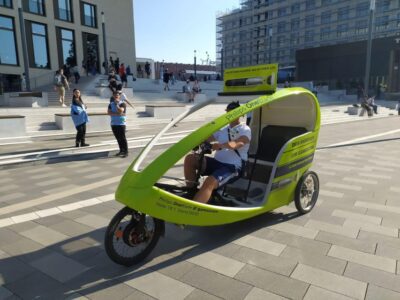
This Tuk Tuk tour is a smart way to string together big sights in a short time, with an English-speaking guide doing on-the-fly storytelling as you roll. I especially love how it pairs Gaudí-focused moments with the city’s wider story, from Eixample planning to Montjuïc’s history. I also like that you get quick photo-friendly stops without getting trapped in ticket lines all day. The main drawback: some of the famous places are exterior-only here, and if you want to go inside, you’ll need to plan separate tickets and time.
The ride is built for first-time orientation. With a small group (maximum 8) and bottled water included (one bottle per person), you can settle in, catch the layout, and decide what to explore again later. Just note that the commentary can feel brisk depending on the guide, and the open-air ride can be bumpy in spots.
In This Review
- Key Things to Notice Before You Roll
- Why a Tuk Tuk Works for a Short Barcelona Visit
- Where You Start in Eixample and What the Route Feels Like
- Gaudí Exteriors: Sagrada Família and La Pedrera Without the Ticket Rush
- The Modernist Avenue Moment, Plus Eixample’s Grid Logic
- A Bulls’ Ring, an Old Arena, and Gaudí Symbol Details
- Montjuïc: Jewish Cemetery Memories and the Magic Fountain Timing
- Olympic-Era Barcelona: Stadium Views and Arata Isozaki’s Impact
- Port Vell to Maremagnum: From Trade Power to Mediterranean Walks
- Old Barcelona Streets: Born, Picasso Area, MACBA Exterior, and Ciutadella Peace
- Price and Value: Is $35.43 a Smart Move?
- When a Tuk Tuk Tour Might Not Fit You
- Should You Book This Barcelona Tuk Tuk Loop?
- FAQ
- How long is the Barcelona Tuk Tuk tour?
- How much does it cost per person?
- What language is the tour offered in?
- Where do you meet and where does the tour end?
- Is bottled water included?
- Are tickets for major attractions included?
- How big is the group?
Key Things to Notice Before You Roll
- Small group size (max 8): more chance your guide can actually talk to you instead of lecturing over traffic.
- Open-sided sightseeing style: the operator is aiming for strong visibility from the seats, and most people get solid views.
- Big sights with flexible add-ons: major icons like Sagrada Família and La Pedrera are usually seen from outside, with tickets not included.
- Gaudí + city planning in one loop: you’ll hear about modernism details plus Ildefons Cerdà’s grid logic.
- Montjuïc and the port in the same outing: you get the hill views and then a Mediterranean mood shift by the marina.
- Guides like Pablo, Diane, and Carlos show up: several guides are described as local, punctual, and comfortable sharing stories.
Why a Tuk Tuk Works for a Short Barcelona Visit
Barcelona rewards walking, but not everyone has the hours (or the energy) to do it all on foot. A Tuk Tuk loop is ideal when you want to get your bearings fast and cover a wide slice of the city in roughly 1 to 2 hours.
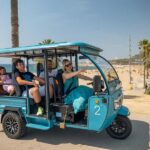
The small group size matters. When the group stays under eight, the guide has room to point out details and adjust the pace. You also get bottled water right away, which sounds small until you’re bouncing from neighborhood to neighborhood in warm or windy weather.
One more thing: the experience is photo-friendly. Several guide descriptions mention time to take pictures. That’s important because Barcelona’s best features aren’t always obvious from one angle. If you like snapping facades and panoramic views, this format helps.
Still, there’s a reality check. Not every seat has the same comfort, and some riders report a bumpy ride. The upside is that you’re not stuck inside a bus looking at glass the whole time.
You can also read our reviews of more tours and experiences in Barcelona.
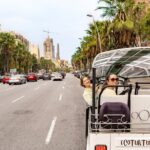
Where You Start in Eixample and What the Route Feels Like
You meet at Carrer de Casp, 8, L’Eixample (08010). The tour ends back at the same starting point. That’s great for planning because you don’t have to re-route your day after the ride.
The route is a greatest-hits sampler, but with variety built in:
- Modernist Barcelona (Eixample and Gaudí landmarks)
- Montjuïc hill history and the Magic Fountain area
- Olympic-era architecture and viewpoints
- The waterfront and Old Port atmosphere
- Old city streets toward Ciutadella and nearby landmarks
It’s not a deep, slow study tour. Think of it as a moving map with commentary. You’ll leave with names, visuals, and a short list of what to return to—especially if you’re visiting Barcelona for the first time or only have a limited schedule.
Gaudí Exteriors: Sagrada Família and La Pedrera Without the Ticket Rush
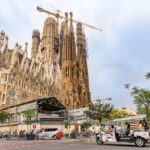
Two of the biggest Gaudí draws get handled in a very practical way: you stop to admire the facades and learn what to look for. The Basilica de la Sagrada Família and Casa Mila (La Pedrera) are both presented from the outside, and admission is not included for these.
This approach makes sense if you’re doing the full day thing elsewhere. Seeing Sagrada Família’s front from the sidewalk gives you the scale and the symbolism the guide explains. You don’t get the interior experience here, but you do get enough context to know what you’d want to see up close later.
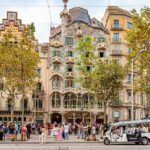
Same with La Pedrera. You’ll look at the balconies, chimneys, and the building’s undulating shapes. If you’re the type who likes learning before you buy a ticket, this ride helps. If you’re the type who wants to go inside everything, you may feel a little teased—because you’ll still need separate plans for entry.
The Modernist Avenue Moment, Plus Eixample’s Grid Logic
Barcelona’s modernism isn’t just about famous architects. It’s also about the city’s layout. This tour mixes those ideas well.
You’ll stroll through Eixample and learn how Ildefons Cerdà’s urban design shaped the city blocks. That grid logic is more than trivia. It explains why moving around feels orderly, why certain neighborhoods feel airy, and why addresses line up the way they do.
Then the tour leans into the modernist street story. You’ll observe an iconic commercial avenue with boutiques, modernist buildings, and urban art. You’ll also have stops aimed at Casa Batlló and Casa Amatller from the outside. The goal here is recognition: knowing what you’re looking at, and why it belongs in the modernist era.
One practical note: if you’re obsessed with getting every detail, you may find these are quick look-and-learn stops rather than long photo sessions. That said, several riders highlight that their guides gave time for pictures, so you’ll likely have enough to capture the essentials.
A Bulls’ Ring, an Old Arena, and Gaudí Symbol Details
Not every Barcelona tour includes both bullfighting heritage and modern architecture reuse. Here, you get both—without needing to buy a ticket for every stop.
You’ll visit the exterior of Plaza de Toros Monumental de Barcelona, described as the last remaining bullring in Catalonia. The guide talks about its neo-Mudejar architecture, plus the broader cultural history of bullfighting in the region. Admission isn’t included, but the exterior is still worth the stop if you like architecture with stories attached.
Later, you’ll see Arenas de Barcelona, which has been converted into a shopping center. There’s a panoramic viewpoint, and since admission is listed as free for that portion, it can be a nice break from the nonstop sightseeing. Even if you don’t go inside shops, the change in use shows Barcelona’s pattern: preserving strong structures while giving them new roles.
There’s also a moment focused on a lesser-known Gaudí modernism façade, where the guide explains symbolic elements and historical context. The exact building isn’t called out in the information you provided, but the idea is clear: you get more than only the usual face shots. It’s an extra layer for people who want their Barcelona experience to feel more than checklist tourism.

Montjuïc: Jewish Cemetery Memories and the Magic Fountain Timing
Montjuïc is where Barcelona changes temperature—literally and emotionally. You’ll hear about the medieval Jewish cemetery on the hill and the Jewish presence in the city during medieval times. That kind of stop adds context that many first-time visitors never get.
You also get the visual payoff. The tour includes a stop in front of the classical fountain located before the MNAC. The guide explains it was built for the 1929 Universal Exposition. That’s one of those details that makes a landmark feel real instead of just pretty.
Another clue you’ll want to watch for: the Magic Fountain of Montjuïc stop happens with the show schedule in mind. The tour notes that times are scheduled, which means it’s worth checking the show timetable on your travel days. If you time your day right, this can be one of the most memorable moments of the whole loop.
Olympic-Era Barcelona: Stadium Views and Arata Isozaki’s Impact
Olympic sites in Barcelona are more than stadium nostalgia. You’ll get the exterior of Lluís Companys Olympic Stadium, with a history thread covering from the 1929 Games to the 1992 Olympics. You’re not going inside here, but the guide’s framing helps you see the buildings as part of a longer urban story.
The tour also includes stops around Olympic facilities and a modern complex designed by Arata Isozaki. The focus is on architecture and how these venues shifted from sports infrastructure into settings for international events and concerts. If you like your city history served with a side of design, this is a strong section.
There’s also mention of Olympic-sized pools and how they were used during the Olympics and world swimming championships. Plus, you’ll hear about the educational function of the national sports institute tied into the Olympic period. It’s not deep academic content, but it’s enough to understand why the area exists beyond a single event.
Port Vell to Maremagnum: From Trade Power to Mediterranean Walks
After Montjuïc, the mood drops from hill views to sea air. You’ll hear about Puerto de Barcelona from a viewpoint, including its economic and logistical importance as the largest port in the western Mediterranean.
Then the tour moves to a more stroll-friendly zone with trails featuring Mediterranean flora from around the world, with commentary about conservation and biodiversity. That’s a nice break when you want something calmer than facades and fountains.
You’ll also pass a modern waterfront office and conference complex, which gives you contrast against the older areas. Then comes the heart of the waterfront: Port Vell (Old Port). You’ll stroll through the renovated marina area with shops and luxury yachts. The guide also covers the transformation—how the port became more visitor-facing and less purely industrial in feel.
Next is Maremagnum, with free time to explore. This part is practical. If you want a coffee, a snack, or a slower browse with sea views, it’s built for that.
There’s also a stop tied to a 60-meter-high column and its symbolism connected to the discovery of America. If you’re the type who likes knowing what monuments mean before you take a photo, this is a good place to pay attention.
Old Barcelona Streets: Born, Picasso Area, MACBA Exterior, and Ciutadella Peace
Toward the end, the tour shifts toward the old-city vibe. You’ll walk through medieval alleys, hidden squares, and see Roman remains while hearing the city’s ancient history.
Then you’ll move into the bohemian side of town: stops around the Picasso Museum area and the ancient archaeological market of El Born. You’ll also tour the neighborhood in front of MACBA (exterior), with commentary about cultural and social evolution. That helps connect street scenes to how Barcelona became what it is today—part art city, part working city, part tourist magnet.
You’ll also stroll along a famous avenue with street performers and flower stalls. Since that section includes safety warnings in the tour info, it’s smart to keep your phone secured and stay aware of your surroundings, especially if the street gets crowded.
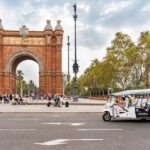
Finally, you get a reset in Parc de la Ciutadella. This is where you can exhale: monumental fountain, lake views, and that easy park feeling. The tour also includes Arc de Triomf, a neo-Mudejar arch linked to the 1888 World’s Fair, which is another good photo moment if you want a clean architectural framing.
You’ll then end around a central square after a stop in a neighborhood with strong Chinese influence and international cuisine. The big win here is pacing: you finish with less sensory overload than some sightseeing-heavy days.
Price and Value: Is $35.43 a Smart Move?
At $35.43 per person, this tour is positioned as an affordable overview—especially compared to stacking multiple separate neighborhoods and transport costs in a short window.
Here’s the value logic that makes sense:
- You get many districts in one go: Eixample, Montjuïc, Olympic area, port, Old City, and parkland.
- You get guided context for what you’re seeing, not just driving by it.
- Bottled water is included, which reduces small friction on a warm day.
- Group size stays small (max 8), which typically improves the quality of the interaction.
Where value can drop is if you personally want deep time at each landmark. Because several of the iconic sites are seen outside and tickets aren’t included for key attractions, you might feel like you’re paying for introductions and then paying again to go inside. If that’s your style, plan your extra tickets on a different day.
When a Tuk Tuk Tour Might Not Fit You
This tour is best for:
- First-timers who want orientation and a hit list
- People short on time who still want multiple neighborhoods
- Travelers who like exterior architecture and city stories more than museum hours
It may not fit if:
- You want long stops for ticketed sights like Sagrada Família, Casa Mila, and the bullring
- You prefer very detailed narration for every corner (some guides may be more efficient than chatty)
- You’re extremely sensitive to motion or rougher road sections, since some people report bumpy rides
Also, confirm your guide and meeting details. A couple of the issues described involve confusion around bookings or missed pickups, so I’d keep an eye on your confirmation and be ready to communicate if there’s any last-minute shift.
Should You Book This Barcelona Tuk Tuk Loop?
If you want a practical first pass through Barcelona—Gaudí names, urban planning context, Montjuïc views, port atmosphere, and Old City streets—this is a strong fit. The small group size, English narration, and photo-friendly pace make it a good “start here” option.
Book it if you’re aiming to:
- See a lot fast
- Learn what you’re looking at before you return on your own
- Keep your day lighter and avoid long ticket-line marathons
Skip it (or pair it carefully) if you want to go inside major attractions during this exact outing. The tour clearly includes moments where admission is not part of the package, so your best plan is to let this ride build your priorities—and then schedule the ticketed experiences separately.
FAQ
How long is the Barcelona Tuk Tuk tour?
The duration is listed as about 1 to 2 hours.
How much does it cost per person?
The price is $35.43 per person.
What language is the tour offered in?
It’s offered in English.
Where do you meet and where does the tour end?
You start at Carrer de Casp, 8, L’Eixample, Barcelona, and the activity ends back at the meeting point.
Is bottled water included?
Yes. Bottled water is included, with 1 bottle per person.
Are tickets for major attractions included?
Not always. The tour info says admission is not included for several places such as the bullring and Gaudí sites like Sagrada Família and Casa Mila. Some other areas list admission as free.
How big is the group?
The tour has a maximum of 8 travelers.