REVIEW · BARCELONA
Barcelona Panoramic Private Tuk Tuk Tour
Book on Viator →Operated by Tuk-Tuk Barcelona · Bookable on Viator
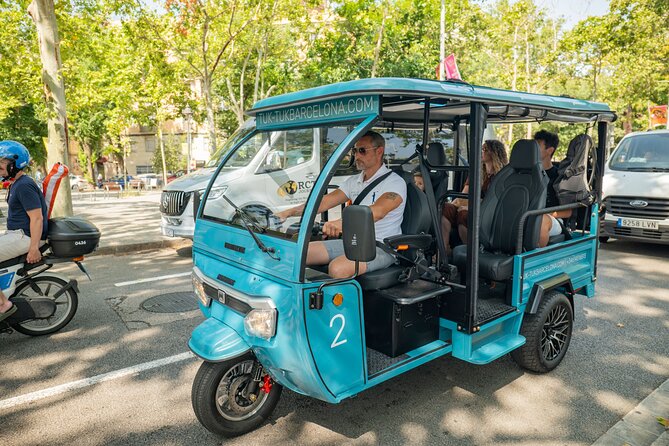
Barcelona gets complicated fast. This private tuk tuk tour keeps it simple with a big-sights route you can tailor to your time. I especially like the personalized driver-guide approach, plus the flexibility to pick a short 1-hour hit or stretch it toward 4 hours when you want more stops and photos.
One thing to consider: the route moves around a lot of iconic places, so you’ll often be doing quick looks and photo moments from the vehicle or at short roadside stops, not a slow museum-style visit of every single building. That still works well, but it’s good to know up front.
In This Review
- Key things I’d zero in on
- Why a private tuk tuk tour works so well in Barcelona
- Getting started at Carrer de la Diputació (and why the meeting point matters)
- The architecture stretch: bullring to UNESCO modernism to Gaudí faces
- The 1914 bullring façade (now a visual landmark)
- The UNESCO modernist complex from 1997
- Sagrada Família: towers and façades up close
- Passeig de Gràcia modernism: Puig i Cadafalch, Gaudí, and Casa Batlló
- Josep Puig i Cadafalch’s pointed-tower building on Diagonal Avenue
- The UNESCO Gaudí apartment-building style façade
- Casa Batlló: the mosaic façade people photograph for a reason
- Plaça de Catalunya to Plaça España style viewpoints: where the city turns
- Montjuïc views: a quick ticket-free pause with big payoff
- From La Rambla’s edge to Port Vell: Columbus and the oldest harbor
- The Columbus column near La Rambla
- Port Vell and Maremagnum: maritime history meets modern shopping
- La Barceloneta and Port Olímpic: sea breeze, narrow streets, Olympic-era structure
- La Barceloneta: former fishing village energy
- Port Olímpic: built for the 1992 Olympics
- Parc de la Ciutadella and the Arc de Triomf: green break, then Expo-era drama
- Parc de la Ciutadella: fountain, lake, and the Catalan Parliament area
- The red-brick Arc de Triomf entrance
- Price and value: is $36.12 for 1–4 hours fair?
- The role of the driver-guide: small details that make the day easier
- Tips to make your tuk tuk tour feel like a win
- Should you book the Barcelona Panoramic Private Tuk Tuk Tour?
- FAQ
- How long is the Barcelona Panoramic Private Tuk Tuk Tour?
- Is this tour private or shared?
- What language is the tour offered in?
- What’s the meeting point for the tour?
- Are there stops with free admission?
- What sights are included?
- What is the cancellation policy?
Key things I’d zero in on
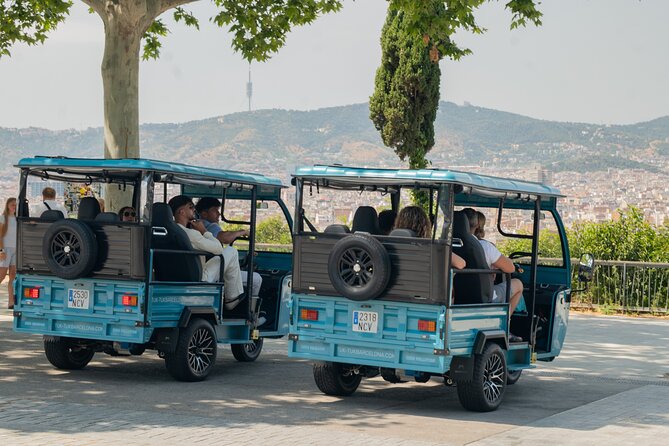
- Private door-to-sight pace: Only your group rides, so questions and stop requests stay easy.
- Gaudí in real sequence: You get a clear run of major modernist facades in a short window.
- Ocean + Olympics add contrast: Port areas and beach districts balance the architecture stops.
- Guides who handle the practical stuff: From quick photo support to comfort extras like blankets, the focus isn’t just facts.
- UNESCO stops without the stress: You hit major UNESCO-listed sites as part of a sane, time-saving plan.
Why a private tuk tuk tour works so well in Barcelona
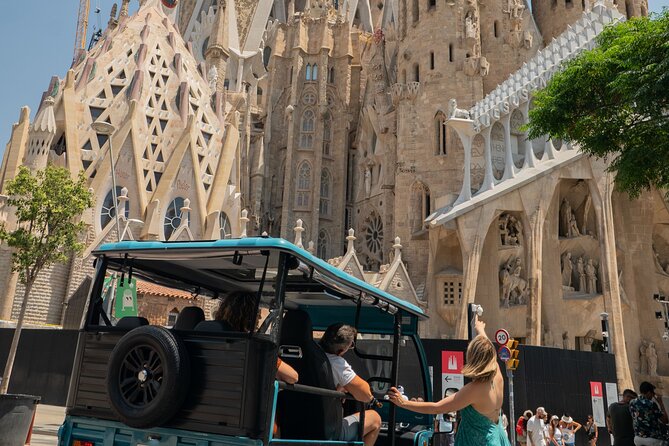
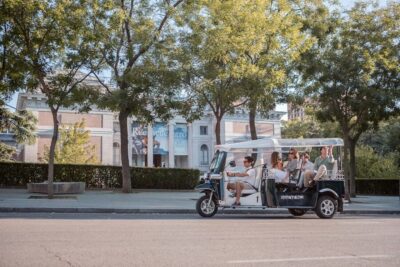
Barcelona is one of those cities where the sights are close on a map and far on your feet. Streets are hilly in places, neighborhoods change fast, and walking between the big names can eat your day. A tuk tuk cuts through the time math.
You also get a day that feels more like a guided route than a checklist. The driver-guide style is built for questions on the move, plus stop flexibility. That matters because Barcelona changes by the minute: morning light can make Gaudí stone details look totally different than afternoon shade, and sea air can make the later port stops feel like a whole other city.
You can also read our reviews of more tours and experiences in Barcelona.
Getting started at Carrer de la Diputació (and why the meeting point matters)
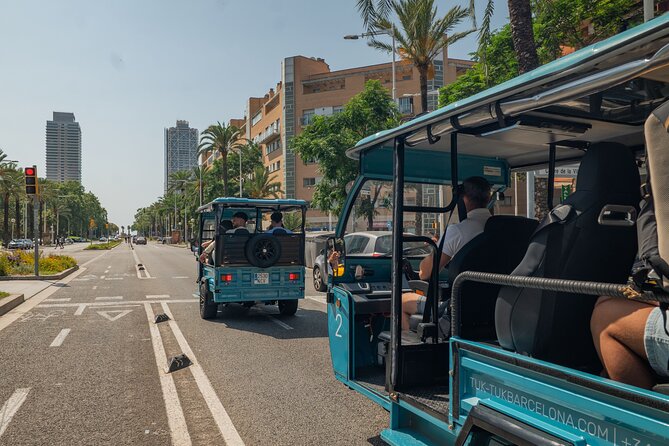
Your tour starts at Carrer de la Diputació, 338 (Eixample, 08009). The area is practical because you’re in a neighborhood that connects well with public transport, so it’s easier to arrive without stress if you’re staying elsewhere.
Since the tour ends back at the meeting point, think of it as a loop: you’re using a single base location to cover multiple districts. If you want to build your day around it, this helps you plan your lunch and evening plans nearby rather than chasing across town after the ride.
The architecture stretch: bullring to UNESCO modernism to Gaudí faces
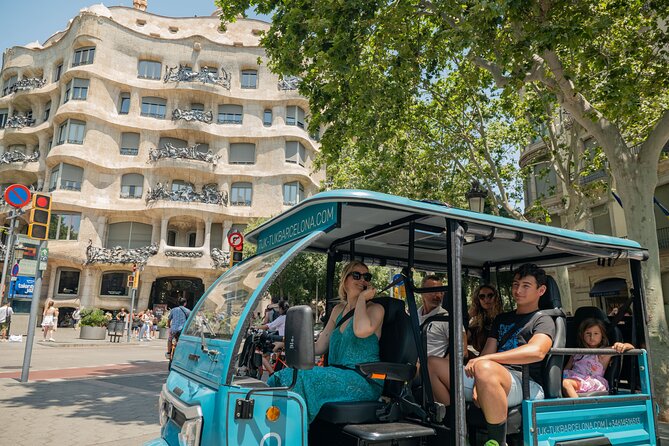
This tour’s first momentum comes from a strong run of landmark architecture. Even if you’re not trying to memorize every style term, you’ll see a pattern: Barcelona loves bold forms, and this route shows that obsession clearly.
The 1914 bullring façade (now a visual landmark)
The day begins with Barcelona’s last bullring, opened in 1914, known for a striking mix of Moorish and Byzantine styling. Since it’s no longer used for bullfighting, it’s more interesting as a piece of city theater—how it dominates the surrounding area even when the original purpose is gone.
Why it’s a smart first stop: you get an instant “wow” façade early, and it sets expectations for how the rest of the tour works—lots of visual impact without requiring museum tickets.
The UNESCO modernist complex from 1997
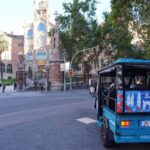
Next is the largest modernist complex of Catalan architecture, a UNESCO World Heritage Site since 1997. Even from outside, these kinds of complexes tend to feel designed as a full environment, not just a single building.
A practical note: modernist sites often involve distance between points of interest, so the value of the tuk tuk is that you don’t have to stitch it together yourself on foot.
Sagrada Família: towers and façades up close
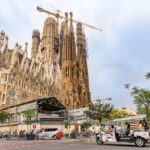
Then comes the big highlight: Gaudí’s Sagrada Família, described as still unfinished and famous for its spiraling towers and intricate façades. This stop is the kind that changes your internal map of Barcelona. Once you’ve seen the façade details from a good viewing spot, the city’s design language starts to make more sense everywhere else.
One consideration: the tour info doesn’t say admission is included for Sagrada Família. So if you want interior time, you’ll likely need to plan tickets separately. If you’re fine with exterior viewing and photos, this still hits the emotional high point.
Passeig de Gràcia modernism: Puig i Cadafalch, Gaudí, and Casa Batlló
After Sagrada Família, the route leans even harder into modernist architecture—especially around the style-dense zone where the buildings compete for your attention.
Josep Puig i Cadafalch’s pointed-tower building on Diagonal Avenue
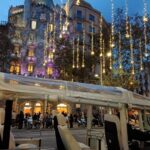
You’ll see a fairytale-like building with pointed towers, designed by Josep Puig i Cadafalch, on Diagonal Avenue. It’s a different flavor than Gaudí. Where Gaudí often feels like organic motion, Puig i Cadafalch leans into a more medieval, storybook silhouette.
This stop works because it stops you from getting modernist fatigue. Your eyes get a new kind of pattern.
The UNESCO Gaudí apartment-building style façade
Another major Gaudí hit follows: a UNESCO World Heritage icon with an undulating stone façade and wrought-iron balconies. This is the kind of building that makes you understand why Barcelona became a global modernist classroom.
If you’re the type who likes to spot details—curves, metalwork, and stone textures—this stop is where you’ll slow down a little, even if you only have a minute or two.
Casa Batlló: the mosaic façade people photograph for a reason
Finally, Casa Batlló enters the frame: famous for its colorful mosaic façade and organic shapes along Passeig de Gràcia. This is one of those buildings that looks good in photos but also rewards real-life viewing, because you can see how the pattern logic changes across the façade.
Practical photo tip: use the short stop to get one wide shot and one close-detail shot. The mosaics read differently depending on angle, so don’t waste the moment staring only at the tallest part.
Plaça de Catalunya to Plaça España style viewpoints: where the city turns
Then you hit the civic center energy: Plaça de Catalunya, described as the central square linking the old and new parts of the city. It’s essentially Barcelona’s beating heart—surrounded by shops, cafés, and major avenues.
From a route-planning perspective, this is a helpful reset point. After architecture, the square helps you understand the city’s geometry: where north-south movement happens, and how the main streets funnel you toward the next districts.
After that, you’ll also see a grand square framed by Venetian towers and fountains, acting as a gateway toward Montjuïc and the Magic Fountain area. Even without spending long here, these squares give you a sense of how Barcelona stages space like it stages buildings.
Montjuïc views: a quick ticket-free pause with big payoff
Montjuïc is one of the tour’s best “price-to-feel” moments. You’ll get the hilltop viewpoint area with panoramic views of the city and sea, plus gardens and museums nearby. The tour data also notes admission ticket free for this 10-minute stop.
Why this works even as a short pause: it gives your brain a breather after dense architecture. You can look out and reorganize what you saw earlier. Plus, if you’ve been walking earlier in the day, the switch to a viewpoint helps your legs without removing you from the sightseeing loop.
A realistic consideration: it can be windy on the hilltop. In reviews, guides have offered comfort extras like blankets on a windy day, but you should still plan to bring a light layer just in case.
From La Rambla’s edge to Port Vell: Columbus and the oldest harbor
After Montjuïc, the tour moves from height to shoreline mood.
The Columbus column near La Rambla
You’ll stop at a tall column honoring Christopher Columbus, located by the foot of La Rambla and pointing out toward the sea. It’s an easy landmark to orient yourself. Even if you don’t linger, it ties the old-world navigation story to modern Barcelona’s waterfront.
Port Vell and Maremagnum: maritime history meets modern shopping
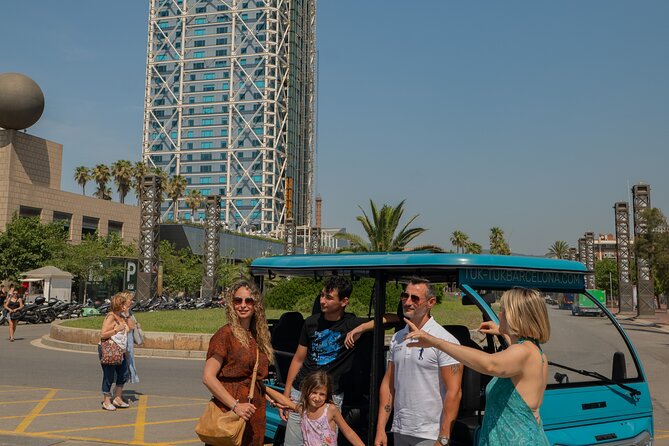
Next is Barcelona’s oldest harbor, blending maritime history with modern charm, including yachts, palm-lined promenades, and the Maremagnum mall area. This stop is less about one single building and more about atmosphere: boats, water movement, and a sense of how Barcelona shows its seafaring identity.
If you love people-watching, you’ll enjoy the waterfront angle here. It also sets you up for the next seaside neighborhood without feeling like you jumped from one theme to a totally different planet.
La Barceloneta and Port Olímpic: sea breeze, narrow streets, Olympic-era structure
Then you get the seaside districts that make Barcelona feel Mediterranean instead of strictly architectural.
La Barceloneta: former fishing village energy
You’ll visit La Barceloneta, Barcelona’s historic seaside district. It’s described as once a fishing village now blending local flavor with energy: narrow streets, classic tapas bars, and laid-back beach culture.
What I like about this stop is that it gives you a texture check. You’re not only seeing famous designs; you’re seeing how people actually live and eat nearby.
A useful way to use this short stop: take one slow photo at the beach edge, then look for a street view showing the narrow lanes. That mix tells the Barceloneta story faster than trying to read it all at once.
Port Olímpic: built for the 1992 Olympics
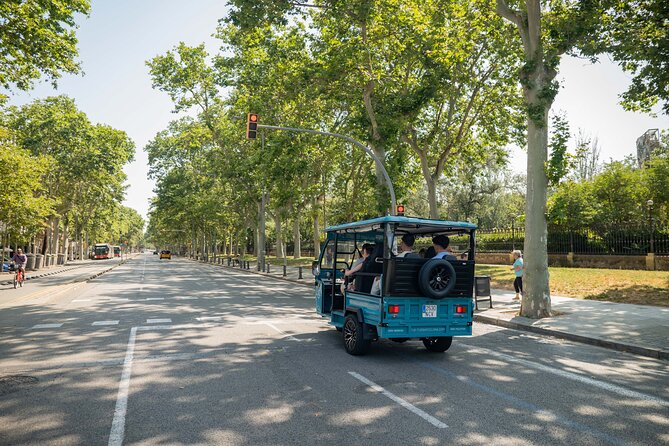
After Barceloneta, you head to Port Olímpic, built for the 1992 Summer Olympics. The tour notes this as 10 minutes with admission ticket free. This part feels structured compared to the older harbor: marina lines, sailboats, and an easy skyline view frame.
If you want one clean “Barcelona + sea” photo, this stop is a solid candidate because the marina gives you natural reference points.
Parc de la Ciutadella and the Arc de Triomf: green break, then Expo-era drama
The final stretch cools down the pace.
Parc de la Ciutadella: fountain, lake, and the Catalan Parliament area
You’ll spend time at Parc de la Ciutadella, one of the city’s beloved green spaces. It’s known for a majestic fountain, a small lake, sculptures, and the Catalan Parliament nearby.
Even as a short stop, this kind of park visit resets your eyes. After stone façades and waterfront lines, the softer greens and open space make the tour feel less like a sprint.
The red-brick Arc de Triomf entrance
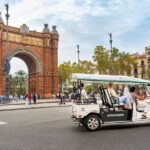
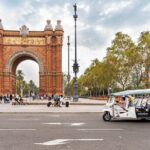
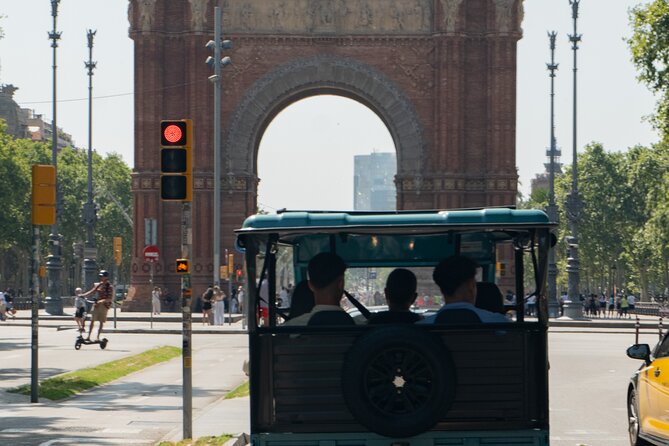
You end with the Arc de Triomf, a red-brick arch that served as the grand entrance to the 1888 Barcelona Universal Exposition. It’s a strong closing image because it links Barcelona’s modern identity to older world-fair ambition.
It also works as a “walk-off” stop. If you want one last photo before heading back toward the meeting point loop, this arch gives you a classic frame and height.
Price and value: is $36.12 for 1–4 hours fair?
At $36.12 per person, the value comes down to what you’re trying to solve.
If your goal is:
- seeing major Barcelona highlights without stacking long walking routes,
- getting flexible stop time,
- and having a private driver-guide who can keep the pace smooth,
then this price can feel reasonable. A big chunk of the cost is paying for transportation and for the human help to sequence the day. In Barcelona, that sequencing is where most DIY days get messy.
Where value may feel lower:
- if you only want one or two stops and don’t care about the broader route, or
- if you want long interior visits at every major site (since the tour is designed for panoramic movement and short stops).
The best move: treat this as a “first big look” tour. Then, use the remaining time in Barcelona to go deep on whichever places caught your eye most.
The role of the driver-guide: small details that make the day easier
The tour isn’t just about where you go. It’s also about how the day runs.
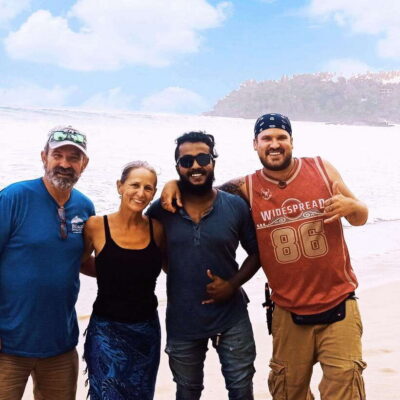
In reviews tied to this experience, guides like Isaac and Pablo are praised for friendly, funny delivery and for making people feel welcome. Danny is called out for being informative while keeping the tour smooth from start to finish. Elisa Rodrigues and Eliza show up with standout practical attention—help with comfort in traffic, quick photo stops when asked, and even restroom guidance.
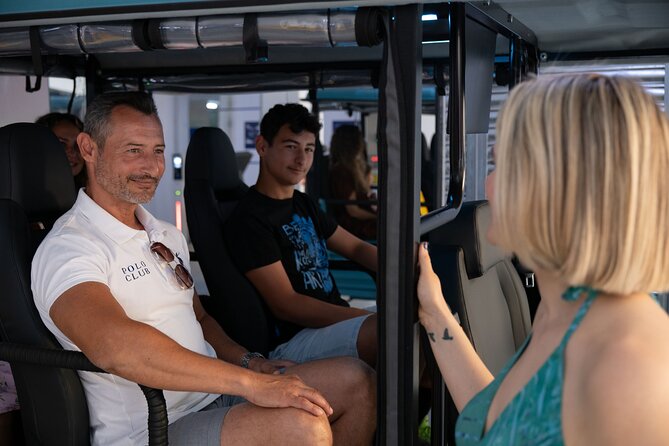
I’d take that as a hint: this kind of private tuk tuk day is at its best when you treat your guide like a partner. If you want more photo time, ask. If you need a restroom break, tell them. If the route should match your pace, say so early.
Tips to make your tuk tuk tour feel like a win
A few practical things help this style of tour land well:
- Pick your time goal before you arrive. A 1-hour plan is about highlights. A 3–4 hour plan is where you can slow down and ask for more photo stops.
- Dress for wind if you’re going to Montjuïc. A light layer is smart.
- Bring a quick photo plan. Decide what you want: one wide skyline shot, one façade detail, one sea-and-city frame.
- Ask about drop-offs if you need it. The tour ends back at the start point, but some guides in reviews have handled hotel drop suggestions. If that matters to you, raise it at booking.
- Use the loop to orient yourself. After the tour, you’ll know what’s close, what’s far, and where you’ll want to return on foot.
Should you book the Barcelona Panoramic Private Tuk Tuk Tour?
I’d book this if you want a private Barcelona highlights route that balances architecture and waterfront in a day that doesn’t destroy your legs. It’s especially good for couples, families, or anyone who wants to see more than the usual walking-day radius, and it seems to work well for people with mobility limits—one review specifically mentioned comfort for a harder time getting around.
Skip it or adjust expectations if you’re expecting long, interior-heavy visits. This tour is built for panoramic viewing and smart sequencing. If that matches your style, you’ll get a lot out of the route.
FAQ
How long is the Barcelona Panoramic Private Tuk Tuk Tour?
The duration is listed as approximately 1 to 4 hours, depending on your chosen pace.
Is this tour private or shared?
It’s private. Only your group participates.
What language is the tour offered in?
The tour is offered in English.
What’s the meeting point for the tour?
The start point is Carrer de la Diputació, 338, Eixample, 08009 Barcelona, Spain. The tour ends back at the meeting point.
Are there stops with free admission?
Yes. The tour data specifically notes Montjuïc (10 minutes, admission ticket free) and Port Olímpic (10 minutes, admission ticket free).
What sights are included?
The route includes major highlights such as the Sagrada Família, Casa Batlló, Plaça de Catalunya, Montjuïc, the Columbus column, Port Vell, La Barceloneta, Port Olímpic, Parc de la Ciutadella, and the Arc de Triomf, plus additional modernist architecture stops.
What is the cancellation policy?
You can cancel for a full refund if you cancel at least 24 hours in advance. If you cancel less than 24 hours before the start time, the amount paid is not refunded.