REVIEW · BARCELONA
Barcelona: Tour by electric tuk tuk
Book on GetYourGuide →Operated by WalkTuk · Bookable on GetYourGuide
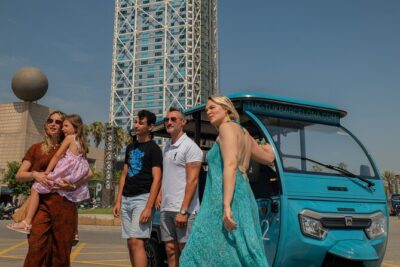
Gaudí is nicer when you don’t have to walk it all. This electric tuk-tuk tour is a fun, low-effort way to see big sights up close, with panoramic views from a comfortable open-air ride.
I also love the human part: a live local guide who ties art and streets together in clear English or Spanish. On one rainy, gloomy day, the guide Pablo kept the mood up and explained what you’re actually looking at, not just where it sits.
One thing to plan for: monument tickets aren’t included, so you’re mostly there to enjoy views and photo stops rather than pay for every interior.
In This Review
- Key things to know before you ride
- Why an electric tuk-tuk tour makes sense in Barcelona
- Where you start at Teatro Tívoli (and why it helps)
- Riding the route: what you’ll actually see along the way
- Arc de Triomf and La Monumental: easing into the city
- Sagrada Família: seeing it from streets, angles, and scale
- Passeig de Gràcia Gaudí trio: Casa Mila, Casa Batlló, and more
- City breaks you’ll appreciate: Rambla de Catalunya and the in-between moments
- The guide experience: live stories that make the buildings click
- Comfort and weather: open-top doesn’t mean you’re stuck
- Accessibility and who this tour fits best
- Price and value: what $39 covers (and what you’ll pay extra for)
- Should you book this WalkTuk eTukTuk tour?
- FAQ
- How long is the Barcelona electric tuk-tuk tour?
- Where does the tour meet?
- What is included in the price?
- Are monument tickets included, and do we skip lines?
- What languages is the guide available in?
- What happens if it rains?
Key things to know before you ride
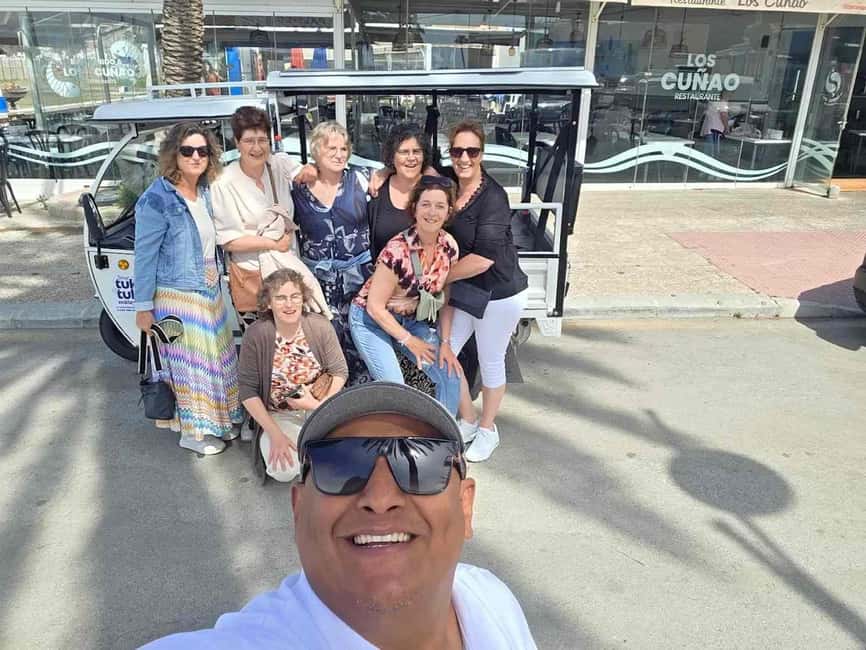
- Small group of up to 8 people, so questions don’t get swallowed by the crowd
- 100% electric eTukTuk ride that’s quieter and easier on the streets
- Gaudí route focus with stops timed for seeing facades from multiple angles
- Rain cover + blankets if the weather turns, so the tour doesn’t automatically get canceled
- Stops can match your interests, not just a one-size-fits-all script
Why an electric tuk-tuk tour makes sense in Barcelona
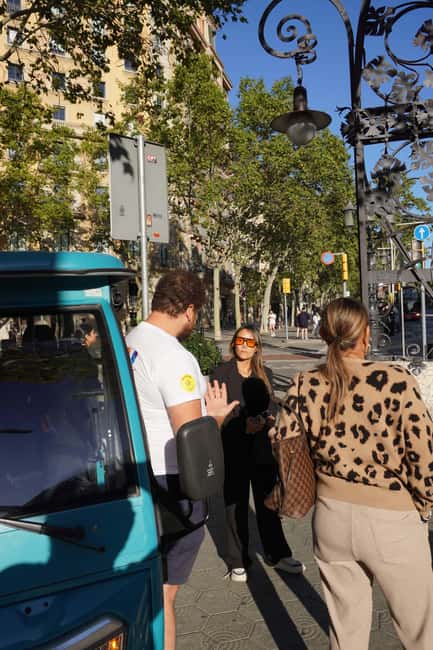
Barcelona can be a lot—especially when your list includes multiple Gaudí buildings in one day. What I like about this kind of tour is that it helps you get your bearings fast. Instead of bouncing from one address to another on foot, you glide along the main avenues, then weave toward the buildings where you’ll want photos.
The eTukTuk format also changes how you experience the city. You’re not stuck indoors, and you’re not stuck walking. You’re up high enough to see, but close enough to feel the scale of things like Sagrada Família without standing in one spot all day. And because it’s electric, the ride feels smoother and noticeably quieter than many other “tour vehicle” options.
Another practical win: it’s built for limited time. This is listed as about 1–2 hours, which makes it realistic even if you’re also planning a museum, beach time, or a long dinner later.
You can also read our reviews of more tours and experiences in Barcelona.



Where you start at Teatro Tívoli (and why it helps)
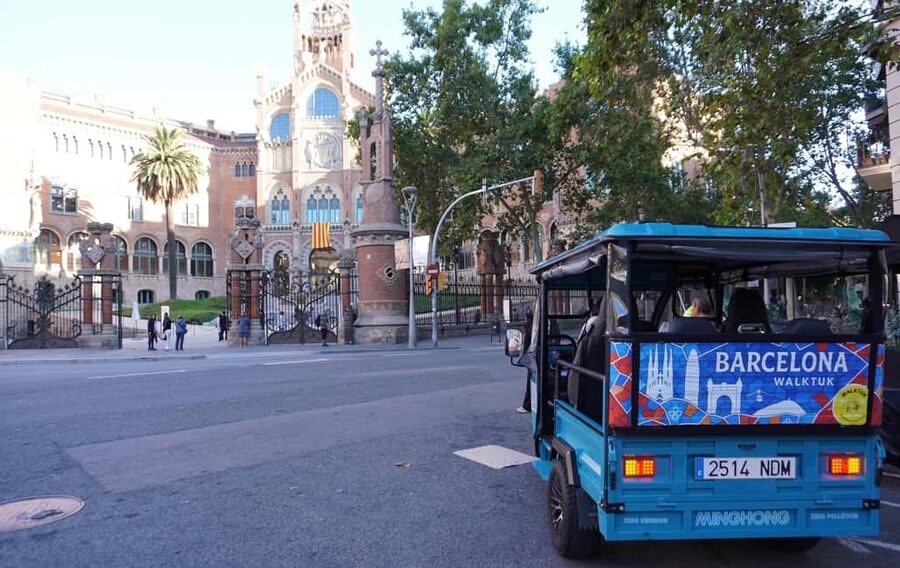
Your tour meets at the Teatro Tívoli, with the tuk-tuk and guide waiting out front at the scheduled time. That location matters. You’re starting near central transit, so it’s easy to arrive by metro or train without turning your morning into a navigation test.
Getting there is straightforward:
- Metro: Urquinaona or Plaça Catalunya (L1)
- Train: Plaça Catalunya
- Taxi: right at the starting point
- Parking: Interparking Novedades
- Bus: multiple nearby lines
If you’re coming from another part of Barcelona, Plaça Catalunya is usually the easiest “hub” to aim for. I like that you don’t have to think too hard about a far-flung meetup—because the whole point is getting into the sightseeing flow quickly.
Riding the route: what you’ll actually see along the way
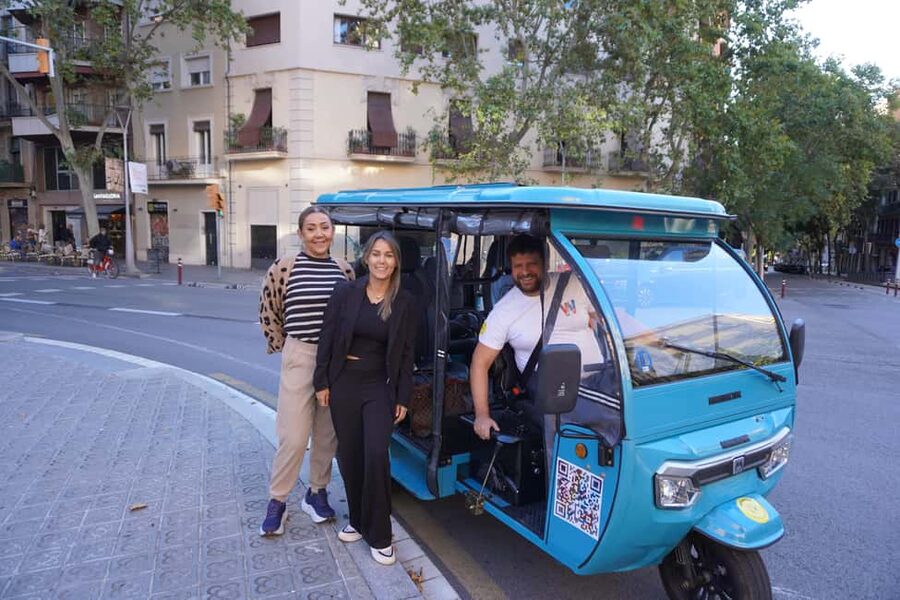
This tour is designed as a guided loop. You start at Teatro Tívoli, then move through key sights where you’ll get scenic views and repeated chances for good angles.
The route highlights include:
- Arc de Triomf
- La Monumental (scenic views along the way)
- Sagrada Família
- Casa de les Punxes
- Casa Mila
- Casa Batlló
- Rambla de Catalunya
- Back to Teatro Tívoli
Even where the itinerary lists “scenic views on the way,” that still counts as real time well spent. Barcelona’s biggest landmarks aren’t always easiest to access on foot—so having the vehicle do the transfer work for you can save energy for the moments you’ll linger, take photos, and listen.
And yes, it’s a small group (limited to 8). That’s not just a comfort perk. It also keeps the guide from speaking into a megaphone while people drift out of earshot.
Arc de Triomf and La Monumental: easing into the city
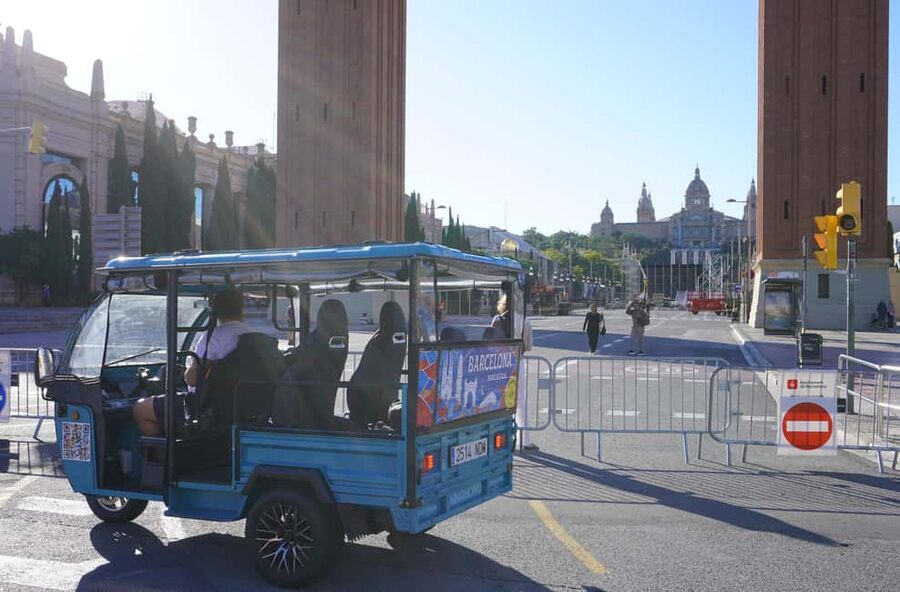
You’ll hit Arc de Triomf early, which is smart. It’s a big, recognizable structure that helps you orient yourself. From a tuk-tuk seat, you get a sense of the avenue scale—how wide the city is, how the sightlines open up, and how Barcelona’s layout helps you connect neighborhoods.
Along the route you’ll also get scenic views near La Monumental. You might not get a long stop here, but it works as a “city texture” moment. It’s the kind of stop that’s useful when you’ve never been and you’re trying to understand what kind of city you’re in: structured streets, grand architecture, and lots of movement.
If you’re the type who gets overwhelmed by too many stops in a single block, this early phase keeps things calmer. You’re building context before you reach the heavy hitters.
Sagrada Família: seeing it from streets, angles, and scale

Then the tour heads toward Sagrada Família, and this is where the trip earns its keep. Even without stepping inside, the building has a way of taking over your attention. From different angles, you notice different details—facades that feel busy up close, and a structure that looks almost unreal from a distance.
What I like about viewing it during a short guided ride is that you’re not stuck hunting for the perfect photo position. You also get guide context while the monument is still in your frame of mind. That means your brain isn’t just taking snapshots—it’s mapping what you’re looking at.
One note for expectations: the tour includes help that says skip the ticket line, but tickets to monuments aren’t included. So if you want to go inside Sagrada Família (or any other site), you’ll likely need to purchase those separately and plan extra time around them. If your goal is to see the masterpiece from outside and learn what to notice, this format works very well.





Passeig de Gràcia Gaudí trio: Casa Mila, Casa Batlló, and more
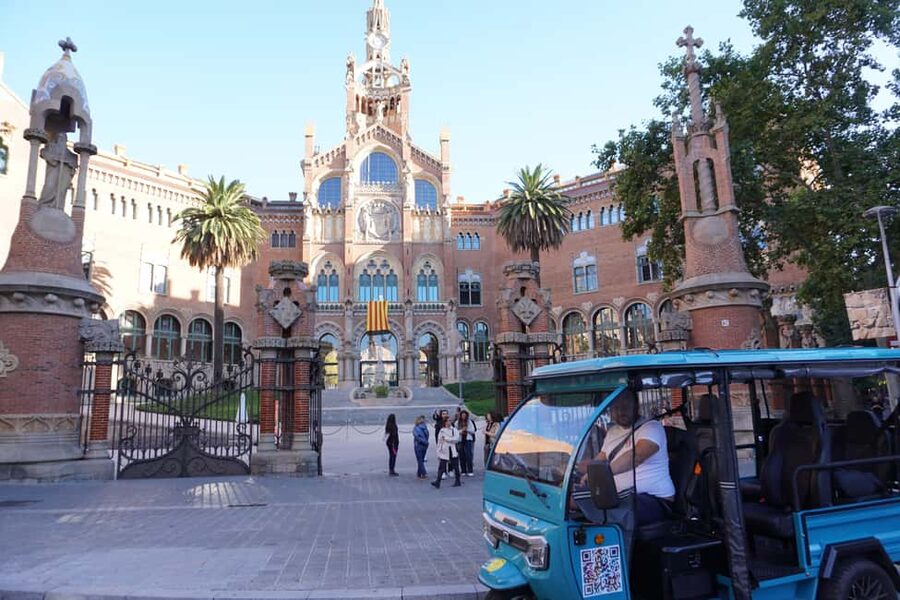
The “Gaudí zone” is built around Passeig de Gràcia, and that’s where you’ll recognize the city’s identity fast. This is a street where Barcelona flexes—on purpose—and you’ll see why it became the address for some of Gaudí’s most famous residential visions.
Here’s what to expect as you move through:
- Casa de les Punxes: You’ll get a view that helps you connect Gaudí’s style beyond the two most famous homes. It’s useful for spotting patterns in how he designs shapes and silhouettes.
- Casa Mila (La Pedrera): This is one of those buildings that looks different depending on the angle. From a moving seat, you’ll catch the facade as it changes across the street.
- Casa Batlló: You’ll see the building associated with the colorful, imaginative side of Gaudí. It’s the kind of structure where details reward slow looking, even if you only get a brief window.
The practical advantage here: you’re getting a guided “reading” of facades while the tuk-tuk moves you between perspectives. If you’ve tried to do a Gaudí crawl on your own, you know how easily you can end up rushing—because the city distances are real, and public transit plus walking can eat hours.
With this tour, you get the essentials in a compact window. And because the ride is quiet, you can actually listen without competing with engine noise.
City breaks you’ll appreciate: Rambla de Catalunya and the in-between moments
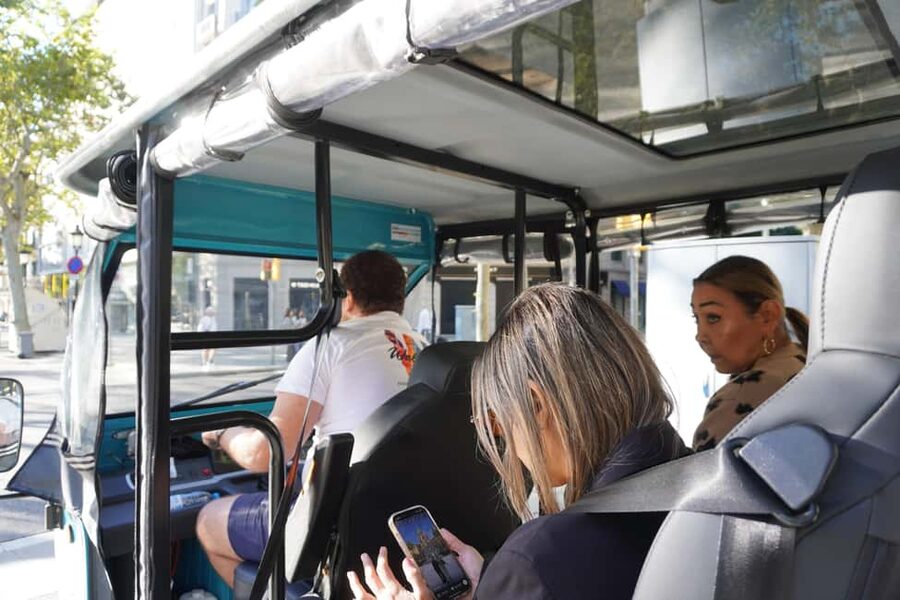
You’ll also travel along Rambla de Catalunya, which helps connect the Gaudí stops to the broader feel of central Barcelona. This stretch is more than a travel corridor. It’s a place where you sense daily city life—shops, foot traffic, and that classic Barcelona “everything is happening” energy.
If you’re traveling with kids (or just your own legs need a break), these in-between segments matter. They’re not filler time. They keep you from feeling like every minute is dedicated to standing still and staring up at architecture.
And because the ride includes multiple “scenic views on the way” moments, you don’t lose the thread of the route. The guide continues explaining, so you’re learning while you move—not only at stops.
The guide experience: live stories that make the buildings click
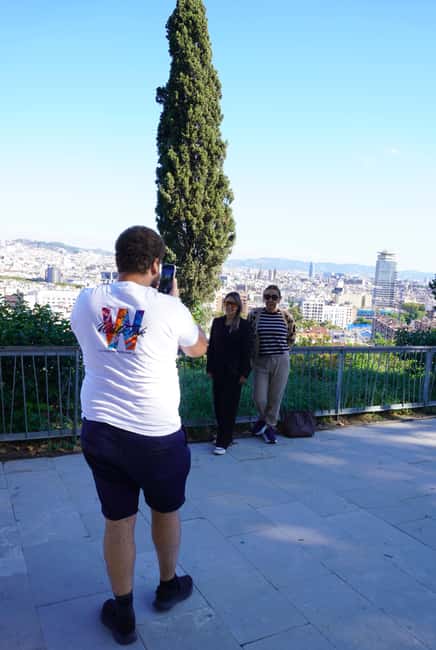
This is a guided tour with a live guide in English or Spanish. That means you’re not just sitting in a vehicle while buildings pass by. You’re getting explanations designed to help you look smarter.
I especially like that the tour focuses on art, history, and culture in a way that fits a short outing. It’s not trying to turn you into an architecture student. It’s aiming to help you understand what you’re seeing so the trip stays memorable after you leave.
A small-group setup makes a difference here. When only a handful of people are on board, you’re more likely to get answers that fit what you personally care about—style, symbolism, or how Barcelona’s streets shaped the buildings.
And one example from a recent day matters: Pablo was highlighted as excellent, particularly when the weather wasn’t cooperating. That’s real value, because a good guide doesn’t just survive a grey sky. They make it feel useful.
Comfort and weather: open-top doesn’t mean you’re stuck
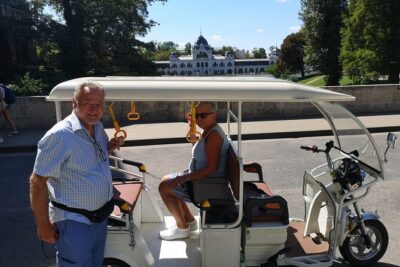
This tour is on an open-top electric tuk-tuk, but you’re not just hoping for the best. If it rains, the vehicles have transparent rain covers, and the tour also provides blankets for the cold.
So how does it feel in practice? Plan for the possibility of getting a little damp around edges, because you’re still outdoors. But you’re also not forced to cancel and regroup. The tour is built to keep moving.
Comfort tips based on the format:
- Bring layers, even in mild seasons, since breezes can chill you.
- Wear shoes you’d be happy standing in for quick photo stops.
- If you’re sensitive to light rain, plan to use the covers without hesitation.
Also worth knowing: kids under 15 must be accompanied by an adult, and the tour isn’t suitable for children under 4.
Accessibility and who this tour fits best
The tour says it’s wheelchair accessible, which is great. At the same time, there are specific restrictions: non-folding wheelchairs aren’t allowed, and electric wheelchairs aren’t allowed.
If you’re traveling with strollers, the same rule applies: non-folding strollers aren’t allowed. Bikes also aren’t allowed.
Because the group is limited to 8 and the vehicle is built for moving through both wide avenues and narrow streets, this isn’t the type of tour where you want to bring bulky gear. It’s designed for people who want an easy way to hit multiple landmarks without turning the day into logistics.
Who it’s especially good for:
- Families who want “highlights” without long walks
- First-timers who need context fast
- Anyone who wants Gaudí stops without building a complex itinerary
- People with limited time who still want a guide
Price and value: what $39 covers (and what you’ll pay extra for)
The price is $39 per person, and the tour lasts 1–2 hours. In that time, you get:
- Over an hour of touring by electric tuk-tuk
- A live guide (English or Spanish)
- Free water bottle for each customer
- Help related to skipping the ticket line (while tickets themselves aren’t included)
So is it good value? For me, it depends on what you want from the day. If you’re mainly after guided exterior views plus context, $39 feels reasonable because you’re paying for time, guidance, and transport between stops.
If your priority is going inside several monuments and spending a lot of time at each, you’ll likely end up paying additional ticket costs and maybe adjusting your schedule. That’s not a flaw—it’s just how the pricing is set up. This is built to get you to the right places quickly, not to replace every ticket purchase.
Should you book this WalkTuk eTukTuk tour?
Book it if you want a smart, low-stress way to see Barcelona’s biggest icons—especially Gaudí highlights—with a guide who helps you look beyond the surface.
Skip it (or plan differently) if you need lots of interior time at monuments, since tickets aren’t included and this style of tour is best for views, photos, and guided context. Also consider the weather: open-top means you should be ready for the outdoors, even with rain covers and blankets.
One last practical thought: if you’re trying to fit Sagrada Família plus multiple Gaudí buildings into a tight schedule, this is the kind of tour that turns a complicated day into a simple one. I’d call it a great “anchor experience” for your first 24 hours in Barcelona—then you can build the rest of your day around what you liked most.
FAQ
How long is the Barcelona electric tuk-tuk tour?
It’s listed as 1–2 hours, depending on the starting time and tour flow.
Where does the tour meet?
The meeting point is in front of the Tívoli Theater (Teatro Tívoli).
What is included in the price?
The tour includes over 1 hour by tuk-tuk and a free water bottle for each customer. Monument tickets are not included.
Are monument tickets included, and do we skip lines?
Monument tickets are not included, but the tour includes skip-the-ticket-line support.
What languages is the guide available in?
The live guide is available in English and Spanish.
What happens if it rains?
The tuk-tuk is open-top, but it includes transparent rain covers, and they provide blankets for the cold.