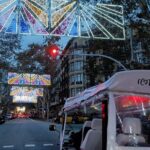
Barcelona can overwhelm you fast, so I like tours that help you get oriented. This private tuk-tuk loop is built for just that: you roll past major landmarks, hear clear context from guides like Elisa, Isaac, and Dany, and you leave with a short list of what to revisit on your own.
What I like most is the mix: the ride covers both the big-name Gaudí stops and the city anchors like Plaça de Catalunya and the Arc de Triomf. The one caution: this is an efficient highlights tour, so plan on seeing plenty from the street rather than settling in for long indoor museum-style time.
In This Review
- Key highlights worth your attention
- How the tuk-tuk layout makes Barcelona click
- Your route: from a 1914 bullring to today’s Gaudí focus
- The last bullring (1914) and why its façade still grabs you
- Sagrada Família: the unfinished masterpiece you can’t unsee
- A Puig i Cadafalch pointed-tower building on Diagonal Avenue
- Gaudí’s UNESCO icon: undulating stone and wrought-iron balconies
- Casa Batlló on Passeig de Gràcia: the mosaic façade photo magnet
- Plaça de Catalunya: the city’s central connector
- Arc de Triomf: the 1888 Universal Exposition entrance
- Guides like Elisa, Isaac, and Dany: why the commentary matters
- Price and time: when $31.61 feels like a good deal
- Where this tour fits best (and who should skip it)
- Should you book this Barcelona Essentials private tuk-tuk tour?
- FAQ
- How long is the Barcelona Essentials private tuk-tuk tour?
- What’s the price per person?
- Is this tour private or shared?
- Where does the tour start?
- Does the tour end somewhere else?
- What language is the tour offered in?
- Do I get a mobile ticket?
- Which major sights are included?
- Can most people participate?
- Is free cancellation available?
- How close is the meeting point to public transportation?
Key highlights worth your attention
- Private ride for your group with only your people in the tuk-tuk
- Gaudí concentration: Sagrada Família plus multiple modernist façades you’ll recognize instantly
- A modernist timeline: Casa Milà, Casa Batlló, and a Puig i Cadafalch building on Diagonal Avenue
- Catalonia context from the guides (including Catalan vs Spanish history in the commentary)
- Quick city orientation so you can choose what deserves a second visit
- Great for first-timers and short stays because you cover a lot ground in a short window
How the tuk-tuk layout makes Barcelona click
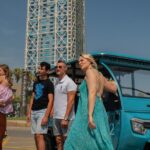
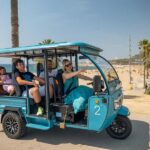
The nicest thing about a tuk-tuk tour is how it changes your pacing. In a car, you can feel boxed in and focus only on the road. On a tuk-tuk, you get that open feel plus easy sightseeing, which makes it simpler to connect the streets you’ll actually walk later.
This route is also a smart primer for first-time visitors. You’re not just ticking off famous names; you’re seeing how Barcelona’s neighborhoods and architecture talk to each other. The itinerary swings from Eixample into the areas where you’ll want to explore next, ending back at the same meeting point on Carrer de la Diputació.
And the guides matter. I’m putting weight on that because the best part of these tours is usually the storytelling. You can see a pattern in the feedback: guides like Elisa and Isaac are praised for clear commentary, and Dany is specifically noted for history context and even Catalan vs Spanish comparisons. If you like learning just enough to navigate the city better, this format fits.
You can also read our reviews of more tours and experiences in Barcelona.

Your route: from a 1914 bullring to today’s Gaudí focus
This is a highlights loop, so think of it like architectural orientation with frequent photo opportunities. It typically runs 1 to 4 hours, and the pacing is designed to keep you moving while still giving you time to look closely at façades and details.
Here’s what you’ll see, in the order on the route.
The last bullring (1914) and why its façade still grabs you
Barcelona’s last bullring opened in 1914, and the building is hard to miss because of its Moorish and Byzantine-style look. Even though it’s no longer used for bullfighting, the exterior still dominates the area.
This kind of stop is more useful than it sounds. It trains your eye to notice that Barcelona isn’t only Gaudí. There are layers of style here, and the city can look like it’s borrowing from different eras and regions. If you’ve been expecting everything to look modernist, this quick detour sets the right expectations fast.
Practical tip: since this is a look-at-the-building stop, take a moment to photograph the façade from different angles if the street gives you room. The style reads differently depending on where you stand.
Sagrada Família: the unfinished masterpiece you can’t unsee
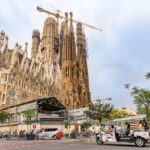
Next up is Sagrada Família, Gaudí’s most famous (and still unfinished) basilica. The description alone explains why it’s such a showstopper: spiraling towers and intricate façades.
This is the kind of stop where even brief viewing feels worth it. The church is visually busy in the best way. From street level, you get a sense of vertical ambition—those towers seem to pull your gaze upward even before you study details.
Two things to keep in mind:
- If you came hoping for long time inside, a short-form tour may not match that. This experience is built for the big sights and orientation.
- If you want your first impressions to be strong, this stop delivers. It’s the anchor for the rest of your Gaudí day.
A Puig i Cadafalch pointed-tower building on Diagonal Avenue
Then you’ll glide past a modernist gem by Josep Puig i Cadafalch on Diagonal Avenue. The description mentions fairytale-like pointed towers, and that’s exactly the vibe: whimsical forms, medieval-leaning silhouettes, and a skyline effect that feels different from Gaudí’s smoother, more fluid stone language.
This stop matters because it broadens your understanding of Catalan modernism. If all you remember about the city is Gaudí, you miss half the story. Seeing Puig i Cadafalch here helps you sort the visual signatures: how one architect’s style reads as playful and jagged, while another’s feels wavier and more organic.

Gaudí’s UNESCO icon: undulating stone and wrought-iron balconies
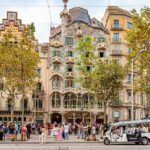
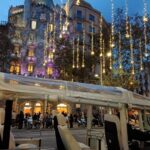
After that, you reach one of Gaudí’s boldest creations, recognized as a UNESCO World Heritage Site. The clue is in the details you’re given: an undulating stone façade and wrought-iron balconies.
That façade is the point. Even without going inside, the building’s surface creates motion. It’s the kind of architecture that looks different every time you change your angle. The wrought iron adds a delicate layer that balances the heavier stonework.
If you’re the type who cares about why people fall in love with Barcelona, you’ll likely understand it here. The city doesn’t just offer famous monuments; it offers surfaces that look like they were designed to be studied slowly—this tour gives you a fast taste.
Casa Batlló on Passeig de Gràcia: the mosaic façade photo magnet
Next is Casa Batlló, famed for its colorful mosaic façade and organic shapes. It also gets called out as one of the most photographed buildings along Passeig de Gràcia, and for good reason: it’s visually loud in a controlled way.
This stop is perfect for your camera roll and your memory. If you’ve ever seen Casa Batlló in photos, you already know the general look. Seeing it in person adds scale and texture. The mosaics and curves don’t read the same on a screen as they do on the street.
If you only have one day, you can think of Casa Batlló as one of those landmarks that makes the rest of your walking route feel more meaningful. You see it, then you start spotting patterns in the surrounding modernist buildings.
Plaça de Catalunya: the city’s central connector
After the architecture, the route shifts to a city “hub” moment at Plaça de Catalunya. This square connects older and newer parts of Barcelona, and it’s surrounded by the kind of shop-and-café energy that makes it a natural starting point for independent exploring.
Even if you’re not shopping, this stop helps you orient. It’s a decision-making place. From here, you can usually plan which direction to go next—toward the older streets, toward Gaudí’s modernist stretches, or toward museums and transport links.
If you like building your own itinerary, Plaça de Catalunya is a good place to pause mentally. You’ll feel where the city wants you to go next.
Arc de Triomf: the 1888 Universal Exposition entrance
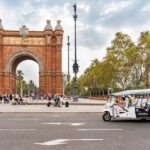
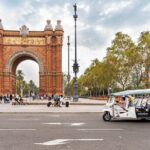
Finally, you’ll see the iconic red-brick arch, built as the grand entrance to the 1888 Barcelona Universal Exposition. Today, it stands as a symbolic gateway to the historic heart.
This is a helpful closing stop because it adds a non-Gaudí layer. The arch connects you to Barcelona’s ambition in the late 19th century and shows how the city marks important events with big public architecture.
It’s also a nice visual “breather” after all the modernist façades. You get a clear structure, a strong silhouette, and a sense of what Barcelona looked like when it was presenting itself to the world.
Guides like Elisa, Isaac, and Dany: why the commentary matters
The standout consistency in the feedback is that the guide experience drives the tour quality. People are praising the clarity of the explanations and the way the guide helps you understand what you’re looking at.
Names that show up in the experience feedback include:
- Elisa, noted for first-rate commentary and insight that helped people plan the rest of their stay
- Isaac, credited with a great two-hour tour and strong knowledge during the ride
- Dany, described as helpful with Catalonia history, comparisons of Catalan vs Spanish, and suggestions beyond the tour
So if you’re choosing between a quick driver-only option and a narrated experience, this one leans toward narration. That matters because Barcelona’s architecture is not just pretty. It’s political, cultural, and personal to the city. A good guide makes those connections without turning the ride into a lecture.
Price and time: when $31.61 feels like a good deal
At $31.61 per person, this tour sits in a category that’s more about value than cost-cutting. You’re paying for convenience (a private tuk-tuk), speed (covering multiple highlights in a short span), and interpretation (English guide commentary).
The duration is listed as 1 to 4 hours, and many people end up doing around the shorter side based on the pace implied by how the route works. That’s key: if you’re on a tight schedule, the value comes from compressing several iconic stops into one morning or afternoon block.
If you’re the type who loves spending hours at one place, you might feel the stops come quickly. But if you want a quick overview so you can choose what to return to, this is the right kind of spending.
Two extra value signals:
- It’s private, so you’re not competing with strangers for the same views and photo moments.
- You get a mobile ticket, which is usually easier than hunting down papers on vacation.
Where this tour fits best (and who should skip it)
I’d book this if you:
- are short on time and want a fast, guided orientation
- want multiple Gaudí and modernist highlights without planning each stop separately
- like learning just enough history to make your walking routes feel smarter
- value a private format for your group
I’d think twice if you:
- want a slow, museum-like pace with long indoor stays
- hate being in motion and prefer to linger at fewer sights
- expect the tour to function like separate ticketed entrances at every stop
In other words, this tour is excellent at the “see it, understand it, then go deeper” stage.
Should you book this Barcelona Essentials private tuk-tuk tour?
If your goal is to get oriented quickly and see a concentrated slice of Barcelona’s architecture—Sagrada Família, Casa Batlló, Casa Milà, and more—this is a strong choice. The high satisfaction numbers (a 4.8 rating with 93% recommending) line up with what you’d want from this format: easy logistics, major sights, and guides who explain what you’re looking at.
Book it when:
- you’re in the early days of your trip
- you want a guided hit-list before you spend more time on your favorites
- you prefer a private ride over group bus time
Skip it when:
- you want long interior visits at every stop
- you need a very calm, slow tour with minimal driving
If you’re unsure, choose the shorter end of the time window and use what you learn to plan the rest of your Barcelona days.
FAQ
How long is the Barcelona Essentials private tuk-tuk tour?
The tour duration is listed as 1 to 4 hours (approx.).
What’s the price per person?
The price is $31.61 per person.
Is this tour private or shared?
It’s a private tour/activity, meaning only your group participates.
Where does the tour start?
It starts at Carrer de la Diputació, 338, Eixample, 08009 Barcelona, Spain.
Does the tour end somewhere else?
No. The activity ends back at the meeting point.
What language is the tour offered in?
The tour is offered in English.
Do I get a mobile ticket?
Yes, it includes a mobile ticket.
Which major sights are included?
The route includes the 1914 bullring façade, Sagrada Família, a Josep Puig i Cadafalch modernist building on Diagonal Avenue, Gaudí’s UNESCO World Heritage Site building with wrought-iron balconies and an undulating façade, Casa Batlló, Plaça de Catalunya, and the Arc de Triomf.
Can most people participate?
The information says most travelers can participate.
Is free cancellation available?
Yes. You can cancel up to 24 hours in advance for a full refund.
How close is the meeting point to public transportation?
The meeting point is listed as near public transportation.