REVIEW · BERLIN
One Up to 3 Rickshaws(6 GUESTS)-Taylor Made Rickshaw Berlin Tour
Book on Viator →Operated by Berlin-Rickshaw / Berlin-Excursions · Bookable on Viator
Berlin in a rickshaw beats bus lines. This private 3-hour tour is built to save time and keep you from getting lost, because you’re rolling with a driver and a guide who handles the route. I also love the option to ride in a way that feels personal—either solo or in pairs—so the day fits how you like to travel. The one catch: each stop is timed, and the Berliner Fernsehturm admission isn’t included, so you’ll mainly see it from the outside unless you book the tower separately.
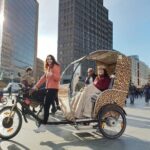
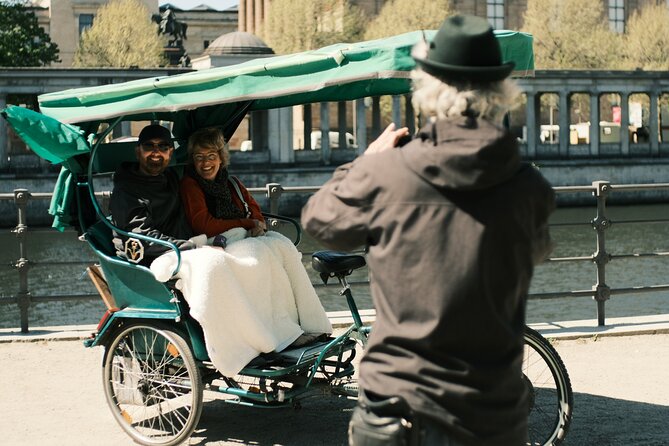
What makes this tour feel practical is the “make it yours” mindset. You can stop for photos anywhere you want, and you’re close enough to landmarks that you won’t feel locked behind glass. You’ll also have Wi‑Fi on board and a cozy blanket if you’re choosing rickshaw transport, which sounds small until you’re actually riding around Berlin in cool weather.
In This Review
- Key things to know before you ride
- Why this rickshaw format works in Berlin’s big-city maze
- The private guide experience: more flexible than it sounds
- Alexanderplatz to Museum Island: getting bearings fast
- Unter den Linden to Bebelplatz and the Gendarmenmarkt contrast
- From Checkpoint Charlie to Topography of Terror: intense stories, short walks
- Potsdamer Platz to the Holocaust Memorial: from modern city blocks to moral weight
- Brandenburg Gate and the government district: seeing how power became a landmark
- How to plan your 3 hours: what matters most for comfort and photos
- Who this tour is best for (and who should skip it)
- Should you book this Rickshaw Berlin Tour?
- FAQ
- How long is the Rickshaw Berlin tour?
- What sights do you see during the tour?
- Are tickets included for Berliner Fernsehturm?
- Is admission included for the other stops?
- Is pickup available?
- Is the tour private?
- What language is the tour in?
- Is there Wi‑Fi during the ride?
- Can you choose to ride alone or in pairs?
- Are service animals allowed?
- Is tipping included in the price?
Key things to know before you ride
- A tight 3-hour loop of top sights: 5–10 minute photo windows that add up fast when time is short.
- Flexible priorities: you can choose which landmarks you spend more time on, based on your interests.
- Frequent “see it, don’t slog” stops: classic Berlin—from Alexanderplatz to Wall sites to memorials—without walking across the whole city.
- Most admissions are free: you’re not paying at many stops; the one notable exception is the TV Tower.
- Photo-friendly approach: your guide can pull over so you can take pictures, and you don’t have to step out every time.
- Private, tailored group experience: only your group participates, and the tour can work for less mobile guests with only a few steps to enter.
Why this rickshaw format works in Berlin’s big-city maze
Berlin is wonderful, but the distances and layout can make a short visit feel chopped up. This rickshaw setup is basically a solution to that problem: you get a clear route, you sit comfortably, and you still get meaningful sight stops instead of just driving past things at speed.
I like that the “driver for the day” concept isn’t just about transportation—it changes how your brain handles the city. You’re not spending time figuring out which tram to take, where to cross, or whether you’ll end up on the right side of a busy boulevard. The guide plans a route where many of the major sights sit in a logical order, so you’re making progress while you’re sightseeing.
Another big win is how personal the ride can feel. The tour notes that you can ride alone or in pairs, and that matters if you want a quiet day or if you’re pairing up for conversation and shared photos. Add Wi‑Fi on board and the option for a blanket, and the day stops feeling like a “tour marathon.” It’s more like a comfortable guided circuit where you can actually enjoy what you see.
The value angle is also pretty clear. At $420.08 per group (up to 2) for about 3 hours, you’re paying for the guide time plus the rickshaw transportation. Since many stops are free to view (including long stretches tied to museums and memorial sites), a lot of what you’re buying is the logistics and interpretation—not a stack of pricey tickets.
You can also read our reviews of more tours and experiences in Berlin.


The private guide experience: more flexible than it sounds
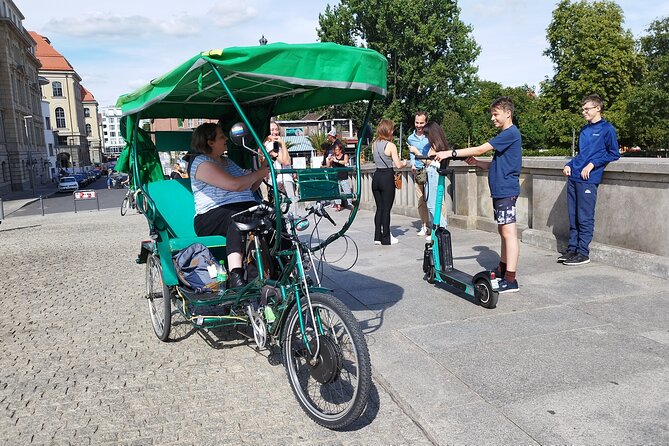
This is a private tour, so it doesn’t feel like you’re being rushed through a script. The tour is described as tailored even during pickup: your guide can adjust the plan based on what you’re already seeing in Berlin, and you can influence where you spend more time. That flexibility matters because Berlin isn’t the kind of city where one “perfect itinerary” fits everyone.
The guiding style also stands out in the names and comments included with the experience. People specifically praised friendly, upbeat guiding and a strong ability to connect the sights to the stories around them. One named guide, Levent Aydin, is credited with making the day feel fun and unforgettable, and another named driver, Tille, is praised for being helpful and getting to places people wouldn’t think possible. There’s also a repeated theme of smart photo stops—one description even notes the guide is almost a great professional photographer. That usually means you’ll get practical “stand here, angle it like this” guidance without making the day stiff.
Still, I’d keep expectations honest: timed stops mean you’re not doing deep museum visits at every location. You’re getting orientation, context, and photo access, plus the chance to linger where the guide decides it makes sense for your interests. If you want long indoor time at multiple museums, you’d likely pair this with a separate museum block. But if you want a clear, high-impact day, this format nails that.
Alexanderplatz to Museum Island: getting bearings fast
The tour starts at Berliner Fernsehturm, Berlin’s tallest structure, right by Alexanderplatz. This is a smart way to begin because it gives you a visible anchor point for the rest of the city. You get about a 5-minute stop here, and it’s important to know that admission isn’t included. Translation: you can see the tower and surrounding square, but if you want the interior/view experience, you’d need to arrange that separately.
From there, you head to Rotes Rathaus and pass major sights on the way toward Museum Island. The path is described as scenic and structured: you’ll pass the Red Town Hall, Marien Church, and Neptunes Brunn, then arrive at the UNESCO World Heritage Site of Museum Island.
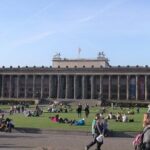
Museum Island is where Berlin’s public “cultural power” becomes obvious. Expect around a 10-minute stop, with views and photo opportunities connected to Unter den Linden (the historic boulevard) and multiple museum buildings. The tour mentions the Berlin Cathedral, the unfinished reconstruction of the City Palace, the Old Museum, Old National Gallery, Pergamon Museum, and Bode Museum. Even if you’re not going inside, that’s a lot of major architecture to clock in a short amount of time—plus, your guide can help you understand why these buildings sit together and what they represent.
If you’re the type who likes to plan future museum visits, this is a great moment to do it. You’ll likely spot which museum facades you want to return to on a different day. The only drawback is that 10 minutes is not enough to do a meaningful indoor museum review—so treat this as a “choose your next stop” moment.
Unter den Linden to Bebelplatz and the Gendarmenmarkt contrast
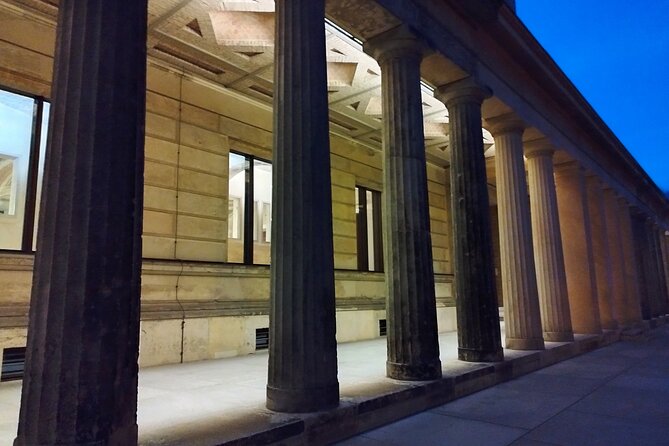
After Museum Island, you move to Bebelplatz, where the tour is tied to memory and education. Expect about 5 minutes. The tour points out a forum area linked to Humboldt University’s institutions, including the State Library and St. Hedwig’s Cathedral, then brings you to the exact place made infamous by the Nazi book burning in 1933 (25,000 books). There’s also a memorial here connected to that event.
This is one of those stops where a quick visit can still land because the setting is tied to what happened, not just to a pretty square. If you care about modern German history, this is an efficient way to get context without needing a separate lecture schedule.
Then it’s on to Gendarmenmarkt, which is a total tonal shift in the best way. You’ll spend about 10 minutes here, and the tour highlights the former Royal Concert Hall flanked by the German Dom on one side and the French Dôm on the other. The square is described as one of the most beautiful in Europe today, and the key practical point is that it’s visually clear. You get architecture, symmetry, and big-photo potential—plus the guide can point out how the buildings relate to each other spatially.
One small consideration: because both Bebelplatz and Gendarmenmarkt are short stops, you might feel rushed if you usually read slowly. If you want to really take in the memorial details, plan to spend extra time elsewhere afterward—this tour is designed more for breadth than for lingering at a single site.
From Checkpoint Charlie to Topography of Terror: intense stories, short walks
The Berlin Wall story is handled as a sequence of major reference points, and the pacing is practical. You’ll stop at Checkpoint Charlie for about 5 minutes, then move along the former border strip toward Topography of Terror for another short stop (about 5 minutes), with additional nearby references including Martin-Gropius-Bau and the Prussian Parliament.
Checkpoint Charlie is one of the most famous border crossings tied to Cold War tensions. You’ll see it as a symbol—important because it’s instantly recognizable—and the guide can connect why moments like this mattered politically, not just geographically.
Topography of Terror is where the experience becomes more documentary in tone. The tour describes it as one of the most frequently visited documentation centers about the period of National Socialism, and it also references the former headquarters of the SS and Gestapo. Even if you don’t go deep into exhibits during a timed stop, being brought to the location helps you understand the “why” behind the museum and memorial approach.
If you’re looking for a purely emotional visit, you might want a longer, museum-focused day afterward. But as part of a 3-hour circuit, this section gives you the key locations so you don’t leave Berlin only remembering famous names without understanding what they connect to.


Potsdamer Platz to the Holocaust Memorial: from modern city blocks to moral weight
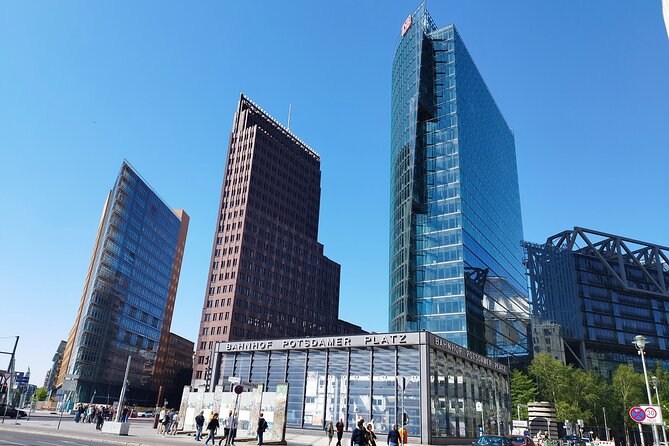
Next you’ll roll into Potsdamer Platz, with about 10 minutes here. The tour notes that it has been Europe’s largest construction site ever since the fall of old structures, and you’ll see an ensemble of skyscrapers and futuristic buildings, including the Sony Center. This stop acts like a reset. After the Wall and WWII-era sites, Potsdamer Platz shows the city’s post-reunification shape.
The Holocaust Memorial—also called the Memorial to the Murdered Jews of Europe—comes next, with about 10 minutes. It’s listed as free admission. This is where Berlin shifts into moral gravity. Because it’s an outdoor memorial setting, you don’t need ticket lines to access it, and it works well inside a timed tour. You can still walk among the elements at your own pace even if you only have a short window.
A practical tip: bring a moment of quiet expectation. This is not a “quick photo and go” site. You can still take pictures, but it’s more meaningful if you let yourself pause and absorb what’s around you.
Brandenburg Gate and the government district: seeing how power became a landmark
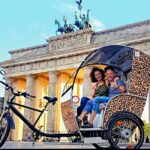
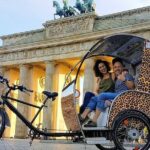
After the memorial, the tour reaches Brandenburg Gate for about 10 minutes. This is one of Berlin’s biggest icons, and the value here is both visual and historical. The gate isn’t just a postcard. It’s a marker for eras—what was controlled, what was rebuilt, and how Berlin kept becoming itself through political change.
Then the route continues into the government district area for views connected to the Reichstag/Bundestag and the Chancellery. You’ll have about 5 minutes here, and the tour also notes a stop connected to Fuhrerbunker (described as now a parking). That mention is a reminder that the city isn’t only architecture; it’s layers. Even locations that look ordinary today can carry enormous weight.
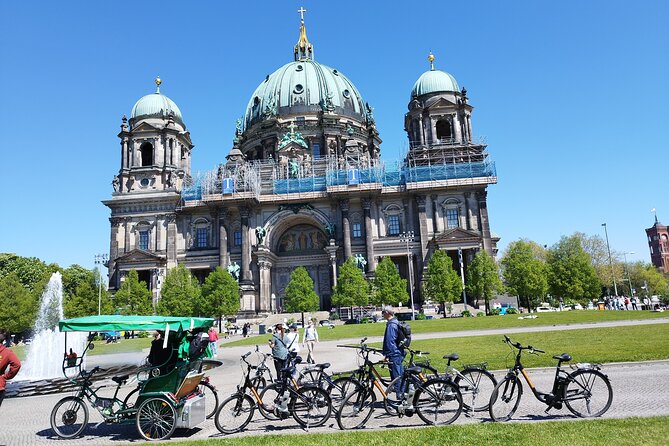
Finally, you’ll reach Berliner Dom for about 10 minutes. The tour lists it as free to view, and it’s a classic “big dome” finish that gives you something visually uplifting after a heavy stretch. It also helps to close the loop on Berlin’s ceremonial side—cathedral, government, memorial, and the gate—all within a single guided arc.
How to plan your 3 hours: what matters most for comfort and photos
A short, high-impact tour like this works best when you set yourself up for success. Here’s how I’d plan around it:
- Wear comfortable shoes even if you’re rickshaw-first. Some steps and crossings may require short walking segments.
- Bring a light layer. There’s a blanket option if you’re riding in the rickshaw, but Berlin weather can change fast.
- If you want the Berliner Fernsehturm view from inside, budget for that separately. The tower admission isn’t included, so you’ll mainly be sightseeing outdoors during this stop.
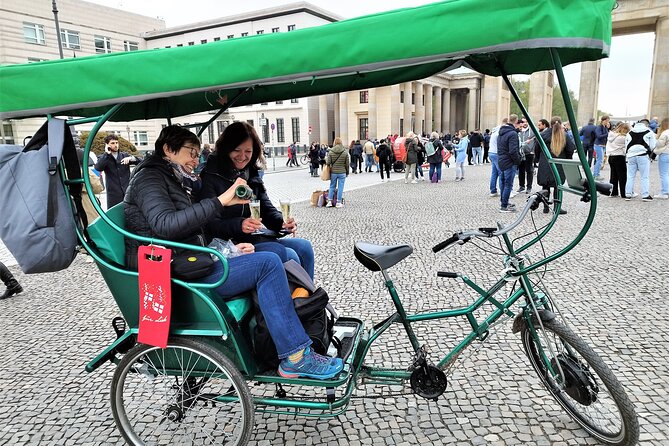
- Think photo-first. The tour notes you can stop anywhere you’d like for memorable pictures, and you can even get very close—sometimes without stepping out of the rickshaw and even touching monuments. That’s ideal for people who hate photo-tension and want clear, close access.
One more practical note: since this is a private tour tailored to your interests, you’ll get more out of it if you arrive with a short list of priorities. For example, tell the guide if you care more about architecture, Wall-era sites, or memorials. The guide can then decide where to spend a bit more time as the route unfolds.
Who this tour is best for (and who should skip it)
This is a great match if you want to:
- See a large slice of central Berlin in a short time without navigating on your own
- Get a guided explanation at key locations, including Wall sites and memorials
- Travel in a more comfortable way than constant walking or crowded group transit
- Appreciate photo-friendly stops where you can get close to monuments
It’s also a smart pick if you value a friendly, flexible guide. The included guide names—like Levent Aydin and Tille—show that people remember not just the route but the personality and helpfulness behind it.
You might skip it if your top priority is long museum time or if you want to repeatedly go inside major buildings. The stop durations are short by design, and most admissions you’ll see are free to access only in the sense of viewing/visiting the site quickly, not doing extended interior tickets at every stop.
Should you book this Rickshaw Berlin Tour?
I’d book it if you’re trying to make the most of a limited stay and you want one guided day that covers Berlin’s big emotional and architectural beats—TV Tower, Museum Island, Wall-era sites, memorials, Brandenburg Gate, and the domed finish.
I would not book it if your visit includes multiple museum days you’re already committed to, and you prefer to control pacing down to the minute. In that case, you might do Berlin museum neighborhoods on your own schedule and add only a partial sightseeing day with a guide.
Bottom line: for $420.08 per group (up to 2), the best value is how much ground you cover in about 3 hours, plus the comfort and close photo access. If you want a structured, low-stress way to get your bearings and then decide what to return to, this is a strong bet.
FAQ
How long is the Rickshaw Berlin tour?
It runs for about 3 hours.
What sights do you see during the tour?
You’ll stop at major places including Berliner Fernsehturm, Rotes Rathaus, Museum Island, Bebelplatz, Gendarmenmarkt, Checkpoint Charlie, Topography of Terror, Potsdamer Platz, the Holocaust Memorial, Brandenburg Gate, the Reichstag/Bundestag government district area, and Berliner Dom.
Are tickets included for Berliner Fernsehturm?
Admission tickets are not included for the Berliner Fernsehturm stop.
Is admission included for the other stops?
The tour notes admission is free for many of the stops along the route.
Is pickup available?
Pickup is offered, with additional pickup details available.
Is the tour private?
Yes. It’s a private tour/activity, and only your group participates.
What language is the tour in?
The tour is offered in English.
Is there Wi‑Fi during the ride?
Yes, Wi‑Fi is available on board.
Can you choose to ride alone or in pairs?
Yes. You can choose to ride alone or in pairs.
Are service animals allowed?
Yes, service animals are allowed.
Is tipping included in the price?
No. Tips are not included.