REVIEW · BERLIN
Individual City Tour – Rickshaw Sightseeing in Berlin
Book on Viator →Operated by myVeloTour Berlin (L. Daloiso) · Bookable on Viator
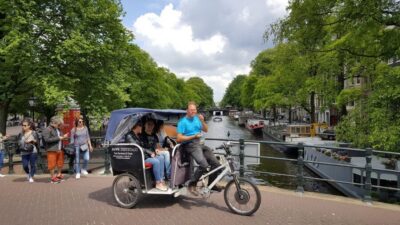
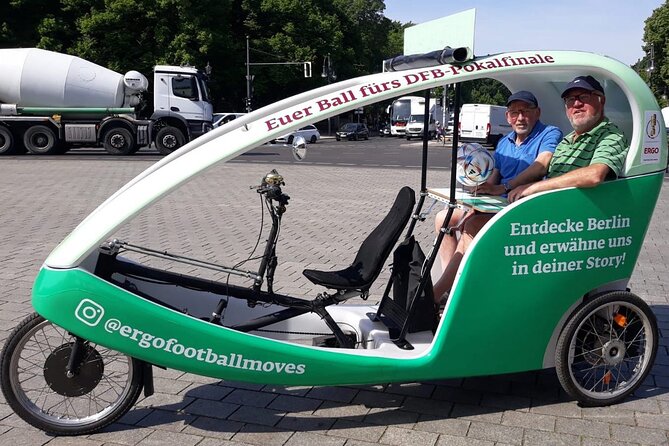
A rickshaw makes Berlin feel easy. This private ride threads you through major landmarks and Wall-era stops without the slog, with warm blankets helping on cold days and Leo guiding the story as you move.
I especially love the time-saving route: you get a fast, human-scale orientation, plus stops for photos and quick views, not a forced museum day. And I like how the pace stays flexible, so you can steer the day toward what your group cares about.
One drawback to plan for: a few sights have entry you’d pay separately if you want to go inside, like Museum Island and a couple of government/monument areas, and drinks aren’t included.
In This Review
- Key highlights to look for
- Private Rickshaw Style: seeing Berlin without walking the whole city
- Where it starts at World Time Clock, then quickly turns into a story
- East Berlin memory lane: Weltzeituhr, Nikolaiviertel, and the GDR-era contrast
- Museum Island and Bebelplatz: culture stops that still pack strong meaning
- Hackesche Höfe and Gendarmenmarkt: pretty courtyards and grand squares
- Checkpoint Charlie and Palace of Tears: border realism at walking speed
- Topography of Terror to Potsdamer Platz: Wall traces and modern junction energy
- Tiergarten and the Victory Column: a long ride that feels like a breather
- Bellevue Palace and the Government District: present-day power along the Spreebogen
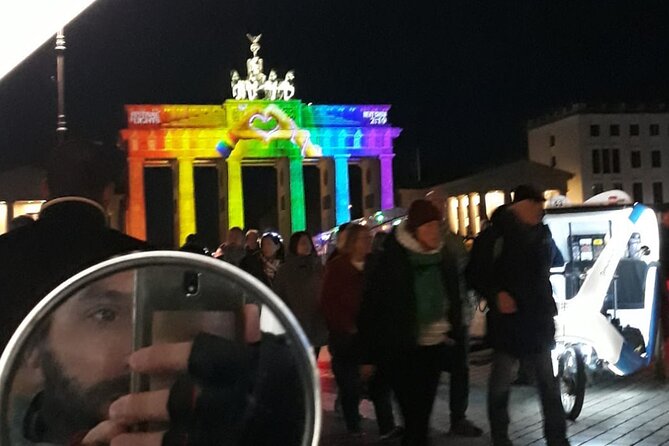
- Brandenburg Gate: the final “big picture” with division-to-unity context
- Pace, comfort, and route flexibility: how to get the day you want
- Price and value: why $53.21 can make sense for Berlin’s layout
- Who this tour fits best (and who might prefer something else)
- Quick practical tips so your day goes smoothly
- Should you book this Rickshaw tour?
- FAQ
- How long is the Individual City Tour by rickshaw in Berlin?
- What is the price per person?
- Is the tour private?
- Do you get pickup from hotels?
- Are the tour guides fluent in English?
- Are entry tickets included for every stop?
- Are drinks included during the tour?
- What comfort items are provided for cold weather?
- What is the cancellation policy?
- FAQ (more about practical details)
- Are service animals allowed on this tour?
- Is the tour suitable for most travelers?
Key highlights to look for
- Private party only: your rickshaw time is just for you, not a mixed group shuffle.
- Cold-day comfort: blankets are provided, and on very chilly outings the guide has been known to bring extra warmth like hot water bottles.
- Route that can bend: you can personalize the track depending on your interests and timing.
- Wall and border memory, up close: places like Checkpoint Charlie, the former crossing area at Bahnhof Friedrichstraße, and Topography of Terror help you visualize how Berlin worked when it was divided.
- Easy “first-day bearings”: it’s a great way to map the city before you pick which neighborhoods to explore longer.
- Good photo windows: the stops are built for quick stops and angles, especially when skies are low and shadows are long.
Private Rickshaw Style: seeing Berlin without walking the whole city
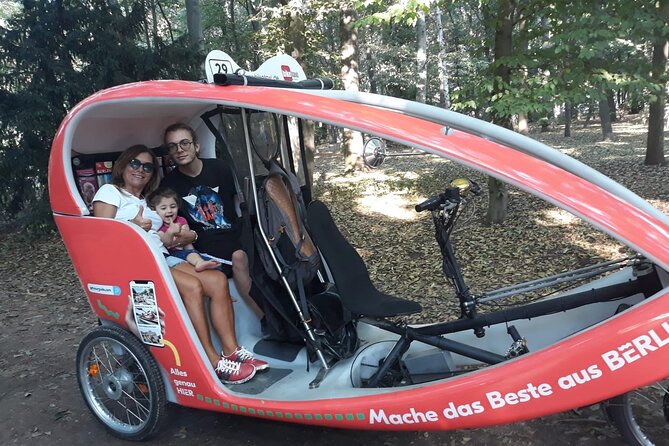
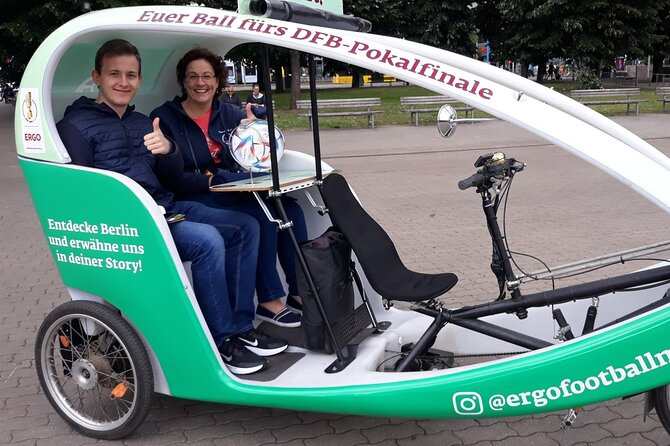
Berlin is big, and its highlights are spread out. This tour solves that with a private rickshaw format that gets you close to famous spots without you trudging between them. You still get the city’s “wow” moments, but at a pace that feels manageable.
The biggest comfort win is the cold-weather setup. You’ll be handed a warm blanket, and people report that Leo often shows up with extra heat too, like hot water bottles. That changes everything in winter: you can stay outside for photos and short pauses instead of rushing to the next indoor stop.
You also get the kind of guide attention that group tours often can’t manage. Since it’s private, Leo can answer your questions as they come up, and the ride doesn’t feel like a lecture you’re stuck with. Even better, the tour includes music by request, so you can set a mood if your group likes that kind of touch.
You can also read our reviews of more tours and experiences in Berlin.


Where it starts at World Time Clock, then quickly turns into a story
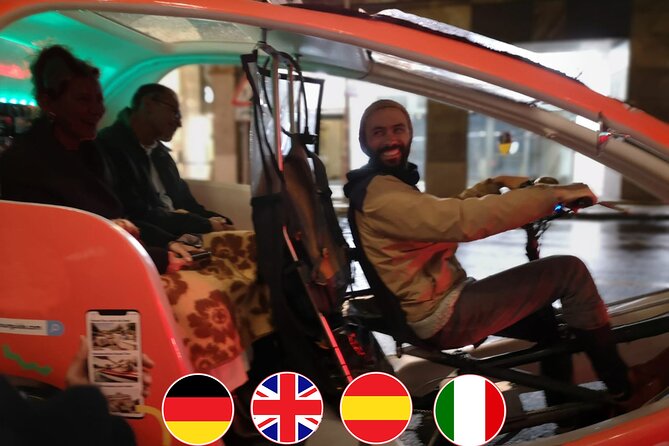
The ride begins at the World Time Clock at Alexanderplatz. That location matters more than it sounds. It’s a busy hub with plenty of foot traffic, and it also sits at a crossroads of Berlin past and present, which is a natural launch point for a route built around divided-city history.
From there, you move through several “layered Berlin” areas in a logical sweep: East-of-center history, then the core cultural zone, then border memory and Wall traces, and finally toward the broad boulevards and grand squares by the center-to-west pivot. In plain terms: you get a coherent tour arc instead of random hopping.
This is also where the rickshaw shines. You’re not just getting driven between points. You’re able to stop, look, and ask questions without committing to long walks between each stop. That’s a real help if your group includes kids, people with mobility limits, or anyone who simply wants a smarter sightseeing day.
East Berlin memory lane: Weltzeituhr, Nikolaiviertel, and the GDR-era contrast
First you hit Weltzeituhr, a well-known meeting spot on Alexanderplatz. The clock itself is famous, but what makes this stop useful is the context around it: you’re positioned between the city’s older border story and the former center of the GDR capital. It’s a clean way to set up the Berlin you’re about to see.
Next comes Nikolaiviertel, described as the oldest settlement site in the twin-city area of Berlin-Cölln. It was heavily damaged in World War II, then rebuilt for the city’s 750th anniversary. That “history rebuilt after destruction” angle is one of the reasons this stop works well early in the ride: it reminds you that Berlin’s look today is often the result of decisions made after trauma.
Practical tip for you: treat these first stops as orientation. Let Leo point out what you’re seeing and how it connects. Once you’ve got that mental map, the later border and Wall reminders land harder.
Museum Island and Bebelplatz: culture stops that still pack strong meaning
Museum Island is next, and it’s a World Heritage area commissioned by the Prussian kings, listed by UNESCO since 1999. If you’re curious about “why Berlin has so much monumental culture,” this is where you start making sense of it. You’ll also find the Berlin Cathedral and the new Berlin Palace nearby, so even a short view gives you a sense of how the area is organized.
Here’s the practical catch: admission is not included for this stop. That doesn’t ruin the experience. Most people use this portion as a photo and overview moment, then decide later whether they want a ticketed museum detour.
Bebelplatz is the next big “pause and think” stop. It’s tied to May 10, 1933, when books were burned. The square includes an empty library memorial that marks that moment, and it’s also described as a place for culture even now. This is one of the stops where the rickshaw time feels extra valuable because you can spend a couple minutes looking while Leo explains the setting without you needing to read everything at once.
If your group likes stories, you’ll likely enjoy how Leo connects the design of the spaces with what happened there. If your group prefers pure sightseeing, you’ll still get landmarks and good angles.
Hackesche Höfe and Gendarmenmarkt: pretty courtyards and grand squares
Then you slide into Hackeschen Höfe, an area known for its enclosed courtyard setup. It’s described as the largest such courtyard area in Germany, with a mix of youthful-style facades and smaller backyard-like views. This is a nice contrast after the heavier border and memory stops because courtyards feel more human-scale.
Keep expectations realistic: even though the rickshaw can get you close, the courtyards are still a place where you’ll likely want a little foot wandering if you want the full effect. If you want a quick look, you’ll be fine. If you want to explore every back passage, you’ll need extra time on your own afterward.
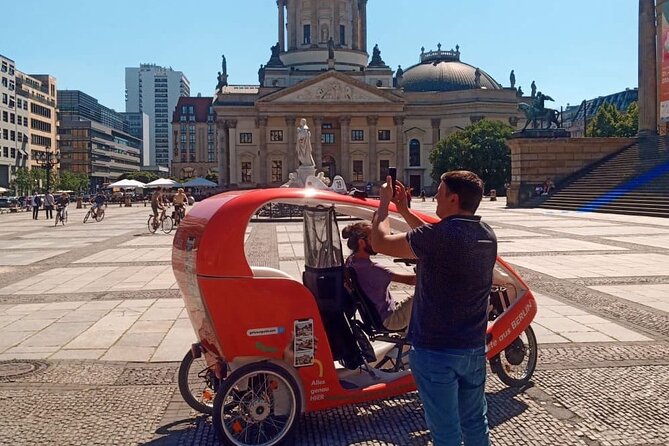
After that, you reach Gendarmenmarkt, often framed as one of Berlin’s most beautiful squares. It’s an ensemble of concert hall and churches with towers. The value here is visual. You get the symmetry and “big square” feeling without having to pick your way through crowds across long distances.
If you’re traveling with family, this is also one of the easiest stops to enjoy right away, because it’s impressive even if you don’t know the historical details.

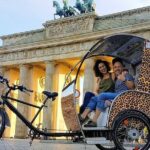
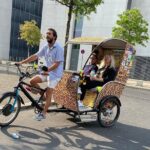
Checkpoint Charlie and Palace of Tears: border realism at walking speed
Checkpoint Charlie is next, and it’s exactly what you’d hope for: a reminder of divided Berlin and the Cold War, and a setting tied to tragic escape attempts. Seeing it from the rickshaw helps you absorb it faster, because you’re not trying to do a long walking tour while mentally carrying the weight of the story.
Palace of Tears follows at Bahnhof Friedrichstraße, described as the former exit hall of a border crossing. You can even walk through the control counters area there. This stop tends to stick with people because it’s tangible. It’s not just a plaque. It’s a built environment that makes you imagine daily movement and daily rules.
Good to know: both of these are part of the stop list with admission ticket free notes, so you’re not forced into extra entry costs just to make sense of the location.
If you want photos, tell Leo your timing goal early. One family-style tip from how people talk about this tour: evenings can give you great photo light, but if you’re trying to cover a lot in one day, afternoon can be easier for pacing and visibility.
Topography of Terror to Potsdamer Platz: Wall traces and modern junction energy
Topography of Terror is where the Wall returns in a very physical way. The key detail is that it includes the longest remaining section of the Berlin Wall still standing in its original state. That one sentence describes why it’s such a powerful pivot point in the tour: it’s one thing to read about division; it’s another to see the wall portion that survived.
After that comes Potsdamer Platz, one of Berlin’s major traffic junctions across the last two centuries. It’s modern now, but the route explanation notes that the city was destroyed by division and that parts of the old Potsdamer Platz are still hidden today. You’re basically looking at layers: past foundations under today’s flow.
This is a good moment to pause and let Leo frame what you’re seeing. When you understand what got disrupted, modern architecture can feel less random and more like an answer to a complicated past.
Tiergarten and the Victory Column: a long ride that feels like a breather
Then you get a longer stretch through Tiergarten, often called the green heart of Berlin. The route passes several named landmarks: the Victory Column, the Office of the Federal President, the House of World Cultures, the Carillon, the Soviet Memorial, and then into the park’s nature areas. That means you’re not just sitting by for a quick photo. You’re getting an overview of the broader civic-and-memorial layout in this section.
Tiergarten also works as a physical reset. After the dense emotional stops, this park time gives you room to look around without feeling like you’re rushing to the next crucial site. It’s also where the rickshaw feels particularly smart: you cover distance while the surroundings change.
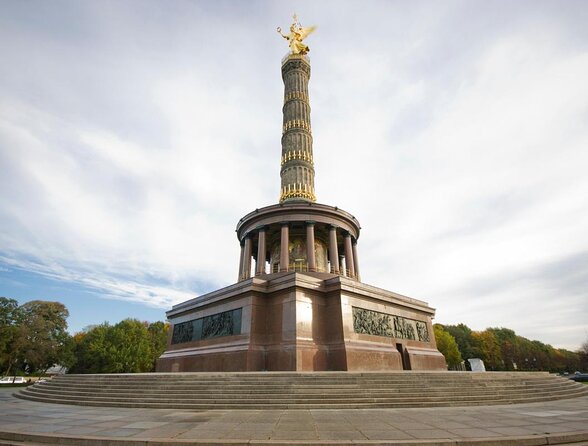
Victory Column comes as a dedicated stop afterward. It’s linked to the Love Parade in the tour description, and it commemorates three important Prussian victories. Up close near it, there are interesting details like the gilded cannons. Admission isn’t included for this stop, so it’s mostly about exterior views and short looks unless you plan extra ticket time on your own.
Bellevue Palace and the Government District: present-day power along the Spreebogen
Bellevue Palace is one of the later stops. It’s described as the first official residence of the German Federal President since 1994. Again, admission is not included here, so treat it as a landmark viewing moment that still helps you understand how Berlin’s political center reads on the ground.
Then you move into the Government District, built around the year 2000 directly on the Spreebogen with the historic Reichstag building. This pairing matters because you’re seeing how old and new Berlin sit side by side in the modern era.
If your interest runs toward architecture and political geography, this portion is likely to feel satisfying. You’re not just going to famous monuments. You’re learning the city’s internal logic.
Brandenburg Gate: the final “big picture” with division-to-unity context
Unter der Linden leads you to Brandenburg Gate, described as the only surviving city gate in Berlin. It has also shifted meaning over time: once a memorial to division, later a symbol of unity, and today a national symbol. This is one of the most important stops on the list because it ties the whole tour together.
When you reach the Gate after stops like Checkpoint Charlie and Topography of Terror, the symbolism lands better. You’ve already seen how division controlled movement. Now you see the landmark used to represent a different future.
For photos, you’ll likely want a clear window to step off just long enough to get the shot. If it’s cold, lean into the rickshaw comfort so you’re not rushing. You’re already close to everything needed for a strong finale.
Pace, comfort, and route flexibility: how to get the day you want
This tour runs about 1 to 3 hours, depending on the version you choose and how your group moves. Shorter rides are ideal for first-timers who want the highlights in one clean loop. Longer rides make sense if you want more time at key stops for photos and questions.
The route is described as flexible. In practice, that means you can personalize the route based on interests. People mention that the guide can pivot based on what a teenager wants to focus on, or adjust plans to avoid doubling up with a next-day activity. So if you already have a museum or a neighborhood planned, tell Leo your direction at the start and you can often avoid repetition.
Comfort details are not small here. Cold-weather riders have been very happy with the blankets, and some notes mention hot water bottles arriving for extra warmth. Also, the rickshaw can access areas you might not reach easily by bus or car, which makes the tour feel more personal and less like a drive-by slideshow.
Drinks aren’t included, and you can order them separately. That’s normal for a short sightseeing format, but it’s still worth thinking about beforehand so you’re not surprised.
Price and value: why $53.21 can make sense for Berlin’s layout
At about $53.21 per person, the value depends on what you’d otherwise do. If you’re trying to cover Brandenburg Gate, Wall memory sites, courtyard areas, and a long Tiergarten stretch in one day, walking or piecing together multiple transport options can eat up time fast. The rickshaw format reduces that “time cost,” which is often what really matters in a short trip.
You also get a private experience, not a shared group situation. That means more direct time with Leo and more chances to ask questions without feeling rushed. When your guide is also adapting the route to your interests, you’re paying for both transportation and interpretation.
The other value angle is comfort. Warm blankets (and often extra warmth) mean you can tour more days of the year without turning your trip into a battle against cold.
One note to budget for: admission is not included for certain stops like Museum Island, Victory Column, and Bellevue Palace. If those matter to your group, you’ll likely want to plan tickets in addition to the tour price. If you mainly want viewpoints and guided context, you can keep costs under control.
Who this tour fits best (and who might prefer something else)
This tour is a strong match if you want an efficient orientation day. It’s also a good choice if you’re traveling with mixed ages, including kids, or if someone in your party has mobility challenges. People specifically mention help getting on and off the rickshaw for bad knees, plus the ability to bring a walker.
It’s also ideal if you want a guided version of Berlin that connects sites to the bigger story of division and unity. If you’re the kind of traveler who likes to understand what you’re seeing (and not just snap photos), you’ll get a lot out of Leo’s explanations at each stop.
If you’re the type who wants long museum time and deep ticketed interiors, you might find this tour more like a framework than a full day of paid attractions. But as a “map it first” experience, it works well.
Quick practical tips so your day goes smoothly
- Use the tour to get your bearings fast, then choose one or two areas for deeper exploring later.
- If you’re sensitive to cold, lean into the blanket and ask for extra warmth if needed before you start.
- For photos, consider timing your tour for later in the day if you like softer light, but plan your energy level if it’s a long winter evening.
- If your hotel is beyond the included pickup radius, expect additional charges for extra distance. The tour notes pickup is free within 2 km from Museum Island, and further km cost 5 €/km.
- If you have a theme, mention it at the start. The route can be personalized, so your priorities matter.
Should you book this Rickshaw tour?
If you want a Berlin highlights loop that’s calmer than walking and smarter than bouncing between stops on your own, I think this is an easy yes. The private format, strong historical stop selection, and cold-weather comfort turn it into a practical first-day plan, especially if you’re balancing sightseeing with energy limits.
Book it if you like guided context at recognizable landmarks, and if you want to stand in the places where Berlin’s division and reunification story becomes real. Skip it only if your main goal is paid museum interiors and you’re already set on doing those at length. For everyone else, this is a comfortable way to see a lot of Berlin without feeling like you’re just racing from one site to the next.
FAQ
How long is the Individual City Tour by rickshaw in Berlin?
It runs from about 1 to 3 hours, depending on the option you book.
What is the price per person?
The price is $53.21 per person.
Is the tour private?
Yes. It’s a private tour/activity, and only your group participates.
Do you get pickup from hotels?
Pickup is offered from hotels or other locations within a radius of 2 km from Museum Island free of charge. Any further distance is charged at 5 €/km.
Are the tour guides fluent in English?
Yes. The tour is offered in English.
Are entry tickets included for every stop?
No. Some stops list admission as not included, including Museum Island, the Victory Column area, and Bellevue Palace. Other stops are marked free.
Are drinks included during the tour?
No. Drinks can be ordered separately.
What comfort items are provided for cold weather?
A warm blanket is provided.
What is the cancellation policy?
Free cancellation is available up to 24 hours in advance for a full refund.
FAQ (more about practical details)
Are service animals allowed on this tour?
Yes. Service animals are allowed.
Is the tour suitable for most travelers?
Most travelers can participate, and the rickshaw helps reduce long walking between stops.