REVIEW · BERLIN
Rickshaw Sightseeing City Tours Berlin – Rikscha Tours
Book on Viator →Operated by Rikscha & Bier Bike & Party Beer Bike - Leo Rickshaw Tours · Bookable on Viator
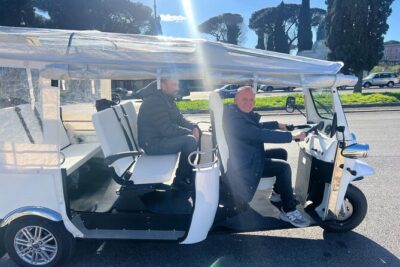
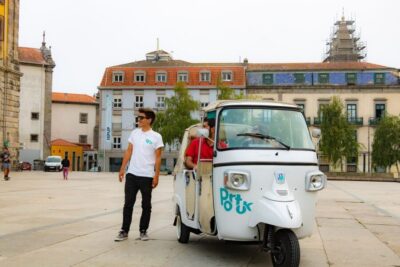
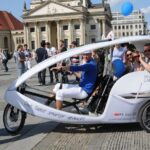
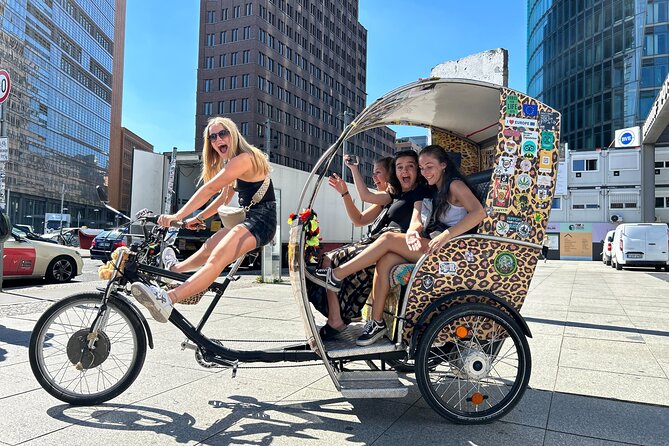
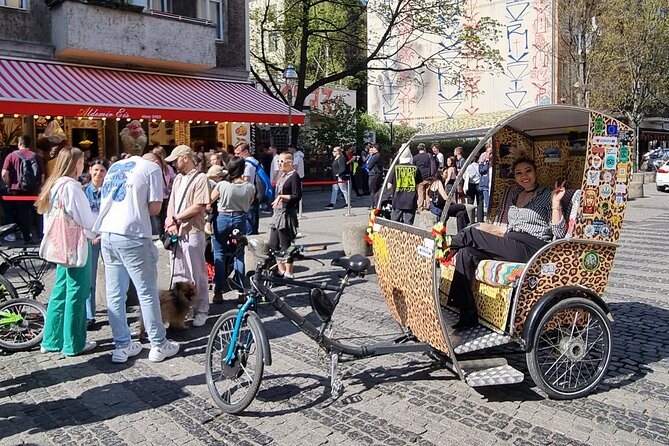
Rickshaw rides make Berlin feel close. This private Berlin rikscha tour lets you glide past the famous landmarks and still pause for the kind of details you miss from a bus, with onboard Wi‑Fi and a guide who keeps things moving.
I love the onboard Wi‑Fi—it’s oddly helpful when you’re hopping between neighborhoods and want quick map checks or to share photos right away. I also appreciate the warm blanket for chilly evenings, which makes a fast ride feel comfortable instead of rushed.
One possible drawback: I’d run with a Plan B. There have been cases where the operator didn’t show up or communication was slow, so build in a little buffer time before dinner or a later appointment.
In This Review
- Key highlights at a glance
- Why a rikscha works better than a bus in Berlin
- Price for up to two: when this tour feels like a smart buy
- Route walkthrough: from Brandenburg Gate toward Reichstag and Tiergarten
- Brandenburg Gate: German classicism in sandstone
- Reichstag/Bundestag: where power and conflict intersect
- German Chancellery: modern design that feels intentionally open
- Tiergarten and the Soviet War Memorial: tanks, names, and graves
- Tiergarten stroll mood: from royal pleasure grounds to public park
- Potsdamer Platz and the slice of post-wall Berlin you can actually feel
- WW2 to the Wall: Topography of Terror, the Berlin Wall memorial, and Checkpoint Charlie
- Topography of Terror: the Nazi terror machinery, located in one place
- Gropius Bau: art and photography stop (if you want it)
- Memorial of the Berlin Wall: a reminder you can’t ignore
- Checkpoint Charlie: border drama made famous
- Friedrichstraße: the shopping mile that grew after the fall
- Gendarmenmarkt classics: Deutscher Dom and Konzerthaus on the same stretch
- Gendarmenmarkt: French Huguenot roots and a guard regiment
- Deutscher Dom: parliamentary democracy, shown over multiple floors
- Konzerthaus: classicist architecture built for public life
- Bebelplatz to the New Synagogue: the city’s memory stops
- Bebelplatz: book burning as a memorial
- Neue Wache: memorial for victims of war and tyranny
- Museum Island and the old-town pocket around Nikolaiviertel
- Museum Island: UNESCO-level museum complex
- Berlin Cathedral and Lustgarten: palace leftovers and a big church view
- New Synagogue on Oranienburger Straße: a major Jewish landmark
- Nikolaiviertel: Berlin’s oldest residential feel
- Alexanderplatz to the East Side Gallery: Wall leftovers become street art
- Alexanderplatz: still one of the liveliest intersections
- East Side Gallery: the Wall as an open-air art stretch
- Comfort, music, and photos: what makes the ride feel personal
- Pickup and meeting point: how to avoid wasting your time in Berlin
- Who should book this rickshaw tour
- Should you book Rickshaw Sightseeing City Tours Berlin (Rikscha Tours)?
- FAQ
- How long is the rickshaw sightseeing tour?
- How many people are in a group?
- Is pickup available?
- Is the tour private?
- What’s included during the ride?
- Are admission tickets included for major sights?
- What language is the tour offered in?
- Does it work in cold or chilly weather?
- What about weather cancellations?
- Is there free cancellation?
Key highlights at a glance
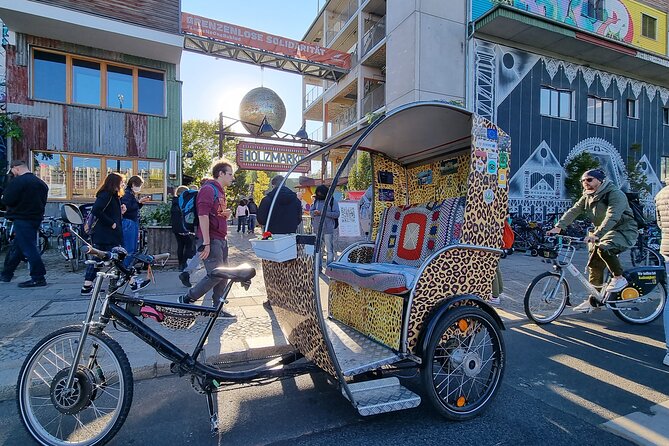
- Close-up landmark views that you won’t get from a bus
- Onboard Wi‑Fi so you can check directions and post as you go
- Warm blanket comfort for evening rides
- Music on request to set the mood while you’re rolling
- A built-in photographer moment for your group photos
- Private tour for up to two with pickup near Brandenburg Gate
Why a rikscha works better than a bus in Berlin
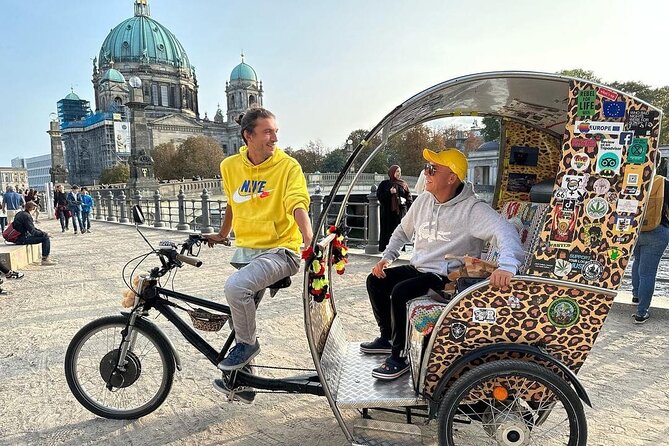
Berlin is big, and a bus tour can feel like you’re watching the city through a windshield. On a rickshaw, you move slower when it matters, and you can get closer to the facades, plaques, and viewpoints.
You also get real pacing. Instead of one fixed schedule that barrels onward, you can feel out what you want: a quick photo stop, a longer look, or a “show me this angle” moment.
And yes, it’s fun. It’s not just transportation—it’s a different way to experience the streets, especially around the historic districts where traffic can be annoying and sidewalks can be jammed.
You can also read our reviews of more tours and experiences in Berlin.

Price for up to two: when this tour feels like a smart buy
This tour is priced at $105.72 per group (up to 2). That structure can be a bargain when you’re traveling as a couple, because you’re essentially buying a private guide and vehicle for your time together—not splitting cost across a crowd.
It’s also worth considering your alternative: on your own, you’d likely spend time walking between major stops and lose the chance to cover as many sights in a short window. The rickshaw helps you see a lot without turning your day into a fitness challenge.
Where value gets tricky is the time range. The tour is listed as about 1 to 4 hours, so your best “deal” comes when you maximize that time with the stops you actually care about. If you only want a quick highlights sweep, you may want to confirm you’re choosing the duration that matches your priorities.
Route walkthrough: from Brandenburg Gate toward Reichstag and Tiergarten
The tour starts at Brandenburger Tor (Brandenburg Gate) on Unter den Linden. It’s a solid starting point because it anchors the whole route in the “classic Berlin” core, and you can easily orient yourself before you roll.
Brandenburg Gate: German classicism in sandstone
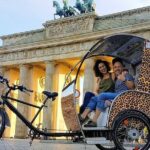
You’ll ride past the Brandenburg Gate—built in the late 1700s using designs influenced by classic Greek forms. It’s one of those landmarks where the details matter: the setting, the scale, and the way it sits right at the center of historic axes.
A rickshaw view helps because you don’t just see it from far away. You get a better angle for photos and a clearer sense of how it frames the streetscape.
Reichstag/Bundestag: where power and conflict intersect
Next up is the Reichstag/Bundestag area, tied to major turning points in German history. The skyline here carries weight—politics, fire, rebuilding, and later symbolism after WWII.
You’ll pass notable moments connected to the building:
- The proclamation of the Republic in 1918
- The Reichstag fire in 1933
- The Soviet symbolism of 1945
This is one of those stops where you’ll probably appreciate staying outside rather than rushing indoors. The ride lets you take in the dome-and-building silhouette without losing time to lines.
Ticket note: the Reichstag/Bundestag admission is not included.

German Chancellery: modern design that feels intentionally open
You’ll also ride by the German Chancellery, described as a tall administration building with a transparent, light feel thanks to large glass sections. Even if you never enter, the architecture explains a lot about how the state wants to project itself today.
This stop works well on a rickshaw because it’s easy to see how the building breaks into segments, rather than getting stuck with a single distant view.
Ticket note: admission is not included.
Tiergarten and the Soviet War Memorial: tanks, names, and graves
Then the route swings toward the Soviet War Memorial in Tiergarten. Flanking tanks (T 34s) and a bronze soldier carrying a rifle is a powerful visual that hits harder than a quick photo would suggest.
What makes the stop meaningful is the list-of-names approach—texts on pillars for fallen soldiers—and the fact that around 2,500 soldiers are buried at the rear.
If you’re the type who likes context, this is a good moment to slow down. It’s not abstract. It’s specific, and it’s right there in front of you.
Ticket note: this part is free.
Tiergarten stroll mood: from royal pleasure grounds to public park
You’ll also hear the background of the area, including the idea of the zoo/park evolution—turning a former hunting ground into a public pleasure park. The route’s description points to how the city’s “green space” identity shifted over time and got shaped by designers like Peter Joseph Lenné.
The helpful part for you: this gives you a reason to notice the park layout instead of just passing trees. You’ll be riding through Berlin’s habit of mixing memorial space with daily life.
Potsdamer Platz and the slice of post-wall Berlin you can actually feel
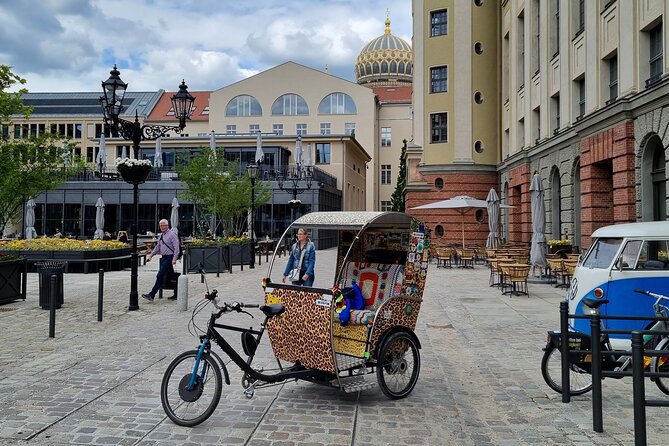
Potsdamer Platz is next. If you’ve only seen it from photos, seeing it from a rickshaw can surprise you—the place is built like a district, not just a single square.
You’ll pass cafes, cinemas, and shops around newer high-rises. It’s the sort of area where people come to hang out, not just to sightsee.
Ticket note: Potsdamer Platz is free.
WW2 to the Wall: Topography of Terror, the Berlin Wall memorial, and Checkpoint Charlie
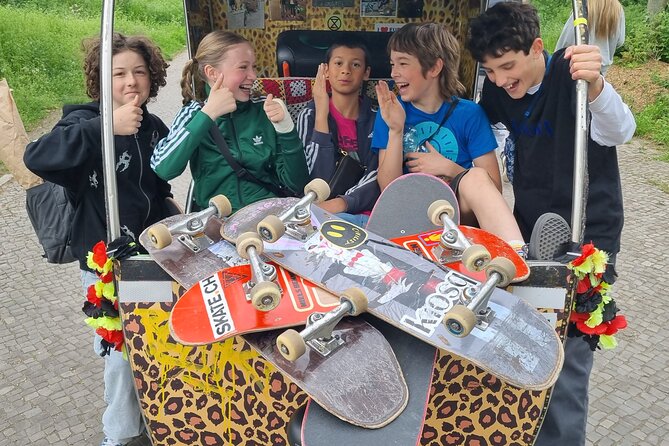
Berlin’s 20th-century story can feel like it’s all in museums. This route makes it feel street-level instead.
Topography of Terror: the Nazi terror machinery, located in one place
You’ll ride by Topography of Terror, the central site tied to planning and control of Nazi crimes. The place is important because it connects institutions and locations, not just ideas.
Ticket note: free for the tour stop.
Gropius Bau: art and photography stop (if you want it)
Next is Gropius Bau, aimed at cultural history and contemporary art and photography. Even if you don’t go in, the building is a good visual breather between heavier memorial stops.
Ticket note: admission is not included.
Memorial of the Berlin Wall: a reminder you can’t ignore
You’ll then reach the Memorial of the Berlin Wall, with a stop designed to keep the history in view. This is one of those places where you may want extra time to absorb what you’re seeing and what’s missing.
Ticket note: admission is not included.
Checkpoint Charlie: border drama made famous
Then it’s Checkpoint Charlie, one of the most well-known crossing points during Berlin’s division. You’ll learn how foreigners and specific officials used it, while other border points worked under different systems.
It’s a famous spot, but it’s also a useful one, because it helps you connect the Wall to real movement—who could cross, and where the rules changed.
Ticket note: this stop is free.
Friedrichstraße: the shopping mile that grew after the fall
The route continues along Friedrichstraße, described as a north-south axis with a popular shopping stretch after the Wall fell. On a rickshaw, you can feel the “shift”: from political boundaries to everyday city life.
Gendarmenmarkt classics: Deutscher Dom and Konzerthaus on the same stretch
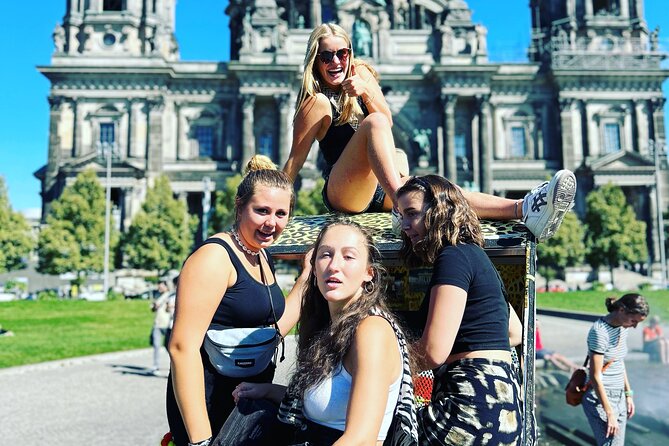
After the border-area stops, the tour moves toward one of Berlin’s prettiest pieces of central planning: Gendarmenmarkt.
Gendarmenmarkt: French Huguenot roots and a guard regiment
You’ll hear how the square was shaped in the late 1600s, tied to French Protestant settlers, and later connected to the “gens d’armes” ward regiment. The changing names over time reflect who controlled the space and why.
On this route, this is a palate cleanser. You get a break from the heavy WWII and Wall topics while still staying in the historic center.
Ticket note: free.
Deutscher Dom: parliamentary democracy, shown over multiple floors
Next is Deutscher Dom, where the permanent exhibition focuses on the development of liberal parliamentary democracy in Germany. Even if you don’t enter, the stop gives you a clear theme shift toward political institutions rather than conflict.
Ticket note: admission is not included.
Konzerthaus: classicist architecture built for public life
Then the Konzerthaus am Gendarmenmarkt. This building is one of Karl Friedrich Schinkel’s main works, and it traces back to an earlier comedy house that became a leading theater.
This is a good place to stop and look up. From street level, the classicist proportions can feel surprisingly calm and controlled compared to the surrounding modern city.
Ticket note: admission is not included.
Bebelplatz to the New Synagogue: the city’s memory stops
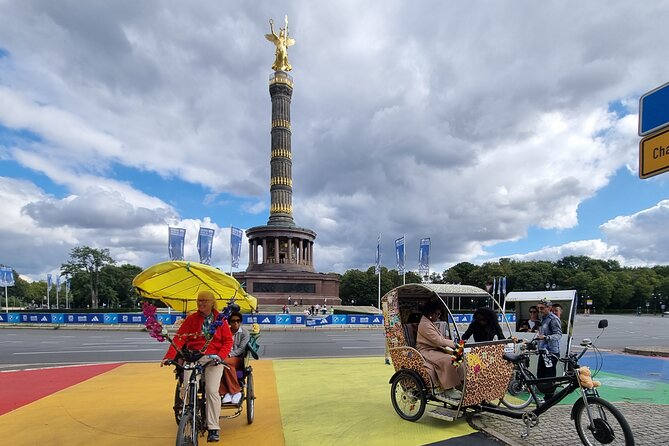
Now you get a strong thread of remembrance and identity.
Bebelplatz: book burning as a memorial
At Bebelplatz, you’ll learn about the Nazi book burning on May 10, 1933, with the idea that the site is now used to memorialize those destroyed works. The scale you’re told—over 20,000 books—helps the moment stop feeling like a slogan.
This is another exterior-focused stop that works well on a rickshaw because you’re not stuck in queues before you’ve even processed the meaning.
Ticket note: free.
Neue Wache: memorial for victims of war and tyranny
You’ll also pass Neue Wache, built in the early 1800s and used as a central memorial for victims of war and tyranny since the 1990s. It’s positioned right by the Zeughaus area (now linked with the German Historical Museum).
If you want to understand how Germany built a public space for remembrance in modern times, this stop is a useful step.
Ticket note: no specific ticket note is provided for the tour stop, so plan on enjoying it from outside unless you decide to check further on your own.
Museum Island and the old-town pocket around Nikolaiviertel
Museum Island: UNESCO-level museum complex
Next is Museum Island, a UNESCO World Heritage museum complex in central Berlin. The tour gives you the quick “why it matters” context: it’s one of Europe’s most notable museum concentrations, and it sits at the heart of the city.
The value of seeing this area from a rickshaw is timing. You can look at where the museums sit, then decide whether you’ll spend your next hours paying entry elsewhere.
Ticket note: free for the stop.
Berlin Cathedral and Lustgarten: palace leftovers and a big church view
You’ll pass the Berlin Cathedral area and the Lustgarten, once part of the Berlin City Palace grounds. The Lustgarten part matters because it helps you grasp how Berlin rearranged power centers after wars and political shifts.
This is a good stretch for photos because the buildings and open square give you clean sight lines.
New Synagogue on Oranienburger Straße: a major Jewish landmark
You’ll also stop to see the New Synagogue on Oranienburger Strasse, described as the largest and most important synagogue in Germany at the time. Even when you only see the exterior, the context makes it feel less like architecture and more like survival and public identity.
Nikolaiviertel: Berlin’s oldest residential feel
Then it’s Nikolaiviertel, Berlin’s first and oldest residential area, plus the old-town style: historic houses, restaurants, and coffee spots near the Nikolaikirche.
This portion is a nice shift toward “Berlin as lived-in.” If your evening plans include food or a relaxed walk, this is where you can get ideas for where to linger afterward.
Alexanderplatz to the East Side Gallery: Wall leftovers become street art
Alexanderplatz: still one of the liveliest intersections
You’ll pass Alexanderplatz, a place that has remained a major hub through different eras of Berlin. On a rickshaw, it’s easier to catch the scale and the rhythm of the area without walking for miles.
East Side Gallery: the Wall as an open-air art stretch
Finally, the route ends with the East Side Gallery, described as a remnant of the Berlin Wall and the longest open-air gallery. This is where the tour’s story arcs from borders and conflict to expression and public art.
Even if you’re not an art museum person, the sheer “Wall-as-canvas” idea helps the historical shift land.
Comfort, music, and photos: what makes the ride feel personal
A lot of Berlin tours are built around information. This one adds comfort and small extras that make the experience easier on your body and better on your camera roll.
- Warm blanket for evening chill, so you don’t rush or clench through the ride.
- Music on request, which can make the trip feel like a tailored evening, not just sightseeing.
- Photographer included, which means you’re not stuck handing your phone to a random passerby.
- Onboard Wi‑Fi, handy for checking where your next stop is, or just sharing as you go.
There’s also a practical upside: because your guide can maneuver the rickshaw through narrower paths, you’re more likely to get angles and stops that buses can’t manage easily.
If you want a specific photo idea—like a particular monument angle or a “family shot” moment—this is the moment to say it clearly at the start. The best outcomes come when you and your guide align on what matters most.
Pickup and meeting point: how to avoid wasting your time in Berlin
You meet at Brandenburger Tor. The tour is set to end back at the meeting point, so you’re not stuck figuring out late-night transport afterward.
Pickup is offered within a 2 km radius from Brandenburgertor. If you’re farther than that, there’s an extra charge stated at €10 per km beyond the radius.
One practical note: because Berlin has lots of pedestrian zones and construction changes, make sure your driver can identify your exact spot quickly. If you’re staying at a hotel, pick a clearly visible entrance or landmark near the road.
And again, given the real no-show issues shown in the operator’s track record, I strongly suggest you confirm close to departure time and keep a backup plan if something feels off.
Who should book this rickshaw tour
This is a great match if you want:
- A private tour for up to two with minimal walking
- Close-up Landmark-first sightseeing, especially around major historic sites
- A guide who can tailor the flow and help with photos
- Comfort features like blankets and onboard Wi‑Fi
It’s less ideal if you:
- Need total certainty on a tight schedule with zero flexibility
- Want a museum-heavy itinerary with guaranteed timed entries inside major attractions
- Prefer quiet, long contemplation over moving between sites quickly
If you’re visiting Berlin for the first time and want the “big picture” without spending hours in transit, this tour has a lot going for it.
Should you book Rickshaw Sightseeing City Tours Berlin (Rikscha Tours)?
My take: book it if you’re traveling as a couple or small group, and you want the shortcuts that rickshaws offer—close-up views, photo-friendly stops, and a guide-led story through Berlin’s key corners.
But don’t treat it like a bulletproof appointment. Because there have been real instances of missed tours and weak communication, you should build in buffer time and keep a Plan B for evening plans.
If you can do that, you’ll likely come away with a memorable, photo-rich Berlin loop that feels more personal than a standard group bus day.
FAQ
How long is the rickshaw sightseeing tour?
It runs for about 1 to 4 hours.
How many people are in a group?
This is listed as up to 2 people per group.
Is pickup available?
Yes. Pickup is offered within a 2 km radius from Brandenburgertor. Anything beyond that is charged at €10 per km.
Is the tour private?
Yes. It’s a private tour/activity, so only your group participates.
What’s included during the ride?
Included items are warm blanket, music on request, photographer, and onboard Wi‑Fi.
Are admission tickets included for major sights?
It depends on the stop. The tour notes admission ticket not included for some locations (for example Reichstag/Bundestag and Gropius Bau), while other stops are listed as free.
What language is the tour offered in?
The tour is offered in English.
Does it work in cold or chilly weather?
It’s designed to be comfortable in cooler conditions, with a warm blanket provided.
What about weather cancellations?
The experience requires good weather. If it’s canceled due to poor weather, you’ll be offered a different date or a full refund.
Is there free cancellation?
Yes. You can cancel up to 24 hours in advance for a full refund.