REVIEW · MADRID
1.5-hour Tuk Tuk Tour in Madrid
Book on GetYourGuide →Operated by Tuktuk tapas · Bookable on GetYourGuide
90 minutes, Madrid, on four wheels. I like this plan because you get central hotel pickup plus an electric tuk tuk that keeps your feet fresh while still hitting the city’s headline sights. The one trade-off: if traffic gets rough, your stops can feel tighter and the tour may end a bit earlier than expected.
What makes it work so well is the pace. Instead of choosing between walking and guessing your own route, you roll past major landmarks, get short viewpoint moments, and your guide-driver shares context so the streets don’t blur together. Still, keep expectations realistic: this is built for seeing from the curb and designated spots, not museum ticket lines.
In This Review
- Key highlights at a glance
- How the electric tuk tuk tour actually feels in Madrid
- Starting at the Royal Palace and Almudena Cathedral: power and ceremony
- Calle Mayor and Plaza de la Villa: old Madrid in short form
- Mercado de San Miguel to La Latina: markets and the bohemian food streets
- The Viaduct of Segovia view and San Francisco el Grande’s big photo moment
- Puerta de Toledo to Retiro area: viewpoints, gardens, and the city’s green breath
- Prado and Reina Sofía from the curb: art-center orientation without tickets
- Cibeles and Neptune: fountains that tell you Madrid means business
- Temple of Debod and Gran Vía: the sunset-style wrap-up
- What I’d watch for: traffic, stop length, and realistic expectations
- Price and value: is $152 per group worth it?
- Who should book this tuk tuk loop, and who should skip it
- Should you book this tour or plan something else?
- FAQ
- How long is the Madrid tuk tuk tour?
- How many people can ride in each tuk tuk?
- Is pickup and drop-off included?
- What language is the guide-driver available in?
- Do we go inside monuments or museums?
- Is food or drink included during the tour?
- What happens if it rains?
Key highlights at a glance
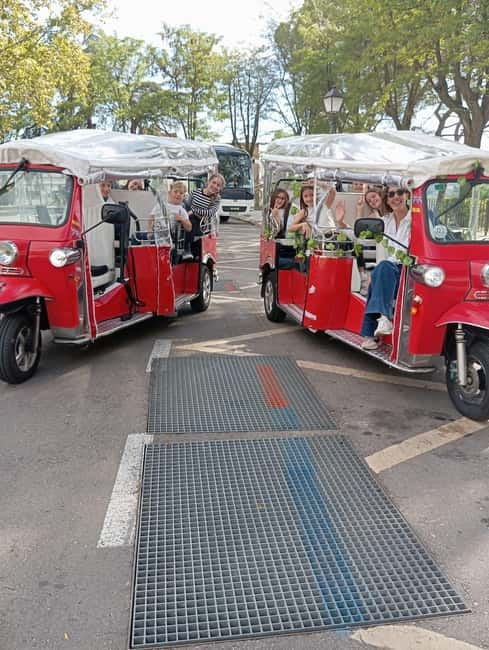
- Hotel pickup + private group (up to 4) means a calmer start and a route that fits your small crew
- Electric tuk tuk comfort: quiet, eco-friendlier driving with minimal time on foot
- Photo-stop timing built into the route, not tacked on at the end
- A single guide-driver who explains what you’re seeing as you pass Royal Palace to Gran Vía
- Big-city variety in 90 minutes, from markets and plazas to art-center streets and fountains
How the electric tuk tuk tour actually feels in Madrid

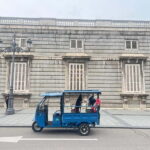
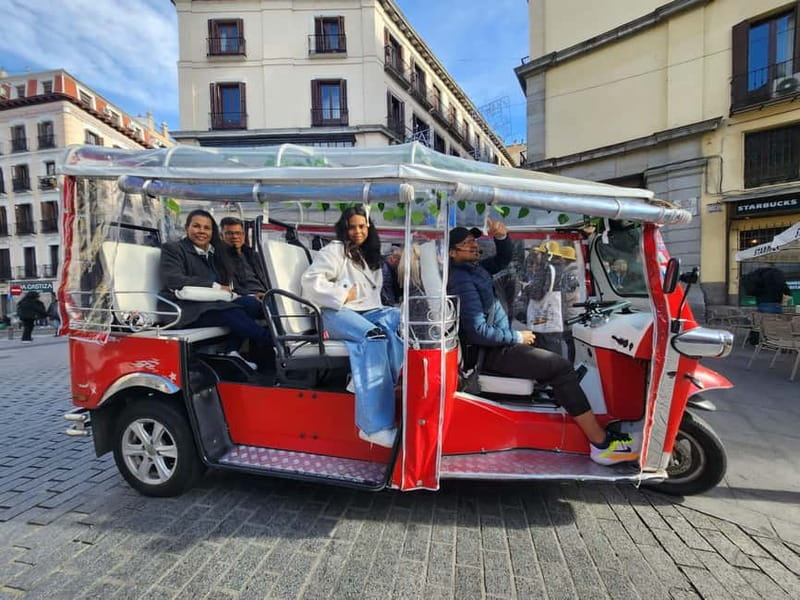
This tour is designed for people who want the big Madrid hits fast, without the penalty of long walks. You ride in an electric tuk tuk, which matters in Madrid because the center can be packed, hot, and slow-moving. You’re also not stuck staring at a screen or reading signs on your own—you’re moving, then stopping briefly when it’s worth getting a photo.
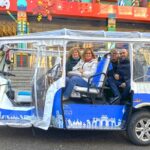
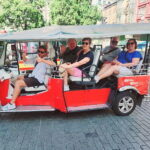
The private size is a big quality-of-life detail. With capacity up to 4 people per tuk tuk, you’re not dealing with a loud, crowded bus vibe. It’s also easier to ask questions in real time—especially in English and Spanish, since the live guide-driver communicates in both languages.
One practical note that changes the experience: stops are limited to viewpoints or places where urban mobility is allowed, and there’s no inside access to monuments. So you’ll see a lot, but it’s more “orientation + quick look” than “spend hours here.” If you’re the type who loves to sit, linger, and photograph slowly, I’d plan a longer separate visit afterward to whichever area catches your eye.
You can also read our reviews of more tours and experiences in Madrid.


Starting at the Royal Palace and Almudena Cathedral: power and ceremony
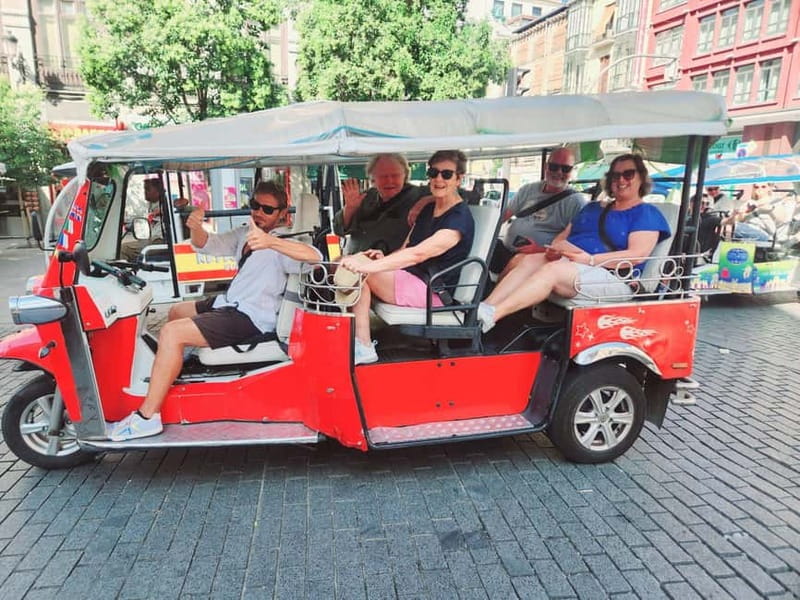
The ride begins with pickup in central Madrid (starting in Centro), then it quickly pivots into iconic architecture. First up is the Royal Palace area, where you get scenic drive-by views—fast, but effective for orientation. Even if you’ve seen photos, the scale hits differently when you’re close enough to understand the space.
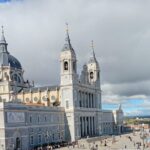
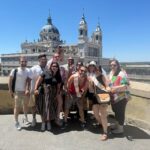
Next is the Almudena Cathedral. You don’t go inside, but you do get that “this is the real thing” sense of Madrid’s ceremonial center. The guide-driver’s job here is important: they help connect why these buildings sit where they do, and how the city’s royal and religious identity shows up in street-level geography.
Why I think this early start works: it sets a baseline. Once you understand the palace-and-cathedral axis, the rest of the route feels more navigable when you’re back on foot later.
Calle Mayor and Plaza de la Villa: old Madrid in short form
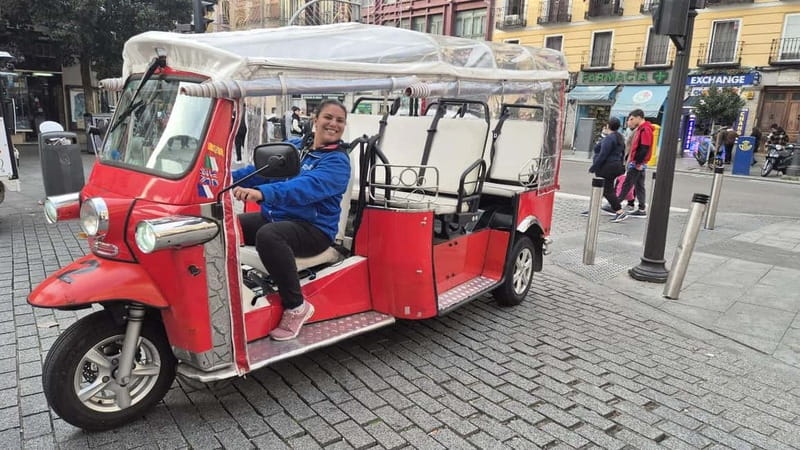
After the palace zone, you move onto Calle Mayor, one of the city’s classic old-town corridors. You get a brief scenic pass, but it’s the kind of street where a little context makes a huge difference—think historic commerce routes and the way neighborhoods grew around major routes.
Then comes Plaza de la Villa, a quieter-feeling stop in the old-core area. Even without a long stop, it’s useful because it gives you a sense of Madrid’s layered age: grand boulevards later, and here’s the older civic core first.
If you’re traveling with kids or you’re simply not in walking mode, this part is a win. The tuk tuk keeps you close to the action without tiring you out before you reach the more photogenic viewpoints.
Mercado de San Miguel to La Latina: markets and the bohemian food streets
One of the smartest parts of this tour is how it threads Madrid’s food culture into sightseeing. You pass by Mercado de San Miguel, a famous market area where the streets around it feel alive even when you’re not going inside.
The route then shifts toward old lanes and alley vibes around places like Calle de Cuchilleros and Puerta Cerrada, followed by the more energetic La Latina area. You also get time around Cava Baja, plus Mercado de la Cebada and Puerta de Moros.
Here’s what to expect in practice: this section is about atmosphere and location. You’re not eating on the tour—food and drinks aren’t included, and you can’t eat or drink during the ride. But you are getting the lay of the land so that later, when you’re hungry, you know which streets to chase.
Also, a small but real consideration: these areas can be crowded. The advantage is that you don’t have to walk deep into congestion; the tuk tuk carries you along while you catch the spirit from the curb and viewpoints.
The Viaduct of Segovia view and San Francisco el Grande’s big photo moment
As you continue, you get a view of the Viaduct of Segovia. Even as a roadside look, it helps Madrid click into a broader geographic picture—how the city connects to its surrounding regions and elevated structures.
Then you reach the Royal Basilica of Saint Francis the Great (San Francisco el Grande). This is a standout because you get a photo stop (around 10 minutes) rather than just a quick look. That extra time matters when a building is visually “wow,” because you’ll want a few angles and a moment to position yourself without rushing.
Why I like this stop in particular: it breaks up the “palaces and plazas” pattern. It gives you a different kind of Madrid landmark—one that feels more about scale, stone, and silhouette than about royal ceremony.





Puerta de Toledo to Retiro area: viewpoints, gardens, and the city’s green breath
Moving on, you pass Puerta de Toledo and head toward viewpoints like Campo del Moro and Cuesta de la Vega. This section is more about slope and perspective than about one single monument.
Then you hit the garden-and-view moment: the Jardín del Moro and the Mirador del Factor, where you get another photo stop (about 5 minutes). If you’ve never been to Madrid’s viewpoint culture, this is one of the quickest ways to see why locals care about “lookouts.” Even brief stops can give you a wider angle on street layout and rooflines.
After that, you continue toward the elegant Plaza de Oriente and the Teatro Real area. You get scenic views passing the theater, which works well because the building’s presence is strong even from the street.
Then comes Puerta del Sol, which the tour uses as a central anchor point. You’ll pass through key city-center streets, including the Congress of Deputies area, and you get a sense of how Madrid’s political and commercial energy sits right alongside historic neighborhoods.
Prado and Reina Sofía from the curb: art-center orientation without tickets
Art lovers often face a dilemma: spend time choosing between Prado and Reina Sofía, or just “walk the museum streets” and accept you won’t enter. This tour takes a third route: it gives you art-center orientation plus street-level visuals.
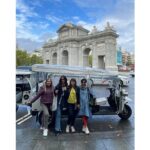
You’ll see the Reina Sofía Museum and get to view the Prado Museum from a photo stop (about 5 minutes). You also pass by the Jerónimos church area (views only, no interior access). Then you continue toward the famous fountain zone.
It’s a good fit if:
- you want to map the art triangle quickly,
- you don’t want to commit to timed entry tickets during your first day,
- or your schedule is tight and you still want to feel where the masterpieces live.
It’s not ideal if you were hoping for a full museum visit. Since entrance fees and inside access aren’t part of this experience, you’ll still want a separate visit to see the art itself.
Cibeles and Neptune: fountains that tell you Madrid means business
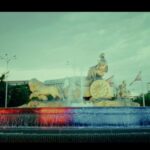
Two major fountain stops—Cibeles and Neptune—appear in the route, with scenic drive-by moments near each. These aren’t just pretty photo targets. In Madrid, fountains like these help explain how the city planned large civic spaces: places where streets widen, foot traffic gathers, and landmarks become meeting points.
After the fountains, you pass Puerta de Alcalá and head toward Retiro Park, Madrid’s well-known green lung. Again, you’re not going deep into the park for a long walk, but you do get the key “this is the green pause” impression.
If you’re coming in from another European city where parks feel like afterthoughts, this section helps you understand Madrid’s balance: grand monuments and major museums right next to places where you can breathe.
Temple of Debod and Gran Vía: the sunset-style wrap-up
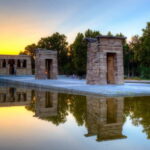
The final stretch has a dramatic shift into Madrid’s modern center. First is the Temple of Debod, where you get another photo stop (about 5 minutes). Even without a long visit, this stop tends to feel special because it’s visually distinct from most Madrid architecture you’ve seen earlier in the route.
Then it moves into Plaza de España and up Gran Vía, where you’ll pass by famous building icons, including:
- the Carrión Building
- Plaza de Callao
- the Telefónica Building
- the Metropolis Building
- the Bank of Spain
Gran Vía can be chaotic on foot. The tuk tuk makes it easier to see the big landmarks without fighting through crowds, which is exactly what you want during a short, first-day orientation.
If you time this well, the Gran Vía stretch can feel like a satisfying “last chapter” that links historic Madrid to the city’s big urban energy.
What I’d watch for: traffic, stop length, and realistic expectations
This tour is built for a short, high-coverage experience. That’s the point. But there are two things you should keep in mind so you don’t feel let down.
First: traffic. Madrid’s center can slow down fast. If traffic is heavy, you might lose some of the planned stopping time, and you may get fewer stops than expected. That’s not the tour being “bad”—it’s the city being the city.
Second: it’s view-focused. You’re told clearly that there’s no inside monument access and food/drinks aren’t part of the ride. So if you want long entry experiences, you’ll need to pair this with a museum or palace visit on a different day.
My advice: treat this as a primer. Use it to decide where you want to spend your real time next—whether that’s the art area, the old markets, or the park zone.
Price and value: is $152 per group worth it?
At $152 per group up to 4, the best way to judge value is to compare it to what you’d spend on transit, time, and planning if you did this on your own.
For up to four people, your effective cost can work out roughly like a “group taxi with a guide.” And that’s the key: you’re paying not just for wheels, but for a guide-driver who connects what you’re seeing—Royal Palace, Almudena Cathedral, major plazas, art streets, fountains, and Gran Vía—into a route that makes sense fast.
It also reduces decision fatigue. In Madrid, first-day confusion is normal. This tour saves you from building a perfect route while you’re still learning the city.
One more value point: the hotel pickup in accessible central areas. If you’ve ever tried to wrangle taxis or navigate to a random meeting point after a long travel day, you’ll appreciate the simplicity.
Who should book this tuk tuk loop, and who should skip it
This tour fits best if you’re:
- visiting Madrid for a short stay and want quick orientation,
- traveling as a small private group (family, couple, friends),
- not thrilled by long walks, but still want “real city” views,
- interested in history and street context, delivered by a guide-driver while you move.
You might skip it if:
- you want museum-grade time inside major buildings,
- you have heavy mobility needs (it’s not wheelchair accessible),
- you’re traveling with pets or you need baby carriage access (pets aren’t allowed and baby carriages aren’t permitted),
- you expect uninterrupted, stand-still sightseeing. The city’s pace will still influence your schedule.
Should you book this tour or plan something else?
Book this if you want a smart first look at Madrid that feels fun and efficient. It’s especially worth it when you want to see everything from Royal Palace and Almudena Cathedral to Prado, fountains at Cibeles and Neptune, and the Gran Vía skyline—without turning your day into a leg workout.
I’d pair it with one longer standalone visit afterward (a museum or a monument you actually want to enter). Do that, and the tuk tuk tour becomes the map that tells you where to spend your hours.
If traffic worries you, keep your expectations flexible. You’re buying a short orientation ride, not a guaranteed timetable to the minute. When you treat it that way, it’s a very satisfying use of 90 minutes.
FAQ
How long is the Madrid tuk tuk tour?
The tour lasts 1.5 hours (about 90 minutes).
How many people can ride in each tuk tuk?
Maximum capacity is 4 people per tuk tuk, and it’s offered as a private group.
Is pickup and drop-off included?
Yes. Pickup and drop-off are included at your hotel in central Madrid or at a nearby accessible point if your exact location can’t be reached by tuk tuk. You’ll need to coordinate the exact pickup spot by phone or WhatsApp.
What language is the guide-driver available in?
The live guide-driver provides the tour in English and Spanish.
Do we go inside monuments or museums?
No. Entrance fees are not included, and access to the inside of buildings isn’t part of the tour. You’ll mainly see sights from viewpoints or permitted urban stops.
Is food or drink included during the tour?
No. Food, drinks, and tapas aren’t included, and eating or drinking isn’t allowed during the tour.
What happens if it rains?
If it rains, the tour can be rescheduled or adapted.