REVIEW · MADRID
Madrid Expert Tour with Local Guide in Eco Tuk Tuk Private
Book on Viator →Operated by Eco Tuk Tuk - Spain · Bookable on Viator
Three hours. Zero stress. Big Madrid payoff.
This private eco tuk-tuk tour is a fun, easy way to get oriented, with pre-selected photo stops and an expert guide who keeps the story moving (I’ve seen guides like Jaime and Lucia bring both humor and clear context). I also love the practical touch of blankets and protective layers in cooler months, so you stay comfortable without rushing the experience. One possible drawback: the route and photo stops are fixed, so if you’re hoping for extra museum time or detours, you may feel a bit constrained.
You’ll ride through old Madrid and newer neighborhoods fast, then stop often enough to look closely and snap pictures. Expect a full loop of major sights, including Atocha, the Prado area, major royal monuments, and a classic viewpoint finish at Templo de Debod.
In This Review
- Key highlights at a glance
- How the Eco Tuk Tuk Makes Madrid Feel Manageable
- Price and Value: What You Get for $28.67
- Market Morning to Railway Power: Covered Food Halls and Atocha
- From Spanish Courts to the Prado Area: Government Meets European Painting
- Jerónimos, Puerta de Alcalá, and Salamanca Streets Without the Sprinting
- Bernabéu, Columbus, BNE, and Cibeles: Icons You’ll Recognize Instantly
- Royal Madrid: Plaza de Santa Ana, San Francisco el Grande, and Almudena
- Royal Palace to Campo del Moro to Debod: Where the Tour Gets Cinematic
- Tips That Help You Get More Out of the Ride
- Should You Book This Eco Tuk Tuk Madrid Tour?
Key highlights at a glance
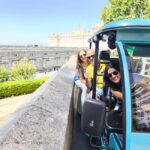
- Electric, 100% sustainable tuk-tuk with your group riding together
- No-queue start and a pace built for seeing a lot in about three hours
- Blankets and rain/wind protection so weather is less of a dealbreaker
- Photo-friendly stops placed at the best viewpoints (no random wandering)
- A mix of Madrid eras, from Atocha and government buildings to royal spaces and Debod
- Expert guide storytelling, with energy that keeps you asking questions
How the Eco Tuk Tuk Makes Madrid Feel Manageable
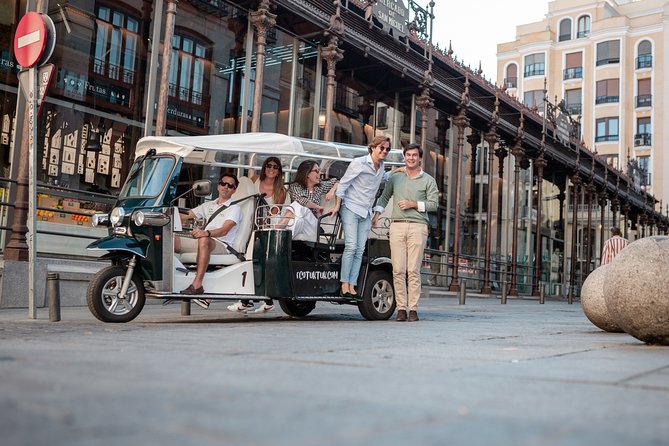
Madrid can be walked, sure. But it’s also wide, spread out, and full of crowds in the center. This tour uses a compact, easy ride so you spend less energy getting between sights and more energy actually looking at them.
The eco tuk-tuk also changes how the city feels. Instead of staring out a bus window, you get frequent moments where you slow down, stop, and frame the view properly. That matters because Madrid’s best details are visual: facades, arches, domes, and fountains that you only truly notice when you’re close enough to see proportion and materials.
And since this is private for your group only (no joining strangers in the same vehicle), the guide can keep the pacing right for your crew. In the past, guides like Gustavo and Carlos were praised for keeping teens engaged and for adding quick context as they drive by major streets and landmarks.
You can also read our reviews of more tours and experiences in Madrid.


Price and Value: What You Get for $28.67
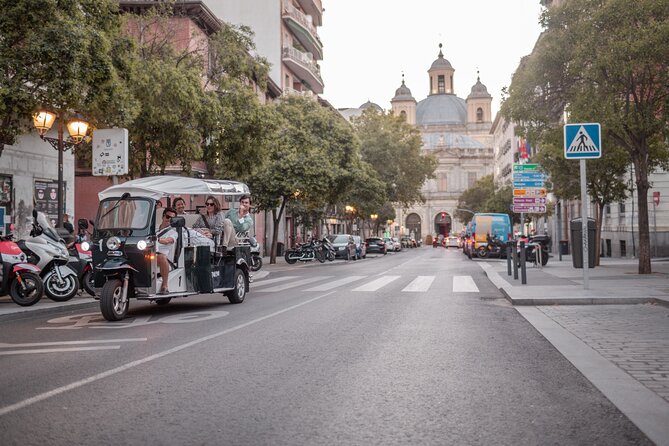
At about $28.67 per person, this feels like a deal for the amount of ground covered—especially because you’re not just buying transport. You’re buying a plan: an expert local guide, an electric vehicle, and stops positioned for photos and perspective.
Here’s the practical value math:
- You get a pre-arranged route (less time lost figuring out logistics on your own).
- You get multiple landmark stops in a short window, which is ideal if Madrid is only part of a longer trip.
- You get comfort perks that can be surprisingly important—blankets and protection against rain and wind.
Where value can dip slightly: you can’t customize the route during the tour, and you can’t request alternate photo locations. If you want deep time inside a museum or a long sit-down at one stop, you’ll likely need a second, separate visit afterward.
Market Morning to Railway Power: Covered Food Halls and Atocha
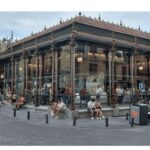
Your loop often starts at a covered market area dating to around 1916. Think food, delicatessen, and that elegant feel you get when a market is built to last. Even if you do not plan to buy much, it’s worth using the stop to understand how Madrid eats and lives day-to-day.
From there, the tour moves toward Atocha, one of Madrid’s major railway hubs. This is a great moment for a guide to connect the dots for you. Atocha isn’t just a transport stop—it’s where movement, architecture, and daily life overlap. Seeing it up close also helps you later when you’re planning trips by train to other parts of Spain.
If you’re the type who likes to feel oriented quickly, these early stops do that work well. You learn where key districts sit and you get an anchor point for later.
From Spanish Courts to the Prado Area: Government Meets European Painting
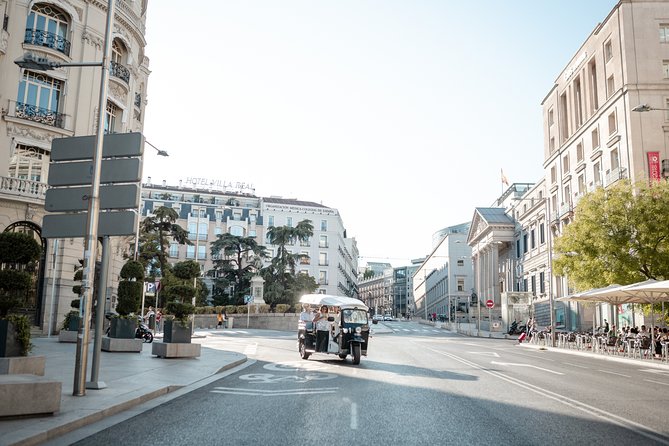
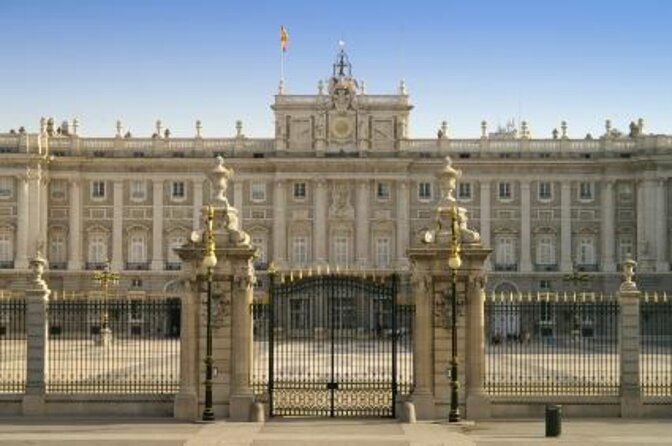
Next comes a big shift: the Palace of the Spanish Courts. It’s the kind of building that rewards a slow look because of the structure and symbolism on the facade. The neoclassical portico with its columns, the decorative details, and the dramatic scale all tell you Madrid’s confidence in the grand civic style.
Then you roll into the Neptune fountain area in Plaza de Cánovas del Castillo. It’s a classic roundabout focal point that locals know instantly. The fountain’s timing, placement, and monument feel make it a useful way to reset your bearings: you’ll see how the city’s big avenues and plazas connect.
After that, the tour focuses on the Prado museum area—one of Europe’s most important painting destinations. The guide’s job here is not to name-drop for the sake of it. It’s to help you understand what makes the Prado special: the strong concentration of European masters and the standout representation of artists like Velázquez, El Greco, Goya, and others. Even if you don’t go inside during this tour, you’ll walk away with a mental map of what to prioritize later.
Practical tip: if Prado matters a lot to you, use this stop to decide what you want most. The Prado can swallow your day if you’re not strategic, and this tour gives you the starting point for a smarter second visit.
Jerónimos, Puerta de Alcalá, and Salamanca Streets Without the Sprinting
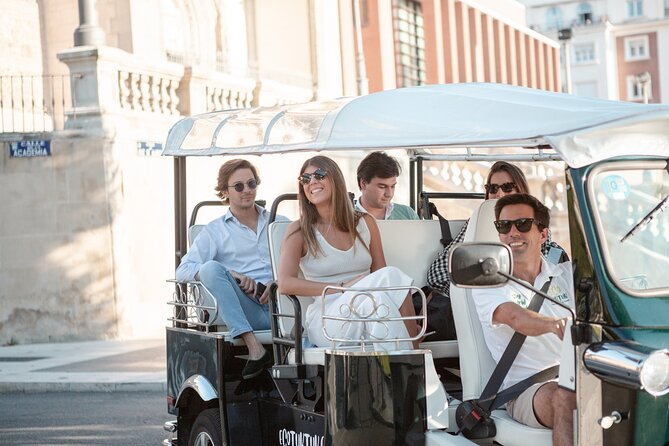
From the grand civic and art world, you head into the realm of major religious and ceremonial architecture.
You’ll pass by San Jerónimo el Real, often called Los Jerónimos. It’s a late Gothic church with Renaissance influence, and it sits next to the Prado area. What I like about this stop is that it gives you a contrast to the museums and government buildings. Here the emphasis is on how faith, monarchy, and city planning shaped the neighborhood over centuries.
Next is the Puerta de Alcalá. This monumental neoclassical triumphal arch is built by Francesco Sabatini. It’s also a visual reminder of Madrid’s identity as a planned capital: an entrance-like statement where the details are all about symmetry, structure, and civic pride.
Then your route expands into Barrio Salamanca, with streets such as Velázquez, Ortega y Gasset, and Serrano. These stops are a nice change of pace. They help you see Madrid beyond the museum core, and they also give you a sense of where modern shopping and upscale neighborhoods start.
If you like mixing architecture with street atmosphere, this section is a strong reason to book. You see how Madrid shifts character from plaza to boulevard without burning hours walking.





Bernabéu, Columbus, BNE, and Cibeles: Icons You’ll Recognize Instantly
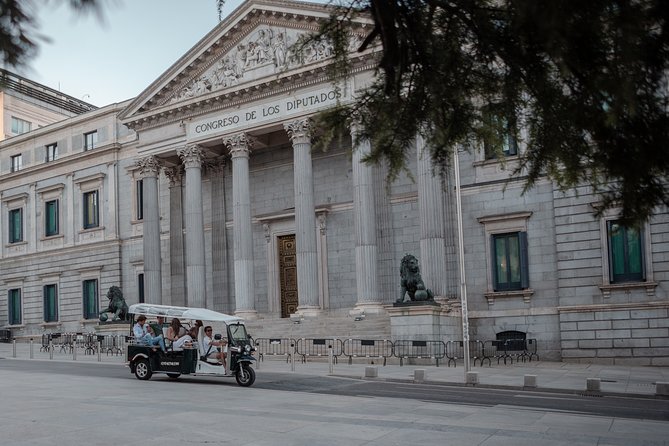
No Madrid orientation loop feels complete without a sports landmark and big city monuments, and this tour delivers.
You’ll head toward the Santiago Bernabéu stadium area. The stop includes its scale and importance—worth noting even if you’re not planning a match. Seeing it in context helps you understand the surrounding neighborhood too.
Then you roll to the Columbus monument area in a major square with fountains and traffic flow. The point isn’t just the statue—it’s learning where that centerpiece sits in the city grid and how it connects to nearby park space. The tour also references the Gardens of Discovery, with sculptures you can admire in a calmer environment.
From there, you’ll pass the National Library of Spain (BNE) area. This is the kind of stop that turns a building into a story. The library’s role in collecting and preserving Spain’s documentary heritage gives you a sense of how the country treats knowledge and archives—not just as storage, but as cultural continuity. You may see parts of how it’s presented through museum and exhibition spaces, depending on timing.
And then, Cibeles. If you want a Madrid postcard moment that still feels grounded, this is it. The goddess Cibeles on a chariot pulled by lions is carved marble and stone, and it’s also tied to real-life fandom celebrations. Even if you don’t follow soccer, the plaza energy and the symbolic weight come through fast.
This whole segment works well because it gives you recognizability. After this, you’ll likely spot these icons later in photos and on maps and actually know where they belong.
Royal Madrid: Plaza de Santa Ana, San Francisco el Grande, and Almudena
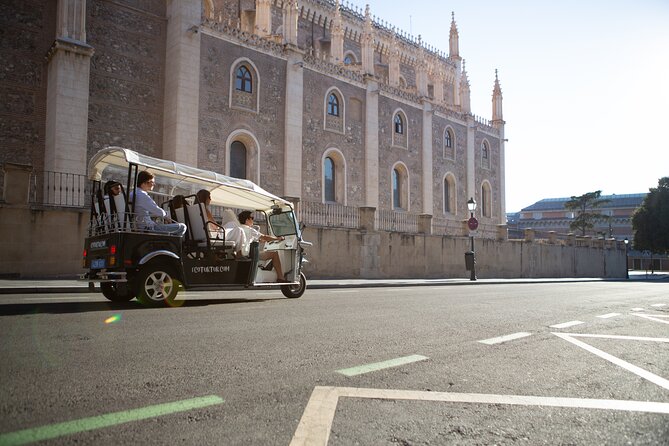
As you move deeper toward the historic core, the tour shifts toward plazas and major churches.
Plaza de Santa Ana is an open space with a layered past, first dated to the early 1800s and shaped by later urban changes. It’s a helpful stop because it shows you how Madrid balances built heritage with everyday street life.
Then comes the Royal Basilica of San Francisco el Grande. It’s a Catholic church with strong landmark presence in the city center. The stop helps you understand that Madrid’s religious architecture isn’t one-style-only. You’re looking at a monument that feels both grand and local at the same time.
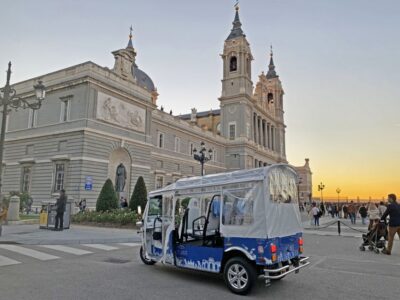
Next is Almudena Cathedral. This matters because it’s the main religious building in Madrid and was consecrated in 1993. The cathedral museum also adds context with multiple rooms that tell the story of the diocese, with objects ranging from mosaics to ornament.
If your plan includes returning to Madrid for more walking later, these religious stops do something useful: they help you learn how the city’s major institutions cluster around plazas and pedestrian corridors.
Royal Palace to Campo del Moro to Debod: Where the Tour Gets Cinematic
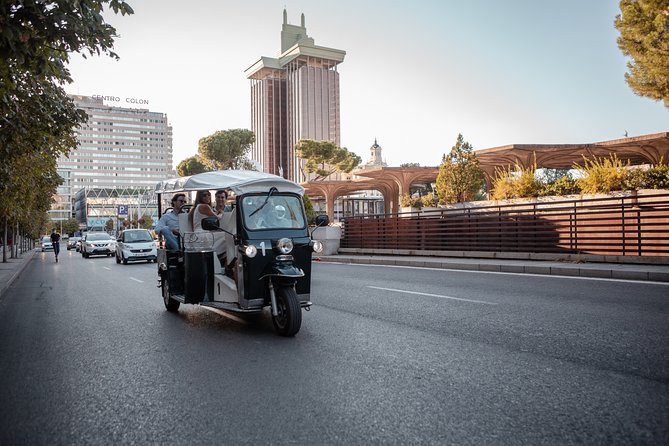
Now you reach the part of the tour that tends to feel most dramatic on the route.
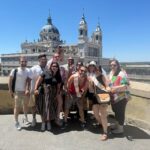
You’ll see the Royal Palace area (Palacio de Oriente), built in the 1700s, set into the royal district with the Campo del Moro gardens. These gardens give you a visual break between monumental architecture and the softer, slower pace of landscaped space. You can visit Campo del Moro during the day, and it’s a nice place to stretch your legs after the ride.
Then you move toward Templo de Debod. This is an ancient Egyptian temple building relocated to Madrid. It’s located west of Plaza de España near the Paseo del Pintor Rosales, and admission is listed as free with a short stop time.
This finish is smart because Debod is the kind of sight that makes people go silent for a second. It also gives you a contrasting memory: one day you’re thinking about Spanish monarchy and royal gardens, the next you’re seeing an Egyptian temple sitting in Madrid air.
If the sky cooperates, this area can feel like a perfect wrap-up. Even if it’s cloudy or chilly, it still makes the whole tour feel memorable.
Tips That Help You Get More Out of the Ride
A few things will make the tour feel smoother and less like a checklist.
First, dress for quick stops and weather. The tour can run in rain or heat, and it includes blankets plus protective layers against rain and wind. Still, wear what lets you move easily during short get-on and get-off moments.
Second, come with a simple photo plan. Stops are prearranged for picture-taking, but you’ll enjoy it more if you’re ready to shoot quickly when the vehicle stops. Don’t count on swapping locations mid-tour.
Third, ask questions as you ride. The best guide moments usually happen while you’re moving between landmarks, not during the most obvious photo time. If you get a guide with energy—people have praised guides like Manuel, Alex, and Salvador for keeping conversations lively—lean into it.
Finally, if you’re mixing this with museum visits, use it for prioritizing. For example, one guide-style tip that has popped up in guide storytelling is that the Prado can have evening free entry after 6pm. Even if you don’t remember every detail, you’ll leave the tour thinking about what you want to see next.
Should You Book This Eco Tuk Tuk Madrid Tour?
Yes—if you want a practical first look at Madrid without spending your precious hours fighting traffic or walking long distances between far-flung sights.
Book it if:
- You’re visiting Madrid for the first time and want a quick orientation loop.
- You like guided context paired with short stops for photos and quick observations.
- You want comfort support like blankets and an electric vehicle.
Think twice if:
- You want to control the itinerary and linger at one place for a long time.
- You’re hoping for lots of last-minute detours or changing photo locations.
For most people, this is an efficient way to start strong. Use it to learn the city’s layout, then come back on your own time for the places that truly pull you in.