REVIEW · MADRID
Madrid Historical Tour with Local Guide in Eco Tuk Tuk Private
Book on Viator →Operated by Eco Tuk Tuk - Spain · Bookable on Viator
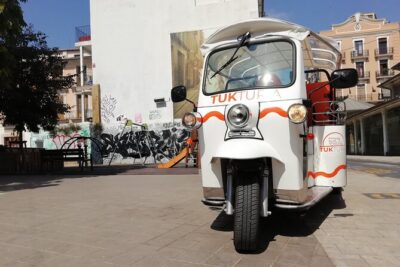
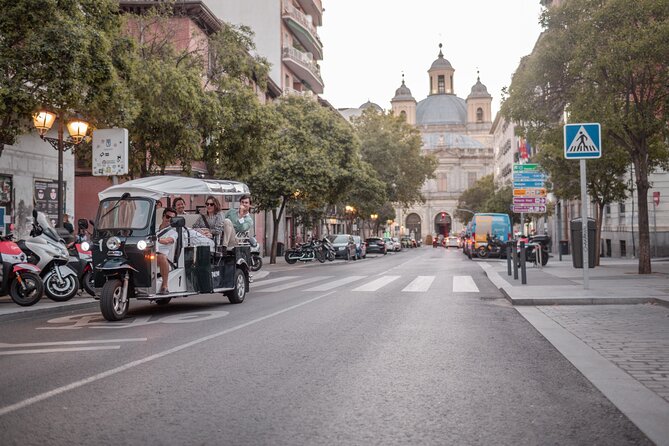
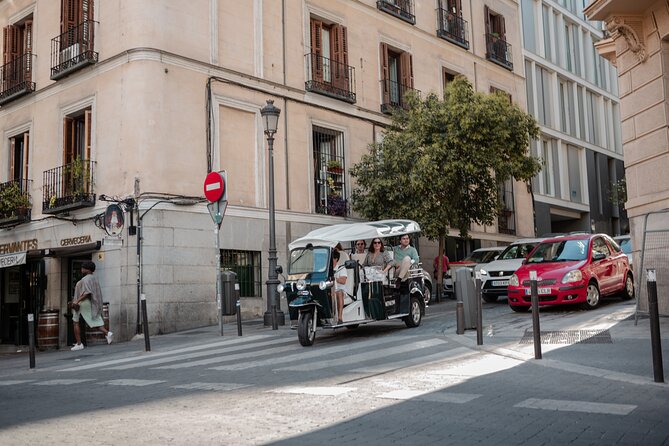
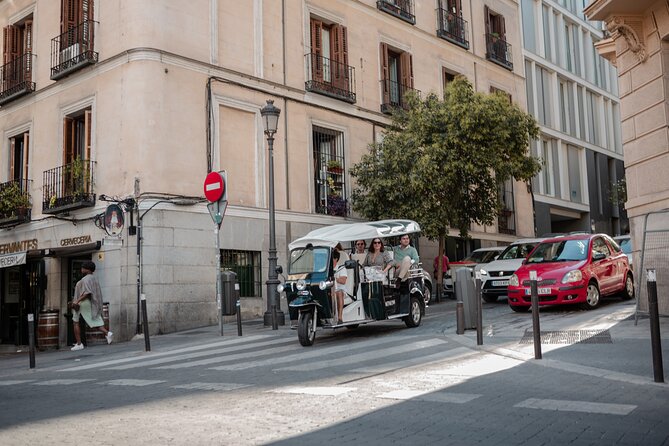
Electric tuk-tuks beat the Madrid traffic headache. I like the electric tuk-tuk novelty and the way it keeps the day comfortable, and I also love that it’s private for just your group. One thing to watch: the start is in an underground bus-station area by Puerta del Príncipe, so you’ll want to follow the directions and show up on time.
The best part for first-timers is how no queues or waiting is built into the plan. You’ll move between big-name sights and local-flavored stops, with pre-set photo moments and blankets if it’s cold.
In This Review
- Quick take: what makes this Madrid tour worth it
- Why an eco tuk-tuk is a smart way to learn Madrid
- Getting on board near the Royal Palace without stress
- Covered market + local food vibe: the first taste of Madrid
- San Francisco el Grande: a basilica stop that feels like a city landmark
- Atocha station: not just a train hub, but Madrid’s busiest front door
- The Spanish Courts: power in stone, plus those famous lions
- Plaza del Dios del Mar and Cibeles: football rivalries made into monuments
- Prado-area art energy: why this museum matters
- Los Jerónimos (San Jerónimo el Real): a church that frames the Prado story
- The “Carlos III” monumental gate: empire-era planning in plain view
- The National Bank building and Plaza Santa Ana: what you notice when you slow down
- Almudena Cathedral Museum: why 1993 matters
- Royal Palace and gardens: the outside story you’ll remember
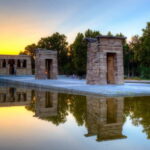
- Temple of Debod: a small stop with a big twist
- Value and timing: how long should you book?
- Who this tour suits best (and who should consider alternatives)
- Should you book this Madrid Historical Tour in an eco tuk-tuk?
- FAQ
- How long is the Madrid Historical Tour?
- Is this tour private?
- Is the tour offered in English?
- What’s the best way to find the meeting point?
- Do I need to bring tickets for the tour?
- Are there age or weight limits?
- Are pets allowed on this tour?
- What should I expect if there are demonstrations or closed streets?
Quick take: what makes this Madrid tour worth it
- Electric, 100% sustainable tuk-tuk ride that feels fun without sacrificing comfort
- Private vehicle for your group only, with a max of 4 passengers per tuk-tuk
- Pre-selected photo stops (no wandering off-script for selfies)
- Classic Madrid highlights in one loop: basilicas, stations, plazas, and royal sights
- English companion guide who keeps the story moving, with lots of room for questions
- Built-in time for breaks, so the tour stays realistic instead of rushed
Why an eco tuk-tuk is a smart way to learn Madrid
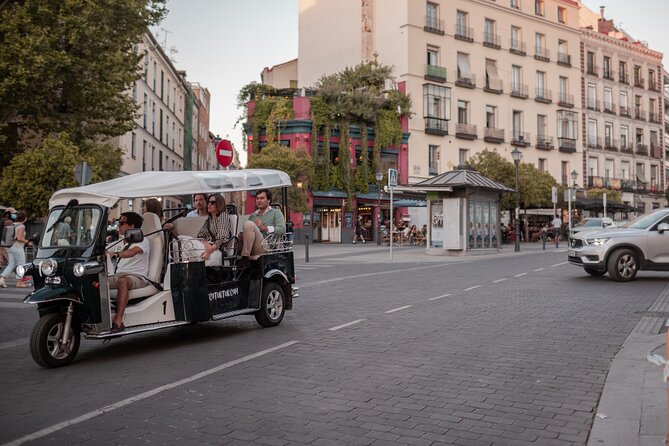
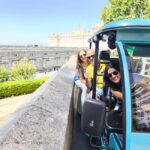
Madrid is spread out, and on your first day you usually lose time doing the boring stuff: walking too far, crossing busy streets, and re-checking your map every five minutes. This tour trades all that for a smooth electric ride that lets you look up at buildings, take photos, and still feel fresh enough to enjoy the next stop.
I also like the mindset behind the route. It’s designed for orientation, not museum-only perfection. You’ll see the places that shape Madrid’s identity—religion and empire, politics and football, art and civic life—while your guide ties it together in plain English.
There’s a practical side too: you don’t need to keep shoving yourself into lines. The tour is planned to start without queues or waiting, which matters when the city is busy and the light is already changing.
You can also read our reviews of more tours and experiences in Madrid.


Getting on board near the Royal Palace without stress
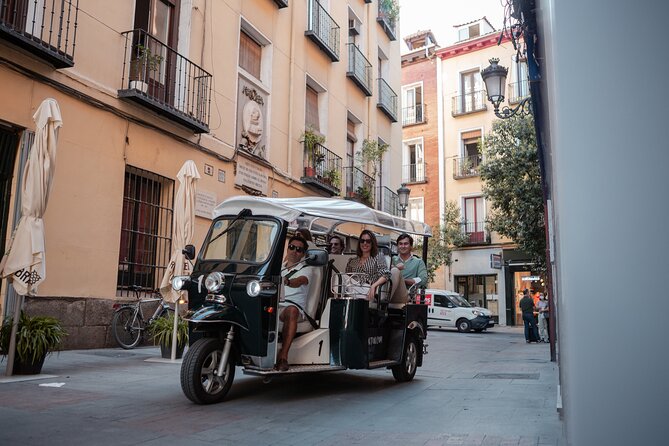
Your meeting point is near the Royal Palace, but it’s easy to miss if you assume the tuk-tuks are lined up in the open. The actual pickup is at the bus station (underground) by Plaza de Oriente, next to the Royal Palace, near Puerta del Príncipe.
Here’s how to find it smoothly:
- Search Google Maps for Calle Bailén 4 or Puerta del Príncipe (even if the street number doesn’t show like you expect).
- Look for the stairs by Puerta del Príncipe that lead into the station area.
- When you’re down there, watch for the Eco Tuk Tuk signage.
If you’re traveling with mobility needs, contact the company by phone or WhatsApp ahead of time so they can help with elevator access. It’s the kind of detail that can make the difference between a calm start and a frustrating one.
Covered market + local food vibe: the first taste of Madrid
One of the coolest early stops is a covered market dating to around 1916. The setting is elegant for a market, and it’s the kind of place where you feel the city’s everyday rhythm—local food, delicatessen counters, and events that add energy without turning into tourist chaos.
Even if you don’t buy anything, it’s a good orientation stop because it teaches you how Madrid snacks and socializes. You’ll also get a visual sense of where people actually gather, which helps when you later choose where to eat on your own.
A small consideration: because this is a sightseeing route and photo timing matters, you shouldn’t expect lots of free wandering here. Think of it as a taste-and-look stop that sets the tone.
San Francisco el Grande: a basilica stop that feels like a city landmark
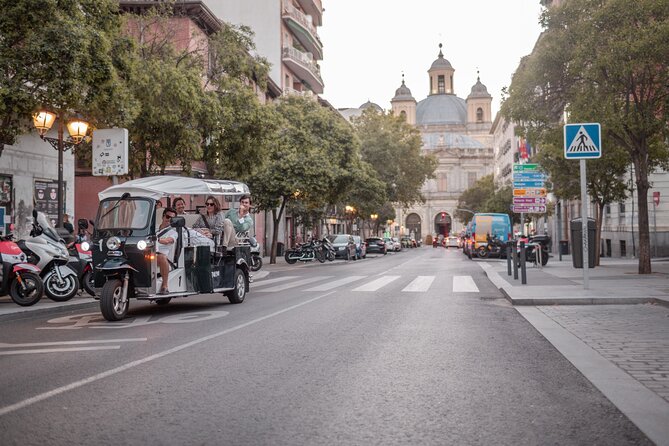
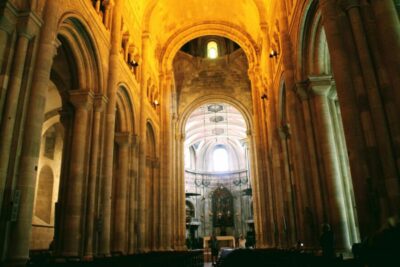
Next up is the Royal Basilica of San Francisco el Grande (officially Basilica of Our Lady of the Angels). It’s a Catholic church in Madrid’s Palacio neighborhood, right in the historic center.
This kind of stop works well on a tuk-tuk tour because the exterior and setting tell you a lot quickly: you’re seeing how neighborhoods and major institutions cluster together in the older parts of Madrid. It also gives your brain a break from streets and squares—you get that slow, sacred atmosphere for a moment.
If churches aren’t your thing, don’t worry. Even then, it’s worth seeing at least once because it’s a landmark you’ll hear about repeatedly, and it helps connect later sights in the center of the city.
Atocha station: not just a train hub, but Madrid’s busiest front door
Then you roll into Atocha station, one of Madrid’s major railway complexes near Plaza del Emperador Carlos V. It serves as a railway hub and is described as the busiest station in Spain and one of the main stations in Europe.
This stop is valuable because it reminds you that Madrid isn’t only sightseeing plazas. It’s a working city with huge transportation arteries, and the station acts like a front porch for travelers and daily commuters.
Practical tip: if you’re trying to plan the rest of your trip, seeing Atocha early helps you understand how you’ll move between Madrid and day trips. You’ll likely feel less intimidated about logistics later.





The Spanish Courts: power in stone, plus those famous lions
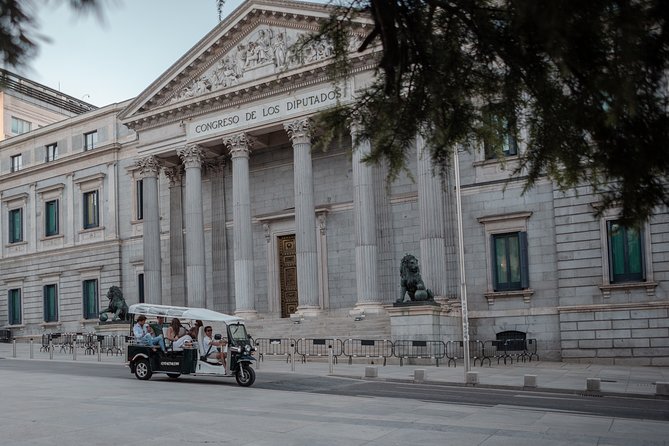
One of the most fascinating stops on the route is the Palace of the Spanish Courts. It sits on the site of the former convent of the Holy Spirit, which served as the seat of Congress between 1834 and 1841. That mix of past and present is a big reason the building feels meaningful, not just pretty.
From outside, you’ll notice the neoclassical portico with six striated Corinthian columns and a triangular pediment with reliefs. The building’s emblematic lions are especially specific: they were cast with iron from cannons captured during the war in Africa. The bronze door under the pediment is also described as opening only on very marked occasions—so don’t plan on it as a casual photo moment.
Inside, your guide’s story includes references to the Session room and the library/conference room known as the lost steps room. Even if you’re not going deep inside, hearing those names gives you a richer mental map of what this place represents in modern Spain.
Plaza del Dios del Mar and Cibeles: football rivalries made into monuments
Madrid’s civic spaces are also sports spaces, and this route uses that idea on purpose. You’ll stop at the points where fans celebrate the big clubs through statues: Atlético de Madrid is connected with Plaza del Dios del Mar, while Real Madrid is connected with Cibeles.
This isn’t just fun trivia. It helps you read Madrid’s public art the way locals do. When you later see these monuments, you’ll recognize what they symbolize and why people gather there.
Photo-wise, this is a good moment because the buildings and monuments frame the skyline in a way you can’t replicate from street level alone. Your guide also points out pre-selected angles, which keeps the tour moving while still giving you solid shots.
Prado-area art energy: why this museum matters
The route spends time in the orbit of the Prado Museum. The art description here is specific: uniquely rich in European painting from the 16th to 19th centuries. It’s even described by art historian and Hispanicist Jonathan Brown as the world’s most important museum for European painting.
You don’t have to be an art superfan to appreciate why this matters. In Madrid, the Prado isn’t just a museum. It’s a magnet that pulls cultural influence into the streets around it, from architecture to the kind of walking routes locals choose.
Even better, the tour pairs this museum area with a church you can’t easily ignore.
Los Jerónimos (San Jerónimo el Real): a church that frames the Prado story
Next to the Prado area, you’ll visit San Jerónimo el Real, popularly known as Los Jerónimos. It’s a parish church with late Gothic style and Renaissance influences from the early 16th century.
Here’s the useful context: little remains of the original building because it was remodeled and restored many times over the centuries. That detail matters because it turns the structure from a static postcard into a living record of Madrid’s changes.
If you love architecture, this stop gives you a chance to see how styles overlap instead of splitting cleanly into eras. If you’re not into details, it still works because it’s right in the part of Madrid you’ll want to return to for longer.
The “Carlos III” monumental gate: empire-era planning in plain view
Another highlight is a monumental gate built by order of Carlos III to replace a previous gate from the 16th century. It was inaugurated in 1778.
What I like about this stop is the way it teaches you to look at the city as a plan. The gate sits amid major institutions, including Buenavista Palace (Army Headquarters), Linares Palace (America House), the Communications Palace (formerly post office, now Madrid City Council), and the Bank of Spain.
When you see those together, you understand that Madrid’s center was designed to channel power, administration, and public life into one coherent zone. It’s not random; it’s organized.
The National Bank building and Plaza Santa Ana: what you notice when you slow down
The route also includes a building described as almost a decorative waste, which was awarded at the National Exhibition of Fine Arts in 1884. It was built to match the National Bank’s importance—especially the single issuance of coins and bills across Spain.
That’s a great line to keep in your head, because it makes you look twice: Madrid isn’t afraid to put artistic emphasis into institutions that handle money and governance. That tension—beauty vs. function—is part of why the city feels human.
Then you’re in Plaza de Santa Ana, an open space in the Cortes neighborhood dating to 1810. Over time it’s been reshaped by multiple rounds of urbanization, with changing results. Even without getting too academic, you’ll feel the layering in how people use the space.
Almudena Cathedral Museum: why 1993 matters
The route includes the Almudena Cathedral, described as the most important religious building in Madrid. The date given is specific: it was consecrated on June 15, 1993, by Pope John Paul II, making it the first consecrated cathedral outside Rome.
You’ll also hear about the Almudena Cathedral Museum, which gathers dozens of objects telling the story of the diocese of Madrid. The museum is described as having twelve rooms, with items ranging from mosaics to episcopal shields and ornament.
What makes this stop feel worthwhile on a short tour is the storytelling. The guide connects the cathedral to Madrid’s modern identity and religious life, instead of treating it like just another “big church.”
Royal Palace and gardens: the outside story you’ll remember
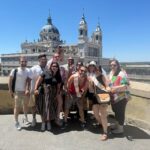
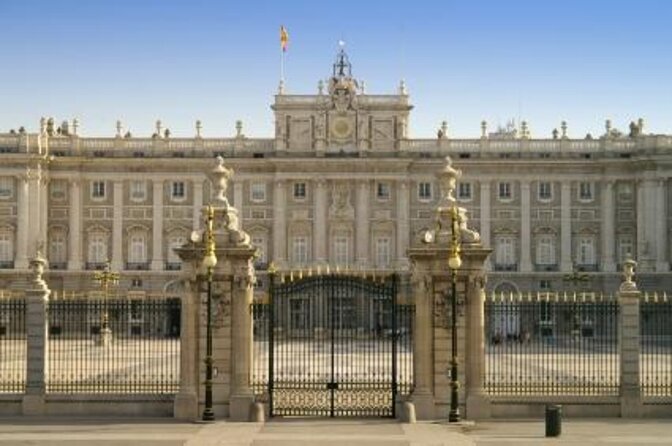
The tour includes the Royal Palace of Madrid (Palacio de Oriente), with strong facts that help you picture the site. Construction began in 1738 and lasted seventeen years. Carlos III made it his habitual residence in 1764, and the location had earlier been occupied by the Palace of the Austrias, destroyed in a Christmas Eve fire in 1734.
In practical terms, your time here is about viewpoint and context. The palace is currently used for receptions, ceremonies, and official events since the kings reside in the Palacio de la Zarzuela.
You also get garden context: the Campo del Moro gardens (west, dating to the Middle Ages) and the Sabatini gardens (created in the 20th century, in front of the north façade, with an area described as 2.66 hectares). You likely won’t cover every path, but you’ll understand why this palace zone feels like a stage for Madrid’s official life.
Temple of Debod: a small stop with a big twist
If your schedule includes it, you’ll have time for Templo de Debod. It’s described as an ancient Egyptian building located in Madrid, west of Plaza de España near Paseo del Pintor Rosales. It sits on a hill where the Cuartel de la Montaña was located, and the stop is noted as 10 minutes with free admission ticket.
This is the kind of contrast that makes a tuk-tuk tour memorable. One minute you’re looking at imperial-era Spanish architecture, and the next you’re in a spot tied to ancient Egypt. Even a short visit changes how you see the city’s cultural reach.
Value and timing: how long should you book?
The listed price is $28.66 per person, and the real value comes from what’s included: an expert companion guide, your private 100% electric vehicle, and a plan built around skipping queues or waiting. You’re also getting blankets and protective layers for cold weather, which is not always true on “short sightseeing” tours.
Duration is flexible from 1 to about 4 hours. Here’s how to choose:
- 1–2 hours: best for a quick orientation and key photos if you’re also planning museums later.
- 2–3 hours: the sweet spot for first-time visitors to cover major areas without feeling rushed.
- 3–4 hours: good if you want more time for stops, questions, and a slower pace between neighborhoods.
One more thing to keep in mind: tuk-tuks are reserved privately, and the price depends on how many tuk-tuks you need for your group (with the legal maximum of 4 passengers per tuk-tuk). So if you’re traveling as a larger party, the “private” part stays true, but cost per person can shift depending on how many vehicles get allocated.
Who this tour suits best (and who should consider alternatives)
This is a strong fit if you:
- are visiting Madrid for the first time and want orientation fast
- want a comfortable sightseeing day without long walking stretches
- like history told through specific places, not generic “top attractions” lists
- have kids or mixed-age groups and need easy pacing (blankets help too)
It may be less ideal if you want maximum freedom to roam inside buildings at your own pace. Stops and photo moments are pre-selected, and stops for photographs can’t be modified. Also, if audio quality matters a lot to you, note that one experience mentioned the sound system wasn’t the best.
Should you book this Madrid Historical Tour in an eco tuk-tuk?
Yes—if your goal is to learn Madrid without burning your legs on day one. The private electric tuk-tuk format, the no-queue planning, and the way the route links major landmarks (from San Francisco el Grande to Atocha to the Royal Palace and beyond) make this a high-leverage first-day activity.
Book it early in your trip if you can. You’ll come away with neighborhood context and practical ideas for what to revisit on foot later. And when you’re standing in front of monuments like the lions of the Spanish Courts or the Prado-area views, you’ll be glad you got the story stitched together before you go deeper on your own.
FAQ
How long is the Madrid Historical Tour?
It runs for about 1 to 4 hours, depending on the selected duration.
Is this tour private?
Yes. It’s private for your group only, with your own reserved electric tuk-tuk vehicle(s).
Is the tour offered in English?
Yes, the tour is offered in English.
What’s the best way to find the meeting point?
Meet at C. de Bailén, 4, Centro (near Puerta del Príncipe). The pickup is at the underground bus station next to the Royal Palace. If Calle Bailén 4 doesn’t show clearly, use Puerta del Príncipe on Google Maps and look for the Eco Tuk Tuk signage.
Do I need to bring tickets for the tour?
You’ll receive a mobile ticket. For Temple of Debod, the stop is listed as free admission ticket.
Are there age or weight limits?
Yes. Minimum age is two years old (babies are not allowed). There is also a minimum weight requirement of 9 kg.
Are pets allowed on this tour?
No, pets are not allowed for security reasons.
What should I expect if there are demonstrations or closed streets?
The route may vary due to closed streets or demonstrations on the day of the tour. The tour stops can also change because of lost time if the customer is delayed.