REVIEW · MADRID
Madrid Welcome Tour with Local Guide in Eco Tuk Tuk Private
Book on Viator →Operated by Eco Tuk Tuk - Spain · Bookable on Viator
Madrid, but faster and friendlier. This private electric Eco Tuk Tuk tour gives you a quick, high-impact look at Madrid’s big icons like the Royal Palace and Almudena Cathedral, with preplanned stops made for photos. I especially like that it’s comfortable in real weather, since you’ll have blankets and protective layers if it’s cold or windy.
Two things I really like: first, the tour is designed to start without queues or waiting, so you make the most of limited time. Second, you ride in a private vehicle reserved for your group only, so you’re not stuck watching other people’s pace. You might get a guide with a style you’ll click with, too—names that show up again and again include Christian, Laura, Enrique, Carlos, and Roberto.
One possible drawback: this is an overview, not a slow stroll. Stops for photos are fixed, the route can shift due to street closures or demonstrations, and if you’re late the experience may be shortened with no refund.
In This Review
- Key things you should plan around
- Why an Eco Tuk Tuk is the smart way to start Madrid
- Meeting at Puerta del Príncipe: don’t overthink it
- Mercado-style food atmosphere and the city’s everyday rhythm
- San Francisco the Great: the Palace District’s bold church moment
- Atocha Station: Madrid’s busiest hub in real life
- The Palace of the Spanish Courts: neoclassical power with sharp details
- Cibeles and Neptune: when sports fandom meets city design
- Prado Museum: what makes it matter without trying to replace it
- Los Jerónimos: a monastery stop that changes the tone
- Puerta de Alcalá and Plaza de Santa Ana: classic Madrid geometry
- Banco de España: why an important building can still feel secret
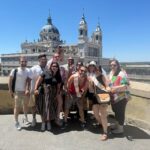
- Almudena Cathedral and the Royal Palace: the grand finale look
- Sabatini Gardens and Temple of Debod: a break with big payoff
- What makes the guides part of the value
- Who this tour fits best (and who should consider alternatives)
- Should you book this Madrid Welcome Tour in an Eco Tuk Tuk?
- FAQ
- How long is the Madrid Welcome Tour in the Eco Tuk Tuk?
- Is this a private tour?
- What’s included in the ticket price?
- Do I need hotel pickup?
- What if the streets are closed or there’s an event?
- Can I bring a pet?
Key things you should plan around
- Electric, private transport means less walking and more seeing in less time, with your group only inside each tuk-tuk.
- Photo stops are pre-selected, so you’ll get great viewpoints without negotiating where to pull over.
- Blankets and layers help a lot in winter, and the tour runs in rain or heat (with only extreme cancellations).
- A tight route with many landmarks is perfect for orientation, but you’ll likely want to return later for deeper visits.
- Guides matter here—the experience is often praised for friendly, humorous storytelling and practical tips.
- Time rules are real: delays over 15 minutes can lead to cancellation, so aim to arrive early.
Why an Eco Tuk Tuk is the smart way to start Madrid
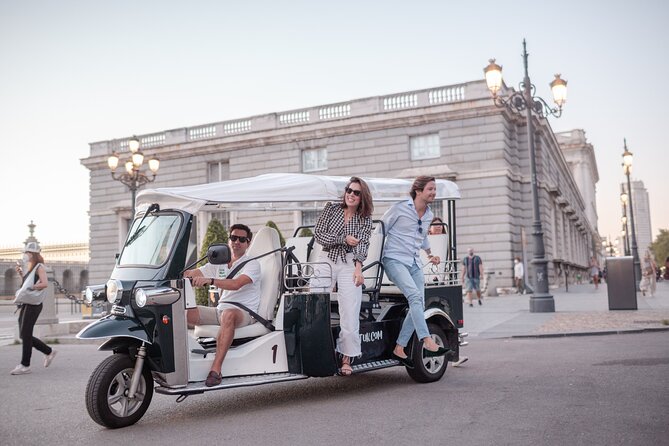
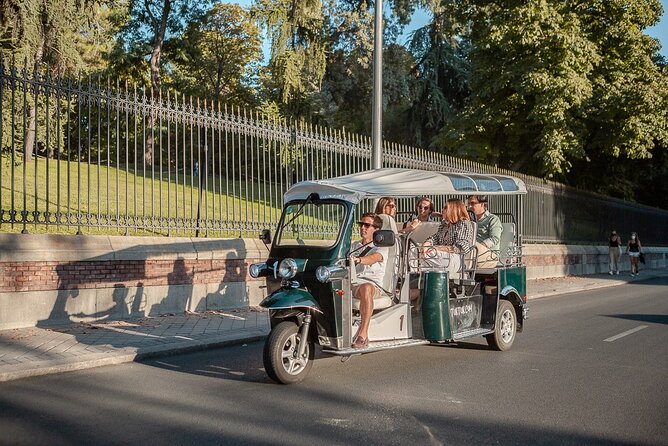
Madrid is big, spread out, and full of layers. If you try to do it on foot on day one, you’ll burn time before you even get your bearings. This is where the Eco Tuk Tuk idea shines: you cover a lot of ground while still feeling like you’re on a human-paced tour.
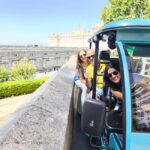
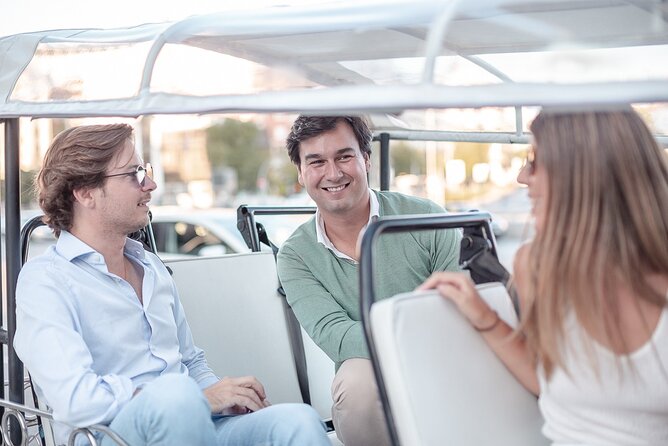
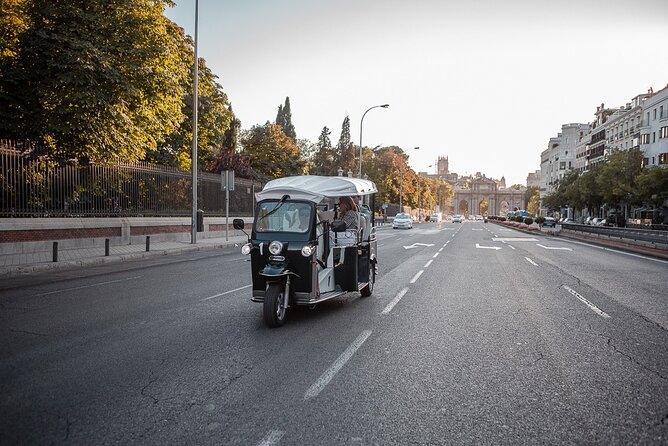
The vehicle is 100% electric and sustainable, but the practical payoff is quieter, smoother riding in busy central streets. You’re also in a setup built for comfort: the tour includes blankets and protective layers, and the drivers are there to help people get on if needed.
Finally, this tour is priced in a way that makes sense for a quick “first pass” through the center. It’s not trying to replace museum tickets or guided cathedral entry. Instead, it helps you decide what you’ll prioritize next.
You can also read our reviews of more tours and experiences in Madrid.


Meeting at Puerta del Príncipe: don’t overthink it
Your pickup point is at C. de Bailén, 4 (near Plaza de Oriente), right by the Royal Palace area. There’s no number 4 that’s obvious on Calle Bailén, so use Google Maps for “Calle Bailén 4” or look for “Puerta del Príncipe.”
The key detail: the meeting spot is under the main area in an underground station/bus station right next to the Royal Palace. When you arrive, look for the Eco Tuk Tuk signage and follow the stairs to the station entrance.
If you’re traveling with older family members or anyone who needs help with stairs or getting down/up, plan ahead and contact them by phone or WhatsApp so they can guide you to elevator access if available.
Mercado-style food atmosphere and the city’s everyday rhythm
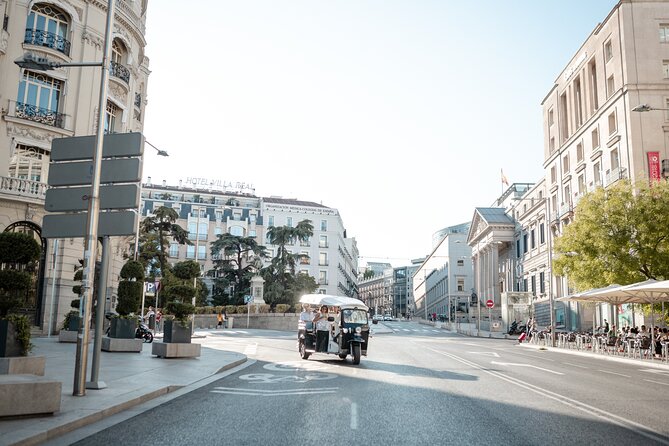
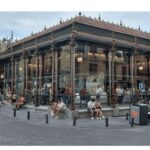
The tour often begins with a stop at a covered market dating from around 1916—a place that mixes local food, delis, and events inside an elegant indoor setting. Even if you don’t stop to eat here for long, it’s a strong “Madrid anchor” because it shows you how locals actually live and snack, not just what tourists photograph.
Why this works on a short tour: it breaks up the heavy monuments early. You get texture—smells, packaging, small stalls, and a sense of the city’s appetite. It’s also an easy contrast against later stops like palaces, cathedrals, and grand plazas.
Practical tip: if the market stop is brief, decide ahead of time whether you want one small bite or just use it for orientation.
San Francisco the Great: the Palace District’s bold church moment

Next up is the Royal Basilica of San Francisco the Great (officially the Basilica of Our Lady of the Angels). This Roman Catholic church is in Madrid’s historic center, in the Palace district.
Even from the outside, it tends to hit a different mood than the palace-and-museum circuit. It’s sacred architecture in a city that often feels secular and fast-moving. If you’re the type who notices domes, facades, and skyline shapes, you’ll probably appreciate having a clear church landmark in the middle of your overview.
A small consideration: if you’re hoping to spend lots of time inside, this tour isn’t built around that kind of extended stop. You’re using the tuk-tuk to get close and learn what to look for next.
Atocha Station: Madrid’s busiest hub in real life
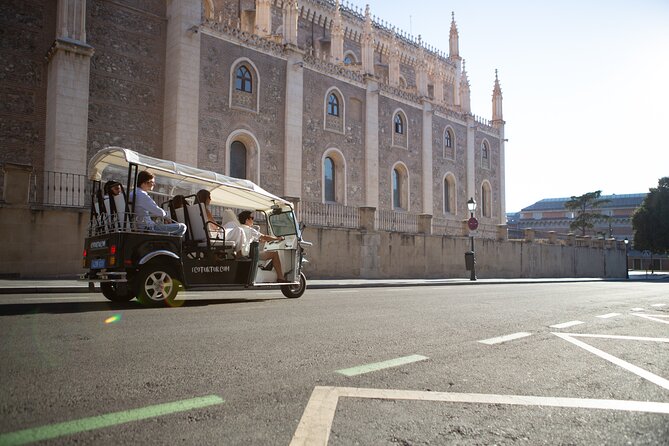
Then you roll into Atocha railway station, one of the busiest passenger stations in Spain and one of the major rail nodes in Europe. It’s located near Emperor Charles V Square, so it’s not just a train stop—it’s a city crossroads.
This is a great stop because it gives you a Madrid “systems” perspective. You start to see why day trips work from here, how commuters move, and why the center stays alive even outside tourist hours.
If you’re planning your next moves—museum day, day trip, or even just where to go without panic—this is the kind of place you’re glad you saw early.





The Palace of the Spanish Courts: neoclassical power with sharp details
Your tour also includes the Palace of the Spanish Courts, built on the former convent of the Holy Spirit, which once housed Congress between 1834 and 1841. That time layering matters: you’re standing (or stopping) in a spot where civic power replaced religious use.
What I like here is how visually specific it is. The main facade has a neoclassical portico with six Corinthian columns and a triangular pediment decorated with reliefs. The iconic lions flanking the entrance are tied to a darker story too—they were cast using iron from cannons captured during the African war.
Inside names like the Session Hall and the library hall known as the hall of the lost steps sound like trivia—until you realize they help you read the building with more meaning.
Note for your expectations: this stop is best for architectural looking and context. If you want interior time, you’ll likely need a separate plan.
Cibeles and Neptune: when sports fandom meets city design
A must-see stop is the Cibeles and Neptune area, where Greek myth meets modern Madrid. The tour explains the rivalry in a very Madrid way: Atletico Madrid celebrates in the square of the god of the sea, while Real Madrid celebrates at Cibeles.
There’s also a street-planning story behind the fountains. Originally, they faced each other on Paseo del Prado as part of Ventura Rodríguez’s original project. Later, at the end of the 19th century, both fountains were restructured and relocated to their current squares.
Two names tied to the sculpture you’ll hear: Francisco Gutierrez for the goddess sculpture, and Roberto Michel for the lions. You don’t need to memorize it—but you’ll understand why this spot is more than a pretty backdrop.
If you’re a fan of football culture, this is one of the most fun stops. If you’re not, it still works because it shows how the city reuses mythology for identity.
Prado Museum: what makes it matter without trying to replace it
The route includes the Prado Museum, widely regarded as a top destination for European painting. The tour’s explanation gives you a practical way to think about it: you’re not just seeing art, you’re seeing the depth of artists across centuries.
You’ll hear that its main strength includes major holdings by Velázquez, El Greco, Goya (with the most extensive representation of that artist), plus Titian, Rubens, and Bosco. Other big names come up too, including Murillo, Ribera, Zurbarán, Fra Angelico, Rafael, Veronese, Tintoretto, Patinir, Antonio Moro, Van Dyck, and Poussin.
Why this is valuable on a tuk-tuk tour: if you only have one short museum day, this overview helps you choose your strategy. You can look at the outside and feel confident you’re going somewhere worth your time—then decide which artists you care about most.
Los Jerónimos: a monastery stop that changes the tone
Then you get a stop at the ancient monastery of Saint Jerome el Real, popularly called Los Jerónimos. Originally governed by the Order of Saint Jerome, the site later expanded into what was called the Royal Room, and then became associated with the Palace of the Good Retreat during Philip IV’s time.
Even if you mostly see it from outside, this stop is helpful for understanding Madrid’s shift from religious power to royal and civic power. It’s also a good contrast to the more theatrical palaces and fountains. Monastery architecture tends to feel quieter and more disciplined, which balances out the energy of central streets.
Puerta de Alcalá and Plaza de Santa Ana: classic Madrid geometry
The tour includes Puerta de Alcalá, one of Madrid’s old royal gates—part of five gates that used to give access to the city. It sits in the center of the Independence Square roundabout, which means you’ll likely see it from a practical viewing angle as cars circulate.
Nearby, you may also pass by or stop around Plaza de Santa Ana, an open space in the Cortes district dating from 1810. The idea here isn’t just the square itself; it’s that the layout and feel changed across time through multiple urbanization phases.
Why you’ll enjoy this stop even on a quick tour: plazas are where Madrid changes tempo. You start thinking about where to sit, where to walk later, and where evening plans naturally happen.
Banco de España: why an important building can still feel secret
The route can also pass by the Banco de España building area—famous enough to be part of the skyline, but with an odd limitation: the interior can only be visited by groups from educational establishments and universities, with exceptions for some cultural entities and non-profit associations.
The tour frames it as a building constructed to match the function of the National Bank, including the issuance of coins and banknotes across Spain. So even if you don’t go inside, it helps you understand why the building looks the way it does—and why it’s treated like something public-facing but controlled.
Almudena Cathedral and the Royal Palace: the grand finale look
You’ll also see Almudena Cathedral, described as Madrid’s most important religious building. A standout fact: it was consecrated on June 15, 1993 by Pope John Paul II, becoming the first cathedral consecrated outside Rome.
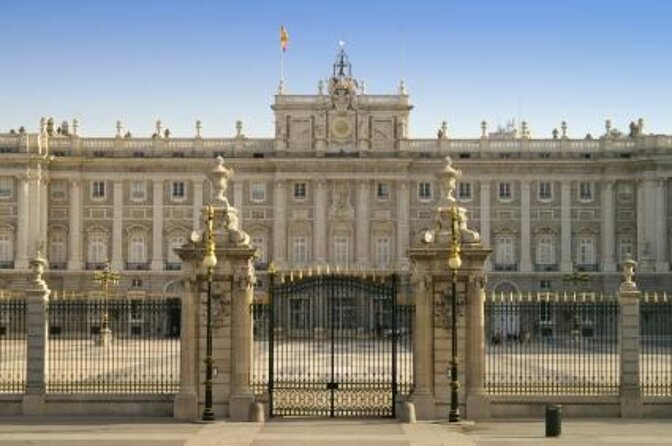
Next comes the Royal Palace of Madrid (sometimes described as the Royal Palace of the East). It’s the official residence of the King of Spain, though the current kings do not live there; it’s used for state ceremonies and solemn acts.
This pair of stops hits a useful mental contrast. Almudena gives you modern Catholic identity and milestone consecration. The Royal Palace gives you state power and ceremony without requiring you to manage palace-entry logistics on day one.
Sabatini Gardens and Temple of Debod: a break with big payoff
After the palace energy, you can enjoy Sabatini Gardens, opposite the northern facade of the Royal Palace, between Bailén Street and the San Vicente Coast. The gardens cover 2.66 hectares, so it’s not just a tiny patch of green.
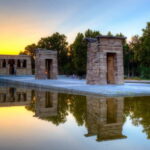
Then the route may include Templo de Debod. This is an ancient Egyptian temple building now located in Madrid, set west of the Spanish Steps near Paseo del Pintor Rosales on a high where the Mountain Barracks once stood. One of the best practical notes here: admission is free with a ticket, and the stop is designed to be short—about 10 minutes.
This is a smart final (or near-final) stop on an overview tour because it gives you a different kind of wow: not European power, not Spanish royalty, but a transplanted temple that feels like you time-traveled.
What makes the guides part of the value
This tour succeeds or fails on the human side, and the guide styles show up clearly in the kind of praise you’d want if you’re booking for real.
You’ll see names like Carlos, Juan Carlos, Enrique, Christian, Manuel, Laura, and Roberto tied to the experience in a way that suggests real personality matters. A few themes pop: clear explanations, friendly humor, and practical help—especially with finding the pickup spot and even guiding people back to elevators.
If you’re new to Madrid, that human guidance is gold. You don’t just get facts; you get a sense of where to spend your next hours and how to approach the city without wasting energy.
Who this tour fits best (and who should consider alternatives)
This works best if:
- you want an overview in 1–2 hours (or up to 4 hours if you choose a longer option) without heavy walking
- you like outdoor sightseeing and photo stops tied to major landmarks
- you want a local guide to point out what’s worth repeating later
You might want a different plan if:
- you’re hoping for long indoor museum or cathedral time (this tour isn’t built around extended entries)
- you want lots of flexible detours (photo stops and changes aren’t allowed)
- you’re arriving late or you’re worried about making tight timing windows
Also, keep in mind the tour requires a minimum age of two years and a minimum weight of 9 kg, and pets aren’t allowed.
Should you book this Madrid Welcome Tour in an Eco Tuk Tuk?
Book it if you want a simple, efficient way to get your bearings and build a priority list for the rest of your trip. The value is strongest for first-timers because you get a lot of Madrid’s most recognizable sights, plus guidance on what to do next, with an added comfort factor from blankets and a smooth electric ride.
Skip it (or pair it with something else) if you’re traveling with very specific interests that need deep ticketed access. Think of this as your orientation layer, not your final destination.
If your goal is to see Madrid’s top landmarks quickly, feel comfortable doing it, and leave with a clear plan for follow-up visits, this is a very solid choice.
FAQ
How long is the Madrid Welcome Tour in the Eco Tuk Tuk?
The tour runs for about 1 to 4 hours, depending on the option you book and the time available.
Is this a private tour?
Yes. It’s a private activity, and only your group participates.
What’s included in the ticket price?
You get an expert guide and driver, a tour that starts without queues or waiting, a private 100% electric vehicle for your group, pre-selected photography stops, and blankets/protective layers for cold or windy weather.
Do I need hotel pickup?
No. Hotel pickup and drop-off are not included.
What if the streets are closed or there’s an event?
The itinerary may vary due to closed streets or demonstrations on the day of the tour.
Can I bring a pet?
No. Pets are not allowed for security reasons.