REVIEW · LISBON
Lisbon Highlights: Private Tuk Tuk Tour Adventure Sightseeing
Book on Viator →Operated by ColourTrip Lisbon · Bookable on Viator
Lisbon’s best views come with zero uphill slog. I love how an electric tuk-tuk lets you cross steep neighborhoods fast, and I love the live local guide commentary that turns quick stops into real context. One thing to consider: the ride can feel bumpy on uneven streets, so it’s not a fit if you’re prone to motion sickness or have back issues.
This is a true private tour for your group, with flexible timing because you can pick shorter or longer options. You’ll also get to see a lot from the outside, which means less time lining up and more time moving between Lisbon’s famous viewpoints and landmarks, from Alfama to Belém.
In This Review
- Key highlights to know
- Electric Tuk-Tuk Logistics That Actually Matter in Lisbon
- How Long Should You Book: 3 to 8 Hours, Plus Tour Types
- Alfama Viewpoints and Cathedral Exteriors: The Lisbon Story in Quick Frames
- From Carmo Ruins to Baixa Views: Lisbon’s Turning Points
- Belém in a Tight Loop: Pastéis, UNESCO Sights, and the River Story
- Guides, Safety, and the Small Things That Make It Feel Private
- Price and Value: Why $84.29 Can Make Sense Here
- Should You Book This Lisbon Highlights Tuk-Tuk Tour?
- FAQ
- How long is the Lisbon highlights private tuk-tuk tour?
- Is this a private tour or shared with other groups?
- Do I get pickup in Lisbon?
- Is the tuk-tuk electric?
- Are attractions visited inside or outside?
- Is the pastéis de Belém included?
- Is lunch included?
- What language is the tour in?
- Can children ride in the tuk-tuk?
- What about cancellation and weather?
Key highlights to know
- Private tuk-tuk time with pickup in central Lisbon and your own local guide
- Electric help on steep streets so viewpoints don’t beat your legs
- Miradouro stops at Portas do Sol, Senhora do Monte, and São Pedro de Alcântara
- Belém sights in one route including Pastéis de Belém, Jerónimos, and Torre de Belém (mostly exterior)
- Guide personality shows up: Arthur, Rogério, Nathalia, Juno, Ghassan, and more get praised for pacing and tailoring
- Comfort limits are real: uneven roads mean some people should skip tuk-tuks
Electric Tuk-Tuk Logistics That Actually Matter in Lisbon
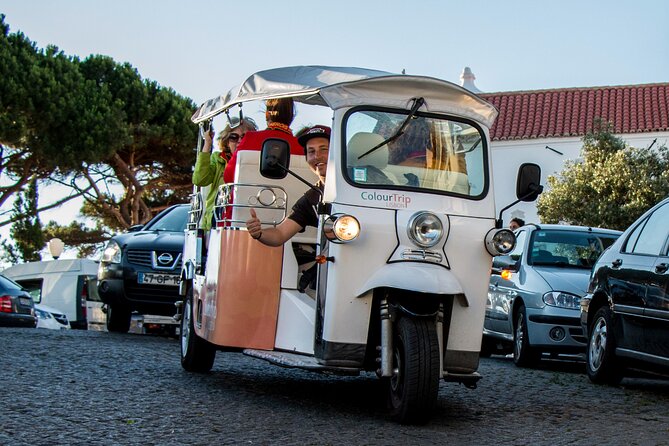
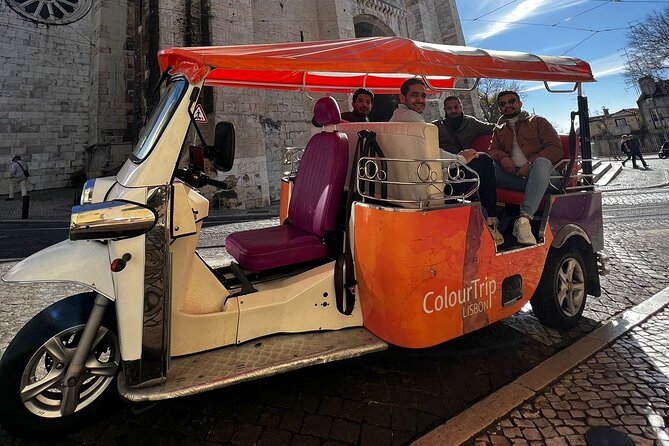
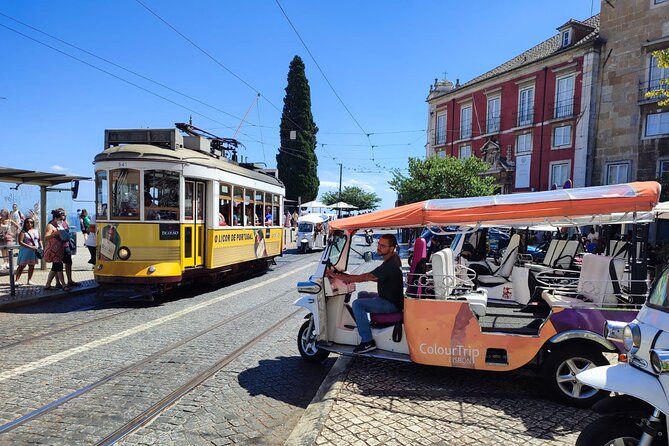
Lisbon is the kind of city where “just walk there” can quietly turn into a leg workout. This tour solves that with a 100% electric tuk-tuk, and that means you can get around areas that bigger vehicles can’t reach. It’s not about speed for speed’s sake. It’s about saving time and energy so you can spend your day looking at things instead of paying for sore calves.
A nice extra is that you’re not doing this in a random crowd. It’s private, so your guide can slow down if someone wants photos, or shorten a stop if you’re running out of daylight.
One practical note: tuk-tuks are great, but they aren’t a smooth ride like a car on a highway. Lisbon’s streets are uneven, and that can trigger neck pain or motion sickness for some people.
You can also read our reviews of more tours and experiences in Lisbon.



How Long Should You Book: 3 to 8 Hours, Plus Tour Types
This tour comes in different lengths (about 3 to 8 hours), and that choice changes how much you can fit without feeling rushed. A shorter option is best if you’re in Lisbon for a day and want the highlights fast. A longer option gives you more breathing room at viewpoints and a fuller loop.
There’s also a plan difference tied to a Premium lunch option. If you choose that version, you’ll add time for lunch in the Alfama area with Portuguese wines, cheeses, and cured meats, plus tastings. Lunch isn’t included in the base price, so think of the Premium add-on as part food stop, part slow-down.
Also keep in mind the route is designed for outside viewing. That can be ideal if you hate ticket lines. But if you’re the type who wants to see every interior detail, you might still want to plan separate museum/church time later.
Alfama Viewpoints and Cathedral Exteriors: The Lisbon Story in Quick Frames
This is where the tour really earns its keep: it strings together viewpoints that explain how Lisbon is built—hills, tiles, courtyards, and neighborhoods pressed into place.
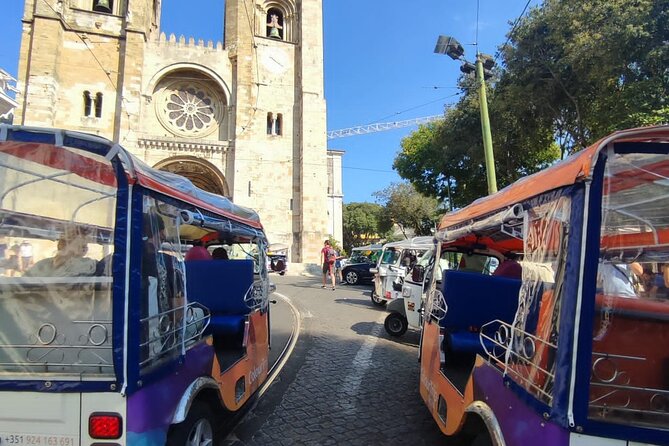
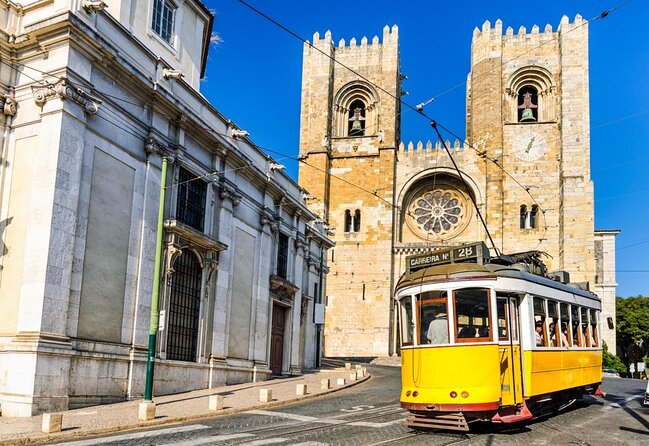
Start with the Lisbon Cathedral (Sé) area. You’ll stop outside for about 10 minutes. The cathedral dates to the 12th century and mixes Romanesque and Gothic styles. You won’t be going deep inside on this stop, but the exterior gives you a strong visual anchor for the old Lisbon story.
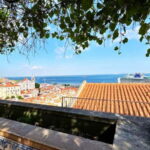
From there, you move to Miradouro das Portas do Sol, one of the classic panoramas. Expect a view over Alfama’s red rooftops toward the Tagus River. Your guide also points out landmarks you can see from there, including the National Pantheon and Igreja de São Vicente de Fora.
Next is Miradouro da Senhora do Monte, a higher viewpoint with a wider sweep. You can look from around São Jorge Castle all the way toward the Tagus, and on clear days you’ll spot big city markers like the 25 de Abril Bridge. This stop is longer (about 20 minutes), and that extra time matters because the view needs a little “let it sink in” pacing.
Along the route, you’ll pass by a couple of big names:
- Monastery of São Vicente de Fora: noted for its Mannerist architecture, with foundations in the 12th century and expansion in the 16th.
- Feira da Ladra: the famous street market that runs only Tuesdays and Saturdays. It’s known as Lisbon’s oldest traditional fair, with origins dating back to the 13th century. If your day matches, it can feel like you’ve stumbled into an old-world ritual. If it’s not market day, you’ll still get the story as you pass through the area.
A brief stop/admire moment comes at the National Pantheon, where your guide explains how it started as a church dedicated to Saint Engrácia before becoming the Pantheon in 1916. The architecture blends Baroque and Neoclassical influences, and you’ll learn who rests there—writers, politicians, and national figures. Even without going inside, the exterior and dome are worth the quick time.
Then you get into Alfama proper. This is about slow-drama streets: narrow lanes, tile work, and the fado atmosphere you hear even when you don’t catch a live performance. You’ll learn how fado’s roots connect to the streets, plus legends that loop back to both the Cathedral (Sé) and São Jorge Castle.
From Carmo Ruins to Baixa Views: Lisbon’s Turning Points
After Alfama, the tour shifts to another part of Lisbon’s identity: places where history has left visible scars and political change in plain sight.
At Largo do Carmo, you’ll stop outside (about 10 minutes). This square centers on the Carmo Convent ruins—damaged severely in the 1755 earthquake. If you want a sense of resilience that goes beyond a postcard, this is it. Your guide also connects the ruins to later history, including the Carnation Revolution in 1974.
Then you’ll pass by Praça do Comércio (Terreiro do Paço) along the Tagus waterfront. Even as a pass-by, it’s an important mental map point: this was public life in Lisbon for centuries. Your guide explains the Age of Discoveries connection and why the square was reconstructed after the 1755 earthquake. You’ll also see the Rua Augusta Arch and the arcades that frame the riverfront.
To keep the day rolling, you’ll reach Miradouro São Pedro de Alcântara. This viewpoint is about sweeping city geometry: views over Baixa, toward São Jorge Castle, and back to the Sé area. It’s a short stop (about 10 minutes), but it gives you a different angle than Alfama’s miradouros.
Belém in a Tight Loop: Pastéis, UNESCO Sights, and the River Story
Belém is the part of Lisbon that feels like it’s tied to ships, maps, and big ambitions. This tour handles Belém efficiently, especially if you’re trying to avoid spending your whole day on buses.
You’ll begin with the Fábrica dos Pastéis de Belém stop for pastéis de nata. The guide explains the origin story and how the recipe became famous (with a secret recipe kept over time). Expect about 10 minutes here. This part is not included in the price, so you’ll pay for the pastry yourself, but it’s a classic reason to come to Belém in the first place.
Next is Mosteiro dos Jerónimos. This is UNESCO and one of Lisbon’s biggest “wow” monuments, built in the 16th century in Manueline style. On this tour, you’re visiting from the outside, and the stop is around 20 minutes. That outside viewing still works well because your guide can point out the design logic and the Age of Discoveries theme without you getting stuck in lines.
From there you move to Torre de Belém, also UNESCO. You’ll admire it mostly from outside (about 15 minutes). Your guide explains its original purpose as a defensive structure and a lighthouse for navigators. The architecture is Manueline again, so if you noticed that style at Jerónimos, you’ll start seeing patterns across the riverfront.
You’ll also stop by the Padrão dos Descobrimentos, a monument on the Tagus with a clear mission: it was inaugurated in 1960 to mark the 500th anniversary of Prince Henry the Navigator’s death. Your guide ties it to the broader story of explorers, cartographers, and navigators who sailed out of Lisbon in the 15th and 16th centuries.
Finally, the day can include Basilica da Estrela on the outer loop (about 10 minutes). This is neoclassical and was inaugurated in the late 18th century after Queen Maria I’s vow tied to the birth of her son.






Guides, Safety, and the Small Things That Make It Feel Private
The best part of this experience is how often the guide turns a drive-by into something personal.
Names keep coming up in the positive feedback: Arthur, Rogério, Ghassan, Carolina, Nathalia, Juno, Francisco Nunes, Patricia, Jama, Rodrigo (Rod), Diogo, Ines, and Leo. Across those guide styles, the patterns are consistent:
- They tailor the pace to the group’s interests and time limits.
- They keep things moving even when traffic or road closures happen.
- They explain what you’re actually seeing, not just a read-out of dates.
One reason people love these tours is that the guide doesn’t treat Lisbon like a checklist. There are examples of extra thoughtful touches when time allows, like adding a stop for a locally loved item, helping with translations, or prepping comfort items when weather turns. That’s not something you should assume will happen on every departure, but it fits the overall service style: your day is meant to flex.
Safety also shows up in the feedback. You’re moving through narrow streets and traffic, and drivers who know how to handle tuk-tuk positioning make a big difference.
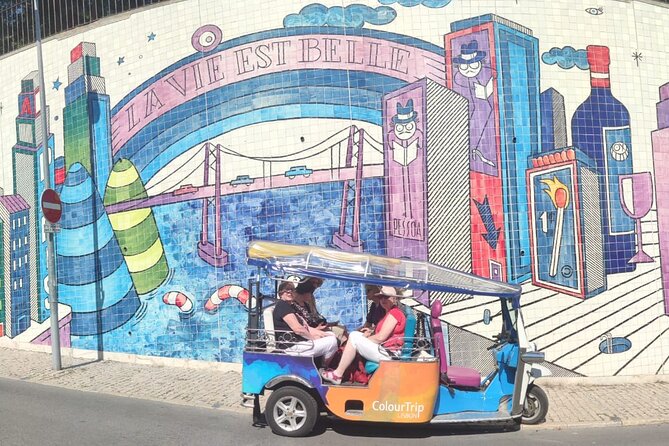
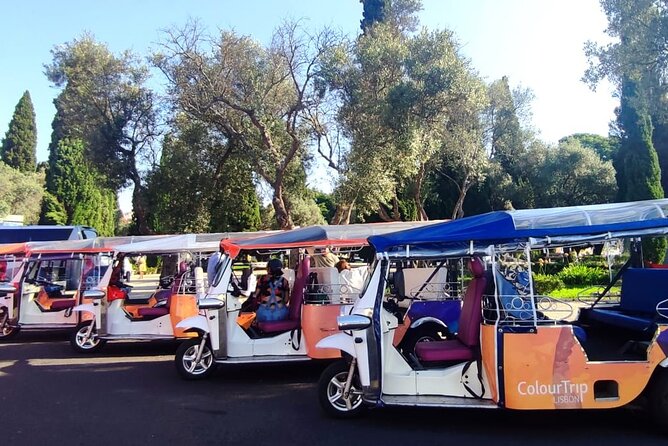
One seat detail worth knowing: the tuk-tuks come in 4 or 6 passenger options. In the 4-seat model, seats face forward. In the 6-seat model, seating is face-to-face. If you’re picky about how you want to face, tell the operator ahead of time.
Price and Value: Why $84.29 Can Make Sense Here
The base price is $84.29 per person, and the value is mostly in three things Lisbon-specific:
- Private transport in an electric tuk-tuk that fits tight hills and narrow lanes.
- Hotel pickup/drop-off within central Lisbon, which saves you the puzzle of where to meet and how to get there.
- Live local commentary, so you’re not just seeing famous spots, you’re understanding them in context.
What you pay for is also balanced by what’s not included: pastéis are extra, and lunch is extra if you choose the Premium plan. Admission is not included for the stops, and since the tour is mostly outside viewing, you’re not buying a pile of attraction tickets during the drive.
So if your goal is to maximize “Lisbon orientation” in a short time, this can be a smart spend. If your goal is slow travel inside major sites for hours, you may want to pair it with separate ticketed visits afterward.
Should You Book This Lisbon Highlights Tuk-Tuk Tour?
Book it if you want a fast, low-effort way to get the city’s main story beats: Alfama’s views, Carmo’s historic scars, and Belém’s riverfront giants. It’s also ideal for first-timers who want your bearings early, plus people who dislike long walks between viewpoints.
Skip or at least think twice if you have back problems or if bumpy rides can trigger motion sickness or neck pain. This tour doesn’t hide that reality. Also note the rule that children under 6 years old are not legally allowed to ride in tuk-tuks.
If you can handle short, outside-view stops and you enjoy history told by a real local, this is a strong way to see Lisbon without turning your vacation into a workout plan.
FAQ

How long is the Lisbon highlights private tuk-tuk tour?
It runs for about 3 to 8 hours, depending on the tour length you choose.
Is this a private tour or shared with other groups?
It’s private. Only your group participates.
Do I get pickup in Lisbon?
Pickup and drop-off are included in central Lisbon. If you’re outside the selected pickup area, pickup is listed as in front of the Hard Rock Café.
Is the tuk-tuk electric?
Yes. The tour uses 100% electric tuk-tuks.
Are attractions visited inside or outside?
The route is designed for attractions from the outside. Several key stops specify that the traveler only visits from outside.
Is the pastéis de Belém included?
No. Pastéis de Belém are listed as not included, even though there is a stop to taste them.
Is lunch included?
Lunch is only part of the Premium option, and lunch is listed as not included.
What language is the tour in?
The tour is offered in English.
Can children ride in the tuk-tuk?
Children under 6 are not legally permitted to ride in tuk-tuks.
What about cancellation and weather?
There is free cancellation up to 24 hours in advance for a full refund. The experience requires good weather, and if it’s canceled due to poor weather, you’ll be offered another date or a full refund.