REVIEW · SPLIT
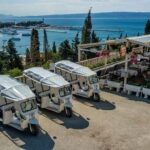
Split City Tour By Electric Rickshaw┃Riva Ride
Book on Viator →Operated by Riva Ride · Bookable on Viator
Split can feel like a maze. This electric rickshaw route gives you an easy, paced way to see the core sights without fighting crowds on foot. You roll through the old streets, hear clear stories about Diocletian’s Palace, then end with the calmer outlooks from Sustipan.
What I really like is how the tour blends big monuments with small, walk-you-to-the-door context. The stops are short, but each one gives you a mental map of how Split’s old town is laid out, starting at the Roman gates and moving toward the square and statues. Guides you might meet, like Toma, Thomas, Mike the Bike (Michael), Blaz, or Gabby, tend to tell the kind of details that help the city make sense fast.
One drawback to keep in mind: the full experience depends on timing and weather. You’re traveling in open-air old-town streets, so hot sun or rough timing can change how relaxed it feels, and it’s worth expecting a tight schedule for such a compact route.
In This Review
- Key highlights to look for
- Why an electric rickshaw is smart for Split
- Diocletian’s Palace and the Roman gates: your orientation boost
- Brass/Bronze Gate: the smaller entrance with big context
- Golden Gate: the one you start to recognize instantly
- Eastern (Silver) Gate: a quieter add-on that fills the puzzle
- Old Split lanes, Prokurative, and where the city breathes
- Prokurative square: a Mediterranean reset button
- Grgur Ninski statue: the story behind a famous figure
- Sustipan park: the view payoff and the pace change
- How it feels in real time: timing, stops, and photos
- Price and value: is $48.06 worth it?
- Who should book this electric rickshaw tour
- Booking timing and practical expectations (quick hits)
- Should you book the Split City Tour by Electric Rickshaw (Riva Ride)?
- FAQ
- How long is the Split City Tour by Electric Rickshaw
- What is the price per person
- Is the tour offered in English
- Is this a private tour
- Are there admission tickets needed for the listed stops
- What weather conditions are required
- Can I cancel for a full refund
Key highlights to look for
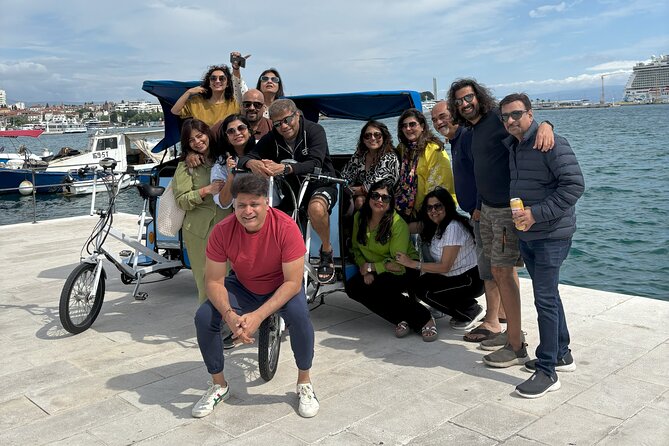
- Electric rickshaw navigation through old-town streets with less effort than walking.
- Roman gate orientation (Brass/Bronze, Golden, and Eastern/Silver) so the old town clicks.
- Old Split photo moments at short stops, without turning it into a long slog.
- Grgur Ninski statue context tied to Old Slavic language and the Glagolitic script.
- Sustipan park viewpoints for a breather after the denser center.
Why an electric rickshaw is smart for Split
Split’s historic center is gorgeous, but it’s also cramped. Streets twist, stairs pop up, and crowds can slow you down more than you expect. An electric rickshaw fixes the problem in a practical way: you can cover ground quickly, then pause for photos and quick looks.
You’re not just being transported. The best part is that the ride is built around storytelling and order. As you pass major landmarks and Roman entrances, you start to recognize what you’re seeing. That matters because Split can look chaotic until someone gives you the thread.
Comfort is another big plus. People with mobility concerns have found it workable, since the tour keeps you moving without making you tackle a full walking route of uneven stone and sudden steps. Service animals are allowed, which is always good to see.
Diocletian’s Palace and the Roman gates: your orientation boost
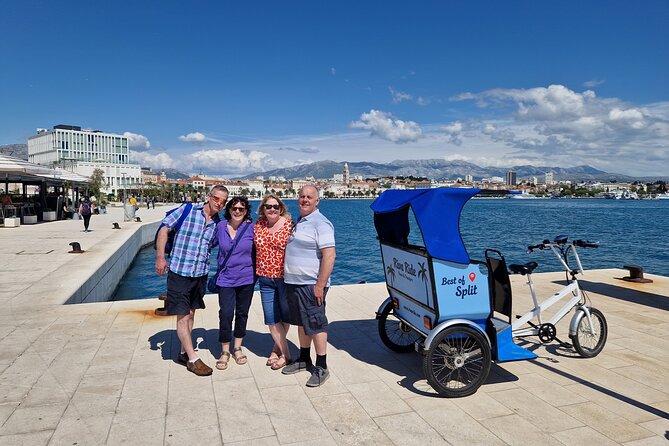
The tour kicks off with Diocletian’s Palace. Even if you’ve seen photos, the palace complex is easier to understand when you view it in motion. While you drive through the old streets, you hear how it was created and how the surrounding buildings fit into the larger story of the palace area.
Right after that, you hit the gates that act like punctuation marks in the old-town layout. These are not just “cool doors.” They help you track where you are.
Brass/Bronze Gate: the smaller entrance with big context
Stop two is the Brass Gate (listed as the Bronze Gate). It’s described as the smaller of the principal Roman gates into Stari Grad, the old town. That “smaller” label matters because it often gets less attention than the bigger entrances, yet it’s still key to understanding how Roman Split was structured. In practice, it’s a good stop for a quick photo and a mental checkpoint.
Golden Gate: the one you start to recognize instantly
Then you roll to the Golden Gate, one of the four principal Roman gates into the old town. Once you’ve seen the first gate, this second stop lands harder because you can start comparing how the gates relate to the city’s flow. It’s the classic “now I get it” moment, where the city map suddenly becomes less abstract.
Eastern (Silver) Gate: a quieter add-on that fills the puzzle
Finally, there’s the Eastern (Silver) Gate, described as a secondary gate of Diocletian’s Palace. This is the stop that helps you connect the dots. Big-gate stops can feel like isolated sights, but adding the secondary gate makes the palace edges feel more complete and believable.
Practical note: each gate stop is brief, so have your camera ready. You’re getting orientation here, not a museum-level stop.
Old Split lanes, Prokurative, and where the city breathes
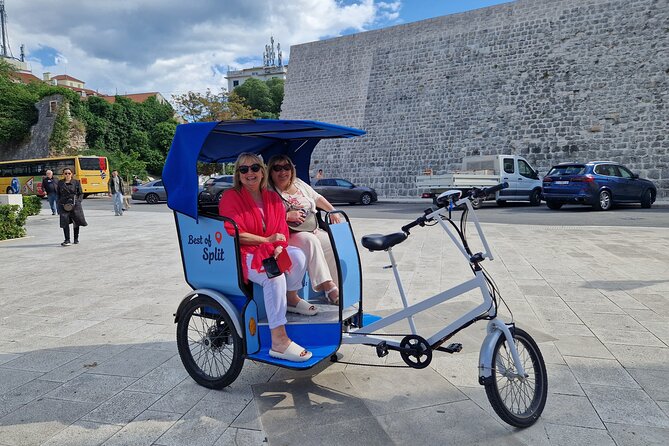
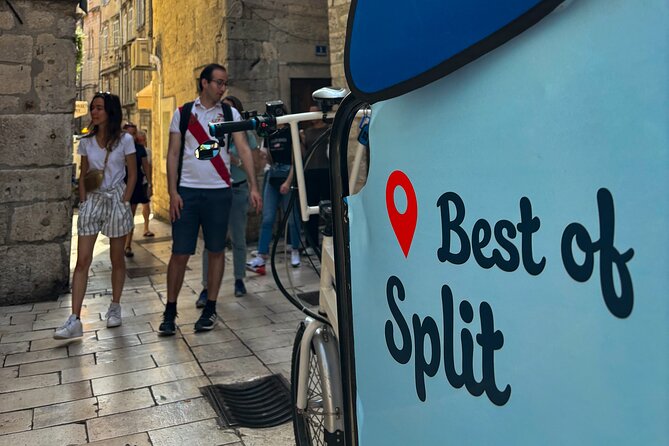
After you’ve got the palace-gate skeleton, you move into the street experience. The itinerary includes narrow streets and then a drive through Old Split. The “drive” part is important. Old Split is easier to follow when someone explains what you’re passing, instead of trying to guess directions while your feet get tired.
Prokurative square: a Mediterranean reset button
Stop three is Prokurative, a Mediterranean square in the center of the city. Think of it as a reset. Squares give you breathing room after narrow lanes. It’s also a helpful place to reorient before you head toward statues and quieter viewpoints.
Even if you only spend a few minutes here, this kind of stop helps you avoid tour fatigue. You’re not stuck in stone alleys the whole time.
Grgur Ninski statue: the story behind a famous figure
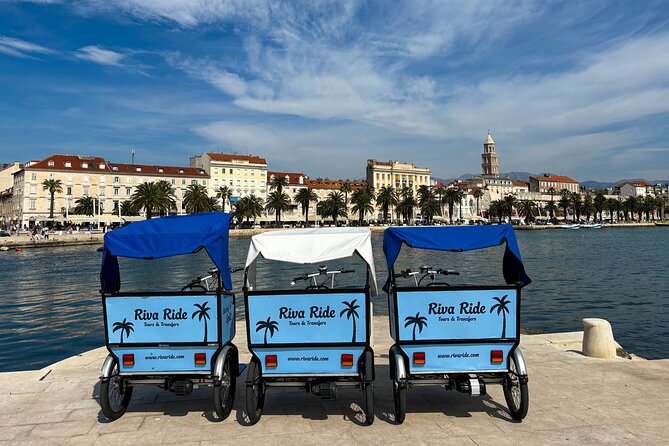
Next comes the Statue of Grgur Ninski (Gregory of Nin). This isn’t treated like a random landmark stop. You’re told he was an advocate of the Old Slavic language and the Glagolitic folk script. That turns a statue from “I saw it” into “I understand what it represents.”
Why that’s valuable: Split loves layers. Roman structures, medieval influence, language identity, and modern city life all overlap. A statue like this gives you one of the clearest cultural threads.
If you enjoy cultural context, this is one of the stops that tends to make the rest of your self-guided walking easier, because you start spotting themes instead of just objects.
Sustipan park: the view payoff and the pace change
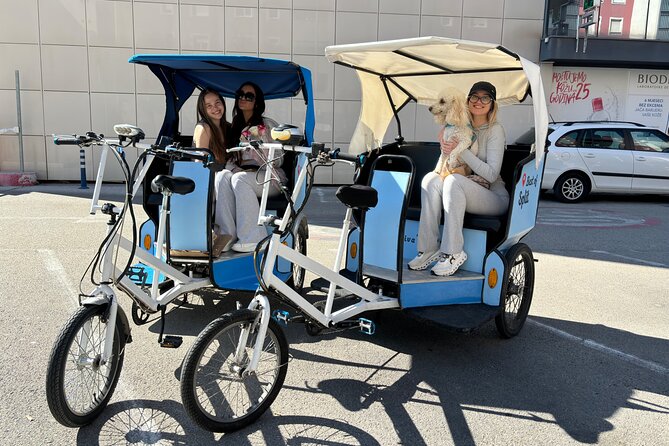
The last major stop is Sustipan, a park where you get to enjoy views over the city. This is where the tour slows down emotionally, even if the clock keeps moving.
After the old town’s tight streets and Roman gates, Sustipan gives you something different: space, shade (at least when conditions cooperate), and open sightlines. It’s also a natural place to step out of the history mode and just take in Split from a distance.
From the ride experience, it often feels like the tour’s “finish strong” moment. You can actually see the harbor area and the relationship between the old center and the modern city around it.
One extra thing that sometimes shows up depending on how your guide times the route: some departures continue into greener areas around Marjan and can include viewpoint moments toward Kasjuni Beach, plus a harbor peninsula with local fishing boats. If that happens on your date, it’s a great bonus, because it adds variety beyond stone and gates.
How it feels in real time: timing, stops, and photos
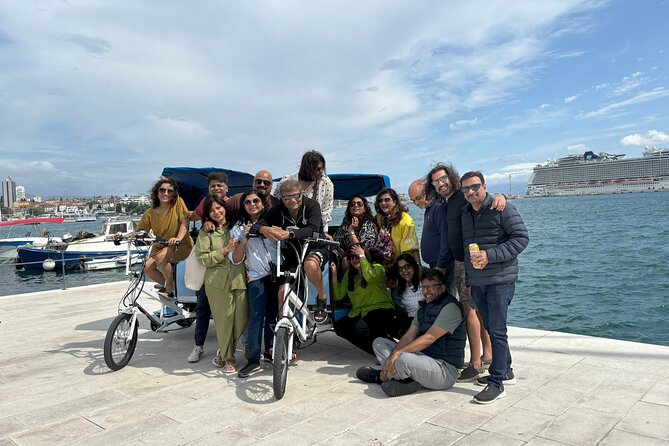
This tour runs about 1 hour to 1 hour 20 minutes. Short duration is the entire point. You get a tight loop of highlights with minimal backtracking.
Stops are generally around 3 to 15 minutes. That means you’ll likely spend more time looking at the street picture and less time standing still. If you’re the type who loves a quick photo and moves on, you’ll be happy. If you’re trying to read every plaque, you might feel rushed.
In hot weather, the short pacing is smart. One review noted the rickshaw had a canopy, which helps take the edge off sun. Electric rickshaws also tend to feel calmer than noisy vehicles, so conversations with your guide are easier.
Also, remember it’s a private tour/activity, so it’s only your group. That usually makes the vibe less chaotic than big group bus tours and can help with photo timing, especially around narrow lanes.
Price and value: is $48.06 worth it?
At $48.06 per person for about an hour to an hour and a bit, the value question comes down to what you want from Split on Day One.
If you’re short on time, this is one of the better ways to get bearings. The tour gives you a quick mental map: palace area logic, Roman gate placements, where Prokurative fits in, and what Grgur Ninski signifies. That kind of orientation often saves you from doubling back later when you’re walking on your own.
If you’re the type who loves to wander for hours and already knows your way around, you might feel like you could do it cheaper by walking. But most people don’t underestimate how quickly Split walking adds up in heat and fatigue. This tour trades a single payment for less stress and faster understanding.
A fair caution: one person felt the price was high for the time. That’s a real consideration. If budget is tight, compare this to what you’d spend on transportation plus your time. If your time is limited, the price starts to feel more reasonable.
Who should book this electric rickshaw tour
I think this tour is a strong match if:
- You want a first-pass orientation in Split without getting lost in the old streets.
- You’re traveling with people who prefer shorter walking segments.
- You’re visiting during a cruise day or another schedule where you need highlights efficiently.
- You enjoy history, but in an easy, story-driven way rather than a long museum session.
It may be less ideal if:
- You want a lot of deep, slow stopping at each site.
- You’re hoping for an all-day plan that includes lots of long scenic hikes.
- You’re very sensitive to heat, since some parts are outdoors and short stops add up.
Booking timing and practical expectations (quick hits)
This experience uses a mobile ticket and is offered in English. Confirmation is received at booking, and it’s described as near public transportation.
Good weather is important. The tour lists a weather requirement, and if it has to change due to poor conditions, you should expect a different date or a full refund.
Also, it’s already popular. On average, it gets booked around 50 days in advance, so if you have fixed plans, don’t wait until the last moment.
Should you book the Split City Tour by Electric Rickshaw (Riva Ride)?
Yes, if you want an efficient, story-led way to understand Split fast. The route hits Diocletian’s Palace context, Roman gates that organize the old town, a key cultural stop at Grgur Ninski, and then a viewpoint payoff at Sustipan. That combination is the whole reason the tour works.
If your main goal is to slow down and linger for long periods at every stop, you may find the pacing a bit tight. But if you want to get your bearings fast and leave with a clearer sense of where everything sits, this is a smart buy.
FAQ
How long is the Split City Tour by Electric Rickshaw
The tour runs about 1 hour to 1 hour 20 minutes.
What is the price per person
The price is listed as $48.06 per person.
Is the tour offered in English
Yes, the tour is offered in English.
Is this a private tour
Yes. Only your group participates.
Are there admission tickets needed for the listed stops
The itinerary lists the stops as admission ticket free.
What weather conditions are required
The experience requires good weather. If it’s canceled due to poor weather, you’ll be offered a different date or a full refund.
Can I cancel for a full refund
You can cancel up to 24 hours in advance for a full refund.