REVIEW · SPLIT
Private Electric Rickshaw Tour of Split
Book on Viator →Operated by Riksa Tour Split · Bookable on Viator
Split is beautiful, and it can also be spread out.
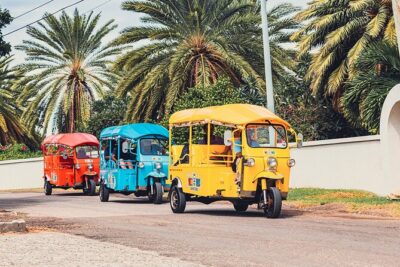
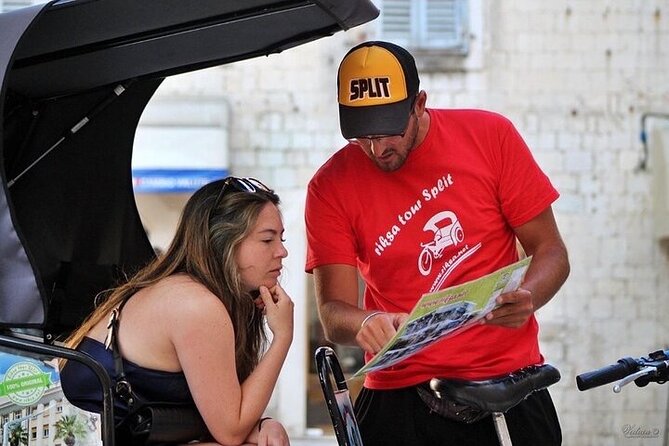
This private electric rickshaw ride helps you cover Split highlights without beating your feet to a pulp, and I love that it’s private so you can ask your driver-guide questions as you go. You’ll glide past the Riva promenade, Diocletian’s Palace entrances, and up to Marjan Forest Park. One thing to consider: the route is weather sensitive, and the best views can depend on how clear the day is.
I also like the value angle here. Even at $46.10 per person, you’re paying for a low-effort way to see a lot of the city in one go, with Marjan Park and Bene Beach time built in on the longer options. The small-battery comfort also matters: it’s a relaxed pace, not a sprint tour.
If you’re on a cruise day or you simply want to get your bearings fast, this is the kind of tour that makes Split easier to enjoy. And since it returns you to the meeting point, you’re not stuck trying to figure out your next move after you’re done.
In This Review
- Key things I’d plan around
- Private electric rickshaw: the real payoff in Split
- Where you start at Model of the Palace (and why it helps)
- Riva Harbor and Prokurative: waterfront charm plus architecture context
- Croatian National Theater: a quick hit of Split’s cultural face
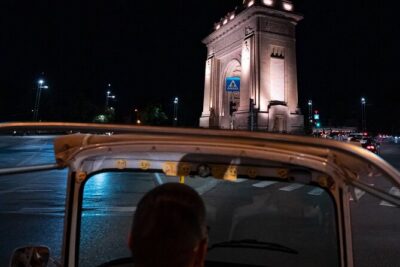
- Diocletian’s Palace gates: the part you’ll remember
- Golden Gate and Gregory of Nin: Roman landmarks plus a local tradition
- Silver Gate: another angle on the same Roman wall
- Bronze Gates and substructures: when you want the under-story
- Matejuška Fishermen’s Port and Sustipan: sea air and a quieter edge
- Marjan Forest Park: the green escape with a plan
- Meštrović Gallery and Obojena Svjetlost Beach: art and color at Marjan
- Kašjuni and Bene beaches: when you want sea time without the hassle
- Poljud Stadium and Park Zvončac: quick stops, quick context
- Price and time: why $46.10 can make sense
- Who this tour is best for (and who should skip it)
- Booking sanity check: when weather can affect your day
- Should you book the Private Electric Rickshaw Tour of Split?
- FAQ
- How long is the private electric rickshaw tour in Split?
- What does the tour cost per person?
- Is the tour private?
- Where does the tour start and end?
- What major sights do you visit?
- Are entrance tickets included?
- Is there a drink included?
- Does the tour use a mobile ticket?
- What is the rickshaw capacity?
- Is cancellation free?
Key things I’d plan around

- Private rickshaw, small groups: max capacity is 2 adults and 1 child (up to 10), so it stays personal
- A tight mix of old town and hill views: Roman gates one minute, Adriatic overlooks the next
- Marjan Forest Park included on the longer route: plus time at beaches like Kašjuni and Bene
- Driver-guide Q&A is part of the experience: you’re not just getting driven around
- Electric and efficient: great for days when walking feels like a chore
- Most stops are quick photo breaks: you’ll see a lot, but you won’t linger everywhere
Private electric rickshaw: the real payoff in Split
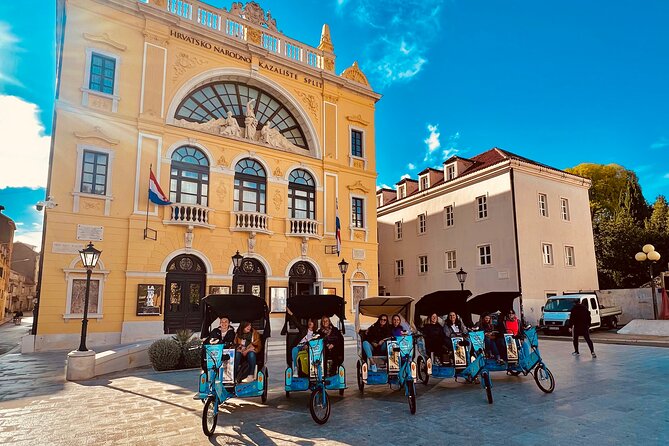
Split is the kind of city where you can easily end up doing “short walk, long wait” all day. Hills, old streets, and crowded areas make it harder than it should be to cover the big sights efficiently. A private electric rickshaw fixes that problem by doing the heavy transportation work for you.
The second payoff is the private format. You’re not sharing your ride with strangers, and the driver-guide can tailor explanations to what you care about most. If you’re more into architecture, Roman street-level details, or coastal views, you can ask—while you’re actually near the place.
The third payoff is flexibility. The tour runs from about 30 minutes up to about 2 hours 30 minutes, so you can match it to a half-day sightseeing plan, cruise timing, or jet-lag reality.
Where you start at Model of the Palace (and why it helps)
Your tour starts at the Model of Palace on Obala Lazareta 1, Split. Starting at the palace model makes practical sense: it gives you a visual framework for Diocletian’s Palace before you start moving through the streets around it.
Getting back at the same meeting point is also a comfort. Split has plenty of great wandering, but it’s nice to have a clean “done” point so you can plan your next meal or stroll without scrambling for the right bus stop or taxi stand.
If you’re arriving near the cruise port, this route also has stops near it. That matters if you want to see meaningful sights without committing to a long walk right after disembarking.
Riva Harbor and Prokurative: waterfront charm plus architecture context
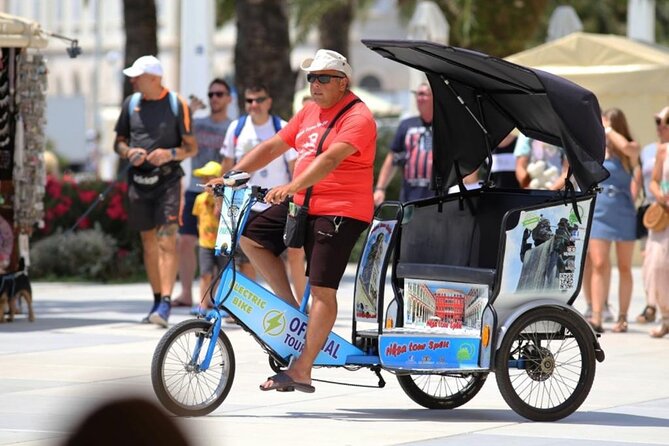
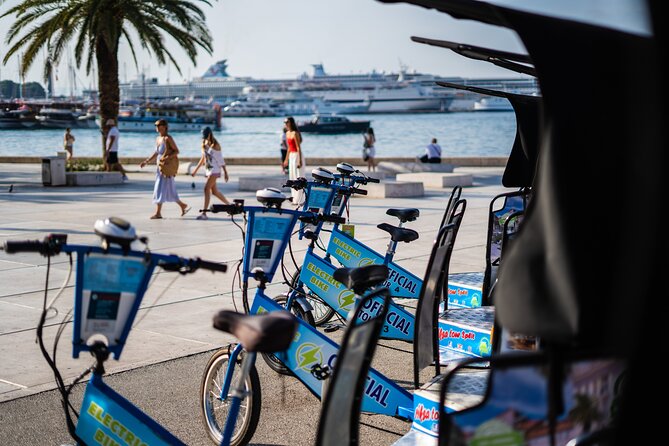
Your ride kicks off at Riva Harbor, Split’s waterfront promenade. This is where locals and visitors gather, and it’s easy to see why: you get classic Adriatic views with historical buildings in the background, plus the kind of café-and-sea-air atmosphere that makes the city feel instantly livable.
From there, you’ll head toward Prokurative, a grand open square surrounded by colonnades and arches. What I like here is that it isn’t only pretty—it’s legible. The square connects back to Venetian influence, which gives you a useful historical thread as you keep moving around Split.
Consideration: Prokurative and the Riva area are popular spots, so if it’s peak season, expect busier foot traffic. The rickshaw helps you avoid getting stuck in the crowd while still getting the views.
Croatian National Theater: a quick hit of Split’s cultural face
At the Croatian National Theater (HNK), you get a short, focused look at the neoclassical facade of the building founded in 1893. This stop is brief, but it works because the tour is about motion—you’re grabbing key exterior landmarks, then moving on.
The theater is also a good reminder that Split isn’t only Roman stones and seaside photos. There’s a living cultural scene here, and HNK is part of it.
Small drawback: since time at each stop can be short, you’ll probably want a quick photo and a short read of the facade rather than planning to study details for a long while.
Diocletian’s Palace gates: the part you’ll remember
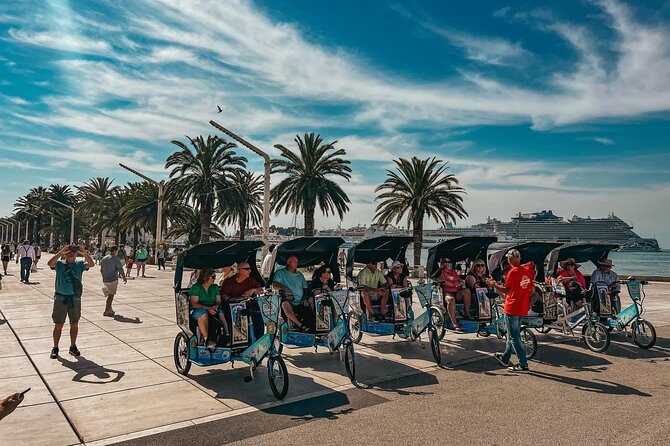
The core of the experience is Diocletian’s Palace. Built in 304, it’s the reason Split looks the way it does: the old palace plan shapes the streets, entrances, and viewpoints all around you.
As you move around the palace, you’ll see the major gates that act like “checkpoints” through time. The tour is set up so you don’t have to choose between Golden, Silver, Bronze, and other key entry points—you get multiple perspectives in one ride.
Golden Gate and Gregory of Nin: Roman landmarks plus a local tradition
At the Golden Gate, you’re looking at one of four original entrances to the palace. The name comes from golden decorations that once adorned it, and today you still get intricate carvings and reliefs that show the craftsmanship of the era.
Right nearby is the Grgur Ninski Statue, the bronze Gregory of Nin figure in front of the northern gate. This is one of those Split moments where a local tradition is as much a “sight” as the monument itself: there’s a well-known custom of rubbing the big toe for good luck.
Tip for photos: this statue draws attention, so you’ll get the best results if you treat the moment like a timed shot—quick pose, then move aside so you’re not fighting for space.
Silver Gate: another angle on the same Roman wall
Next is the Eastern (Silver) Gate. It’s another original palace entrance from the 4th century, named for silver-colored decorations that used to be there. Even if those details are gone, the architecture still reads clearly, especially when you’re seeing it as part of a gate “set” rather than as an isolated stop.
Bronze Gates and substructures: when you want the under-story
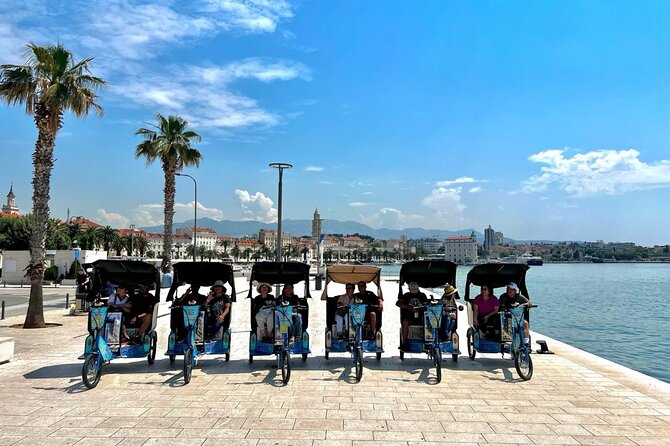
You’ll also pass the Bronze Gates on the southern side of the palace complex. These gates are known for ornate reliefs and a layout with two main doorways separated by a central pillar. It’s the kind of detail you’d miss if you were just walking through quickly.
Then comes one of the most interesting practical parts of the tour: the Diocletian Palace substructures. These are the underground spaces that served storage and living quarters in ancient times, and the visit includes an entrance door made of bronze.
Why this matters: gates are impressive, but the substructures give you a sense of how the palace functioned day to day. It turns the story from exterior postcard to actual lived space.
Matejuška Fishermen’s Port and Sustipan: sea air and a quieter edge
After the palace zone, the ride shifts atmosphere. You’ll stop at Matejuška Fishing Harbor, on the western side of old town. This is where colorful fishing boats, nets, and a fish market create a working-village feeling. You don’t have to buy anything to enjoy it—you just get to watch real maritime life rather than only tourist scenery.
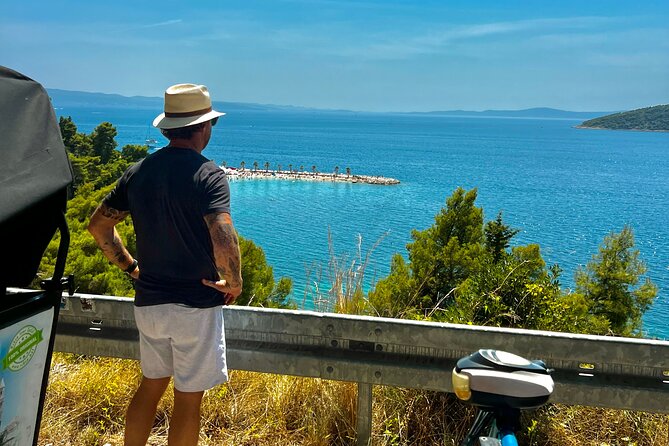
Then you’ll head to Sustipan, a rocky promontory overlooking the Adriatic. Historically it served as a defensive point, and now it’s more about calm and views. You’ll see ancient stone walls and fortification remains, plus a panoramic overlook of Split’s coast and nearby islands.
Consideration: Sustipan can feel cooler and more exposed depending on wind, which is good for sightlines but not always ideal for long outdoor sitting. Treat it as a view-and-walk stop, not a picnic mission.
Marjan Forest Park: the green escape with a plan
The tour spends a longer stretch at Marjan Forest Park—about 45 minutes, and entry is included. Marjan is one of the places in Split where you’re not only looking at the sea, you’re looking down at it from hills and trails.
The park covers roughly 178 hectares and has pine forests, Mediterranean shrubs, and rocky cliffs. It’s crisscrossed with trails for hiking, jogging, and cycling. There’s also a landmark worth knowing: St. Nicholas Church, perched near the highest peak (13th-century).
Why this is a smart add-on: if you only stay in the palace area, you get a great slice of Roman Split, but you miss the “why people move here” part—the natural setting and outlook. Marjan gives you that balance.
Meštrović Gallery and Obojena Svjetlost Beach: art and color at Marjan
Inside Marjan, you’ll also visit Galerija Meštrovic (the Meštrović Gallery). It’s in a villa connected to Ivan Meštrović himself and focuses on his sculptures, drawings, and architectural designs. Even if you’re not a hardcore art person, the setting and the structure of the visit make it easy to appreciate.
Another stop in this area is Obojena Svjetlost Beach, a beach known for colors reflected off the sea. The water here is described as crystal-clear turquoise with soft golden sand, and there are beach bars and restaurants nearby.
Practical note: beaches make the day feel longer, but your rickshaw stop times are still designed for quick access. So if you want a true swim session, plan to keep it short unless you’ve chosen the longest tour duration.
Kašjuni and Bene beaches: when you want sea time without the hassle
Toward the end, you’ll hit two additional seaside stops on Marjan’s side.
Kašjuni Beach is described as a pebble-and-sand mix with crystal-clear turquoise water and pine trees providing shade. It’s a good place for a reset: water views, a few minutes to breathe, then back on the ride.
Then comes Bene Beach, with shallow, calmer water that’s especially friendly for families and less experienced swimmers. Here’s a key detail for value: on the largest tour, you get a free drink included at Va Bene café at Bene Beach. If you’re trying to decide between shorter and longer options, that included break can tip the math in a longer direction.
Small drawback: Bene Beach’s calm water is great for easy time in the water, but if you’re looking for a high-energy beach scene, you may find it more relaxed than you imagined.
Poljud Stadium and Park Zvončac: quick stops, quick context
Your route also includes Poljud Stadium and a stop at Park Zvončac. The available details don’t spell out what you’ll do at each one, but they function as additional waypoints while you’re moving across different parts of the city.
How to treat these: think of them as “on the way” picture breaks. Keep your expectations focused on the main stops: Riva, Diocletian’s Palace gates, and Marjan.
Price and time: why $46.10 can make sense
At $46.10 per person, this is not a cheap add-on, but it also isn’t priced like a premium museum day. You’re paying for transport plus a private driver-guide, and you’re getting a lot of major landmarks in a short span.
Here’s where the value really shows: if you’re doing Split in limited time—cruise schedule, tight itinerary, or high heat—walking-only sightseeing can burn your energy before you finish seeing the top sights. The rickshaw removes that friction.
Time choices matter too. If you pick the short version, you’ll likely focus on the palace and old-town highlights. If you pick the longer ride, you’re buying extra access to Marjan Forest Park and beaches, which are a big part of what makes Split feel like more than one old stone site.
Also, tickets aren’t equal across every stop. Many stops list free admission, while Marjan Park and Bene Beach are listed as included (and the Bene Beach drink is part of the largest tour). That helps you avoid surprise entry costs.
Who this tour is best for (and who should skip it)
This private electric rickshaw tour is a great fit if:
- you want to see a lot quickly without getting exhausted
- you prefer having a guide do the route and explanations
- you like mixing Roman architecture with coastal viewpoints
- you’re traveling as a couple or small family (capacity is small)
It may not be the best fit if:
- you want long museum-style time at a single site
- you’re hoping for a slow, wandering walk through every street detail
- you’re planning a heavy swim-and-stay-beach day (the stops are meant for access, not hours of lounging)
If you like to ask questions, this format is especially useful. A quick conversation while you’re beside the Golden Gate or inside the palace substructures can turn a photo stop into something you actually understand.
Booking sanity check: when weather can affect your day
The tour requires good weather, and if it’s canceled due to poor weather, you’ll be offered another date or a full refund. Also, this kind of tour sells out, so booking early is smart—especially in busy seasons.
Should you book the Private Electric Rickshaw Tour of Split?
Yes, if your goal is smart sightseeing with less walking and you want both old town and Marjan in one plan. The combination of Diocletian’s Palace gates (Golden, Silver, Bronze), the Gregory of Nin statue tradition, and the hill-to-sea variety at Marjan and beaches makes it a strong “first big tour” in Split.
If you’re on a tight schedule, you’ll appreciate how the rickshaw helps you hit major highlights without losing your whole day to navigation. If you have more time, choose the longer version so you get real Marjan Forest Park time and the Bene Beach break with the free drink.
If you want to experience Split primarily on foot with unhurried wandering, then you might not need this. But if you want an efficient, private, eco-friendly way to see the essentials and get to the views, this is an easy one to justify.
FAQ
How long is the private electric rickshaw tour in Split?
The tour duration runs from about 30 minutes up to about 2 hours 30 minutes, depending on the option you choose.
What does the tour cost per person?
The price listed is $46.10 per person.
Is the tour private?
Yes. It’s a private tour/activity, and only your group participates.
Where does the tour start and end?
It starts at the Model of Palace on Obala Lazareta 1, Split, and it ends back at the same meeting point.
What major sights do you visit?
You’ll stop at places including Riva Harbor, Prokurative, the Croatian National Theater, Diocletian’s Palace gates and substructures, Grgur Ninski Statue, Matejuška Fishermen’s Port, Sustipan, Marjan Forest Park, and beach stops such as Kašjuni and Bene Beach.
Are entrance tickets included?
Marjan Park entry is included, and Bene Beach is included (with a free drink on the largest tour). Many other listed stops show admission as free.
Is there a drink included?
For the largest tour option, a free drink is included at Va Bene café on Bene Beach.
Does the tour use a mobile ticket?
Yes. The tour features a mobile ticket.
What is the rickshaw capacity?
The maximum capacity per rickshaw is 2 adults and 1 child up to 10 years old.
Is cancellation free?
Free cancellation is available. You can cancel up to 24 hours in advance for a full refund, and cancellations within 24 hours aren’t refunded. The experience also requires good weather, with options to reschedule or get a full refund if canceled for weather.