REVIEW · LISBON
Tuk Tuk Tour – Golden Age
Book on Viator →Operated by Otherwise Experiences · Bookable on Viator
Lisbon looks best when you move. This tuk tuk tour strings together the city’s big sights with guided story stops, so you actually understand what you’re seeing. You start with a viewpoint toast at Parque Eduardo VII, then bounce through Baixa and Chiado with a guide who keeps it friendly and clear.
What I like most is the focus: you’re not just getting dropped at photo spots. You get quick context at each stop, including Portugal’s rebuilding story after the 1755 earthquake and the political moments that shaped the capital. Second, the tour offers a pastel de nata on us, which is a perfect way to make the sightseeing feel like Lisbon, not a checklist.
One thing to consider: this experience depends on good weather. If conditions are poor, you may be offered a different date or a full refund, so keep your schedule flexible.
In This Review
- Key highlights you should know
- The vibe: “Golden Age” means guided stories, not just rides
- Where you meet and how the timing usually feels
- Parque Eduardo VII: your toast and the 1755 earthquake connection
- Tip for this stop
- Marquês de Pombal statue details that make the monument click
- Avenida-to-square sequence: from modern connection to the 1640 liberation moment
- Baixa Lisbon and the Elevador do Carmo area: a mechanical landmark with a payoff
- Chiado’s heart stop: meeting the poet that put Portugal on the world map
- The pastel de nata moment and Lisbon’s big food hub energy
- Praça do Comércio: the political symbol framing the capital
- Price and value: what $123.74 buys you
- Tour pacing tips so you don’t miss the best parts
- Who should book this tuk tuk experience?
- Should you book Tuk Tuk Tour – Golden Age?
- FAQ
- How long is the Tuk Tuk Tour – Golden Age?
- What language is the tour offered in?
- Do they offer pickup?
- Is this tour private?
- What’s the meeting point for the tour?
- Are tickets mobile-friendly?
- What happens if the weather is bad?
- Is there free cancellation?
Key highlights you should know
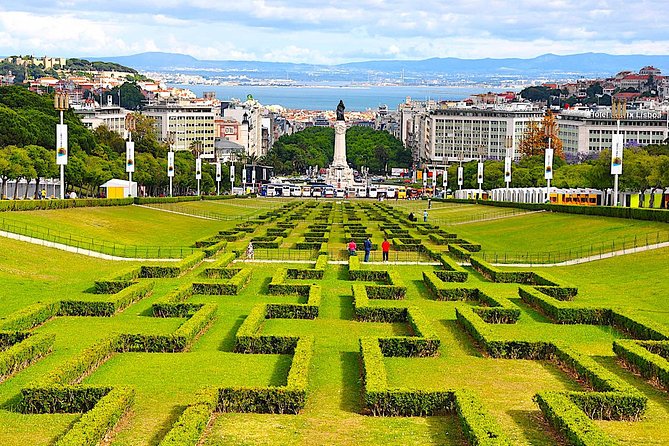
- Parque Eduardo VII toast with city-view perspective and a direct link to the 1755 earthquake rebuilding era
- Marquês de Pombal statue stop where the guide points out details that make the monument make sense
- Monumento dos Restauradores and the 1640 liberation story tied to the obelisk and square
- Baixa viewpoint of Elevador do Carmo area, including the metal tower and the walkway connection
- Chiado’s poet square that ties Lisbon’s street life to Portugal’s literary legacy
- A pastel de nata included, plus directions toward a major food hub moment in the city
The vibe: “Golden Age” means guided stories, not just rides
This is a private tuk tuk tour in Lisbon, typically running about 1 to 3 hours. That time window matters. Lisbon streets can be slow on foot, and your energy can vanish fast. A tuk tuk keeps the pace sane while still giving you time to stop, look up close, and listen.
Because it’s private, the route feels more like a custom mini-lesson for your group rather than a bus-style crawl. You’re also on English-speaking guidance, which is a big deal if you want the details without guessing. And pickup is offered, which can be a lifesaver if you’re staying up on a hill or want to avoid navigating the busiest parts of town right at the start.
You can also read our reviews of more tours and experiences in Lisbon.



Where you meet and how the timing usually feels

You meet at R. dos Bacalhoeiros 111, 1100-068 Lisboa. It’s a practical starting point because it sits in an area that’s not hard to reach using public transport. From there, the tour is designed to move you through a chain of landmarks that “click” together: viewpoints, monuments, and Lisbon’s famous neighborhood centers.
The biggest practical benefit is pacing. Each stop is short, so you get enough time to understand why it matters, then you move on before the next crowd crushes the view. The downside is obvious: if you love lingering, this route will feel time-tight. Think of it as a fast, smart sampler—great for your first days in Lisbon, less ideal if you want hours of museum-level time.
Parque Eduardo VII: your toast and the 1755 earthquake connection

The tour kicks off at the top of Parque Eduardo VII. Here, you get a toast with a viewpoint angle that helps you “read” Lisbon. From higher ground, the city’s shape stops feeling random. You start seeing the logic behind the neighborhoods and the way Lisbon rebuilt itself after the disaster.
The guide also frames this stop around Marquês de Pombal, the statesman linked to the post-1755 rebuilding effort. Even if you’ve heard the date before, hearing how it tied to reconstruction gives you something useful: it turns a historic reference into a reason for why certain parts of Lisbon look the way they do today.
Good news: this is listed as free admission for the stop, so you’re not adding surprise costs.
Tip for this stop
Bring a layer. Wind can be strong near viewpoints, and a quick toast plus photos can mean you stand still longer than you planned.
Marquês de Pombal statue details that make the monument click

Next you’ll get a closer look at the statue of Marquês de Pombal. The tour is built to help you notice components you’d normally miss. That’s the difference between seeing a monument and understanding it.
Why this matters: Marquês de Pombal is tied to the idea of rebuilding with intention—planning, laws, infrastructure. When the guide points out parts of the statue and explains what they represent, it stops being a “big guy on a base” and becomes a story in stone and symbolism.
You’ll also feel the tour’s rhythm here: brief explanations, quick stops, and enough time to ask questions if something grabs you.






Avenida-to-square sequence: from modern connection to the 1640 liberation moment
After the Pombal emphasis, the tour moves to an avenue that connects Lisbon’s modern edge with the downtown core. This kind of street-level orientation is underrated. You’ll start to feel where Lisbon’s past meets its present, and the tour uses that transition to prime you for what comes next.
Then you pass by Monumento dos Restauradores, known for its tall obelisk—30 meters—commemorating Portugal’s liberation from Spanish rule on December 1, 1640. Monuments like this can feel overly formal from a distance. But when you connect the date and the political meaning to the physical structure, it becomes clearer why the obelisk is the centerpiece and why the square around it has that built-in sense of importance.
If you like understanding public spaces—why they were placed where they were—this stop is a good match.
Baixa Lisbon and the Elevador do Carmo area: a mechanical landmark with a payoff

One of the most interesting stops in Baixa de Lisboa is the metal-tower monument where two cabins circulate, plus a walkway that links the upper floor to the Carmo area. You’ll be close enough to see how the structure works, not just how it looks in a postcard.
Here’s the value: Lisbon has several funiculars and lifts, but they’re not random tourist gadgets. They’re part of how people move through the slopes and levels of the city. When you understand the “why” of this kind of transport—vertical movement in a hilly place—your map at the end of the tour makes more sense.
Possible drawback: this kind of stop can be best when you’re comfortable standing and looking up. If you hate heights or you’re traveling with someone who needs lots of seated breaks, you might want to mention it at the start.
Chiado’s heart stop: meeting the poet that put Portugal on the world map

Next, the tour heads into Chiado, hitting a square in the heart of the neighborhood associated with a major Portuguese poet. The guide links the square to the poet’s role in taking Portugal’s voice beyond its borders.
This is where the tour shifts from monuments and dates to culture and identity. Lisbon’s written legacy matters here. When you pair a landmark with the idea that literature helped project national culture internationally, the city feels less like a set of buildings and more like a place with personality.
If you’re the type who likes seeing the human side behind famous places, you’ll probably enjoy this stop. It’s also a nice pacing reset before the food moment.
The pastel de nata moment and Lisbon’s big food hub energy

You’ll learn where one of Lisbon’s main gastronomic centers is located, and the tour includes a chance to try one of the best pasteis de nata in town on us. This is smart tour design.
Why this works: sightseeing can start to feel heavy—dates, plaques, and architecture. A food stop gives you something sensory and quick, plus it helps you remember the route. It’s also an easy way to test what you like in Lisbon’s pastry scene without overcommitting.
Practical note: pastry taste depends on how warm it is and how fresh it feels. If you care about that, you’ll want to eat it right when you get it, not later “after photos.”
Praça do Comércio: the political symbol framing the capital
The tour finishes by passing through one of Lisbon’s most beautiful and majestic squares, described as a historical symbol of political power and a statement of the capital’s presence in Portugal. This is the kind of place that makes Lisbon feel official—big space, strong lines, and a built-in sense of ceremony.
Even if you only spend a short amount of time here, the views give you a final context check. You’ve already seen Lisbon’s rebuilding story, its liberation moment, and its neighborhood identity. Now you see the square that represents the city’s central political role.
If this is your favorite stop, you’re not alone. It’s the one that makes people slow down without realizing it.
Price and value: what $123.74 buys you
At $123.74 per person, the price isn’t “cheap,” but it can be good value if you care about two things: guided context and time savings.
Here’s the value breakdown in plain terms:
- Private group experience: you’re not sharing the guide with a random crowd. That usually means you can get answers fast and move at the group’s pace.
- Time-efficient route: 1–3 hours is long enough to hit multiple neighborhood anchors without losing half a day.
- Included moments: pickup is offered, and the tour includes a toast and a pastel de nata. Those small inclusions help the tour feel complete, not like you’re paying for transportation only.
- English guidance: if you’re not traveling with strong Portuguese, having clear explanations makes the monuments worth the effort.
Who feels the most satisfaction from this price?
- Couples and small groups who want a first-pass orientation to Lisbon
- Visitors who like history but don’t want museum-style pacing
- Anyone who’s tired of walking uphill in heat or cold, but still wants real stops, not drive-bys
Tour pacing tips so you don’t miss the best parts
A tuk tuk tour works best when you plan for quick stops and short listening moments.
- Dress for sudden weather shifts. Viewpoints can feel colder even when lower streets are warm.
- Wear shoes you can stand in. Even if you’re not walking far, you’ll want stable footing for looking up at monuments.
- Ask one question at each “story” stop. The guide’s explanations are the point. If something sounds interesting, don’t wait until the end.
- Don’t overpack your day. This works best when you still have energy for one extra neighborhood wander after.
Who should book this tuk tuk experience?
Book this tour if you want a guided overview that connects Lisbon’s major landmarks through real stories: the rebuilding after 1755, the liberation commemorated by the 1640 obelisk, the culture of Chiado, and the grand central square that ties it all together.
Skip it (or choose a longer-format option) if:
- You want long stays at fewer places
- You dislike standing for short photo-and-explanation moments
- Your schedule is rigid and you can’t handle weather-dependent rescheduling
Should you book Tuk Tuk Tour – Golden Age?
I’d recommend booking if you’re going to Lisbon for a short time and want your first day (or first half-day) to make sense. The tour’s strongest points are the guided storytelling at each key landmark and the way it mixes major monuments with neighborhood personality in a tight route. Add the toast and the included pastel de nata, and it feels like a complete experience rather than just a ride.
If the weather is iffy for your dates, keep a little flexibility. When conditions are good, this is an efficient way to see Lisbon with context and a smile—history explained in human language, not a lecture.
FAQ
How long is the Tuk Tuk Tour – Golden Age?
The tour is listed as lasting about 1 to 3 hours.
What language is the tour offered in?
It’s offered in English.
Do they offer pickup?
Yes, pickup is offered.
Is this tour private?
Yes. It’s a private tour/activity, meaning only your group participates.
What’s the meeting point for the tour?
The meeting point is R. dos Bacalhoeiros 111, 1100-068 Lisboa, Portugal.
Are tickets mobile-friendly?
Yes, you’ll receive a mobile ticket.
What happens if the weather is bad?
The tour requires good weather. If it’s canceled due to poor weather, you’ll be offered a different date or a full refund.
Is there free cancellation?
Yes. You can cancel for a full refund up to 24 hours in advance of the experience’s start time.