REVIEW · BERLIN
Daily First Rickshaw promotion in Combi Vehicle public Group 90€
Book on Viator →Operated by Berlin-Rickshaw / Berlin-Excursions · Bookable on Viator
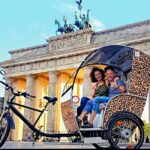
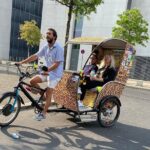
Berlin moves faster on wheels. A guided rickshaw tour like this helps you cover the big landmarks without spending your whole day dodging crowds on foot. I like the comfort of seated sightseeing, and I especially like the built-in photo stops right at the monuments. One thing to plan for: you only get short time slices at each stop, and the Berliner Fernsehturm entry isn’t included.
You’ll ride with an experienced, safe guide, and the small touches matter. The rickshaw includes WiFi on board, plus bottled water and alcoholic beverages, and in rainy weather the driver can keep things practical with the roof and a blanket. If you’re the type who wants to linger inside every museum, this may feel like a fast sampler rather than a slow deep visit.
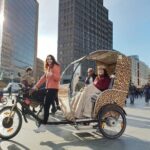
This is also a smart format for many mobility levels. You step into the rickshaw in just a few steps, and you can usually get very close to the sights for photos without fully getting out. For a couple, the booking is max 2 travelers, and if you’re traveling with more people you can add extra rickshaws so the group stays together.
In This Review
- Key highlights to know before you go
- Why a rickshaw tour is a smart way to see Berlin
- Meeting at Weinbergsweg and settling in (with a small-group feel)
- Alexanderplatz to Museum Island: TV Tower views and UNESCO monuments
- Bebelplatz to Gendarmenmarkt: shifting from dark memory to elegant squares
- Checkpoint Charlie to Topography of Terror: Cold War reality at street level
- Potsdamer Platz and the memorial belt toward Brandenburg Gate
- How the 4-hour timing works (and where you might want to add time)
- Comfort details that make the ride feel worth it
- Value: what $216.74 buys you for up to 2
- Who this rickshaw tour suits best (and who should reconsider)
- Should you book this rickshaw tour?
- FAQ
- How long is the rickshaw tour?
- What language is the tour offered in?
- How many people can be on the tour?
- Is admission to Berliner Fernsehturm included?
- Are admission tickets needed for the other stops?
- What’s included in the price?
- Are tips included?
- Where do we meet, and does the tour end nearby?
- Can I get a full refund if I cancel?
Key highlights to know before you go
- Private-style comfort for up to 2 with frequent stops you control
- Close-up photo opportunities without the usual walking shuffle
- Alexanderplatz to Museum Island anchored by Berlin TV Tower and UNESCO sights
- History stops that don’t feel textbook: Bebelplatz, Checkpoint Charlie, Holocaust Memorial
- Rickshaw pace with real guiding plus a sense of humor when it counts
- Rain-ready setup (roof and blanket), plus WiFi for keeping your day organized
Why a rickshaw tour is a smart way to see Berlin
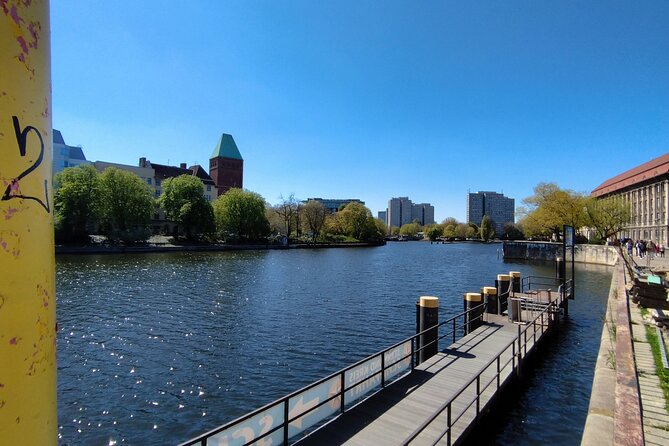
Berlin has a lot of “big photo” spots, and many of them are spread out. Walking between them can mean a sore back, tight time windows, and extra effort when streets get busy. A rickshaw changes the math. You stay seated, you move from area to area efficiently, and you still get the stories and context you’d want from a guide.
The best part is how flexible it feels at the street level. Even though the route includes major anchors, you can stop for pictures where it makes sense. That means you can slow down when the light looks right, or when you want to regroup for a few minutes before the next viewpoint.
And because this is a small group, you’re not fighting for space in the way you often do on larger bus tours. It’s the kind of plan that helps you see more, but also keeps your day from feeling like a conveyor belt.
You can also read our reviews of more tours and experiences in Berlin.
Meeting at Weinbergsweg and settling in (with a small-group feel)
The tour starts and ends back at the meeting point on Weinbergsweg 6, near public transportation. From the start, the format is designed to be practical: you’re not dealing with long transfers or finding your place in a big crowd. You simply get into the rickshaw in a few steps, and then you’re off.
This is the kind of setup you’ll appreciate if you want a comfortable overview of Berlin before picking your next moves. You’ll see how different neighborhoods connect, where major landmarks sit, and what kind of streets the city has. After a ride like this, it’s easier to plan your remaining days because you’ve already built a mental map.
Also: this booking is for up to 2 travelers. That small size shows up in the experience—fewer voices to manage, more space for questions, and more time for the guide to tailor the ride to your interests.
Alexanderplatz to Museum Island: TV Tower views and UNESCO monuments
The route begins at Berliner Fernsehturm, Berlin’s tall TV Tower. Even if you don’t go inside, the tower’s sheer height makes it a useful starting landmark. You’re in the Alexanderplatz area, where the city feels arranged around major public spaces.
From there, you move past iconic sights like the Red Town Hall and Marien Church, then head toward Museum Island. The time at this first stretch is short—just enough to set the tone and point you toward what to look for.
Two practical notes:
- Fernsehturm admission isn’t included, so if you want to go up, you’ll need to plan that separately.
- The value here is timing and positioning: you’re seeing the area without spending the whole morning queueing or figuring out logistics.
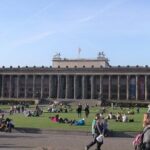
Museum Island is where the tour slows slightly for a longer stop (about 15 minutes). This UNESCO site is packed with major museum buildings in one concentrated area, including the Berlin Cathedral and well-known museums such as Altes Museum, Bode Museum, and Neues Museum. If you’re the type who likes architecture and strong “where am I?” moments, this stop works well because you can take photos and orient yourself even if you don’t go inside any museum rooms.
What I like about this section is the balance. You get a famous skyline marker first, then you transition into a dense museum zone. That mix helps you understand Berlin’s “center” from both a modern landmark and a cultural-past angle.
Bebelplatz to Gendarmenmarkt: shifting from dark memory to elegant squares
Next comes Bebelplatz, and this part of Berlin doesn’t let you stay comfortable for long—in the right way. At this square, the Nazis held a book-burning ceremony on May 10, 1933, using the event to show power and destroy books labeled un-German. It’s a stark reminder of how hate can translate into real action, not just slogans.
This stop is brief (around 10 minutes), so the goal isn’t to make you sit and read every detail. It’s more about getting the facts and then seeing the location clearly. When you later pass similar memorials or cultural sites, you’ll understand the context more quickly.
After that, the ride turns toward Gendarmenmarkt, one of the prettiest squares in central Berlin. You’ll see the Royal Concert Hall building in the middle, framed by the German Cathedral and the French Cathedral. The whole area feels designed for photos—statues, façades, and a sense of old-world formality that contrasts sharply with the earlier memory stop.
This section is a good example of why the rickshaw format works. You don’t just “tick off” landmarks. You feel the emotional swing: from a place of oppression to a place of order and grandeur.
Checkpoint Charlie to Topography of Terror: Cold War reality at street level
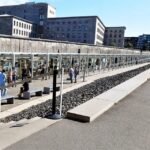
Checkpoint Charlie is one of those spots that matters even if you’ve seen photos before. It symbolizes the Cold War border reality and the years Berlin was divided. The wall came down in 1989, but the meaning stays, especially when you’re standing near where families and lives were separated.
The stop here is very quick (about 5 minutes), but that can be enough if your guide gives you the why behind the marker. The value is in being able to look at the place itself and connect it to the larger story of divided Berlin.
Then you move to Topography of Terror. This documentation centre focuses on the atrocities committed during the Nazi era. It’s not a light stop, and it isn’t meant to be. The point is education and remembrance—learning so something like that never happens again.
Right next to it is the Martin-Gropius-Bau exhibition centre, which has hosted exhibitions by internationally known artists over the years (including Ai Weiwei and David Bowie, as named in the tour info). That pairing matters because you’re in the same general area where history documentation sits close to art programming.
This stop is also short (around 10 minutes), so keep your expectations aligned. Think of it as a “right place, right context, right start.” If you want to spend more time reading exhibits in depth, you can plan a separate follow-up visit later.


Potsdamer Platz and the memorial belt toward Brandenburg Gate
Potsdamer Platz shows up next as Berlin’s modern transformation story. After reunification in 1990, this area became a symbol of a united Germany’s energy and building momentum. The tour frames it as a place that went from post-war disrepair to a skyline makeover, and it points out the Sony Center as a key landmark here.
The stop time is brief (about 10 minutes), but it’s long enough to take in the scale. Potsdamer Platz often feels like a “what does modern Berlin look like?” lesson, and the rickshaw angle makes it easy to watch how the city space opens up.
Then comes the memorial belt—starting with the Holocaust Memorial, the Memorial to the Murdered Jews of Europe. The tour info notes it opened in 2005 to commemorate more than six million Jews murdered under National Socialism. The design forces you to slow down mentally. Even on a short stop, it hits as heavy, and it’s meant to make you think about the fragility of freedom.
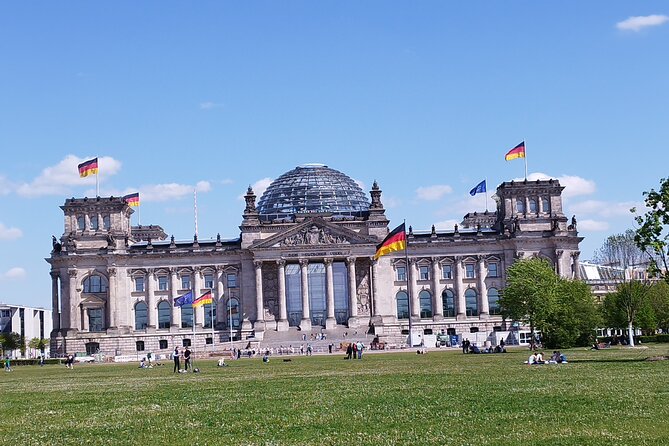
The tour also continues past the Memorial to the Murdered Sinti and Roma, then heads toward the Government District area, including the Reichstag/Bundestag and the Chancellery, before reaching the Brandenburg Gate.
This last stretch (around 10 minutes at Brandenburg Gate) gives you a classic finishing postcard. But the point isn’t only photos. It’s the arc of the day: division, persecution, rebuilding, and a Berlin that still carries its reminders on the streets.
How the 4-hour timing works (and where you might want to add time)
The full tour runs about 4 hours. It uses short timed stops—about 5 to 15 minutes at most landmarks—plus travel time between them.
That timing style is a feature. It’s how you fit in many of Berlin’s hardest and most famous stops without ending the day completely exhausted. You’ll get key takeaways and a sense of place, and you can decide later what deserves extra time on your own.
Here’s the trade-off: short stops can limit how deep you go inside museums or memorial exhibits. The TV Tower is one clear example because entry to Berliner Fernsehturm isn’t included. If you want the interior or viewing access, you’ll need to budget extra time and ticket cost.
If you’re traveling with limited time in Berlin, I think the short-stop plan is a win. If you’ve planned a slow museum day already, you can treat this rickshaw ride as the “orientation and context” half of your day and then choose one or two longer follow-ups afterward.
Comfort details that make the ride feel worth it
This is not a “stand outside and wave at the sights” kind of tour. You’re sitting while the driver handles movement. That changes how Berlin feels. You can take photos without constantly repositioning your feet, and you can listen without the stress of walking uphill or through crowds.
A few specifics matter:
- WiFi on board helps you handle maps, messaging, or quick searches while you’re moving between stops.
- Bottled water is included, which is simple but important on a long sightseeing block.
- Alcoholic beverages are included, so think ahead about how you want your day to feel. If you’re trying to stay sharp for photos and walking later, you may want to go easy.
- In rain, the ride can still work. The experience includes a roof and blanket approach, and the guide may pull over when needed so you don’t get soaked while getting the story.
Also, one recurring strength is the guide’s ability to keep it fun while still packing in information. Humor and real street-level guidance make a difference, especially when the topics get heavy at Bebelplatz or Topography of Terror.
Value: what $216.74 buys you for up to 2
Let’s talk value in a realistic way. $216.74 for a group up to 2 for about 4 hours means you’re paying for three things at once:
1) a rickshaw and driver,
2) an experienced guide for active storytelling,
3) convenience perks like WiFi on board, water, and included beverages.
If you’re splitting the cost between two people, it can be competitive with what you’d spend on a private-style guide plus transport on your own. If you’re a solo traveler, the cost per person can feel higher, but the “small group” benefit still helps: you’re not squeezed into a big bus plan.
There’s also a note about a daily First Rickshaw promotion in a Combi Vehicle public group listed at 90€. That sounds like a cheaper shared-option angle. If that option is available for your dates, it can be a way to cut costs, but it won’t be the same as the up-to-2 private feel.
My rule for value: if you want comfort plus access to many Berlin anchors in one day, this pricing makes sense. If you only care about one or two highlights, you might get better value by picking a shorter focus tour instead.
Who this rickshaw tour suits best (and who should reconsider)
This tour is ideal if you want:
- a comfort-first day that still covers big Berlin landmarks,
- frequent stops for photos without sprinting around,
- an overview of both the city’s iconic sights and its heavier memorial sites,
- a plan that works well if mobility is limited.
It’s also a strong pick for couples. The max of 2 travelers keeps the experience personal, and the guide can adjust pacing and photo timing around you.
You might reconsider if you:
- want long museum time inside specific venues,
- need extensive accessibility accommodations beyond stepping into the rickshaw in a few steps (the info says it’s suitable for less mobile guests, but it doesn’t promise every scenario),
- prefer purely leisurely walking days where nothing happens on a schedule.
Should you book this rickshaw tour?
I’d book it if you’re trying to get your bearings fast and still want more than a generic bus stop list. The mix of stops hits major Berlin themes: modern landmarks at the start, UNESCO museum buildings, memory sites tied to Nazi persecution, Cold War markers, and the big reunification-era landmarks toward the end.
The biggest reason to choose it is practical: you can see a lot without the physical toll of nonstop walking. And the small-group setup makes it easier to ask questions and get the story behind what you’re seeing.
If you’re the type who wants to go inside the TV Tower, or you’re planning deep reading time at major memorial sites, treat this as the context-setting ride—not the only visit. Pair it with one focused follow-up later, and you’ll get the best of both styles.
FAQ
How long is the rickshaw tour?
The tour is about 4 hours.
What language is the tour offered in?
It’s offered in English.
How many people can be on the tour?
This activity has a maximum of 2 travelers.
Is admission to Berliner Fernsehturm included?
No. The Fernsehturm stop notes that the admission ticket is not included.
Are admission tickets needed for the other stops?
For the other listed stops, the tour info shows admission ticket is free.
What’s included in the price?
The price includes the rickshaw and an experienced tour guide, plus WiFi on board, bottled water, and alcoholic beverages.
Are tips included?
No. Tips are listed as not included.
Where do we meet, and does the tour end nearby?
You meet at Weinbergsweg 6, 10119 Berlin, Germany, and the activity ends back at the meeting point.
Can I get a full refund if I cancel?
Yes. Free cancellation is available if you cancel at least 24 hours in advance for a full refund.