REVIEW · BERLIN
Private Guide Up to Group 6 – ONE Rickshaw, (E)Bikes, E-Scooters
Book on Viator →Operated by Berlin-Rickshaw / Berlin-Excursions · Bookable on Viator
Berlin moves faster when you’re rolling through it. I love the way this private tour keeps everyone together while your guide fills the ride with clear stories and on-the-street context. You can also choose your vehicle mix, including e-bikes and a rickshaw, which makes it easier for different ages and mobility levels to enjoy the same stops.
My other big plus: the stops are timed like a smart city-walk plan, so you’re not stuck in one place. You still get close to key Berlin icons, but the experience stays focused on interpretation and photos rather than long indoor stays. One thing to consider is the 3-hour pacing: you’ll cover a lot of famous ground, so it’s not built for deep, hour-long museum browsing.
In This Review
- Key highlights worth planning around
- Choosing Your Ride: Rickshaw, E-Bikes, Scooters, or Regular Bikes
- What the 3 Hours Really Feels Like (And Why It Works for Groups)
- Price and Value for Up to 6 People
- First Stop: Fernsehturm (TV Tower) and Getting Oriented Fast
- Rotes Rathaus: Where Berlin’s Government Life Shows Up in Architecture
- Stadtschloss Berlin and Museum Island: Palace Debates and Cultural Power
- Unter den Linden: The Grand Boulevard With Multiple Eras in One Line
- Bebelplatz: The Book Burning Memorial and the Cost of Censorship
- Gendarmenmarkt: Three Icon Buildings and a Square Built for Looking
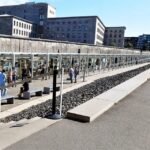
- Checkpoint Charlie and Mauermuseum: Cold War Friction Up Close
- Topography of Terror: The Museum on Historic Ground
- Führerbunker: What You See Isn’t What Was There
- Holocaust Memorial: Walking Through Unease, One Step at a Time
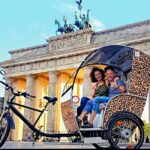
- Brandenburg Gate: The Finish That Ties Berlin’s Stories Together
- Who This Tour Fits Best (And Who Might Want Something Else)
- Book It or Skip It?
- FAQ
- How long is the private tour?
- How many people can be in a group?
- What vehicle choices do I have?
- Where does the tour start and end?
- Are entrance fees included for the main stops?
- What’s included in the price?
- Is lunch included?
- Is the tour suitable for less mobile guests?
- What is the cancellation policy?
Key highlights worth planning around
- Private group up to 6 (only your group participates), so questions and pacing stay flexible
- Vehicle choice: e-bikes, regular bikes, e-scooters, or a rickshaw for less mobile guests
- Photo-friendly routing: you can stop for pictures and get close to monuments
- Guide-led storytelling at each stop, including Cold War and memory sites with context
- Comfort extras: air-conditioned vehicle, WiFi on board, and bottled water
Choosing Your Ride: Rickshaw, E-Bikes, Scooters, or Regular Bikes
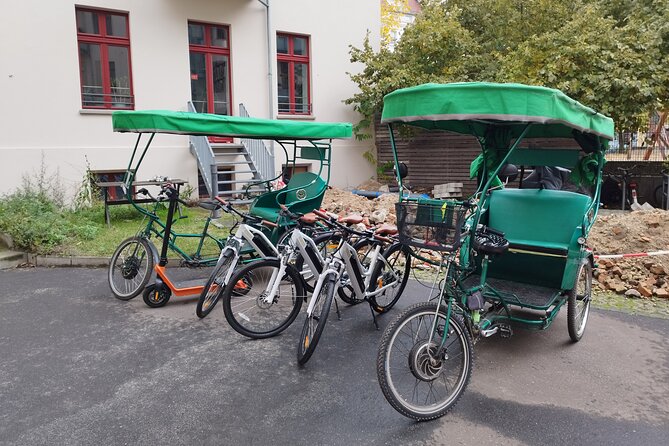
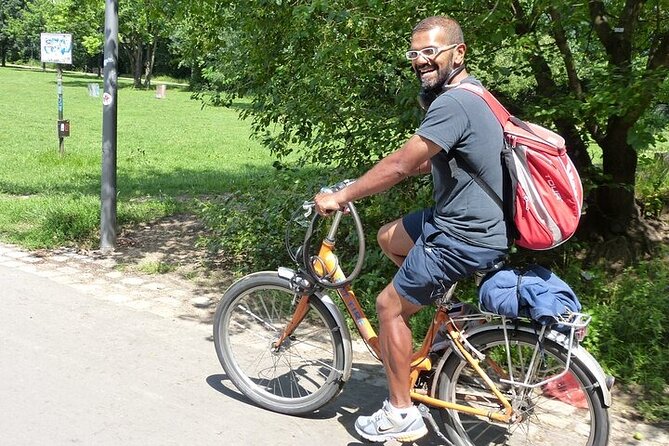
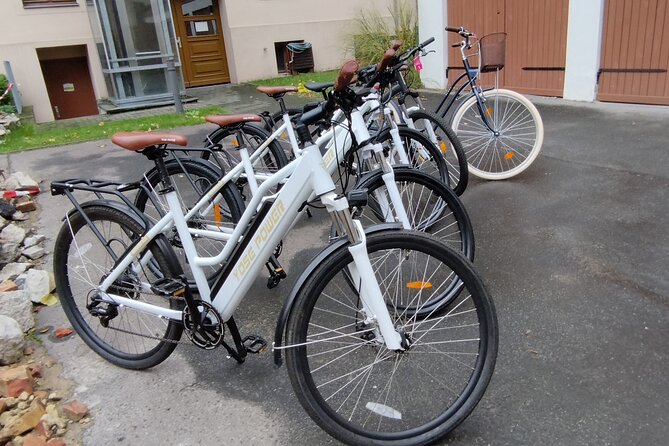
This is one of those Berlin tours where the vehicle choice actually matters. If your group has mixed comfort levels, you can pick a mix of e-bikes, regular bikes, e-scooters, and a rickshaw—and the whole point is that you still tour together.
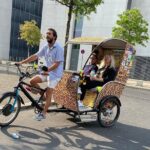
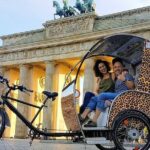
The rickshaw option is especially useful if some people don’t want to bike or scooter. The key detail here is that it’s designed for guests with trouble getting around, and you enter the rickshaw via just a few steps. Once you’re in, you can come very close to monuments for photos. In the reviews, this setup gets praised as fun and practical for families, because kids can feel included even if they’re not doing the hardest ride.
One more comfort win: the tour includes an air-conditioned vehicle, plus WiFi on board and bottled water. That means you’re not just biking and hoping for the best when Berlin weather is doing its thing.
You can also read our reviews of more tours and experiences in Berlin.


What the 3 Hours Really Feels Like (And Why It Works for Groups)
The tour is about 3 hours, and that matters because it shapes how you’ll experience Berlin. You’re moving between several major areas and monuments, with short stop times that keep the energy up.
The route includes a lot of landmark names most visitors come to see: Fernsehturm (the TV Tower), Stadtschloss and Museum Island, Unter den Linden, Bebelplatz, Gendarmenmarkt, Checkpoint Charlie, Topography of Terror, the Holocaust Memorial, and Brandenburg Gate. With stops ranging from roughly 10 to 20 minutes at many locations, you’re getting the “why this matters” story plus time to orient and take pictures.
The advantage: you leave with a clear mental map. The drawback: if you were hoping for long, quiet museum time, this won’t be that kind of tour. It’s more like a guided sprint through Berlin’s most meaningful highlights—fast, informative, and designed for group fun.
Price and Value for Up to 6 People
The price is $465.43 per group (up to 6) for about three hours. If you fill all six spots, that’s roughly $78 per person—which is usually where a private guide plus specialized transport starts to look reasonable.
You’re not paying just for movement. You’re paying for a guide who will explain what you’re seeing at each stop, and for the logistics of coordinating different vehicles so nobody gets left behind. Included extras like WiFi, bottled water, and an air-conditioned ride also reduce the little annoyances that add up on short tours.
And because it’s private, you can shape the experience with your group’s pace. The tour is also described as mobile-ticket based, which tends to make things smoother once you arrive.
First Stop: Fernsehturm (TV Tower) and Getting Oriented Fast
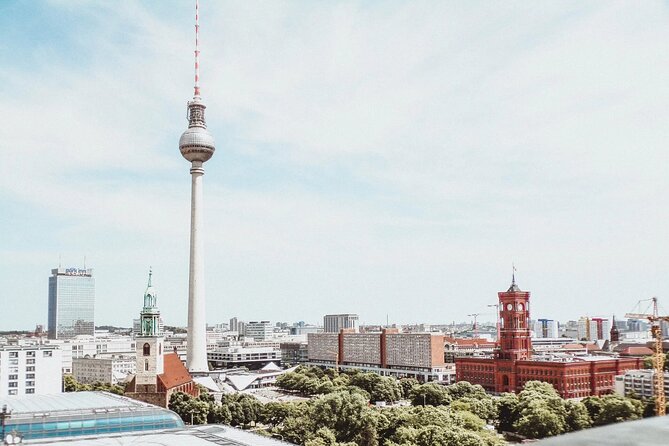
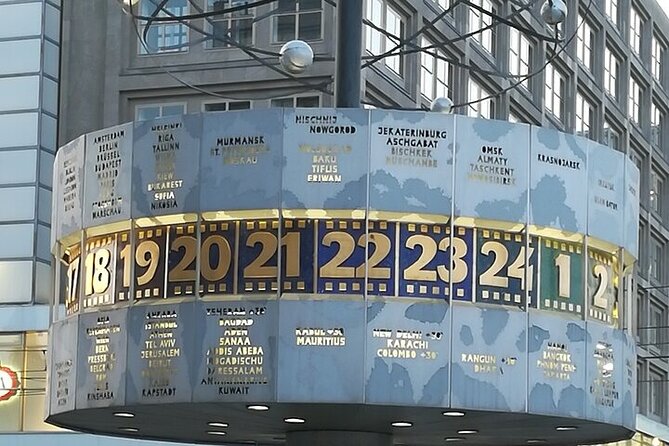
You’ll start in the TV Tower area—Fernsehturm Berlin—where it dominates the skyline above Alexanderplatz. It’s a perfect starting point because it instantly gives you a sense of scale and direction.
The TV Tower is about 368 meters tall, with an observation level around 203 meters. The spherical top is a distinctive design, tied to the architects Hermann Henselmann, Jörg Streitparth, and Fritz Dieter. Even if you don’t focus on the deck itself, the view from here sets the tone: Berlin isn’t small, and you need a guide who can help you read what you’re seeing.
As a meetup landmark, it also reduces stress. You’re not trying to guess where to gather in a huge central area.
Rotes Rathaus: Where Berlin’s Government Life Shows Up in Architecture
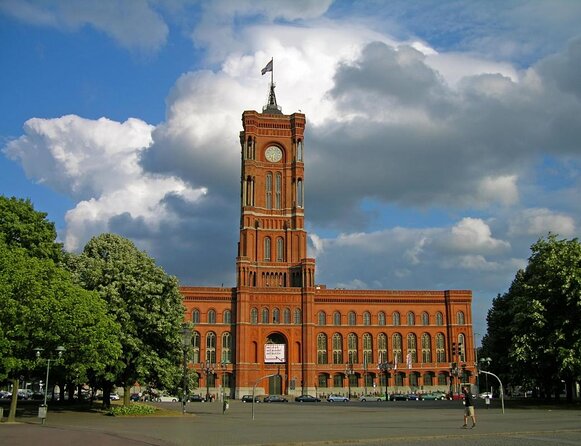
From there you’ll pass or stop near the Rotes Rathaus (Berlin City Hall). This isn’t a “pretty photo only” stop. It’s a reminder that Berlin isn’t frozen in history—it’s also active, political, and administrative.
The architecture makes the point: this building is a central hub of political activity and administration. On a tour like this, that matters because it ties modern Berlin to the places you’ll later visit that explain division and memory. The guide’s job is to connect the dots so the city doesn’t feel like separate attractions.


Stadtschloss Berlin and Museum Island: Palace Debates and Cultural Power
Two of the stops that usually feel most meaningful are Stadtschloss Berlin and Museum Island.
Stadtschloss Berlin (Berlin City Palace) carries a complicated story. It started as a royal residence centuries ago, then took on major political meaning through the Hohenzollern dynasty. After WWII, it was destroyed. After the Berlin Wall fell, there was debate about whether to reconstruct it. The final result was the Humboldt Forum project, bringing back the Baroque façade while using modern interiors for cultural purposes. The key takeaway for you: Berlin rebuilds its identity by arguing about what should come back—and what should be changed.
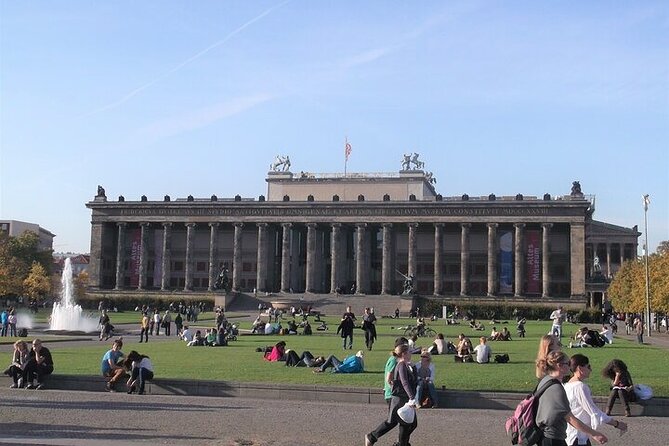
Museum Island is a UNESCO World Heritage site and a cluster of museums and historic artifacts. You don’t need to be a museum person to appreciate it. It’s a sign of how much Berlin invests in public culture and preservation.
One practical note: the stop times here are limited (about 15 minutes for Stadtschloss and around 20 minutes for Museum Island), so think of these as orientation and context stops. If you want to go deep inside, you’ll need to plan a separate museum visit later.
Unter den Linden: The Grand Boulevard With Multiple Eras in One Line
Next comes Unter den Linden, the boulevard where architecture shifts through time. You’ll see a mix of Baroque and Neoclassical styling alongside more modern elements.
This is also where several headline sights show up, including the Brandenburg Gate, the Berlin State Library, and the Kronprinzenpalais (Crown Prince’s Palace). The value of this stop is how the guide helps you notice patterns—what looks planned and monumental versus what looks layered and adapted.
If you like walking but hate wandering, this is a smart compromise: you get the big-name street with interpretation, not a long self-guided slog.
Bebelplatz: The Book Burning Memorial and the Cost of Censorship
At Bebelplatz, the story turns dark. In May 1933, thousands gathered here for Nazi-era book burning—books deemed un-German were incinerated. Today, the memorial designed by Micha Ullman uses a glass plate on the ground that reveals empty bookshelves below.
It’s the kind of stop where you’ll feel the silence shift. The memorial is designed to make you think about the fragility of knowledge and what happens when ideas are forced out.
The stop time is around 10 minutes, and it’s exactly long enough to grasp the meaning without dragging. If your group likes questions, this is a strong moment to ask for context—because this is one of those places where the explanation is the whole point.
Gendarmenmarkt: Three Icon Buildings and a Square Built for Looking
Then you roll into Gendarmenmarkt, a square famous for its neoclassical harmony. It’s dominated by three major buildings: the Konzerthaus, the French Cathedral, and the German Cathedral.
The Konzerthaus is Berlin’s concert hall with world-class performances and serious architectural presence. The French Cathedral is connected to Huguenot refugees from the 18th century, symbolizing tolerance and diversity. Opposite it, the German Cathedral rounds out the trio with an elegant façade and a museum inside.
For you, this stop is a reset. Berlin’s emotional intensity from earlier stops gives way to beauty and order. The group tends to relax here, which matters because after this you head into more emotionally heavy Cold War and WWII-era sites.
Checkpoint Charlie and Mauermuseum: Cold War Friction Up Close
Checkpoint Charlie is one of the most iconic Cold War symbols in Berlin. It was one of the famous border crossing points between East and West Berlin, and during the Cold War it represented the Iron Curtain, with tense encounters between American and Soviet military personnel.
What makes this stop work on a guided tour is the contrast between the original story and what exists now. There’s a replica guardhouse on site, and it’s manned by actors dressed as U.S. military police, which adds a living, street-level layer to the historical context. The museum is now known as the Mauermuseum.
Even with only about 15 minutes here, the guide helps you understand why the world remembers this specific place. It’s not just a photo spot. It’s a symbol of how borders controlled movement and information.
Topography of Terror: The Museum on Historic Ground
Next is Topography of Terror, where the Nazi Gestapo and SS had headquarters. This museum documents Nazi atrocities using exhibits, documents, and remnants of the original buildings.
This is a heavier stop. The value of the guided approach is that you don’t just see objects and photos—you get help turning information into understanding. The stop time is about 20 minutes, which is short for a museum, so think of this as a guided starter that tells you what to notice if you return for a longer visit later.
Führerbunker: What You See Isn’t What Was There
The tour then reaches Führerbunker, the underground bunker complex where Adolf Hitler spent the final months of WWII. The important detail for your expectations: there’s basically no visible structure today. The site is located beneath a parking lot near the intersection of In den Ministergärten and Gertrud-Kolmar-Straße.
You can’t tour the bunker itself, and that’s exactly why a guide matters. The explanation makes the location meaningful even without physical remnants. It also helps you understand the postwar handling of the site, which is tied to preventing it from becoming a neo-Nazi pilgrimage destination.
Stop time here is about 10 minutes, so it’s more about context than sightseeing.
Holocaust Memorial: Walking Through Unease, One Step at a Time
Berlin’s Memorial to the Murdered Jews of Europe is designed to feel disorienting. It consists of 2,711 concrete slabs of varying heights arranged on a sloping field.
The design creates an experience of disorientation and unease as you move through the maze-like structure. The slabs symbolize the vastness and anonymity of the victims, emphasizing dehumanization and the mass scale of the atrocities. As you go deeper, the ground drops and you become more isolated from the city outside.
The stop time is about 10 minutes, and that timing makes sense. It’s intense, and you probably don’t want to stand there for an hour. A good guide will keep you moving respectfully, with just enough time to feel the change as the space shifts around you.
Brandenburg Gate: The Finish That Ties Berlin’s Stories Together
You end at Brandenburg Gate, Berlin’s most iconic landmark. It’s a neoclassical triumphal arch commissioned by King Frederick William II of Prussia and completed in 1791.
This structure has witnessed more than two centuries of dramatic events, and it links neatly back to the city’s broader themes: power, conflict, and reunification. It also connects to Unter den Linden, which gives you a sense that the tour wasn’t random—it was a curated path through how Berlin changed.
A final 10 minutes here works well because by now you’ve heard the city’s major chapters. Standing at the gate feels like putting a period at the end of a sentence.
Who This Tour Fits Best (And Who Might Want Something Else)
This is a strong fit if you:
- want a private Berlin highlight tour without the hassle of coordinating bikes on your own
- have mixed ages or different comfort levels and need vehicle flexibility
- like your history explained in plain language with room for questions
- want a fun, family-friendly ride that still takes seriously what the sites mean
It might be less ideal if you:
- want long museum time or deep reading at just one site
- prefer fully independent pacing without scheduled stop times
- are sensitive to emotionally heavy stops, since the route includes Topography of Terror, Holocaust-related memorials, and book burning context
Book It or Skip It?
If you want Berlin in one compact, guide-led loop, I think this is an excellent value—especially for a group of up to six. The mix of vehicles, the “we stay together” approach, and the inclusion of practical comfort items like WiFi, water, and AC make it easy to enjoy the city without turning your trip into logistics.
I’d book this when your group wants both fun and meaning: bikes or rickshaw rides, plus real context at sites like Checkpoint Charlie and the Holocaust Memorial. If your group is museum-obsessed, plan longer separate visits; for orientation and story, this tour does the job fast.
FAQ
How long is the private tour?
It runs for about 3 hours.
How many people can be in a group?
The tour is priced for a group of up to 6. The rickshaw is listed as able to accommodate up to 7 people.
What vehicle choices do I have?
You can choose from e-bikes, regular bikes, e-scooters, or a rickshaw.
Where does the tour start and end?
It starts at Weinbergsweg 6, 10119 Berlin, Germany, and ends back at the meeting point. The route description also notes meeting at the TV Tower (Fernsehturm Berlin) area.
Are entrance fees included for the main stops?
The tour information marks admission tickets as free for the listed stops, including Stadtschloss Berlin, Museum Island, Bebelplatz, Checkpoint Charlie (Mauermuseum), Topography of Terror, the Holocaust Memorial, and Brandenburg Gate.
What’s included in the price?
Included are the guide plus the vehicles (bikes/e-bike/rickshaw as listed), an air-conditioned vehicle, WiFi on board, and bottled water.
Is lunch included?
No, lunch is not included.
Is the tour suitable for less mobile guests?
It’s described as ideal for less mobile guests. You enter the rickshaw with a few steps, and you can get close to monuments for pictures without stepping out if you don’t want to.
What is the cancellation policy?
You can cancel for a full refund if you cancel at least 24 hours before the experience starts. If you cancel less than 24 hours before, the amount paid is not refunded. Free cancellation is available up to 24 hours in advance.