REVIEW · MADRID
Tour en tuk-tuk electrico por MADRID MODERNO
Book on Viator →Operated by TUK TUK MADRID · Bookable on Viator
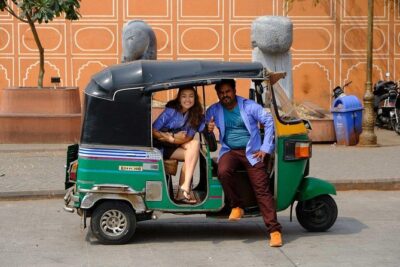
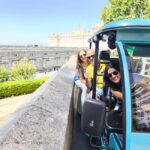
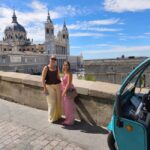
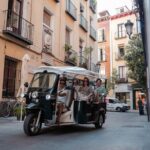
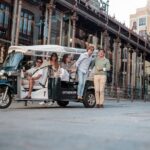
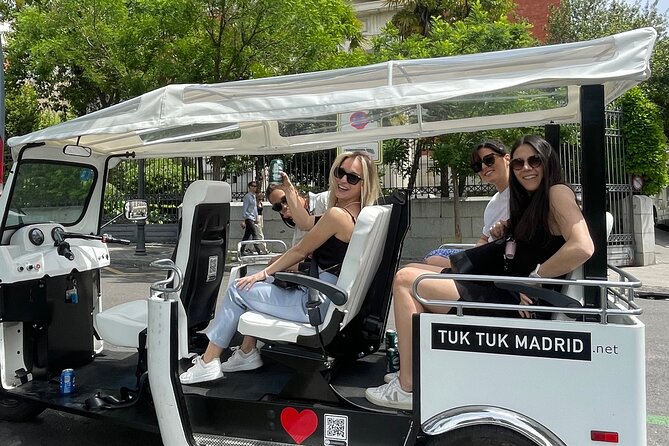
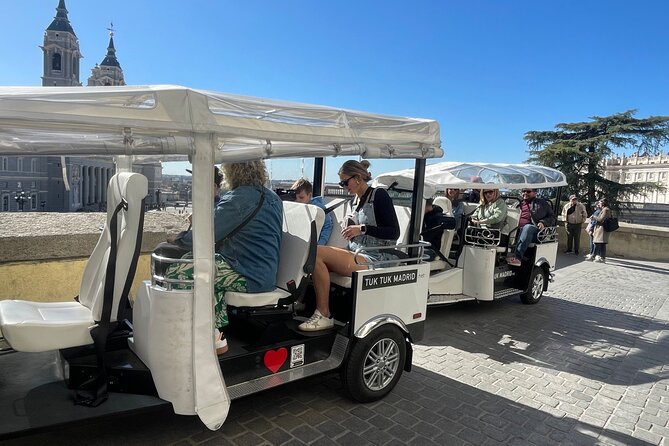
Madrid rolls by in an electric tuk-tuk. This Madrid Moderno tour is built for a fast, friendly overview of the city, mixing big landmarks like the Royal Palace, Almudena Cathedral, and Prado-area classics with modern Madrid streets like Gran Vía and Salamanca, all in about 1 hour 30 minutes with an English-speaking guide.
I love the stop-and-photo pacing. You can pause for quick pictures, then get brief, clear context so the sights make sense when you’re walking around later. I also like the way the tour atmosphere feels—guides named Juan and Jimena impressed with English that was easy to follow, while Javier and George kept the ride lively for mixed-language groups.
One thing to consider: a few people reported driver/guide no-shows on their scheduled morning, which is every traveler’s nightmare. I’d treat this like a “start time matters” experience, arrive at the meeting point early, and keep the operator contact handy in case anything goes off-track.
In This Review
- Key things that make this Madrid Moderno tuk-tuk tour worth it
- Why an electric tuk-tuk is a smart way to see Madrid in 90 minutes
- Price and value: $131.54 per group (up to 4) for a private highlight ride
- The route in plain language: how you’ll experience Madrid
- Royal Palace and Almudena Cathedral: classic Madrid, explained fast
- Royal Palace of Madrid (quick but impressive context)
- Almudena Cathedral: a “mix of styles” lesson you’ll actually remember
- San Francisco el Grande, Puerta de Toledo, and Neptune Fountain: Madrid’s “icon geometry”
- Royal Basilica of San Francisco el Grande
- Toledo Gate: a triumphal arch with a modern roundabout feel
- Neptune Fountain at Plaza de Cánovas del Castillo
- Atocha station and Reina Sofía: transportation meets modern art
- Atocha station: why everyone passes through it
- Museo Reina Sofía: the modern museum building you’ll recognize later
- Jerónimos, Buen Retiro remnants, and Prado zone stops: the “royal-to-museum” story
- Jerónimos (San Jerónimo el Real): Royal scale, shared setting
- Casón del Buen Retiro: a surviving court ballroom turned museum space
- Salón de Reinos (Army Museum era): coats of arms you can picture
- Real Academia Española: a language institution you don’t expect on a sights tour
- Museo del Prado: the “you’ll thank yourself later” museum stop
- Puerta de Alcalá, Las Ventas, and the modern city edge: monuments that set the vibe
- Puerta de Alcalá
- Las Ventas bullring
- Barrio de Salamanca, Plaza de Colón, and the National Library of Spain: Madrid with a sharper, newer feel
- Barrio de Salamanca (Serrano area vibes)
- Plaza de Colón and the Christopher Columbus monument
- National Library of Spain (BNE)
- Cibeles, Bank of Spain, and Gran Vía: the Madrid postcard, powered by traffic
- Cibeles fountain
- Bank of Spain
- Gran Vía
- The human part: what makes guides like Juan, Jimena, and Javier work
- Practical tips so your tuk-tuk morning goes smoothly
- Should you book the Madrid Moderno electric tuk-tuk tour?
Key things that make this Madrid Moderno tuk-tuk tour worth it
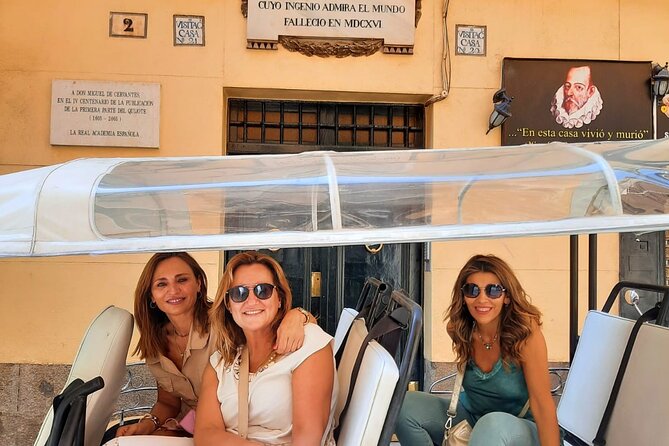
- Electric tuk-tuks for an easy ride through lots of major sights without long walks
- Private group up to 4, so you’re not lost in a crowd
- English-guided highlights that connect landmarks to what you’ll notice later
- A huge range of stops, from royal Madrid to Atocha, Reina Sofía/Prado areas, and modern Gran Vía
- Short time at each place, which is great for first-timers who want orientation fast
- Mix of “free admission” stops (like Jerónimos and Prado) with at least one not included (like the Royal Spanish Academy)
Why an electric tuk-tuk is a smart way to see Madrid in 90 minutes

Madrid can be a lot. Streets are busy, sights are spread out, and your feet don’t care that you planned to hit ten places. That’s where this electric tuk-tuk format helps: you get motion between stops, and you’re not spending the whole morning figuring out routes.
The “Madrid Moderno” part is also real. Yes, you’ll pass through the classic royal core and church landmarks, but you’ll also cover the city’s modern, public-facing Madrid—Atocha as a transportation hub, Reina Sofía and Prado as major museum zones, plus the big urban landmarks around Plaza de Cibeles, the Bank of Spain, and Gran Vía.
You’ll feel the tour is designed for orientation. You won’t get “one-hour in one museum” depth. Instead, you’ll get quick context at each major stop, so your later self-guided exploring feels easier.
You can also read our reviews of more tours and experiences in Madrid.


Price and value: $131.54 per group (up to 4) for a private highlight ride
This costs $131.54 per group for up to 4 people, and the time on the clock is about 1 hour 30 minutes. For a private tour, that’s the key value: you’re paying for transportation + a guide/driver, not a big group scramble.
What makes it feel like good value is the number of distinct areas you cover in one go:
- Royal Madrid landmarks (Royal Palace and Almudena Cathedral)
- A classic historic church stop (San Francisco el Grande area)
- Big fountain and gateway landmarks (Puerta de Toledo, Neptune Fountain)
- Atocha + Reina Sofía museum neighborhood
- Retiro-zone architecture (Jerónimos, Buen Retiro remnants around Prado)
- Major city symbols like Puerta de Alcalá, Cibeles, and Bank of Spain
- Modern Madrid shopping and street life around Barrio de Salamanca and Gran Vía
If you’re traveling as a small family, a couple with friends, or a group with mixed ages and walking comfort, private tuk-tuk time can be a practical bargain compared with paying for multiple taxis plus separate guided time.
The route in plain language: how you’ll experience Madrid
The whole trip works as a sequence of “see it, get it, move on.” You’ll stop for short moments, usually long enough to take pictures and hear a quick explanation. Some stops are listed as short (like 5 minutes), while others are longer (like Barrio de Salamanca at 20 minutes and Gran Vía around 10 minutes).
That pacing is great if:
- it’s your first day in Madrid,
- you want an overview before choosing where to spend real time,
- you’d rather get the big shapes and locations right than argue with maps.
It’s less ideal if you’re chasing slow, museum-level immersion in every place. This tour is about seeing the city as a system—where monuments relate to one another and where the neighborhoods start to feel different.
Royal Palace and Almudena Cathedral: classic Madrid, explained fast
You start with the heavy hitters of royal Madrid.
Royal Palace of Madrid (quick but impressive context)
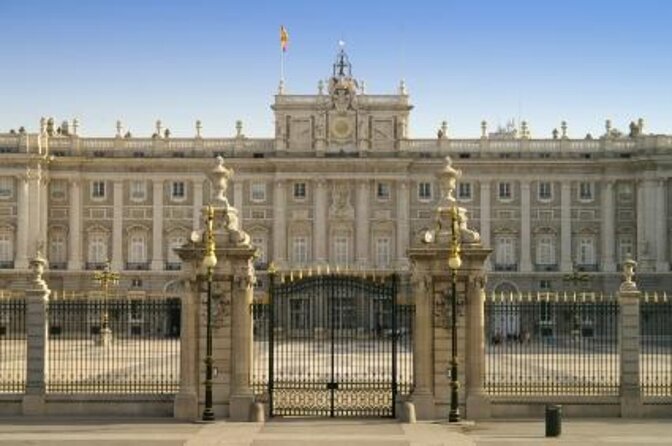
You’ll learn why the Royal Palace is such a big deal: its scale is enormous—135,000 m² and 3,418 rooms—and it’s described as the largest royal palace in Western Europe, with comparisons to Buckingham Palace and Versailles. Even if you just get a view and a short stop, that room count and size figure helps you understand why this place dominates the skyline.
Practical tip: if you want great photos, position yourself early during the stop. Royal-palace-area light can change quickly.




Almudena Cathedral: a “mix of styles” lesson you’ll actually remember
Next is Almudena Cathedral, Madrid’s central Catholic church dedicated to the Virgin Mary under the invocation of Almudena. You’ll get the meaning behind its name and the setting: it was built on the site of an old mosque, and the name comes from the Arabic al-mudayna, meaning citadel.
The coolest part for many people is the style contrast:
- Neoclassical on the outside
- Neo-Gothic inside
- Neo-Romanesque in the crypt
It’s also described with specific size markers—102 meters long and 73 meters high.
Even if you don’t go deep inside, this stop gives you a reference point for how Madrid absorbed layers of time.
San Francisco el Grande, Puerta de Toledo, and Neptune Fountain: Madrid’s “icon geometry”
After the main royal anchors, the route shifts into a rhythm of recognizable city shapes.
Royal Basilica of San Francisco el Grande
This stop is tied to a prominent setting in the historic center: it presides over the western face of Plaza de San Francisco, near the intersection of Calle Bailén and Carrera de San Francisco. You’ll also hear how it connects to the Franciscan convent of Jesus and Mary, founded in the early 13th century.
Why it’s valuable on a tuk-tuk tour: it’s one of those landmarks that feels “placed” in the city rather than isolated. You start noticing how Madrid built public space around religion and community.
Toledo Gate: a triumphal arch with a modern roundabout feel
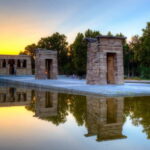
The Toledo gate is now a roundabout centerpiece in the Glorieta de la Puerta de Toledo. You’ll learn it’s one of Madrid’s access gates, with the current gate dating to the first third of the 19th century and designed by architect Antonio Aguado. It’s described as a triumphal arch honoring King Ferdinand VII, commemorating independence after the French occupation.
Neptune Fountain at Plaza de Cánovas del Castillo
Then comes Neptune Fountain, a neoclassical monument in the middle of its roundabout. You’ll get the timeline:
- proposed in 1777
- construction started 1782
- finished 1786
- moved to its current plaza center in 1898
It’s also tied to the idea of being originally located to face the Cibeles fountain, which makes these fountains feel like part of a plan—not random city decorations.
Atocha station and Reina Sofía: transportation meets modern art
Madrid’s not just royal and church landmarks. It’s also rail power and contemporary culture.
Atocha station: why everyone passes through it
You’ll stop near Atocha station, a railway complex described as the station with the highest passenger traffic in Spain. The story is also useful: it began as a simple halt in 1851, then extended into what was inaugurated as a station in 1892.
For travelers, this matters because it explains why Atocha is such a hub. Even if you don’t ride the train that day, you’ll feel where Madrid’s flow is centered.
Museo Reina Sofía: the modern museum building you’ll recognize later
Next is Museo Reina Sofía, focused on 20th century and contemporary art. It’s housed in the former General Hospital of Madrid (neoclassical, 18th century). The building evolution is part of the “why it matters”:
- José de Hermosilla started it
- Francesco Sabatini continued it
- it’s currently known as the Sabatini building
The museum opened in 1992, and it expanded in 2005 with the Nouvel building.
You’ll also hear a key art transfer detail: Picasso’s Guernica was moved to Reina Sofía in 1992. That single sentence gives you a reason to care beyond “it’s a museum.”
Jerónimos, Buen Retiro remnants, and Prado zone stops: the “royal-to-museum” story
This is where the tour connects the dots between Madrid’s old power and today’s museum map.
Jerónimos (San Jerónimo el Real): Royal scale, shared setting
You’ll visit San Jerónimo el Real, known as Los Jerónimos. You’ll learn it was one of the most important monasteries in Madrid, originally ruled by the Order of San Jerónimo. Next to it sat the Royal Room, which later expanded into the Buen Retiro Palace during Felipe IV’s time.
This is a smart stop on a short tour: it helps you understand why the Retiro area feels like it has layers—religious institutions, royal residences, and today’s cultural landmarks.
Admission note: Jerónimos is listed with free admission for the stop.
Casón del Buen Retiro: a surviving court ballroom turned museum space
The Casón del Buen Retiro is described as one of only two surviving buildings from the destroyed Buen Retiro Palace. It was built in 1637 by Alonso Carbonel and originally designed as a ballroom space for Felipe IV’s court.
Since 1971, it’s been part of the Prado Museum, housing around 3,000 19th-century paintings. After Guernica moved to Reina Sofía in 1992, the Casón later reopened as a Museum Study Center in 2009. The 19th-century collection moved to Prado’s main headquarters after expansion credited to Rafael Moneo.
If you’re the type who likes knowing why buildings feel familiar, this stop gives you that “wait, I recognize this” connection even when you’re just passing by.
Salón de Reinos (Army Museum era): coats of arms you can picture
The Salón de Reinos is presented as the representative axis of the former Buen Retiro Palace, built 1630–1635. You’ll hear that it housed major paintings now preserved in the Prado Museum.
The details that stick:
- coats of arms of 24 kingdoms of the Hispanic Monarchy under Philip IV were painted there
And its popular name today comes from a later use: it housed the Army Museum from 1841 to 2005, with collections transferred to the Alcázar of Toledo starting in 2005.
Real Academia Española: a language institution you don’t expect on a sights tour
You also pass the Real Academia Española (RAE) area. It’s described as publicly funded and a cultural institution, founded in 1713 and placed under protection of King Felipe V after his approval.
Stop note: admission is listed as not included for the RAE stop, and it’s set as a short duration.
Museo del Prado: the “you’ll thank yourself later” museum stop
Finally, you reach Museo Nacional del Prado. The museum is described as one of the most important worldwide, and a top Spanish cultural institution. It’s especially known for painting collections from the 15th to 18th centuries and Spanish works from the 19th.
The main attraction is specifically named: Velázquez, El Greco, Goya (most widely represented), Titian, Rubens, and Bosco.
Admission note: the stop is listed with free admission.
Practical takeaway: even a brief visit can help you decide which museum to prioritize later. If you’re already feeling museum fatigue, this quick Prado encounter keeps you oriented without forcing a long ticket commitment.
Puerta de Alcalá, Las Ventas, and the modern city edge: monuments that set the vibe
Once you leave the museum zone energy, the tour pushes toward wide, iconic city statements.
Puerta de Alcalá
You’ll see Puerta de Alcalá, one of Madrid’s five old royal gates. It sits at the Plaza de la Independencia roundabout, at the junction of several major streets near the Retiro gates.
Las Ventas bullring
Next is Las Ventas, described as the largest bullring in Spain, with a capacity of 23,798 spectators and noted as the third largest in the world after those in Mexico and Valencia (Venezuela). It’s also listed as the second largest by ring diameter (61.5 m).
Even if bullfighting isn’t your thing, this is still a strong Madrid stop because it shows how the city made room for major public spectacles.
Barrio de Salamanca, Plaza de Colón, and the National Library of Spain: Madrid with a sharper, newer feel
Then you move into a different Madrid mood: shopping streets, public squares, and big institutions.
Barrio de Salamanca (Serrano area vibes)
Barrio de Salamanca is described as a major commercial district and one of the highest standard-of-living areas in Europe. It’s named after José de Salamanca y Mayol, Marquis of Salamanca, who helped develop parts of the district in the 19th century. The luxury-shopping core centers around Serrano, Claudio Coello, and Ortega y Gasset streets.
The tour gives it more time than many stops (listed as 20 minutes) and that’s smart. You’ll have room to get your bearings for where you might want to come back on foot.
Plaza de Colón and the Christopher Columbus monument
You’ll also pass Plaza de Colón, where streets including Goya, Génova, Paseo de la Castellana, and Recoletos converge. It’s named for Christopher Columbus, and the monument there is neo-Gothic, built between 1881 and 1885.
National Library of Spain (BNE)
The stop at the National Library of Spain is about scale and purpose. The BNE is described as an autonomous body preserving Spain’s bibliographic and documentary heritage and safeguarding around thirty million publications produced since the start of the 18th century.
It’s one of those stops that makes you slow down and appreciate what cities build beyond tourist landmarks.
Cibeles, Bank of Spain, and Gran Vía: the Madrid postcard, powered by traffic
This final run is classic Madrid city-center energy.
Cibeles fountain
Cibeles fountain (La Cibeles) is described as a monumental neoclassical fountain in Plaza de Cibeles. It was part of an 18th-century urban remodeling plan initiated by King Carlos III, aiming for neoclassical aesthetics. The plan included sculpted fountains and other projects, including what’s now the Prado Museum and the Royal Botanical Garden.
Locals apparently called it the Salón del Prado because of the space’s beauty and amenity—so this is where the city’s “public living room” feeling shows up fast.
Bank of Spain
Then comes the Bank of Spain, described as Spain’s central bank, founded in 1782 by Carlos III. Its main headquarters were built 1884–1891, and it faces Plaza de Cibeles, sitting at the confluence of Calle Alcalá with Paseo del Prado.
This pairing (Cibeles + the Bank building) helps you see how Madrid mixes monumental city art with serious institutions.
Gran Vía
Finally, you ride through Gran Vía, one of Madrid’s main streets that runs from Calle de Alcalá to Plaza de España. It’s a major tourist and leisure landmark, famous for cinemas historically, with a section between Plaza de Callao and Plaza de España known as Madrid’s Broadway. Another section near San Luis and Plaza de Callao includes many fashion chain stores.
Even if you don’t stop long, Gran Vía gives you that “this is the modern spine of Madrid” feeling.
The human part: what makes guides like Juan, Jimena, and Javier work
The tour lives or dies by communication. The good sign here is that multiple guides were mentioned with strong English and an engaging approach:
- Juan was described as amazing, knowledgeable, and fun.
- Jimena was noted as very knowledgeable and patient.
- Javier (with George) was praised for keeping mixed-language groups able to follow along.
So when you’re booking, look at this as a cultural translation service, not just sightseeing transport. You’re buying someone’s ability to turn each landmark into a few memorable points.
Practical tips so your tuk-tuk morning goes smoothly
- Bring a flexible mindset. Stops are short, so you’ll want to decide quickly where to take photos.
- If you’re sensitive to sound, expect Madrid street noise. One note mentioned the audio system could be hard to hear in traffic, so sit where you can clearly hear your guide.
- If anything feels off at the start time, don’t wander. Stay at the meeting address and use the operator contact tools in your booking app.
- Plan to use this tour as your map. Afterward, pick one or two neighborhoods to return to on foot—Salamanca for shopping time, or the Prado/Reina Sofía area for museum time.
Should you book the Madrid Moderno electric tuk-tuk tour?
Yes, if you want an efficient first pass at Madrid that covers both royal classics and modern city life—in a private group—without spending your whole day walking. The route is packed with recognizable landmarks, and the guide explanations are designed to help you understand what you’re looking at.
Maybe skip it or book with extra caution if:
- you’re very dependent on perfect morning timing (a small number of people reported guide or driver no-shows),
- you want long museum time at each stop (this tour is built for quick orientation),
- or you’re expecting fully quiet, controlled audio (busy streets can interfere with hearing).
If your goal is get your bearings fast, then explore smarter, this is a strong choice for your Madrid schedule.