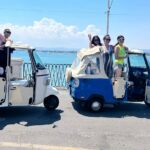
Ortigia is small, but the sites add up fast. This Ape-TUK tour uses a clever route to help you hit the top Syracuse highlights without the slow, frustrating scramble on foot. I like that it’s private and timed for maximum viewing stops, and I also like how it mixes big monuments with everyday places like the Mercato di Ortigia. One thing to consider: the ride is great for getting around, but you’re still walking into some stops on your own, so you may want an audio guide plan (especially if you want deeper context).
The best part is that the day feels well paced: short photo-and-look stops for the outdoor classics, plus a longer block inside the old-town market area. I especially value the route’s balance—cathedrals and Greek-era ruins in the same tour, plus that “wait, I didn’t know this was here” Giudecca neighborhood stop. A possible drawback is that the big Neapolis archaeological park ticket is not included, so you’ll need to budget a per-person amount.
If you’re visiting Syracuse for a first look and you want coverage without feeling rushed, this tour makes sense. It also tends to work well for different comfort levels because the vehicle handles the in-between distances while you choose what to do at each stop.
In This Review
- Key highlights to watch for
- Why a Tuk Tuk Works So Well in Ortigia and Syracuse
- Price and value: what $415.42 per group gets you
- Your 4-hour route: what the timing feels like
- Piazza Duomo: cathedral square, St Lucia alla Badìa, and quick orientation
- Fonte Aretusa: a fast myth stop that pays off
- Castello Maniace: terrace views with free access
- Piazza Archimede and the Diana fountain photo moment
- Temple of Apollo (Tempio di Apollo): ancient scale in a short stop
- Giudecca neighborhood churches: San Giovanni Battista and San Filippo Apostolo
- Mercato di Ortigia: fish stalls, and F.LLI BURGIO preserves
- Small port of Santa Lucia and scenic viewpoints for photo breaks
- Madonna delle Lacrime: a modern sanctuary with major timing
- Basilica Santa Lucia al Sepolcro and the Caravaggio painting
- Neapolis Archaeological Park: Greek Theater, Arch of Dionysus, Roman Amphitheater
- What your driver does (and what they don’t) inside sites
- If you want the best experience: ask for your style of guide
- Who this tour suits best
- Should you book the Ape-TUK Tour of Ortigia and Neapolis?
- FAQ
- How long is the Ape-TUK Tour of Ortigia and Neapolis?
- How much does the tour cost?
- Is pickup available?
- Where does the tour start?
- Do I need to buy tickets for Neapolis?
- Is Syracuse Cathedral free to enter?
- What language is the tour offered in?
- Does the tour include mobile tickets?
- Is there free cancellation?
Key highlights to watch for
- Ape-TUK for tight streets: your ride helps you reach scenic and historic corners that are awkward on foot.
- Market time at Mercato di Ortigia: you’ll see fish stalls up close and then visit a local preserves producer.
- Neapolis at the right pace: you get a full stretch at the big Greek Theater–Archae of Dionysus–Roman Amphitheater zone.
- Religious sites plus major viewpoints: cathedral square, Madonna delle Lacrime, and a panoramic stop for the Syracuse Fallen in Africa monument.
- Caravaggio connection in Santa Lucia al Sepolcro: the basilica stop includes a display of a Caravaggio painting.
- Friendly, flexible drivers: multiple guide names show up in real feedback, including Marco, Francesco, Angelo, and Claudio/Luca as part of the broader team.
Why a Tuk Tuk Works So Well in Ortigia and Syracuse
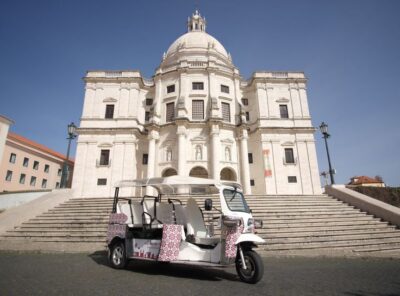
Ortigia can feel like a puzzle box—pretty, historical, and full of lanes that look like they might be too narrow for anything bigger. That’s exactly why a tuktuk-style vehicle is such a practical match here. You spend more time seeing, less time hunting parking, and you move between viewpoints and churches without wearing yourself out.
Another reason this format works: the tour is designed around short “arrive, look, pause” moments. That’s perfect for places like fountains and plazas, where a quick stop can still give you the whole payoff: photos, a bit of atmosphere, and the chance to appreciate what’s around you.
Finally, it’s private. With a group up to 4, you can usually tailor how long you linger at a specific stop—useful if your favorite part of Syracuse is the details, not just the main monuments.
Price and value: what $415.42 per group gets you
This tour costs $415.42 per group (up to 4 people) for about 4 hours. What makes it feel fair is that you’re paying for private transportation plus an itinerary that hits a lot of different “types” of sights—religious landmarks, city views, historic neighborhoods, and archaeological park time.
You’ll also want to understand what you’re not paying for upfront. The Neapolis Archaeological Park ticket is not included, and it’s listed as €10 to €20 per person depending on your situation. The Syracuse Cathedral stop has an admission note of €2 per person (ticket details at that stop), so plan on small on-site payments as you go.
Your 4-hour route: what the timing feels like
The overall plan is a loop that starts at Piazza Emanuele Pancali, 17, 96100 Siracusa, then returns there at the end. Pickup is offered if you’re inside Syracuse city and Ortigia—just specify the exact pickup point you want for the ape calessino.
In practice, the route is structured so you don’t just park and wander. You get a string of short stops (often 10–15 minutes) for plazas, fountains, and church exteriors, plus one longer market segment and one longer archaeology segment.
This style works best if you don’t try to “do everything” inside every building. Use the vehicle time to arrive, orient yourself, and pick what you want to explore more deeply.
Piazza Duomo: cathedral square, St Lucia alla Badìa, and quick orientation
Your tour begins in Piazza Duomo, one of the most beautiful squares in the Mediterranean. You’ll have a chance to visit the Syracuse Cathedral, with the note that admission is €2 per person, and also see the church of St Lucia alla Badìa.
This is a smart first stop because it gives you immediate orientation. Even if you’re tired from travel, you can still enjoy the look of the square, then decide if you want to step inside for the cathedral and related church areas.
A practical tip: since the tour includes several church stops afterward, it helps to treat Piazza Duomo as your “baseline.” Look at where you are, then you’ll recognize the city’s layers as the route moves on.
Fonte Aretusa: a fast myth stop that pays off
Next comes Fonte Aretusa, a mythological spring tied to Greek storytelling. You’ll only have about 10 minutes, so this is more of a look-and-feel stop than a full deep dive.
Still, it’s worth it because Fonte Aretusa is one of those places that makes Syracuse feel different from other Mediterranean cities. It’s not just a view—it’s the way the landscape is tied to legend.
If you like quick stops, this is the kind that keeps the tour energy up without burning your time.
Castello Maniace: terrace views with free access
At Maniace Castle, the timing is short (around 15 minutes), but the payoff is strong. The entrance to the terrace is described as free of choice, while visiting the castle itself is for a fee.
This is a useful arrangement. If you want the viewpoint and sea-air feeling, you can focus on the terrace without committing to every indoor space. If you want more, you can pay for the castle visit portion.
Either way, treat this stop as your “break from streets” moment. It’s a good time to reset before moving through more churches and the market.
Piazza Archimede and the Diana fountain photo moment
In Piazza Archimede, you’ll stop near the Diana fountain for about 10 minutes. This isn’t a long “museum-style” stop, and that’s fine. You’re here for the plaza feel and the visual anchors that define Ortigia’s public spaces.
This also functions as a transition point—after the castle viewpoint, you’re back in the urban core. If you’re keeping an eye on time, this is one of the easier stops to manage because you can enjoy the fountain quickly and then be ready to move.
Temple of Apollo (Tempio di Apollo): ancient scale in a short stop
The Tempio di Apollo is a 6th-century BC temple stop, again about 10 minutes. Even if you don’t go deep inside anything, it’s a powerful “scale shock” moment—suddenly you’re looking at something that long predates the city streets around it.
This stop matters because your tour isn’t only about pretty streets. It’s also about showing you the Greek layer under the city, then continuing that theme into Neapolis later.
Quick question for your planning: if your group loves archaeology, you’ll probably want to treat this as a preview, then save your longer attention span for Neapolis.
Giudecca neighborhood churches: San Giovanni Battista and San Filippo Apostolo
You’ll make two church-area stops in the Giudecca Jewish area: Chiesa di San Giovanni Battista and Chiesa Di San Filippo Apostolo. Each one is about 10 minutes, and the tour frames them as part of understanding this neighborhood’s place in the city.
Because these are short stops, don’t expect full guided explanations unless your driver shares key points during the ride. What you can get is the geography of the area and a chance to notice how the neighborhood’s feel differs from the market and main plazas.
If you like walking past places that mark cultural layers, these stops are a good fit. If you prefer only the biggest “named sights,” you may want to keep these as look-and-snap moments.
Mercato di Ortigia: fish stalls, and F.LLI BURGIO preserves
This is the heart of the old-town experience, with about 40 minutes at Mercato di Ortigia. You’ll visit colorful market areas, including time inside to see the characteristic fish stalls, then you’ll stop at F.LLI BURGIO, a local family known for making preserves using exclusively local products and traditional methods.
This segment is valuable because it connects the historic city to how people still live there. Even if you don’t buy anything, seeing how the market runs gives you context that many sightseeing-only tours miss.
What I like about this setup for you: you’re not just staring at storefronts. You’re getting a short “local life” window, plus a structured stop where you can sample and understand what the area produces.
Small port of Santa Lucia and scenic viewpoints for photo breaks
Later, you’ll pause at the small port area called Sbarcedero Santa Lucia. The schedule then includes a stop at the Monument to Syracuse Fallen in Africa, described as one of the city’s most beautiful panoramic points, with about 10 minutes there.
These stops are about air and angle. After churches and streets, you get open views and better photo angles—exactly what you want when you’re trying to remember a place in more than just one frame.
If you’re traveling in warmer months, this is also where you’ll likely appreciate the vehicle transitions. Even short sight pauses can feel heavy in heat if you’re stuck walking between them.
Madonna delle Lacrime: a modern sanctuary with major timing
Next is Santuario Madonna delle Lacrime, with about 15 minutes. The sanctuary is described as inaugurated by Pope John Paul II in honor of a miracle that took place in 1953.
This stop adds a more modern, emotionally charged dimension to the tour. Earlier moments are mostly about ancient and classic-looking Syracuse; this one shows how the city also carries faith events that shaped its identity.
Even if you’re not visiting for religious reasons, you’ll likely notice the way the sanctuary changes the atmosphere. It’s the kind of place where people slow down naturally.
Basilica Santa Lucia al Sepolcro and the Caravaggio painting
You’ll also visit Basilica Santa Lucia al Sepolcro in the Borgata district, again around 15 minutes. The key detail here is that a Caravaggio painting is exhibited.
This is one of the stops that can feel like a “bonus” if your group wasn’t expecting a major art highlight. It’s also a strong reason to choose this tour rather than only focusing on outdoor monuments.
Tip for timing: car-focused or art-focused stops can run a bit longer than expected because you’ll want to look at the details. If your group is especially interested in art, you might want to spend a little more time here and keep your later Neapolis visit focused.
Neapolis Archaeological Park: Greek Theater, Arch of Dionysus, Roman Amphitheater
Your longest stretch is at Parco Archeologico della Neapolis, about 1 hour on-site. You’ll see the Greek Theater, the Arch of Dionysus, and the Roman Amphitheater.
This is where the tour really connects the dots between ancient Syracuse and what you saw earlier. The Apollo temple preview sets the stage, then Neapolis gives you the full set-piece.
Plan for the fact that the ticket is not included and costs €10 to €20 per person. If you’re budgeting, add that amount in advance rather than being surprised at the gate.
What your driver does (and what they don’t) inside sites
One practical reality: the driver usually helps you get to the right places and gives context during the ride, but they don’t join you inside every stop. That means your on-site experience may depend on either your own reading signage or an audio plan.
This doesn’t make the tour less useful. It just changes the kind of learning you’ll get. If you want deeper explanations for cathedrals or archaeological structures, plan to use audio guides or consider pairing this with a separate paid guide for the big indoor moments.
A helpful approach: treat the tour as your navigation and orientation tool first. Then, for the one site you care about most—like Neapolis—you can choose how much extra learning you want on your own time.
If you want the best experience: ask for your style of guide
The names coming through in actual feedback are a nice clue about what to expect. People highlight Marco for patience and managing time to revisit the Duomo area; Francesco gets strong notes for knowing the right pacing and recommending food spots; Angelo is praised for handling mobility needs with care; and Andrea is noted for passionate stories and an organized route.
If you can request, it’s reasonable to ask the company whether Marco or Francesco is available, especially if you care about explanations and flexible stop timing.
Even without a specific name, the overall pattern in feedback is clear: drivers tend to bring enthusiasm for their home town and make the route feel like a guided pass, not just a taxi ride.
Who this tour suits best
This tour fits you if:
- You want to see a lot of different Syracuse highlights in one half-day.
- You prefer getting around comfortably instead of sprinting between plazas and churches.
- Your group includes mixed interests—some people like viewpoints, others want markets or archaeology.
You might not love it as much if:
- You want a full guided walk-through inside every site with detailed narration at each door.
- Your group dislikes any market time, because the Mercato di Ortigia segment is a key part of the route.
- You need long, unhurried stays inside multiple museums, since several stops are intentionally short.
Should you book the Ape-TUK Tour of Ortigia and Neapolis?
Yes, you should book it if this is your first Syracuse visit and you want a smart route that covers the “must-see” and the “you’d never find it quickly on your own” moments. The private Ape-TUK format is a real time-saver, and the mix of markets, churches, and Neapolis gives you more than a single-theme tour.
Book it especially if you like a plan that balances outdoor views with a meaningful market stop and a full archaeology hour. If Neapolis ticket costs and the cathedral’s small admission feel manageable for your budget, this tour looks like strong value for a group up to four.
If you’re more into deep museum learning than navigation and brief site stops, then consider adding a separate guide for your top priority site. Otherwise, this is an easy first-choice way to get oriented and start enjoying Syracuse fast.
FAQ
How long is the Ape-TUK Tour of Ortigia and Neapolis?
The tour is about 4 hours.
How much does the tour cost?
It’s priced at $415.42 per group for up to 4 people.
Is pickup available?
Yes. Pickup is offered if you’re inside Syracuse city and Ortigia. You’ll need to indicate the exact pickup point you want.
Where does the tour start?
It starts at Piazza Emanuele Pancali, 17, 96100 Siracusa SR, Italy.
Do I need to buy tickets for Neapolis?
Yes. The Neapolis Archaeological Park ticket is not included and is listed as €10 to €20 per person.
Is Syracuse Cathedral free to enter?
No. The Cathedral stop lists admission at €2 per person.
What language is the tour offered in?
It’s offered in English.
Does the tour include mobile tickets?
Yes, a mobile ticket is included.
Is there free cancellation?
Yes. Free cancellation is available up to 24 hours in advance of the experience start time for a full refund.