REVIEW · MADRID
Tour Madrid: Royals, Plazas & Secrets 3H
Book on Viator →Operated by Green Tours · Bookable on Viator
Madrid in 3 hours feels like fast magic. This private tuk-tuk tour stitches together royal monuments, major plazas, classic churches, and big-city landmarks so you can get your bearings fast. I especially like that you spend time on the places you can actually see from the street, plus you still get stops near top museums and signature Madrid squares without needing a full day plan.
I also like the value shape: many locations are marked with free entry, and the group price covers up to four people, so you can split the cost. The main drawback to consider is timing: it’s short, so you’ll mostly view highlights from outside or at quick museum moments, and Palacio Real entry is not included.
In This Review
- Key takeaways before you go
- Royals, plazas, and street-level secrets on a 3-hour tuk-tuk loop
- Meeting point and how the route strings together
- Royal Madrid in the Centro grid: Santa Ana, Palacio de Oriente, Almudena
- Photo-and-pause highlights: Templo de Debod, Plaza Mayor, and Mercado San Miguel
- Churches and literary Madrid: San Francisco el Grande, Cervantes, Lope
- Plaza de las Cortes and Neptune Fountain: power, symbols, and scale
- Prado, Jerónimos, and Puerta de Alcalá: the museum corridor made practical
- Las Ventas to Bernabéu: Madrid’s arenas and big-city confidence
- Plaza Colón, National Library, and Cibeles: monuments you can orient by
- Gran Vía, Retiro, and the long Prado-to-Atocha line
- Price and value: why this tour is often a smart split
- What makes the guide factor matter (and a couple of real cautions)
- Tips to get the most out of a short highlights ride
- Should you book this Madrid royals, plazas, and secrets tour?
Key takeaways before you go
- A tight 3-hour highlights loop built for first-timers who want the big picture quickly
- Mostly free-entry stops so you keep moving and don’t blow your budget on tickets
- Royal and literary Madrid in one pass from Palacio de Oriente to the Cervantes and Lope de Vega houses
- Photo-friendly timing with frequent short halts at plazas, fountains, and landmarks
- Guides that adapt to your interests (names you’ll see in the feedback include Rommel, Maria, Javier, Daniel, Mari, and Alvaro)
Royals, plazas, and street-level secrets on a 3-hour tuk-tuk loop

This is the kind of tour you book when you want Madrid to click into place in your head. The route mixes “wow” royal stops with practical orientation points, then sweeps you outward toward modern Madrid icons like Santiago Bernabéu and the Paseo de la Castellana. In a few hours, you’ll go from classic Centro plazas to Salamanca streets and back toward the Prado/Retiro area.
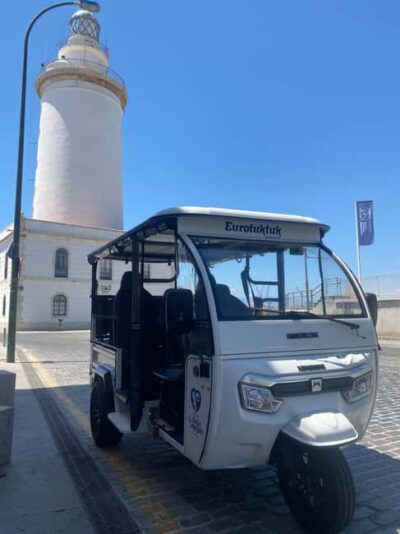
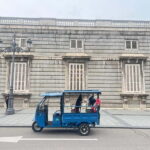
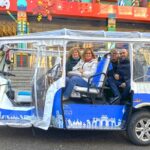
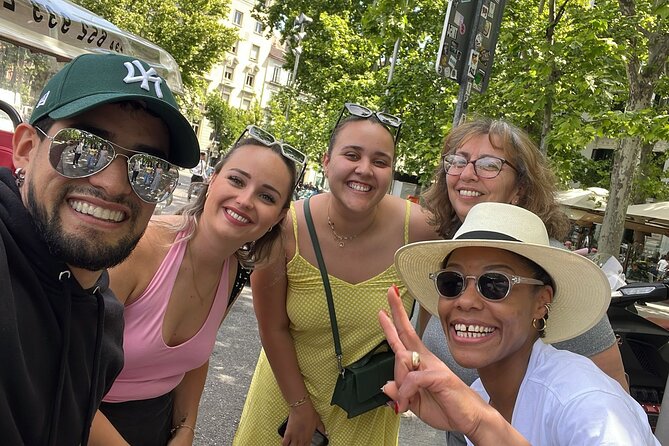
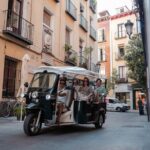
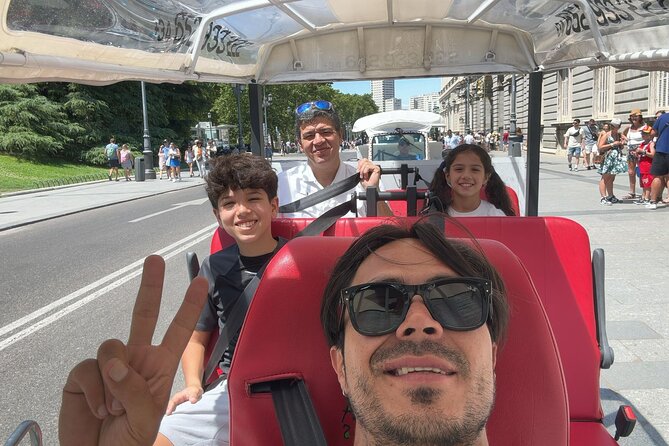
The format matters. You’re not walking a long loop for hours. You’re riding in a tuk-tuk style vehicle, with short stops so you can photograph, look up, and take in how the city is laid out. It’s ideal when your legs are tired, your schedule is tight, or you’d rather spend your energy on noticing details than counting steps.
You can also read our reviews of more tours and experiences in Madrid.


Meeting point and how the route strings together
You start at Pl. de la Lealtad, 1 in the Retiro area, and the tour ends back at the meeting point. That matters because it keeps the itinerary coherent: you’re not doing an out-and-back where the final section feels disconnected from the first.
Timing is designed for short viewpoints. Expect stops around 5 to 10 minutes for most locations, plus a slightly longer photo window around Parque del Retiro. If you like to linger, plan to return to your favorite spot later on your own. If you like structure, this will feel like a well-paced highlight reel.
Royal Madrid in the Centro grid: Santa Ana, Palacio de Oriente, Almudena
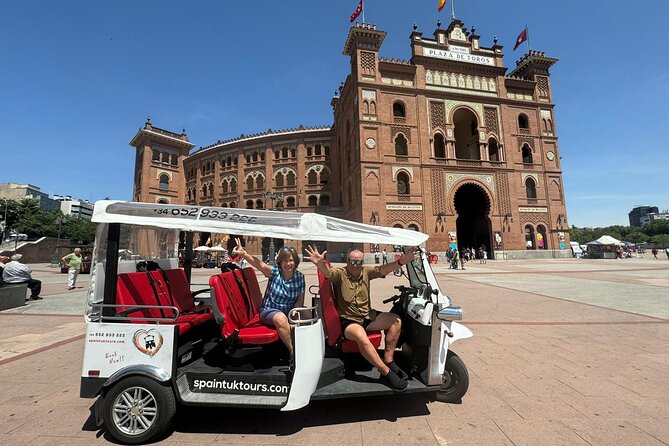
Your first stop is Plaza de Santa Ana in the Cortes/Centro area. It’s a small start on purpose: you get a feel for the neighborhood energy and an easy open-space reference point before the tour swings you toward the royal core.
Next comes Royal Palace of Madrid (Palacio de Oriente). Construction started in 1738 and the works ran for about 17 years, and you’ll learn why it’s called Palacio de Oriente. Here’s the practical twist: the Spanish kings live at Palacio de la Zarzuela, so the Royal Palace today is used mainly for receptions, ceremonies, and official events. That explains why your visit is more about exterior impressions and surrounding context, not a long “inside the palace” day.
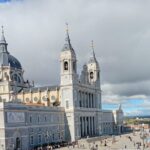
Right after that, you’ll see Almudena Cathedral through its museum connection. The museum collects objects tied to the diocese of Madrid, spread across multiple rooms with things like mosaics and episcopal symbols. Then you’ll step into the outdoor payoff: Jardines de Sabatini, the gardens directly in front of the palace’s north facade. Even when the garden time is brief, it’s a useful reset—views soften into greenery while you’re still in the royal zone.
Photo-and-pause highlights: Templo de Debod, Plaza Mayor, and Mercado San Miguel
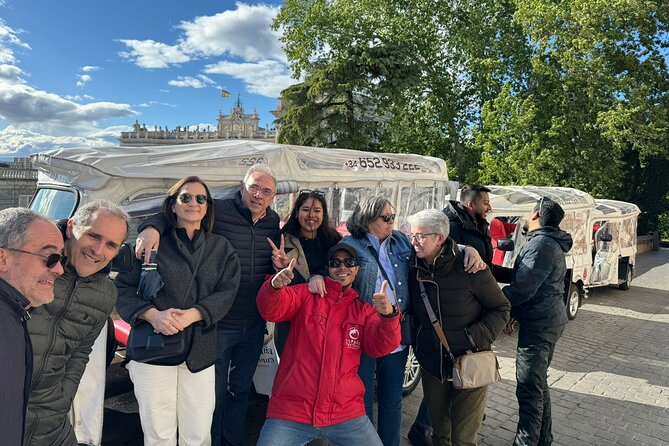
Templo de Debod is a fun curveball. It’s an ancient Egyptian temple located in Madrid, set on a hill area west of Plaza de España. When you see it in daylight, it’s easier to understand why people remember this stop long after the rest of the tour becomes a blur of squares and facades.
Then you hit the heart of old Madrid: Plaza Mayor. This is the classic meeting point of Madrid de los Austrias, with uniform building lines and a long list of historical uses. You’ll also get the sense of why it works so well for orientation: it’s central, easy to picture on a map, and a natural anchor for walking directions afterward.
A quick stop at Mercado San Miguel follows, a covered market dating to around 1916. Even if you don’t plan a full meal here, it’s an excellent place to grab something small and see the modern version of market culture—delicatessen-style browsing in an elegant setting. It’s also a good “last snack check” before the tour continues into churches and museum-adjacent areas.
Churches and literary Madrid: San Francisco el Grande, Cervantes, Lope
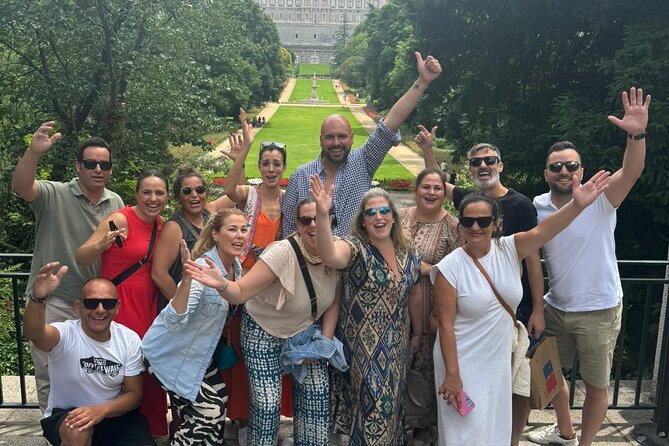
Madrid has a talent for packing big meaning into a few blocks. Real Basilica de San Francisco el Grande is one of those stops. It’s a major church in the historic center, and it gives you a different architectural mood than the royal palace zone—more religious gravity, less ceremonial shine.
The tour also makes room for literature, which I love because it changes your mental soundtrack. You’ll pass by Casa de Cervantes, the former residence of Miguel de Cervantes, best known for Don Quijote, with guided tours available there. Then you’ll head to Casa Museo Lope de Vega, the 16th-century home that Lope de Vega lived in until his death in 1635.
A side effect of these stops is that you start noticing how Madrid layers time: royal power, religious authority, and writers who shaped Spanish culture all coexist in the same walking-and-driving map. When your next museum day comes, you’ll feel like you already know the story beats.





Plaza de las Cortes and Neptune Fountain: power, symbols, and scale
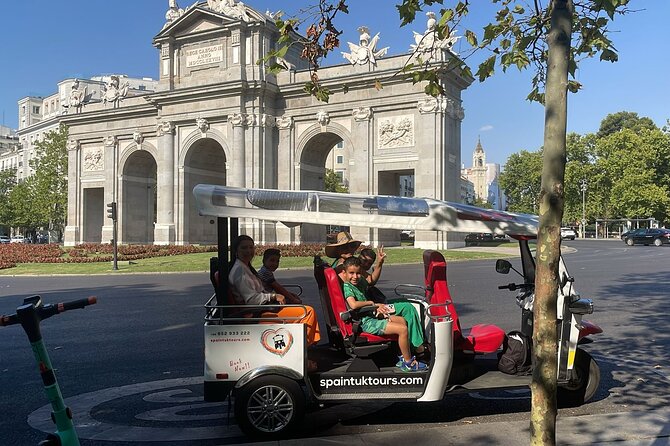
At Plaza de las Cortes, the tour shifts from royal to political. This area sits near the Palace of the Spanish Courts and the stop includes a look at the neoclassical facade and details like the sculpted lions at the entrance. You’ll also learn why certain architectural elements exist—like those lions being cast with iron from cannons captured during the war in Africa. It’s the kind of detail that makes a building feel less like a postcard and more like a historical document.
Then the tour moves toward Neptune Fountain in Plaza de Cánovas del Castillo. This is one of those Madrid moments where you feel the city’s commitment to monuments. Proposed in 1777 and built from 1782 to 1786, it’s a classic neoclassical centerpiece, and it’s perfectly timed for a quick photo stop before you head deeper into the museum corridor.
Prado, Jerónimos, and Puerta de Alcalá: the museum corridor made practical
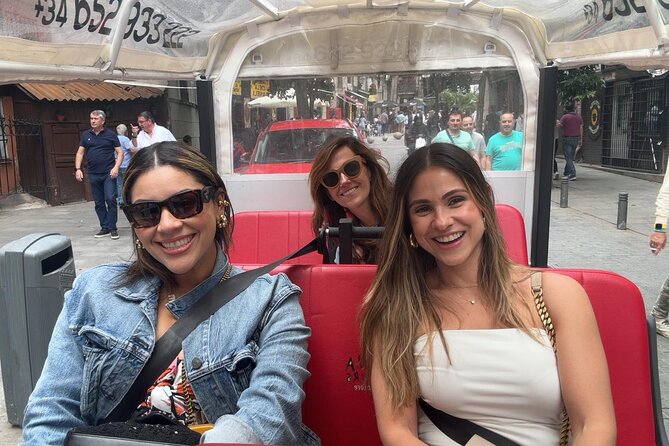
Now you reach what many people picture first when they think Madrid. The tour stops at Museo Nacional del Prado, which is famous for paintings from the 16th through 19th centuries. The museum’s standout strengths include major names like Velázquez, El Greco, and Goya, along with deep collections tied to artists such as Bosch. If you want to return for a focused museum visit later, this stop helps you understand where it sits and how to plan your route.
Nearby is Jeronimos (Parish Church of San Jerónimo el Real), sometimes called Los Jerónimos. It’s late Gothic with Renaissance influences, built around the 16th century with lots of royal connection. Even with a short stop, it works because you’re next to the Prado area and the church’s stair-and-façade presence is visually strong.
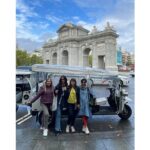
Then you’ll see Puerta de Alcalá, built by Carlos III and designed by Francesco Sabatini as a neoclassical triumphal arch. It’s also one of the European “firsts” that people compare to later triumphal gates elsewhere. Here, the key value is the scale and symmetry: the five openings make it feel different from simpler arch designs, so it’s easier to remember.
Las Ventas to Bernabéu: Madrid’s arenas and big-city confidence
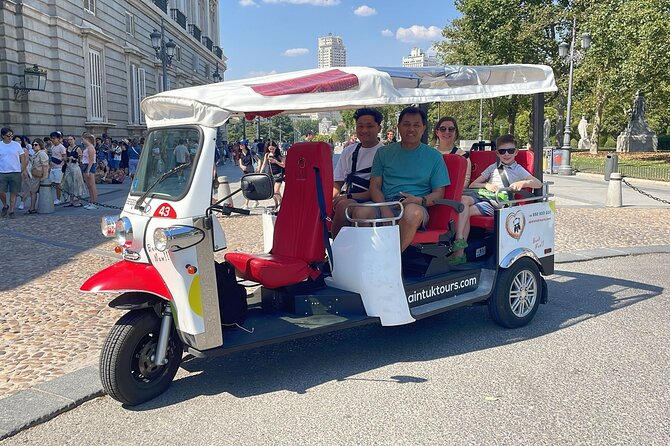
The tour then heads into a Madrid that feels louder and wider. Las Ventas bullring is the big stop in this section—Madrid’s major arena, with a huge seating capacity. Even if you don’t care about bullfighting, it’s worth seeing as architecture and city identity, the same way you’d treat a stadium in another country: it’s a cultural “set piece.”
Next comes Barrio de Salamanca. You’ll drive through and see major streets like Velázquez, Ortega y Gasset, and Serrano. This is a reminder that Madrid isn’t one style forever; you’re moving into a more polished, upscale grid as the tour stretches toward modern landmarks.
Then you’ll reach Santiago Bernabéu Stadium. It opened in 1947 and holds a massive capacity. Even if you don’t go inside, this is a strong “where you are now in Madrid” marker. From here, the tour continues along the Paseo de la Castellana financial district, which helps you understand how the city routes big movement around central points.
Plaza Colón, National Library, and Cibeles: monuments you can orient by
A standout cluster in the middle-to-late part of the tour is the monument belt. Plaza de Colón features the Christopher Columbus monument and its fountain, with the square surrounded by landscaped areas and a cultural center below. Then you’ll see the Biblioteca Nacional de España, which is all about Spain’s stored documentary heritage, holding tens of millions of items across books, maps, prints, and more.
After that, the tour brings you to Cibeles Fountain. This is one of the easiest Madrid monuments to recognize later because it’s surrounded by big civic buildings: the Army Headquarters, Casa de América, city council offices, and the former postal headquarters area. The fountain’s myth ties to the Roman goddess Cibeles and two lions—then Real Madrid fans connect it to celebration moments. That cultural layer is part of the reason this stop works even if you’ve never cared about sports; it’s a city ritual made visible.
Gran Vía, Retiro, and the long Prado-to-Atocha line
From the monument cluster, the route turns into the Madrid “main street” vibe. Banco de España appears as a notable exterior stop, and the interior is generally only accessible for certain group types—so treat this as a look-from-outside moment on the tour.
Then you ride through Gran Vía, Madrid’s famous boulevard linking Alcalá and Plaza de España. It’s a strong transition point: this is where you see commercial and tourist Madrid at its most concentrated, which makes it an easy mental anchor for planning the rest of your day.
You also get Parque del Retiro. The tour includes a drive-around and a stop for photos at the main entrance. That matters because Retiro is one of the city’s biggest “return later” places. Even a short glance helps you decide if you want to come back for a longer wander, a boat moment, or just a break in the greenery.
Then you continue along Paseo del Prado toward Atocha train station, with a straight-line feel that helps you understand how Madrid’s famous museum strip connects to transport.
Finally, you’ll see Teatro Real, an opera house with a long track record. It’s another “Madrid identity” stop: even when you don’t attend a show, you’re reminded that performing arts matter here, not just attractions.
Price and value: why this tour is often a smart split
The price is $323.59 per group for up to 4 people, for about 3 hours. If you split it four ways, that’s roughly $81 per person, and you’re paying for a lot of driving coverage plus short, guided stops at dozens of major points.
Also note that GST is included. That’s helpful because you don’t have to do mental math for local taxes on top of the tour price.
The big cost exception is Palacio Real, where entry is not included. If you strongly want to go inside, budget extra time and tickets. If you’re happy with exterior viewing and the surrounding garden and cathedral connections, this tour keeps your money focused on the experience rather than piling up admissions.
What makes the guide factor matter (and a couple of real cautions)
This is the kind of tour where the guide can change your experience. In the feedback, specific guide names come up for being flexible—people mention guides like Rommel, Maria, Javier, Daniel, Mari, and Alvaro as professional, personable, and willing to adjust the route within the time available. One theme is that good guides pause for photos and answer questions fast, which is huge when you’re moving city-block by city-block.
One practical caution: the route is in heavy traffic areas, so sound can get lost. If you’re in a group where you need audio clarity, ask your guide to speak up when you stop, and don’t be shy about repeating questions. Another small but important note is meet-up clarity: since people have run into confusing meet-up instructions, I’d treat it like a mission. Screenshot your meeting address and arrive a few minutes early so you don’t start the ride frazzled.
Tips to get the most out of a short highlights ride
- Keep your camera accessible. Most stops are 5 to 10 minutes, so you’ll want to move quickly at each halt.
- Decide what you want to do later. The Prado, Jerónimos, and other major sites are likely best for a return visit if you care about interiors.
- Wear good walking shoes anyway. Even with a tuk-tuk, you’ll step out for photos and quick viewing, and Madrid streets can be uneven.
- Plan around the one paid exception. If you want Palacio Real inside, treat that as a separate half-day plan or add-on.
Should you book this Madrid royals, plazas, and secrets tour?
Book it if you fit one of these profiles:
- You’re in Madrid for a short time and want a structured orientation loop across Centro, Prado, and Salamanca.
- You’d rather see many icons quickly than spend hours in transit.
- You like the idea of a guide-led route with frequent photo stops and room to ask questions.
Skip or modify it if:
- You’re the type who wants long museum galleries. This tour is built for highlights, not deep, uninterrupted time inside major attractions.
- Palacio Real inside is your top priority. The tour doesn’t include admission there, so you’ll need your own ticket plan.
If you want Madrid to feel connected instead of random, this is a strong way to get your bearings in just 3 hours—then use the rest of your trip to follow the sights you liked most.