REVIEW · PORTO
Porto: Fun Private Tuk Tuk Tour
Book on Viator →Operated by byLocals · Bookable on Viator
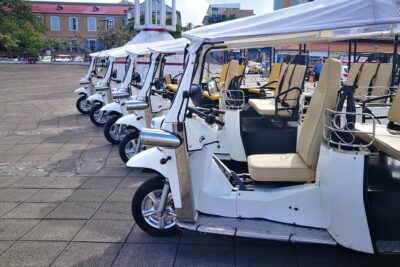
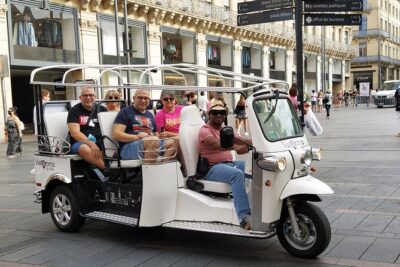
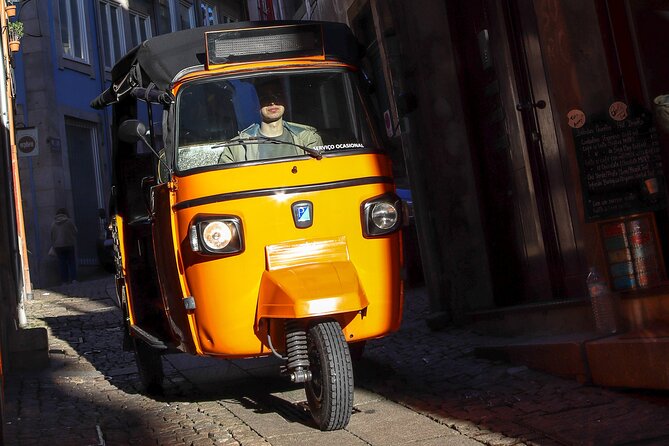
Porto on a tuk tuk feels like time saved. This private 1.5-hour loop is built for big views and easy getting around, even when the city’s hills do their best to slow you down. I like that you cover a lot of ground without feeling rushed, because the stops are placed where the city’s story and scenery actually meet.
I also love the bridge-and-river focus. You get classic engineering landmarks across the Douro plus Ribeira-area walk-through moments, like the gardens and tile-covered station, so the tour doubles as orientation and photo practice. The one real thing to plan for is weather: the ride needs good weather, and when rain hits, it changes the vibe even with a great guide.
If you want a smart first taste of Porto (or a second-day reset after you’ve already seen the main highlights), this is a fun, efficient way to do it—especially as a group since it stays private for just your party.
In This Review
- Key points I’d plan around
- Hopping the hills: why Porto works so well by private tuk tuk
- Price and value for about $57.45
- São João National Theatre and the Fernandine Wall start
- Serra do Pilar and the circular church viewpoint over the Douro
- The Douro bridge run: São João Bridge, Maria Pia, and Dom Luís I
- Ribeira reset: Jardim do Infante, Ferreira Borges, and Palácio da Bolsa
- Church and old-quarter flavor: Igreja de São Francisco and Miragaia
- Ponte da Arrabida and the engineering mood shift
- Cordoaria Garden, Carmo, and Carmelitas on a short walk
- Clérigos Tower and the Crystal Palace Gardens views
- São Bento Station with azulejos and the Sé Cathedral finale
- What your guide can change (and why it matters)
- Should you book this Porto Fun Private Tuk Tuk Tour?
- FAQ
- How long is the Porto Fun Private Tuk Tuk Tour?
- Is the tour private?
- What language is the tour offered in?
- What’s included in the price?
- What is the meeting point and where does it end?
- Are entrance tickets included?
- Is tipping required?
- How far in advance is it commonly booked?
- What happens if the weather isn’t good?
- Are service animals allowed?
Key points I’d plan around
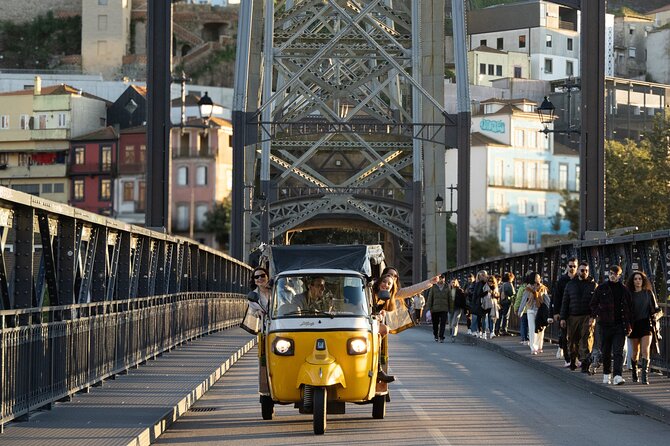
- Private ride, not a crowded bus: you’ll move at your pace with only your group
- A tight 90 minutes with major Douro moments: multiple bridges, fast context, great viewpoints
- Most entrances are free: you won’t be hit with costs at every stop
- Guides make the difference: names like José, Leandro, Ana, and Tonya show up in standout feedback
- Rain is possible: if it’s wet, go with the flow and bring a poncho mindset
Hopping the hills: why Porto works so well by private tuk tuk
Porto is a city of steep streets. This tour helps you avoid the whole workout problem by using private transportation that gets you close to the good stuff fast. You’re not stuck waiting at bus stops or playing the climb-vs-stay-put game every time you spot a viewpoint.
Because the time is limited (about 1 hour 30 minutes), the tuk tuk format matters. You spend your energy on looking, learning a few key facts, and stepping out at places you’ll remember—rather than burning time just getting between them.
The upside is obvious when the streets feel slippery or the hills feel endless. One rainy-day comment summed it up perfectly: the guide kept things moving and still made the experience feel special. The downside is that you can’t pretend weather doesn’t exist, since the tour depends on good conditions and much of it is outside-air.
You can also read our reviews of more tours and experiences in Porto.


Price and value for about $57.45
At $57.45 per person, you’re paying for three things: a private vehicle, a local guide, and a route that stitches together Porto’s highlights in a short window. In practical terms, you’re buying fewer logistics headaches and a smoother day than piecing it together on your own.
A big value point: many of the stops listed are free to enter. From the Fernandine Wall to the UNESCO monastery at Serra do Pilar, and on to places like Palácio da Bolsa, the tour plan keeps entrances from turning into a constant cost hunt. One church stop is specifically noted as not included, so you’ll know where that might pop up.
Is it “cheap”? No. But for a tight schedule, it’s hard to beat the time-efficiency. If you’re trying to cram Porto into a day with limited energy—or you simply hate zigzagging stairs for hours—this price can feel like a relief.
São João National Theatre and the Fernandine Wall start
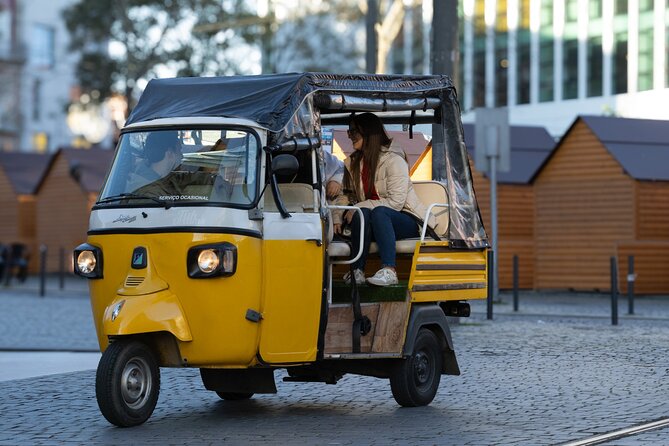
The tour kicks off at São João National Theatre, in Praça da Batalha. The theatre is a major cultural anchor in Porto, inaugurated in 1798 and rebuilt in 1920 by architect José Marques da Silva. Even if you’re not catching a show, it’s a strong starting point because it signals the city’s layered identity: classical roots, modern restoration, active arts.
From there, you roll toward the Muralha Fernandina, the Fernandine Wall. This defensive structure was built in the 14th century during King Fernando I’s reign, replacing older walls as the city grew. You’ll see surviving sections—especially around Ribeira and Morro da Sé—that act like an outdoor history lesson.
What I like about this opening segment is that it doesn’t just show you a monument. It gives you context for why Porto looks the way it does: walls, river life, and the constant push to protect and expand.
Serra do Pilar and the circular church viewpoint over the Douro
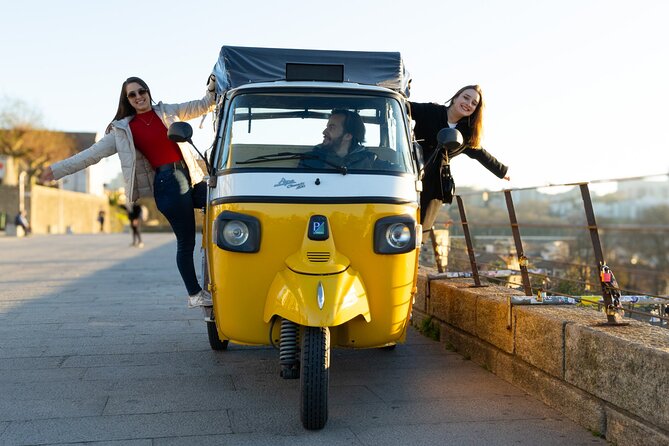
Next up is Mosteiro da Serra do Pilar, in Vila Nova de Gaia. This 16th-century monastery is famous for its circular church and Renaissance architecture, built by Augustinian monks. It’s also a UNESCO World Heritage Site, which means it’s not just scenic—it’s recognized for cultural value.
The real “use it right” tip here is to treat the stop like a viewpoint break. Even with quick timing, the monastery’s position gives you that classic Porto-over-the-river perspective, helping you understand the geography behind the bridges later on.
This is also a good place to pause your brain. If you start the tour feeling overwhelmed by Porto’s hills, the Serra do Pilar moment often makes everything click.
The Douro bridge run: São João Bridge, Maria Pia, and Dom Luís I
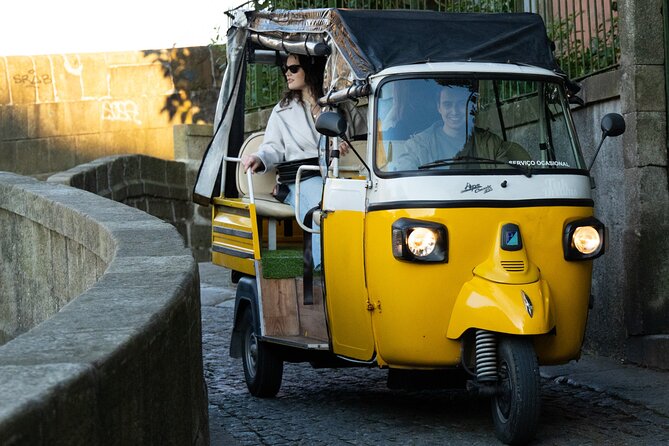
Porto’s bridges are where the city’s engineering pride shows. The tour hits a sequence of major crossings so you can see how the styles evolved over time.
First, you pass the São João Bridge, a railway bridge inaugurated in 1991 and designed by engineer Edgar Cardoso. It replaced the old Maria Pia Bridge, and it’s known for its modern reinforced concrete design.
Then you reach Ponte D. Maria Pia. This bridge opened in 1877 as the first railway bridge over the Douro River, designed by Gustave Eiffel. Even though it’s no longer active for rail, it remains a landmark of ironwork and transportation history—an excellent reminder that Porto’s “modern” look has deep roots.
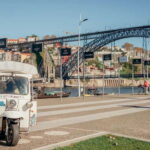
After that, Dom Luís I Bridge takes the spotlight. Inaugurated in 1886 and designed by Théophile Seyrig, it features two metal decks linking Porto and Vila Nova de Gaia for vehicles, pedestrians, and the metro. It’s one of those bridges you’ll recognize immediately once you’re near it, because it’s so tied to Porto’s visual identity.
If you care about photos (and most people do), this is the segment where you can ask your guide for the best angles. Many guides are praised for taking people to strong picture points, not just for names and dates.



Ribeira reset: Jardim do Infante, Ferreira Borges, and Palácio da Bolsa
After the bridges, the tour settles into Porto’s Ribeira area. You’ll pass Jardim do Infante Dom Henrique, a public garden created in the 19th century. At its center is a statue honoring Prince Henry the Navigator, a key figure tied to Portuguese Age of Discoveries in the 15th century.
This garden stop works because it softens the day. After bridges and monuments, you get trees, flowers, and breathing space—plus the symbolism of exploration without needing a museum ticket.
Nearby is Ferreira Borges Market. It was inaugurated in 1885 with an iron structure in a neoclassical style. The important practical detail: it no longer functions as a market, and today it serves as a cultural and leisure space for events and exhibitions. So you’ll be seeing an architectural shell that’s still in use, just differently.
Then comes Palácio da Bolsa, a 19th-century neoclassical building that once served as the Porto Commercial Association headquarters. It’s known for its Arab Room, and it’s a UNESCO World Heritage Site. The value of arriving here in the middle of your route is simple: you’re ready for indoor grandeur after outdoor views, and you can appreciate how Porto’s trading wealth shaped its big public buildings.
Church and old-quarter flavor: Igreja de São Francisco and Miragaia
Porto’s church stop here is Igreja de São Francisco. It’s a Gothic structure from the 14th century with a richly decorated Baroque interior and gilded woodwork. One of the standout details is the Jesse Tree sculpture, which is the kind of feature that makes people linger even when the timing is short.
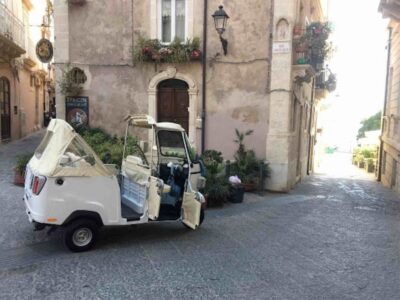
Then you’ll move into Miragaia, an older, picturesque district by the Douro. You’re looking at narrow streets, colorful buildings, and a medieval atmosphere shaped by merchants and artisans. This is one of those moments where you’ll understand why people come back to Porto after the first day: it feels like a real neighborhood, not just a sightseeing list.
If you’re the kind of traveler who likes wandering for 10 minutes with no plan, Miragaia is the kind of place that sparks it.
Ponte da Arrabida and the engineering mood shift
Next you roll toward Ponte da Arrabida. It’s a road bridge inaugurated in 1963 and designed by Edgar Cardoso. The bridge is known for its reinforced concrete arch, which was among the largest in the world at the time, and for its clean structural look connecting Porto with Vila Nova de Gaia.
This stop gives you a useful rhythm shift: after the older iron bridge story, you see how the region’s engineering kept evolving. It also helps you keep track of the river crossings so that later viewpoints make sense.
Cordoaria Garden, Carmo, and Carmelitas on a short walk
Weather permitting, you get a short walk near Jardim de João Chagas. This area connects to a few nearby landmarks, turning part of the tour into a more intimate stroll rather than pure vehicle time.
You’ll visit the Cordoaria Garden, a historic green space inaugurated in the 19th century with century-old trees and public art, including The Boys by Juan Muñoz. The value here is low-effort contrast: a quick pause with art and shade before more church façades.
Next is Igreja do Carmo. This is an 18th-century Baroque-Rococo church famous for a large tile panel on its side façade depicting religious scenes. Entrance is noted as not included, so this is the one stop where your total day costs might shift depending on what’s needed at the door.
Right by it is Igreja dos Carmelitas. This 17th-century Baroque church has an elegant façade and an interior rich with gilded woodwork. Entrance is included here, so you get the payoff without worrying about an extra charge at this specific stop.
Clérigos Tower and the Crystal Palace Gardens views
The tour then reaches Clérigos Tower, one of Porto’s iconic monuments. Built in the 18th century in the Baroque style by Nicolau Nasoni, it rises to about 75 meters and offers panoramic views. Even without going to the top, the tower is a strong focal point because it anchors the skyline.
After that, you head to Jardins do Palácio de Cristal. The original Crystal Palace building has been replaced by the Rosa Mota Pavilion, but the gardens remain famous for Douro River views, sculptures, and calm green space. You’ll also get a sense of how Porto mixes formal viewpoints with everyday leisure.
Then comes Passeio das Virtudes, a terraced viewpoint spot known for overlooking the Douro River. This is the kind of stop where you’ll likely want a few extra minutes to just look—especially if you’re doing the tour early or later in the day when the light feels kinder.
São Bento Station with azulejos and the Sé Cathedral finale
Two of Porto’s most memorable “read the city with your eyes” experiences happen near the end.
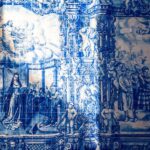
First is São Bento Railway Station, inaugurated in 1916. It’s famous for traditional Portuguese azulejos (tile murals) that cover station walls and depict Portuguese historical and cultural scenes. This stop is short, but it’s powerful because it turns waiting space into a mini museum. It’s also central, so it ties the tour back into where most people spend their time.
Finally, you end at the Porto Cathedral, also known as Sé do Porto. Built between the 12th and 13th centuries, it’s mainly Romanesque with later Gothic and Baroque influences. It sits in the historic center and gives you a view over the city and toward the Douro River, making it a fitting close to a tour that began with Porto’s foundations and ended with its heart.
If you’re trying to remember one thing from the day, remember this: the cathedral area is where Porto’s “old center” feeling is strongest.
What your guide can change (and why it matters)
This is a private tour, so your local guide has real control over how it feels. In the strong feedback, guides like José and Leandro are praised for being able to point out photo spots and tailor the tour if you already saw parts of the city. Other named guides, including Ana and Tonya, are highlighted for making adjustments when weather was rough.
So here’s how you can get more value out of your guide, even with a fixed route. At the start, tell them what you want most:
- More river views and bridges, less church time
- Quick photo stops, no long descriptions
- A bit more neighborhood wandering in the Ribeira/Miragaia vibe
Your tour length is short, so the guide’s job is to steer you to the highest-impact moments. If you share your priorities early, you’ll usually feel the difference.
Should you book this Porto Fun Private Tuk Tuk Tour?
I’d book it if you want:
- A fast orientation to Porto without climbing hills all day
- A curated mix of bridges, viewpoints, and classic architecture
- A private ride where your group can keep a relaxed pace
- A plan that includes plenty of stops with free entrances
I’d think twice if:
- You’re traveling in shaky weather and hate being outside
- You strongly prefer deep museum time over quick “see it and move on” stops
- You’re the type who wants to explore at random with zero schedule (this tour is structured, not wandering-only)
If you’re on a tight timeline and you’d rather spend your energy looking at Porto than getting to it, this tuk tuk loop is one of the more efficient ways to do it.
FAQ
How long is the Porto Fun Private Tuk Tuk Tour?
It lasts about 1 hour 30 minutes.
Is the tour private?
Yes. It’s private, so only your group participates.
What language is the tour offered in?
It’s offered in English.
What’s included in the price?
The tour includes private transportation and a local guide.
What is the meeting point and where does it end?
It starts at São João National Theatre, Praça da Batalha, 4000-102 Porto, Portugal, and ends back at the meeting point.
Are entrance tickets included?
Many stops are free. Igreja do Carmo has admission noted as not included, while Igreja dos Carmelitas is listed as admission included.
Is tipping required?
Tips are optional.
How far in advance is it commonly booked?
On average, it’s booked about 31 days in advance.
What happens if the weather isn’t good?
The experience requires good weather. If it’s canceled due to poor weather, you’ll be offered a different date or a full refund.
Are service animals allowed?
Yes, service animals are allowed.