REVIEW · PORTO
Discover Porto on a 2-Hour Shared Electric TukTuk
Book on Viator →Operated by Tuk Tour Porto · Bookable on Viator
Porto in two hours, minus the guesswork. This shared electric tuk-tuk ride is a fast way to get your bearings and still hit postcard-worthy landmarks. You’ll start on the city’s main walk-and-shop zones, then swivel into some of Porto’s best-known churches and viewpoints.
What I like most is the small-group feel and how much ground you cover without feeling rushed on foot. You also get a local guide who can help connect the dots, plus practical suggestions on what to do next (especially helpful if you only have one day). A lot of value comes from the quick explanations you can apply right away while you’re walking around.
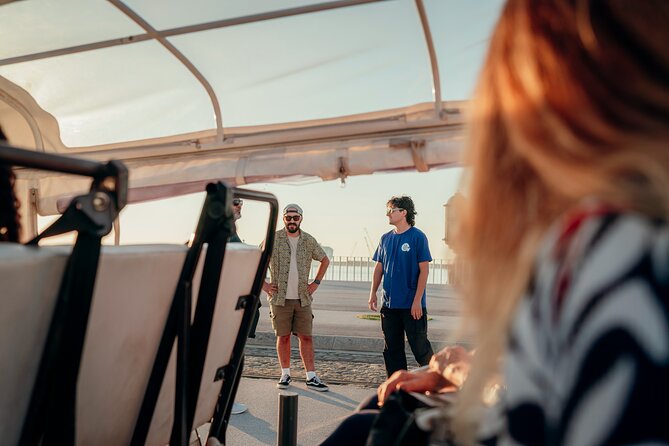
One thing to consider: the experience quality depends a lot on the guide’s storytelling. I’d also keep expectations realistic about viewing from the tuk-tuk roof—on the covered ride, the clear plastic panels and supports can make photos a bit harder. If you’re sensitive to the bumpy cobblestones, keep that in mind too.
In This Review
- Key things to know before you ride
- Electric tuk-tuk coverage: seeing the right Porto, fast
- Where you start: R. de Alexandre Herculano 251
- Santa Catarina Street: the shopping street warm-up
- Aliados Avenue: Porto’s main civic boulevard
- Igreja do Carmo: baroque-rococo façade and azulejo details
- Torre dos Clérigos: the tower that earns the climb
- Porto Cathedral (Sé do Porto): oldest-monument feel in a 15-minute pause
- Staying dry and still moving: what the covered ride feels like
- Price and value: what $42.14 buys you in real terms
- Who this tour suits best (and who should choose something else)
- Making the most of it after the ride
- Should you book Tuk Tour Porto?
- FAQ
- How long is the shared electric tuk-tuk tour?
- Where does the tour start and end?
- What stops are included during the tour?
- Are tickets to churches or the tower included?
- Are snacks included?
- Is this tour family-friendly?
- Is the tour offered in English?
- What happens if the weather is bad?
- Can I cancel for a refund?
Key things to know before you ride
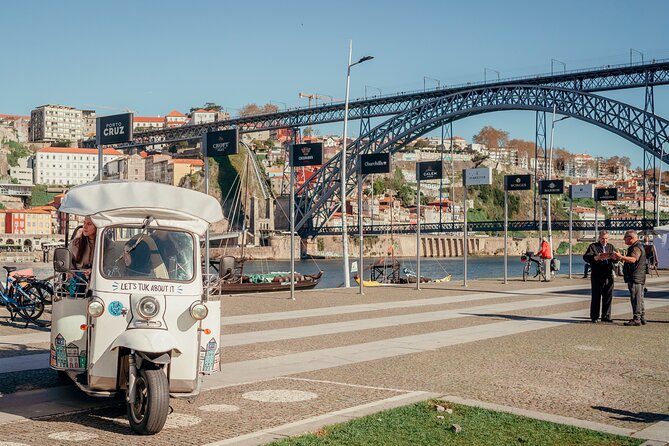
- Electric tuk-tuk = less walking, better coverage for a short stay
- Up to 4 people means more chances to ask questions and steer your interest
- Photo-friendly stops at major sights, with short on-site breaks
- No entrance tickets included, so plan to pay if you want towers or interiors
- A guide can shape the whole day, from food tips to history connections
Electric tuk-tuk coverage: seeing the right Porto, fast
This is the kind of tour that helps on day one. Porto can feel like a maze of hills, streets, and viewpoints, so getting an organized sweep through the main areas pays off. You’re not doing a long walking tour; you’re doing a guided orientation with brief stops where it matters.
The tuk-tuk is electric, so it’s quieter than you might expect and it’s comfortable for short distances. Best of all, the guide’s context makes the landmarks easier to recognize later when you’re wandering on your own. You’ll understand what you’re looking at—then you can decide what deserves a second visit.
Duration is about two hours, which is ideal if you’re trying to pack in a lot without exhausting your legs. You’ll still have enough time to continue your day afterward, whether that means heading for lunch, taking a sunset stroll, or buying tickets for one or two places you skipped during the quick photo stop.
You can also read our reviews of more tours and experiences in Porto.



Where you start: R. de Alexandre Herculano 251
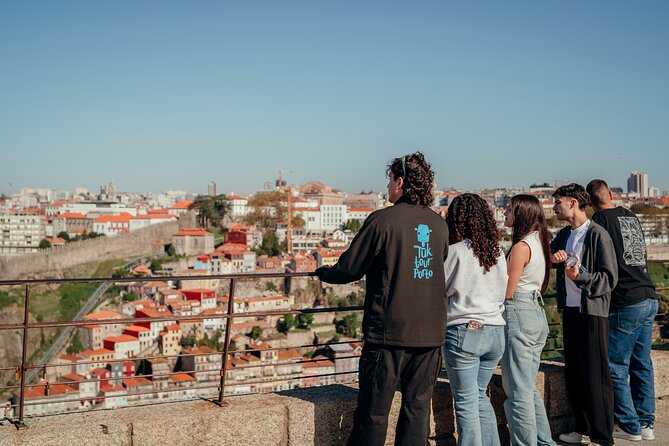
You meet at R. de Alexandre Herculano 251, 4000-053 Porto, and the tour returns to the same place. That matters more than it sounds. Porto’s center is walkable, but it’s easy to start getting turned around—having a fixed, known meeting point helps you reconnect quickly after the ride.
It’s offered in English, and it’s designed for most travelers. It’s also a shared tour with a maximum of 4 travelers, so you’re not crammed into a huge group. That usually makes the ride feel more like a mini city briefing than a production line.
If you’re arriving by public transportation, the meeting point is near transit. That’s useful because you won’t need to plan your day around a complicated “get here exactly at X time from Y corner” situation.
Santa Catarina Street: the shopping street warm-up

The tour begins with Santa Catarina Street, Porto’s lively pedestrian shopping strip. This stop works as a warm-up because it shows you the city’s everyday rhythm: shopfronts, historic cafés, and local storefronts mixed into one long pedestrian flow.
Even if you don’t plan to shop, this street gives you something important: orientation. From here, you start to understand how Porto’s “life on the street” connects to its more famous monuments. It’s also an easy place to grab a mental map of where you are relative to the big sights you’ll see next.
One practical note: because it’s a pedestrian shopping street, it can be busy. The good part is that it’s lively in a way that feels real—less staged than some tourist-only zones—so your first impression of Porto stays grounded.
Aliados Avenue: Porto’s main civic boulevard
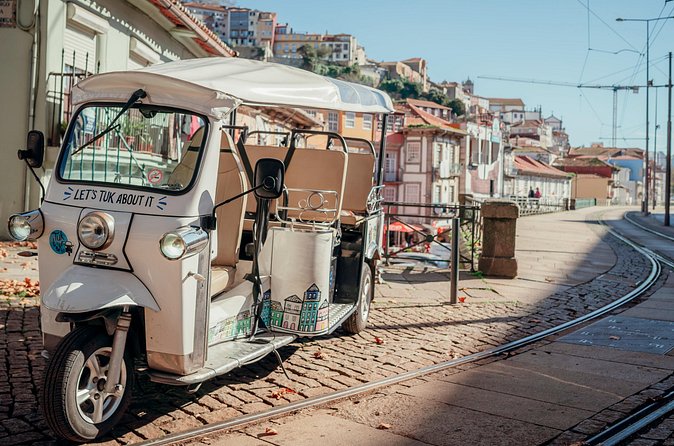
Next up is Aliados Avenue, Porto’s grand boulevard lined with impressive architecture, hotels, and cafés. This is the city’s more formal, “big frontage” zone—the wide street that signals you’re in the civic and cultural core.
Why it matters: Aliados gives you a strong visual backbone for your day. When you later look at photos or follow signs, you’ll have a reference point. You’ll also start noticing the architectural styles that Porto is known for, including the way buildings frame the street like a stage.
This segment is also a good mental reset. You’re not just moving from one church stop to the next—you’re seeing how the city’s public spaces are arranged. That helps if you want to keep exploring afterward without losing time.
Igreja do Carmo: baroque-rococo façade and azulejo details
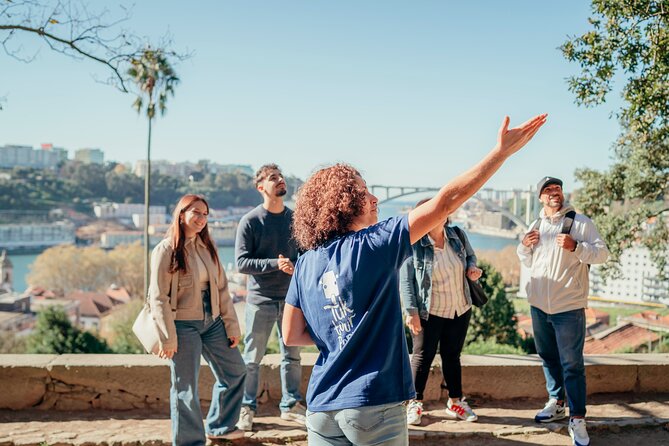
The first major landmark stop is Igreja do Carmo (Church of Carmo and Carmelitas). This is where Porto flexes its decorative side. The complex is known for its ornate tiled façade—azulejo work that’s both striking and specific to Portugal.
You’ll have about 10 minutes at the site. That’s short, so treat this stop like a “spot the key details” moment. Look for the façade design first, then stand back a bit to see how the pieces fit together as a single composition. If you’re a photo person, this is one of the places where a quick angle change matters.
Important: admission tickets are not included. So if you want to go inside, plan to pay for that separately. If you only care about exterior photos and street-level views, you can still get value from this quick stop.



Torre dos Clérigos: the tower that earns the climb
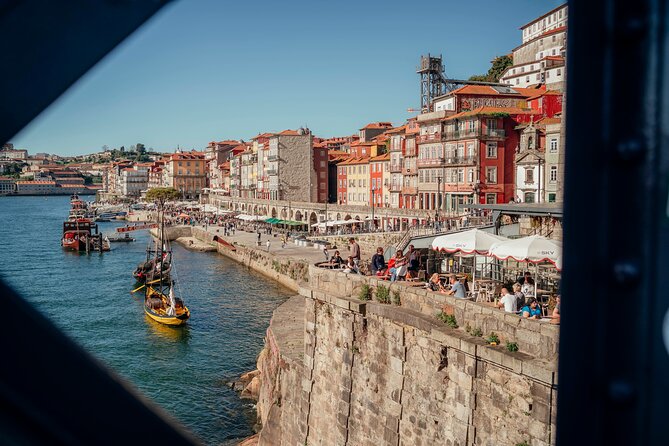
Then you’ll reach Torre dos Clerigos, Porto’s famous bell tower linked to the Clérigos complex. This is a baroque landmark with an iconic tower silhouette, and it’s one of the best-known places for panoramic views over the city.
You’ll get around 10 minutes here, which usually works best for: exterior photos, a quick look at the immediate surroundings, and deciding whether you want to commit to the tower experience later. If you’re curious about the view, remember that entrance tickets are not included in the tour price.
This stop is also good for learning what makes Porto’s architecture feel different from other European cities. The tower stands out because it’s so visually dominant. Even if you don’t go up, you’ll know exactly where it is once you’ve seen it from the street.
Porto Cathedral (Sé do Porto): oldest-monument feel in a 15-minute pause
The last major church stop is Catedral do Porto (Sé do Porto), one of the city’s oldest monuments. It’s described as Romanesque Gothic, and that blend shows up in the stonework and overall structure. This is the kind of sight where you can feel the age without needing a long lecture.
You’ll have about 15 minutes here—longer than the earlier landmark stops. Use it to slow down a little. Check the exterior forms first, then look for the angles that show the cathedral’s character against the surrounding streets. If you’re going to return later, the best move is to note which entry direction or viewpoint feels most promising.
Again, admission tickets are not included, so if you want interior access, you’ll need to buy tickets on your own. Still, even an exterior-focused stop gives you something valuable: a “now I get why people care” moment.
Staying dry and still moving: what the covered ride feels like
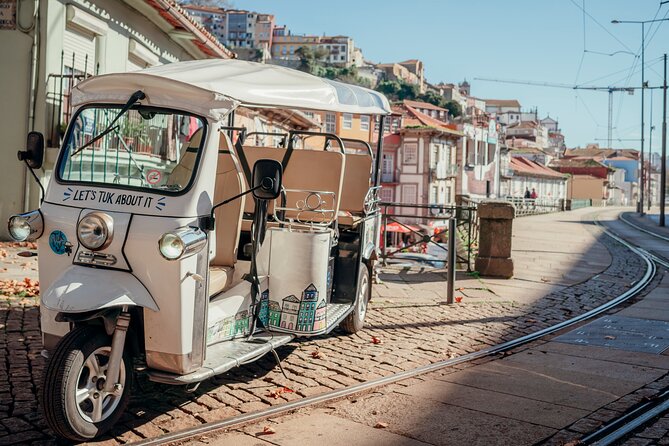
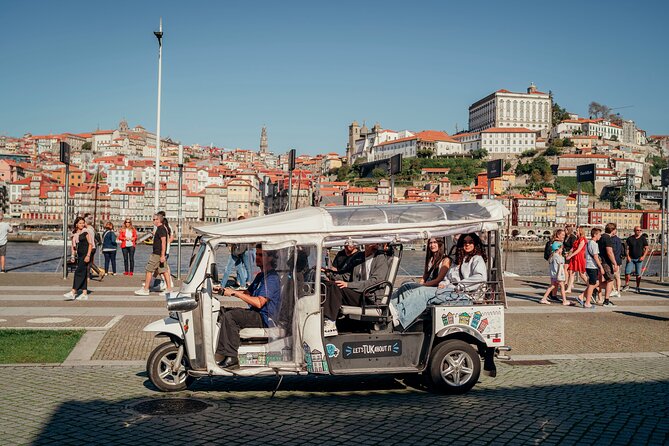
A big practical win here is weather. Porto can throw rain at you without warning, and this tour’s covered tuk-tuk setup can keep you mostly dry while you move between stops. That’s a comfort upgrade when you’re trying to see a lot in a short time.
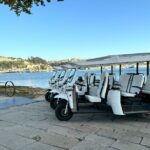
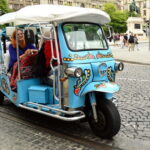
But I also want you to be aware of the downside noted from real-world experiences: the clear plastic roof can make the view slightly awkward, especially for photos. Metal supports can block sightlines, so it’s smart to plan to take your best photos at the actual stop points, not while you’re rolling.
If you’re sensitive to bumps, know that Porto’s streets—especially near older areas—can be uneven. Short ride segments help, but it’s still a tuk-tuk on cobblestones, not a smooth city bus.
Price and value: what $42.14 buys you in real terms
At $42.14 per person for about two hours, you’re paying for three things: transport, a guide, and the structure of a timed route. You’re not paying for monument entry, and that’s the key to understanding the value.
Here’s how to judge it for yourself:
- If you want orientation plus highlights and you’ll revisit places later, this is a strong deal.
- If you’re expecting the tickets to be included for the churches and tower, you’ll need to adjust your plan—those entrances are not included.
- If you’re traveling on a one-day schedule, the time savings can be worth more than the exact list of minutes at each stop.
Also, this tour is often booked ahead (on average, about 27 days in advance). That’s a sign it fits well into short itineraries. If you’re traveling in a busy season, it’s smart to book sooner rather than “see what happens.”
Who this tour suits best (and who should choose something else)
This is ideal if you want:
- A fast overview of Porto’s key sights
- A guide to explain what you’re seeing while you’re still fresh
- A plan that doesn’t depend on your stamina or shoe choices
It’s also a good fit if you like the idea of short stops you can later expand. The tour basically gives you permission to decide what deserves more time. If you enjoy walking, you’ll have a clearer sense of where to go next.
It may be less ideal if you want long, slow museum-style time at each site. The stops at major landmarks are brief. Think of it as a “great hits” sampler, not an all-day deep dive into one neighborhood.
Making the most of it after the ride
The best way to use this tour is to treat it as your navigation and planning tool. After the tuk-tuk route, you’ll know where to circle back on foot. If you’re building your day around entrances, you’ll also know which places are worth the extra ticket time.
A strong part of the experience is that a good guide can steer you toward practical next steps—things like where to eat, and how to prioritize what you want to see before the day ends. I’d also make a simple plan: choose one interior stop you really care about (cathedral or tower) and leave the rest for exterior photos and street exploration.
And if it rains, don’t panic. The tour is built around short outdoor-to-cover transitions, so you can still keep your sightseeing momentum.
Should you book Tuk Tour Porto?
Book it if you want a 2-hour electric tuk-tuk introduction that covers Porto’s top streets and major church/tower landmarks with a small-group guide. The value is strongest when you use it as orientation and then follow up on the sights that feel most worth your time.
Skip it or switch plans if you need long entrance-heavy visits, or if you’re expecting monument tickets to be included. Also consider that guide style can vary—so if storytelling matters more to you than the route itself, you’ll want to be flexible and ready to ask questions.
FAQ
How long is the shared electric tuk-tuk tour?
It lasts about 2 hours.
Where does the tour start and end?
You start at R. de Alexandre Herculano 251, 4000-053 Porto, Portugal, and the tour ends back at the same meeting point.
What stops are included during the tour?
You’ll visit Santa Catarina Street, Aliados Avenue, and you’ll stop at Igreja do Carmo, Torre dos Clérigos, and Catedral do Porto (Sé do Porto).
Are tickets to churches or the tower included?
No. Tickets or monument entrances are not included.
Are snacks included?
No. Snacks are not included.
Is this tour family-friendly?
Children under 7 are not allowed. Service animals are allowed.
Is the tour offered in English?
Yes, the tour is offered in English.
What happens if the weather is bad?
The tour requires good weather. If it’s canceled due to poor weather, you’ll be offered a different date or a full refund.
Can I cancel for a refund?
Yes. You can cancel for a full refund up to 24 hours in advance of the experience’s start time.