REVIEW · PORTO
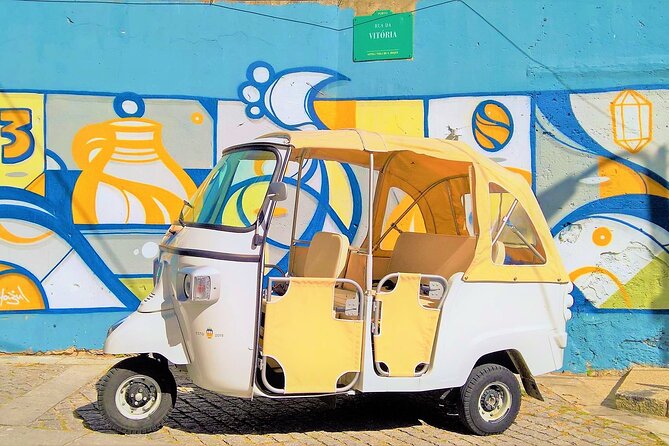
Porto Half Day Private Tuk Tuk Tour
Book on Viator →Operated by Portuk · Bookable on Viator
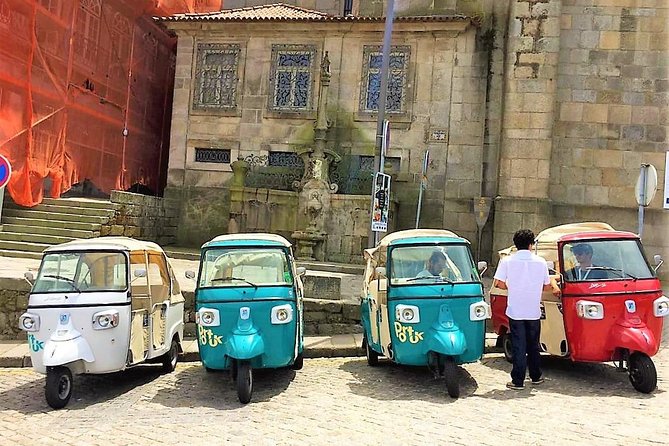
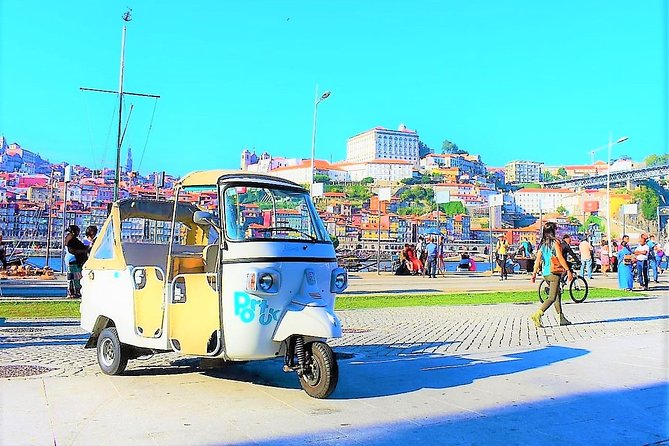
Porto by tuk-tuk feels like a shortcut. This private half-day tour packs major sights into about 3.5 hours, with a driver/guide, live commentary, and wine tasting to round out the experience. I love how quickly you get oriented in Porto (and across the river to Gaia), and I love that your guide can adjust the route so you spend your time where your interests actually are.
One thing to consider: the schedule can feel tight if traffic and narrow streets slow things down, and the covered tuk-tuk roof can make sight lines a bit awkward at certain stops.
In This Review
- Key highlights worth marking on your map
- Why a Porto tuk tuk half-day tour works so well
- The meeting point and how the tuk tuk day flows
- Stop-by-stop: what you’ll actually see and why it matters
- 1) São João Theatre area: a rebuilt stage on older ruins
- 2) A 12th-century Romanesque wall: Porto’s older city limits
- 3) Mosteiro da Serra do Pilar: circular church, 360-degree feel
- 4) Dom Luís I Bridge: iron engineering + Metro on top
- 5) Igreja de São Francisco: Gothic bones, golden Baroque interior
- 6) Palácio da Bolsa: Arabian Room and the feel of power
- 7) Praça do Infante D. Henrique: navigation memorial right in the center
- 8) Jardins do Palácio de Cristal: a botanical break with big views
- 9) Mercado Ferreira Borges: iron architecture turned entertainment space
- 10) Alfândega Nova do Porto: transport and communications in an elegant building
- 11) Igreja dos Carmelitas: Porto rococo inside a calmer exterior
- 12) Cordoaria Garden (Jardim de João Chagas): rope makers to public park
- 13) Torre dos Clérigos: Porto’s skyline needle
- 14) Igreja do Carmo: rococo interior with historic tile work
- 15) Fonte dos Leões: a French-built lion fountain copy
- 16) Antiga Cadeia da Relação: prison geometry to photography center
- 17) Livraria Lello: Art Nouveau façade, reinforced concrete staircase
- The wine tasting: where the tour often feels more personal
- Private doesn’t always mean effortless: what can affect timing
- What it costs, and why it can still be a good value
- Who this tour suits best
- Should you book the Porto Half Day Private Tuk Tuk Tour?
- FAQ
- FAQ
- How long is the Porto half-day private tuk tuk tour?
- Is the tour private?
- What’s included in the price?
- Is wine tasting guaranteed during the tour?
- Are entrance tickets included for all stops?
- Where does the tour start and end?
Key highlights worth marking on your map
- Fast orientation of Porto + Gaia: you cover both sides of the river without walking hills all morning.
- Serra do Pilar’s terrace views: that wide panorama stretches across Porto, Gaia, and toward major bridges.
- Baroque-to-medieval variety in one ride: from golden church interiors to iron bridges and old walls.
- Wine tasting included: you get a formal taste session during the tour window.
- Stops are short but meaningful: you’ll see a lot, then the guide helps you decide what to revisit later.
Why a Porto tuk tuk half-day tour works so well
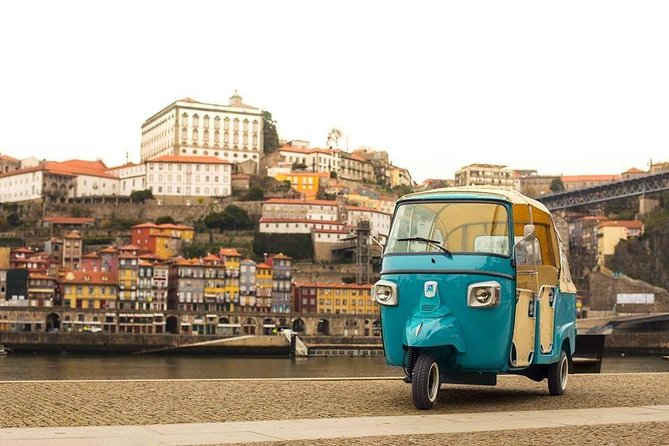
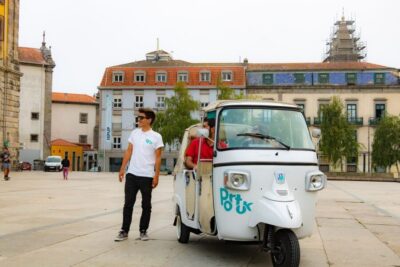
Porto is hilly, charming, and sometimes a little chaotic for cars. A tuk-tuk solves a big chunk of the problem by slipping through streets where buses won’t go and where you’d lose time fighting parking and traffic lights. You’re not trying to “do everything.” You’re trying to get your bearings fast and see the places that give Porto its identity.
The private format matters here. You’re not stuck listening to a generic group lecture. Guides can steer you toward the stops you care about—architecture, viewpoints, churches, old neighborhoods—while still hitting the real classics that first-timers usually want.
And yes, you’ll spend plenty of time looking out over the city. The flip side is that the covered top can block some angles for photos and views, especially if you’re hoping to shoot straight lines from inside the vehicle. Plan on stepping out at the best viewpoints to get your best shots.
You can also read our reviews of more tours and experiences in Porto.


The meeting point and how the tuk tuk day flows
You start at R. de Augusto Rosa 180 (4000-528 Porto), and the tour ends back there. Expect the morning to move in a sequence of quick drops and picture breaks rather than long museum-style visits. That’s not a flaw—it’s the point. In a half-day window, the value is seeing multiple “big ideas” of Porto in one sweep.
Most stops are arranged for short viewing time, with occasional longer breaks where a church interior or viewpoint calls for it. If you have limited mobility or just want low effort, this style is a great match.
Stop-by-stop: what you’ll actually see and why it matters
1) São João Theatre area: a rebuilt stage on older ruins
Your route begins in the historic core near a major theatre building. This one was constructed in 1910 on top of the ruins of the Real Theatre, which burned down in 1908. You’ll also notice the decorative story on the façade—stylistic emblems tied to themes like pain, quality, hate, and love.
Why it’s worth a quick stop: it’s a reminder that Porto’s landmarks don’t only survive—they evolve. Rebuilding after disaster is part of the city’s rhythm, and theatres are one of the places where art and civic life overlap.
2) A 12th-century Romanesque wall: Porto’s older city limits
Next comes a Romanesque wall dating to the 12th century. This was built to show the administrative and urban boundaries of a city that, for a long stretch, had grown in dispersed pockets rather than one tightly packed center.
What you gain from this stop: it adds a layer most sightseeing routes skip. You’re not just looking at pretty buildings—you’re seeing how Porto defined itself on the ground.


3) Mosteiro da Serra do Pilar: circular church, 360-degree feel
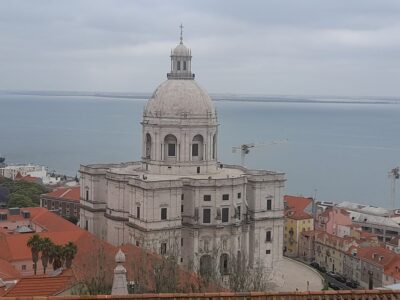
Then you get to Mosteiro da Serra do Pilar, a UNESCO World Cultural Heritage site. Construction started in 1538 and continued until around 1670. The story connects to the Augustinian Friars, then to the Civil War era in 1832–1834, when the liberal army used the monastery—and when damage left the complex in poor condition until later restoration.
The church layout is a big visual hook: it’s a circular plan, with a dome surrounded by a balcony. The cloister is also circular, with 36 Ionic columns, noted as the only example of this specific cloister style in Portugal.
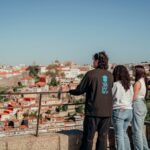
But the reason most people remember this stop is the terrace viewpoint. From up there you can see the riverside stretch of Porto and Gaia, the Arrábida Bridge, the historic center (including the Cathedral and Dom Luís I bridge), and even toward Fontainhas and the São João bridge.
Practical tip: this is one of the best places to step out and take your time, even if the rest of the tour stays fast.
4) Dom Luís I Bridge: iron engineering + Metro on top
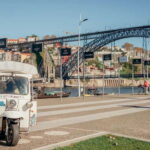
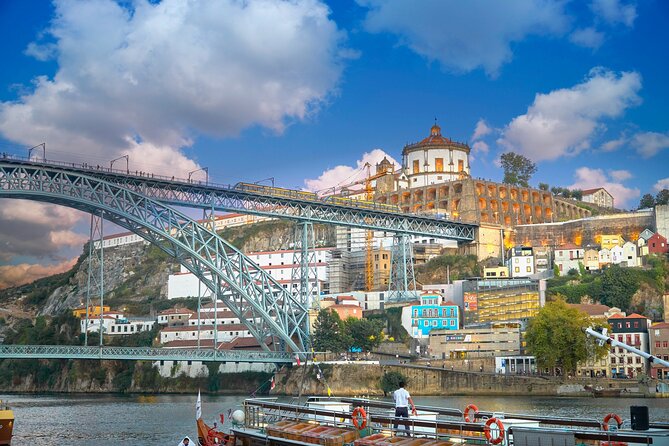
Crossing the next big signature: Dom Luís I Bridge. Designed by Teófilo Seyrig (a disciple of Eiffel), it opened in 1886 and features two overlapping iron decks. The bridge is 395 meters long and 8 meters wide, with an arch still described as the world’s largest forged iron arch.
Today, the upper deck carries the Porto Metro, linking areas from the Cathedral area through to Vila Nova de Gaia and further toward Avenida da República.
Why this is more than a bridge photo: it’s a clear example of how Porto mixes old-world charm with serious industrial-era engineering.
5) Igreja de São Francisco: Gothic bones, golden Baroque interior
Now for one of Porto’s most dramatic interiors: Igreja de São Francisco. Construction began in the 14th century, and it’s known for a Baroque side—especially the gilded interior from the 17th and 18th centuries. People often describe it as the Church of Gold, including the richly carved woodwork. You’ll also want to look for the Tree of Jesse and the catacombs.
If you care about art inside churches (not just outside façades), this is the stop that tends to justify the whole tour.
6) Palácio da Bolsa: Arabian Room and the feel of power
Next is Palácio da Bolsa (Stock Exchange Palace), a neoclassical building designed by Joaquim da Costa Lima in 1842. It serves as the property and headquarters of the Commercial Association of Porto.
The standout here is the famous Arabian Room, which is what most people come to see first. Even if you only peek for a short time, the room’s reputation is earned: it gives you a very different texture of Porto, one tied to wealth, trade, and global style influences.
7) Praça do Infante D. Henrique: navigation memorial right in the center
A quick stop at Praça do Infante D. Henrique, a national monument space set near Mercado Ferreira Borges and Palácio da Bolsa. There’s a small garden, and underneath it sits an underground car park. The plaza also features a Monument to Infante D. Henrique, built to mark the 500th anniversary of his death.
Construction began in 1894 and finished in 1900, and the memorial celebrates Portuguese navigation and faith—very on-brand for a city that grew through maritime trade.
8) Jardins do Palácio de Cristal: a botanical break with big views
Now you get to breathe for a bit at Jardins do Palácio de Cristal. This botanical garden is one of Porto’s best-loved escapes, filled with lawns, fountains, sculptures, giant magnolias, camellias, cypress and olive trees. It’s designed like a mosaic of small gardens that reveal themselves as you wander.
The big payoff is view access: you see Porto and the Douro area in the background while strolling a route that feels like a break from sightseeing intensity.
9) Mercado Ferreira Borges: iron architecture turned entertainment space
Next is Mercado Ferreira Borges, built in 1885 as a replacement for the old Mercado da Ribeira. It had a relatively short market role, then became a site with other uses over time.
You’ll recognize it as an important example of iron architecture in Porto, and it was renovated later to function as an entertainment venue—now known for Hard Club. Even if you don’t go inside, the building’s structure tells the story.
10) Alfândega Nova do Porto: transport and communications in an elegant building
You’ll also pass by or stop near Alfândega Nova do Porto, a neoclassical building built in the 19th century. The project involved engineer Jean F. G. Colson, and it includes two façades: one facing the Douro river and one facing the city.
This building is interesting because it shows practical engineering choices, using iron with stone, brick, and wood depending on the function of different spaces.
Later, in 1987, the building adapted for the Museum of Transport and Communications, under architect Eduardo Souto Moura. It’s managed by an association that also runs a congress center within the complex.
11) Igreja dos Carmelitas: Porto rococo inside a calmer exterior
The tour includes a stop at Igreja dos Carmelitas. It’s a 17th-century church, while the classical façade dates to the 1850s and has been attributed to Nicolau Nasoni. The altarpiece is described as Porto rococo style and marked as stylistically revolutionary at the time.
Admission is free, so if your timing allows, it can be a satisfying “bonus art” stop without adding ticket friction.
12) Cordoaria Garden (Jardim de João Chagas): rope makers to public park
Then you head to Cordoaria Garden, also known as Jardim de João Chagas since 1924. The name connects to rope makers who stayed here for about 200 years.
In the 1800s, the municipality transformed the old Praça da Cordoaria into public space. The project came from German landscaper Emile David in 1865–1866, and the garden includes statues and later sculptures, including works by Juan Muñoz from 2001.
If you want one stop that feels like Porto’s creative “in-between” spaces, this is it.
13) Torre dos Clérigos: Porto’s skyline needle
You’ll likely get a classic Porto photo moment at Torre dos Clérigos. It’s part of the Baroque Clérigos Church, and the bell tower is a city symbol you can spot from lots of points around town. Here, the tower’s admission is not included, so treat this as a viewpoint and exterior photo stop unless you decide to pay separately.
14) Igreja do Carmo: rococo interior with historic tile work
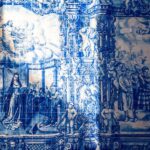
Another church exterior/view stop is Igreja do Carmo, built in the second half of the 18th century. It’s noted for its rococo architecture and interior carvings. In 1912, its lateral façade was covered with tiles designed by Silvestre Silvestri, with figurative scenes tied to the cult of Nossa Senhora (Our Lady).
Like Torre dos Clérigos, admission is not included here.
15) Fonte dos Leões: a French-built lion fountain copy
Next comes Fonte dos Leões (Fountain of the Lions), a 19th-century fountain built by a French company and cast in France. It’s described as a copy in most part of a fountain in Leicester, England.
This is the kind of stop that’s quick but fun because it shows how Porto’s streets connect to European trades and design trends.
16) Antiga Cadeia da Relação: prison geometry to photography center
Then you see Antiga Cadeia da Relação, a granite building dating from 1582, rebuilt in 1767 in a neo-classical style. It features a geometric window sequence—103 windows. The building has four façades, including one on Rua de São Bento da Vitória connected to the court sector, and another facing Cordoaria Garden used as the main entrance.
It served as a prison, holding people like writer Camilo Castelo Branco and the thief Zé do Telhado. Today, it’s restored and used as the Portuguese Centre for Photography, including exhibition space.
17) Livraria Lello: Art Nouveau façade, reinforced concrete staircase
Finally, many routes end with Livraria Lello. The library building was inaugurated in 1906, with a striking Art Nouveau façade and neo-Gothic details. Inside, the plasterwork imitates wood, and there’s a famous staircase—one of the early reinforced concrete works in Porto.
You’ll also notice the huge stained-glass skylight with the library monogram and motto: Decus in Labore. Admission is not included, so plan this as an exterior and quick look unless you’re willing to ticket in.
The wine tasting: where the tour often feels more personal
Wine tasting is listed as included, and you’ll taste as part of the tour’s pacing rather than leaving it for a later detour. In practice, guides often use this as a chance to slow down and talk through local wine culture and what you’re seeing.
One helpful way to use this moment: if you’ve been busy taking notes on architecture, ask a direct question here—what’s worth going back to, what neighborhood best matches your vibe, and where to try a specific type of meal later.
Private doesn’t always mean effortless: what can affect timing
A half-day tuk-tuk tour is built on quick stops. That means anything that slows you down—traffic, construction bottlenecks, crowded streets—can compress time at later sites.
You can also run into comfort tradeoffs. The tuk-tuk roof covering can limit views while you’re seated, so do not treat every stop as a “stay in the vehicle and shoot photos” moment. Step out at the big viewpoint moments.
If you want a more relaxed pace, tell your guide early. You’ll generally get the best outcome when your priorities are clear from the first minute.
What it costs, and why it can still be a good value
At $83.48 per person for about 3 hours 30 minutes, this is not the cheapest tuk-tuk option in Porto. But it’s also not just transportation. You’re buying a licensed driver/guide setup, live commentary, a guided route across major sites, and wine tasting.
For value, ask yourself this: do you want to spend your limited time in Porto driving around trying to solve logistics, or do you want someone else doing the route planning while you focus on seeing the city? If your answer is the second one, the price can make sense.
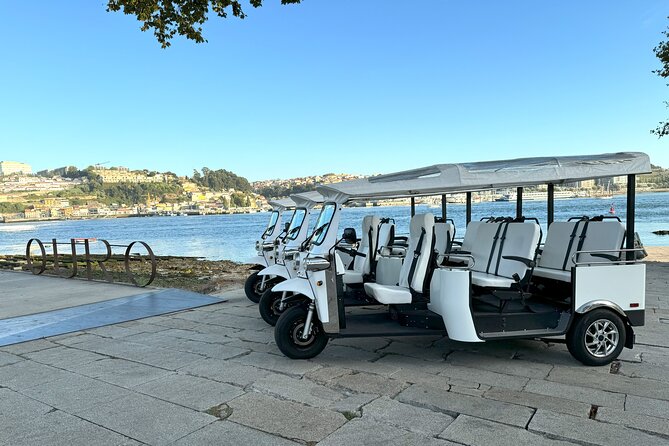
If you’re traveling as a larger group, you may use multiple tuk-tuks, but you should still expect the same stops around the same time.
Who this tour suits best
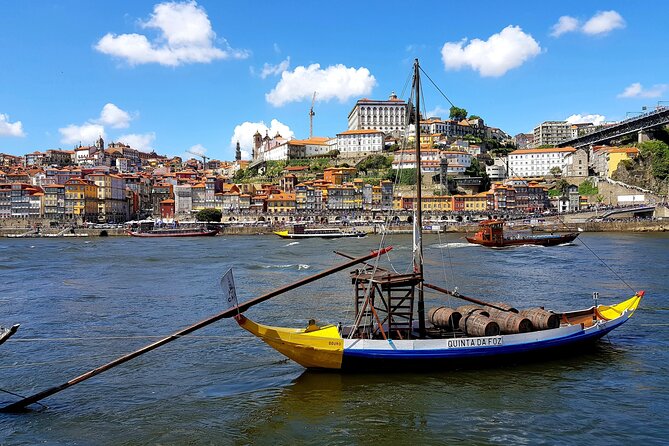
This works especially well if you:
- are short on time and want a fast overview of Porto’s core sites
- want low-effort sightseeing that still feels guided
- like churches, architecture, and city viewpoints more than long museum hours
- want a first morning plan that helps you choose what to return to later
If you want deep, stop-by-stop explanations for every single church interior and you love long ticketed museum time, this may feel too fast. You’ll likely enjoy it more when you treat it as orientation plus “choose-your-own follow-up” for later.
Should you book the Porto Half Day Private Tuk Tuk Tour?
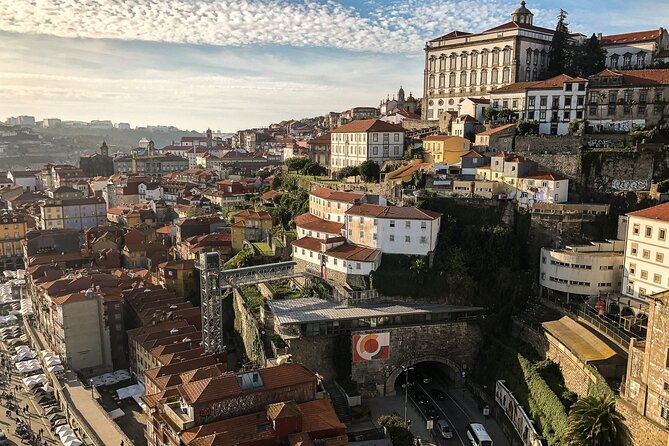
Book it if you want maximum Porto per hour with a guide who can tailor stops and who helps you connect what you see—like the iron engineering of Dom Luís I, the circular design and terrace views at Serra do Pilar, and the gilded interior of Igreja de São Francisco. It’s also a strong pick if you’re doing Porto for the first time and want to knock out both sides of the river without the stress.
Skip it (or at least set expectations) if you’re the type who needs slow, unhurried museum-style time and perfectly scheduled arrivals no matter what traffic does. In that case, consider either a longer guided option or be ready to prioritize fewer “must-see” sites.
FAQ
FAQ
How long is the Porto half-day private tuk tuk tour?
It’s listed as approximately 3 hours 30 minutes.
Is the tour private?
Yes. It’s described as a private tour/activity where only your group participates.
What’s included in the price?
The tour includes a driver/guide, live commentary on board, a local guide, and wine tasting.
Is wine tasting guaranteed during the tour?
Wine tasting is listed as included in the experience, but the exact timing can depend on how the route day runs.
Are entrance tickets included for all stops?
No. Some stops are free, and some have admissions not included, such as Torre dos Clérigos, Igreja do Carmo, and Livraria Lello.
Where does the tour start and end?
It starts at R. de Augusto Rosa 180, 4000-528 Porto, Portugal, and ends back at the same meeting point.