REVIEW · MADRID
Madrid Tuk Tuk Welcoming Tour
Book on GetYourGuide →Operated by Tuktuk Limo Tours · Bookable on GetYourGuide
Madrid hits you fast. This tour helps you aim.
In about 120 minutes, you glide from Calle Mayor through markets, churches, parks, gates, and power spots like Retiro and the Bernabéu, with a guide turning each stop into a story you can actually remember. I especially like the photo-stop rhythm (quick, timed chances to get great angles) and the way the route mixes iconic places with lesser-spotlight corners you’d otherwise miss.
One thing to consider: it’s a sound-and-visibility experience. If your language match is critical or you need very clear audio, I’d confirm expectations up front, because a few past bookings reported trouble hearing the guide and language problems.
In This Review
- Quick Hits: What Makes This Tuk Tuk Welcome Tour Worth Your Time
- Why a 2-Hour Tuk Tuk Welcome Tour Works in Madrid
- The Route: From Calle Mayor to Royal Madrid in Photo-Stop Order
- Calle Mayor: the opening photo stop that sets the tone
- Mercado de San Miguel: a busy food-and-drink landmark
- Sobrino de Botín: Madrid’s old-school dining legend
- Cava Baja: a neighborhood with layers
- Royal Basilica of San Francisco el Grande: stop for scale and vibe
- Glorieta de Toledo and the Puerta de Toledo view
- Atocha Station: modern Madrid’s busiest nerve center
- Buen Retiro Park: the “slow down” break
- Alcalá Gate: your Madrid entrance-and-exit moment
- Las Ventas: a bullring that’s pure scale
- Santiago Bernabéu Stadium: football as architecture
- Paseo de la Castellana: a long avenue with old-to-new contrasts
- Gran Vía: Madrid’s modernization with a built-in skyline
- Plaza de España: a big square at the junction
- Temple of Debod: a small miracle moment near the park
- Royal Palace of Madrid and Plaza de Oriente: royal Madrid without the long museum plan
- Ópera and Almudena Cathedral: final orientation toward the skyline
- How the Price Becomes Value (or Doesn’t)
- What to Watch For: Audio, Language, and Getting In/Out
- Best Fit: Who This Tour Is For
- Should You Book the Madrid Tuk Tuk Welcoming Tour?
- FAQ
- FAQ
- How long is the Madrid Tuk Tuk Welcoming Tour?
- How much does the tour cost?
- Where do we meet for the tour?
- Is the tour private?
- What languages are available for the live guide?
- Is the tuk tuk electric?
- Is the tour wheelchair accessible?
- What’s included in the price?
Quick Hits: What Makes This Tuk Tuk Welcome Tour Worth Your Time
- A tight 2-hour circuit designed to help you understand Madrid quickly, not slowly.
- Photo stops built into the plan so you aren’t sprinting between landmarks.
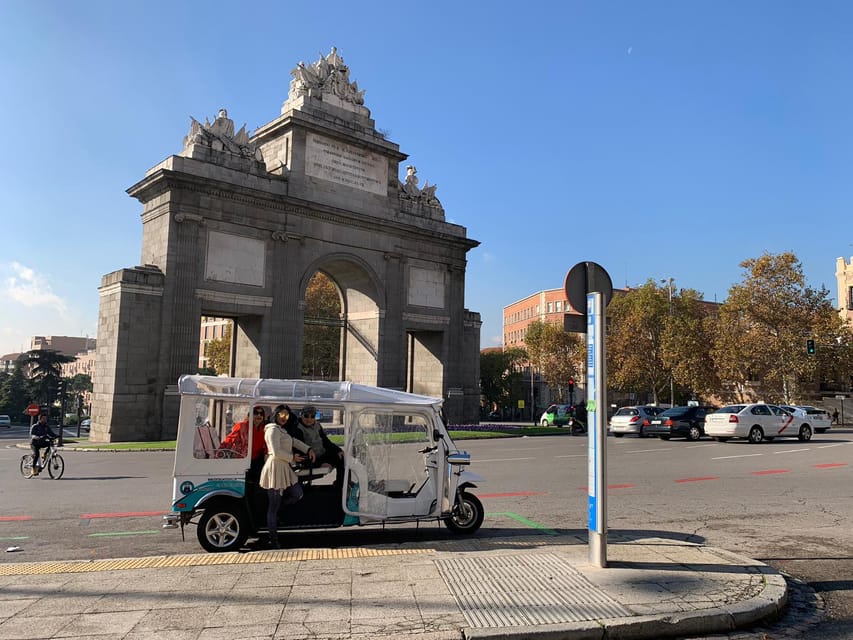
- Electric tuk tuk comfort for hopping across neighborhoods without parking drama.
- A long list of major landmarks packed in one smooth orientation.
- Live multilingual guides (English, French, German, Italian, Portuguese, Slovenian, Spanish).
- A private group of up to 4, so it feels flexible rather than mass-tour-ish.
Why a 2-Hour Tuk Tuk Welcome Tour Works in Madrid
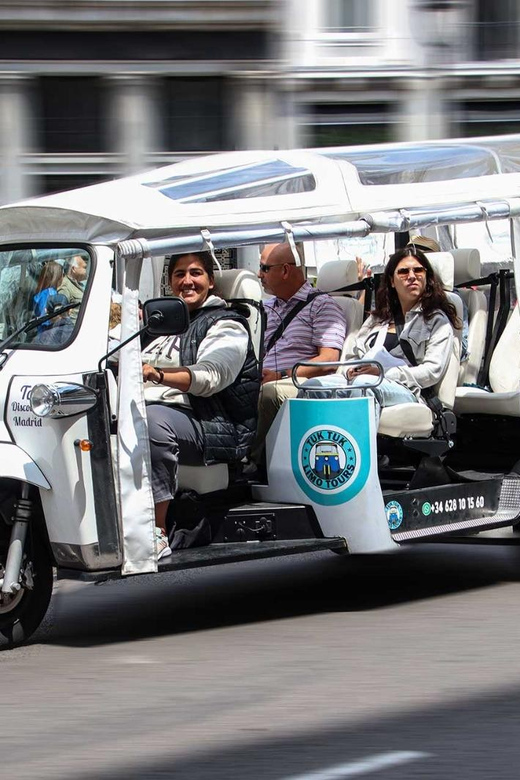
Madrid is one of those cities where the best first day is still a little chaotic. Streets are wide, neighborhoods feel different from one block to the next, and you can lose a lot of time just figuring out what’s where.
This is the reason I like a short tuk tuk orientation. You don’t just see famous stops. You get a guided map of how Madrid connects: old power centers, royal Madrid, transport nodes, and modern “look up” architecture. Afterward, you usually know where to return for a longer visit—because you’ve already placed the sights in your mental grid.
Also, the format is practical. You’re moving most of the time, then you’re given short on-foot photo moments. That pacing helps if you’re jet-lagged, traveling with someone who doesn’t want museum marathons, or you just want your camera roll to start strong.
The private-group setup matters too. If you’re traveling with friends or family, you can ask quick questions without competing with a crowd. And with up to 4 people per group, it can be a surprisingly good value compared to paying for multiple separate taxis just to cover “high points.”
You can also read our reviews of more tours and experiences in Madrid.


The Route: From Calle Mayor to Royal Madrid in Photo-Stop Order
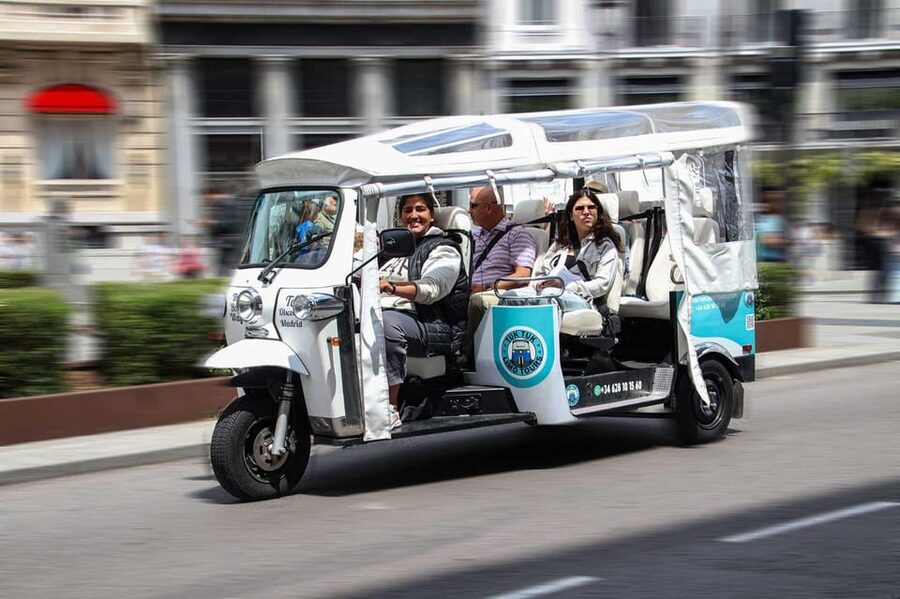
Meeting point is on C. Mayor / Calle Mayor 90, near Cripta de Almudena. You’ll want to look for the Tuk Tuk Limo Tour branded vehicles. From there, your guide builds the story of the city like a living highlights reel.
Here’s what each segment gives you, and what to watch for.
Calle Mayor: the opening photo stop that sets the tone
You start with Calle Mayor—a classic Madrid street with a sense of theater built in. One reason this first stop works is that Calle Mayor helps you immediately picture where the city’s social life has historically gathered. You also get the name-drop that your guide may connect to: it’s linked with playwright Pedro Calderón de la Barca, who lived here.
Practical tip: early in the tour is when you’re most alert. Treat this stop as your “get your bearings fast” moment.
Mercado de San Miguel: a busy food-and-drink landmark
Next comes Mercado de San Miguel, in one of the busiest squares near Puerta del Sol (the center of Spain’s road network). This is one of those places where the energy comes from people, not just architecture. Even if you don’t buy much, the market gives you a feel for modern Madrid’s relationship with tradition.
Practical tip: if you want to snack later, note what looks good now. You won’t have long here, so a quick browse beats a rushed purchase.
Sobrino de Botín: Madrid’s old-school dining legend
Then you stop for Sobrino de Botín, founded in 1725 and often cited as the oldest restaurant in the world. Whether you consider that claim a fun fact or a serious historical marker, the value is the same: it anchors the tour in everyday Madrid life, not only sightseeing.
Why it matters: royal palaces are impressive, but this kind of place shows how the city fed itself and built routines that lasted.

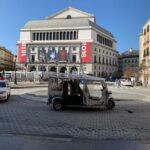

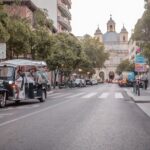
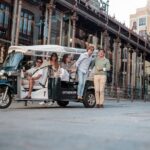
Cava Baja: a neighborhood with layers
After Botín, the tour heads into Cava Baja, an area with a past connected to hideouts and shifting eras. Today, it’s known for bars, traditional restaurants, hostels, and flamenco bars. This stop is a contrast moment—still central Madrid, but with a more nightlife-ready vibe.
Practical tip: if your trip includes an evening out, you can use this stop to choose a neighborhood direction without guessing.
Royal Basilica of San Francisco el Grande: stop for scale and vibe
You’ll reach the Royal Basilica of Saint Francis the Great (La Latina). It’s a Roman Catholic church with history going back to the 13th century. Churches can blur together when you see too many, but this one is worth stopping for because it’s visually strong and the area around it helps you picture older Madrid street life.
What you’ll likely feel: a change in pace as you step into a more solemn architectural mood.
Glorieta de Toledo and the Puerta de Toledo view
Next you’ll pass Glorieta de Toledo and the Puerta de Toledo, a monumental 19th-century gateway. This is a good reminder that Madrid isn’t only medieval and royal—there’s also an infrastructure story in the way the city expanded and controlled movement.
Photo tip: this is a great “stand back and let the structure frame you” kind of stop. If you shoot from the same place each time, you’ll end up with more consistent shots.
Atocha Station: modern Madrid’s busiest nerve center
You then arrive at Atocha Station, one of Spain’s busiest transport hubs, serving around 90 million passengers annually. That number is a clue to what Atocha represents: Madrid is a travel machine, not just a museum city.
Why it belongs on a welcome tour: it’s a map point. If you plan day trips, you’ll probably route through Atocha at least once. Seeing it early makes later logistics easier.
Buen Retiro Park: the “slow down” break
At Buen Retiro Park, you get a historic green space with a pond, monuments, and the Crystal Palace (dating to the reigns of Philip IV and Charles III). This stop gives your brain a reset between denser city areas.
Practical tip: even with limited time, find one viewpoint where you can see water or major structures. Retiro photographs well because you’re capturing both people and geometry.
Alcalá Gate: your Madrid entrance-and-exit moment
Next is Alcalá Gate, erected in 1778 and once Madrid’s main entrance near Retiro Park. It’s one of those elements that looks like it belongs to a grander plan—because it used to be part of how the city controlled entry.
Why it’s useful: you’re seeing a former threshold, not just a monument. It helps your city story feel chronological.
Las Ventas: a bullring that’s pure scale
Then comes Las Ventas bullring, considered the world’s most important bullring. Even if bullfighting isn’t your thing, the structure is impressive: it’s built to hold noise, crowds, and drama, and you can feel that purpose in the space.
Photo tip: try shooting at a slight angle so you catch more of the outer form rather than just the facade.
Santiago Bernabéu Stadium: football as architecture
You’ll also stop at Santiago Bernabéu Stadium, home to Real Madrid since 1947, where major events have been hosted. This is Madrid through modern sports culture—less about monarchy, more about mass emotion and design.
Practical tip: if your group is big on football, this stop can be a highlight even for non-fans, just because the building reads so strongly.
Paseo de la Castellana: a long avenue with old-to-new contrasts
You roll along Paseo de la Castellana, a major thoroughfare lined with historic mansions now housing embassies and cultural centers, plus the Museum of Public Art. This segment is where you start noticing how Madrid layers power: private residences turning into institutions.
Why it’s good for first-timers: it helps you understand why Madrid feels both grand and functional.
Gran Vía: Madrid’s modernization with a built-in skyline
Gran Vía is a classic modernization corridor with early skyscrapers and modern architecture. This is one of the best “look up” moments on the tour, especially for photos.
Practical tip: if you’re shooting for Instagram-style framing, this is where you’ll want to slow down a second and let the street act as your leading line.
Plaza de España: a big square at the junction
You’ll visit Plaza de España, with the Cervantes Monument at the intersection of Gran Vía and Princesa streets. It’s a hub-squared stop: you’re seeing how Madrid places monumental identity right where people cross paths.
Photo tip: get one close shot of the statue, and then one wider shot that shows the plaza edges. That contrast is what makes the photo feel like Madrid.
Temple of Debod: a small miracle moment near the park
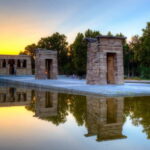
Next is the Temple of Debod, an ancient Egyptian temple from the 2nd century BC, relocated to Madrid in Cuartel de la Montaña Park. This stop is a clever twist in the tour because it’s not “just Madrid.” It’s a reminder that cities also collect history from elsewhere.
Why it’s valuable: it breaks the rhythm of only Spanish landmarks and makes your tour feel more surprising.
Practical tip: aim to capture the temple silhouette against the park setting. It photographs best with some context around it.
Royal Palace of Madrid and Plaza de Oriente: royal Madrid without the long museum plan
You’ll reach the Royal Palace, once home to Spain’s kings and now the official royal residence. From there, you also stop at Plaza de Oriente, the pedestrian square bordering the palace with gardens and statues.
If you’re short on time and you don’t want to commit to a full palace visit, this stop still gives you something important: you learn how the palace sits in its public space. It helps you decide later whether you want to tour inside.
Practical tip: this is a great time to take photos from a spot where you can include both the palace mass and the public square structure.
Ópera and Almudena Cathedral: final orientation toward the skyline
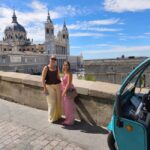
The tour ends with Ópera Station, which gives access to Teatro Real, Plaza de Oriente, and the Royal Palace. Then you’ll see Catedral de Almudena, Madrid’s cathedral, completed in 1993, with a history that stretches back more than a century. It’s a fitting closer because it links your tour with modern Madrid identity and views around the palace area.
Then you return to Calle Mayor near where you started.
Practical tip: for the last stop, keep your phone battery in mind. This tour gives you several “final photos” moments, and they add up.
How the Price Becomes Value (or Doesn’t)
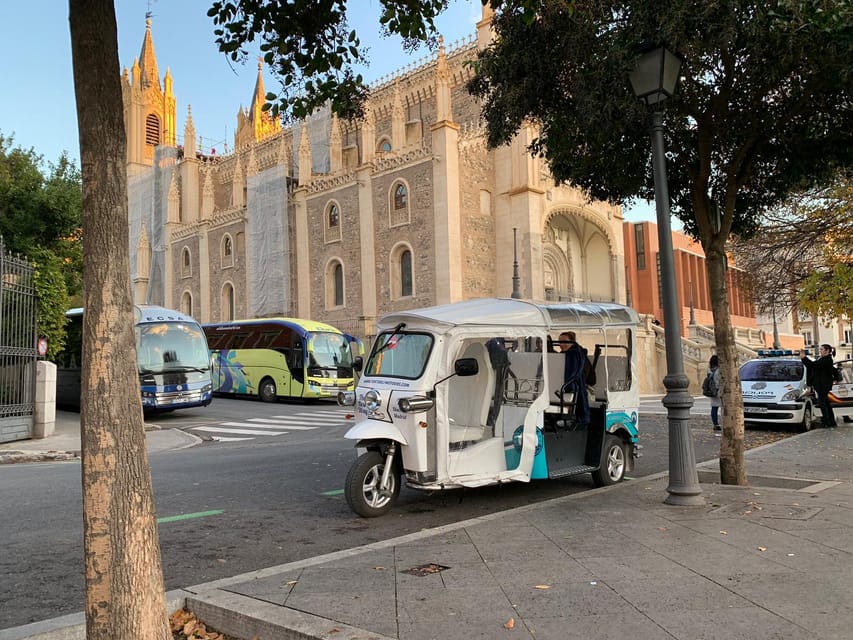
This tour costs $187 per group up to 4 for 2 hours. That price is actually easier to judge when you think in terms of what you’re buying:
- You’re paying for transport in an electric tuk tuk, not just commentary.
- You’re paying for a live guide who can explain the city while you move.
- You’re paying for the time-saving factor: you cover a wide swath of Madrid without planning routes, parking, or connections.
For a group of four, the per-person cost becomes more reasonable, especially if you would otherwise take multiple taxis just to hit the big landmarks and neighborhoods quickly. For solo or two people, it can still feel worthwhile if your goal is orientation, photo stops, and a guided “map in your head,” not deep time at each monument.
Where the price can feel less satisfying: if you specifically want long stops inside buildings, or you don’t care about a broad overview. This tour is designed to point, place, and explain—not to replace museums or guided interior tickets.
What to Watch For: Audio, Language, and Getting In/Out
Two things can make or break the experience with any tuk tuk tour: sound and comfort.
- Audio clarity: A couple of past experiences flagged that the tour guide was hard to hear even when the volume was maxed out. If you know you struggle with audio in moving vehicles, consider where you’ll sit, and be ready to ask follow-up questions at stops.
- Language matching: The tour offers live guides in several languages, including German, English, French, Italian, Portuguese, Slovenian, Spanish. Still, if you’re booking for a specific language, I’d double-check before your day starts so you aren’t stuck with something you can’t follow comfortably.
- Boarding and dismounting: A few people also mentioned that getting in and out was tricky for some guests. If anyone in your group has mobility limits (even if wheelchair access is listed), I’d ask how the tuk tuk handles boarding at street level.
The good news: most of the route is paced with short visits, so even if you miss one detail while moving, you’ll usually catch up at the photo stops.
Best Fit: Who This Tour Is For
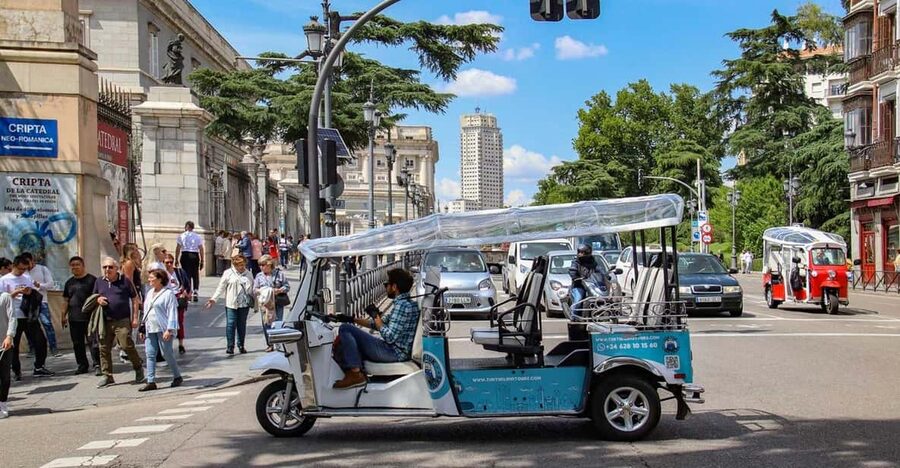
This tour is a great match if you:
- are in Madrid for the first time and want a clean orientation in 120 minutes
- want photo opportunities without spending hours planning
- prefer a guided overview across multiple neighborhoods rather than one focused theme
- enjoy mixing “big names” (Royal Palace, Retiro, Bernabéu, Las Ventas) with street-level personality (Cava Baja, Mercado de San Miguel, Botín)
I’d skip it (or pair it with other plans) if you:
- want extended time at only one or two attractions
- need uninterrupted commentary in a specific language and want zero risk
- get uncomfortable in moving transport with limited time at each stop
If you’re doing this on day one, it sets up your later day trips and neighborhoods. If you’re doing it on day three, it helps you finally connect the dots.
Should You Book the Madrid Tuk Tuk Welcoming Tour?
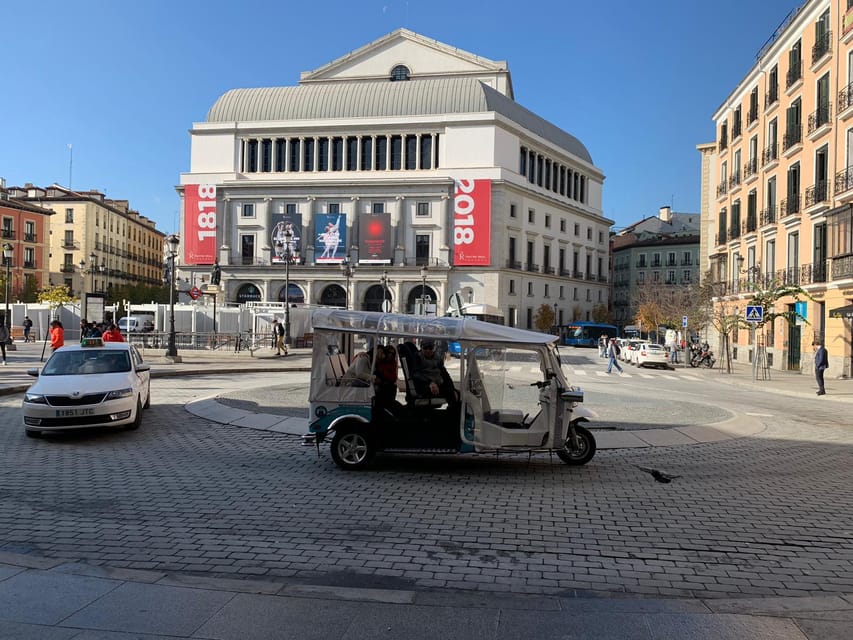
If you want a quick, guided route that touches the city’s most recognizable landmarks plus a few local-feeling stops, I think it’s a solid booking. The biggest win is the structure: photo stops + an overview narrative that helps you understand Madrid fast.
My advice before you hit reserve:
1) confirm your guide language needs, and
2) plan for lots of quick moments rather than long stays.
If that matches your style, you’ll come away with a clearer mental map of Madrid and plenty of photos that don’t feel like random stops.
FAQ
FAQ
How long is the Madrid Tuk Tuk Welcoming Tour?
It runs for 2 hours (120 minutes).
How much does the tour cost?
The price is $187 per group, up to 4 people.
Where do we meet for the tour?
The meeting point is on Calle Mayor 90, near the Cripta de Almudena area in Madrid. Look for Tuk Tuk Limo Tour branded tuk tuks.
Is the tour private?
Yes, it’s listed as a private group.
What languages are available for the live guide?
The live guide is available in English, French, German, Italian, Portuguese, Slovenian, and Spanish.
Is the tuk tuk electric?
Yes, the tour uses an electric tuk tuk.
Is the tour wheelchair accessible?
Yes, it’s wheelchair accessible.
What’s included in the price?
It includes the electric tuk tuk, a driver/guide, insurance, and the live guide commentary.