REVIEW · CHIANG MAI
Half day Best of Chiang Mai City by Tuk-Tuk Private tours
Book on Viator →Operated by Chiang Mai Local Tours · Bookable on Viator
Three hours, five must-see Chiang Mai stops. I like the hotel pickup and the way an English-speaking guide helps you connect the dots between old walls, famous temples, and local life. The main catch is the pace: it’s a tight half-day, so you’ll see plenty but won’t have long, slow time at each place.
This tour is built for arriving in Chiang Mai and needing a map in motion. You start with a canal loop around the old city, then hit landmark gates like Chiang Mai Gate and Tha Pae Gate before you move inward for temples and a quick monument stop. The late part of the route shifts into shopping mode with Warorot Market, where you can browse everything from fruit and flowers to jewelry and fireworks.
The ride itself is the charm. You get drinking water and seasonal fruit, and it includes accident travel insurance, which is a comforting extra when you’re hopping around by Tuk-Tuk. The plan is capped at a small group size (max 10), and there’s a formal dress code to keep in mind.
In This Review
- Key things to know before you go
- A half-day Chiang Mai Tuk-Tuk orientation that actually helps
- Canal loop and the old-city gates: Chiang Mai Gate and Tha Pae Gate
- Wat Chedi Luang: the big stupa, the Emerald Buddha tie-in, and earthquake scars
- 3 Kings Monument: a quick, useful landmark stop
- Wat Srisuphan (Silver Temple): why the silver details matter
- Warorot Market: where local shopping feels like Chiang Mai
- Tuk-Tuk timing and comfort: great for orientation, variable for the ride
- What’s included in the price (and what you’ll pay for separately)
- Dress code and practical do’s before you step into temples
- Who this Chiang Mai half-day city tour suits best
- Should you book it? A simple decision guide
- FAQ
- What time does the tour start?
- How long is the Best of Chiang Mai half-day tour?
- Is hotel pickup and drop-off included?
- What stops are included in the itinerary?
- Are drinks or snacks provided?
- What should I wear?
- How many people are in the group?
- What’s not included in the price?
- Is cancellation free?
Key things to know before you go
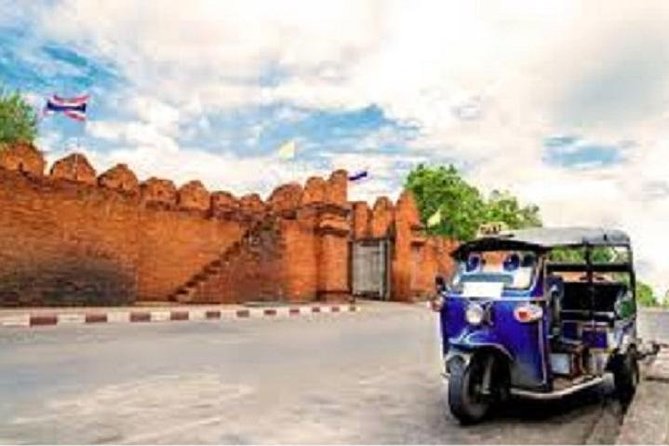
- Hotel pickup by Tuk-Tuk: door-to-door convenience, no figuring out routes on your first day
- Four temples plus Warorot Market: a compact highlights route with photo chances throughout
- Old city gates and walls: Chiang Mai Gate and Tha Pae Gate give quick historical context
- Wat Chedi Luang details: earthquake damage and the Emerald Buddha story help make it meaningful
- Wat Srisuphan Silver Temple: silver-colored buildings and a working silversmith tradition nearby
- Warorot Market pricing: a local shopping stretch where you can compare prices across stalls
A half-day Chiang Mai Tuk-Tuk orientation that actually helps
If you’re short on time, I like how this tour acts like a shortcut to understanding Chiang Mai. You’re not just collecting temple names—you’re getting the layout. The route begins around the old city area, hits the gates that defined movement in and out, and then moves into the temple core and market zone.
That matters because Chiang Mai can feel a bit spread out. By the time you’re dropped back (around 11:30am for the morning tour or about 4:30pm for the afternoon tour), you’ll have a mental model for where to return later—especially if you plan to explore on your own.
This is also a nice style of pacing. You ride in a Tuk-Tuk while your guide handles the order of stops. That means you’re spending your energy on seeing and photos, not on transport logistics.
You can also read our reviews of more tours and experiences in Chiang Mai.


Canal loop and the old-city gates: Chiang Mai Gate and Tha Pae Gate
The tour starts by exploring the canal that surrounds the old city. This is a smart first move because it gives you boundaries and orientation right away. Even if you’re not a history nerd, it helps you understand why the old city feels like a defined world.
From there, you stop at key historical gates. Chiang Mai Gate and Tha Pae Gate are both big landmarks because they connect the idea of protection and controlled entry with today’s street-level reality. You’ll see remains of the guard walls that used to protect the city from foreign invaders many years ago, which gives the architecture context you might miss if you just wander.
Photo tip: treat these gate stops as your visual warm-up. If you’re planning a temple-heavy day, getting a couple of strong street-and-wall shots early makes the rest of the route feel like part of a story instead of random stops.
Wat Chedi Luang: the big stupa, the Emerald Buddha tie-in, and earthquake scars
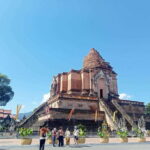
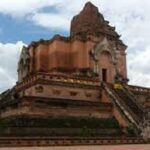
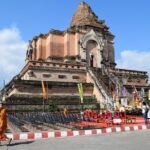
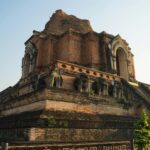
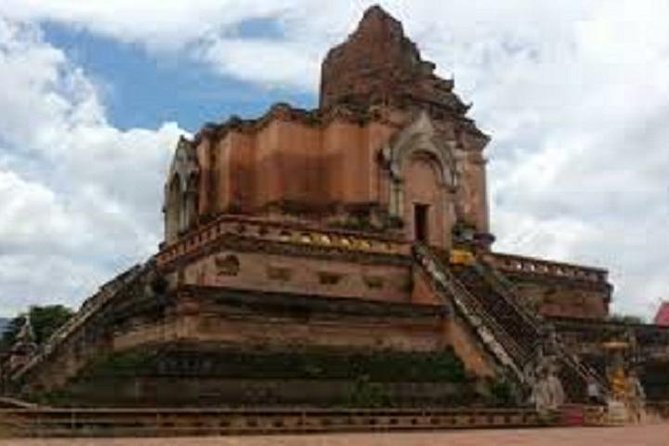
Next up is Wat Chedi Luang, a temple tied to some of Chiang Mai’s most recognizable narratives. The name roughly points to the Temple of the big stupha, and the site dates back to the 14th and 15th centuries. Even before you notice details, the scale does the job.
Here’s what makes the stop more than just pretty stone: this was once home to the famous Emerald Buddha—currently housed in Bangkok’s Grand Palace. So even though you’re in northern Thailand, you’re standing at a piece of a wider national story.
Then comes the earthquake detail. In 1545, an earthquake destroyed the top 30 meters of the temple. Much of it has since been repaired, but damage around the lower edges remains visible. That mix of repair and scars makes the temple feel real, not frozen in time.
Time reality check: this stop is part of a 3-hour half-day plan. You’ll see what you need to see, but if you’re hoping for long, quiet study, you’ll want to schedule a return later.
3 Kings Monument: a quick, useful landmark stop
After Wat Chedi Luang, you’ll make a stop at the 3 Kings Monument. This is a shorter pause, but it plays an important role in how the tour teaches you the city. It gives a named point of reference between temples and the next big cultural stop.
Think of this as your “reset moment.” You’ll get a breather, a clear photo opportunity, and a chance to orient your bearings before you head into the more specialized temple and crafts area.
Wat Srisuphan (Silver Temple): why the silver details matter
One of the highlights of this route is Wat Srisuphan, often called Chiang Mai’s silver temple. The tour frames it with specific background, and that helps you appreciate what you’re looking at.
The temple traces back to 1501 under King Mengrai. It was originally known as Wat Srisuphan Aram, and it was renovated in 2004. The most eye-catching feature is the silver-colored building that shimmers in sunlight.
What I like here is that the tour doesn’t just say silver looks good. It explains materials and tradition. The Ubosot is described as using alloy and zinc-silver, which is the kind of detail that makes you pay closer attention instead of just snapping photos.
There’s also a crafts angle. The temple is linked to Chiang Mai’s silversmith tradition and is positioned as an important center for handicrafts. The tour connects the next generation of artisans with the Ancient Lanna Arts Study Centre (Sala Sip Mu Lanna), where visitors may see artisans at work. Even if you don’t buy anything, watching craft techniques happen in real time changes how you view temple art—less decoration, more living skill.
If you’re sensitive to crowds, note that temples and craft areas can be busy. This route keeps things moving, which can be good, but it also means you might not have long stretches to watch one process.




Warorot Market: where local shopping feels like Chiang Mai
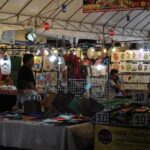
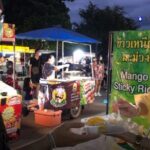
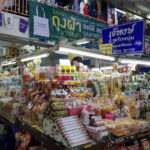
The final major stop is Warorot Market. On the way, you’ll pass areas associated with the Sunday Market and the Night Bazaar. Then you’ll step into Warorot, where locals do much of their daily shopping.
This market stop is where the tour shifts from culture to everyday life. The list of what’s available is wide: fresh and dried fruit and vegetables, souvenirs, fireworks, clothing, fresh seafood, jewelry, watches, beauty supplies, a large flower market, and more. That variety is exactly why it works as a “see the city” wrap-up.
The tour also emphasizes price: Warorot is described as having some of the lowest prices in Chiang Mai. That matters if you’re trying to balance souvenir shopping with budget. You’ll likely get more value here than in places aimed mainly at visitors.
One practical thing: markets are not the place to expect perfect quiet. Even with a guide, you’ll be navigating through crowds and stalls. If you like browsing at your own speed, use the guide for orientation, then spend your free moments comparing prices and products.
Tuk-Tuk timing and comfort: great for orientation, variable for the ride
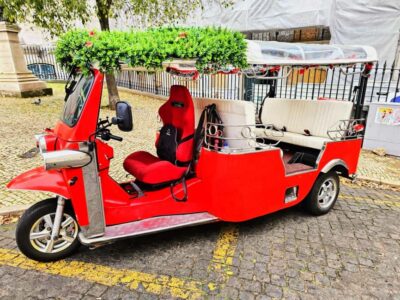
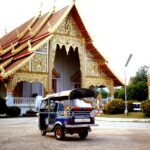
This half-day tour is designed to feel easy: you’re picked up from your hotel by Tuk-Tuk, taken between stops, and dropped back near the end. The morning and afternoon starts help you match it to your arrival plans.
- Morning option: start around 8:30am, return about 11:30am
- Afternoon option: listed as 12:30pm, and the schedule also shows 1:30pm pickup—confirm your exact time in your booking details
- Duration: about 3 hours
Now, about comfort. One review-style note you should take seriously is that Tuk-Tuk condition can vary. In one case, the upholstery was described as worn and the passenger seat as old and hard. In another case, the ride felt steady and relaxing.
So here’s my advice: when you climb in, do a quick comfort check. If the seat feels rough for you, take it as a reminder to plan quick stops elsewhere later. If you’re prone to back discomfort, you may want to bring a small cushion.
The flip side is what makes Tuk-Tuk worth it here. You’re dealing with short transfers and frequent stops. A Tuk-Tuk gets you there without making you manage transit yourself—especially helpful on day one.
What’s included in the price (and what you’ll pay for separately)
At $55 for an around-3-hour half-day, you’re paying for a guided route plus hotel pickup/drop-off by Tuk-Tuk. In return, you get a few “real value” extras: an English-speaking tour guide, drinking water and seasonal fruit, and accident travel insurance.
What’s not included is fairly standard for this kind of tour: souvenir photos (sold separately) and personal shopping. In other words, you can treat this as a guided highlights run, and then decide what’s worth buying once you see what you actually like.
For value, I think the sweet spot is this: if you want temple + market orientation quickly, this price can make sense. If you’re the type who likes to linger and read everything slowly, you might find this half-day a bit too short to feel fully satisfying.
Dress code and practical do’s before you step into temples
The tour lists a formal dress code. In practice, that means you should bring clothing that feels respectful and not too casual for temple visits. If you’re traveling in hot weather, plan for breathable layers that still fit the dress expectation.
Also, come with a basic mindset shift: you’re mixing temples and a market. You’ll want shoes that handle walking and uneven ground. Bring a plan for sun and hydration too, since Chiang Mai weather can be intense and you’ll be out for several hours.
If you’re shopping, keep your budget flexible. Warorot’s pricing is presented as lower, but market shopping still depends on what you choose. If you’re only buying a few items, you can keep it simple and enjoy the browsing.
Who this Chiang Mai half-day city tour suits best
This tour is a good fit if you:
- Are arriving in Chiang Mai and want to understand the old-city layout fast
- Want an easy, guided day with minimal planning
- Like photos and want a route that covers temples plus a major local market
- Prefer Tuk-Tuk transport for short hops between sights
It’s less ideal if you:
- Want long time at temples or deep guided explanations at each stop
- Are uncomfortable with market crowds and fast walking
- Expect a very varied itinerary beyond the listed temples and market
Should you book it? A simple decision guide
If you’re on your first or second day in Chiang Mai and you want quick, useful context—this is a smart way to start. The combination of old-city gates, Wat Chedi Luang, and Wat Srisuphan gives you both landmark visuals and cultural meaning, and Warorot Market adds the local everyday side.
I’d book it if you like organized highlights and you’re comfortable with a tight schedule. I’d think twice if you’re picky about transport comfort or you know you need more time for slow temple wandering.
FAQ
What time does the tour start?
The morning departure is listed at 8:30am. The afternoon option is listed at 12:30pm, with a schedule note showing 1:30pm pickup—your confirmation should show the exact start time.
How long is the Best of Chiang Mai half-day tour?
It runs for about 3 hours.
Is hotel pickup and drop-off included?
Yes. You’ll get pickup and drop-off from your hotel or guesthouse by Tuk-Tuk.
What stops are included in the itinerary?
The tour includes the canal around the old city, historical gates (such as Chiang Mai Gate and Tha Pae Gate), Wat Chedi Luang, the 3 Kings Monument, Wat Srisuphan (Silver Temple), and Warorot Market.
Are drinks or snacks provided?
Yes. The tour includes drinking water and seasonal fruit.
What should I wear?
The dress code is formal. Plan clothing that matches a respectful temple-visit expectation.
How many people are in the group?
There is a maximum of 10 travelers per tour.
What’s not included in the price?
Souvenir photos are available for purchase, and personal shopping is not included.
Is cancellation free?
Yes, you can cancel for a full refund up to 24 hours before the experience’s start time.