REVIEW · CHIANG MAI
Half Day Chiang Mai City and Culture tour by Electric Tuk Tuk (Private Tour)
Book on Viator →Operated by AP Good@travel · Bookable on Viator
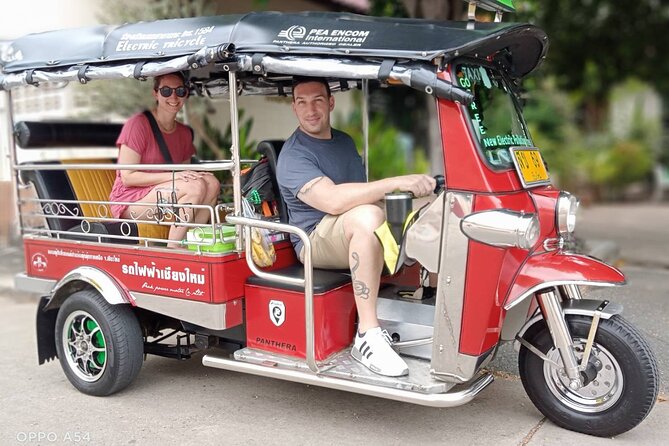
Electric tuk tuks make city culture feel simple. This private tour blends temples, a cultural museum stop, and a real local market into a smooth 3–4 hour loop, with a guide who can explain what you’re seeing. I like the up-close perspective you get from an open-air ride through the old city, and you can hop off fast at each highlight. One thing to watch: the ride can be loud and a bit smoky, so if you’re sensitive, you’ll want to manage that.
In the same morning or afternoon window, you’ll cover the “big picture” of Chiang Mai’s heritage and daily life without the hassle of planning your own route. You’ll also get hotel pickup and drop-off inside the city area, plus bottled water and travel accident insurance. If you want the quietest, least-stress way to get around temples and markets, this is a very workable choice.
In This Review
- Key things to know before you go
- Electric tuk tuk through Chiang Mai’s old-city sights
- Pickup and the 3–4 hour flow (where time actually goes)
- Stop 1: Tha Phae Gate and the idea of Chiang Mai’s walled city
- Stop 2: Chiang Mai City Arts and Cultural Centre for context you’ll use later
- Stop 3: Wat Chedi Luang, the city pillar, and temple etiquette
- Stop 4: Warorot Market (Kad Luang) for real shopping energy
- Price and value: what $76.50 per person buys you
- What to bring (and what to expect from the electric tuk tuk)
- Who this private tour suits best
- Should you book this Electric Tuk Tuk City and Culture tour?
- FAQ
- How long is the Half Day Chiang Mai City and Culture tour?
- What is the price per person?
- Is hotel pickup and drop-off included?
- What stops are included in the itinerary?
- Is the tour private, and how big can the group be?
- What should I wear for the temple visit?
- Do I need to provide passport details?
- What is the cancellation policy?
Key things to know before you go
- Private, not crowded: Your group only, with a maximum of 9 people.
- Open-air electric tuk tuk: Fun for photos and views, but plan for noise and occasional smoke.
- A tight, smart route: Tha Phae Gate, Chiang Mai City Arts and Cultural Centre, Wat Chedi Luang, then Warorot Market.
- Guide quality matters here: English-speaking guides with a TAT license, including Noom and Nui in past bookings.
- Temple-ready clothing helps: A T-shirt with short sleeves and long trousers is perfect for temple stops.
Electric tuk tuk through Chiang Mai’s old-city sights
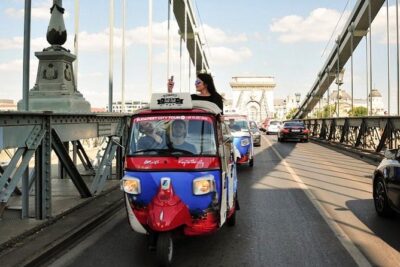
This tour is built around a simple idea: get you around Chiang Mai’s main highlights without the friction of traffic logistics. The electric tuk tuk is open-air, so you get that street-level feel as you roll past old walls, temple structures, and daily neighborhood scenes. It’s a classic way to see the city, with the added perk of an electric vehicle.
I like how the tour is short enough to feel doable even if you’re just settling in. In one half-day, you’re not only checking off temples—you also get the context of Chiang Mai’s culture and the everyday shopping rhythm at Warorot Market.
Small heads-up: because it’s open-air, you may notice noise and some smoke depending on traffic and how the route runs that day. Also, the sightseeing pace is efficient. If you want long, slow photo stops at every corner, you may wish you had more time.
You can also read our reviews of more tours and experiences in Chiang Mai.


Pickup and the 3–4 hour flow (where time actually goes)

The tour is scheduled for about 3 to 4 hours, with specific stop durations that keep things moving. If you’re staying inside the city area, you’ll get hotel pickup and drop-off. If you’re outside that zone, pickup may not be included, so it’s worth confirming your hotel location fits the city-area boundary.
You’ll travel by electric tuk tuk between stops, then spend a concentrated amount of time where it matters:
- about 10 minutes at Tha Phae Gate
- about 1 hour at Chiang Mai City Arts and Cultural Centre
- about 40 minutes at Wat Chedi Luang
- about 40 minutes at Warorot Market
This matters because it keeps the day from turning into a long, wandering scavenger hunt. You get a guided narrative at each stop, and you’re not left guessing what you’re looking at.
Stop 1: Tha Phae Gate and the idea of Chiang Mai’s walled city
You begin at Tha Phae Gate, the main entrance to Chiang Mai’s old walled city. Even in a short visit, you get a strong sense of how the city used to be organized around walls and gates—what once marked the edge of the protected urban area is now a landmark you can connect to the city’s past.
This is also a good “warm-up” stop. It sets the mental map for the rest of the tour: once you understand where the old city’s boundary concept sits, the temple and cultural stops feel less random. The time here is around 10 minutes, so you won’t get stuck lingering when you could be moving on.
Practical note: the gate area is outside, so it’s a straightforward starting point. If you’re thinking about photos, this is the kind of place where you can get a few quick shots without needing a long stay.
Stop 2: Chiang Mai City Arts and Cultural Centre for context you’ll use later
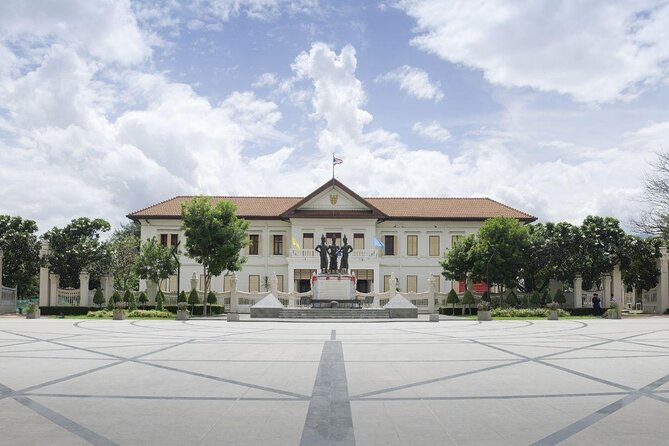
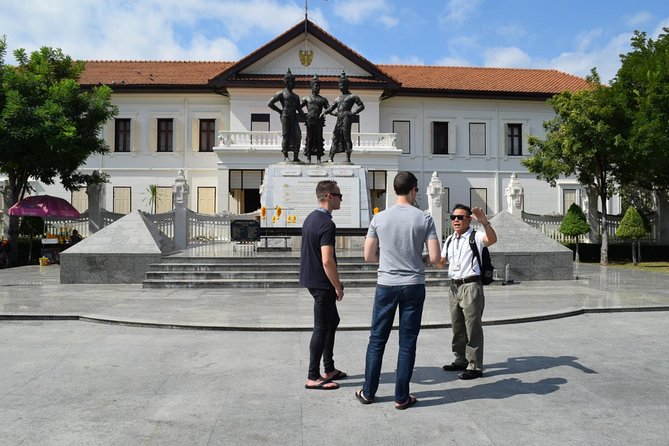
Next is the Chiang Mai City Arts and Cultural Centre, with about 1 hour on the schedule. This stop is included, and it’s designed to make local heritage feel understandable rather than like a list of facts. The center was set up through the city hall initiative to help people learn about Chiang Mai’s culture and history in an accessible way—more interactive than you might expect.
Why I think this is valuable: temples and monuments in Chiang Mai can feel like separate boxes unless someone connects the ideas. A museum-style stop helps you interpret what you’ll see at Wat Chedi Luang. You’re not just looking; you’re getting a framework.
Tip for you: if you’re short on time in general, this is still worth the hour. It makes the later stops land better, especially if you care about why certain places matter to locals.
Stop 3: Wat Chedi Luang, the city pillar, and temple etiquette
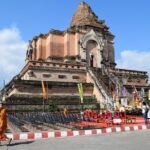
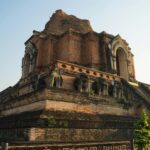
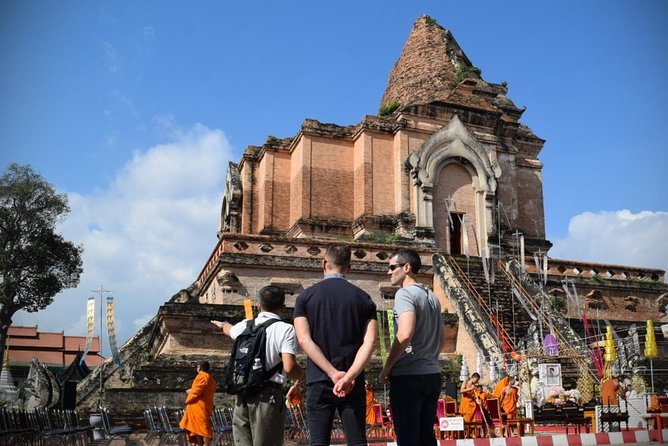
The tour then moves to Wat Chedi Luang, often called the Temple of the big stupa. You’ll spend about 40 minutes here, and entry is free as part of the schedule.
Two details are especially worth paying attention to:
- the stupa was built at the end of the 14th century
- on the temple grounds is the city pillar (Lak Mueang) of Chiang Mai, named Sao Inthakin
Those aren’t just trivia. They hint at how religious life, civic identity, and local belief intertwine. This is one of those stops where a good guide can turn stone and structure into meaning.
Temple etiquette matters, and the tour specifically suggests dressing appropriately—a T-shirt with short sleeves and long trousers is ideal for the temple visit. If you show up in clothing that feels too revealing or too short, you may end up spending your time figuring out how to cover up instead of learning.
Also remember: this stop is timed. You’ll likely have enough time to look around calmly, but the tour is designed to keep your day moving.





Stop 4: Warorot Market (Kad Luang) for real shopping energy
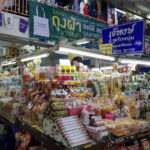
The last stop is Warorot Market (Kad Luang), where you’ll spend about 40 minutes. This is described as the biggest local market in Chiang Mai, and it’s the kind of place where you’ll see daily shopping patterns up close.
This is also the most sensory stop on the route. You can expect stalls with goods like:
- clothes
- ethnic foods
- vegetables and fruits
- herbs
- flowers
If you like souvenirs that feel connected to real life—spices you can actually use, edible snacks to share, or small gifts—you’ll get more mileage here than at a place built only for tourists.
One timing consideration: markets can feel endless, even in a short visit. With only 40 minutes, you’ll want to go with a plan—pick a few categories you care about (for example spices and snacks, or flowers and small gifts) and focus there.
Price and value: what $76.50 per person buys you
At $76.50 per person, this tour isn’t the cheapest way to see Chiang Mai. But it does cover several things that are hard to assemble on your own in a short half-day: private electric transportation, a licensed English-speaking guide, and planned entries at the cultural center plus market time.
The private nature is part of the value equation. The group size tops out at 9, and it’s your group only. That matters if you want questions answered on the fly, or if your schedule needs a bit of flexibility without losing the structure of a guided itinerary.
On top of that, you get included basics that reduce hassle:
- drinking water
- travel accident insurance
- hotel pickup and drop-off within the city area
You do not get alcohol or soft drinks, and you’ll pay personal expenses on your own. Still, for a 3–4 hour guided loop, the overall deal often comes down to one question: do you want a guide narrative and a planned route, or do you want to wander without structure?
What to bring (and what to expect from the electric tuk tuk)
This tour is simple, but it helps to pack smart. Since it’s open-air riding, you’ll feel the air around you more than you would in a closed vehicle. The tour provides bottled water, but you should still bring your own comfort items if you use them.
For temple comfort:
- wear the suggested T-shirt short sleeves + long trousers setup
- bring a light layer if you’re sensitive to indoor air-conditioning later on (not required, but you might find it handy depending on your plans)
For market comfort:
- plan a little time to look, then decide
- keep cash/card habits ready, because markets usually work best when you’re prepared to buy quickly
And for the ride itself:
- keep expectations realistic about noise and possible smoke
- treat the electric tuk tuk as your “viewing platform,” not a quiet taxi
Who this private tour suits best

This is a great fit if you want a half-day that does two jobs at once: learning and moving. You’ll enjoy it most if you like your sightseeing with explanations—history tied to physical places, plus daily life shown through a market.
It’s also a strong choice for:
- first-time visitors who want a guided overview without a full-day commitment
- small groups that prefer private pacing over bus schedules
- people who want to cover the old city highlights in one logical route
If you’re the kind of traveler who wants hours inside one museum or you love deep, long temple wandering, you might feel the time is short. But if you want a clean, guided hits-and-meaning experience, this works.
Should you book this Electric Tuk Tuk City and Culture tour?
If you want a practical half-day plan with a private guide and a route that mixes old-city landmarks, culture learning, and local shopping, I think this is an easy yes.
Book it if:
- you value English guidance and a structured route
- you want the old walled city feel at Tha Phae Gate plus the major temple stop
- you want a market with enough time to actually pick something out
Skip or adjust your expectations if:
- you’re very sensitive to noise or smoke from open-air rides
- you want lots of free time to roam without a schedule
Bottom line: for most people, this tour is a smart way to see Chiang Mai’s core highlights fast, with a guide like Noom or Nui helping make sense of what you’re looking at.
FAQ
How long is the Half Day Chiang Mai City and Culture tour?
It runs for about 3 to 4 hours.
What is the price per person?
The price is $76.50 per person.
Is hotel pickup and drop-off included?
Yes, hotel pickup and drop-off are included for hotels inside the city area.
What stops are included in the itinerary?
The tour includes Tha Phae Gate, Chiang Mai City Arts and Cultural Centre, Wat Chedi Luang, and Warorot Market (Kad Luang).
Is the tour private, and how big can the group be?
It’s private—only your group participates. There’s a maximum of 9 people per booking.
What should I wear for the temple visit?
The tour suggests dressing appropriately, with a T-shirt with short sleeves and long trousers being perfect for the temple tour.
Do I need to provide passport details?
Yes. Passport name, number, expiry, and country are required at booking for all participants.
What is the cancellation policy?
You can cancel for free up to 24 hours in advance for a full refund. Less than 24 hours before the start time is not refunded.