REVIEW · MADRID
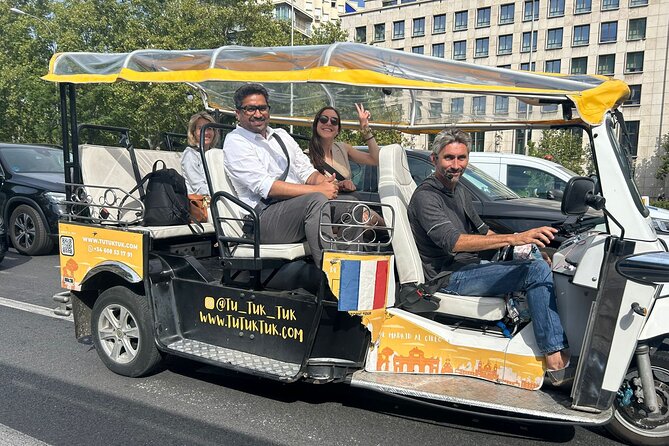
Tour of Castizo Madrid with a private guide in a yellow Tuk-Tuk
Book on Viator →Operated by Yellow TU TUK TUK Madrid · Bookable on Viator
A yellow tuk-tuk makes Madrid feel smaller. This private Castizo Madrid loop uses the city streets like a living map, rolling you past big-name sights and lesser-known corners in about an hour. I especially like the close-up views from the tuk-tuk, since it can reach places bigger vehicles struggle with.
I also love the English-speaking guides called out by name in feedback, like Pepe, Miguel, Jose, Magel, David, and Frédéric, who bring real context (not a memorized script). One drawback to keep in mind: it’s mostly a driving tour, so if you want lots of time standing around inside monuments, or you get stuck with a driver who’s less upbeat during traffic or light rain, the pace can feel a bit on-the-road.
In This Review
- Key things to know before you ride
- Why a yellow tuk-tuk is a great Madrid starter
- Price and what you actually get for it
- The route starts at Plaza de Isabel II for a reason
- Royal Palace: scale you can’t get from photos
- Madrid Cathedral: a must-see with a different look inside
- Puerta de Alcalá: the royal gate that still anchors the city
- Mercado de San Miguel: a gastronomy stop without the ticket headache
- Cervantes’ former residence: literature in the street grid
- Streets and squares that shape old Madrid (Mayor, Sol, and more)
- Congress of Deputies: politics from street-level
- Prado Museum area: seeing why Madrid is a museum city
- Passing modern Madrid beside historic bones
- Plaza de Santa Ana and Gran Vía: classic Madrid energy on the move
- Comfort, traffic, and the rain factor (real talk)
- How the guide shapes the tour more than the route does
- Best for who? (And who might prefer something else)
- Should you book this Castizo Madrid tuk-tuk tour?
- FAQ
- How long is the Castizo Madrid tour?
- How much does the tour cost?
- Is this tour private?
- Where does the tour start and end?
- Is the tour offered in English?
- Does the tour include entrance fees to monuments and museums?
- Are tips included?
- What’s included in the price besides the guide?
- Can I get confirmation after booking?
- Is there free cancellation?
Key things to know before you ride
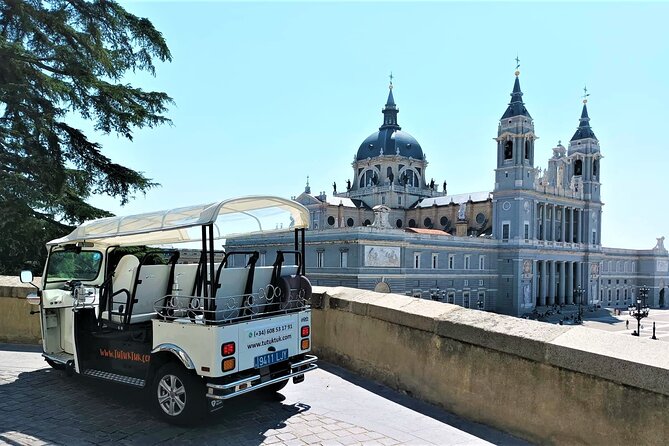
- Private by default: only your group in the tuk-tuk, with a professional guide/driver and a mobile ticket.
- Close access to old-town streets: the vehicle’s size helps it get nearer to classic neighborhoods and viewpoints.
- A fast city overview: it’s designed to help you decide what to spend time on next in Madrid.
- Guides who teach as they drive: multiple guides are highlighted for fluent English and history-focused explanations.
- Food and next-day tips: several guides are noted for recommending restaurants and must-see spots.
- Comfort can vary: one review calls out traffic-heavy roads and a slightly scary ride feel, so go in expecting movement.
Why a yellow tuk-tuk is a great Madrid starter
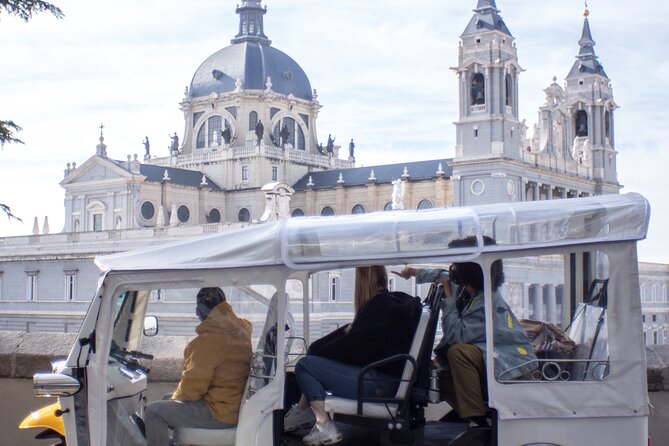
Madrid can feel huge on Day 1. This is one of the smarter ways to get your bearings fast without wasting your limited vacation hours on research, maps, and wrong turns.
The best part is the format: you’re not stuck on a fixed route with forced stops. Instead, you’re riding through the city center in a compact yellow tuk-tuk, getting a guided tour while the streets themselves do the work—showing you how the royal, religious, cultural, and political parts of the city connect.
You can also read our reviews of more tours and experiences in Madrid.



Price and what you actually get for it

At $37.95 per person for about 1 to 1 hour 15 minutes, the value is that you’re paying for two things at once: private transportation and a professional guide/driver. That combo matters in Madrid, where “getting around” is half the game.
Two things to budget separately:
- Entrance fees are not included for monuments and museums.
- Tips are not included.
So think of this as a guided “see it, understand it, then decide” tour. It’s ideal when you want an efficient overview first, and then you’ll buy museum or cathedral tickets on your own schedule.
The route starts at Plaza de Isabel II for a reason

Your meeting point is Plaza de Isabel II in the Centro district, and the tour ends back where you started. That round-trip setup is practical: you don’t have to guess transit, drag luggage through the wrong neighborhood, or plan an extra pickup.
From this central hub, your guide can shape the drive to match timing and traffic. It also makes the tour a strong first-day choice: once you know where everything sits, your next walks feel less random.
Royal Palace: scale you can’t get from photos
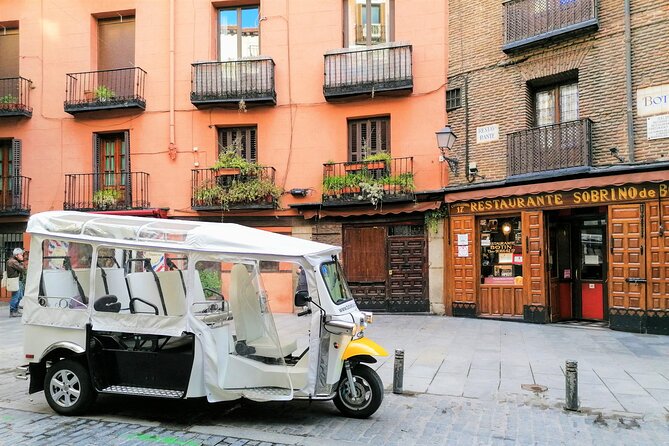
The Royal Palace of Madrid is the big opener, and it’s the right first stop because it sets the tone for everything that follows. You get the sense of power and permanence—this is one of the largest palaces in the world, with 135,000 square meters and 3,418 rooms.
Even if you don’t tour every room, the key value is understanding what you’re looking at. The palace is also noted as one of the few official residences for heads of state that’s open to the public. That detail helps you see it as more than a pretty building.
Practical tip: since the tour is short overall and entrance fees aren’t included, you should treat the palace as “spotlight time” from the route. If you want a deeper interior visit, plan that as a separate ticket day.
Madrid Cathedral: a must-see with a different look inside
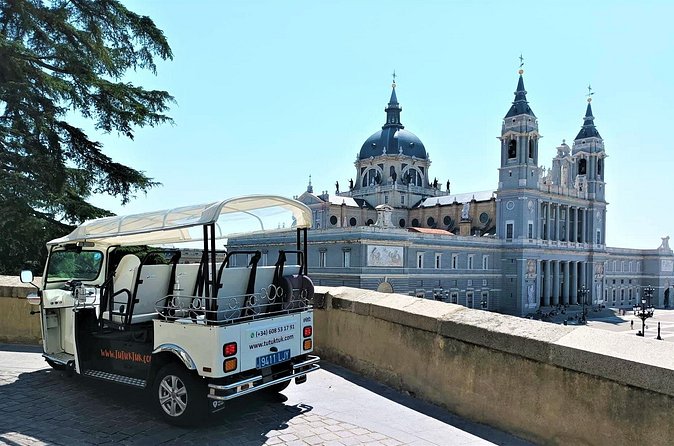
Next comes the Madrid Cathedral, and this stop is a strong example of why a guided format helps. The cathedral story is tied to a turning point: the first stone was laid in 1883, and the project shifted when Pope Leo XIII granted the bull in 1885 creating the bishopric of Madrid-Alcalá.
The highlight you’ll want to remember is the interior style—especially the ceiling paintings, which stand out because the design feels different from other churches of the era. Without a guide, it’s easy to walk in, take a look, and miss why it feels unusual.
Practical consideration: again, entrances aren’t included. So if you want to go inside, you’ll need to plan that separately.

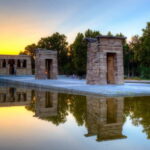




Puerta de Alcalá: the royal gate that still anchors the city
You can’t talk about Madrid’s historic layout without the Puerta de Alcalá. It’s one of the city’s five old royal gates, and it’s a classic landmark that helps explain how people once entered and moved around the city.
This is the kind of stop that works especially well from a road tour. You get perspective on its position in the urban grid, not just a close-up photo. It’s also a simple way to learn a piece of city geography without doing a whole walking history marathon.
Mercado de San Miguel: a gastronomy stop without the ticket headache
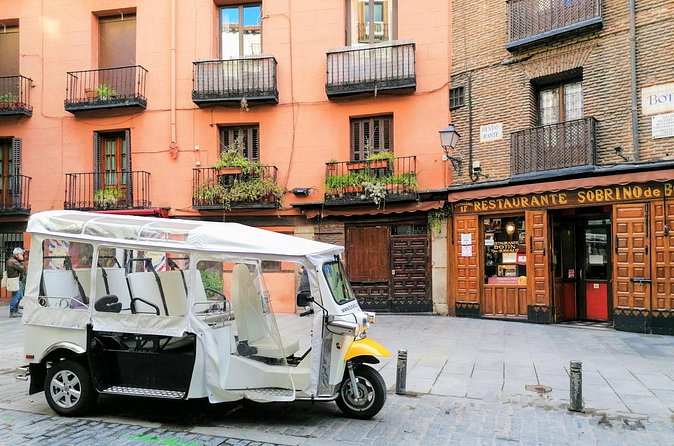
The Mercado de San Miguel is in the heart of Madrid and is described as a monument to Spanish cuisine and a meeting point for gastronomy lovers. On a short route like this, that matters: it’s where you can connect the history and culture of Madrid to what’s actually fun to eat today.
The main thing to know is timing and expectations. With a drive-based format and no included entrance fees, you may get a pass-by moment or a quick look rather than a full indoor wander. If you want to snack or browse stalls for real, build it into your own free time later.
Cervantes’ former residence: literature in the street grid

This tour also includes a stop at the former residence of Miguel de Cervantes, the author of Don Quixote. It’s a nice shift from royal palaces and cathedrals into something more human-scale.
What I like about this kind of literary stop is that it gives you a Madrid you can feel even if you’re not doing museums all day. The idea isn’t to memorize dates—it’s to notice how writers and culture are woven into neighborhoods, not locked behind ticketed doors.
Streets and squares that shape old Madrid (Mayor, Sol, and more)
One of the most useful parts of the loop is the way it connects major streets and squares: Mayor, Arenal, Segovia, Carrera de San Francisco, Bailén, Toledo, plus squares like Cebada, de la Paja, Mayor, Puerta del Sol, and de Oriente.
This is where the tour earns its Castizo title. You’re not just seeing landmarks—you’re seeing how Madrid’s old-town neighborhoods like La Latina, Ópera, and Las Vistillas fit into the city’s pattern.
The guide also points out monumental complexes from the 16th and 17th centuries under the Habsburg dynasty, and it helps you connect that architecture to what you see around you today. You may also pass churches like San Nicolás de los Servitas and San Pedro el Viejo, plus the Royal Palace again as part of that larger built story.
Why it matters for you: if you plan to walk later, this segment turns the street names into real places. That makes your self-guided exploring much easier.
Congress of Deputies: politics from street-level
The tour includes a pass by the Congress of Deputies, the lower house of Spain’s Cortes Generales, the constitutional body representing the Spanish people.
From the road, this stop is more about context than inside access. It gives you a sense that Madrid isn’t only royal and religious. It’s also modern governance, right in the center of the city.
If you’re the type who likes understanding how a country works (not just how it looks), this is a worthwhile checkpoint.
Prado Museum area: seeing why Madrid is a museum city
You’ll also pass by the Museo Nacional del Prado area. It’s described as one of the most important museums in the world and one of Spain’s most visited cultural institutions, including in a 2020 Observatory of Culture reference.
Even if you don’t go in on this tour, the value is knowing what you’re looking at and why people plan entire days around this museum. Madrid’s art scene can be overwhelming if you don’t know the “big center” right away.
So if you’re deciding between a first museum visit or a slower day outside, keep Prado in mind. This tour plants the idea early.
Passing modern Madrid beside historic bones
One of the more interesting elements is the drive past a newer icon of international luxury described as being in the heart of Madrid, made up of seven historic buildings.
I like this stop because it shows Madrid’s contrast. You’re looking at old stone and layers of the city while the street scene moves forward. It’s the kind of contrast that makes photos better, but it’s also the kind of contrast that helps you understand the city’s character when you’re out walking later.
Plaza de Santa Ana and Gran Vía: classic Madrid energy on the move
The route includes Plaza de Santa Ana, an open space in the Cortes neighborhood dating to 1810. It’s been reworked multiple times since then, and the guide helps you read the changes without turning it into a lecture.
Then you hit Gran Vía, one of Madrid’s main streets, known for commercial, tourist, and leisure life. The street is a 20th-century landmark, built at the beginning of the 1900s, and it’s the kind of place where you can feel Madrid’s modern rhythm.
This pair of stops is a nice balance after the palace-and-cathedral stretch. It gives you both tradition and everyday energy in one short circuit.
Comfort, traffic, and the rain factor (real talk)
The tour is short, but the experience is still a drive-through-the-city ride. One review notes that the ride can feel a bit scary, especially when you’re moving along major traffic corridors. Another points out that it’s mostly driving and you may want more stop time.
Weather is another variable. One guest said rain itself wasn’t the issue, but the driver’s mood made the ride less enjoyable, with repeated talk about potentially stopping if the rain got worse.
So my advice is simple:
- Go into it expecting motion and city traffic.
- If rain is in the forecast, bring a light layer and plan to stay flexible.
- Choose a guide you trust if you have that option when booking.
How the guide shapes the tour more than the route does
This tour lives or dies on the guide. The strongest feedback centers on guides who speak fluent English and explain what you’re seeing with personality.
Names that pop up in the feedback include Pepe (praised for history knowledge), Magel (called out for excellent English), Miguel (history professor vibes and lots of laughter), Jose (church knowledge and checking out two churches), David (restaurant recommendations), and Frédéric (encyclopedic knowledge and a fun ride).
If you can request a guide, I’d do it. A good guide turns a short ride into a useful map for your whole trip.
Best for who? (And who might prefer something else)
I think this works best for:
- First-time visitors who want the big picture fast.
- People who want a private, English-speaking guide without committing to a full-day museum plan.
- Travelers who like history, architecture, and city storytelling but don’t want to walk all day.
- Families who want an easy way to see a lot with kids in tow (one review mentions accommodations for two kids).
You might want to consider another option if:
- You need long, in-depth time at each attraction.
- You get uncomfortable with driving in traffic.
- You want an experience that feels mostly stationary and calm.
Should you book this Castizo Madrid tuk-tuk tour?
If your goal is to get oriented fast, learn the story behind the big landmarks, and end up with clear ideas for where to spend time later, then yes—this is a smart bet.
The reviews are strong: 96% recommended and the overall rating sits at 4.9 out of 5. That lines up with what matters most on a tour like this: short duration, private attention, and guides who actually teach. Just be realistic about the format—this is a driving overview, not a long monument-by-monument crawl.
My practical call: book it early in your trip. Ask about guide options (names like Miguel, Pepe, Jose, Magel, David, and Frédéric show up for good reasons). Bring a light rain layer if needed, and plan your deeper museum or cathedral visits separately since entrance fees aren’t included.
FAQ
How long is the Castizo Madrid tour?
It runs about 1 hour to 1 hour 15 minutes.
How much does the tour cost?
The price is $37.95 per person.
Is this tour private?
Yes. It’s a private tour/activity, meaning only your group participates.
Where does the tour start and end?
It starts at Plaza de Isabel II (Centro, 28013 Madrid) and ends back at the meeting point.
Is the tour offered in English?
Yes, it’s offered in English.
Does the tour include entrance fees to monuments and museums?
No. Entrance fees are not included.
Are tips included?
No. Tips are not included.
What’s included in the price besides the guide?
The tour includes private transportation and a professional guide/driver.
Can I get confirmation after booking?
You should receive confirmation at the time of booking, unless you book within 2 hours of travel, in which case confirmation is provided as soon as possible based on availability.
Is there free cancellation?
Yes. Free cancellation is available up to 24 hours in advance for a full refund.
If you tell me your travel dates and whether you’re visiting Prado or the Royal Palace on a separate day, I can suggest the best order to stack your tickets and walks.