REVIEW · TOKYO
Tokyo Asakusa Rickshaw Tour
Book on Viator →Operated by Ebisuya · Bookable on Viator
A rickshaw turns Asakusa into a story. This Tokyo tour mixes Edo-era streets with modern sights like the Tokyo Skytree, and it’s flexible enough to steer toward temples, food-area vibes, or photo stops. I especially like how the guide’s explanations make the small places feel meaningful, and how the ride gives you an overview fast without feeling rushed.
One thing to plan around: you can’t ride inside the Sensoji/Asakusa Temple area, including Nakamise shopping street. You’ll still see it from outside and hear what matters, but you’ll walk the bits you want to explore up close.
In This Review
- Quick hits you’ll feel right away
- Why a Tokyo Asakusa rickshaw tour feels different than walking
- Getting started at Asakusa Station and choosing your route
- Edo-era streets, old Tokyo facades, and a ride that keeps moving
- The rickshaw’s key constraint: no riding through Sensoji Temple and Nakamise
- Ushijima Shrine: a Shinto stop with a very specific gate detail
- Sensoji Temple gate area: bright color and the Shinto/Buddhism connection
- Honryuin Matsuchiyama Shoden: radishes as the clue
- Imado Shrine: manekineko cats and lots of figurines
- Japanese garden calm: the Lucky Fortune Cow Shrine
- Asahi Beer Headquarters: the golden flame contrast
- Rokku Street and old entertainment energy
- The raccoon street stop: quirky Tokyo with a lot of photo fuel
- One of Japan’s oldest amusement parks still operating
- Sumida Park and the Tokyo Skytree view across the river
- Where the tour ends: finish near where you want to keep exploring
- Price and value: $42.90 per person for a short, guided Tokyo snapshot
- Comfort and fit: rickshaw size rules you should know before you assume
- Rain, warmth, and the small perks that make a difference
- Who should book this Asakusa rickshaw tour
- Should you book the Tokyo Asakusa Rickshaw Tour?
- FAQ
- How much does the Tokyo Asakusa rickshaw tour cost?
- How long is the tour?
- Where do I meet for the tour?
- Is hotel pickup or drop-off included?
- Can I customize the route?
- Is food included?
- Are admission tickets included for the shrines and temples?
- Is the rickshaw allowed in the Sensoji Temple/Asakusa Temple area?
- What are the seating rules for adults and children?
- What happens if the weather is bad?
- What if I need to cancel?
Quick hits you’ll feel right away
- Custom route based on your interests, with optional shorter or longer time windows
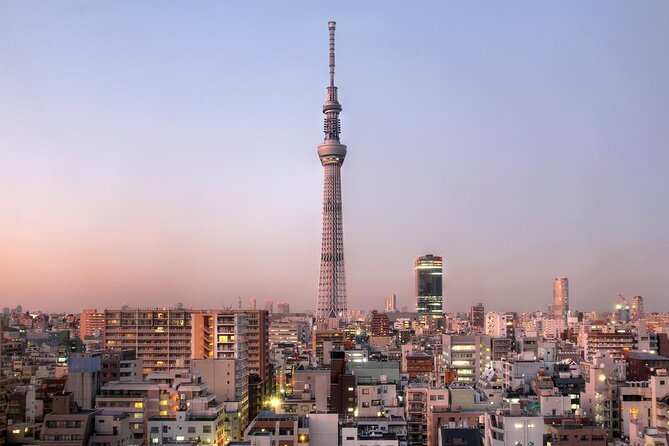
- Skytree photo moment across the Sumida River from Sumida Park
- Three-entrance gate at Ushijima Shrine, plus why radishes and cats show up repeatedly across Asakusa
- Raccoon street stroll with figurines placed along the way, plus a classic entertainment-district vibe
- Asahi Beer Headquarters and its iconic golden flame, for a very modern contrast
- Warm and rain-friendly routines reported by previous riders, including seat coverings for comfort
Why a Tokyo Asakusa rickshaw tour feels different than walking
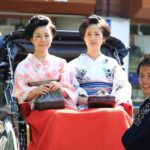
Asakusa is one of those neighborhoods where you can’t just look at buildings—you need context. A rickshaw changes the pace in a good way. You glide through narrow streets at human speed, which makes it easier to spot the small details: shrine gates, old house facades, street quirks, and the way religious spaces sit right beside everyday life.
The other big advantage is that your guide decides how you flow. You’ll tell them what you care about, and they adjust the stops accordingly. That means you’re not stuck doing a one-size-fits-all checklist. If you’re shrine-leaning, you’ll spend more time there. If you’re picture-leaning, you’ll get the best angles and calmer moments.
Getting started at Asakusa Station and choosing your route
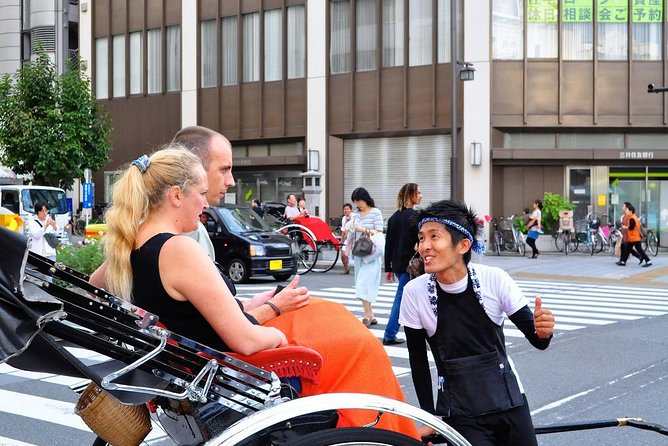
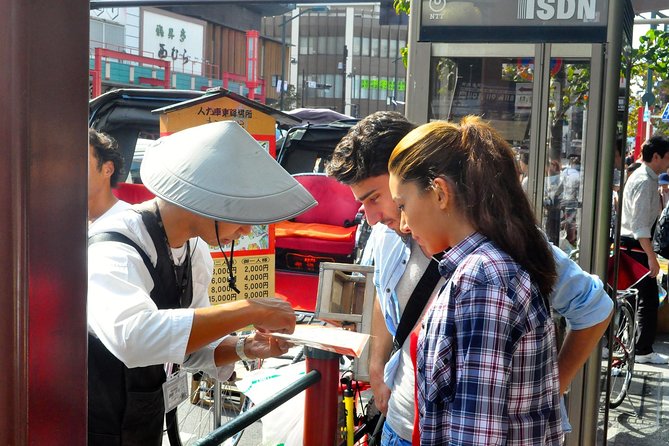
You make your own way to the meetup point near Asakusa Station (start address: 1-chōme-1-4, Asakusa, Taito City). Then you meet your guide and climb in.
Because this is a private tour for your group, the pace can match you. You’ll also choose the general direction of the visit when you speak with your guide—temples, shrines, Edo-era streets, entertainment history, or specific photo targets like the Sumida River view.
Important practical note: the tour can run anywhere from about 30 minutes up to about 3 hours, and shorter options may mean not every landmark fits. So if there’s a must-see—like Imado’s cat theme or the Asahi Headquarters—say it early so it stays on the plan.
Edo-era streets, old Tokyo facades, and a ride that keeps moving
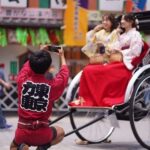
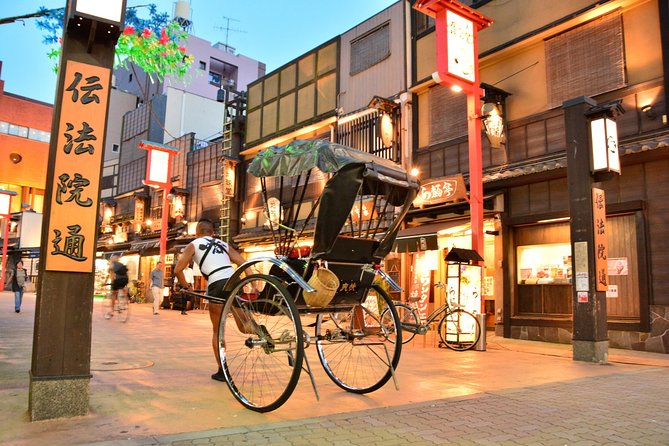
Once you’re rolling, the experience becomes part sightseeing, part street-level orientation. Expect narrow lanes where storefronts and house fronts keep that older Tokyo look. This is where the rickshaw really earns its place: you can take in the street rhythm without constantly turning your head and stopping to read every sign.
The guide provides background at the stops, but the ride itself is doing work too. You’re not just collecting sights. You’re learning how Asakusa pieces fit together—religion, entertainment, everyday errands, and the modern skyline edge creeping into views.
The rickshaw’s key constraint: no riding through Sensoji Temple and Nakamise
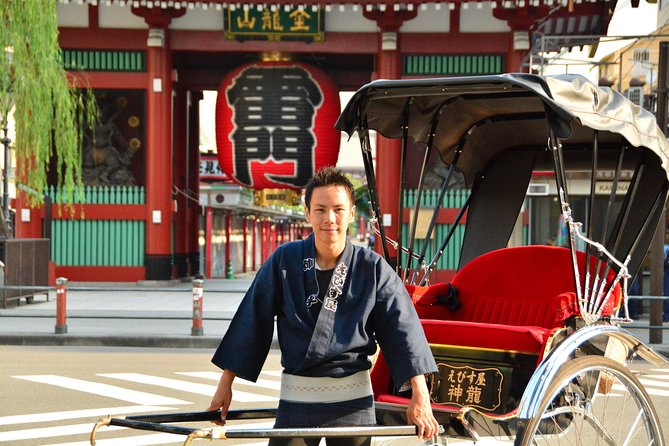
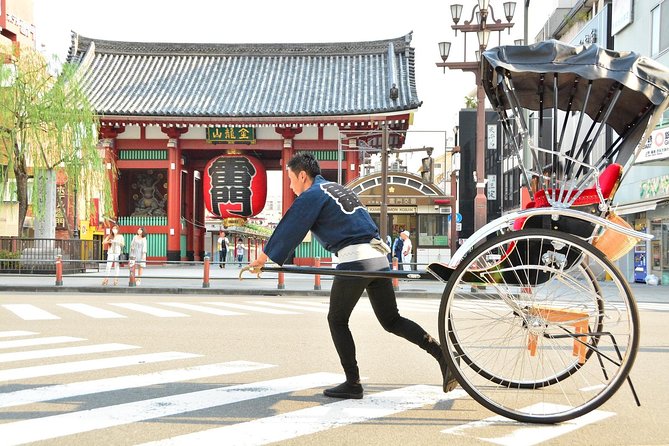
Here’s the big rule that shapes the experience. No rickshaw ride is allowed in the Sensoji Temple/Asakusa Temple area, including the temple buildings, temple grounds, and Nakamise shopping street.
So what does that mean for you?
- You still get the famous “gate to Sensoji” look and the chance to understand what you’re seeing.
- When you want to linger inside the market area, you’ll be walking.
- Your guide can still point out the Shinto/Buddhist connections and explain why certain shrines sit together with temple tradition.
If you’re hoping to roll straight through the busiest tourist stretch on wheels, adjust your mindset. This is still a great tour—you just shift from riding to walking for that one key zone.
Ushijima Shrine: a Shinto stop with a very specific gate detail
Ushijima Shrine is one of the first shrine-style stops you may visit. It’s Shinto, and you’ll likely hear about a standout feature: the shrine has a gate with three entrances rather than the standard single entrance.
That kind of detail matters because it gives you a reason to look closely. Instead of treating shrines as decoration, you start noticing how architecture and layout communicate meaning.
The stop time can be around 15 minutes, and admission is not included for shrine/temple stops listed for tickets separately.
Sensoji Temple gate area: bright color and the Shinto/Buddhism connection
You’ll see the colorful gate leading to Sensoji Temple and Asakusa Shrine. It’s visually loud in the best way—perfect for photos, and perfect for understanding why Asakusa feels ceremonial even on ordinary days.
One of the most useful parts here is the explanation of Shinto vs. Buddhism and how they coexist in the same neighborhood spaces. This is the kind of guidance that helps you make sense of what you’re seeing without needing to research beforehand.
Again, you can’t ride into the temple grounds, but the guide’s story makes the area feel more legible once you’re standing there.
Honryuin Matsuchiyama Shoden: radishes as the clue
Honryuin Matsuchiyama Shoden is a Buddhist temple and one of the constituent temples of Sensoji. The reason you’ll remember this stop is oddly specific: there are so many radishes, and you’ll even see radishes painted on lanterns.
You’ll get the background behind why that theme shows up here—so the radishes stop being random and start being part of a tradition. If you like “small objects with big meaning,” this is a very satisfying stop.
This stop is often around 15 minutes, and admissions for these temple stops are listed as not included.
Imado Shrine: manekineko cats and lots of figurines
Next up is Imado Shrine, another Shinto stop with a theme you can spot even before you read anything: cat figurines, especially the classic manekineko, the beckoning cat.
This is the kind of visit that’s fun even if you’re not a “temple researcher.” You can just enjoy the charm—and still learn why these symbols show up here. The guide’s explanations help you understand what’s going on beyond the cute factor.
Expect about 15 minutes for this stop, with admission tickets not included for listed shrine stops.
Japanese garden calm: the Lucky Fortune Cow Shrine
Asakusa isn’t only crowds and gates. You may also get a calmer pause in a Japanese garden setting. One highlight is the Lucky Fortune Cow Shrine.
This is a good time to slow down and look. Gardens are built for noticing—shapes, paths, and small details you miss when you’re bouncing from landmark to landmark. A rickshaw tour gives you just enough breath without losing the momentum of the day.
Asahi Beer Headquarters: the golden flame contrast
Then comes a very modern contrast: the Asahi Beer Headquarters, with the iconic golden flame on top of the building.
Even if you’re not a beer fan, it’s a great Asakusa-and-beyond photo moment. It reminds you that Tokyo’s “old” and “new” aren’t separate worlds. You’re seeing the neighborhood as it actually is: layered.
Rokku Street and old entertainment energy
One stop option takes you into the area connected to Asakusa’s entertainment district history. You’ll hear about Rokku Street, which used to be a major entertainment zone before the war, with cinemas and theatres.
This part works well for people who like more than religion and architecture. It adds a human, cultural layer—how locals spent time, what they watched, and what Asakusa meant as a nightlife and show district.
Depending on your tour length and your interests, you might also encounter a venue that’s still part of the neighborhood’s comedy and show spirit.
The raccoon street stop: quirky Tokyo with a lot of photo fuel
Not every Tokyo street has a theme you can spot every few meters. This one does. There’s a raccoon-themed street where raccoon figurines appear repeatedly along the way.
What I like about this kind of stop is that it breaks the “shrine then shrine” pattern. It gives you a playful visual break while keeping you walking through the actual local street feel rather than a staged scene.
One of Japan’s oldest amusement parks still operating
Another stop can include one of the oldest amusement parks in Japan, still in operation. If you’re the type who likes nostalgia that’s still alive—this is your lane.
Even without knowing every ride name, you’ll get a sense of how Asakusa keeps older entertainment traditions running alongside religion and modern business.
Sumida Park and the Tokyo Skytree view across the river
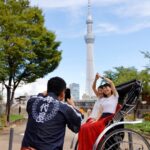
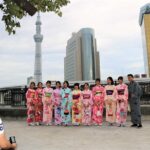
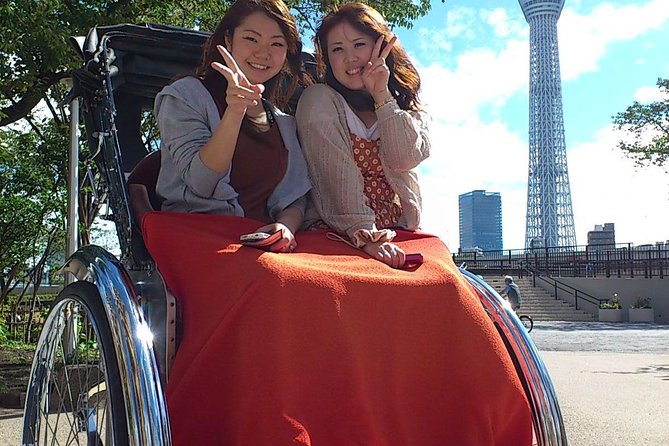
When you reach Sumida Park, you get your reward: a long stretch along the Sumida River and a view across the water at the Tokyo Skytree.
This is a strong photo spot because it’s not just “look up.” You’re composing with the river line, the park space, and the skyline beyond. In spring, you can also see cherry blossoms here, so the timing can be extra rewarding if you’re visiting that season.
It’s also a practical break. After shrines and street wandering, the park gives you room to sit, regroup, and just breathe.
Where the tour ends: finish near where you want to keep exploring
Your tour ends at a nearby location of your choosing. You’ll discuss the ending point directly with your guide the day of the tour.
Do keep this in mind: finishing locations other than the rickshaw stand may involve an additional drop-off fee payable on the day of the tour. If you have a target—like heading toward a specific station or restaurant—tell your guide early so you don’t end up walking farther than you planned.
Price and value: $42.90 per person for a short, guided Tokyo snapshot
At $42.90 per person, you’re paying for three things:
1) the rickshaw ride itself (not just walking),
2) a guide who can explain what you’re seeing, and
3) the efficiency of hitting multiple “micro-stops” in a short time window.
This is a value move when your goal is a focused overview of Asakusa. If you only have a day, it’s a smart way to cover more than you’d cover on foot without needing a whole afternoon of research.
The trade-off is that the rickshaw can’t access the Sensoji/Asakusa Temple grounds area, so you’re not getting an “all-wheel tour.” But you do get guidance plus strong photo moments plus a street-level sense of old Tokyo that’s hard to recreate solo.
Comfort and fit: rickshaw size rules you should know before you assume
Two practical points matter:
- A maximum of 2 adults per rickshaw.
- If children aged 5 and under ride, they may ride free of charge provided they sit on an adult’s lap.
If a child 5 or under is meant to use one of the rickshaw’s seats, they must be booked as an adult.
Also, the rickshaw is only 29.1 inches (74 centimeters) wide, so it can get snug. If anyone in your group is larger, you’ll likely prefer booking individual rickshaws for comfort.
Rain, warmth, and the small perks that make a difference
One pattern stands out from rider experiences: the guides pay attention to comfort. People report warmth supports like seatwarmers and rugs and even handling rain well, keeping riders dry.
So even if your day starts gray, don’t panic. Still, this experience needs good weather, and if it’s canceled for poor weather, you’ll be offered another date or a full refund.
Who should book this Asakusa rickshaw tour
This is a great fit if:
- you want an Asakusa overview in a short window,
- you enjoy shrines/temples but also like quirky street stops,
- you want photo-ready moments like the Skytree view across the river and the colorful gate areas,
- you’d rather have a guide connect the dots than read everything yourself.
It’s less ideal if:
- your priority is spending the maximum amount of time inside the busiest temple market areas by foot with no distractions,
- you hate walking segments (because of the rickshaw restriction in the Sensoji/Asakusa Temple area).
Should you book the Tokyo Asakusa Rickshaw Tour?
Yes—if you want a guided Asakusa day that moves at a smart pace. The combination of shrine stops with specific, memorable themes (three-entrance gate, radishes, manekineko cats) plus playful street moments (raccoons) plus a modern contrast (Asahi golden flame and Skytree) makes it feel like Asakusa in layers, not a single straight line.
Book it if you can share your interests up front, because customization is where this shines. Skip it only if you’re trying to avoid any walking near Sensoji or you expect the rickshaw to cover every inch of the temple and Nakamise market area.
FAQ
How much does the Tokyo Asakusa rickshaw tour cost?
The price is $42.90 per person.
How long is the tour?
The duration is approximately 30 minutes to 3 hours, depending on the option you select.
Where do I meet for the tour?
Meet outside 1-chōme-1-4 Asakusa, Taito City, Tokyo 111-0032, Japan.
Is hotel pickup or drop-off included?
No. Hotel pickup and drop-off are not included.
Can I customize the route?
Yes. You tell your guide what you’re most interested in, and the tour can be customized based on your preferences.
Is food included?
No. Food and drinks are not included.
Are admission tickets included for the shrines and temples?
Admission tickets are not included for stops listed with admission requirements (such as Ushijima Shrine, Honryuin Matsuchiyama Shoden, and Imado Shrine).
Is the rickshaw allowed in the Sensoji Temple/Asakusa Temple area?
No. No rickshaw ride is allowed in the Sensoji/Asakusa Temple area, including temple buildings, temple grounds, and Nakamise shopping street.
What are the seating rules for adults and children?
A maximum of 2 adults per rickshaw. Up to 2 children aged 5 years and under can ride with 2 adults if they sit on an adult’s lap. Children aged 5 years and under may ride for free if they sit on an adult’s lap.
What happens if the weather is bad?
This experience requires good weather. If it’s canceled due to poor weather, you’ll be offered a different date or a full refund.
What if I need to cancel?
You can cancel for a full refund if you cancel at least 24 hours before the experience’s start time. Free cancellation is available up to 24 hours in advance.