REVIEW · MADRID
Privately Guided Panoramic Tour in Yellow Tuk Tuk from Madrid
Book on Viator →Operated by Yellow TU TUK TUK Madrid · Bookable on Viator
Madrid from a yellow tuk tuk feels instantly different. This private panoramic spin in a compact tuk tuk lets you glide past big landmarks, slip through tighter streets, and get a quick feel for Madrid’s old core and modern grid, with guide-led history and photo stops along the way. I especially like how many major sights fit into two hours and how easy it is to ask questions while rolling. One thing to plan for: you only get brief looks at each spot, and weather can limit photo time and getting closer.
If you do this early in your trip, it helps you map the city in your head. The route also mixes neighborhoods and the football-fan viewpoints—so it feels less like a list and more like a guided walk through how Madrid is organized.
In This Review
- Quick highlights from the ride
- Yellow Tuk Tuk Madrid: A Fast, Fun City-Orientation Tool
- The Route Makes Sense: Old Madrid, New Madrid, and Team Colors
- 1) Museo de la Catedral de la Almudena (quick hit)
- 2) Mercado San Miguel (food market energy, low commitment)
- 3) Barrio de Las Letras (Cervantes’ neighborhood feel)
- 4) Congreso de los Diputados (politics on a street-level view)
- 5) Cibeles Fountain and 6) Fuente de Neptuno (football fan viewpoints)
- 7) Iglesia de San Jerónimo el Real (a calm, pretty pause)
- 8) Parque del Retiro (green break without the commute)
- 9) Puerta de Alcalá (the postcard gate)
- 10) Barrio de Salamanca (traditional neighborhood feel)
- 11) Plaza Colón (classic square for people-watching)
- 12) Financial District, Paseo de la Castellana (modern Madrid)
- 13) Santiago Bernabéu Stadium (Real Madrid magnet)
- 14) Paseo de la Castellana return (the big-artery view)
- 15) Biblioteca Nacional de España (bookish skyline moment)
- 16) Museo Nacional del Prado (world-famous, but entrance costs extra)
- 17) Calle de Alcalá (shopping street energy)
- 18) Edificio Metrópolis (iconic skyline landmark)
- 19) Plaza de Santa Ana (flavor of the city)
- 20) Templo de Debod (the standout historical twist)
- What Makes the Guides Matter in Real Life
- Photo Stops vs. Deep Stops: The Main Trade-Off
- Price and Value: Paying for Speed, Not Tickets
- Who Should Book a Yellow Tuk Tuk Tour in Madrid
- Practical Tips: Weather, Comfort, and Getting the Most From 2 Hours
- Should You Book This Yellow Tuk Tuk Madrid Tour?
- FAQ
- Is this tour private?
- How long is the Yellow Tuk Tuk panoramic tour?
- What does the tour cost?
- Is the guide language English?
- What’s included in the price?
- Are monument or museum entrance fees included?
- Where does the tour start?
- Where does the tour end?
- What should I do if the weather is bad?
- Can service animals join?
Quick highlights from the ride
- 2 hours, lots of variety: cathedral area, markets, politics, parks, shopping streets, and the Prado zone.
- Private for just your group: no sharing with strangers, so the guide can keep the pace comfortable.
- Tuk tuk access in narrow streets: you can pass by places bigger vehicles can’t reach.
- Great for first-time orientation: you come away knowing where the city’s “main arteries” and key squares are.
- Prado note: the Prado museum entrance is listed as not included, so you’ll decide if you want that add-on.
Yellow Tuk Tuk Madrid: A Fast, Fun City-Orientation Tool

A two-hour tour can sound short until you see how fast Madrid adds up. What makes this one work is the format: you’re not stuck in traffic lines or trapped behind a recorded audio track. You’re moving, stopping, and learning at a human pace—then you can go back later on your own when you find a place you want to linger.
I like that the tour feels made for real sightseeing time, not just transit time. You hop between iconic landmarks and distinct areas—classic Madrid vibe, then business Madrid, then the football-world landmarks—without a full day of walking.
You can also read our reviews of more tours and experiences in Madrid.



The Route Makes Sense: Old Madrid, New Madrid, and Team Colors
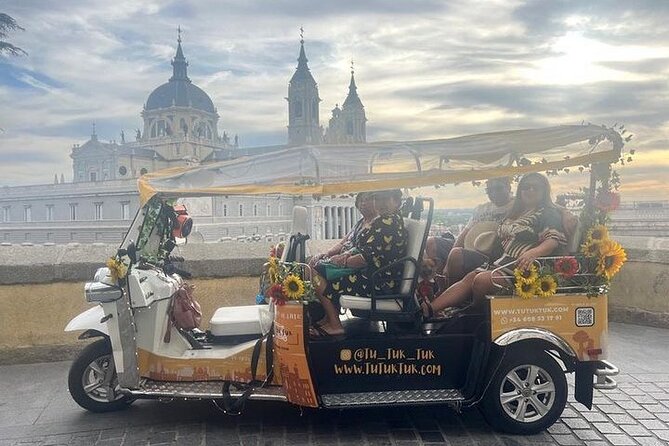
This tour is built like a loop around the city’s “greatest hits,” with short stops designed for views and quick photos. You’ll start at Plaza de Isabel II in the Centro area, then head through a sequence of highlights where each stop has a clear role in the bigger story of Madrid.
1) Museo de la Catedral de la Almudena (quick hit)
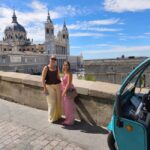
You start near Madrid Cathedral, where the look and the location anchor the tour’s “historic Madrid” mood. It’s a short stop, so think of it as a first visual landmark to orient you rather than a full museum experience. Admission is listed as free for this stop, so there’s no extra cost barrier to checking it out briefly.
2) Mercado San Miguel (food market energy, low commitment)
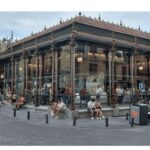
Next up is Mercado de San Miguel, one of the city’s best-known gastronomic stops. Even if you don’t go inside for long, the market’s presence helps you understand Madrid’s daily rhythm: people actually gather here, not just tourists.
3) Barrio de Las Letras (Cervantes’ neighborhood feel)
Then comes the Literary Quarter, tied to Cervantes. This is the kind of area where you can feel history in the streets without needing a ticket. It’s also a great moment to ask the guide what you should pair with your later self-guided walk.





4) Congreso de los Diputados (politics on a street-level view)
Stopping by the Congress building shifts the tone from culture to power. It’s another “see it, place it, move on” moment—useful because it shows you where Madrid’s national-story landmarks sit in relation to the rest of the city.
5) Cibeles Fountain and 6) Fuente de Neptuno (football fan viewpoints)
These are fun stops, because they’re not just pretty. Cibeles Fountain is a major Real Madrid reference point, while Fuente de Neptuno is tied to Atlético de Madrid. Even if you’re not a die-hard fan, it’s a memorable way to understand how Madrid’s identity shows up in public space.
7) Iglesia de San Jerónimo el Real (a calm, pretty pause)
This church stop adds a softer, quieter angle. It’s ideal if you want one moment that feels slower than the big squares—still quick, but different.
8) Parque del Retiro (green break without the commute)
Retiro Park is one of the city’s must-know spaces. A short stop here works because it gives you the park’s “scale” and atmosphere so you can decide later if you want a longer stroll on your own.
9) Puerta de Alcalá (the postcard gate)
Puerta de Alcalá is one of those Madrid sights you recognize instantly in photos. The stop is brief, but it’s worth treating it as a landmark checkpoint.
10) Barrio de Salamanca (traditional neighborhood feel)
This is where the tour begins to show you another layer of Madrid: residential streets and a more upscale vibe. It’s a smart way to balance the tourist-dense center with a different feel.
11) Plaza Colón (classic square for people-watching)
Plaza Colón is a “must visit” kind of stop, partly because it’s central and partly because it’s a good landmark for planning your own routes later.
12) Financial District, Paseo de la Castellana (modern Madrid)
The tour then transitions into the business side of town along Paseo de la Castellana. This section helps you see the contrast Madrid offers: glamorous monuments and then straight-ahead modern lines, all in one continuous city map.
13) Santiago Bernabéu Stadium (Real Madrid magnet)
Bernabéu is included as a quick stop, and it’s one of the clearest “Madrid sports identity” moments. If you care about football, it’s a big win to have it fit into your first 2 hours instead of treating it as a separate outing.
14) Paseo de la Castellana return (the big-artery view)
The route returns along the same main corridor. This helps you catch the rhythm of Madrid’s layout without doubling your walking time.
15) Biblioteca Nacional de España (bookish skyline moment)
This library stop adds a cultural “anchor” to the modern district. It’s one of those buildings that looks better when you see it from the moving viewpoint of the tuk tuk.
16) Museo Nacional del Prado (world-famous, but entrance costs extra)
The Prado is the one major museum stop flagged as not included for admission. That matters. If you want the museum itself (not just the exterior), you’ll need to plan for entrance tickets separately and treat this stop as a prompt—good for seeing the area, not for completing the full experience in the middle of a panoramic loop.
17) Calle de Alcalá (shopping street energy)
Then you roll through Calle de Alcalá, a central shopping street. It’s a practical stop because it points you toward areas where you can do easy browsing after the tour ends.
18) Edificio Metrópolis (iconic skyline landmark)
Edificio Metrópolis brings back the “you’re in a real city” feeling—decorative, noticeable, and perfect as a quick visual marker.
19) Plaza de Santa Ana (flavor of the city)
This is a classic Madrid square stop. The point here isn’t museum time; it’s letting you recognize where the vibe concentrates so you can revisit for dinner or drinks later.
20) Templo de Debod (the standout historical twist)
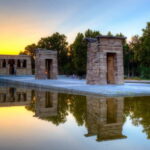
The final major highlight is Templo de Debod. This Egyptian temple dates to the 2nd century BC, and it was donated to Spain by Egypt to prevent flooding damage after the Aswan High Dam project. You get around 10 minutes here, which is long enough to actually slow down and take it in rather than rushing past.
And then there’s also a stop described as Madrid’s royal palace area. Even without extra detail, the intent is clear: finish with a strong sense of Madrid’s royal and monumental core before heading back.
What Makes the Guides Matter in Real Life
The guide is the whole experience. You’re not just riding a vehicle with a route map—you’re getting a narrated tour that helps you connect the dots between places.
In the field, I’ve seen the difference in guides first-hand. Miguel, Louise, Laura, Antonio, Sam, David, and Frederic/Frederick all show up as examples of how the tour can feel personal—friendly, interactive, and willing to adjust pacing. If someone is passionate about the city, you’ll notice it in how they explain why each stop matters, not just what the building is.
If you care about a specific angle—football, architecture, neighborhood vibe—private format helps. One guide-style approach included customizing the tour based on your interests and even swapping focus away from stops that don’t matter to you.
Photo Stops vs. Deep Stops: The Main Trade-Off

This tour is designed for breadth, not slow immersion. Most stops are listed at about 5 minutes, with the Debod temple getting about 10 minutes. That works if your goal is city orientation and seeing the key symbols quickly.
Here’s the drawback to weigh: if you love one area and want time to explore inside or take longer photos from closer angles, the schedule can feel tight. Weather can make that worse too. One version of the experience is shorter when it’s raining and cold, and another situation can interrupt the ride if there’s a mechanical issue.
So I’d think of it like this: treat it as your “Madrid map in motion.” Then plan your museum or long-stroll day afterward.
Price and Value: Paying for Speed, Not Tickets

At $60.34 per person for about 2 hours, you’re paying for a private guide and private transportation. Entrance fees aren’t included, and the Prado museum is specifically listed as not included. That’s normal for a panoramic format, but it affects value: you’ll get the most bang if you’re happy with exteriors, short views, and guided context.
What makes it feel worth it is how much you cover. The tour hits major landmarks that would otherwise take several separate rides or a long walking day across different neighborhoods. Plus, the tuk tuk format can save time because it can handle narrow streets where larger buses can’t.
It’s also booked fairly in advance on average (about a month out), so if you have specific timing, grab your date early.
Who Should Book a Yellow Tuk Tuk Tour in Madrid

This fits best when you want a quick, guided overview without planning a whole day. You’ll likely love it if you:
- are in Madrid for a short stay and want key sights fast
- prefer sitting while someone else handles navigation
- want a route that includes both historic and modern Madrid
- enjoy photo stops and want help figuring out what to visit next
It’s also a good family-friendly idea for the simple reason that you can break up walking time. One guide accommodation mentioned making the ride comfortable for a 1-year-old with a car seat, which is exactly the kind of practical detail you want to ask about if you’re traveling with kids.
Practical Tips: Weather, Comfort, and Getting the Most From 2 Hours
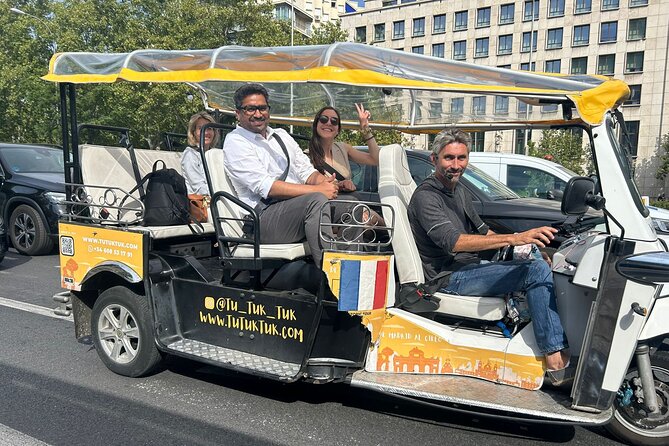
This experience needs good weather. If it’s canceled for poor weather, you’re offered a different date or a full refund. So pick a day when the forecast gives you a decent shot.
Dress like you’re going outside for quick stops, not like you’ll be stuck indoors. You’ll spend time looking, snapping photos, and occasionally stepping out briefly—cold rain will slow things down.
Also, plan your expectations around time. With a lot of 5-minute stops, the best results come when you pick one or two sights you want to go deeper on afterward. The tour gives you leads; you choose your follow-up.
Should You Book This Yellow Tuk Tuk Madrid Tour?

If you want a fast, guided way to see Madrid’s core landmarks plus major neighborhood vibes in about two hours, I’d book it. It’s a solid value when you treat it as orientation and inspiration, not as a substitute for museum tickets or long visits.
Skip it or rethink if you:
- want lengthy time inside museums during the tour itself (Prado access isn’t included)
- expect to linger at every stop
- are traveling on a day with heavy rain and limited flexibility, since the format depends on good weather
If you’re smart about what you want next—pick your follow-up sights after the ride—this tuk tuk tour becomes a high-impact first step.
FAQ
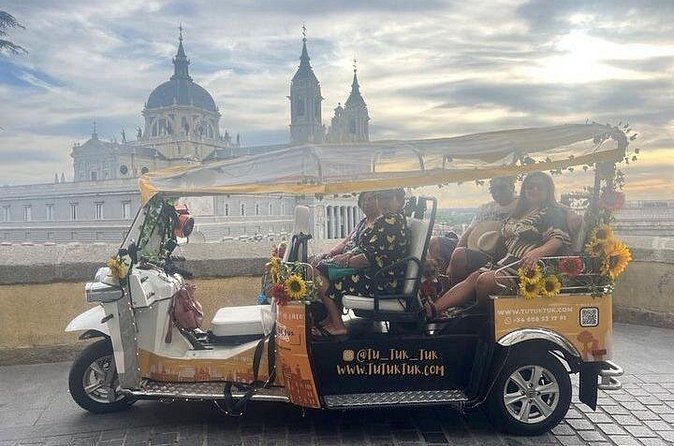
Is this tour private?
Yes. It’s a private tour, so only your group participates.
How long is the Yellow Tuk Tuk panoramic tour?
The duration is about 2 hours.
What does the tour cost?
The price is $60.34 per person.
Is the guide language English?
Yes, the tour is offered in English.
What’s included in the price?
You get a guide/driver and private transportation.
Are monument or museum entrance fees included?
No. Entrance fees are not included, and the Prado museum specifically notes that admission is not included.
Where does the tour start?
The meeting point is Plaza de Isabel II, Centro, 28013 Madrid, Spain.
Where does the tour end?
It ends back at the meeting point.
What should I do if the weather is bad?
This experience requires good weather. If it’s canceled due to poor weather, you’ll be offered a different date or a full refund.
Can service animals join?
Yes, service animals are allowed.