REVIEW · SIEM REAP
Private Tuk Tuk Tour to Angkor Wat and Small Circle with Two Extras
Book on Viator →Operated by Angkor-Travel Tours · Bookable on Viator
Angkor Wat twice in one day is the trick. This private tuk-tuk plan lets you hit Angkor Wat at East Gate in the morning light, then return later for the pond-reflection shots. You also get a focused run through Angkor Thom and the surrounding smaller temples, plus one stop at Wat Thmey.
I love that the route is built around timing, not just ticking boxes. Seeing Angkor Wat from the East Gate early helps you avoid the worst crowds and get cleaner photos, and the late-day return sets you up for the classic mirrored towers over the water.
The one possible drawback: it’s a long day—about 9 to 10 hours—so you’ll want stamina for steep stairs and gravel paths, and Wat Thmey is emotionally heavy.
In This Review
- Key things to know before you go
- East Gate sunrise and the late-afternoon Angkor Wat return
- Prasat Kravan, Bat Chum, and Srah Srang: the “small” stops with big details
- Banteay Kdei, Ta Prohm, Ta Nei, and Ta Keo: jungle, labyrinths, steep effort
- Spean Thma and the procession-carving temples: Chau Say Tevoda and Thommanon
- Angkor Thom’s gates and Bayon: photo stops that still add up
- Sunset Angkor Wat photos plus Wat Thmey’s memorial pause
- Tuk-tuk comfort, private pacing, and what the driver actually does
- Price and value: $15 tour cost plus the Angkor ticket reality
- Who should book this private tuk-tuk day?
- Should you book this tour? My practical take
- FAQ
- How long is the private tuk-tuk tour?
- What time does the tour start in Siem Reap?
- Is pickup and drop-off included?
- What’s included in the price?
- Do I need an Angkor ticket?
- Is lunch included?
Key things to know before you go
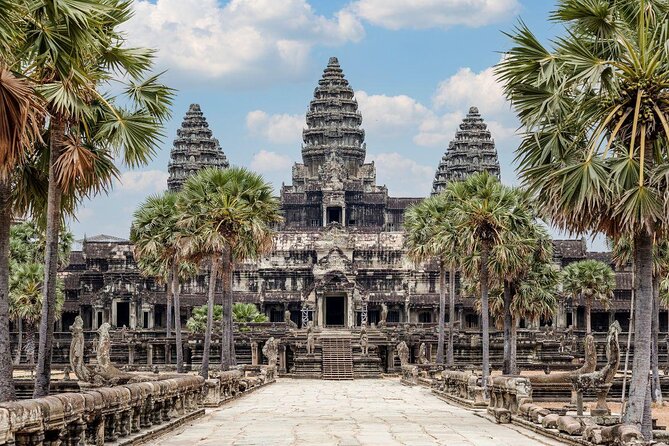
- East Gate start (7:00 am): Angkor Wat in softer morning light, before the busiest waves roll in.
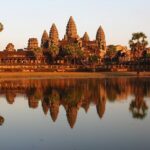
- Angkor Wat again late afternoon: you return for the pond and moat reflections, not just one quick look.
- Smaller temples in between: Prasat Kravan, Prasat Bat Chum, and Ta Nei help break up the big-name crowds.
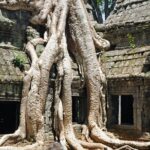
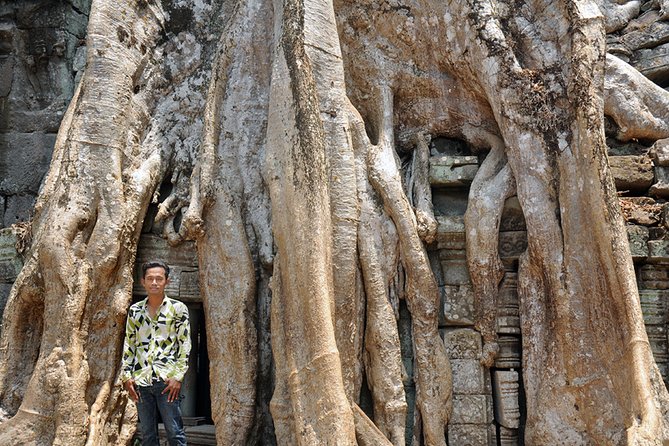
- Ta Prohm plus the “Indiana Jones” look: strangle figs and big photo angles at a familiar but still dramatic stop.
- One serious stop at Wat Thmey: the memorial stupa and photo boards about Khmer Rouge victims.
- Private pacing with cold bottled water: you move as a group, with an English-speaking driver and free water included.
East Gate sunrise and the late-afternoon Angkor Wat return
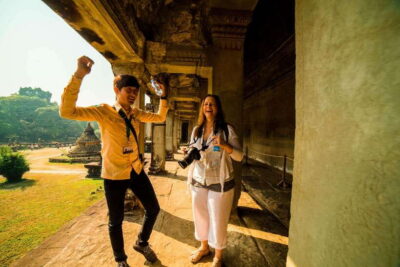
The heart of this day is simple: you don’t treat Angkor Wat like a one-stop photo booth. You start early, when the air feels calmer and the temple stone looks less harsh. The driver takes you to the less busy East Gate first, so you get that first full view in better morning light than you’ll usually get if you arrive later.
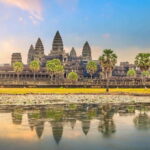
This matters because Angkor Wat’s look changes fast through the day. In the morning, the stone tends to read more clearly, and you can photograph without everyone being shoulder-to-shoulder. Then, after a packed middle stretch of temples, you come back again at late afternoon, when the towers and galleries often photograph best with the light slanting across the ponds and moats.
At the start of the day, the tour sets you up to see the famous complex from the perspective that many people miss. You’ll also get time at Angkor Wat a second time later, when the classic mirror effect becomes the focus. That second visit is what makes this plan feel like more than a standard temple run—you get a morning mood and an evening mood.
Practical tip: plan for a bit of waiting around for the best angles. The temples don’t care about your schedule, and light shifts quickly. If you’re the type who wants a clean shot (and not just a record photo), the two Angkor Wat windows are a smart use of time.
You can also read our reviews of more tours and experiences in Siem Reap.

Prasat Kravan, Bat Chum, and Srah Srang: the “small” stops with big details
Between Angkor Wat and the more famous names, you’ll hit a string of smaller temples. These are short stops, but they’re the places where the carvings and architecture differences start to make sense.
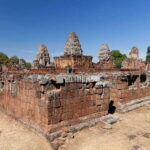
Prasat Kravan is known for five towers in a line. What I like about this kind of stop is that it slows you down. The brick carvings are described as unusually large in size compared with many other Angkor carvings. Translation: you get to notice texture and design without a wall of crowds.
Prasat Bat Chum is even more compact—just three towers on a shared platform. Its importance is tied to the large inscriptions, with clues showing Buddhism’s presence in Angkor. If you’ve ever wondered why Angkor temple styles can feel different even within the same overall era, stops like this help you connect the dots.
Then comes Srah Srang, an artificial basin with a terrace featuring animal sculptures. It’s not one of the big baray reservoirs, and that’s exactly why it works as a breather stop. You get a scenic pause that still feels connected to the religious and ceremonial design of the site. Even if you only spend about 10 minutes, it changes the pace so your brain can reset before the more intense jungle and steep-stair temples.
What to watch for: don’t rush your eyes here. These short stops reward close looking. If you spend 3–5 minutes just scanning carvings and inscriptions, the day feels richer without adding much time.
Banteay Kdei, Ta Prohm, Ta Nei, and Ta Keo: jungle, labyrinths, steep effort
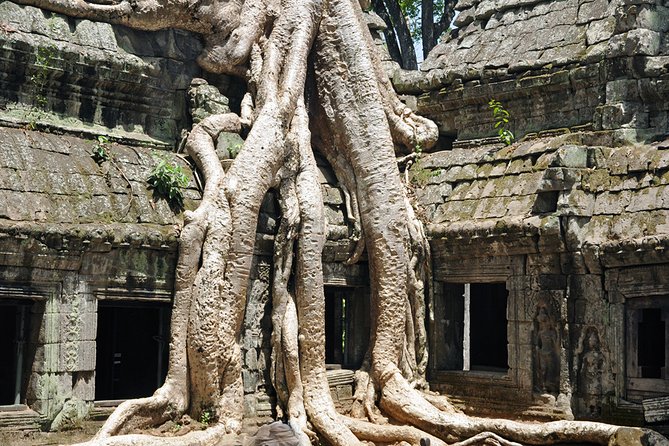
Once you get into the middle of the circuit, the temples start varying in how they feel underfoot. That variety is a good thing. A long day can otherwise feel repetitive, but these stops change the texture of the experience.
Banteay Kdei is often compared with the more famous Ta Prohm because it has that “smaller sister” vibe—but it’s still a major complex. Expect a more labyrinth-like layout, but you won’t be left on your own to figure it out. This stop is ideal when you want something big, but not so crowded that you can’t walk and pause.
Next is Ta Prohm, the world-famous jungle temple with enormous strangle figs. This is the stop where the ruins feel alive. The whole place has a dramatic photo rhythm: roots twisting, stone frames opening onto shade, and angles that make it easy to recreate movie-like scenes. The time here is about 1 hour 15 minutes, which is the right length to both wander and stop for photos without feeling frantic.
Then you go for something more off the beaten path: Ta Nei. It’s described as hidden in the jungle and reached on gravel roads. That detail matters. A gravel-road approach makes it feel less “tour-bus optimized,” and you get more room to explore. If you’re chasing that Indiana Jones feeling, this is where it shows up—ruins that look like they’re waiting for you to notice them.
Finally, Ta Keo brings the day back to effort. It’s a state temple with the stepped pyramid style common in Angkor, and the stairs to the upper levels are described as extraordinarily steep. If you do any climbs here, take it slow. This isn’t just about seeing more stone—it’s about preserving your legs for the rest of the circuit.
Reality check: after Ta Prohm, Ta Nei, and then Ta Keo, your feet will know you’ve been moving all morning. If you’re the type who plans to “only glance,” you might find yourself staying longer anyway because these sites have that slow-walk, look-around momentum.
Spean Thma and the procession-carving temples: Chau Say Tevoda and Thommanon
Some of the best moments in Angkor happen when you shift from big-photo views to decorative storytelling. That’s what this stretch does.
Spean Thma is mainly a photo stop, but it’s a meaningful one. You’ll see a stone bridge from the late Angkor period, made using carved stones taken from earlier temples. That reuse detail matters: it shows how later builders reused materials rather than starting from scratch every time. Even a 5-minute stop can feel educational when you know what you’re looking at.
Then you get Chau Say Tevoda, described as a medium-sized temple with an impressive processional route. The pediment carvings depict mythological themes, so it’s one of those stops where you can walk a bit and keep your eyes moving across story scenes rather than only scanning for viewpoints.
Thommanon is the “sister” to Chau Say Tevoda and is associated with the Angkor Wat period. The towers are noted as sharing the style you’ll see at Angkor Wat. This is a good pairing because it gives you a contrast-and-compare moment: two temples with overlapping design ideas, but not identical.
How this helps you understand Angkor: when you place these temples back-to-back, you start noticing patterns. You see what stays consistent across styles, and what changes when time and religious influences shift.
Angkor Thom’s gates and Bayon: photo stops that still add up
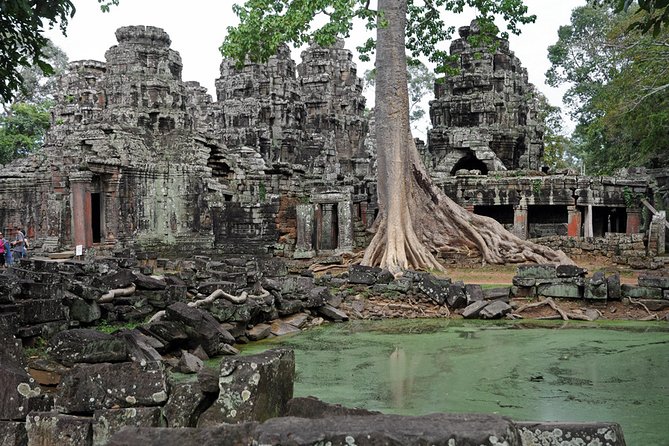
The day doesn’t ignore Angkor Thom. It just uses it in a practical way so you don’t lose the whole day in one crowded area.
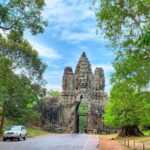
You start with the Victory Gate, one of the eastern gates of Angkor Thom. It’s described as among the best preserved city gates, and there’s a great photo angle from climbing up the wall to see the southern giant face. This is a quick stop, but it works because the payoff is immediate: you look up, you see the faces, and you get the scale.
Then there’s a Bayon moment—only a photo stop on the shorter circuit. Even if you don’t linger, Bayon is one of those places where the key visual element hits you right away. It’s hard to understate how different Bayon feels compared with Angkor Wat: more faces, more dense detail, and a different kind of rhythm in the stone.
After that comes Angkor Thom South Gate, a must-see in the circuit. This is where the face tower and the railings formed by rows of giant statues—demons and gods—are the focal point. The railings alone can take your attention longer than you expect, because the repetition is impressive and the details reward patience.
Photo strategy tip: gates tend to be the busiest parts of the day. If you care about photos, it helps to stay calm and accept that you might wait for one clear angle. The time here is short by design, so use the moments you get well.
Sunset Angkor Wat photos plus Wat Thmey’s memorial pause
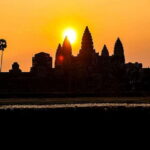
After the Angkor Thom stretch, you circle back to Angkor Wat one more time. Late afternoon is the described sweet spot for photos of the towers mirrored in the ponds and moats. This return visit is also psychologically helpful: you end the day with the main “wow” site again, not with a random final stop.
Then comes Wat Thmey, the emotional shift. This is a small memorial stupa for victims of the Khmer Rouge, with photo boards showing images of those killed here. The grounds include a large prayer hall, so it’s not just a roadside memorial; it’s a place of remembrance.
This stop is brief by time, but it’s unforgettable in feeling. If you’re sensitive to difficult history, plan mentally for that transition. It changes how you think about the rest of the day’s beauty.
If you’re deciding when to go: remember that Angkor is visually joyful and Wat Thmey is not. A private pace can help here, because you can control your walking speed and choose how long you stand with the memorial material.
Tuk-tuk comfort, private pacing, and what the driver actually does
This is a private tour, so you’re not fighting for space with another group. The day runs about 9 to 10 hours, starting 7:00 am, with pickup offered and drop-off back to your hotel or another point in Siem Reap’s town center.
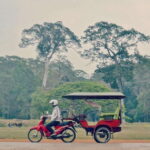
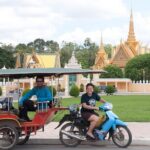
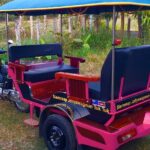
You’ll travel by private transportation (tuk-tuk style) with an English-speaking driver, plus free drinking water during the tour. Bottled water is included, and cold water tends to show up in practice with certain drivers—an easy comfort win when you’re out for most of the day.
One real-world detail from past experiences: you may find your driver is not walking into the temple sites with you. In practice, you explore the temples yourself while the driver handles movement and timing. That setup can be totally fine, especially at places with multiple paths. It also means you should be ready to manage your own entry points and keep yourself on schedule.
If you want extra reassurance, it helps to know that English-speaking staff names like Vannak (guide) and drivers such as Kim, Sina, and Pin show up in feedback. That doesn’t guarantee your exact team, but it tells you the provider is used to serving English-speaking visitors.
Price and value: $15 tour cost plus the Angkor ticket reality
The headline price is $15 per person, which covers the private transport and the driver service. The key thing is that this price is not the full cost of getting into the temples.
You’ll need an Angkor Ticket for the temple sites, priced at $37 per person for 1 day (valid for all temples). Wat Thmey is listed as free admission. Lunch is also not included.
So your real budgeting math looks like this:
- Tour fee: $15 per person
- Angkor Pass: $37 per person
- Lunch: not included
- Wat Thmey: free
For what you get, the value is in the structure: you’re paying for private movement across a lot of ground, plus a day built around two Angkor Wat photo windows. If you try to recreate this schedule on your own—especially the early East Gate start and the late return—you’ll spend real money and time just getting the logistics right. This tour packages the hardest parts into one plan.
Where the value gets less clean is if you already know you’ll mostly want only one Angkor Wat visit. In that case, you might decide you don’t need the full day. But if you want photos, variety, and the memorial stop without juggling multiple bookings, the combined cost can feel fair.
Who should book this private tuk-tuk day?
I think this tour is a strong match if you:
- want more than just Angkor Wat photos, with smaller temples and Angkor Thom gates in the same day
- care about lighting and photo timing, especially the morning East Gate entry and the late afternoon return
- prefer a private setup where you can keep a calmer pace and don’t get split across random meeting points
- want one organized moment to understand Khmer Rouge history at Wat Thmey without making the schedule yourself
You might think twice if you:
- hate long temple days with lots of walking and steep stairs (Ta Keo is noted for being extraordinarily steep)
- want a purely uplifting day with no memorial component, because Wat Thmey is heavy
If you’re traveling as a pair or small group, private transport often makes the experience feel easier and more personal, even when the temples themselves are public.
Should you book this tour? My practical take
If your goal is to see Angkor Wat at both the quieter morning angle and the late-day reflection look, this is one of the more sensible ways to do it. The day is heavy on temples, yes, but it’s also structured with variety: smaller carving-focused stops, jungle ruins, a steep-stair climb, and then Angkor Thom’s gates.
I’d book it if you want a plan that saves you from the hardest coordination work—especially timing your Angkor Wat visits—and if you’re okay with one serious stop at Wat Thmey. I wouldn’t book it only if you know you’re not up for a long day, or if you want to avoid the memorial content altogether.
FAQ
How long is the private tuk-tuk tour?
It runs about 9 to 10 hours.
What time does the tour start in Siem Reap?
The start time is 7:00 am.
Is pickup and drop-off included?
Yes. Pickup is offered, and drop-off is back at your hotel or another point in the town center of Siem Reap.
What’s included in the price?
Private transportation and an English-speaking driver are included, along with free bottled drinking water during the tour.
Do I need an Angkor ticket?
Yes. An Angkor Ticket is not included, and it’s required for temple sites. Wat Thmey is listed as free.
Is lunch included?
No. Lunch is not included, so you’ll need to plan your own meal break.