REVIEW · SIEM REAP
Guided Private Tuk Tuk Tour Angkor Wat and Small Circle and Five Extras
Book on Viator →Operated by Angkor-Travel Tours · Bookable on Viator
Angkor Wat at sunrise and late afternoon sounds perfect, but this tour adds a smart twist: you see it twice, and you get there early enough to dodge most of the worst crush. What makes it really interesting is the mix of big-name sights (Angkor Wat, Ta Prohm) with quieter, off-route stops that feel more like discovery than checklist tourism.
I especially like the private format: you have an English-speaking driver and an English-speaking Angkor guide who takes you temple to temple while the driver waits in the car park. I also love the way the day is timed for light and mood—early entrances at Angkor Wat, then a second visit in better late-day sunshine for those classic mirror-pond photos.
One possible drawback: this is an intense day. Between the 6:30am start, the number of temple stops, and a 3.5 km hike around Angkor Thom, you’ll want decent stamina and comfy shoes.
In This Review
- Key highlights worth knowing
- Why 6:30am works: twice at Angkor Wat, plus better light
- The private setup: driver waits, guide leads, you keep control
- Price and what you’re really paying for
- From East Gate to brick carvings: the morning temple run
- Srah Srang lunch break: a quieter pause with real scenery
- Banteay Kdei and Ta Prohm: the “labyrinth” and the roots
- Hidden-in-plain-sight extras: Ta Nei, Ta Keo, and Spean Thma
- Chau Say Tevoda, Thommanon, and Mangalartha: quieter carvings to end the morning stretch
- Angkor Thom: Victory Gate, East Gate, and a 3.5 km walk
- Back to Angkor Wat late day: pond reflections and a second look
- Wat Thmey (Killing Fields) and the ride back to town
- So who should book this tour?
- Should you book it? My practical take
- FAQ
- What time does the tour start?
- How long is the tour?
- Is the tour private?
- Do I need an Angkor Ticket?
- Is pickup included?
- Is lunch included?
- Does the driver wait while we visit the temples?
- Are there any free sites during the day?
- How much walking is involved?
- Can I cancel for free?
Key highlights worth knowing
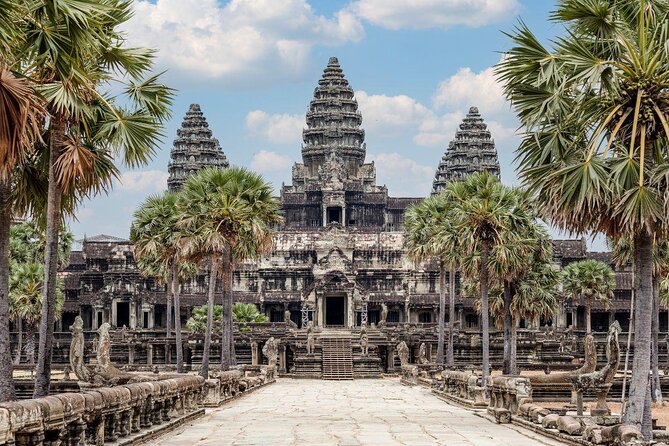
- Two Angkor Wat visits: morning light first, then a late-afternoon photo moment at the end of the day
- English guide at every stop: you’re not left to wander while the driver waits
- Quiet “extras” off the main route: smaller temples and junctions most people skip
- A real 3.5 km walk in Angkor Thom: not just gates and quick photos
- Photo breaks built in: like Spean Thma and several short, targeted stops
- Most entrances are ticketed: you’ll need your own Angkor Ticket (lunch isn’t included)
Why 6:30am works: twice at Angkor Wat, plus better light
This tour starts at 6:30am for a reason: early access changes what Angkor feels like. In the morning, Angkor Wat is calmer, with softer light that makes the stone read well instead of blasting in your face. You enter from the East Gate, which means you get that first wide impression before your brain has absorbed the standard crowds and photo angles.
Then you do it again later in the day. The late-afternoon visit is scheduled specifically for the light that helps the towers show up nicely against the water and moats—when the sky shifts, the whole scene can look more dramatic without changing anything you’re seeing. You’re also spending the middle hours visiting other temples, which keeps the day from feeling like one long wait in the same spot.
The payoff for you is simple: you get two “signature Angkor Wat” moments, but you don’t waste the day trapped in one temple compound. If you hate doing the same place twice with the same crowd vibe, this structure is a win.
You can also read our reviews of more tours and experiences in Siem Reap.

The private setup: driver waits, guide leads, you keep control
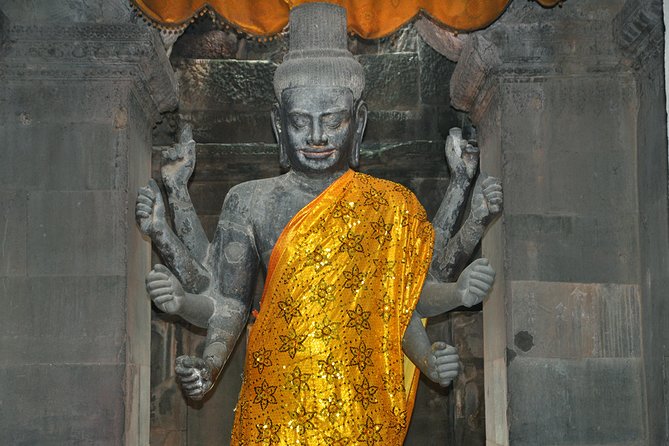
A lot of tours use the word private, but you still end up moving like a herd. Here, the format is clearer: the guide moves you through each temple area, while the driver waits at the car park. That matters because Angkor temple time is not just walking—it’s waiting for the flow of people, deciding where to stand for photos, and understanding what you’re looking at.
Having an English-speaking guide also helps you get context fast. Even when stops are short—like 15 to 30 minutes—you’re not staring at stone and guessing what the carvings mean. Your guide can point out what’s different from temple to temple, like which buildings are earlier state-style temples versus later additions, and where to focus your time.
For solo travelers, couples, and small groups, this kind of day planning tends to feel smoother. You’re not negotiating group pace or arguing about when to move on. The schedule is already intense, so the private structure makes it feel more manageable.
Price and what you’re really paying for
At $59 per person, the cost covers private transportation, an English-speaking driver, and an English-speaking Angkor guide. What’s not included is the Angkor Ticket and lunch.
That’s the key value point: you’re paying for time efficiency and interpretation. Temple tickets get you entry, but they don’t buy you guidance, timing, and a route that mixes sunrise, off-route stops, and an afternoon photo window. If you were to DIY this day, you’d likely spend more time figuring out logistics, parking, and the route order—especially early when you’re aiming to beat crowds.
Two more practical notes from the details you’ll want to keep in mind:
- Each temple needs a ticket, so budget for the entry pass first. The 1-day Angkor Ticket is $37 per person.
- Lunch is not included, but there’s a scheduled break at Srah Srang, where restaurants are available. If you want to change the lunch plan, the driver can drop you elsewhere if you agree to pay for the extra kilometres.
From East Gate to brick carvings: the morning temple run
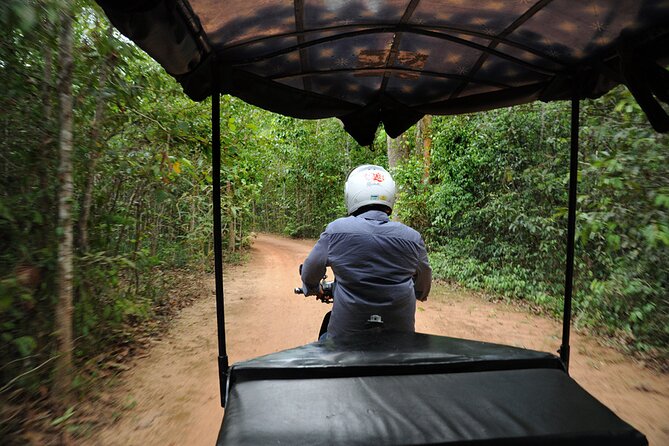
After pickup and the early start, the day begins with Angkor Wat via the East Gate. You’ll see it in morning light, then you’ll also visit the better-known West Gate later on your own mental timeline—because your guide keeps the route moving. Even if you’ve seen Angkor Wat photos before, this first look tends to land differently when the light is soft and people are still trickling in.
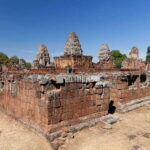
Next up, you move into smaller, quieter structures that many tours skip. Prasat Kravan is one of those stops: five towers in a line, but what you’re really looking for is the brick carvings. In Angkor, stone details can look subtle from a distance. Here, the carvings are large enough to matter, so it’s a good place to slow down even if the stop is only around 20 minutes.
Then comes Prasat Bat Chum, another small but meaningful site. The big draw is the large inscriptions, which help explain how religions and ideas moved through Angkor over time. Even if you only catch fragments, an inscription stop gives your brain something “text-like” to latch onto when the rest of the day is mostly architecture and carvings.
Srah Srang lunch break: a quieter pause with real scenery
You get a break at Srah Srang, a terrace area known for animal sculptures. The details matter here: it’s an artificial basin deepened by humans (not a natural-looking baray), and the setting feels more intimate than some of the massive reservoirs. In other words, it’s not just a place to sit. It’s still part of the experience while you recharge.
This is where the “intense day” becomes survivable. The tour schedule gives you a short window, around 10 minutes listed for the stop, and then the broader lunch break happens in the area where there are several restaurants. If you’re the type who gets hangry fast, this planning helps: you won’t have to scramble for lunch somewhere random between temples.
If you prefer to eat somewhere else, the driver can drop you off at another location, as long as you agree to pay him for the extra kilometres. That’s a useful option if you know the area well or you want a specific kind of meal. Otherwise, it’s easiest to stay near Srah Srang and keep the day on track.

Banteay Kdei and Ta Prohm: the “labyrinth” and the roots
After lunch, the route shifts into temple compounds that reward patience. Banteay Kdei is described as the smaller sister of Ta Prohm, but it’s still large. The layout can feel labyrinthic, yet the schedule gives you a manageable time window so you don’t wander endlessly. This is the kind of stop where you’ll want to follow your guide’s suggested path so you get the main visual rhythm without spending half your hour circling dead ends.
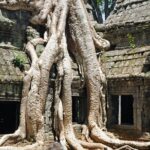
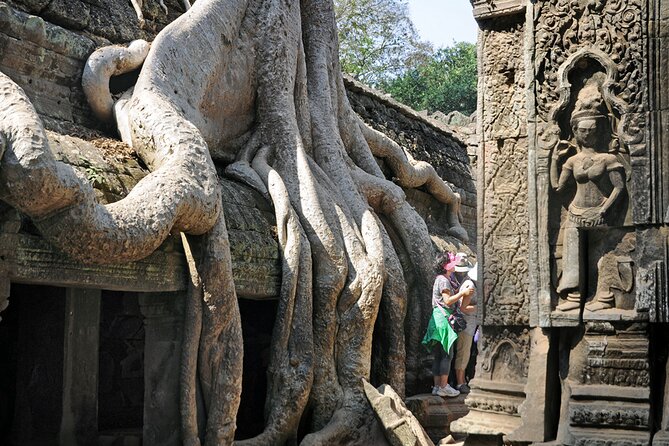
Then you hit Ta Prohm, the jungle-famous one with huge strangler figs. Plan to take your time here. The compound is big, and Ta Prohm’s look isn’t just the trees—it’s the way the architecture breaks apart and reappears in frames as the roots push through.
The stop listed for Ta Prohm is about 1 hour 15 minutes, which is plenty if you treat it like a slow walk with pauses for photos rather than a race to tick boxes. If you only remember one thing from this day, it’s that Ta Prohm needs a slower tempo than the “quick 20-minute” temples. Your guide can help you pace it so you don’t feel rushed.
Hidden-in-plain-sight extras: Ta Nei, Ta Keo, and Spean Thma
One of the extra temple stops is Ta Nei, the one that tends to feel like Indiana Jones territory. It’s reached on gravel roads, and that’s exactly why most people don’t find it. When you arrive, the ruins can feel more “found” than “visited,” and the schedule gives you enough time (around 30 minutes) to wander without turning it into a sprint.
Then there’s Ta Keo, a former state temple shaped like an artificial mountain—basically a stepped pyramid. The stairs to the upper area are extraordinarily steep. This is your workout moment of the day, and it’s worth coming prepared: shoes with grip, water nearby if you can, and no rushing. If stairs scare you, at least take your time on the lower levels and let the views do the heavy lifting.
You also get a brief photo stop at Spean Thma, a late Angkor period stone bridge. It’s short—about 5 minutes—but it’s interesting because it shows how materials from earlier temples were used, and how the riverbed shifted over time.
Chau Say Tevoda, Thommanon, and Mangalartha: quieter carvings to end the morning stretch
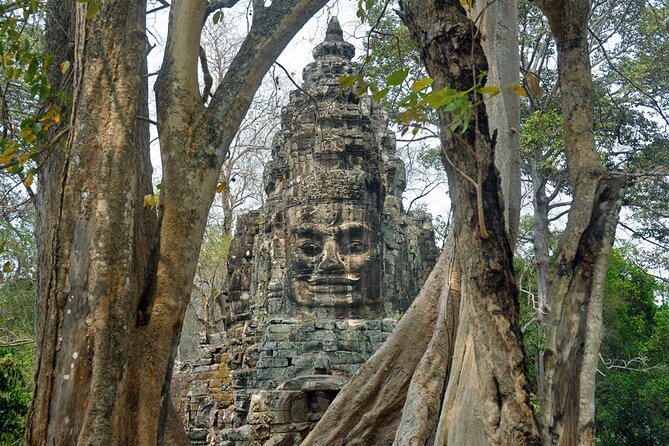
The next set of temples are smaller than the headline sites, which is exactly why they help. Chau Say Tevoda is charming and medium-sized, with a processional route from the east and lots of pediment carvings showing mythological themes. These stops are where your guide’s explanations really help, because the details can be easy to miss if you’re only looking for the biggest silhouette.
Thommanon is the sister temple of Chau Say Tevoda. It’s from the Angkor Wat period, and the towers share the same style as at Angkor Wat. This makes it a great “contrast stop”: you can look at the design language and see what style elements repeat across the complex.
Finally, Mangalartha is the late-day-morning surprise: small, on a steep and tiered platform, from the 13th century, and rarely visited. This is another good opportunity to slow down and notice scale. When fewer people are around, details like stone placement and the way the tiers sit in the ground become easier to appreciate.
Angkor Thom: Victory Gate, East Gate, and a 3.5 km walk
The afternoon shifts from temple compounds to the city walls and gateways of Angkor Thom. First comes the Victory Gate, the second eastern gate. You’ll climb the wall for views, including a look toward the southern giant face of the gate. That climb adds a physical element, but it’s also one of those moments where the view makes sense immediately. Your guide’s timing here matters because you’re not just taking one angle—you’re seeing how the gate faces the city plan.
Next, you get a quieter East Gate feeling. You’ll walk along the medieval city walls of Angkor Thom and see a “lonesome” East Gate. The detail that makes it special is that there’s no road leading to it, so the environment feels more removed. The stop listed is about 20 minutes, which is enough to appreciate the isolation without dragging your whole day down.
Then comes Prasat Chrung, which ties directly to the 3.5 km hike. Four corner temples called Prasat Chrung sit along the city walls. You’ll see the southeastern one, noted as the best preserved. This is where your legs earn the story: walking the wall route makes the city feel like a system, not a set of isolated photos.
You also stop at the Angkor Thom South Gate, the iconic one with the face tower and the railings made from rows of giant statues showing demons and gods. Take your time here. Even if you’ve seen images before, the scale reads better in person, and the carvings are easier to see when you’re not sprinting between stops.
Back to Angkor Wat late day: pond reflections and a second look
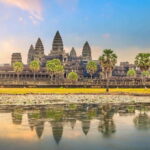
After the Angkor Thom walk and gates, you end with a second visit back to Angkor Wat. This is the late afternoon slot, when photos of the towers mirrored in ponds and moats tend to come out well. The goal isn’t to repeat the entire morning experience. It’s to catch the light and the reflection mood.
The stop listed is about 1 hour. That means you can do a practical loop: find a good viewing position, get your reflection shots, and then follow your guide’s cues to see a slightly different set of angles than you did at sunrise.
If you’re someone who likes to linger, this is the time to do it. The day ends at a calmer pace than some other early-start tours, and you’ll have the satisfaction of already “covered” the morning highlights.
Wat Thmey (Killing Fields) and the ride back to town
You also stop at Wat Thmey, known for the Killing Fields memorial. It includes a small memorial stupa for Khmer Rouge victims and photo boards with images of those killed here. There’s also a large prayer hall on open grounds.
This part of the day shifts the tone. It’s short—about 10 minutes—but it’s important, and it helps keep the trip grounded in real history rather than only stone architecture. If you need a moment to reset after long hours of temples, this is the place to do it, with the understanding that it’s not a sightseeing detour for entertainment.
From there, you’re dropped back at your meeting point. The tour info also says drop-off can be at your hotel or any point in Siem Reap town centre, so you should plan your end location in advance depending on where you want to continue your evening (markets, dinner, or just rest).
So who should book this tour?
This works best if you:
- Want maximum Angkor time with structured guidance and private logistics
- Like off-route temple stops and the feel of quieter ruins
- Have the stamina for an early start and a 3.5 km walking segment
- Prefer an English-speaking guide so short temple stops still feel meaningful
It might not fit if you:
- Want a relaxed day with fewer stops
- Struggle with steep stairs (like at Ta Keo) or gravel-road access (like Ta Nei)
- Hate early starts. This one begins at 6:30am, and it stays moving all day.
If you’re a first-time visitor, the route still hits the classics (Angkor Wat and Ta Prohm) while giving you enough extras to feel like you earned your photos instead of just queuing for them.
Should you book it? My practical take
Book it if you want the best of Angkor without wasting time. The two Angkor Wat visits, the guide-led route at each stop, and the combination of major temples plus quieter ruins creates strong value—especially at $59 per person—as long as you budget for the Angkor Ticket and lunch.
Skip it or switch to something gentler if your goal is rest and flexibility. This day has a lot packed into it, and you’ll feel it by the time you finish the Angkor Thom walk.
One last note: since ticket cost and lunch aren’t included, I’d set aside a simple checklist before your day starts—Angkor Ticket ready on your phone or in hand, comfortable shoes, and a plan for lunch at Srah Srang (or an agreed alternative if you choose to adjust it).
FAQ
What time does the tour start?
The tour starts at 6:30am.
How long is the tour?
It runs about 11 to 13 hours.
Is the tour private?
Yes. It’s private, so only your group participates.
Do I need an Angkor Ticket?
Yes. An Angkor Ticket is required for each temple and is not included in the tour cost. A 1-day ticket is $37 per person (as listed).
Is pickup included?
Pickup is offered, and the tour starts from a specified meeting point in Siem Reap.
Is lunch included?
No. Lunch is not included. There is a break around Srah Srang, where several restaurants are available.
Does the driver wait while we visit the temples?
Yes. The driver waits at each temple’s car park while the guide takes you inside.
Are there any free sites during the day?
Wat Thmey (Killing Fields) and the Wat Thmey memorial area are listed as Free.
How much walking is involved?
There is a 3.5 km hike in Angkor Thom, in addition to walking through temple areas.
Can I cancel for free?
The policy says you can cancel for a full refund if you cancel at least 24 hours before the experience start time.