REVIEW · SIEM REAP
Angkor Wat Private Tour by Tuk-Tuk with English Speaking Driver
Book on Viator →Operated by About Cambodia Travel & Tours · Bookable on Viator
Early mornings and temple magic, minus the hassle. This private Angkor Archaeological Park tour pairs a tuk-tuk ride with hotel pickup, so you spend less time organizing and more time looking up at stonework. I especially like the flexibility of having your driver wait at each stop and the option to add an official English-speaking guide for extra context. The main drawback to plan for: the tour includes transport, but sightseeing tickets and gratuities are on you, and some variants are more of a transfer-style experience than a full guided program.
You can build the day around your energy: classic full-day temple rounds, plus choices like sunrise, sunset, or adding Banteay Srei. It’s also priced to feel doable—especially if you’re traveling with one or two people—because it’s private, not a cattle-car group.
One more practical note: English quality can vary depending on whether you add the license tour guide option. If you’re the type who wants history you can actually follow, the guide add-on is where you get the biggest upgrade.
In This Review
- Key Highlights That Make This Tour Worth Your Time
- Tuk-Tuk Pickup in Siem Reap: Smooth Start, Real Flexibility
- Angkor Wat: The Main Stop That Sets the Tone
- Angkor Thom South Gate: Where the City Feels Like a Set
- Bayon Temple: The Smiling Faces (and the Meaning People Give Them)
- Baphuon and Ta Nei: Small Stops That Break Up the Intensity
- Ta Prohm and Banteay Kdei: Big Atmosphere, Different Kinds of Quiet
- Prasat Kravan: A Short, Focused Hindu Temple Moment
- Banteay Srei, Sunrise, and Sunset: How to Pick the Right Variant
- English Support: Driver English vs Official English Guide
- The Real Price Question: $13.50 and What You Still Need to Budget
- Lunch and Time on the Ground: Eat Smart, Plan to Heat Up
- Timing: How to Avoid the Common Temple-Day Stress
- Should You Book This Private Angkor Wat Tuk-Tuk Tour?
- FAQ
- What’s included in the Angkor Wat private tour?
- Are temple entrance fees included?
- How long is the tour?
- Is lunch included?
- Is this a private tour?
- Does the driver provide English help?
- Can I cancel for a full refund?
Key Highlights That Make This Tour Worth Your Time
- Private tuk-tuk with hotel pickup and drop-off: you avoid the morning scramble and the last-minute figuring-out.
- Driver-waits-at-each-temple timing: you can linger where you care and skip what you don’t.
- Angkor Pass handled on-site: your tuk-tuk driver helps you purchase it at the entrance area.
- Optional official English license guide: history and explanations become much easier to digest.
- Hidden-in-plain-sight stops: Ta Nei and smaller temples give you breathing room from the crowds.
Tuk-Tuk Pickup in Siem Reap: Smooth Start, Real Flexibility
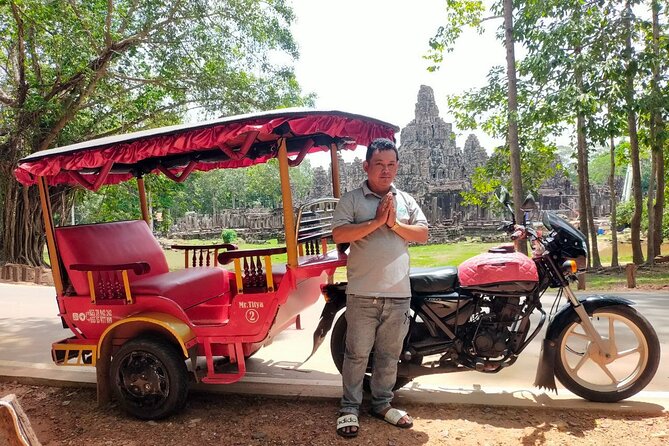
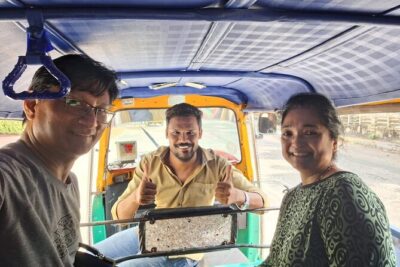
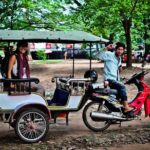
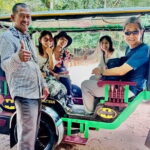
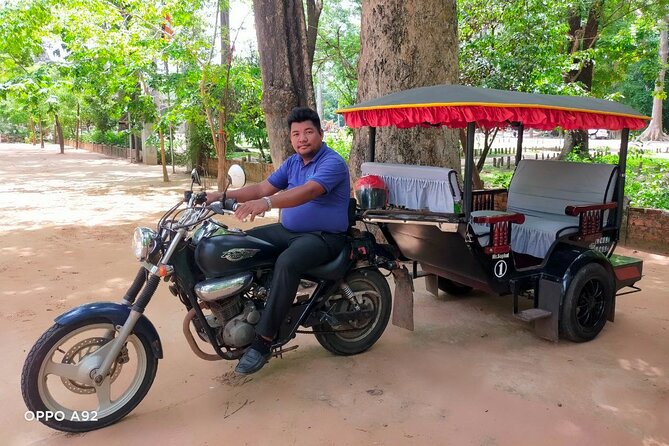
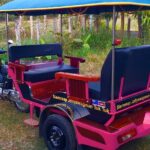
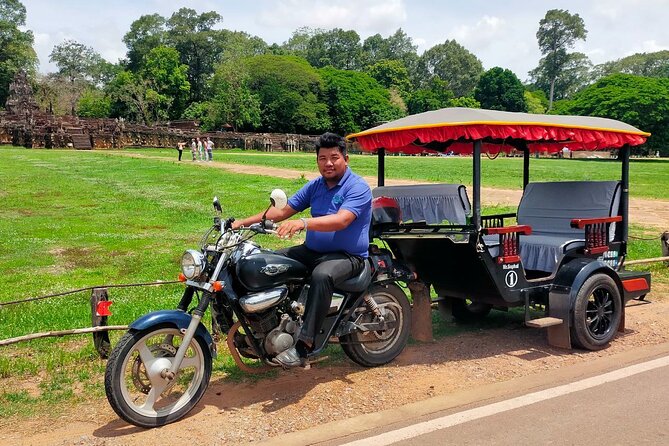
What makes this day work well is the basic logistics: you get picked up from your hotel and transferred by private tuk-tuk for your Angkor circuit. That matters in Siem Reap, where temple days can feel half like sightseeing and half like managing time.
Your driver isn’t just dropping you off at a gate and waving goodbye. They’re set up to wait at each temple, which gives you two big advantages. First, you control how long you want at each stop. Second, you don’t burn energy trying to meet up again with a timeline that keeps slipping.
Also, this is sold as a private experience, meaning it’s just your group. That often makes it easier to shape the route to your pace—especially if you’re coming in late morning after a slow start, or if you want a shorter loop rather than a full marathon.
You can also read our reviews of more tours and experiences in Siem Reap.

Angkor Wat: The Main Stop That Sets the Tone
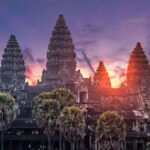
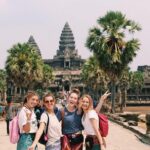
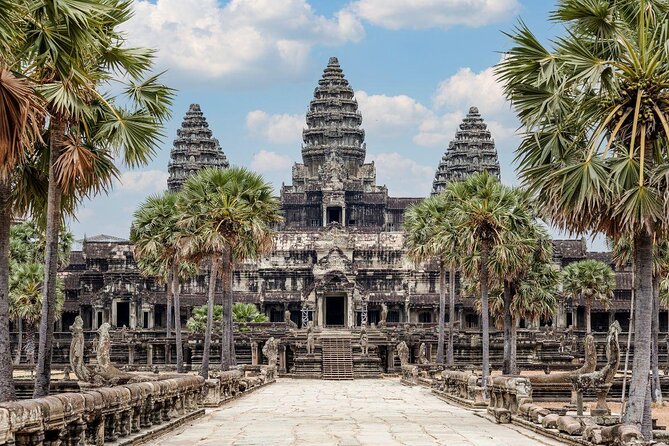
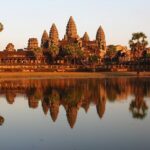
Angkor Wat is where most people’s expectations get clarified. Up close, you’re not just seeing a famous silhouette; you’re seeing how the whole complex is planned. The route structure, the successive layers, and the way paths funnel you toward key viewpoints all feel like part of one controlled system.
Plan for a longish visit here. The tour allots about three hours for Angkor Wat itself, which is a good amount if you want to walk the grounds without treating everything like a checklist. Entrance tickets aren’t included, but your driver helps you buy the required Angkor Pass at the entrance area before you start.
One practical tip: Angkor Wat rewards slow movement. Even if you’ve seen photos before, the details look different when you’re moving at walking speed—especially when you pause to angle your photos with the light.
Angkor Thom South Gate: Where the City Feels Like a Set
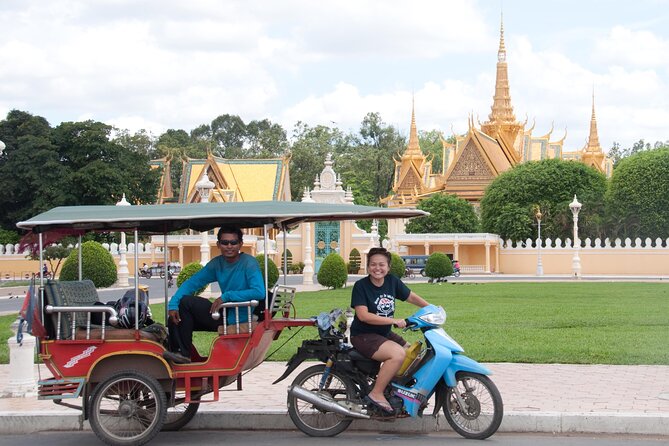
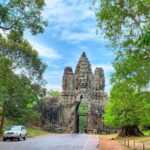
After Angkor Wat, you head into Angkor Thom, the Great City. The South Gate is an attention-getter because it’s a formal entry point, and it makes the rest of the circuit feel like you’ve crossed into a different atmosphere.
This stop is short—about 30 minutes—but it’s the right kind of quick. You’re not trying to solve the whole city on a tight schedule. You’re getting your bearings and setting up for Bayon next, which is the emotional centerpiece.
If you’re sensitive to crowds, this is also a good time to move briskly but stop long enough to understand the layout. A little orientation helps a lot once the face towers start appearing all over the place.
Bayon Temple: The Smiling Faces (and the Meaning People Give Them)
Bayon Temple is famous for the stone faces of the Buddha-like figures carved into the towers. The tour time here is about one hour, and that’s honestly the minimum you’ll want if you care even a little about how the architecture reads from different angles.
The faces appear on many sides, and you notice something interesting as you move around: the expressions look different depending on your viewpoint. Even if you already know the general story, watching the carvings shift with your position is where Bayon becomes more than an icon.
If you don’t have an English guide, you’ll still be able to appreciate the craftsmanship and geometry. If you do add the official English license guide option, Bayon is often where you get the strongest “I get it now” effect because there’s more to connect than just what you see.
Baphuon and Ta Nei: Small Stops That Break Up the Intensity
Baphuon Temple gets around 30 minutes. It’s part of the larger Angkor Thom story, and it gives you a change of pace after the big visual punch of Bayon. This is a good spot to slow down and look at how temple space is structured and reused over time.
Then comes Ta Nei, which is one of those stops that people tend to overlook—because it’s small and less visited. You get about 30 minutes here, and that’s exactly the point. The lack of crowds is a real feature, not an accident.
If you’re tired from heat, sound, and crowds, Ta Nei gives you that calm pocket to reset. I like using stops like this to take a breath and re-center. You’ll often end up seeing more because you’re not rushing.

Ta Prohm and Banteay Kdei: Big Atmosphere, Different Kinds of Quiet
Ta Prohm is known for its sense of time layering—trees and roots growing through the structure. The tour gives about one hour here, which works if you want to walk the grounds slowly and not feel like you’re getting shoved along.
This stop can be both photogenic and exhausting, depending on the day and the light. If you want photos, take them, but don’t let your phone steal your attention from the actual structure. The more you slow down, the more Ta Prohm becomes a story you can read with your eyes.
After that, you’ll hit Banteay Kdei, another temple on the later side of the circuit. You get about 30 minutes. It’s described as a massive Buddhist monastery with concentric walls, and the four entrances with garuda decorations are a great detail to look for. This isn’t the kind of place that needs constant narration to be rewarding; it’s one of those sites that works because of its scale and symmetry.
Prasat Kravan: A Short, Focused Hindu Temple Moment
Prasat Kravan is scheduled for about 30 minutes. It’s a 10th century Hindu temple dedicated to Vishnu, and it’s relatively small compared to other stops in the park.
That smaller scale can be a benefit. When your schedule includes the giants of Angkor, a smaller temple gives you a chance to appreciate specific design elements without feeling like you’re being asked to do everything at once.
If you’re choosing a shorter tour day and wondering what to include, Prasat Kravan is a smart choice because it rounds out the “not only one tradition” feeling of the park—without taking over your whole afternoon.
Banteay Srei, Sunrise, and Sunset: How to Pick the Right Variant
This tour comes in a few flavors, and your choice should match your mood and the time you have.
- Angkor Wat Sunrise by Tuk-Tuk: for the people who want the iconic moment—plus more temple time in a smaller-circle style circuit.
- Angkor Wat Tour by Tuk-Tuk: the classic full-day flow in Angkor Park.
- Angkor Temples & Banteay Srei: adds Banteay Srei, known for its pink sandstone look. This is the option if you want a “different color and different vibe” day.
- Sunset at Angkor Wat: a late-day option that centers on the view.
Here’s the caution I’d give: not every sunset option is set up like a full guided program. One experience in this category felt more like a transfer-style late afternoon trip, with less of a guided session during the sunset moment. So if you’re paying attention to context and explanations, consider adding the official English license guide or choosing a tour variant that clearly includes more time at the temples you care about.
If you’re unsure, I’d choose based on what you want most:
- Want iconic light? Sunrise or sunset.
- Want variety? Add Banteay Srei.
- Want the most classic temple flow? The Angkor Wat full-day option.
English Support: Driver English vs Official English Guide
The tour includes a private tuk-tuk with an English speaking driver. In practice, that can mean different things for different drivers. Some are excellent communicators; others can be more limited.
To fix that, the booking option includes an official English speaking license tour guide. With that guide, the day becomes easier to follow because you get history and meaning in real time instead of trying to piece it together from your own research app.
I’ve also found that the best days are the ones where you get both: a reliable driver who knows how to manage time on the roads, plus a guide who can answer why something matters. In the experiences linked to this tour, guide names like Sophal and driver names like Titya came up repeatedly—often tied to punctual pickup and thoughtful pacing.
The Real Price Question: $13.50 and What You Still Need to Budget
At $13.50 per person, this tour sits in the “value that’s hard to ignore” category. The reason it can feel like a bargain is clear: you’re paying for private transportation, hotel pickup/drop-off, and a driver who’s set to wait while you visit temples.
But you still need to budget for key items that aren’t included:
- Sightseeing tickets: you’ll need the Angkor Pass for the temples in the itinerary. Your driver assists you with purchase before you start.
- Lunch: you’ll eat at local restaurants at your own expense, with dishes around $3–$10 each.
- Gratuities for the tuk-tuk driver: not included.
The value sweet spot depends on how many people you’re sharing with and whether you add the official guide. If you’re traveling solo, this can still be a great deal for the convenience. If you’re traveling with a friend or a family member, it often becomes even more cost-effective because you split the private tuk-tuk experience.
Lunch and Time on the Ground: Eat Smart, Plan to Heat Up
Your tour includes time at temples but not a built-in lunch stop. That’s common in Angkor days, and it can be fine as long as you plan for it.
Lunch is available at local restaurants with vegetarian and non-vegetarian options. Prices are typically $3–$10 per dish, so you’re not stuck with expensive set menus. The bigger issue is energy: temples take you from shade to sun quickly.
Bring water, and use the downtime between temples well. In some experiences related to this tour, drivers supplied water and chilled towels, which is the kind of small comfort that makes a huge difference once you’ve been walking under the heat for an hour.
Timing: How to Avoid the Common Temple-Day Stress
Even with a private tour, Angkor days can get tiring. The practical way to enjoy this is to treat the schedule like a guide, not a prison.
- Use the driver-waits feature to your advantage: linger when you feel curious, move on when you feel drained.
- Aim to stand back and view wide scenes for a moment before you start photographing details. It helps you understand the scale.
- If you’re doing sunrise or sunset, remember that those light moments often come with crowds and early mornings. Choose your start time based on whether you want sleep or photos more.
The overall duration varies from about 3 to 8 hours depending on which option you choose. So if you’re short on time, go for the tighter loop. If you can spare a whole day, you’ll appreciate the slower pacing.
Should You Book This Private Angkor Wat Tuk-Tuk Tour?
I’d book it if you want a practical Angkor day that feels private, flexible, and easy to run—especially if you don’t want to manage transport on your own.
You’ll probably love it most if:
- You value hotel pickup and a driver who waits while you explore.
- You want to see a range of temple types, from the big name stops to quieter sites like Ta Nei.
- You’re traveling with someone and want a simple “day plan” that you can still adjust.
Skip or think twice if:
- You want a deeply guided history experience for every minute, and you’re not choosing the official English license guide option.
- You’re picking a sunset-style variant that’s more transport than explanation. In that case, you might still see the view, but don’t expect a full guided narrative built into the sunset moment.
If you match your expectations to the kind of tour you choose—transport-focused with optional guidance—you’ll end up with a day that feels both efficient and satisfying, not stressful.
FAQ
What’s included in the Angkor Wat private tour?
You get roundtrip hotel pickup and drop-off by private tuk-tuk, plus a private tuk-tuk charter from Siem Reap and an English-speaking driver. An official English-speaking license tour guide is available as an added option.
Are temple entrance fees included?
No. Temple admission tickets are not included. You’ll need the Angkor Pass, and your tuk-tuk driver will assist you in purchasing it at the entrance of Angkor Park before starting the tour.
How long is the tour?
The duration is listed as about 3 to 8 hours, depending on the option you select.
Is lunch included?
Lunch isn’t included. You can eat at local restaurants during the tour, with meals typically costing $3 to $10 per dish.
Is this a private tour?
Yes. It’s a private experience, and only your group participates.
Does the driver provide English help?
The tour includes an English-speaking driver, and you can also add an official English tour guide for in-depth history and insights.
Can I cancel for a full refund?
Yes. You can cancel up to 24 hours in advance for a full refund. If you cancel less than 24 hours before the start time, the amount paid is not refunded.