REVIEW · ROME
Private Electric Tuk Tuk Tour in Rome
Book on Viator →Operated by Pal.Mar. srl · Bookable on Viator
Rome by electric tuk tuk is pure fun.
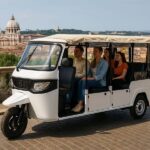
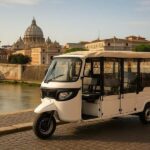
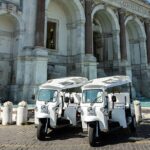
This private 3-hour ride strings together major sights fast, with short stops and an audio guide you can listen to while you roll through traffic. I like that the vehicle helps you get close to big-ticket landmarks without turning the day into a long, sore-foot march, and I also like that the driver handles route logistics so you can focus on looking.
You’ll start at Piazza Barberini and end back there, with frequent opportunities to hop out for photos and quick peeks—then get moving again before crowds squeeze in. Most stops are listed as no-ticket-needed, so the day feels lighter on logistics even though the route covers a lot of Rome.
One thing to plan for: Colosseum admission isn’t included, and in some situations the route can be shortened, which can affect which stops you reach in the time allotted. If you’re counting on specific entry timing, keep your expectations flexible and build in some wiggle room.
In This Review
- Key points before you go
- Why this electric tuk tuk route works in Rome
- Piazza Barberini and the Triton Fountain: Baroque drama in the first minutes
- Repubblica and the Fountain of the Naiads: a classic square break
- Quirinale Palace from the hill: Italian state power, no ticket headache
- Trevi Fountain and the coin legend: the postcard stop with photo pressure
- Palazzo Venezia and the ancient city feel: where Rome shifts from wow to context
- Via dei Fori Imperiali: the scenic street that turns your ride into a photo walk
- Colosseum: the biggest stop that has an important pricing catch
- Circus Maximus and Bocca della Verità: the included tickets that feel like Rome’s fun side
- Vatican City without the ticket talk: what you should expect
- Janiculum views at Terrazza del Gianicolo: Rome’s panorama payoff
- Piazza del Popolo and Via Veneto: end in classic streets and an easy decompression
- How the tuk tuk ride feels on the ground (and why the details matter)
- Timing, delays, and occasional route changes you should plan for
- Price and value: what $54.66 buys you in Rome
- Who should book this tuk tuk tour (and who might not)
- Driver quality and what to look for during your ride
- Should you book? My take
- FAQ
- Does the tour include Colosseum admission?
- What are the meeting point and end point?
- Does the tour run in bad weather?
- Is this tour private?
- Can I bring suitcases or bulky luggage?
- Can I cancel and get a refund?
Key points before you go
- Private ride, only your group: no mixed-bus chaos, just your people and your driver.
- 12-minute sight rhythm: enough time to see, shoot photos, and move on.
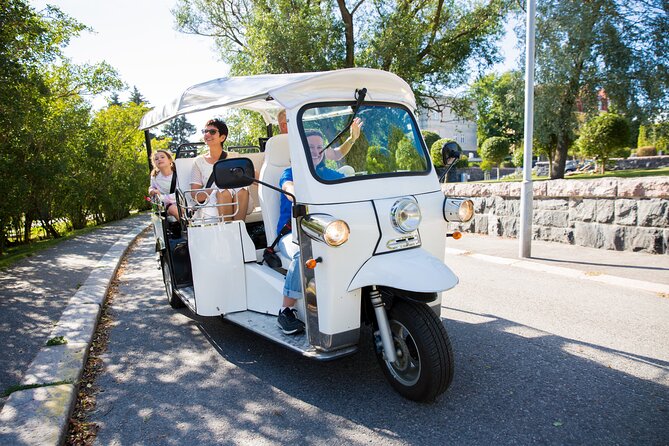
- Rain-ready protection: covers for rain and wind, plus winter blankets to take the chill off.
- Mix of free stops and paid entries: Circo Massimo and Bocca della Verità tickets are listed as included, while the Colosseum is not.
- Driver assistance matters: routes and photo angles are part of the value, not just transportation.
- Big landmarks, efficient route: you’ll touch the ancient core and also reach the Vatican area plus hill views.
Why this electric tuk tuk route works in Rome
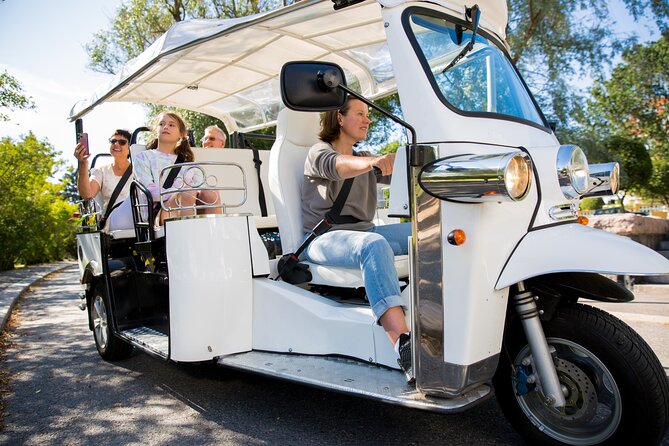
Rome is a city where you can waste an entire day just moving between sights. This tour is built to reduce that pain. You get an electric tuk tuk for a private loop, then you pop out briefly at each point to see what you came for and get back on.
The sweet spot here is the pacing. With about 12 minutes per stop, you’re not stuck lingering while other groups crowd the best angles. Instead, you get a taste of each place, and the driver’s route helps you keep momentum.
I also like that it starts and ends at the same place: Piazza Barberini (at 24/26). That simple loop matters in Rome, where detours and pickup confusion can turn into stress. You don’t need to figure out a new meeting location for the finish.
You can also read our reviews of more tours and experiences in Rome.
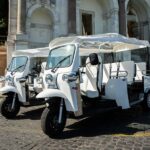
Piazza Barberini and the Triton Fountain: Baroque drama in the first minutes
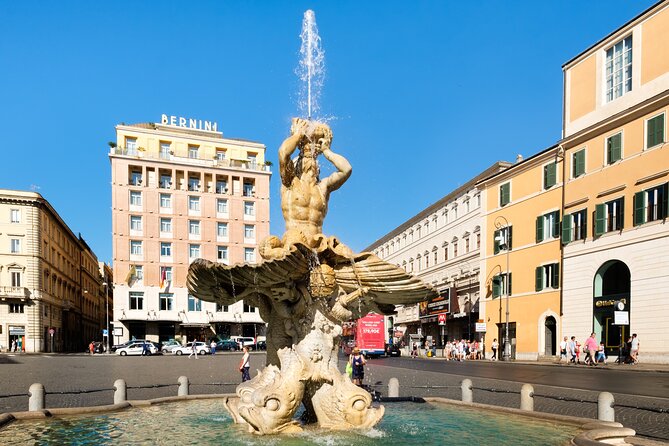
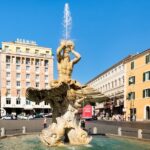
Your first photo moment is Piazza Barberini and Bernini’s Triton Fountain. It was commissioned by Pope Urban VIII Barberini, and even if you do not love art history for its own sake, the fountain’s scale grabs you fast. This is the kind of start that wakes up your eyes after travel.
Why I like this stop: it sets the tone. You’re not starting in a random street corner—you’re beginning in a major square right away. The stop is short, but for an outdoor landmark, short is often perfect.
Practical tip: have your camera ready before you arrive. These early fountains are easy to miss while you’re getting your bearings.
Repubblica and the Fountain of the Naiads: a classic square break
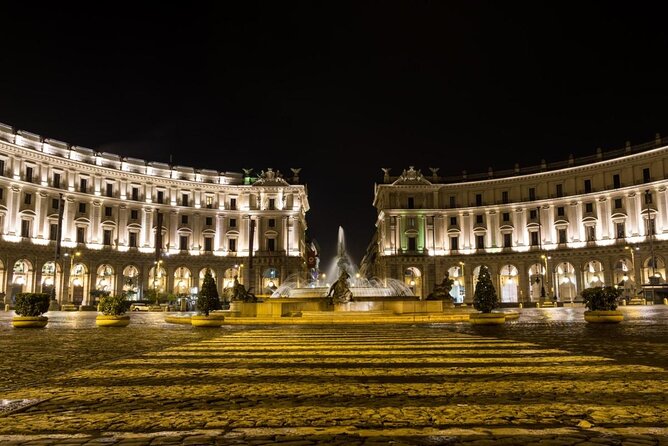
Next up is Piazza della Repubblica with the Fountain of the Naiads by Mario Rutelli and Alessandro Guerrieri. Like many Roman squares, it’s one of those places you could pass by without realizing how much detail is packed into it.
The timing here is again about 12 minutes. That’s ideal because fountains are best as a quick visual hit, especially when you’re doing a packed route.
If you’re sensitive to crowds, this kind of stop length can help. You do not have to fight for time the way you would at a longer guided stop.
Quirinale Palace from the hill: Italian state power, no ticket headache
You then swing toward Piazza del Quirinale and the Quirinale Palace. This historic palace sits on the hill of the same name and overlooks the square. It has served as the official residence of the King of Italy since 1870, and later the President of the Italian Republic since 1946.
Even without going inside, it’s a strong Rome moment. The palace makes you feel the scale of government and ceremony that sits right next to everyday city life.
Since this stop is listed as free, it’s a good place to stretch your legs briefly and then let the tuk tuk relocate you quickly.
Trevi Fountain and the coin legend: the postcard stop with photo pressure
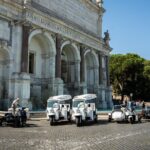
Trevi Fountain is the headline you already know. It’s Rome’s largest famous fountain, built by Nicola Salvi and Giuseppe Pannini. You’ll also see it tied to the film La Dolce Vita, which is why this stop feels so cinematic even from the street.
The “coin with your back to the pool, then turn and hope you see it before it disappears” legend is part of the magic here. Even if you treat the legend as playful superstition, it gives the moment a fun ritual.
The drawback: Trevi can be crowded, and the short stop length means you’ll want to be decisive. If you want the perfect angle, arrive ready and use the time window wisely.
Palazzo Venezia and the ancient city feel: where Rome shifts from wow to context
After Trevi, the tour transitions to Palazzo Venezia / Ancient City between Piazza Venezia and Via del Plebiscito. This building houses the National Museum of Palazzo Venezia and is also connected to Italy’s archaeology and art history institutions, including a major library.
So what’s the point if you are not museum people? It’s the “context” stop. This area helps you connect the dots between the monumental squares and the ancient streets you’ll hit next.
The time is again around 12 minutes, so treat it as a viewpoint + orientation moment rather than a deep museum experience.
Via dei Fori Imperiali: the scenic street that turns your ride into a photo walk
Then you travel along Via dei Fori Imperiali, one of Rome’s most scenic streets. It opened in 1932 as via dell’Impero and takes its current name from the monumental remains of the forums of Caesar, Augustus, Nerva, Peace, and Trajan. The road is also lined with the famous “pines of Rome.”
This is a smart stop in a tuk tuk day because you do not need a ticket to feel it. Even with traffic, it’s a corridor where your eyes can track across layers of empire.
If you like photos, this is one of your easiest wins. You’ll be in motion, but the street layout helps you frame the ruins while moving.
Colosseum: the biggest stop that has an important pricing catch
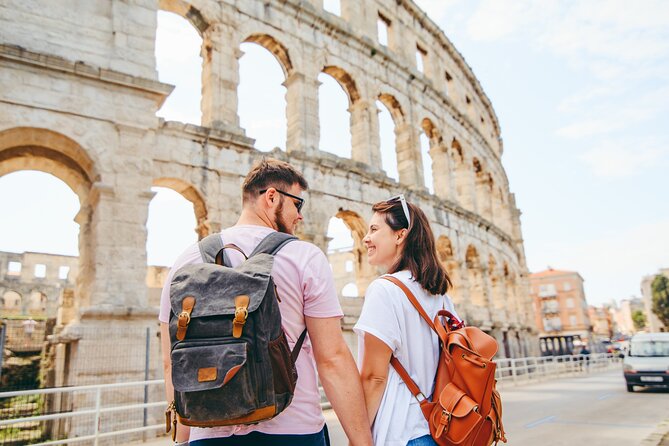
The route then heads to the Colosseum area, the Flavian Amphitheater. It’s the largest Roman amphitheater in the world, with spectator estimates ranging from about 50,000 to 87,000. It’s also the most famous surviving ancient amphitheater you can walk around.
Here is the key planning detail: Colosseum admission is not included in this tour. That means your total cost for the day may rise if you plan to enter. The good news is that you still get the “see it, frame it, feel it” moment even if entry is not the plan.
With about 12 minutes allocated, entry (if you choose it) can turn into a rush. If you want a slower Colosseum experience, consider doing the tuk tuk for orientation first, then coming back for a dedicated Colosseum visit later.
Circus Maximus and Bocca della Verità: the included tickets that feel like Rome’s fun side
Next is Circo Massimo, the ancient circus located in the valley between the Palatine and Aventine. It’s remembered for games from the earliest days of the city’s story. There’s also that famous mythic episode linked to Romulus and games honoring Consus.
This is listed as admission included, which is a rare value perk in a route that covers many highlights with free stops. If you enjoy seeing ancient sites that are less about modern lines and more about open-air space, this can be a satisfying contrast to the Colosseum.
Then you reach Bocca della Verità, the Mouth of Truth: a marble mask in the wall of Santa Maria in Cosmedin since 1632. The legend says that women accused of adultery would place a hand into the slit after swearing they were telling the truth—and if they were lying, the Mouth would cut off the lying hand.
This is listed as admission included too. Even if you treat it as playful theater, it’s exactly the kind of Rome stop that makes the day feel human and goofy in the best way.
Vatican City without the ticket talk: what you should expect
The tour reaches Vatican City. It’s a landlocked city-state and the smallest sovereign state in the world by population and area. It also has a specific kind of government: an elective absolute monarchy.
In the day plan you’ve got, Vatican City is listed as free in terms of admission. That said, Vatican-area time in Rome can still be about crowds, lines, and timing. With short stop windows, you may mostly be in “see and look around” mode rather than a deep visit inside every building.
My advice: treat this as a checkpoint on your first Rome day. Use it to get your bearings, then decide later if you want a separate Vatican day with longer entry time.
Janiculum views at Terrazza del Gianicolo: Rome’s panorama payoff
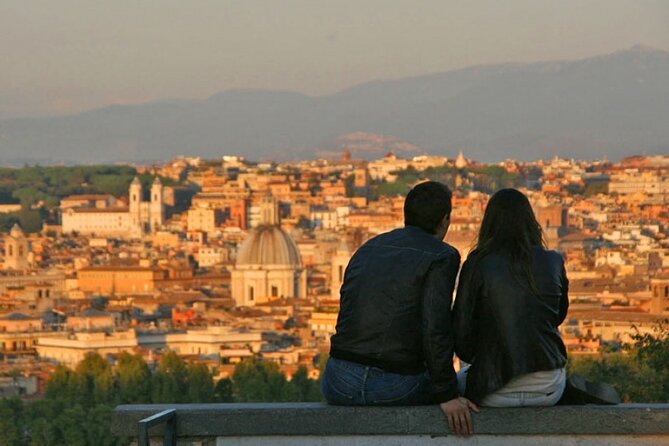
After Vatican-area moments, you climb to Terrazza del Gianicolo in the Janiculum hill area. The Janiculum overlooks the right bank of the Tiber, and its maximum height is 88 meters. The payoff is the city view—monuments, rooftops, and that sense that Rome keeps going farther than your legs expect.
This stop is listed as admission included, and even if you are not a view-person, it’s a valuable reset. After dense sites and close-up monuments, a wide panorama makes the whole day click.
If you’re traveling with teens or anyone who gets tired of lectures, this is often the moment that brings smiles back.
Piazza del Popolo and Via Veneto: end in classic streets and an easy decompression
Then you roll into Piazza del Popolo. It sits at the intersection of three main streets—via del Babuino, via di Ripetta, and via del Corso—and it sits under the Pincio gardens. Historically, the space was part of the main entrance to Rome in Roman times.
From there, the tour heads toward Via Vittorio Veneto, often called Via Veneto. It leads uphill from Piazza Barberini toward Porta Pinciana and is a classic Rome street for atmosphere and strolling.
One practical detail: after the listed major stops, the remaining time is dedicated to moving between attractions and having free time. That matters because it gives you space to slow down a bit at the end instead of sprinting from one place to another.
How the tuk tuk ride feels on the ground (and why the details matter)
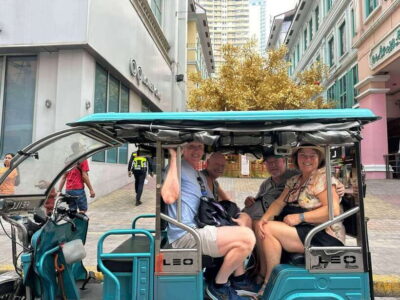
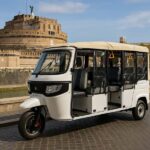
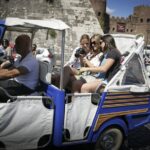
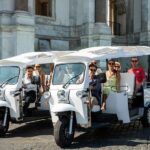
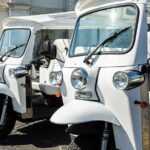
This is not a bus route. The tuk tuk is meant to get close, then move you quickly. The driver assistance is included, which is part of the value: it helps you avoid dead ends, tight turns, and the walking detour effect that happens when you stop trusting your navigation app.
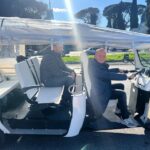
You also get protective covers against rain and wind, and the tour operates rain or shine. In winter, there are protective layers plus blankets to keep you warm. In other words, you are not just hoping for good weather—you’re planning to ride through it.
There’s also a practical limitation: the tuk tuks don’t have a trunk, so you can’t bring suitcases or bulky packages. If you’re traveling with a lot of luggage, you’ll want to store it somewhere before you meet.
Timing, delays, and occasional route changes you should plan for
The tour is about 3 hours, and the pace is built on those quick stop windows. If you’re late, the rules are strict: delays can reduce the activity based on time lost, and if you’re more than 15 minutes late, the tour can be canceled without a refund.
There’s another real Rome factor: citywide closures during major public events can affect which streets are accessible. If the center is partially shut down, the route can be reduced and some stops may not happen in the expected way. That’s not a failure of the service; it’s just how big-city Rome works on certain days.
If you’re trying to connect this to another timed ticket (like a Vatican appointment), keep your schedule breathable. Build buffer time rather than counting on minute-perfect continuity.
Price and value: what $54.66 buys you in Rome
At $54.66 per person for an electric tuk tuk private tour around 3 hours, the value comes from bundling a bunch of things that otherwise cost time and energy: private transport, an audio guide, and driver support to manage where you can go and how you can see.
Many of the stops are listed as free admission, including major outdoor sights like Triton Fountain, the fountains in Repubblica, the Trevi Fountain area, Quirinale, Piazza Venezia, and Via Vittorio Veneto/Piazza del Popolo. That keeps the day from turning into an expense stack.
Two big cost notes:
- Colosseum admission isn’t included, so plan for that if you want to enter.
- Circo Massimo and Bocca della Verità are listed as included, which helps balance the one notable missing ticket.
So the way I see it: this is a great “first Rome day” option when you want orientation and a highlight hit without building a complicated itinerary.
Who should book this tuk tuk tour (and who might not)
This is ideal if you want:
- A fast introduction to Rome’s top sights within a single loop
- A lower-walking day after travel or a long previous day
- Easy photo breaks that do not require museum-level time commitments
- A private setup where your group sets the tone
It may be less ideal if you want:
- Full, unhurried visits inside every major site (especially the Colosseum and Vatican)
- Deep guided time at one location, instead of a rotation of many
Also, if your party has mobility limitations, the tuk tuk approach can help reduce walking. Still, make sure you choose footwear and watch steps around fountains and uneven sidewalks.
Driver quality and what to look for during your ride
One of the biggest reasons this tour scores so well is the human part: the driver. Names like Carlo, Davide, Robin, and Alessandro have been singled out for strong direction and for keeping things fun.
What that means for you: on a route like this, the driver’s ability to find good viewpoints and practical photo moments matters. You also benefit from the audio guide while you ride, which helps you connect landmarks to stories and details without needing a separate walking tour guide.
Should you book? My take
Book it if you want an efficient, fun way to see a lot of Rome early on, without turning your day into a long slog. The mix of free admission stops plus a couple included ticket items makes it easier to manage.
Think twice if your priority is long, ticketed, slow visits at the Colosseum and Vatican. This tour is built for a highlight sweep, not for full inside-the-buildings immersion.
If you’re traveling with limited time, this is the kind of tour that helps you get your bearings fast—and then decide what deserves a deeper return trip.
FAQ
Does the tour include Colosseum admission?
No. The Colosseum is listed as admission not included, so you may need a separate ticket if you want to enter.
What are the meeting point and end point?
The tour starts at P.za Barberini, 24/26, 00187 Roma RM, Italy and ends back at the same meeting point. Drop off is not included.
Does the tour run in bad weather?
Yes, it operates rain or shine. It includes protective covers against rain and wind, and in winter there are protective layers and blankets.
Is this tour private?
Yes. It is described as a private tour/activity, meaning only your group will participate.
Can I bring suitcases or bulky luggage?
No. The tuk tuks do not have a trunk, so you cannot bring suitcases or bulky packages.
Can I cancel and get a refund?
You can cancel for a full refund if you cancel at least 24 hours before the experience’s start time. Canceling less than 24 hours before start time is not refunded.