REVIEW · ROME
Rome by Ape Calessino Auto Rickshaw
Book on Viator →Operated by Dearoma Tours · Bookable on Viator
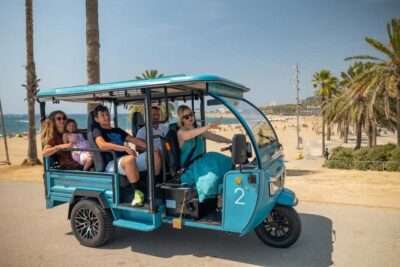
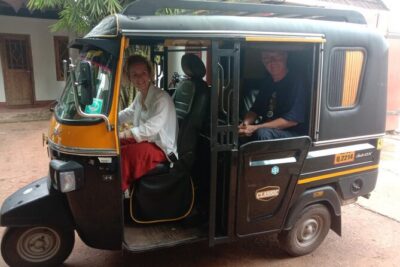
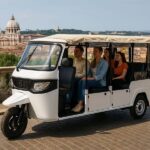
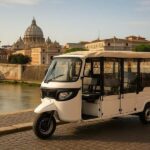
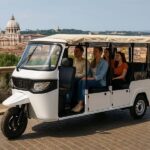
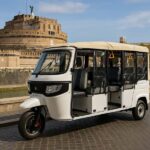
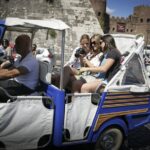
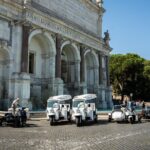
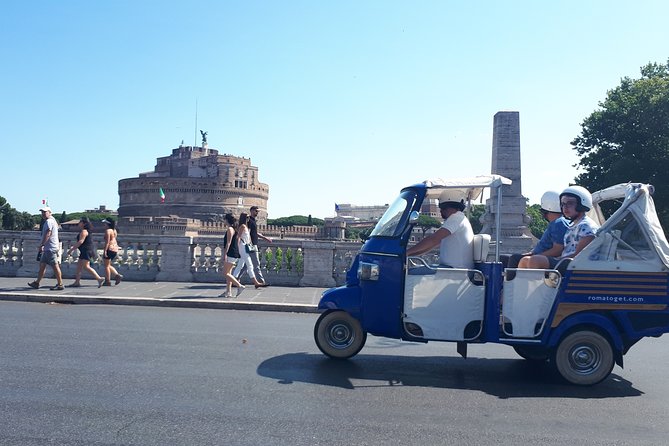
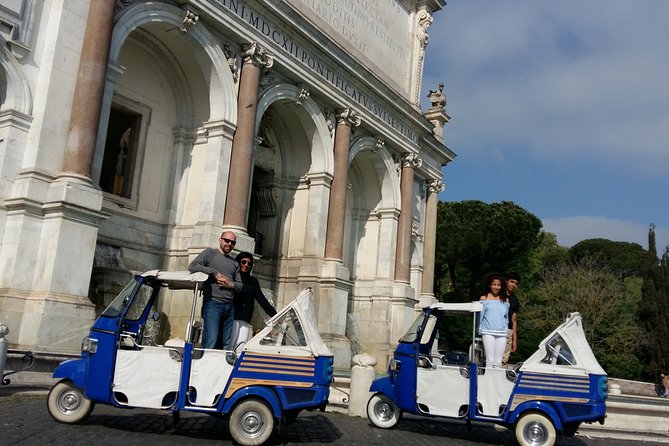
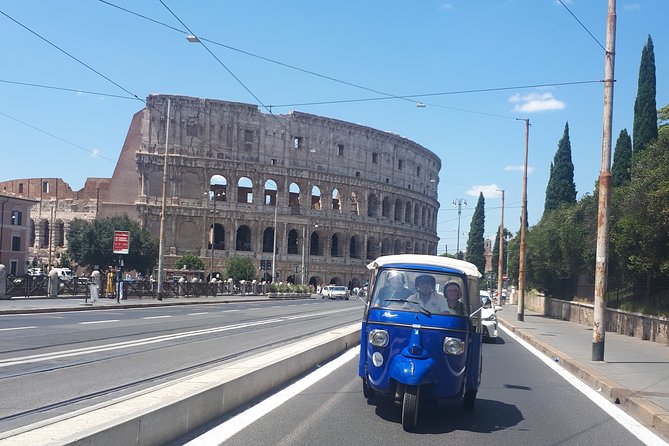
Rome by Ape Calessino feels like Rome on fast-forward. You’ll ride a classic Ape Calessino (an Italian 1960s auto rickshaw, like the Asian tuk tuk) through some of the city’s most photo-friendly angles, with a guide calling the stops.
What I like most is the mix of major landmarks and Roman “how it really worked” stops—especially the Baths of Caracalla area and the Appian Way stone-road vibe. I also love that it’s private, so you can ask questions and adjust when you want more time for a view or a photo.
One thing to keep in mind: it’s panoramic, so you won’t go inside the Colosseum, Baths of Caracalla, or the Vatican as part of this ride. You’ll see exteriors, viewpoints, and key points up close, but entrance tickets are not included.
In This Review
- Key Things You’ll Notice on This Ape Calessino Ride
- Price and Group Value: What You’re Really Paying For
- Getting Started in Rome: Hotel Pickup and a Helmet-Required Ride
- The Ape Calessino Experience: Why This Transport Changes How You See Rome
- Piazza Venezia, Vittoriano, and the Colosseum Area From the Outside
- Baths of Caracalla: The 10-Minute Stop You’ll Remember
- Appian Way (Via Appia Antica): The Road That Still Feels Ancient
- Circus Maximus: Ben-Hur Scale, Two Egyptian Obelisks, and Open-Air Drama
- Pyramid of Cestius and the Knights of Malta Keyhole View
- Campo de’Fiori and a Coffee or Gelato Reset
- Who This Tour Fits Best (and Who Might Want Something Else)
- Should You Book This Private Ape Calessino Tour?
- FAQ
- How long is the Rome by Ape Calessino auto rickshaw tour?
- What does it cost, and how many people can be in a group?
- Is this tour private?
- Do you get hotel pickup and drop-off?
- Are entrance tickets included for the Colosseum, Baths of Caracalla, and the Vatican?
- What’s included during the tour besides the rickshaw ride?
- What language is the tour offered in?
- Does the tour run in bad weather?
- What sights are included on the route?
Key Things You’ll Notice on This Ape Calessino Ride
- Ape Calessino/tuk tuk style transport that makes Rome’s streets feel more playful and less stressful
- Hotel pickup and drop-off so you spend time sightseeing, not figuring out transit
- A flexible private itinerary where your guide can shift based on what you want to linger on
- Big “Rome overview” stops like Piazza Venezia/Vittoriano and the Colosseum area (from the outside)
- Short, focused cultural moments like Caracalla baths and the Pyramid of Cestius
- A built-in coffee/gelato break with caffè/cappuccino/gelato included
Price and Group Value: What You’re Really Paying For
At $505.23 per group (up to 3 people) for about 3 hours, this tour prices like a premium private experience. The trade-off is simple: you’re paying for a private guide, a private vehicle, and hotel pickup/drop-off—not just for transportation.
For a couple or a small family, that can be excellent value in Rome. A taxi can get pricey fast once you start bouncing between distant neighborhoods and viewpoints, and it won’t provide the same guided context as you move from place to place. With this, you’re also getting a pre-planned route that hits major ancient Rome moments and several off-the-beaten-path photo opportunities.
If you’re traveling solo, it can still be worth it if you want the convenience of pickup, plus the chance to stop frequently for photos without negotiating anything yourself. If you’re budget-first and happy to handle transit on your own, you might compare this to cheaper group tours or independent sightseeing. But if you want speed, comfort, and a guided “first-day orientation,” this is made for that.
You can also read our reviews of more tours and experiences in Rome.

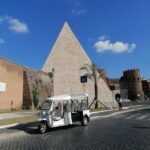
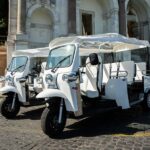
Getting Started in Rome: Hotel Pickup and a Helmet-Required Ride
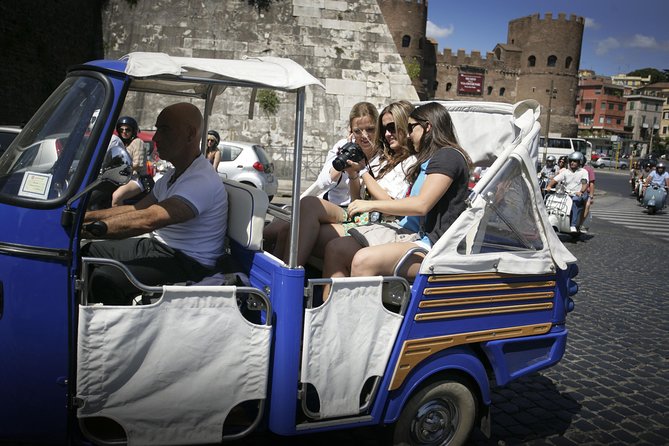
The experience starts with pickup at your hotel, Airbnb, or private accommodation. That matters more than you’d think, because Rome’s walking distances and traffic can eat time. With the pickup, you can slip right into the sightseeing rhythm.
Everyone rides in an Ape Calessino and you’ll be given helmets—not optional. That’s a good sign for safety-minded operation, and it also helps you feel less “tourist exposed” on narrow streets. You should dress for the weather since the tour operates in all weather conditions, so layers and practical shoes help.
From there, your guide gets you oriented and settles you into the backseat. The tour is built around constant movement with frequent viewpoint stops, so you’ll want to keep your phone ready and your camera accessible.
The Ape Calessino Experience: Why This Transport Changes How You See Rome
Rome can feel like a puzzle: ancient ruins, big monuments, busy roads, and sudden viewpoints. The Ape Calessino adds a key ingredient—freedom of angle. When you’re seated low and moving through the streets, the skyline pops out in a way that walking-only sightseeing sometimes misses.
The ride also makes the city more fun. It’s not a quiet, formal coach experience. Instead, it feels like you’re getting a guided street-level tour while still covering far more ground than you could comfortably on foot.
And because it’s private, you can ask for adjustments. If you want a particular hill view, more time near a viewpoint, or a stop that’s a bit less typical, your guide can usually work with that flexibility. The results tend to be better photos and less rushing.
Piazza Venezia, Vittoriano, and the Colosseum Area From the Outside
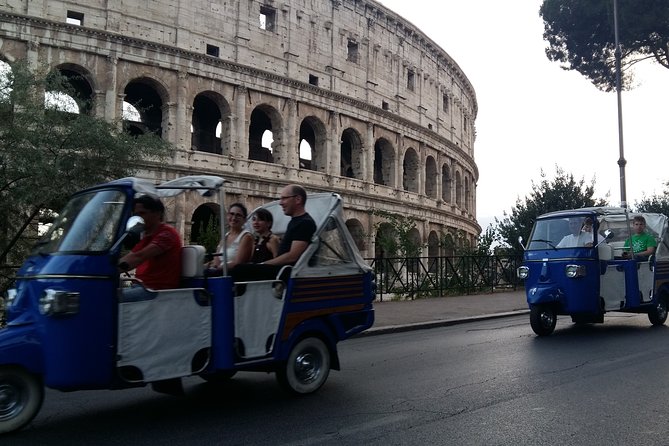
A big early anchor on the route is Piazza Venezia, including the sight of the Vittoriano. It’s one of those Rome landmarks that’s hard to appreciate fully from a distance until you see it from different angles. From the rickshaw, you can catch the monument’s scale and how it connects to the surrounding streets.
Next comes the ancient-adjacent walk-through feeling: the route aims toward the Imperial Forum area, and then continues to the Colosseum. You won’t be doing an inside visit here—this tour is panoramic—but you’ll get the kind of overview that helps you understand where everything sits.
Why that matters: when you later return for a timed ticket or a full visit, your brain already has a map. You’re less likely to feel lost in crowds, and you’ll know which angles to seek out. If you love ancient Rome but don’t want to spend your short trip line-wrangling, this is a smart way to start.
Baths of Caracalla: The 10-Minute Stop You’ll Remember
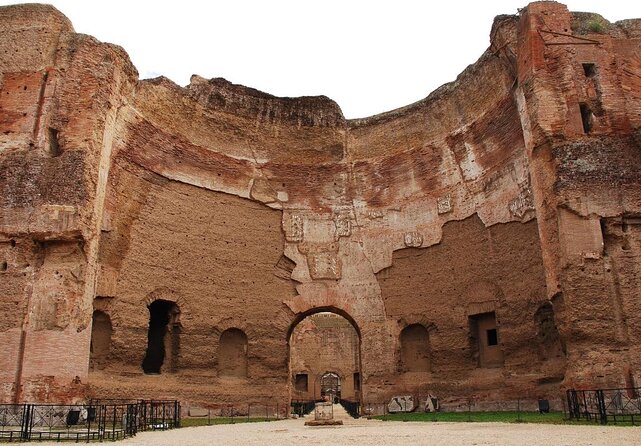
One of the most impressive portions is Terme di Caracalla. The stop is listed as about 10 minutes, and it comes with context that turns ruins into something you can visualize.
You’ll learn it was begun by Emperor Septimius Severus around AD 206 and finished by his son Caracalla by AD 216. This is where the tour really shines: it’s not just a quick photo stop. You’re given the basic structure—how these spaces were designed for public use and how large they were meant to be.
You’ll be pointed toward the core bath-room layout:
- Frigidarium (cold room)
- Caldarium (hot room)
- Tepidarium (lukewarm room)
And you’ll hear about the large vaulted halls and the way the architecture foreshadowed later church-like vaulting. You’ll also see the idea of outdoor exercise and swimming pools within the broader bath complex.
A practical note: admission tickets aren’t included for the Baths of Caracalla, and this tour doesn’t position you as an inside ticket visit. Still, the ruins are the main event, and the guiding helps you read the space instead of just staring at stones.



Appian Way (Via Appia Antica): The Road That Still Feels Ancient
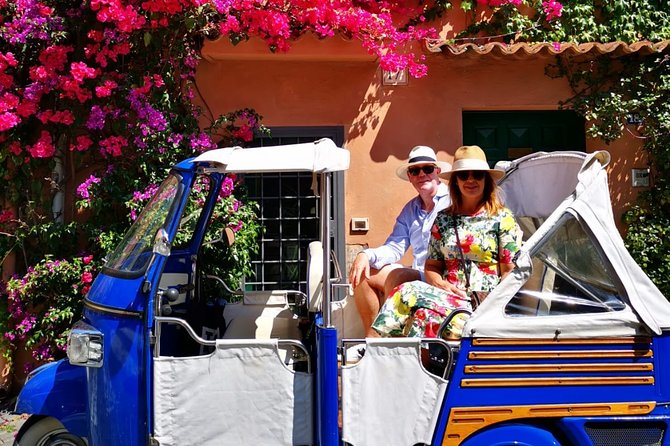
Next, you get a taste of Rome at its most “how did they build and run this” level: the Appian Way, or Via Appia Antica. This is not just a street stop—it’s one of those moments where the route begins to feel bigger than the city around it.
You’ll hear that it was begun in 312 BCE under the censor Appius Claudius, and that it served long-distance connections to the seaports of southeastern Italy and toward Greece and the eastern Mediterranean. The tour also frames it in Roman terms as a major highway, maintained and managed at high administrative ranks.
Even if you’re only getting a short stop, the tour’s value is in the details: the road’s width (about 6 meters), its slightly convex surface for drainage, and the layered stone foundation with lava polygon blocks. It’s the kind of explanation that makes you look at the pavement like it’s evidence, not just ground.
Circus Maximus: Ben-Hur Scale, Two Egyptian Obelisks, and Open-Air Drama
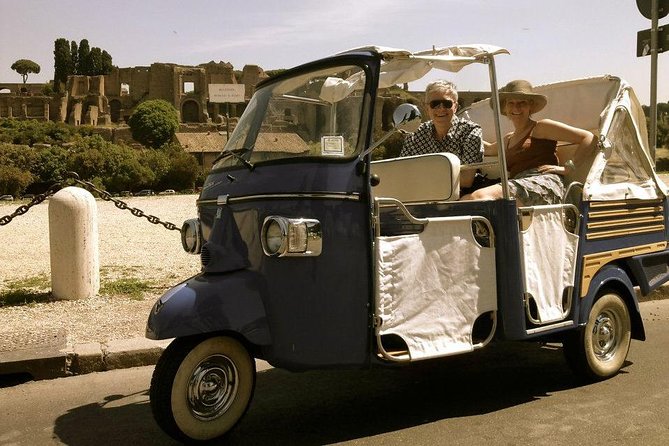
If you’re into epic Roman scenes, you’ll like Circus Maximus. This was the largest hippodrome in Rome—think chariot racing and huge crowds.
You’ll be told it was built in the time of Julius Caesar (1st century BC) and that it could seat an estimated 150,000 at one point. Later emperors enlarged it, reaching an overall maximum around the 4th century under Constantine, with a huge seating potential.
The tour also points out the “signature movie moment” setup: the central spine with two massive Egyptian obelisks brought from Africa. That detail makes the area easier to picture even if you’re viewing it from today’s level.
Because this tour is focused on movement and viewpoint stops, it’s the right length for Circus Maximus: you get the scale and the story without spending hours trying to locate every trace.
Pyramid of Cestius and the Knights of Malta Keyhole View
Two smaller stops punch above their weight, and that’s part of why the route feels well thought out.
First: Pyramid of Cestius (also called the Pyramid of Rome). It’s the only surviving ancient Egyptian-style pyramid in Rome. The tour frames it as a tomb for Caius Cestius, built in the 1st century BC, and it notes a striking construction detail: the inscription says it took 330 days. You’ll also learn it was later incorporated into the Aurelian Walls.
Then you’ll head to Piazza dei Cavalieri di Malta, where the focus is the famous keyhole view—the view framed toward Saint Peter’s Basilica from a small opening. This is one of those places where photos are common, but the experience is better in person. When the view lines up, you immediately see why it pulls people in.
The practical benefit: these stops are short and efficient, so they don’t drain your day. You get a memorable photo opportunity plus a mini-history lesson, and then you’re back into motion.
Campo de’Fiori and a Coffee or Gelato Reset
By the time you reach Campo de’Fiori, the tour shifts into a more human, everyday Rome vibe. During the day, it’s known for its market energy, and at night it becomes a spot for aperitivo and cocktails.
This stop also works as a strategic break. The experience includes a caffè/cappuccino/gelato option, which gives you a quick reset without having to search for a café on your own. In practical terms, that’s great if you’re traveling with kids or anyone who gets tired walking.
Campo de’Fiori is central to other classic sights too, so even if you don’t do an extra walk here, it helps you orient where neighborhoods connect—near enough to understand your next day’s plan, without requiring an extra long trek.
Who This Tour Fits Best (and Who Might Want Something Else)
This is a great fit if you want a high-quality Rome overview without spending your time in ticket lines or battling transit. It also works well as a first-day activity because you return to places with far more context.
It’s especially good for:
- couples who want a fun, different way to cover big sights fast
- travelers who hate rushing but still want structure
- anyone who likes ancient Rome, but prefers panoramic, guided orientation
- small groups (up to 3) who value convenience like hotel pickup
It may not be ideal if you’re planning to spend lots of time inside monuments. Since the tour is panoramic and doesn’t include entrance fees inside the Colosseum, Baths of Caracalla, or the Vatican, you’ll still want separate tickets if you want full interior experiences.
Should You Book This Private Ape Calessino Tour?
I’d book it if your top goals are convenience, guided context, and lots of photo-worthy angles in a short time. The private format is the key advantage: you’re not stuck to a rigid group pace, and you can ask questions while you ride between major sites like Piazza Venezia, the Colosseum area, Appian Way, and Circus Maximus.
I’d think twice if you’re the type who only feels satisfied after you’ve gone inside major sites. This tour can help you plan and prioritize, but it won’t replace timed entry visits to the Colosseum or the Baths of Caracalla.
One last practical hint: it’s typically booked about 10 days in advance, so if your dates are tight, I’d secure it early. For a first glimpse of Rome’s ancient highlights plus a classic Italian street-ride vibe, this one is hard to beat.
FAQ
How long is the Rome by Ape Calessino auto rickshaw tour?
It’s approximately 3 hours.
What does it cost, and how many people can be in a group?
The price is $505.23 per group, and it’s for up to 3 people.
Is this tour private?
Yes. It’s a private tour/activity, so only your group participates.
Do you get hotel pickup and drop-off?
Yes. Hotel pickup and drop-off are included, and pickup is from your hotel/Airbnb/private accommodation in Rome.
Are entrance tickets included for the Colosseum, Baths of Caracalla, and the Vatican?
No. The tour is panoramic and does not include entrance fees inside the Colosseum, Baths of Caracalla, or the Vatican.
What’s included during the tour besides the rickshaw ride?
You get a driver/guide and professional guide, transport by private vehicle, helmets, and a caffè/cappuccino/gelato break.
What language is the tour offered in?
It’s offered in English.
Does the tour run in bad weather?
Yes. It operates in all weather conditions, so you should dress appropriately.
What sights are included on the route?
You’ll see major highlights such as Piazza Venezia (Vittoriano), the Imperial Forum, the Colosseum area, Terme di Caracalla, the Appian Way, Circus Maximus, and the Vatican, plus stops like the Pyramid of Cestius, the keyhole at Piazza dei Cavalieri di Malta, and Campo de’Fiori.