REVIEW · LISBON
Tour TukTuk 3 hours Lisbon Free Pick-up
Book on Viator →Operated by Chaparru's Tours · Bookable on Viator
Lisbon’s hills feel manageable in a tuk-tuk. This 3-hour private loop turns big-city landmarks into an easy, moving checklist, with English-speaking guidance. I like how it builds your bearings fast, especially if it’s your first time in Lisbon.
One thing I really enjoy is the focus on stories you can actually see. You’ll pause at famous lookouts like Miradouro das Portas do Sol and Miradouro da Graça, then move on to neighborhood texture in places like Alfama and Chiado—so Lisbon starts to feel less like a postcard set.
The main thing to watch is that monument entrances aren’t included. Several stops are designed for quick exterior views and viewpoint time, so if you want interiors (cathedral, convents, pantheons), you’ll need extra planning and fees.
In This Review
- Key highlights worth your attention
- Lisbon in 3 hours: why this tuk-tuk format works
- Price and what you’re really paying for
- Getting started at Rua do Comércio and riding comfortably
- Stop 1: Lisbon Cathedral, the city’s deep roots
- Miradouro das Portas do Sol: the Tagus view with Moorish echoes
- Miradouro da Graça (and tile panels near the Convent of Grace)
- Vila Berta: industrial Lisbon, not just palaces and fado
- Stop 4: Miradouro da Senhora do Monte and the Hermitage of Our Lady of Mount
- Church of St. Vincent de Fora: outside views, big name history
- Santa Clara area: market energy and old-stuff fairs
- Panteão Nacional (National Pantheon): portraits of Lisbon legends
- Alfama: the oldest neighborhood and its water-bath origin
- Chafariz de Dentro and the House of Nozzles: fountains as social history
- Igreja de Nossa Senhora da Conceição Velha: the 1755 earthquake in plain sight
- Praça do Comércio and Cais das Colunas: Lisbon’s grand entrance
- Chiado, Pink Street, and São Roque: Lisbon gets theatrical
- Miradouro São Pedro de Alcântara, Carmo, and Bairro Alto at street level
- What to plan for: tickets, timing, and weather reality
- Should you book this Lisbon tuk-tuk tour?
- FAQ
- How long is the Lisbon tuk-tuk tour?
- What is the price per person?
- Is the tour private?
- Is there an English option?
- Are monument or church entrances included?
- Where does the tour start and end?
- Are children allowed?
Key highlights worth your attention
- A true private tuk-tuk ride for your group that saves you from constant uphill walking.
- Viewpoints scheduled on purpose, including Portas do Sol, Graça, Senhora do Monte, São Pedro de Alcântara.
- Lisbon in layers, from Roman-era water tanks to Manueline/Pombaline rebuilding after the 1755 earthquake.
- Guides who bring the city to life, with strong history focus and a knack for making stops feel connected (Rodrigo, Miguel, Fernanda, Thiago, Alexandra stand out in the guide pattern).
- Short stops that favor orientation over long museum time, with several entrance tickets not included.
Lisbon in 3 hours: why this tuk-tuk format works
This is the kind of tour that helps when you’re time-limited but you still want the real Lisbon feeling. A tuk-tuk ride compresses “must-see” viewpoints and landmarks into one smooth route, so you can hop between areas without burning energy on stairs and steep streets.
The time structure also matters. Most stops are built around quick moments: look, photograph, listen, then roll on. That’s ideal for getting the city’s geography into your head. If you’re hoping for slow, hours-long museum wandering, you’ll likely want a second day to go deep on your favorite stop.
You can also read our reviews of more tours and experiences in Lisbon.



Price and what you’re really paying for
The price is $48.12 per person for about 3 hours, and it includes private transportation plus an English-speaking guide (your ticket is mobile, too). The biggest value signal here: you’re paying for guided time and vehicle comfort, not for attraction entry fees.
That’s why the “not included” part matters. Several of the most famous spots—like Lisbon Cathedral and the National Pantheon—are listed with admission not included. The tour still takes you to the places, but you may be looking more at exteriors or brief stop time rather than ticketed interior visits.
If you’re doing Lisbon on a budget, this is still a fair deal—because you’re buying efficiency. If you’re planning to enter multiple monuments, you’ll get the most satisfaction by deciding ahead of time which interior visits are worth paying for.
Getting started at Rua do Comércio and riding comfortably
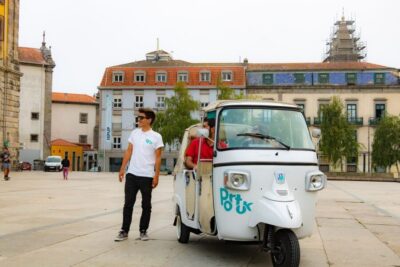
The experience starts and ends back near the same area: Rua do Comércio, 1100 Lisboa. It’s a practical meeting point because this part of Lisbon connects easily to the riverfront and central walking routes. The tour notes that it’s near public transportation, which is useful if you’re arriving by metro or want a simple plan for your day after the ride.
This is also a private tour/activity, meaning only your group participates. That tends to make the pacing feel more natural. It’s not a “herd you along” vibe.
And there are some comfort rules that you should know before you go: large suitcases aren’t allowed, smoking isn’t allowed on board, and alcohol isn’t allowed. If you’re traveling light, you’ll feel more at ease moving quickly between stops.
Stop 1: Lisbon Cathedral, the city’s deep roots
You begin with Lisbon Cathedral, tied to the era after Lisbon was captured from the Moors. The current cathedral’s building work began in 1147, so it’s often described as the oldest church in the Portuguese capital in its present-day context.
Why this stop works early: it anchors the story of Lisbon before the viewpoints and neighborhoods start spinning. Once you hear the medieval timeline, the later stops—Alfama’s Arabic-era roots, the 1755 earthquake rebuilding, the layers of Christian and pre-Christian traces—make more sense.
Plan for a brief visit time. Admission is noted as not included, so treat this as a “see it and understand it” stop unless you plan to pay to go in separately.
Miradouro das Portas do Sol: the Tagus view with Moorish echoes
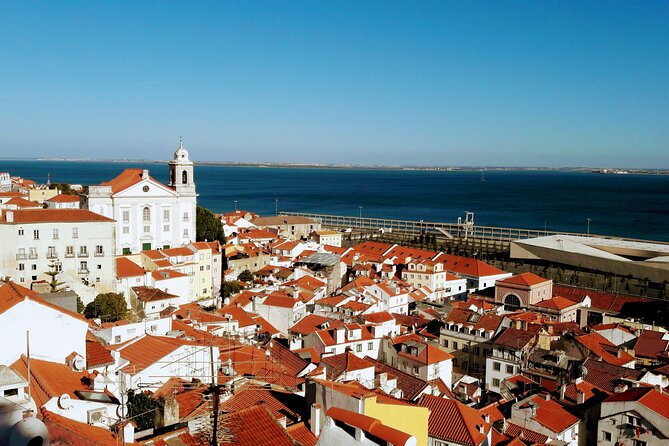
Next comes Miradouro das Portas do Sol. The name connects to an old Moorish gate or dor associated with the sun. The viewpoint overlooks the Tagus River, and you’ll also hear about the Cerca Velha wall and how the area was affected by the 1755 earthquake.
This is one of those Lisbon places where you don’t need to overthink it. You get your skyline view, you take the photos, and then the guide helps you place what you’re seeing.
A small bonus: the stop is listed as free admission, so you’re not juggling ticket decisions while you’re trying to enjoy the view.






Miradouro da Graça (and tile panels near the Convent of Grace)
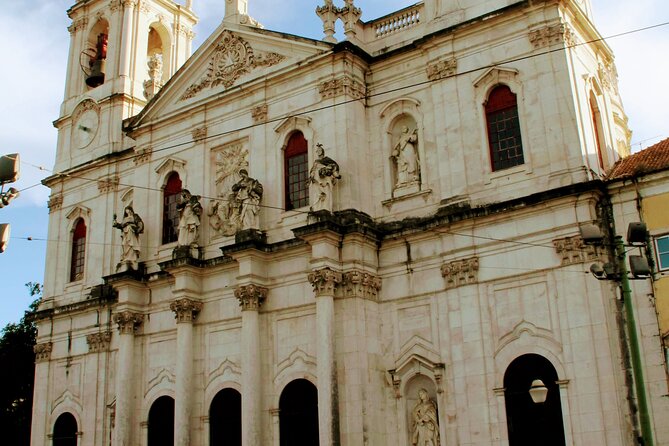
Then you shift to Miradouro da Graça, linked with Sophia de Mello Breyner Andresen. The route also points you toward the Convent of Grace, where you can find tile panels (tiles are a Lisbon superpower, and this is one of the spots where they’re meant to be noticed).
The background matters here. The Convent of Grace area belonged to the Augustinian Hermits (today associated with the Order of Saint Augustine), with roots in the 13th century. And the guide’s story connects this hill to the siege of Lisbon in 1147, when D. Afonso Henriques camped in the area known as Almofala.
This stop is about perspective—both visual and historical. You’re looking over Lisbon from a hilltop, and you’re also watching the timeline of power and faith shift across centuries.
Vila Berta: industrial Lisbon, not just palaces and fado
After the Graça viewpoints, you’ll get a look at Vila Berta, described as part of Lisbon’s industrial heritage. It’s tied to materials like iron and stamped tiles and to the way industrial workers were housed during that period.
This is a nice contrast. Most Lisbon sightseeing is tuned to monuments, churches, and viewpoints. Vila Berta gives you a calmer, working-life side of the city—still “Lisbon,” just less expected.
The advantage is that it makes the city feel bigger than the usual highlights. The drawback is that it’s not a place where you’ll spend a long time. It’s more of a quick stop that helps the bigger tour story click.
Stop 4: Miradouro da Senhora do Monte and the Hermitage of Our Lady of Mount
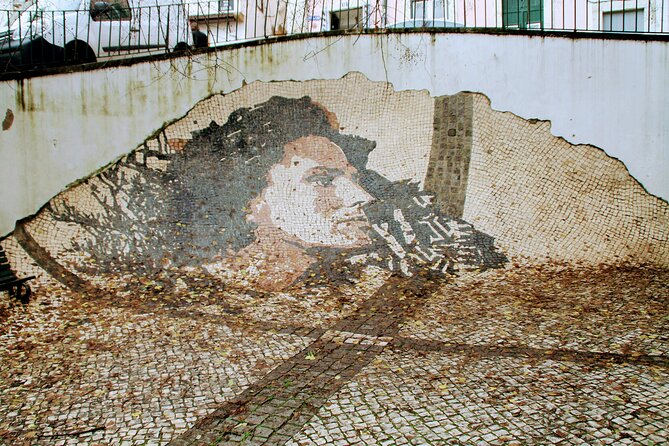
If you want one of the strongest viewpoint moments on this route, this is it. Miradouro da Senhora do Monte offers wide views: south toward Saint George Castle and downtown, west toward Bairro Alto and even Monsanto Forest Park, and north toward the Avenida Almirante Reis valley.
Right beside it is the small ancient Hermitage of Our Lady of Mount, founded in 1147 and associated with Saint Gens. The tour also tells a legend about a stone chair connected to Saint Gens, with a belief that pregnant women who sat there would have uncomplicated births. D. Maria Ana from Austria, wife of D. João V, is mentioned as someone who went to the site when expecting.
You don’t have to buy into every legend to enjoy the human side of it. This is exactly the kind of stop that gives Lisbon personality.
The stop is listed with free admission, so you can spend your time just looking and absorbing rather than worrying about entry fees.
Church of St. Vincent de Fora: outside views, big name history
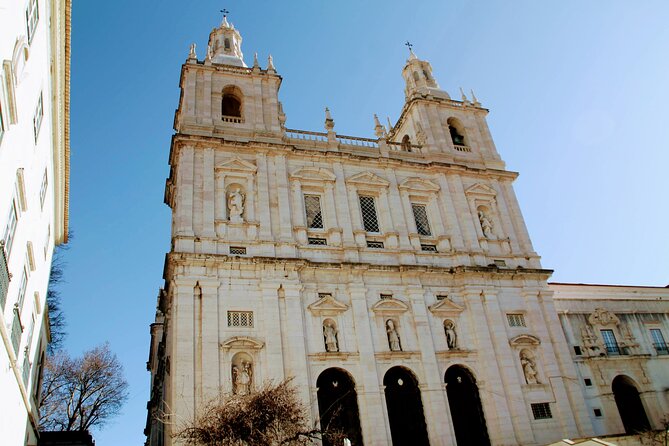
Next is the Church of St. Vincent de Fora. Even when you’re not going inside, it’s worth it because the architecture is described as a mix of Portuguese Mannerism traces, Gothic, and Baroque.
This church is also connected to the Pantheon of the Dukes of Bragança, where Portuguese kings from the Bragança dynasty are buried. The tour notes this as part of what you’ll find here, with admission not included—so again, it’s best treated as a guided exterior stop unless you plan your own entry time separately.
If you like seeing how styles overlap in older cities, this is a good one.
Santa Clara area: market energy and old-stuff fairs
After the church, you pass through the Santa Clara market area, which dates to the second half of the 19th century. Around it, you’ll find craft shops.
There’s also mention of a “thief fair” with roots going back to the 13th century—the fair’s timing is listed in a couple of different weekday ways (Tuesday/Thursday are mentioned, and separately Monday/Thursday shows up in the notes). So the best advice is simple: if this part matters to you, confirm the day-of schedule when you book or when you’re in Lisbon.
Even if you skip the fair, the market-adjacent streets help you feel the city’s everyday rhythm, not just the scenic lookouts.
Panteão Nacional (National Pantheon): portraits of Lisbon legends
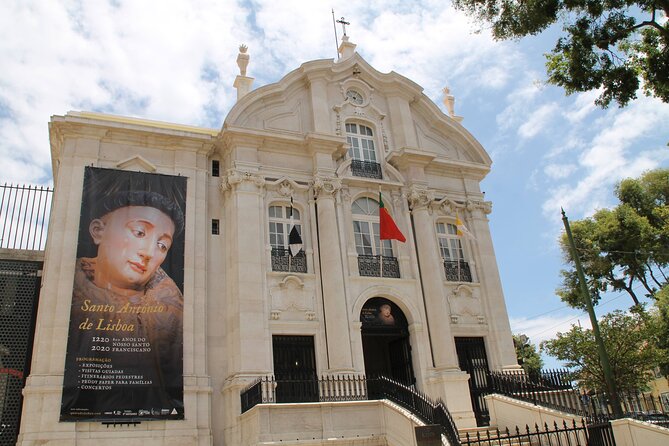
The tour then heads to the National Pantheon, located in the Church of Santa Engrácia. Construction began in 1682 and didn’t finish until 1966, which makes the church one of those “it took forever” Lisbon landmarks.
The pantheon is described as honoring citizens for services to the country, including the graves of Amália (fado diva) and football player Eusébio. This is a useful stop because it ties Lisbon’s identity to both music and sport—two pillars you’ll hear referenced constantly while you’re in town.
Admission isn’t included, so you may or may not go inside depending on your interest and how much time you want to spend beyond the tour’s stop.
Alfama: the oldest neighborhood and its water-bath origin
Then the tour shifts into Alfama, Lisbon’s oldest neighborhood and one of its most typical areas. The name is tied to Arabic roots: al-hamma, meaning fountain or hot water baths. The idea is that Alfama was a thermal area where people came for bath-based care, with water temperatures described between 20°C and 34°C.
The practical point: Alfama isn’t just a view—this is where Lisbon’s past lingers in the streets. When you hear the water-bath origin and then see fountains and stone features later, you start connecting the dots.
This stop is listed as free, and it fits well after the “big landmark” phase because it returns you to neighborhood scale.
Chafariz de Dentro and the House of Nozzles: fountains as social history
In Alfama, you’ll see Chafariz de Dentro, a fountain with a long record. The oldest reference mentioned is 1285 as Fountain of Horses. Later, in 1373, bronze heads are said to have been taken after the Castilians’ sack of Lisbon.
The name “inside fountain” is connected to its location on the interior side of the Fernandina fence. And the notes go further: the water system is described as supplying ships coming from abroad, starting from 1487.
One of the most interesting details here is that the fountain system had different spouts tied to social group categories, with a regulation noted for 1517. You don’t need to memorize it to appreciate the idea: even water access was organized by status.
Right around here is the House of Nozzles (also called the Museum of José Saramago on the second floor). The notes include Roman-era salt tanks, a medieval tower, and Mudejar pavement, plus a diamond-shaped stone façade with Italian Renaissance influence.
This is a strong stop for people who like context. It’s not just “look at a building.” It’s “look at a building and understand what it meant.”
Igreja de Nossa Senhora da Conceição Velha: the 1755 earthquake in plain sight
Next is Igreja de Nossa Senhora da Conceição Velha. This church combines architectural styles due to reconstruction after the 1755 earthquake.
The earlier church on the site—Church of Our Lady of Mercy—is described as the second largest Manueline temple in Lisbon after the Jerónimos Monastery in Belém. Then the Pombaline interior and one-nave design come through.
This is a good place to pause if you want Lisbon’s turning-point moments. The earthquake is a huge part of Lisbon’s story, and this church is one way the city tells it without needing a museum label.
Admission is listed as free for this stop, so you can enjoy the exterior and the setting without extra cost.
Praça do Comércio and Cais das Colunas: Lisbon’s grand entrance
Then you arrive at Praca do Comercio (Commerce Square). It’s described as one of Europe’s largest squares and was the site of Portuguese royal palace for around two centuries.
You also get a classic details stop: Martinho da Arcada café is mentioned as the oldest in Lisbon and a favorite of Fernando Pessoa. On the north side, you’ll spot the Triumphal Arch from Rua Augusta.
If you’ve ever seen photos from here, you’ll understand why the square anchors the riverfront vibe. The tour’s notes also highlight the marble steps of Cais das Colunas, where prominent figures and heads of state are said to have appeared, including Isabel II of England and Gungunhana.
This is one of the best “wow, Lisbon is huge” moments on the route, especially if you’re coming from hill viewpoints.
Chiado, Pink Street, and São Roque: Lisbon gets theatrical
After the square, the route threads toward the more urban, nightlife-connected sections.
Near the river is Cais do Sodré, described as lively for nightlife and gastronomy. The area near the old Ribeira Market is said to host Time Out, where you can find restaurants with international dishes and local specialties.
Then you hear about Pink Street, listed as one of the New York Times favorites in Europe, with a reputation for staying open late and for club energy.
Next is Chiado, described as a Bohemian, intellectual area with writers and artists historically passing through. The tour notes the Brasileira café with a statue of Fernando Pessoa, and mentions Largo Luis de Camões.
To top it off, you visit Igreja de Sao Roque, a Jesuit church built at the end of the 16th century. It’s noted as the first Jesuit church in Portugal and as one of the first Jesuit churches in the world. The church is also highlighted as having survived the 1755 earthquake unscathed, which is the kind of fact that makes architecture feel alive.
The notes even mention the church’s setting: a former cemetery for plague victims outside the walls, and a pilgrimage tradition tied to the hermitage created around 1506.
Miradouro São Pedro de Alcântara, Carmo, and Bairro Alto at street level
The last viewpoint sequence includes Miradouro Sao Pedro de Alcantara, described as one of Lisbon’s best viewpoints, with views over the east of Lisbon and downtown.
You also pass the Convent of Saint Peter from Alcântara, founded in the 17th century and linked to a funerary chapel of Cardinal D. Veríssimo de Lencastre, which is said to have remained untouched after the earthquake.
Then you head into Bairro Alto, described as old and picturesque with narrow cobbled streets and centuries-old houses. Since the 1980s, it’s been one of Lisbon’s best-known nightlife districts, with fado clubs and countless bars and restaurants.
The tour finishes near the Carmo Convent, founded in 1389 and associated with partial wall remains after the 1755 earthquake. You’ll also see the Pombalino do Carmo Fountain, which replaced a fountain in the same location in 1786.
This ending makes sense: you end the tour in the area where Lisbon feels most like Lisbon at night, while you’re still full of daytime viewpoints and history.
What to plan for: tickets, timing, and weather reality
Here’s the practical truth: most stops are short, and admission tickets are not included for several monuments. That’s fine if your goal is orientation and good stories. It’s less fine if your goal is to knock out interior visits in one afternoon.
Also, the tour requires good weather. If conditions are poor, you should expect the operator to offer a different date or a full refund.
What to bring:
- Comfortable shoes for a bit of uneven walking near viewpoints and streets
- A small water bottle for the hills
- Your phone charged for the mobile ticket
Who this fits best:
- First-timers who want the big picture fast
- People who don’t love long uphill walks
- Anyone who likes history tied to street-level details, not just monument labels
Who should think twice:
- Travelers who want a lot of interior museum time
- Families with kids under 7 (it’s not allowed for children under that age)
Should you book this Lisbon tuk-tuk tour?
If you want the cleanest first-time Lisbon overview in three hours, I’d say it’s a smart booking. The combination of viewpoints + historic neighborhoods does more for your sense of where everything is than a slow walking plan would, especially if Lisbon hills already feel like a problem on day one.
Book it if you’re happy treating many monuments as “see it from close up and keep the interior visits for another day.” Skip it if you’re expecting ticketed museum time at each stop.
If you do book, I’d pick one or two interior priorities ahead of time (like the cathedral or the pantheon). Then the rest of the route becomes what it’s best at: giving you Lisbon’s shape, mood, and timeline before you go deeper on your own.
FAQ
How long is the Lisbon tuk-tuk tour?
It runs for about 3 hours.
What is the price per person?
The price is $48.12 per person.
Is the tour private?
Yes. It’s a private tour/activity, so only your group will participate.
Is there an English option?
Yes. The tour is offered in English.
Are monument or church entrances included?
No. Entrances to monuments are not included, so some stops are for viewing rather than ticketed entry.
Where does the tour start and end?
It starts at Rua do Comércio, 1100 Lisboa, Portugal, and ends back at the meeting point.
Are children allowed?
Children under age 7 are not allowed.