REVIEW · ROME
Private Electric Tuk Tuk Tour in Rome
Book on Viator →Operated by TRIPACA · Bookable on Viator
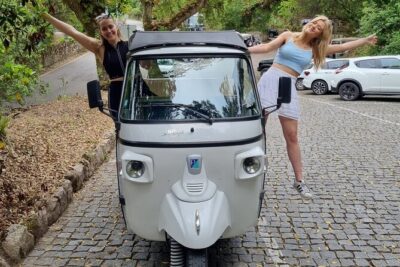
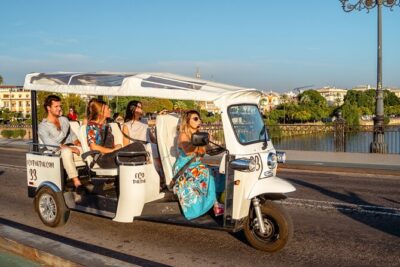
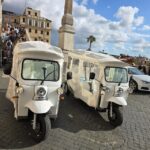
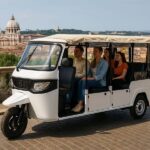
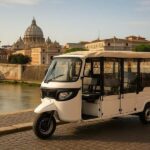
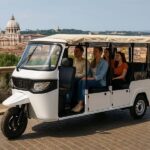
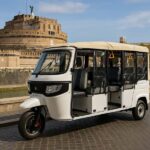
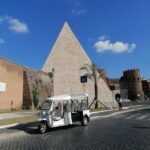
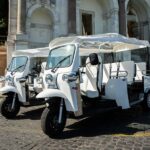
Rome, but from a friendly electric tuk tuk. This private electric tuk tuk tour is a smart way to cover big-name Rome in about three hours, with an audio guide plus your driver’s guidance so you can ask questions as you go. I also like the rain-ready setup—protective covers, and in winter extra layers—so your plan doesn’t fall apart the first time the sky changes.
The main thing to consider is practical: the tuk tuk has no trunk, so it’s not ideal for suitcases or bulky bags. Also, cobblestones are still cobblestones, and one past group reported a rough ride when the vehicle suspension didn’t feel right.
In This Review
- Key highlights if you like your Rome fast and close
- Why an electric tuk tuk is a smart match for Rome
- Price and what $54.67 buys you in real terms
- Meeting at Piazza Barberini: the start that sets your pace
- Piazza Barberini and Bernini’s Triton Fountain: the classic Rome opener
- Piazza della Repubblica: the Fountain of the Naiads detail stop
- Quirinale Palace viewpoints: royal past to modern power
- Trevi Fountain: the movie-famous moment and the coin ritual
- Piazza Venezia and the Vittoriano: modern Rome carved onto ancient roots
- Via dei Fori Imperiali: the Roman street that practically walks you to the Colosseum
- Colosseum area stop: how to handle a not-included admission
- Circus Maximus and Bocca della Verità: Rome’s wow factor gets quirky
- Vatican City and Gianicolo views: big spiritual scale, then skyline relief
- Piazza del Popolo and Porta-style energy: a main entrance feel in modern time
- Via Vittorio Veneto and Dolce Vita street lore
- Driver guidance is the difference between seeing Rome and understanding it
- Who should book this Rome private electric tuk tuk tour
- Should you book this private electric tuk tuk tour of Rome?
- FAQ
- FAQ
- Is this tour private or do I share it with strangers?
- How long does the Rome electric tuk tuk tour take?
- Do you offer pickup?
- What language is the experience offered in?
- Is it okay if it rains?
- Are tickets for attractions included?
- Can I bring suitcases or bulky bags?
Key highlights if you like your Rome fast and close
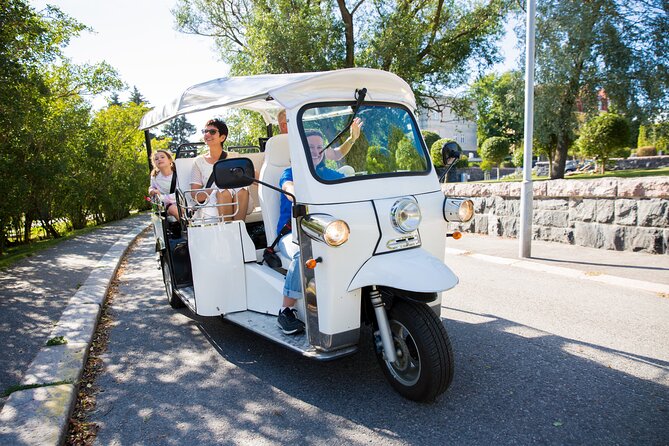
- Private electric tuk tuk that fits Roman streets without long stair marathons
- Audio guide + driver assistance so you get context while you move
- Icon stops packed into ~3 hours from Triton Fountain to Piazza del Popolo
- Rain or shine gear (covers in all seasons, blankets in winter)
- Guide flexibility when the day gets chaotic, including route changes
Why an electric tuk tuk is a smart match for Rome
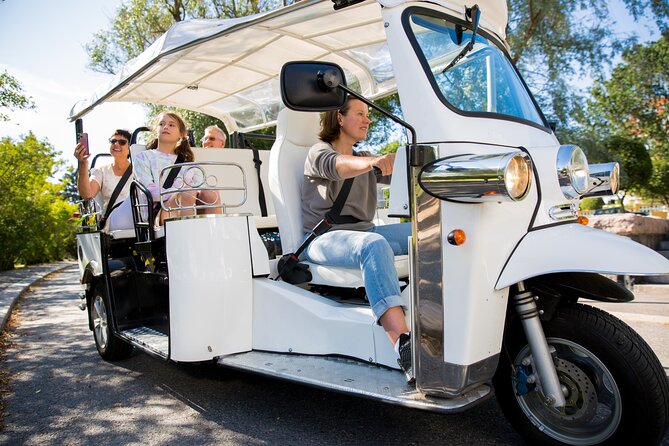
Rome punishes slow planning. Streets turn narrow fast, parking is limited, and you can easily burn your energy just getting between sights. An electric tuk tuk solves a lot of that by keeping you moving while still dropping you near the action—so you spend more time looking up at façades and less time wrestling the map.
You’re also in a small, controlled bubble. Instead of a crowd funnel, you’re rolling with your group, stopping where the moment calls for it. That makes a big difference at the places where you really want a quick photo, a calm read of the details, or time to circle back.
You can also read our reviews of more tours and experiences in Rome.
Price and what $54.67 buys you in real terms
At about $54.67 per person for a 3-hour private ride, you’re paying for convenience and access more than for museum tickets. The value here comes from reducing Rome walking time, getting a tight overview across several neighborhoods, and having an English audio guide to anchor what you’re seeing.
A few stops include admission tickets, and many are listed as free to enjoy at the spot. The Colosseum stop is noted as not included, so if you want to enter the Colosseum itself, you’ll need separate planning. If you’re on a tight schedule and just want the essentials well explained, this format tends to feel like a good deal.
Meeting at Piazza Barberini: the start that sets your pace
Your tour begins at Piazza Barberini (P.za Barberini, 24) and ends back there. That matters more than it sounds: you don’t have to solve a second transportation problem or change your day around some far-off drop-off.
Pickup is offered too, so if you’re staying nearby, you can often save time before the ride. The small warning is that the operator notes the tuk tuks don’t have a trunk—so come light, especially if you’re adding museum bags or shopping plans later.
Piazza Barberini and Bernini’s Triton Fountain: the classic Rome opener
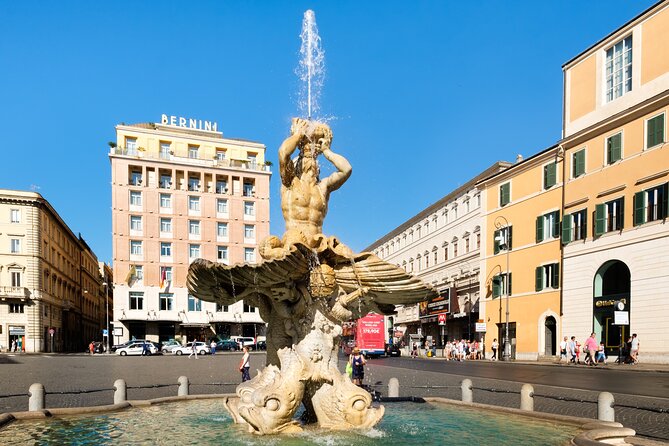
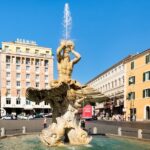
You roll into Piazza Barberini for a close look at the Triton Fountain. It’s a work by Gian Lorenzo Bernini, commissioned by Pope Urban VIII Barberini. Even if you’ve seen photos before, the scale and theatrical stonework hit harder in person.
This is a great first stop because it gives you instant Rome energy. You get symbolism and style right away: Baroque drama in an open square, with the city already stretching outward around you. It’s also a quick reset if you’re tired from travel—stand, look, and you’re ready for the next piazza.
Piazza della Repubblica: the Fountain of the Naiads detail stop
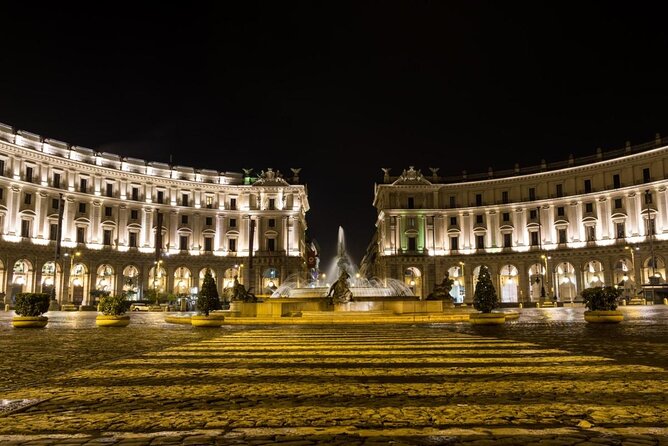
Next up is Piazza della Repubblica, where you’ll see the Fountain of the Naiads by Mario Rutelli and Alessandro Guerrieri. This isn’t just about admiring water in stone. It’s a chance to train your eye for the way Rome uses sculpture to turn a whole square into one big picture.
You’ll likely notice how different this feels from Bernini’s fountain—same grand approach, different mood. If you enjoy comparing styles, this stop makes the tour feel more than just a checklist.
Quirinale Palace viewpoints: royal past to modern power
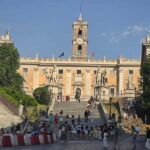
At Piazza del Quirinale, the focus is the Quirinale Palace. It’s tied to the Italian state in multiple eras: the official residence of the King of Italy since 1870, and later the home of the President of the Italian Republic from 1946.
Even if you’re not going inside, this stop helps you understand why Rome politics often plays out in historic monumental spaces. The hilltop setting gives you a different kind of city orientation too—you start seeing how the urban layout rises and frames major buildings.
Trevi Fountain: the movie-famous moment and the coin ritual
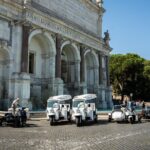
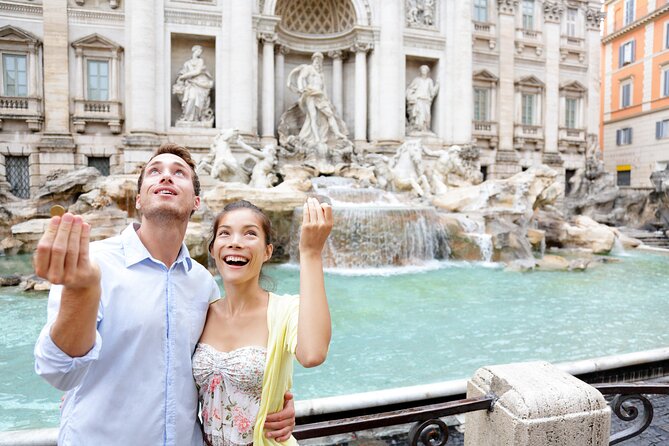
Then you get to Trevi Fountain, Rome’s big headline. It’s described as the largest of the famous fountains in Rome, built by Nicola Salvi and Giuseppe Pannini. You’ll also hear about its connection to La Dolce Vita, which is why it feels so embedded in popular culture.
For the fun part: the legend says you throw a coin with your back to the pool and then turn around—if you see it before it disappears, your return to Rome is guaranteed. Practical tip: give yourself a minute to find a comfortable viewing angle before you do the full photo shuffle. Trevi is popular, and the best shots come from patience, not speed.
Piazza Venezia and the Vittoriano: modern Rome carved onto ancient roots
At Piazza Venezia, you’ll see Palazzo Venezia, which houses the National Museum of Palazzo Venezia and the National Institute of Archaeology and Art History (INASA). This is one of those stops that adds a quieter layer to the tour—Rome isn’t only monuments; it’s also study, archives, and scholarship.
Right next to it is the Vittoriano, also called Altare della Patria. It’s in the center of ancient Rome, and it connects modern Rome through streets that radiate outward from Piazza Venezia. If you like learning how places link together, this is a useful pivot point—your eyes start connecting street lines, not just buildings.
Via dei Fori Imperiali: the Roman street that practically walks you to the Colosseum
The tour continues onto Via dei Fori Imperiali, one of Rome’s most scenic “move-through” streets. It opened in 1932 as via dell’Impero and now takes its name from the monumental remains of the forums of Caesar, Augustus, Nerva, Peace, and Trajan. You’re basically traveling along a timeline.
This is also where you see why tuk tuks work well here: it’s a long corridor, and rolling along keeps your pacing from turning into constant stop-and-go. The street is lined with the characteristic pines of Rome, which gives you an easy visual rhythm as you travel toward the next highlight.
Colosseum area stop: how to handle a not-included admission
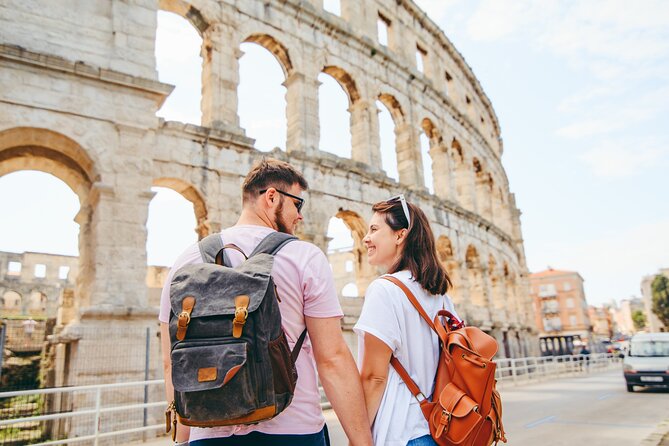
You’ll hit the Colosseum in the center of Rome. It’s the largest Roman amphitheater in the world, estimated to hold between about 50,000 and 87,000 spectators. The names matter too: it was originally known as the Flavian Amphitheater (Amphitheatrum Flavium).
Here’s the practical catch: admission isn’t included for the Colosseum stop. So treat this as a close-view and explanation moment unless you’ve already planned your ticket separately. If you’re hoping for inside time, you’ll want to build that into your day around official entry rules and availability.
Circus Maximus and Bocca della Verità: Rome’s wow factor gets quirky
Next, you stop at Circo Massimo, an ancient Roman circus in the valley between the Palatine and Aventine. It’s remembered for games since early city history, including the famous story of the Rape of the Sabine women connected to games called by Romulus.
This is one of those stops that feels different from the Colosseum. You get a sense of open-scale entertainment space rather than a single carved stage. If you like imagining how these places functioned, Circo Massimo is a strong “picture in your head” moment.
Then comes Bocca della Verità—the Mouth of Truth. It’s an ancient marble mask set in the church of Santa Maria in Cosmedin since 1632. The legend says women accused of adultery placed their hand into the slit and swore they had not lied—if they cheated, the Mouth would cut off the lying hand.
Even if you don’t buy into the legend, it’s great theater in stone. It also gives you a break from the big architectural scale and lets the tour swing into humor.
Vatican City and Gianicolo views: big spiritual scale, then skyline relief
The tour reaches Vatican City, listed as free for the stop. Vatican City is a landlocked city-state and the smallest sovereign state in the world by area, with only 869 inhabitants noted. If you like “how big is it really?” facts, this is a useful one because it puts the Vatican in perspective without needing a long explanation.
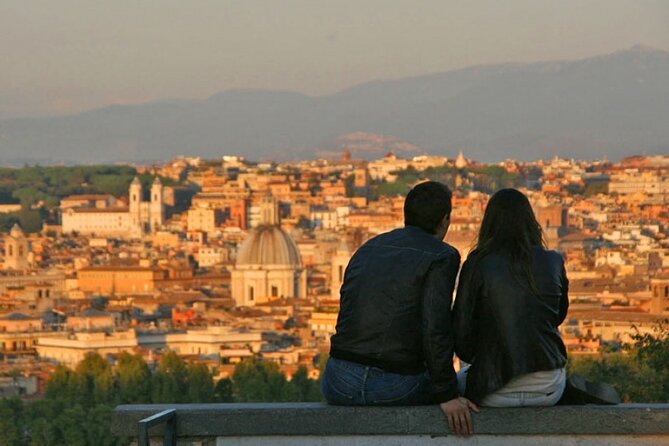
After that, you climb to Terrazza del Gianicolo. The Janiculum is a hill on the right bank of the Tiber, maximum height listed as 88 meters (and it’s not one of the seven traditional hills). This is where Rome stops being a list of monuments and turns into a panorama.
A view like this helps your brain connect everything you just saw. It’s also a smart pacing move: after dense sightseeing streets, the skyline air feels like a reset.
Piazza del Popolo and Porta-style energy: a main entrance feel in modern time
At Piazza del Popolo, you’re at an intersection of three major streets in the historic center: via del Babuino, via di Ripetta, and via del Corso. It sits under the Pincio gardens, and in Roman times it was the main entrance to the city.
The stop being noted as admission ticket included suggests you’ll be able to enjoy something specific tied to the area (rather than just a curbside look). Either way, this place is worth it because it’s both symbolic and practical: you feel how Rome opens up from a single hub.
Via Vittorio Veneto and Dolce Vita street lore
Your ride includes Via Vittorio Veneto, often called Via Veneto. It climbs uphill from Piazza Barberini toward Porta Pinciana in the Ludovisi district. This street became famous during the Dolce Vita period, with cafés and hotels frequented by actors, singers, and journalists.
A specific named connection pops up here: Harry’s Bar is mentioned as one of the notable spots. And the street’s fame is linked to La Dolce Vita by Federico Fellini. Even if you don’t plan to stop for a drink, it’s fun to walk the vibe for a few minutes and understand why this neighborhood is still cultural shorthand for a certain kind of Rome.
Driver guidance is the difference between seeing Rome and understanding it
The tour’s format matters, but the human part matters just as much. In the strongest accounts, the driver—often named Carlo—is praised for pacing, patience, and stories that make the stops click. There are also notes about route adjustments when plans changed, including starting later when street conditions got complicated (like during a major event).
In one account, the driver and staff also helped with practical needs, including finding ways to reduce extra walking for someone with mobility challenges. If your group includes kids, older adults, or anyone who gets tired fast, this “real-world flexibility” is a big reason to choose a private vehicle over a rigid group bus.
Who should book this Rome private electric tuk tuk tour
Book it if you want a high-effort overview with low walking load. It’s also a great fit for your first day in Rome when your brain is still mapping neighborhoods and you want immediate orientation.
It’s especially appealing if you like:
- short stops at major sights where you can linger as needed
- a ride that can handle tight streets
- an English audio guide plus driver explanations while you move
It may not be ideal if you have large luggage, because the tuk tuk doesn’t have a trunk. And if you’re extremely sensitive to rough cobblestone roads, I’d consider that some rides can feel bumpy depending on the vehicle condition.
Should you book this private electric tuk tuk tour of Rome?
I’d book it if your priority is time-saving and getting a guided tour across the classics—Trevi, Vatican area, Colosseum surroundings, and big viewpoints—without turning your day into a marathon.
Skip or rethink if you want full museum-grade time inside major sites like the Colosseum, since admission there isn’t included. Also, if you’re traveling with bulky bags, plan a luggage-friendly alternative or keep expectations modest about what you can carry during the ride.
If you’re flexible, travel light, and want a fun, close-up Rome overview with real storytelling, this one is a strong match.
FAQ
FAQ
Is this tour private or do I share it with strangers?
It’s a private tour/activity, so only your group participates.
How long does the Rome electric tuk tuk tour take?
It runs for about 3 hours.
Do you offer pickup?
Pickup is offered, and the tour starts at Piazza Barberini (P.za Barberini, 24, 00184 Roma RM).
What language is the experience offered in?
The tour is offered in English, and it includes an audio guide.
Is it okay if it rains?
Yes. The tour operates rain or shine, and the tuk tuks have protective covers against rain and wind. In winter, they also include blankets to keep you warm.
Are tickets for attractions included?
Some stops are listed as admission ticket free, and some stops include admission tickets (including Trevi Fountain, Circo Massimo, Bocca della Verità, Terrazza del Gianicolo, and Piazza del Popolo). Colosseum admission is not included.
Can I bring suitcases or bulky bags?
No. The tuk tuks don’t have a trunk, so you can’t carry suitcases or bulky packages.