REVIEW · PORTO
Porto Tuk Tuk: Clérigos, Seaside & Viewpoints – with Options
Book on Viator →Operated by Tuk Tour Porto · Bookable on Viator
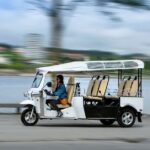
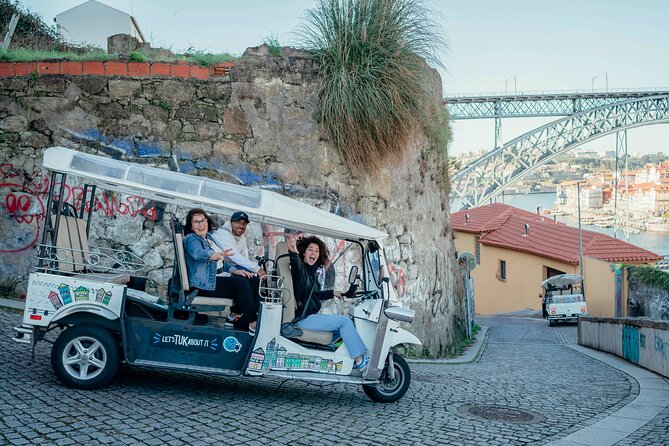
Porto by tuk-tuk is fast and fun. I love how it helps you see major viewpoints without fighting hills, and I also like the way the private guide can tailor the stops with real stories. The tradeoff: a few tuk-tuk setups make it harder to see out to the sides or take photos, especially if your seat position is raised and the roofline is low.
This is a solid half-day-style orientation if you’re short on time. You can choose a start time, and you’ll ride through Porto’s historic core plus the river-and-sea viewpoints. Since it runs only when the weather cooperates, I’d plan to keep this slot flexible in your day.
In This Review
- The Basics: What This Porto Tuk-Tuk Tour Delivers in ~3 Hours
- Key Stops You’ll Hit (And Why They Matter)
- Batalha Square: The Easy Start in Porto’s Historic Center
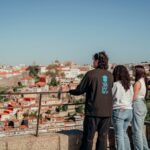
- Fontainhas Viewpoint: Quick Stop, Big Picture Energy
- Luis I Bridge + Maria Pia Bridge: The Engineering Story You’ll Remember
- Palácio da Bolsa: Architecture Clues, Not Just a Name Drop
- Palácio de Cristal Gardens: A Free, Peaceful Douro Break
- The Seaside Fortress Stop: Ocean Views That Feel Like a Different Porto
- Clérigos Area and Central Sights: The Route That Connects It All
- Private Guide Impact: How the Best Tours Stay Personal
- Price and Value: Is $42.34 Worth It?
- What Could Go Wrong (And How to Plan for It)
- Should You Book This Porto Tuk-Tuk Tour?
- FAQ
- How long is the Porto tuk-tuk tour?
- Is this tour private or shared?
- What language is the tour offered in?
- Are tickets to monuments included?
- Who can participate?
- Does the tour run in any weather?
- How do start times and tour length work?
The Basics: What This Porto Tuk-Tuk Tour Delivers in ~3 Hours
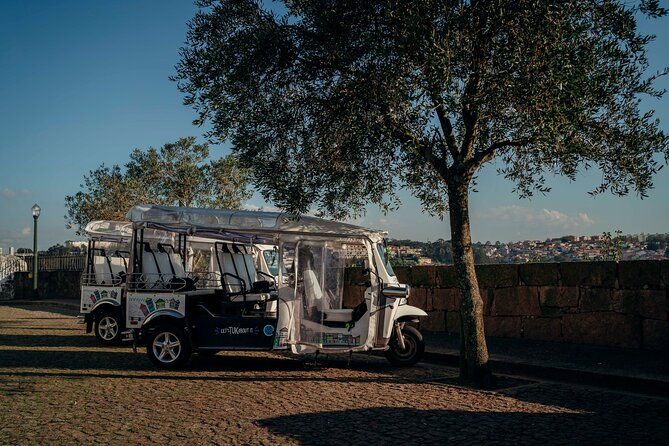
This tour is built for efficiency, not for lingering at one museum. You’ll cover a lot of ground in a short window, with enough time at viewpoints to stop, look, and snap photos.
You’re also getting private transport with a guide (your group only). That matters in Porto, where streets change quickly and shortcuts can save real energy. And yes, it’s a tuk-tuk—so instead of sweating through steep streets, you’re rolling above them.
Key Stops You’ll Hit (And Why They Matter)
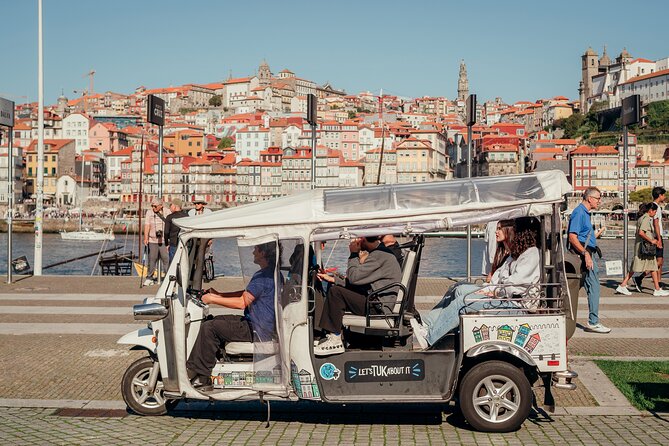
- Batalha Square as a launch pad: a central, local-feeling square that puts you in the historic flow fast.
- Fontainhas Viewpoint for fast skyline payoff: a quick stop where the views are the point.
- Eiffel-era bridge context: you’ll hear how major structures connecting Porto were engineered in the late 1800s.
- Palácio da Bolsa outside-style architecture nerd moment: construction details and design influences you won’t guess on your own.
- Palácio de Cristal gardens for a calm Douro pause: fountains, sculptures, and river views with no ticket cost.
- Seaside fortress views: ocean air and stone walls that feel far from the center.
You can also read our reviews of more tours and experiences in Porto.


Batalha Square: The Easy Start in Porto’s Historic Center
You’ll begin at R. de Alexandre Herculano 251, right in the historic-center orbit. Once you’re rolling, the first named stop is Batalha Square, a lively hub surrounded by notable buildings and the kind of everyday motion that makes Porto feel real.
This is the spot that works as a mental reset. From here, it’s easy to understand the city’s “shape”: steep pockets of old streets, then sudden open areas where you can breathe and look around. If you’re jet-lagged, this stop helps you get oriented fast.
Fontainhas Viewpoint: Quick Stop, Big Picture Energy
Next up is Fontainhas Viewpoint. The timing is short—about 10 minutes—so don’t plan on doing anything slow here. Bring your camera and your patience for hills, because the payoff is in the view itself.
This is the kind of stop that’s perfect early in the tour. I like hitting at least one viewpoint before you get deep into neighborhoods, because later you’ll recognize directions and landmarks you saw from above.
Important note: no admission ticket is included for this stop, so you’ll only be paying if the viewpoint requires something on the day you go. (Most viewpoints don’t, but your guide will clarify what you need.)
Luis I Bridge + Maria Pia Bridge: The Engineering Story You’ll Remember

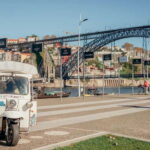
As you move around Porto, you’ll hit a key “how did they build this?” moment: the Luis I Bridge and Maria Pia Bridge. You’ll hear that the Luis I bridge was built between 1881 and 1886, connected to engineer Théophile Seyrig and Gustave Eiffel, while Gustave Eiffel is also tied to the Maria Pia Bridge.
Why I like this: it gives you context for what you’re already seeing. Porto’s river crossings can look like set pieces unless someone explains why they’re there and how they were made. Hearing the dates and names makes the architecture feel less random—and more like a long plan.
If you enjoy structure and design, this is the kind of detail that makes the whole ride more satisfying.
Palácio da Bolsa: Architecture Clues, Not Just a Name Drop
You’ll spend time near Palácio da Bolsa, and the story goes beyond “it’s pretty.” Construction began on October 6, 1842, and the building mixes Tuscan and neoclassical architecture with English and Arabic influences. You’ll also hear about the inside Arab living parallelogram, a standout detail you might miss unless your guide points it out.
One caution: your tour info notes tickets are not included for monuments or entrances. So if you want to go inside and not just admire from the outside and nearby areas, you’ll likely need to plan ahead and pay separately.
Even without an interior visit, I find this stop valuable because it teaches you what to look for. You stop treating Porto’s buildings like postcards and start seeing the design decisions behind them.

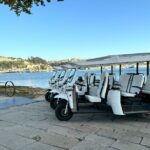
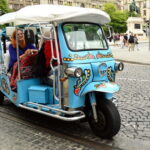
Palácio de Cristal Gardens: A Free, Peaceful Douro Break
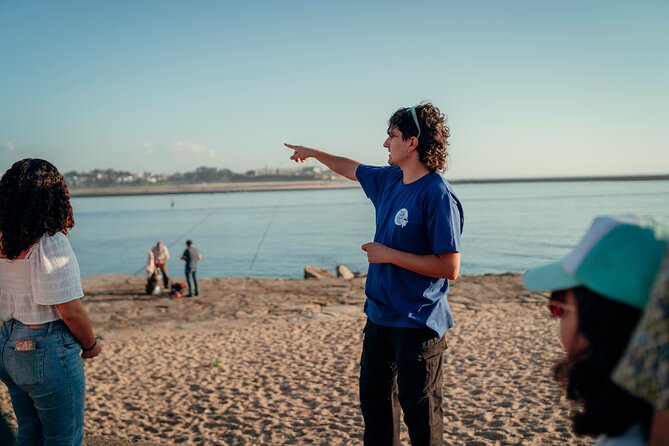
Then you get a breather: Jardins do Palácio de Cristal. This is one of the simplest “value wins” on the day because it’s listed as free admission and around 15 minutes.
The gardens are known for their Douro River views, plus fountains and sculptures. In a city where you might otherwise spend hours in traffic-like street turns and stair-step hills, this feels like a reset button. You’re not chasing something big; you’re pausing to let the river and boats do the talking.
This is also a great spot for photos that don’t look posed. Keep it casual: find a viewpoint, let the light do its thing, then head back before you overstay the group pace.
The Seaside Fortress Stop: Ocean Views That Feel Like a Different Porto
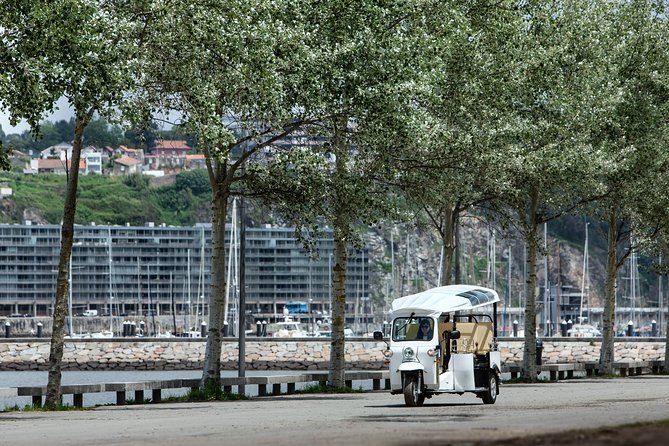
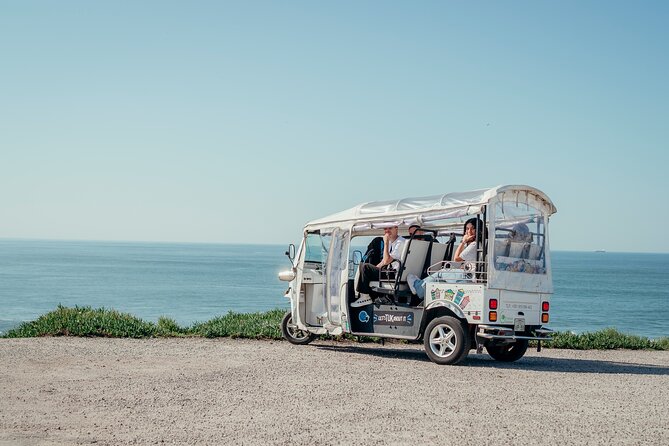
After the gardens, the route shifts toward the coast. The itinerary calls this part a seaside fortress with stone walls and ocean views.
Even when you don’t know the exact name of the structure (your guide can fill in local details), the sensation is clear: stone, wind, and that sense of being at the edge of the city. It also gives you a contrast to the river viewpoints you’ve already seen—Porto gets two moods in one day.
If you’re sensitive to bumpy roads, this is the point where you’ll feel it most. You’re moving across different terrain, and tuk-tuks can run a bit rough on uneven patches. Plan to hold on and relax into it.
Clérigos Area and Central Sights: The Route That Connects It All
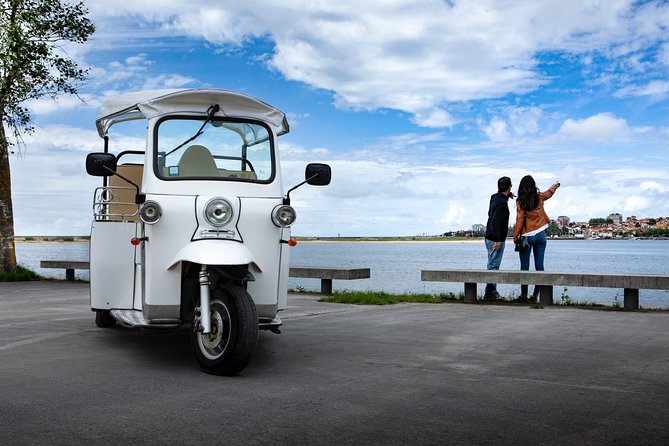
This tour’s title points to Clérigos, and the ride typically includes the historic-center atmosphere where Clérigos Tower sits. You’ll also get passing exposure to other central landmarks that help you connect dots as the day goes on.
A major plus of the tuk-tuk format is the way it lets you see more than one “version” of Porto in a short span. You go from central squares and viewpoints to river-to-sea energy without wasting hours.
Just keep expectations realistic. This isn’t a slow, stop-and-stroll walking tour. It’s more like getting driven through the city’s main visual arguments, with stops that let you answer your own questions: Where’s the best view? What direction am I looking at? What neighborhood should I return to?
Private Guide Impact: How the Best Tours Stay Personal
The strongest praise across the experience is consistent: the guides bring the city to life and handle questions well. Names that show up in feedback include João, Ricardo, Elena, Ruben, Diogo, Pedro, and Helena.
What I’d take from that (and what you should look for) is the value of a guide who:
- picks good viewpoint angles for photos,
- explains the “why” behind what you’re seeing, not just dates,
- and adjusts the route when you want something different.
There’s also a common theme that stops aren’t just checkboxes. Some guides are happy to slow down for photos or tailor the ride if you mention what you care about. One review even highlights a music connection with a guide who had a guitarist/singer background—those little personal touches can turn a tour into a memorable afternoon.
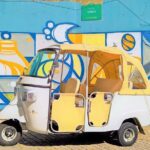
Do note one downside that shows up too: the vehicle setup can affect how much you see. If you want wide side views for photos, ask your guide (or check descriptions at booking time) about the view from your specific seat position.
Price and Value: Is $42.34 Worth It?
At $42.34 per person for about 3 hours, this isn’t a budget “hop-on, hop-off bus” deal. You’re paying for two things that matter in Porto: private transportation and a private guide.
Here’s the math that makes it feel worth it:
- Porto’s hills can be tiring fast. A tuk-tuk lets you cover distance without spending that energy walking between viewpoints.
- Most of the day is built around sights you’d otherwise chase with taxis or a tiring route plan.
- The guide component can save time. Instead of doing guesswork on where to stand, you get pointed at the right angles and context.
If you’re traveling solo or as a pair, private pricing can still feel efficient because you’re not buying “extra” tickets for entrances you might skip. Also, at least one major stop—Palácio de Cristal gardens—is free, which helps.
What Could Go Wrong (And How to Plan for It)
The most real considerations aren’t about safety—they’re about comfort and viewing.
1) Visibility for photos
Some riders report difficulty seeing out to the sides due to the tuk-tuk’s seating setup and roof height. If that’s important to you, choose your seat position carefully if there’s an option.
2) Road feel
A few reviews mention the ride can be bumpy. You’ll likely feel it on older cobblestones or uneven sections. If you’re prone to motion sickness, consider a plan like ginger or a light meal beforehand.
3) Not everything is an entry-ticket stop
Some highlights are viewpoint-and-architecture focused. Tickets or monument entrances aren’t included, so if you want to go inside places like Palácio da Bolsa, budget for that separately.
Should You Book This Porto Tuk-Tuk Tour?
Book it if you want a fast, guided way to get your bearings in Porto, see river-and-sea viewpoints, and learn a few details that make the architecture click. It’s especially good as a first afternoon when you need orientation before committing to longer self-guided walks.
Skip (or switch vehicles) if you’re very photo-focused and need wide side visibility throughout the ride. Also, if you hate bumpy roads, you’ll want to mentally prepare or choose your time of day when streets are calmer.
If you want an easy start that gives you direction for the rest of your trip, this is a smart use of your time.
FAQ
How long is the Porto tuk-tuk tour?
The duration is listed as about 3 hours.
Is this tour private or shared?
It’s a private tour/activity, meaning only your group participates, with a private guide.
What language is the tour offered in?
The tour is offered in English.
Are tickets to monuments included?
No. Tickets or monument entrances aren’t included. Some stops have free entry (for example, the gardens at Palácio de Cristal are free).
Who can participate?
Most travelers can participate, but children under 7 years old are not allowed.
Does the tour run in any weather?
The experience requires good weather. If it’s canceled due to poor weather, you’ll be offered a different date or a full refund.
How do start times and tour length work?
You can choose a start time, and there are options for different lengths (reviews note options such as 1, 2, 3, or 4 hours).