REVIEW · MADRID
Madrid Tuk Tuk & Olé Experience – Private 1.5h Cultural Tour
Book on Viator →Operated by Green Tours · Bookable on Viator
Madrid hits different at tuk-tuk speed. This private 90-minute ride strings together royal landmarks, major churches, and top art stops with an English-speaking guide who helps you understand what you’re actually looking at as you move.
I love the pace-to-value mix: it’s short enough to feel doable, but packed with big-name sights like the Royal Palace, Almudena Cathedral, and the Prado area. I also like that many stops on this route list free admission tickets, so the tour isn’t just sightseeing from the sidewalk. The one caution: some stops are brief, and traffic later in the day can slow things down—one guide tip you’ll want to take seriously is going early.
In This Review
- Key highlights to know before you ride
- A tuk-tuk route that makes 90 minutes feel like more
- Royal Palace of Madrid + Almudena Cathedral: monarchy meets meaning
- San Francisco el Grande, Puerta de Toledo, and Cánovas: history you can point at
- Atocha and Reina Sofía: fast transit energy meets 20th-century art
- Los Jerónimos + the Buen Retiro survivors: the palace that still talks
- Royal Spanish Academy + Prado area: language and masterpieces in one sweep
- Puerta de Alcalá, Las Ventas, Salamanca, and the Madrid showpiece streets
- Price and timing: when $167 per group makes sense
- Should you book this Madrid Tuk Tuk & Olé private tour?
- FAQ
- How long is the Madrid Tuk Tuk & Olé private cultural tour?
- What does the tour cost, and how many people can join?
- Is the tour offered in English?
- Where do we meet, and where does the tour end?
- Is this a private tour?
- Do you need to print tickets?
- What’s included and what isn’t?
Key highlights to know before you ride
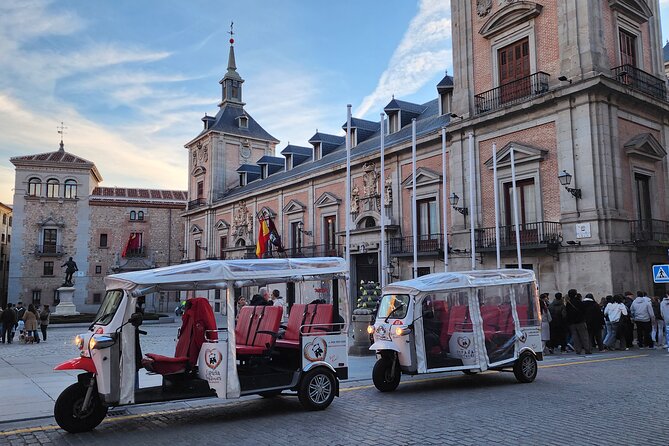
- Private group setup (up to 4): less waiting around, more time talking with your guide.
- Free-entry sights on the route: many of the main stops are listed with free admission.
- Museum-and-monument balance: you get major “wow” stops without turning the trip into a full-day museum sprint.
- Good guide energy: names like Simon, Sebastian, Pedro, Pablo, and Charly show up with praise for clarity and humor.
- A logical Madrid loop: you move through Retiro, Atocha, and central city highlights without backtracking.
A tuk-tuk route that makes 90 minutes feel like more
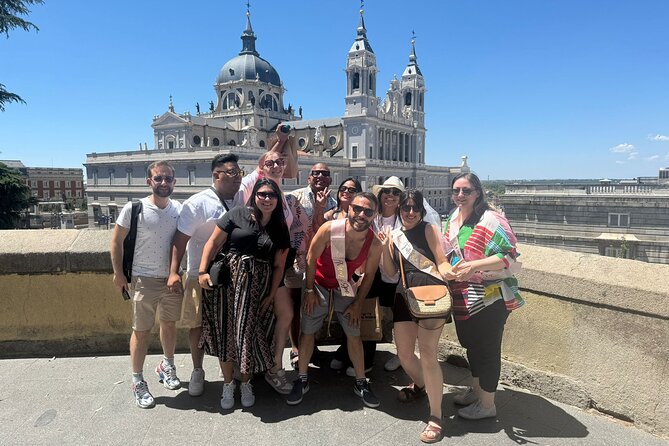
This is the kind of tour you book when you want to get your bearings fast without feeling like you’re cramming. You meet at Pl. de la Lealtad, 1, in Retiro and ride as a private group (up to four people), with the experience ending back at the meeting point.
The big practical win is that the guide can tie together the city’s story while you’re in motion. Madrid isn’t just “pretty streets.” It’s layers: royal power, church influence, modern art, and the grand boulevards of a growing capital. A tuk-tuk makes it easier to cover all those zones in a short time, and an English guide keeps the context clear as you go.
You can also read our reviews of more tours and experiences in Madrid.



Royal Palace of Madrid + Almudena Cathedral: monarchy meets meaning
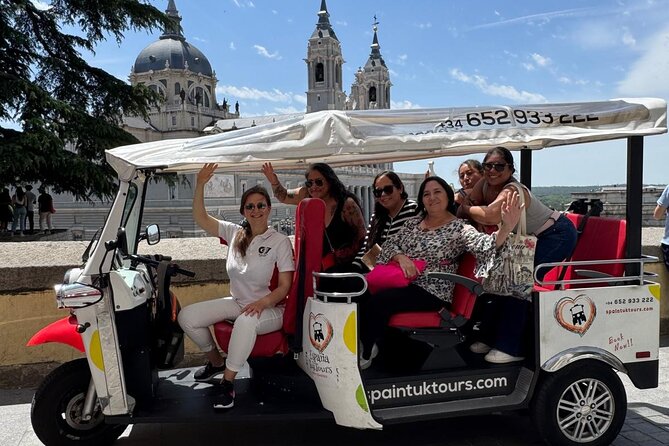
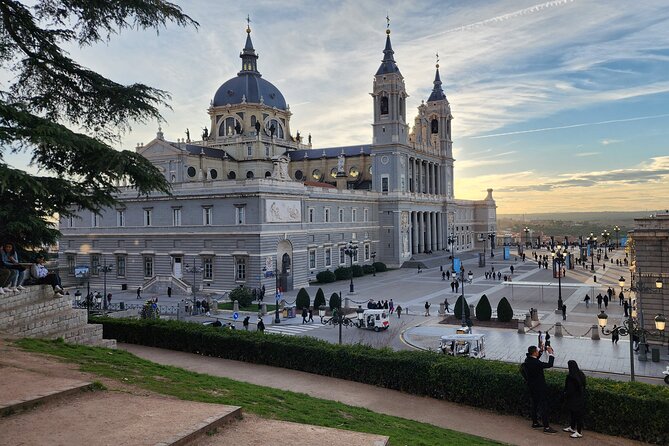
The Royal Palace stop is an instant signal of scale. You’ll see how massive the palace is (about 135,000 m² and 3,418 rooms) and hear how it functions as the official residence of the King of Spain—the emotional point is less about furniture and more about what power looks like in stone.
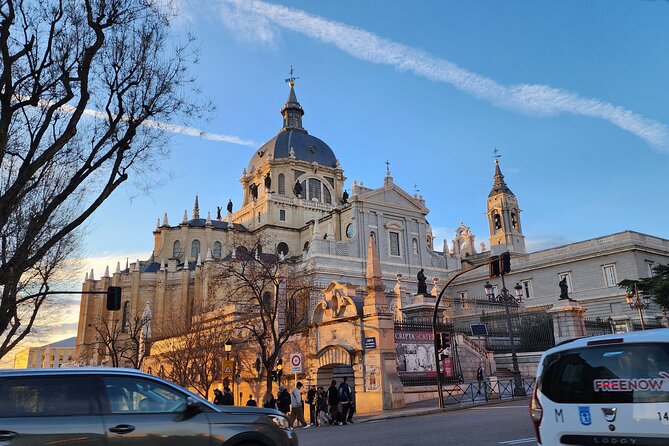
Then you shift to Almudena Cathedral, one of Madrid’s most symbolic religious buildings. The cathedral sits in the historic center and connects to an older story: it’s on a site linked to an old mosque. Even if you don’t go deep into every chapel detail, the guide can point out the building’s timeline and its mixed design language: Neoclassical outside, Neo-Gothic inside, and Neo-Romanesque in the crypt.
Why this pairing works: you start with royal authority, then step into spiritual authority right in the same central gravity. It’s an efficient way to understand how Spain’s capital grew around institutions, not just landmarks.
Quick consideration: the Royal Palace and Almudena Cathedral are major sites, so the stops can feel more like structured orientation than a long sit-down visit. If you want a slow, interior-only day, you’ll still want a separate museum or palace time later.
San Francisco el Grande, Puerta de Toledo, and Cánovas: history you can point at
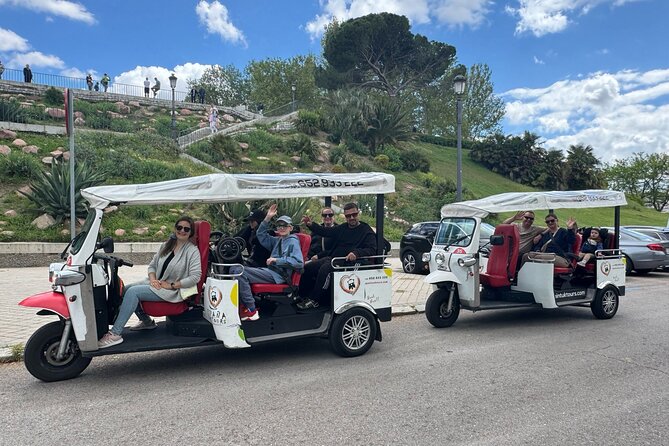
Next comes Real Basilica de San Francisco el Grande, a church that’s hard to forget once you know where it fits. It sits in the historic center near Plaza de San Francisco, and it’s tied to the Franciscan convent of Jesus and Mary, founded in the early 13th century. The guide can explain the relationship between the basilica and the broader convent complex, which helps you see it as part of an older urban system—not just a standalone building.
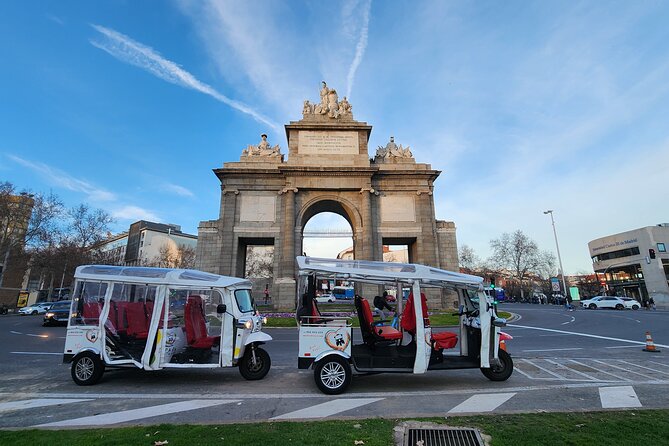
From there, you pass Puerta de Toledo, one of Madrid’s access gates. What’s interesting here is that the gate you see now dates to the first third of the 19th century, and it’s designed as a triumphal arch honoring King Ferdinand VII after the French occupation. It also sits in the middle of a roundabout (Glorieta de la Puerta de Toledo), so it’s one of those places you’re likely to notice repeatedly even after the tour.
Then the tour lands in Plaza de Cánovas del Castillo for the Neptune Fountain. This isn’t just a pretty landmark; it has a timeline. The fountain was proposed in 1777, built from 1782 to 1786, and later moved in 1898 to its current central position.
Why you’ll like this stretch: it’s classic Madrid “bones”—gates, religious buildings, and public art that show how the city shaped movement and public space. These stops also break up the heavy museum time with something more street-level and walkable-feeling.
Atocha and Reina Sofía: fast transit energy meets 20th-century art
Estación de Atocha is the station stop that gives Madrid some electricity. The tour highlights it as a major railway junction and notes it has the highest passenger traffic in Spain. You get an easy sense of why: it began as a simple halt in 1851, later extended and inaugurated as the Midi station in 1892.
Then you head into Reina Sofía territory at Museo Nacional Centro de Arte Reina Sofía. What I like about this stop is that it’s not just about modern art as a style—it’s about the building itself. The museum uses the old General Hospital of Madrid, a neoclassical structure dating to the 18th century, including parts designed by José de Hermosilla and later Francesco Sabatini (the Sabatini building name comes from him). The museum opened in 1992, and later expanded with the Nouvel building at the start of the Ronda de Atocha opening in September 2005.
Practical thought: Reina Sofía can swallow time if you let it. This tour keeps it efficient, so if modern art is your main reason to visit, plan to come back and spend longer on your own.
Los Jerónimos + the Buen Retiro survivors: the palace that still talks
The tour then moves into the Retiro area’s deep past. San Jerónimo el Real—often called Los Jerónimos—was one of Madrid’s most important monasteries. The key idea you’ll hear is that the monastery’s adjacent royal space links into what became the Buen Retiro Palace during Felipe IV. Even though you’re not touring a fully intact palace today, you get that “this used to be huge” perspective.
Two surviving Buen Retiro buildings are the stars here: Casón del Buen Retiro and the Salón de Reinos.
At Casón del Buen Retiro, the story has serious art credibility. Built in 1637 by Alonso Carbonel, it was originally designed as a court ballroom for Felipe IV. Later, it became part of the Prado system in 1971. The big, specific connection you’ll want to remember: Picasso’s Guernica was at the Casón for decades, but it moved to Reina Sofía in 1992. The Casón reopened as a Museum Study Center in 2009, and the 19th-century collections were relocated to the Prado’s main headquarters after work and expansion.
Then the Salón de Reinos brings you back to the Buen Retiro Palace axis. Built between 1630 and 1635, it was the representative axis and hosted the best paintings, many now preserved in the Prado. The room’s name comes from painted coats of arms of the twenty-four kingdoms of the Hispanic Monarchy under Philip IV. A different chapter also matters: the room was called the Army Museum because it housed that institution from 1841 to 2005, with collections later transferred to the Alcázar of Toledo.
Why these stops are a big deal for your time: instead of wandering a destroyed site with no context, you see two intact structures and get the palace’s narrative explained through architecture and collections.





Royal Spanish Academy + Prado area: language and masterpieces in one sweep
If you’ve ever wondered why Spanish looks and feels so formal on street signs, academic walls, and official institutions, the Real Academia Española (RAE) is part of that answer. The RAE is a publicly funded private cultural institution in Madrid, founded in 1713 on the initiative of Juan Manuel Fernández Pacheco, and the King Felipe V approved its constitution the following year. The Academy’s first statutes were approved in 1715.
Then the tour brings you to the Museo Nacional del Prado. This is one of the world’s big art names, and the value of this stop on a short tour is focus: the museum is famous for paintings from the 15th to 18th centuries and Spanish work from the 19th. The guide can point you toward the highlights that people actually travel here for: Velázquez, El Greco, Goya (described as the most widely represented), Titian, Rubens, and Bosco.
Reality check: Prado is not a quick in-and-out kind of museum. On a 90-minute tour, you’re using it as a guided orientation—enough to decide what you want to chase later.
Puerta de Alcalá, Las Ventas, Salamanca, and the Madrid showpiece streets
After the Prado zone, the tour keeps moving through landmarks that show different flavors of Madrid.
You’ll see Puerta de Alcalá, one of Madrid’s old royal gates. It sits in the Plaza de la Independencia roundabout, at the crossroads of Alcalá, Alfonso XII, Serrano, and Salustiano Olózaga. It’s also next to the Retiro gates, including Puerta de España and Puerta de la Independencia (noted as a main entrance to the Retiro gardens).
Then there’s Las Ventas, Madrid’s bullring—listed as the largest in Spain. The capacity noted here is 23,798 spectators, and it’s identified as the third largest in the world after those in Mexico and Valencia (Venezuela). It’s also second largest by diameter at 61.5 m after Round (as described in the provided details). Even if you don’t care about bullfighting, it’s still a major piece of Madrid’s public culture and architecture.
Next is Barrio de Salamanca, which makes Madrid feel upscale and modern. It’s named after José de Salamanca y Mayol, Marquis of Salamanca, who promoted and built part of the area in the 19th century. Today it’s known for shopping around Serrano, Claudio Coello, and Ortega y Gasset, and it’s described as having some of the highest living standards in Europe.
You also pass by the Biblioteca Nacional de España (BNE) and the Banco de España, which add a more official, institutional layer. The BNE is responsible for preserving Spain’s bibliographic heritage, guarding around 30 million publications (books, magazines, maps, engravings, drawings, scores, brochures) produced since the start of the 18th century. The Bank of Spain’s headquarters were built between 1884 and 1891 at the confluence of Calle Alcalá and Paseo del Prado overlooking Plaza de Cibeles.
And finally, you land on Gran Vía, one of Madrid’s main streets. It runs from Calle de Alcalá to Plaza de España and became a signature early-20th-century landmark. The tour notes its “Madrid’s Broadway” nickname for the stretch between Plaza de Callao and Plaza de España, where cinemas evolved into musical theater in recent years. It also points out where international fashion chains are concentrated between the San Luis network and Plaza de Callao.
Why this ending section is smart: by the time you reach Gran Vía, you’ve already seen the power centers (palace, academy, bank) and the public spaces (gates, fountains, bullring). The city’s personality snaps into focus.
Price and timing: when $167 per group makes sense
At $167.02 per group (up to 4 people) for about 1.5 hours, this tour prices like something you’d do for efficiency and guidance—not like a long, deep-dive museum day. If you’re traveling as a small group, the private setup matters: you’re not competing with strangers for time at each stop, and your guide can adjust pacing if your group likes photos, quick questions, or a more story-heavy route.
A key value marker here is that many stops list free admission tickets. That doesn’t mean you’ll necessarily avoid every queue or have unlimited time inside every building, but it does mean you’re less likely to pay extra to enter the sights the tour is showcasing.
Now the other side of timing. The city can get slower as the day progresses. One guide tip repeatedly supported by the experience descriptions is simple: go early. It helps you get to the best views and keeps the schedule from feeling rushed.
Should you book this Madrid Tuk Tuk & Olé private tour?
Book it if you want a guided highlights loop that hits royal sites, major churches, top art territory, and central Madrid streets in one short block of time. It’s especially good for first-timers who don’t want to plan a route themselves or for anyone who wants to understand Madrid’s mix of power, religion, and culture without committing to a full-day museum plan.
Skip it (or plan extra time elsewhere) if you want long interior visits at places like the Prado. This tour works best as orientation plus context. It helps you decide where you want to come back, and the free-entry nature of many stops helps keep that second visit idea affordable.
If you care a lot about personality and delivery style, look for the sort of guide described here: Simon is singled out for being very good, Sebastian for saving the best view for last and even tailoring help by speaking Italian for better understanding, Pedro for making things feel historical, Pablo for being accommodating and informative, and Charly for combining facts with humor and practical local tips for neighborhoods and walking.
FAQ
How long is the Madrid Tuk Tuk & Olé private cultural tour?
It’s approximately 1 hour 30 minutes.
What does the tour cost, and how many people can join?
The price is $167.02 per group for up to 4 people.
Is the tour offered in English?
Yes. It’s offered in English.
Where do we meet, and where does the tour end?
You meet at Pl. de la Lealtad, 1, Retiro, 28014 Madrid, Spain, and the tour ends back at the meeting point.
Is this a private tour?
Yes. It’s a private tour/activity, meaning only your group participates.
Do you need to print tickets?
No. You’ll receive a mobile ticket.
What’s included and what isn’t?
The tour includes all fees and taxes. Lunch and dinner are not included.