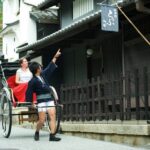
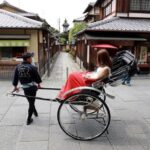
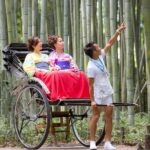
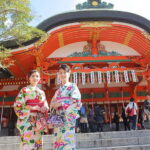
A rickshaw ride feels like Kyoto in miniature. You glide past wooden town houses, stone alleys, and the kinds of corners you miss on foot, with a guide who helps you make sense of what you’re seeing. I like how the route is designed around the old Higashiyama lanes, not just big postcard spots.
Two things I really like: the mix of Higashiyama + Gion stops, and the way the English-speaking guides keep the ride lively with stories and good photo timing. Names you might meet include Fumi, Kai, Yoshi, Kanta, Kota, Shuhei, Moto, and Hina.
One thing to think about first: rickshaw seats are only 29.1 inches (74 cm) wide, and the usual limit is two adults per rickshaw. If you’re bigger-bodied—or traveling as a group and want more comfort—you may want to book separate rickshaws.
In This Review
- Key highlights worth planning for
- Why this Kyoto rickshaw feels more personal than sightseeing on rails
- Price and what $39.79 buys you in real value
- Meeting at Ebisuya Higashiyama: simple start, low friction end
- Higashiyama by rickshaw: wooden town houses, geisha-area streets, and cobblestone atmosphere
- Temple stops with garden pauses and photo angles you can actually use
- Gion’s shrine area: old customs, big atmosphere, and seasonal timing
- Getting the best out of your guide: stories, humor, and strong photo help
- Choosing your ride length: 30 minutes vs 2 hours vs 3 hours
- Comfort and rickshaw seating: the 29.1-inch reality check
- Weather, timing, and keeping the day smooth
- Should you book this Kyoto Rickshaw Tour?
- FAQ
- Is this a private tour?
- How long is the Kyoto rickshaw tour?
- What’s included in the price?
- What isn’t included?
- Where do I meet for the tour?
- Does the tour end somewhere else or back at the start?
- How many people can ride in one rickshaw?
- Can I customize the route?
- Does it run in rain?
- Is the ticket valid for the Arashiyama branch?
Key highlights worth planning for
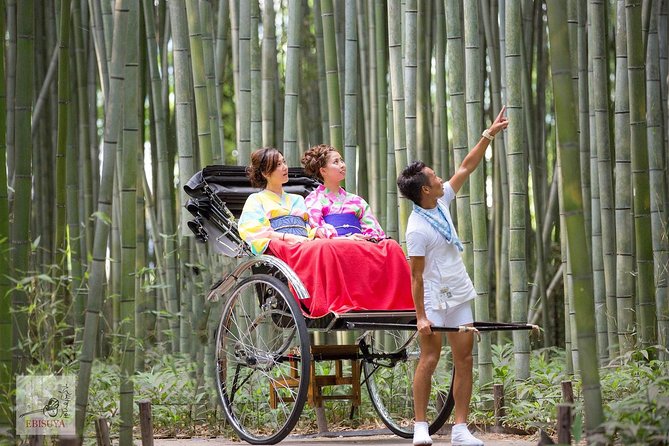
- Old Kyoto streets, up close: cobblestones, narrow alleys, and traditional wooden buildings in Higashiyama
- Temple and shrine time: stops that include a garden temple, an impressive temple, and a big Gion shrine area
- English guide + driver combo: your guide helps with context while the driver handles the route and photos
- Your pace, your interests: you can customize depending on what you want to emphasize
- Photo-friendly timing: small pauses at key viewpoints and guided stops that help you get great pictures
Why this Kyoto rickshaw feels more personal than sightseeing on rails
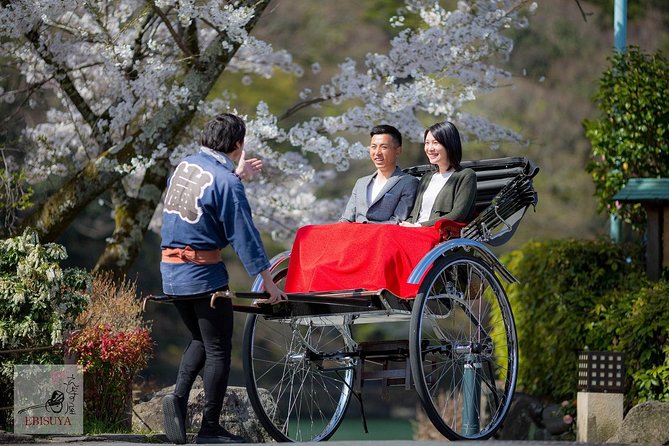
Kyoto is packed with sights, but the real magic is in the in-between details: the stone steps that twist, the old woodwork on low buildings, the quick change from a wide street into a narrow lane. A rickshaw is built for that. You travel slowly enough to notice things, and you don’t have to fight crowds for position.
The experience also has a “Kyoto rhythm” to it. You’re not just moving from point A to point B. You’re learning what you’re looking at—why that street matters, what a shrine/garden tradition is doing here, and how the neighborhood layout shapes daily life. Guides often help with small etiquette and local customs too, which makes the whole walk-and-stop pattern feel respectful rather than touristy.
Price and what $39.79 buys you in real value
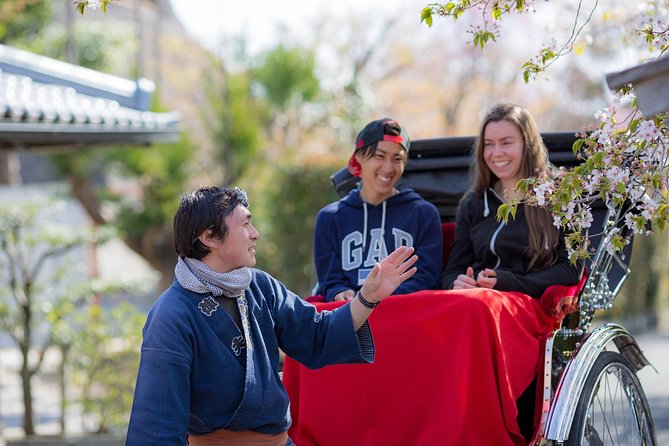
At about $39.79 per person, this is one of the more budget-friendly ways to do a guided rickshaw ride versus fancy private tours that often cost far more. The value comes from three things you don’t always get together:
- a local English-speaking guide (not just a driver),
- a rickshaw ride itself (not a short photo-only demo),
- and multiple stops across Higashiyama and Gion (so you’re not paying for one brief view).
Also, the duration range matters. The ride can be 30 minutes to 3 hours (approx.), so you can match it to your energy and schedule. Shorter options work if you want a quick taste of old Kyoto lanes. Longer rides make more sense if you want time to stop, take photos, and hear more stories.
Meeting at Ebisuya Higashiyama: simple start, low friction end
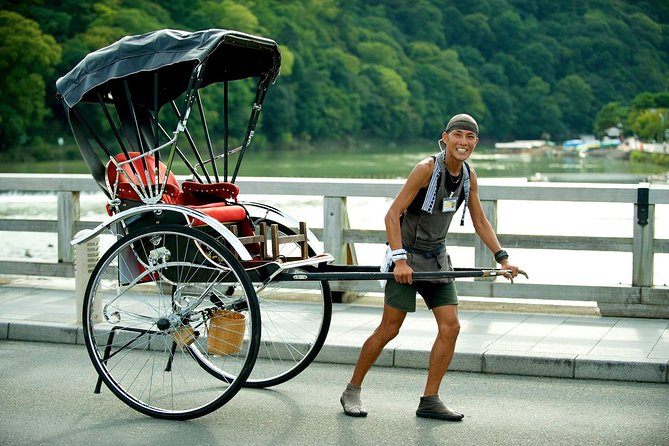
You meet at Ebisuya Higashiyama Rickshaw, 483 Shimokawarachō, Higashiyama Ward. The good news: it’s near public transportation, so you’re not stuck relying on taxis or complicated transfers.
You’ll also finish back at the meeting point. That’s a small detail, but it saves you from the “now what” stress after a tour ends—especially useful if you’re hopping to dinner in Gion or heading to another temple area.
If you’re running tight, keep in mind that late arrival time is deducted from your tour duration, and a delay of 10 minutes or more results in automatic cancellation. In Kyoto, that’s a big deal—streets look close on a map but can take longer in real life. Build in extra minutes.
Higashiyama by rickshaw: wooden town houses, geisha-area streets, and cobblestone atmosphere
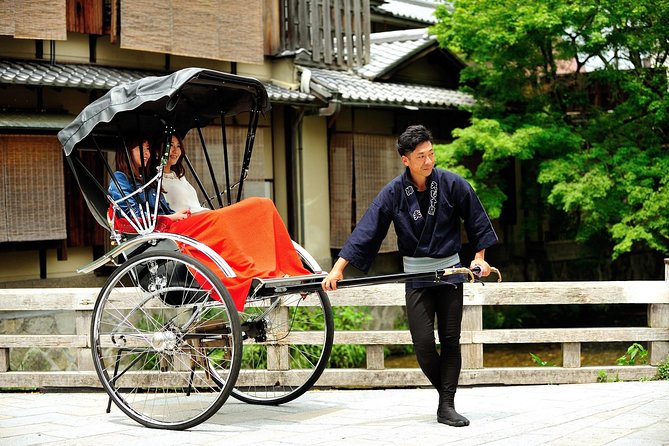
Most of the magic starts in Higashiyama. Your route begins around the Higashiyama area and moves toward recognizable landmarks, then into the older street patterns where Kyoto looks “pre-modern” in feel.
Here’s what makes this part so satisfying:
- You get a slow glide along stone alleys and cobblestone streets, where walking would be slow and a bit tiring.
- You’re framed by wooden buildings and traditional architecture, which reads differently when you’re level with doorways and shop fronts.
- You may spot signs of geisha culture and the surrounding scene, including the chance to see performers in the wider geisha districts (some guides have helped groups catch a glimpse).
In practical terms, this is the part where your guide earns their keep. They point out what to look for—patterns in buildings, the layout of the neighborhood, and why those narrow lanes exist. Guides you might encounter include Fumi, Kai, Yoshi, and Shuhei, and many descriptions point to quick, friendly conversation plus solid English.
You’ll also have stops that break the ride into walk-and-look moments, including:
- a geisha district area with traditional wooden town houses,
- a small bridge in a traditional district,
- and more time spent absorbing side streets rather than only passing by.
One caution: some spots are easy to “see from the rickshaw,” but getting the best photos often means stopping and turning at the right angle. That’s why timing your tour length matters (more on that below).
Temple stops with garden pauses and photo angles you can actually use
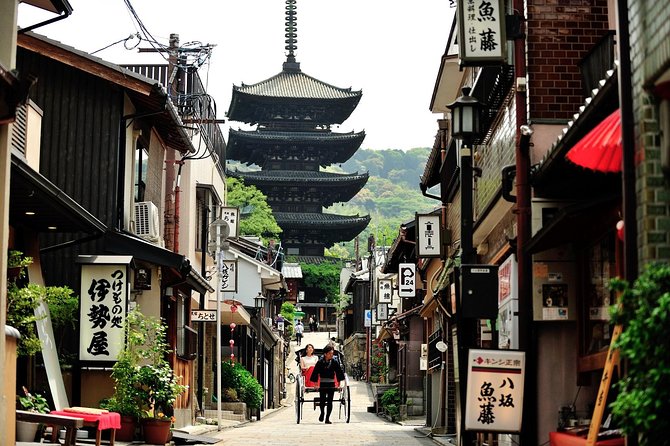
After the old street feel, the itinerary shifts into temple-and-garden territory. There’s usually a beautiful temple with a garden moment, and then an additional impressive temple stop.
Even without naming every temple on the route, the pattern is clear: you’re getting the Kyoto mix of architecture + quiet space. Garden temples in Japan aren’t just pretty. The layout is designed to create viewpoints—what you see from one place differs from another, and the surrounding design often guides your attention.
What you should expect on these stops:
- Short guided explanations (so you understand what you’re looking at).
- Time to take photos without racing.
- A calm break from the motion of riding.
In one example you might get a stop connected with Kennin-ji Temple if your chosen time allows it. If that’s a must for you, choose a longer duration and ask your guide directly when you meet them.
Gion’s shrine area: old customs, big atmosphere, and seasonal timing
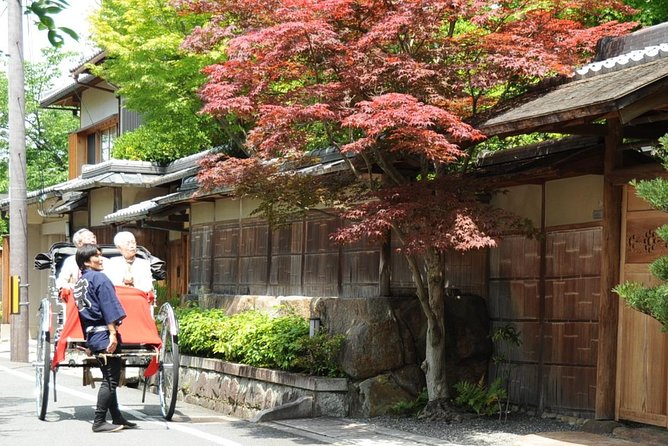
As you move toward Gion, the mood changes from alley-hush to broader shrine and festival energy. The tour includes a large shrine in the Gion area and is described as worth it around New Year’s, before or after your rickshaw ride.
This is one of the reasons I like this tour format in Kyoto’s calendar. A shrine stop isn’t only about buildings—it’s about timing. During the New Year period, the area often carries special atmosphere, and seeing it as part of a ride through nearby traditional streets makes the whole day feel connected.
Also, the Gion portion is where the “old Kyoto” vibe often becomes most cinematic. You’re in an area that’s strongly linked with tradition, so even if you don’t know every detail, you feel the cultural weight.
Getting the best out of your guide: stories, humor, and strong photo help
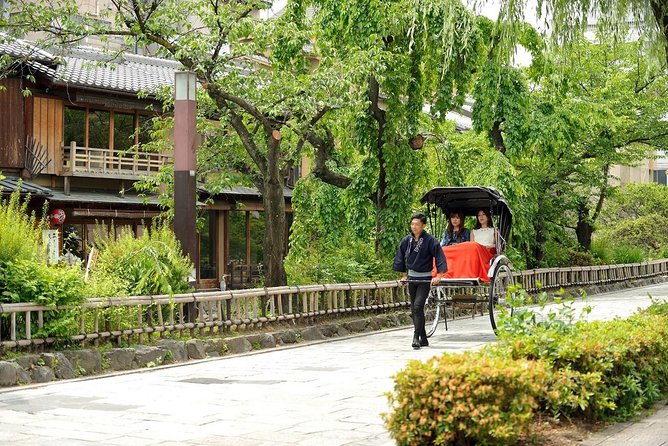
A rickshaw ride lives or dies by the guide. The best ones do three jobs at once: they explain what you’re seeing, keep the pace right, and help you take photos that look like something more than a quick snapshot.
From guide names mentioned, you might ride with people like:
- Fumi (often praised as energetic and story-focused),
- Kai (frequently described as giving a running commentary and being upbeat),
- Yoshi (noted for excellent English),
- Hina (called patient with questions),
- Kanta (praised for street and temple explanations in Gion),
- Kota (friendly, informative, and often a strong photographer),
- Moto and Shuhei (also mentioned as excellent guides).
Here’s what I’d look for during your ride:
- Do they answer questions clearly and without rushing you?
- Do they know where to pause for better angles?
- Do they keep the ride moving but not frantic?
If you want a fun balance, these guides seem to hit it. One theme you’ll notice in feedback is that guides aren’t just pointing. They’re talking—sometimes with humor—and they’re working hard physically too, which adds to the respect level.
Choosing your ride length: 30 minutes vs 2 hours vs 3 hours
You’ll choose your duration at booking, and that choice affects what you can actually cover.
If you go short (like around 70 minutes or the half-hour option), you’ll get a taste—great for first-timers who want the experience without a long time commitment. One person praised a half-hour route as a lovely way to see the district, with helpful photo-taking along the way.
If you go longer (like 2 hours), you have room for more meaningful stops and for the guide to slow down at the spots that need context. Many highlights mention 2 hours as the sweet spot—enough time to see a lot and still take photos and ask questions.
For maximum depth (up to 3 hours), you’re paying for time, which is the biggest currency you spend in Kyoto. The payoff is more stops and a more complete feel of the area. Some groups even extended their time because they didn’t want it to end.
Important note: not every landmark can be covered by shorter options. If there’s a specific temple or shrine you care about, talk through your priorities with the guide when you start (or discuss options in advance).
Comfort and rickshaw seating: the 29.1-inch reality check
This is the part you shouldn’t skim.
Each rickshaw fits two adults, and it’s 29.1 inches (74 cm) wide. That doesn’t sound tiny until you’re sitting in it. More comfortable plans often mean booking individual rickshaws, especially if:
- you’re traveling as a couple and want personal space,
- one person is broader-bodied,
- you’re bringing children (for lap seating rules),
- or you simply hate squeezing.
Also, there’s a clear rule set for children:
- Adult pricing starts at age 6 and over.
- Children 5 years and under can sit on an adult’s lap (one child per adult).
- If a child (5 and under) uses one of the two seats, it must be booked as an adult.
- Up to two children can ride with two adults, but they still must be on an adult’s lap.
If your group configuration doesn’t comfortably fit two adults per rickshaw, you may need to book an additional rickshaw. The tour can require extra purchase in order to ride at the same time, and availability for English-guided scheduling might not be guaranteed if you don’t book early.
Weather, timing, and keeping the day smooth
The tour runs rain or shine, so you don’t lose the day to weather midstream. Still, the provider says the experience requires good weather, and if it’s canceled due to poor weather you’ll get an alternative date or a full refund.
Your best strategy is simple:
- wear layers and decent shoes you don’t mind getting a little wet,
- bring a small umbrella or rain shell,
- and arrive early so you don’t risk losing duration.
Also, the tour can’t accommodate rescheduling requests sent after 5pm the day before. For Kyoto, that’s a good reminder to plan your day timeline early, especially if you’re stacking temple visits and transit.
Should you book this Kyoto Rickshaw Tour?
I’d book it if you want an easy, fun way to see old Kyoto areas without draining yourself on hills and long walking. It’s especially strong for first-timers who want Higashiyama + Gion as a single connected experience, plus real context from an English-speaking guide.
I’d hesitate if your group needs wider seating comfort and you didn’t plan for individual rickshaws. The 29.1-inch width can turn what should be relaxing into an endurance test. It’s also less ideal if you only want one or two specific landmark photos and nothing else—because the value comes from the guided route and the stop-by-stop storytelling.
If you’re doing Kyoto for the architecture, traditions, and street atmosphere—and you like the idea of a guide helping you read the city—this ride is a great use of time.
FAQ
Is this a private tour?
Yes. This is listed as a private tour/activity, so only your group participates.
How long is the Kyoto rickshaw tour?
The duration runs from about 30 minutes up to about 3 hours, depending on the option you choose.
What’s included in the price?
Included: a local English-speaking guide and the rickshaw ride.
What isn’t included?
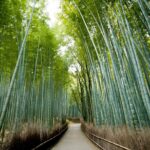
Not included: hotel pickup and drop-off, food and drinks, and Arashiyama Bamboo Forest.
Where do I meet for the tour?
You meet at Ebisuya Higashiyama Rickshaw, 483 Shimokawarachō, Higashiyama Ward, Kyoto, 605-0825, Japan.
Does the tour end somewhere else or back at the start?
It ends back at the meeting point.
How many people can ride in one rickshaw?
A maximum of 2 adults per rickshaw. Children 5 years and under may ride on an adult’s lap (one child per adult), with up to 2 children allowed when riding with 2 adults.
Can I customize the route?
Yes. The tour can be customized depending on your interests.
Does it run in rain?
Yes, the tour takes place rain or shine.
Is the ticket valid for the Arashiyama branch?
No. The voucher/ticket can only be used at the Kyoto Higashiyama branch and is invalid at the Kyoto Arashiyama branch.