REVIEW · PORTO
Cruise Shore Excursion – Private Tuk Tuk Tour to the Historic Center
Book on Viator →Operated by Portuk · Bookable on Viator
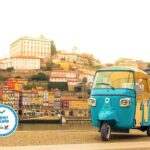
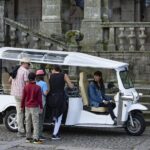
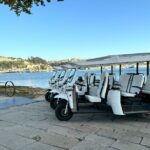
Porto’s hills make this tour feel extra smart. A private tuk tuk ride keeps you moving while your guide ties the sights to Porto’s seafaring, architecture, and day-to-day culture. I love the fast orientation you get in just 3 hours 30 minutes, and I also like the Port wine glass at a scenic stop instead of a rushed bar crawl. One drawback to plan for: many major sights have separate monument entry fees, so you’ll spend extra money if you want to go inside.
If you’re docking and want your bearings early, this is a solid way to see both Porto and the river views toward Vila Nova de Gaia. I especially liked hearing guides like Ana and Gonçalo explain what you’re looking at as you go, not just recite dates. Still, keep expectations realistic: the route is packed, and that can mean limited time for shopping at street level.
In This Review
- Key things that make this Porto tuk tuk tour worth your attention
- Porto by Private Tuk Tuk: why this beats a bus day
- Meeting the tour: cruise pickup that saves your sanity
- The river-and-industry start: Porto’s seafaring vibe before you hit the core
- Arrábida Bridge and the Douro mouth views: the kind of photos you can’t plan yourself
- The old power buildings: a prison story turned into photography
- Cordoaria Garden (Jardim de João Chagas): the quiet pause inside a busy route
- Clérigos Tower: the 240 steps that earn the view
- Livraria Lello: Art Nouveau beauty with real ticket-line reality
- Churches and tile work: Igreja do Carmo and Igreja dos Carmelitas
- The Stock Exchange Palace and Ferreira Borges market: Porto’s commercial brain
- São Francisco Church: why people call it Church of Gold
- Walking the Ribeira area without the vehicle headache
- Serra do Pilar and the two-bridge river panorama
- Where the day gets “Porto energy”: Batalha, São João, and tiled chapels
- Bolhão Market: a famous stop with one big caveat
- Price and value: what $106.93 per person buys you
- Who should book this Porto private tuk tuk tour
- Should you book Portuk’s private tuk tuk tour?
- FAQ
- How long is the private tuk tuk tour?
- Does the tour offer pickup from the cruise port?
- Is the tour offered in English?
- Is this tour private to my group?
- Are entrance fees included for monuments?
- What’s included besides the guide?
- Is the tour suitable for families or kids?
- What if weather is bad or I need to cancel?
Key things that make this Porto tuk tuk tour worth your attention
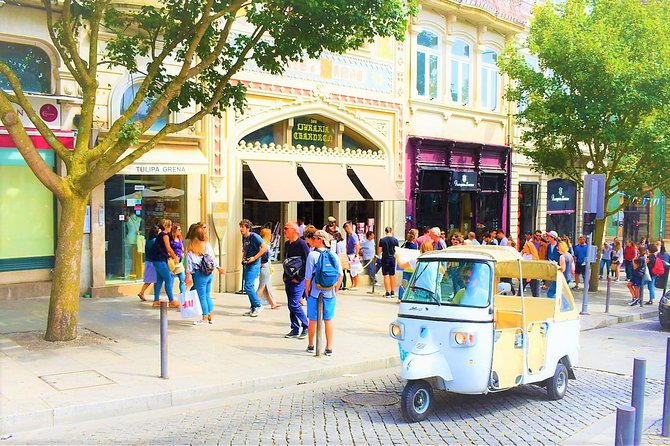
- Private vehicle feel in Porto’s tight streets: You’ll reach corners bigger buses can’t.
- Big viewpoint payoff: Arrábida Bridge views plus Passeio das Virtudes and the Serra do Pilar terrace.
- Port wine, done simply: A glass gets poured as part of the experience, usually from a bottle rather than a sit-down stop.
- Ticketed highlights are the trade-off: Clérigos Tower, Livraria Lello, and several churches are not included.
- Courteous, energetic guides: Many visitors single out guides like Ana, Gonçalo, Fabio, Gabriella, and Claudio for pacing and storytelling.
- Cobblestones can be bumpy: This is a ride experience, not a smooth car tour.
Porto by Private Tuk Tuk: why this beats a bus day
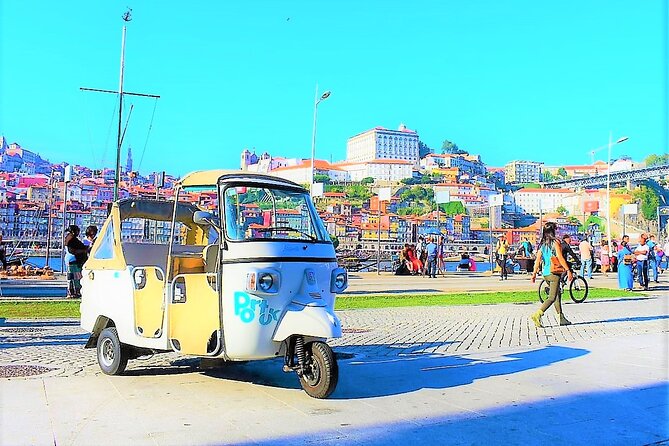
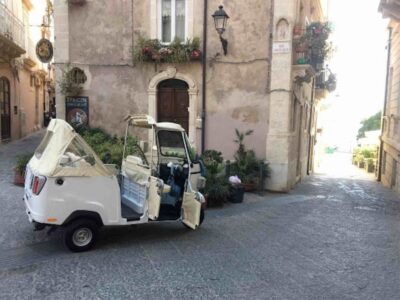
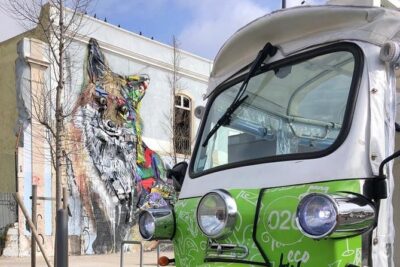
Porto is famous for steep streets and tight turns. A tuk tuk helps because it’s built for maneuvering where larger vehicles struggle. That matters on a cruise day, when you’re on a clock and still want to feel like you saw real neighborhoods, not just scenic pull-offs.
The best part is that you get a “map in motion.” Your guide points out landmarks you’d miss if you arrived on your own, then explains why they matter. You’re not just looking at pretty buildings; you’re learning how the city evolved—from maritime and industrial power to the religious and mercantile centers that shaped the historic core.
The other reason I like this format is that it saves your legs. Even if you do climb steps at a couple of monuments, you’re not walking every hill. One helpful theme in guide style: people repeatedly describe the pacing as just right, with time to pause and take photos without feeling yanked along.
You can also read our reviews of more tours and experiences in Porto.


Meeting the tour: cruise pickup that saves your sanity
Your pickup is at the pier outdoor gate, and it’s specifically tied to the cruise terminals: Leixões Port, Matosinhos Port, and Doca Norte. The tour starts no later than 1 hour after your ship arrives, and they use a mobile ticket you can show on the day.
This is where a lot of cruise excursions live or die. The good news: many guides in the experience have been praised for showing up on time and communicating when docking times shift. You’ll also get English commentary on board.
My practical advice: don’t assume the pickup time is automatically synced to your schedule in a cruise dock shuffle. If your docking time changes, message promptly and be ready with your ship name and re-boarding time details (the operator asks for these at booking).
The river-and-industry start: Porto’s seafaring vibe before you hit the core
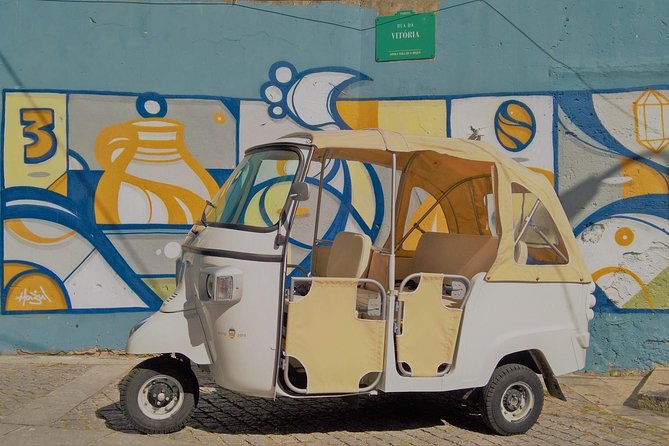
The route begins with visual cues about Porto’s maritime and industrial identity, including a sculpture designed around the city’s fishing heritage. You’ll see elements that reference smokestacks and lighthouses, plus a net structure meant to echo fishing work.
This first segment is more useful than it sounds. It sets the mental framework for everything that follows: ports, bridges, warehouses, markets, and the wealth tied to trade. If you’ve ever wondered why Porto feels both elegant and working-class, this “origin story” makes the rest of the day click.
You then move toward a striking granite hexagonal tower with a red balcony and lantern. Small stops like this help you get your eye trained for the city’s details, especially when the streets start throwing churches, fountains, and facades at you back-to-back.
Arrábida Bridge and the Douro mouth views: the kind of photos you can’t plan yourself
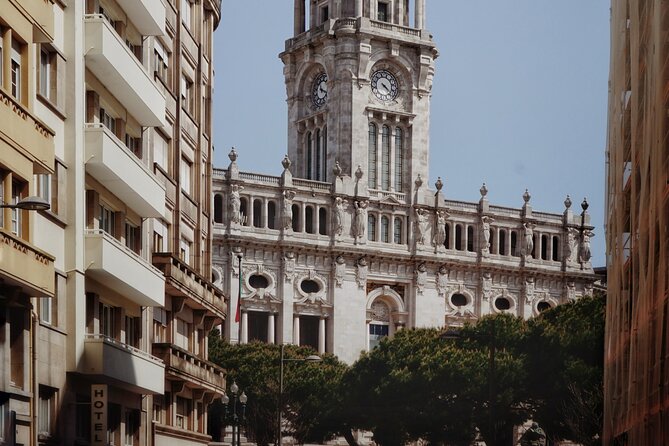
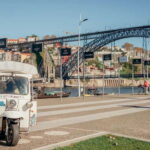
One of the biggest “wow” moments on the route is the Arrábida Bridge, a reinforced concrete arch built over the Douro between Porto and Vila Nova de Gaia. It was inaugurated in 1963, and when it opened, the main span was the largest concrete-arch span in the world.
From there, you’ll reach Passeio das Virtudes, a viewpoint lane with a wide view down to the Douro River mouth bar. In the foreground you’ll find the Fountain of Virtudes, and terraces drop toward São Pedro de Miragaia. Along the river, you can spot the former Customs House—one more reminder that this city grew around trade lanes and river life.
If you like photos, this is a strong payoff section because you’re positioned for broad angles. And since your tuk tuk doesn’t have to fight traffic the way you might, you’re more likely to get the timing right.
The old power buildings: a prison story turned into photography
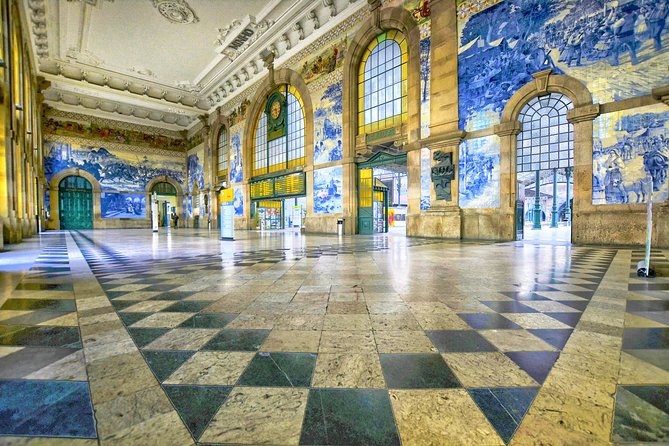
Next comes one of Porto’s most interesting “wait, what is this building?” stops: a polygonal granite building dating from 1582, rebuilt in 1767 in a neo-classical style. It has a geometric sequence of windows—103 in total across the facades.
What I find compelling is how the building’s purpose shaped its layout. The structure has different facades connected to its functions, including an entrance tied to prisoner transport. Famous names are linked to it, including Camilo Castelo Branco and the outlaw Zé do Telhado.
Today, the building is restored and operates as the Portuguese Centre for Photography. So you don’t just get a pretty exterior—you get a living link between Porto’s past and creative culture.
Cordoaria Garden (Jardim de João Chagas): the quiet pause inside a busy route
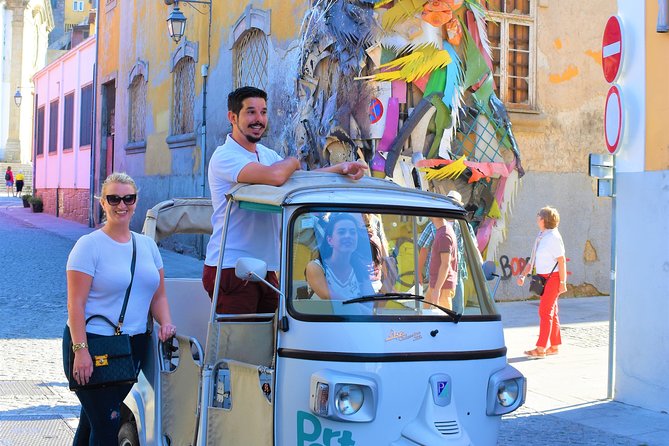
Right after the monuments and institutional buildings, you get a breather at Cordoaria Garden, also known as Jardim de João Chagas. This garden is tied to rope makers who worked in the area for about 200 years, and you’ll see statues and newer sculptures as well.
There are also nods to Porto’s European Capital of Culture moment, when the garden was remodeled. The vibe here is simple: sit for a moment, reset your energy, and look at the textures. It’s free and short in time, but it helps keep your day from feeling like a checklist.
Clérigos Tower: the 240 steps that earn the view
Torre dos Clérigos is one of Porto’s emblematic landmarks, built in the first half of the 18th century by Nicolau Nasoni. The highlight is the climb: 240 steps for a panoramic view over the city and Douro River.
One practical note: entry to this tower is not included, so decide in advance whether the climb is worth the extra time and cost. If you do go up, wear shoes with traction. Porto stone and stairs can feel slick if you’re caught in mist.
There’s also a multi-sensory facility related to the experience of climbing, and it’s described as accessible for all visitors. Still, the real draw is the view at the top.
Livraria Lello: Art Nouveau beauty with real ticket-line reality
Livraria Lello is the stop many people recognize instantly, even if they’ve never been to Porto. The library building opened in 1906 and features an Art Nouveau facade with neo-Gothic details. Inside, you’ll see painted plaster imitating wood, plus a famous red staircase and a large stained-glass skylight with the motto Decus in Labore.
Entry is not included on the tour. The time you get is also limited, so plan how you’ll handle the line outside. Some cruisers recommend getting a faster-entry option online, because the regular ticket lines can be long and your tuk tuk schedule doesn’t stretch.
My advice: go for the exterior and the sense of place even if you decide not to pay for the interior. But if the interior is on your must-see list, treat tickets as part of your itinerary plan, not an afterthought.
Churches and tile work: Igreja do Carmo and Igreja dos Carmelitas
Porto’s churches can be surprisingly specific, and this route hits two that people tend to love for different reasons.
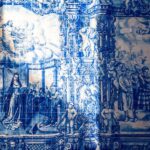
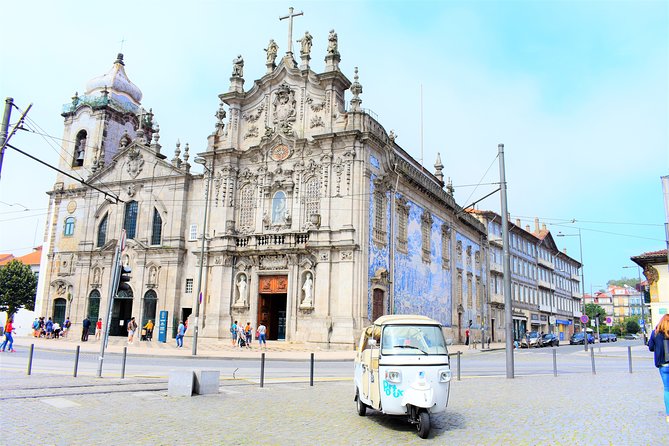
At Igreja do Carmo, you’re looking at late-18th-century rococo architecture. A major detail is the later tilework on the lateral facade from 1912, designed by Silvestre Silvestri, with scenes tied to religious devotion. This one is a national monument.
Igreja dos Carmelitas is earlier in origin, with a seventeenth-century church and a classical facade dated to the 1850s. It’s attributed to Nicolau Nasoni, and the altarpiece is described as Porto rococo. This is also listed as a national monument.
Entry for these is not always included, so you might see the exterior and decide on interiors based on time and ticket cost. If you’re sensitive to spending extra money mid-tour, use the first church as your decision moment: if you love interiors, you’ll likely want to commit.
The Stock Exchange Palace and Ferreira Borges market: Porto’s commercial brain
A key cultural stop is the Palácio da Bolsa (Stock Exchange Palace), a national monument in the historic centre. It was designed in a neoclassical style in 1842, and its standout highlight is the famous Arabian Room.
This palace is also described as part of the Urban Wine Route, which gives you a sense of how the city’s commerce and wine identity intertwine. It’s set up for visitors with reduced mobility through a side entrance, which is good to know if you’re planning a full day.
Nearby is Mercado Ferreira Borges, built in 1885 and known for iron architecture. It later became an entertainment venue, with Hard Club mentioned as its current use. Even if you don’t plan to step inside, it’s a strong visual contrast to the stone churches and baroque details.
São Francisco Church: why people call it Church of Gold
The route includes Igreja de São Francisco, Porto’s major Gothic church with a gilded interior from the 17th and 18th centuries. The woodwork is so ornate that it earned the nickname Church of Gold, and there’s also mention of features like the Tree of Jesse and the catacombs.
This church is a national monument and recognized as UNESCO World Cultural Heritage. Entry is not included, so if you have limited time in your cruise window, you may need to choose: spend your money here or elsewhere.
If you do go in, give yourself a quiet minute. The gold is intense, and it’s the kind of interior you appreciate more slowly than your photos suggest.
Walking the Ribeira area without the vehicle headache
You’ll also pass through Praca da Ribeira, one of Porto’s older squares (cited as medieval in origin). It’s a commercial center tied to the historic riverfront, and the layout was remodeled in the 18th century using wine-related revenues. Archaeological work uncovered a 17th-century fountain, reconstructed and crowned with a sculpture known as the Cube of the Ribeira.
One key detail: this area is described as closed to vehicles, so you’re not dealing with traffic chaos. It’s great if you enjoy nightlife atmosphere, and it’s also part of the Urban Wine Route.
If you want to return later for dinner, this is the zone to remember. Your tuk tuk gives you the orientation; the evening meal is where you can control the pace.
Serra do Pilar and the two-bridge river panorama
The tour tops off the scenic angle with Mosteiro da Serra do Pilar, a UNESCO-listed monastery built starting in 1538 and completed around 1670. The church is circular, with a dome and surrounding balcony. The cloister is also circular and has 36 Ionic columns, noted as unique in Portugal.
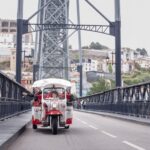
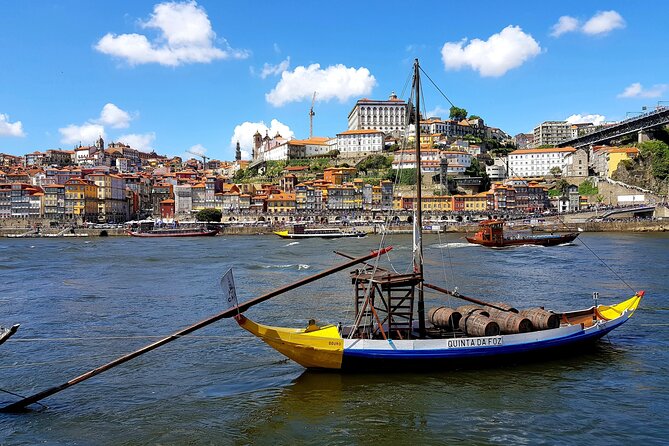
The best part is the terrace view. From here you can see the whole riverside area stretching toward Porto’s historic centre and bridges, including the Cathedral area and D. Luís I Bridge. The opposite direction includes Fontainhas and the São João bridge.
After that, you’ll also notice details tied to another bridge: a modern Maillart-type arch bridge inaugurated in 2003, connecting Fontainhas to Oliveira do Douro in Gaia. Even if you’re not a bridge nerd, it’s a neat contrast—old Porto trade lines paired with modern engineering.
Where the day gets “Porto energy”: Batalha, São João, and tiled chapels
In the historic centre, Praca da Batalha is a quick stop with a monument to D. Pedro V since 1866. The square is also connected to the São João National Theatre and Cine-Teatro Batalha.
The tour continues past the National Theatre São João, constructed in 1910 on older theatre ruins. You’ll also see a chapel connected to tiles that depict scenes from the lives of saints, with panels recovered after damage.
This section is a good example of why the tuk tuk format works. You’re in the heart of the city, but you’re not stuck walking long distances between dots.
Bolhão Market: a famous stop with one big caveat
Bolhão Market is described as Porto’s most famous market, originally dating to 1850 with a two-floor neoclassical structure. It’s known for fresh products and specialized stalls: fish, butcher goods, green groceries, and florists.
But there’s an important planning note: it’s described as currently closed for refurbishment. So treat this as a “see the building” stop rather than a guaranteed browsing time.
If your must-do is shopping inside Bolhão, you’ll need a backup plan for the day.
Price and value: what $106.93 per person buys you
At $106.93 per person for about 3 hours 30 minutes, this tour isn’t the cheapest way to see Porto. You’re paying for three things:
- transport by tuk tuk in areas buses struggle to reach
- live commentary from a driver/guide setup (plus local guidance)
- an included Port wine glass as part of the experience
The value improves if you’re a time-crunched cruiser. The alternative is often piecing together taxis, walking, and paid admissions on your own without the built-in pacing.
The catch is cost creep. Several big hits—like Torre dos Clérigos and Livraria Lello—are not included, and churches can add to your total. I’d budget extra if these interiors matter to you. If you’re mainly after street views and exteriors, the day can stay closer to the base price.
Also, a small group tour can still feel crowded in the vehicle depending on how many people fit comfortably. Some mentions point out that tuk tuks are built for two, so if you’re traveling with three people, comfort may be an issue.
Who should book this Porto private tuk tuk tour
This is a great fit if:
- you want a fast historic-centre orientation on a cruise day
- you like viewpoint stops and want the river angles without long uphill walks
- you enjoy a guide who gives context as you move (not just at one or two attractions)
You might want a different option if:
- you hate adding separate entrance fees for major sights
- you want lots of shopping time (this route is sightseeing-first)
- you have mobility or back issues and want a smoother ride than cobblestones can provide
Should you book Portuk’s private tuk tuk tour?
Yes, with clear expectations. If you want an efficient, guide-led first look at Porto—bridges, churches, viewpoints, and the riverfront—this is a smart choice for most people. The biggest “decision point” is how strongly you care about paying to go inside Clérigos and Lello (and any other ticketed stops).
My final practical advice: message in advance to lock in the pickup timing that works for your cruise. And if you want interiors, decide ahead which ones are non-negotiable so you don’t scramble when the schedule gets tight.
FAQ
How long is the private tuk tuk tour?
It runs about 3 hours 30 minutes.
Does the tour offer pickup from the cruise port?
Yes. Pickup is offered from the main gate at Leixões Port, Matosinhos Port, and Doca Norte.
Is the tour offered in English?
Yes, the tour is offered in English.
Is this tour private to my group?
It is described as private, with only your group participating. A minimum of 2 people per booking is required.
Are entrance fees included for monuments?
No. Monument entrance fees are not included.
What’s included besides the guide?
The tour includes a Port wine glass (and live commentary on board).
Is the tour suitable for families or kids?
Children must be accompanied by an adult, and service animals are allowed.
What if weather is bad or I need to cancel?
This experience requires good weather. If it’s canceled due to poor weather, you’ll be offered a different date or a full refund. You can cancel up to 24 hours in advance for a full refund.
If you want, tell me your cruise docking time and whether you care more about tower climbs, church interiors, or shopping—and I’ll help you decide which ticketed stops to prioritize.