REVIEW · SIEM REAP
Angkor Wat Sunset TUK TUK Tour
Book on Viator →Operated by Angkor Doors · Bookable on Viator
Angkor in one long tuk tuk day. This Angkor Wat sunset tuk tuk tour in Siem Reap is built to move fast between major temples, with stops that make sense in real life, not just on a map. I especially like the punctual transport setup and the English-speaking guide who puts the carvings and places into context.
One practical catch: this trip price is only for the tour, not the temple ticket. You still need an Angkor Pass, and the dress code is strict at the temple entrances. If you show up with bare shoulders or uncovered thighs, you may be turned away.
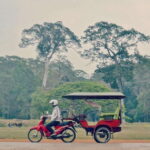
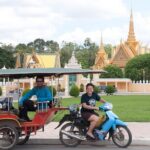
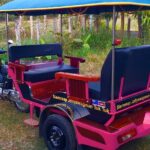
The good news is that the day stays organized. You ride in a tuk tuk (in Khmer, drivers and guides call them Ramorks) and you get cold bottled water along the way. It’s a private group format, so your pace stays yours instead of getting dragged around.
In This Review
- Key Things I’d Put on Your Shortlist
- How the Ramorks Tuk Tuk Day Actually Works
- Price and Tickets: The $32 Reality Check for Angkor
- Dress Code and Timing: Avoid Getting Turned Away
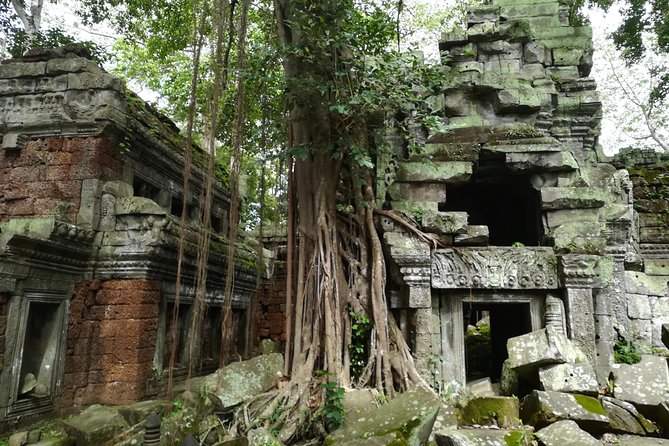
- Ta Prohm: Where Rainforest Trees Take Over
- Banteay Kdei: The Calmer Temple on the List
- Ta Keo: A Quick Photo or Short Walk Stop
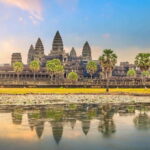
- Angkor Wat: The Main Event on Two Wheels
- Angkor Thom: Bayon, Terraces, Royal Palace, and the Big Circuit
- Angkor Thom South Gate Sunset Options and Phnom Bakheng Choices
- Food, Water, and Keeping the Day Comfortable
- Who This Tuk Tuk Tour Fits Best
- Should You Book This Angkor Wat Sunset Tuk Tuk Tour?
- FAQ
- What is the duration of the Angkor Wat sunset tuk tuk tour?
- How much does the tour cost?
- Is pickup included?
- What time does the tour start?
- Is the Angkor Pass included in the price?
- What does the tour include?
- Are meals included?
- Which temples are visited during the day?
- What is the dress code for the temples?
- Can I cancel for a refund?
Key Things I’d Put on Your Shortlist
- Punctual, well-run tuk tuk transport that keeps the day from feeling chaotic
- English-speaking guide who helps you read what you’re looking at
- Temple route that hits both big names and quieter stops, like Banteay Kdei
- Sunset planning built into the schedule, with options at Angkor Thom South Gate or Phnom Bakheng
- Private tour setup for your group, with cold bottled water included
How the Ramorks Tuk Tuk Day Actually Works
This is an Angkor Wat-focused day where your main job is to show up, sit back, and enjoy the ride between sights. Tuk tuks are the practical choice here. The temple grounds are spread out, and walking the whole circuit all by yourself usually turns into a long, sweaty marathon. With the tuk tuk, you can spend your energy where it matters: looking closely at stonework, climbing viewpoints (if you choose), and listening to the guide explain what you’re seeing.
I also like that this tour keeps the order sensible. Ta Prohm and Banteay Kdei land on the list right away, so you get the dramatic “nature taking over” feeling before the day becomes a blur of crowds. Then you move into the bigger complexes where timing and focus matter more.
Another detail I appreciate: this style of tour is private, so you’re not stuck waiting for other groups to finish photos. That matters at Angkor, where some people move fast and others move slow.
You can also read our reviews of more tours and experiences in Siem Reap.

Price and Tickets: The $32 Reality Check for Angkor
The tour price is $32 per person, and you’ll see that it covers the core experience: guide, tuk tuk transport, and cold bottled water. That’s good value if you’re already planning to buy an Angkor Pass anyway.
But the temple admission fee is not included. The one-day Angkor Pass is listed at $37.00 per person, so your day’s total will be higher once you add entry. In other words, the $32 isn’t a full “temples included” package. It’s the tour logistics plus guide time.
Here’s how I suggest you think about it:
- If you want a guide to help you interpret what you’re seeing and you like an organized route, the $32 tour component makes sense.
- If you’re the DIY type who wants to wander all day with no structure, you may not need a paid guide for every stop—though you’d still have the same entry fees.
Also, food and drinks are not included. Angkor days are hot and long, so this is something to plan for before you run out of energy.
Dress Code and Timing: Avoid Getting Turned Away
Angkor temples have a strict dress code. You need to cover your shoulders and thighs when entering the temple complex. If you don’t have the right clothing, you may be refused entrance to the temples.
I treat this like a basic packing rule, not a nice-to-have:
- Bring a light scarf or shawl for shoulders.
- Pack a wrap or thin pants/long skirt option for thighs.
- Wear comfortable shoes you can stand in for a while.
Timing is another thing to be aware of. The tour start time is listed as 9:00 am, but the Angkor Wat portion notes a pickup at 08:00. That’s not unusual in Siem Reap—companies sometimes set an early collection window to reach the big sights with less stress. If you want zero confusion, I’d confirm your exact pickup time when you book or right after confirmation.
Ta Prohm: Where Rainforest Trees Take Over
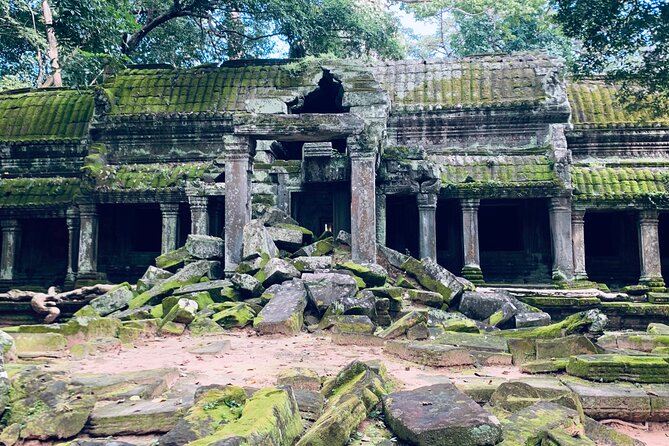
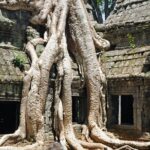
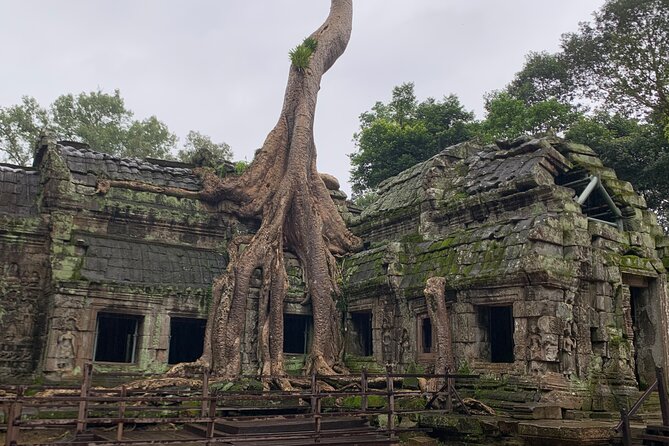
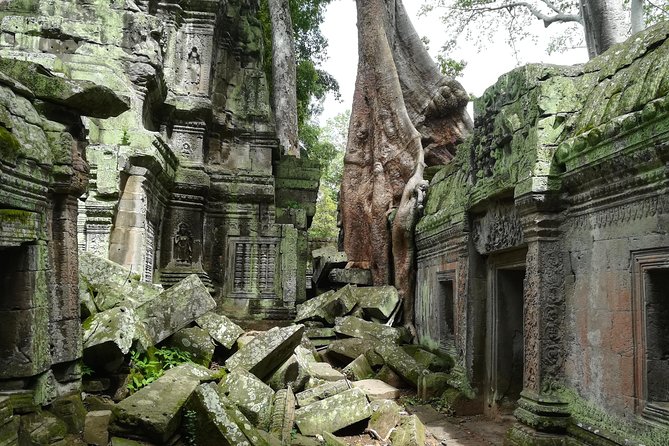
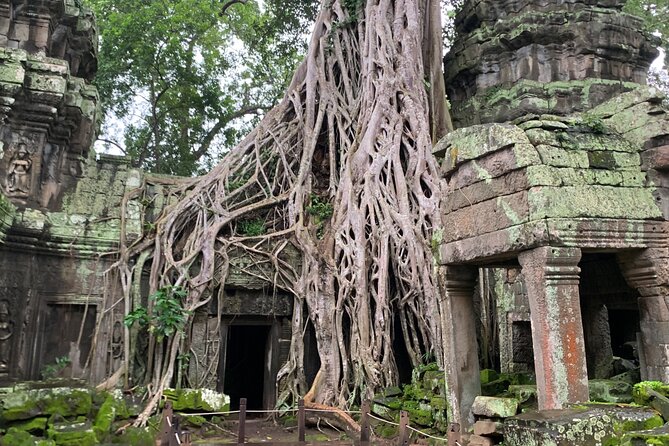
Your first major stop is Ta Prohm, and the vibe here is the reason people remember Angkor. Expect a temple that looks like it has been folded into a living forest. The tour notes this spot as taken over by giant rain forest trees, described with the Khmer word spung.
It also has a pop-culture link. The tour information says Ta Prohm was used as a location for filming Tomb Raider. Even if you don’t care about movies, it helps explain why this temple feels like a set: it has those dramatic “stone meets roots” visuals that photographers love.
You’ll spend about 1 hour 30 minutes here, and that’s a practical amount of time. You’ll want at least 45-60 minutes just to walk the key paths slowly and look up at the roots. Add extra minutes if you stop for photos from multiple angles.
A small consideration: Ta Prohm can feel busy, and it’s easy to get pulled into a single photo spot. If you want the best experience, keep moving and vary your viewpoint. The best images aren’t just wide shots; they’re the details where roots, carvings, and wall shadows overlap.
Banteay Kdei: The Calmer Temple on the List
After Ta Prohm, you head to Banteay Kdei. This one is shorter on the clock—about 30 minutes—but it’s a smart inclusion. When your day only focuses on the most famous temples, you can end up with “same feeling, different stones.” Banteay Kdei helps break that pattern.
The tour frames it as the last temple stop before heading back toward your hotel. So think of this as a momentum-management stop. Use the time to slow down, look for the quieter corners, and reset before the ride back.
Because you only have half an hour, don’t plan to do a deep, scholarly walk-through. Instead, do a focused loop:
- Take a slow first pass to orient.
- Pick one or two structures or gateways to study.
- Take your main photos and then leave time for a final look.
That keeps you from rushing at the end of the day.

Ta Keo: A Quick Photo or Short Walk Stop
Ta Keo is on your route for about 30 minutes. The guide gives you a chance for photos or a quick visit if the timing works out.
This stop is perfect if you like variety without heavy time investment. It also gives you a change of scenery after the bigger and more crowded complexes. If you’re someone who gets temple fatigue after two hours straight, this is a pressure-release valve.
I’d treat Ta Keo like a “grab the best angles and move” moment. In hot weather, the difference between enjoying a stop and sweating through it often comes down to how quickly you choose where to stand.
Angkor Wat: The Main Event on Two Wheels
You’ll spend around 2 hours at Angkor Wat, and this is the heart of the whole day. Since you’re traveling by tuk tuk, you can focus on the highlights without needing to coordinate routes across the whole area.
The tour also calls out a local detail: tuk tuks are known as Ramorks in Khmer. It’s a small thing, but it helps you feel more connected to the place, not just watching from the outside.
Two practical points for Angkor Wat:
- Use your guide. Even if you already know the basics, the guide’s explanations can change how you interpret alignments, carvings, and the layout.
- Plan your walking. Two hours can be either perfect or too tight depending on how quickly you move and how many photos you want.
This is also where the day’s dress code matters most. If you’re going to have any clothing issues, it will likely show up here first. Make sure you’re ready before you arrive at the entrances.
Angkor Thom: Bayon, Terraces, Royal Palace, and the Big Circuit
Next up is the Angkor Thom area, scheduled for about 2 hours. This is the big circuit where multiple landmarks sit close enough that a single organized route makes sense.
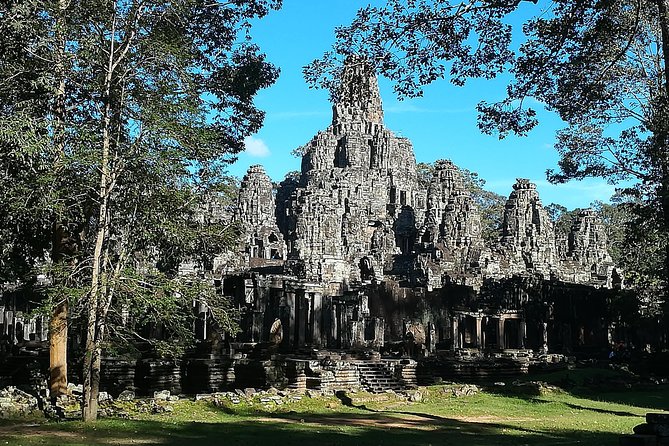
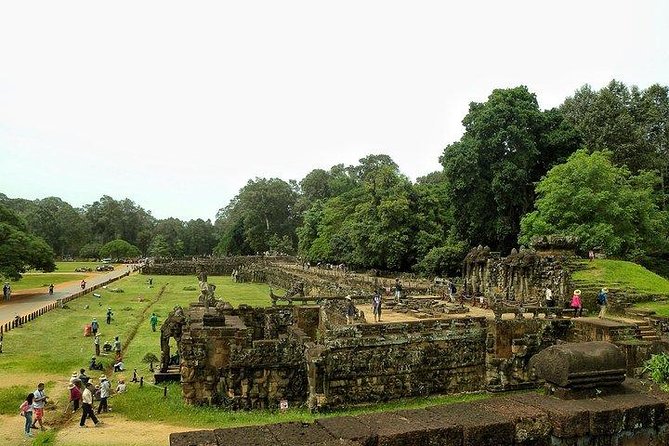
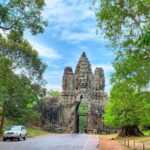
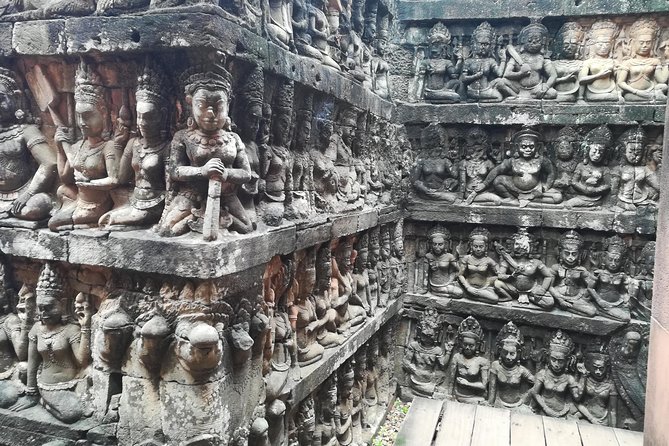
You’ll see the South Gate, Bayon, Baphuon, and then the Terrace of the Elephants and Terrace of the Leper King. The tour also lists the Royal Palace and Preah Palilay. In the broader description of the day, there’s also mention of an ancient Old Bridge as part of what you may be able to see while moving through the area.
I like this selection because it shows Angkor Thom as more than one famous structure. The terraces add texture and storytelling through carvings, and the palace zones feel different from the main temple towers. It’s a chance to sense the range of how the city functioned.
The only drawback is time pressure. Two hours is enough to see a lot, but not enough to make every corner feel leisurely. If you love details and could spend half a day here, you might feel slightly rushed. Still, with a guide managing the flow, you avoid the most annoying part of DIY temple days: bouncing between spots without understanding what’s most important.
Angkor Thom South Gate Sunset Options and Phnom Bakheng Choices
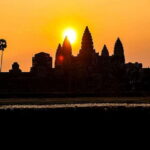
This is a “choose your moment” part of the day. You spend about 1 hour 30 minutes at the Angkor Thom South Gate, and your guide explains sunset options between:
- the South Gate area, or
- Phnom Bakheng temple
Even if you’re not chasing a strict sunset time, the point is smart. South Gate can work well for that classic temple horizon look, while Phnom Bakheng is known as a viewpoint choice. The guide’s role here is to help you decide based on timing and your comfort with walking.
I’d take this as advice to plan your energy. If you burn yourself out earlier (too many photos without breaks), sunset options stop being fun and start being a scramble. Save some legs for this segment.
Food, Water, and Keeping the Day Comfortable
Cold bottled water is included, which is a real quality-of-life win on a long temple circuit. Food and drinks are not included, and the day is long enough that you should assume you’ll need a meal break.
The tour overview also mentions dining at a locally recommended restaurant before you continue deeper into the day’s temple stops. That’s useful because it removes one of the hardest parts of visiting Angkor: figuring out where to eat that won’t waste your time.
My practical take: eat early enough that you’re not hungry but not so full that temple walking feels uncomfortable. Also, if you’re sensitive to heat, ask for water refills if possible during the meal stop, since your tour water is just the bottled amount included.
Who This Tuk Tuk Tour Fits Best
This tour is a good match if you want:
- an organized Angkor day with an English-speaking guide,
- a route that hits major sights like Ta Prohm and Angkor Wat plus Angkor Thom,
- and transport that saves you from long stretches of walking.
It’s also a strong choice for families or mixed-age groups who still want to see a lot but don’t want to manage maps, parking, and timing across multiple temple zones. One of the most positive points noted is that the transportation runs smoothly even for a larger group like an eight-person family.
If you’re a hardcore temple scholar who wants slow, detailed study at every stop, you may feel the schedule is tight at the shorter sites like Banteay Kdei and Ta Keo. But if your goal is to see the best of Angkor efficiently while learning from a guide, this hits the sweet spot.
Should You Book This Angkor Wat Sunset Tuk Tuk Tour?
Yes, if you want an efficient Angkor Wat day with a guide, tuk tuk transport, and a built-in plan for where to consider sunset viewpoints. The most praised parts of the experience are the organization and punctual transport, and that’s exactly what turns a stressful temple day into a smooth one.
I’d book it with two expectations set:
- You’ll pay for the Angkor Pass separately (the $32 isn’t the full temple cost).
- You need to dress for the shoulders and thighs rule, or entrance can be refused.
If that fits your style—guided, efficient, and transport-friendly—this is a solid way to see a lot of Angkor in one go without losing your day to logistics.
FAQ
What is the duration of the Angkor Wat sunset tuk tuk tour?
The tour runs about 7 to 8 hours.
How much does the tour cost?
The price is $32.00 per person.
Is pickup included?
Pickup is offered.
What time does the tour start?
The meeting point start time is listed as 9:00 am. The schedule for the Angkor Wat portion notes pickup around 08:00.
Is the Angkor Pass included in the price?
No. The Angkor Pass is not included, and the one-day pass is listed at $37.00 per person.
What does the tour include?
It includes an English-speaking tour guide, tuk tuk transportation, and cold bottled drinking water.
Are meals included?
Food and drinks are not included.
Which temples are visited during the day?
The tour includes Ta Prohm, Banteay Kdei, Ta Keo, Angkor Wat, and Angkor Thom highlights including the South Gate, Bayon, Baphuon, Terrace of the Elephants, Terrace of the Leper King, Royal Palace, and Preah Palilay.
What is the dress code for the temples?
You must cover your thighs and shoulders. If you are not dressed correctly, you may be refused entrance to the temples.
Can I cancel for a refund?
Yes. Free cancellation is allowed up to 24 hours in advance for a full refund.