REVIEW · BANGKOK
2 Hour Electric Tuk Tuk Cultural Tour of Bangkok
Book on Viator →Operated by LJ Tour Co.LTD. · Bookable on Viator
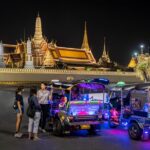
A two-hour tuk-tuk sounds short, but Bangkok packs a lot. This electric EV tuk-tuk route mixes big-name landmarks with a few calmer spots, plus a hands-on lotus folding workshop. I like that the guide keeps the story moving, so you’re not stuck figuring out where to go next. One thing to think about: temple and sightseeing admissions aren’t included, so plan a little extra cash for the final stops.
The best part for me is how fast you get orientation. You’ll roll through key areas like Chinatown and the historic center, then hop to viewpoints and photo stops without fighting traffic on foot. I also really like the mix of senses: river views, flower colors, and the quiet patience of making a lotus from paper.
The main drawback is time pressure. With a total of about 2 hours, some stops are brief, so you’ll get great snapshots and context, but you won’t have a long, slow wander.
In This Review
- Key highlights worth your attention
- Why an electric tuk-tuk works so well in Bangkok
- Chinatown start: energy without the full navigation workout
- Phra Pok Klao Bridge and the 360-degree Sky Garden views
- Pak Khlong Flower Talat: color and photo angles in 25 minutes
- Sao Chingcha and the Giant Swing: faith meets festival design
- Royal Pavilion Mahajetsadabadin near the Golden Mount
- Democracy Monument: the political landmark stop you shouldn’t skip
- Grand Palace and Temple of the Emerald Buddha: the big finale zone
- Wat Pho and Golden Mount: the culture cluster that makes sense together
- The lotus folding workshop: a small souvenir with real staying power
- Guide-led storytelling and the value of hearing it in English
- Price and what you’re really paying for
- Who this tour fits best
- Should you book this 2-hour electric tuk-tuk tour of Bangkok?
- FAQ
- How long is the 2 Hour Electric Tuk Tuk Cultural Tour of Bangkok?
- What is included in the tour price?
- What’s not included?
- Where does the tour start?
- Where does the tour end?
- Which places are visited?
- Is the tour guide available in English?
- How large is the group?
- Can I cancel and get a refund?
Key highlights worth your attention
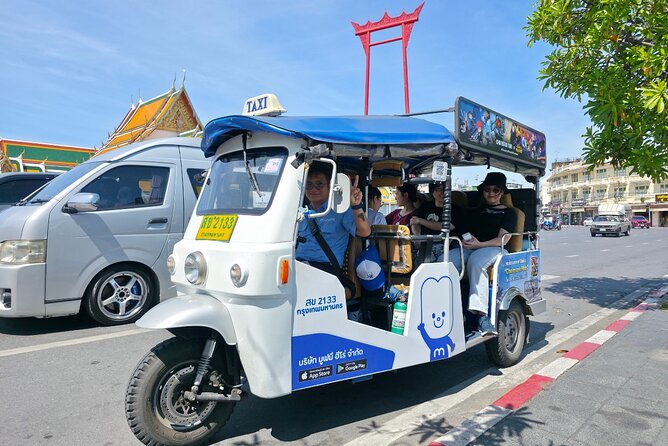
- EV tuk-tuk ride pass that gets you moving efficiently through Bangkok’s busiest corridors
- Phra Pokklao Bridge Sky Garden for quick 360-degree river-and-skyline views
- Pak Khlong Flower Market stop with lots of photo angles (and free entry)
- Sao Chingcha (Giant Swing) and Democracy Monument for a neat history-and-power contrast
- Lotus folding workshop so you take home a small Bangkok craft memory
- Small group size up to 20, which makes it easier to hear the guide and keep on schedule
Why an electric tuk-tuk works so well in Bangkok
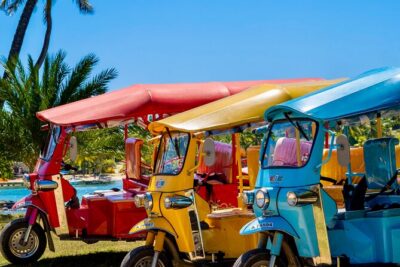
Bangkok can be a lot. The city is huge, traffic can be unpredictable, and walking between major sights often turns into a full-day mission. This 2-hour electric tuk-tuk tour is designed for people who want momentum without stress.
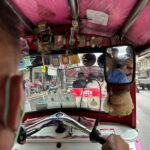
The practical win is simple: you’re not spending your limited time stuck in transit bottlenecks. An EV tuk-tuk helps you cover ground fast while still feeling like you’re part of the neighborhood street scenes. And because it’s a guided loop, you’re less likely to miss the small details that make landmarks feel real instead of just postcard images.
I also like the rhythm. The tour doesn’t just throw you at buildings. It uses short stops that match what you can do best in limited time: take photos, listen to stories, and do one hands-on activity before heading onward near the Grand Palace area.
You can also read our reviews of more tours and experiences in Bangkok.
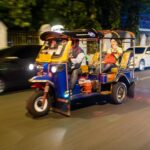

Chinatown start: energy without the full navigation workout
You begin near MRT Hua Lamphong Station, then head into Bangkok’s Chinatown by EV tuk-tuk. The plan includes passing the Chinatown Gate, which is a quick way to mark the shift from one part of the city to another.
For many people, Chinatown is where the senses go loud: signage, vendors, aromas, and street movement. The advantage of the tuk-tuk start is that you get that energy without having to build a route on your own immediately. You’re also better positioned for photos because you’re moving with a schedule rather than trying to pick the best moment while weaving through crowds.
If you’re coming into Bangkok from jet lag or you’re not comfortable with busy crossings, this is a smart first hit. You’ll get your bearings fast and still feel like you did something distinctly Bangkok.
Phra Pok Klao Bridge and the 360-degree Sky Garden views
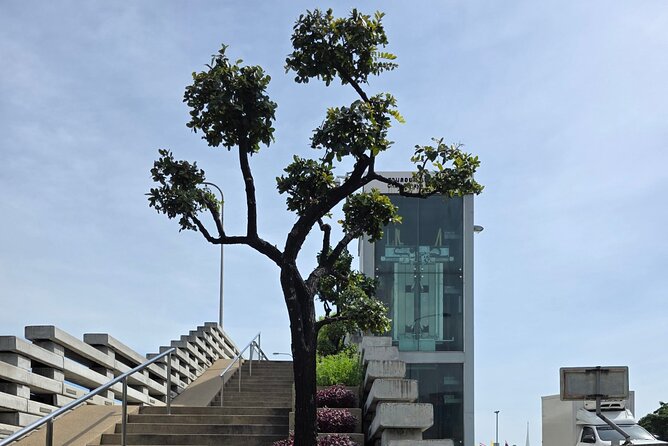
Stop one is Phra Pok Klao Bridge, with access to the Sky Garden viewpoint for about 10 minutes. This is where the tour gives you a big payoff: wide views over the Chao Phraya River, plus a look at nearby high-rises and the motion of boats.
A quick viewpoint stop can feel like a tease, but it works here because the main goal is orientation. Once you see the river and how the city sits around it, a lot of Bangkok landmarks start to make sense. Even if you’re not a photo person, you’ll still understand why people build right next to waterways.
One consideration: it’s only around 10 minutes. If you want to linger for long photos, plan to move quickly at the start. Take your best angles early, then enjoy the last few minutes just looking.
Pak Khlong Flower Talat: color and photo angles in 25 minutes
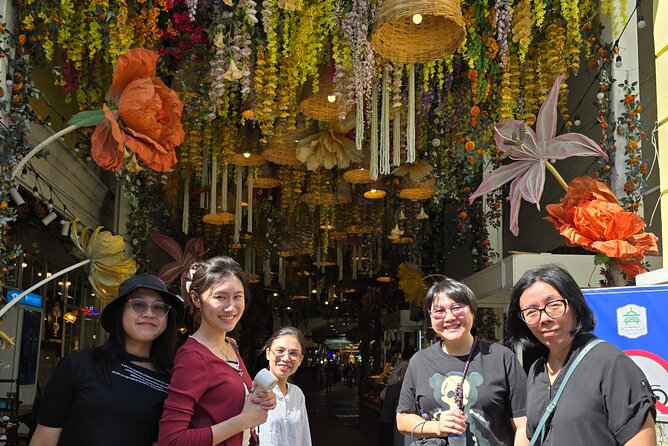
Next comes Pak Khlong Flower Talat Original, Thailand’s largest flower market, with about 25 minutes on site and free admission listed. This is one of those stops where Bangkok becomes very visual, very fast.
You’ll see lots of fresh blooms and colorful arrangements. The market is also famous for being a living place, not a staged attraction. So what you’ll enjoy most is the texture: rows of flowers, sellers working, and the way light hits petals in close-up.
The drawback is also time-based. 25 minutes goes quickly if you stop every 10 steps to photograph. My advice is to pick your priorities before you arrive. If you love wide shots, get them first. If you prefer close-up detail, head toward the densest displays and give your camera a job.
Sao Chingcha and the Giant Swing: faith meets festival design
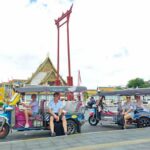
Then you’ll hit Sao Chingcha (the Giant Swing), around 10 minutes, again with free admission listed for the stop. It’s a bright red teak structure and a major symbol of Thai tradition tied to the city’s historic district.
This stop works best when you treat it like a story moment, not just a photo op. The tour framework here is that your guide connects what you see to how Thai traditions are expressed in architecture and ritual spaces.
At just 10 minutes, you won’t have time for a deep, slow study. But you will get the landmark in context, plus enough time to capture it and move on.


Royal Pavilion Mahajetsadabadin near the Golden Mount
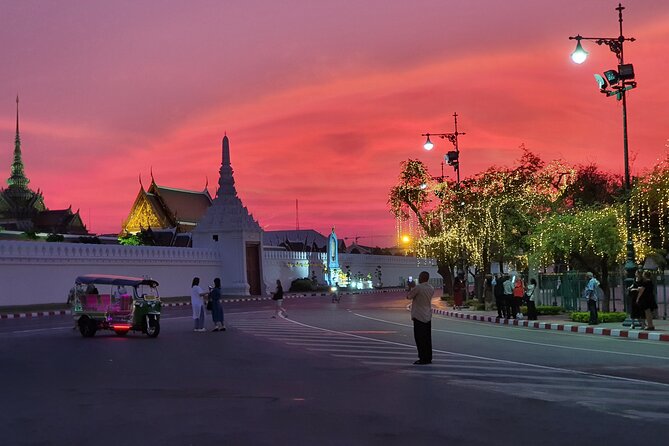
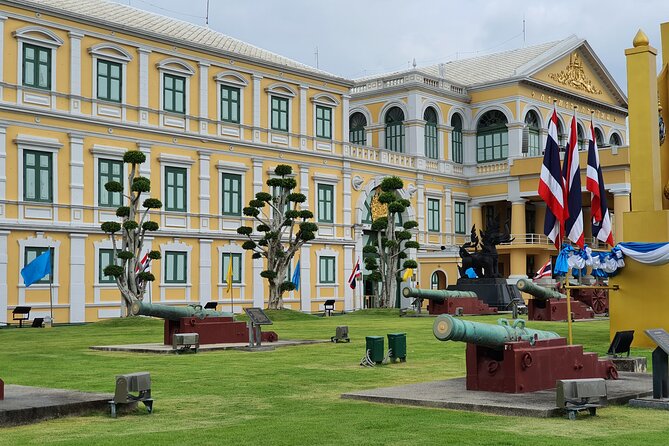
After that, the route includes Royal Pavilion Mahajetsadabadin for about 15 minutes. This stop is described as a royal retreat near the Golden Mount area, and it focuses on Thai-style royal pavilions plus a monument tied to King Rama III.
This is a nice change of pace. After market color and big centerpiece structures, a royal pavilion feels more contained and ordered. It’s also one of the ways the tour balances spectacle with a quieter, more architectural feel.
One practical note: with a shorter stop length, you’ll get the main highlights rather than a long wander. If you’re the kind of person who could spend an hour photographing architectural details, keep expectations in check and use this as your primer.
Democracy Monument: the political landmark stop you shouldn’t skip
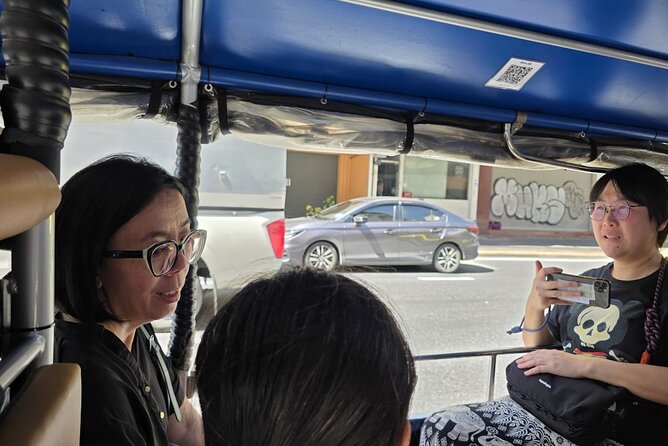
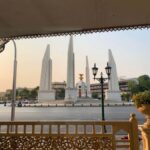
The tour also includes a stop at the Democracy Monument. It’s described as standing at the heart of Bangkok’s political history and as an art deco-designed symbol of Thailand’s shift toward democracy.
It’s a smart inclusion because it broadens what you think of when you think Bangkok. Many quick tours focus only on temples and markets. This one gives you a different angle: how modern civic identity shows up in a physical monument.
Even if you only take in the exterior, it helps connect the dots between the older sacred spaces you’ll see later and the political story happening around them.
Grand Palace and Temple of the Emerald Buddha: the big finale zone
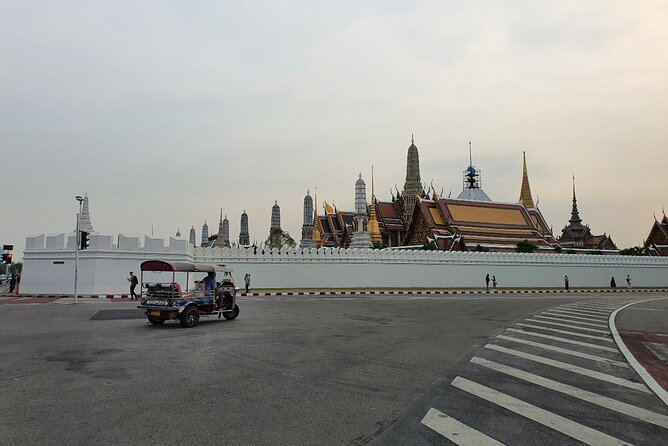
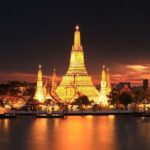
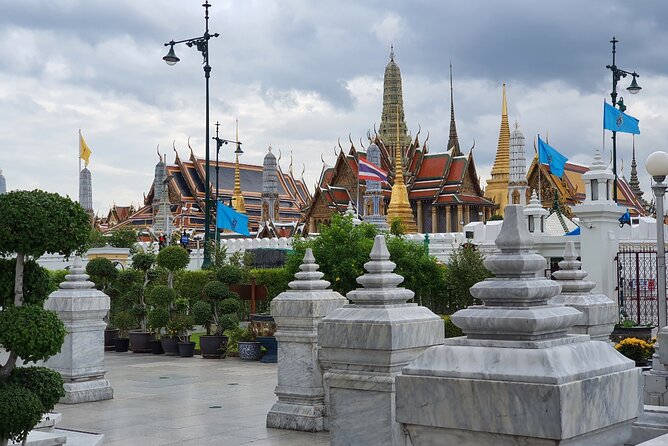
The final stretch is the Grand Palace complex and the Temple of the Emerald Buddha. The tour description highlights it as Bangkok’s crown jewel, and the structure of the tour suggests you’ll get your photo and orientation time near the palace area, ending back near the Grand Palace.
This is the stop you plan around. It’s the cultural heavyweight. It’s also the part where extra admission may apply, since temple and sightseeing admission fees are listed as not included.
Because the tour is about two hours total, you’ll likely focus on key viewpoints and the most important sights rather than doing an unhurried deep walk. That said, starting with an EV tuk-tuk makes a difference here: you arrive with context and you’re less likely to spend your energy trying to figure out where to go once you’re on-site.
My practical tip: bring your patience and wear comfortable shoes. You’re in a top-tier attraction zone, and it’s usually not the place for rushing.
Wat Pho and Golden Mount: the culture cluster that makes sense together
The tour overview explicitly includes Wat Pho and the Golden Mount as part of the landmarks set. You also have a pavilion stop near the Golden Mount, which helps stitch the area together instead of treating each site as unrelated dots.
Why does that matter? Because in Bangkok, these places aren’t just buildings. They’re connected by geography and by the way visitors experience the historic core. When a tour groups them, you’ll understand how the river-and-city layout influences temple siting and how the whole area reads as one cultural zone.
Even though your time is limited, you’ll get enough “linking context” that later, if you return on your own, you’ll navigate with confidence.
The lotus folding workshop: a small souvenir with real staying power
One of the most memorable parts is the lotus folding workshop. This isn’t just entertainment. It’s a hands-on cultural activity that forces you to slow down for a moment and learn something with your hands.
Paper folding may sound minor compared to giant temples, but that’s exactly why it works. It gives your brain a different kind of memory cue. Instead of just seeing gold spires, you also remember a technique, a motion, and the feeling of finishing a small lotus shape.
If you’re traveling with kids, this type of activity is usually a win because it gives a task with clear progress. For couples or solo visitors, it’s a nice break from constant walking and snapping photos.
Guide-led storytelling and the value of hearing it in English
The tour includes an English-speaking guide, and one review snippet specifically highlights a guide named King and the way the tour stays fun while still being informative.
What you should care about as a buyer isn’t only that the guide speaks English. It’s what they do with that language: explain what you’re looking at so the stops feel connected. In short tours, this matters a lot. When time is short, good guidance turns “I saw it” into “I understand why it matters.”
Also, small group size (maximum 20) helps. It’s easier for your guide to keep everyone together and for you to hear the explanation without constantly yelling over road noise.
Price and what you’re really paying for
The price is $30.78 per person for about 2 hours, and the tour uses a mobile ticket. At that cost, you’re essentially paying for three things:
1) Transportation coverage across key city zones
2) Guided stops that reduce your planning workload
3) Included experiences like EV tuk-tuk ride time and the lotus folding workshop
Temple and sightseeing admissions are not included, so your total day cost depends on what you choose to enter once you’re in the Grand Palace area. Still, it’s a strong value if you want efficient coverage without a full guide-led full-day schedule.
One more practical advantage: free cancellation up to 24 hours before the start time. That gives you flexibility if your Bangkok plans shift.
Who this tour fits best
This tour is a great match if:
- You want to see Bangkok’s major landmarks fast without building a self-guided route
- You’re traveling with limited time, like a half-day window before dinner plans
- You like a mix of photos plus one hands-on cultural activity
- You prefer small-group pacing over large bus tours
It’s also a solid choice if you’re solo and don’t want to spend the first day figuring everything out on your own.
If you’re the kind of visitor who likes long temple stays and detailed museum-level reading, you’ll probably want more time elsewhere. Think of this as an efficient sampler that helps you decide what to revisit.
Should you book this 2-hour electric tuk-tuk tour of Bangkok?
Yes, I’d book it if your goal is quick orientation plus key landmarks in a tight schedule. The EV tuk-tuk format makes Bangkok feel easier, and the pairing of river views, a flower market stop, historic monuments, and a lotus folding workshop gives you more than a standard list of sights.
Skip it only if you’re hoping for a slow, deep temple day or if you want lots of time inside major sites. This tour is about getting you there, showing you the important stuff, and keeping the momentum going.
FAQ
How long is the 2 Hour Electric Tuk Tuk Cultural Tour of Bangkok?
The tour lasts about 2 hours.
What is included in the tour price?
The tour includes EV tuk-tuk riding, parking fees, and a tour guide.
What’s not included?
Admission fees to temples and sightseeing are not included.
Where does the tour start?
It starts at MRT Hua Lamphong Station (Exit 4).
Where does the tour end?
You are left in front of the Grand Palace area, and the end address listed is 11 Soi Na Hap Phoei, Khwaeng Phra Borom Maha Ratchawang, Khet Phra Nakhon, Krung Thep Maha Nakhon 10200.
Which places are visited?
The tour includes Chinatown (passing the Chinatown Gate), Phra Pok Klao Bridge (Sky Garden), Pak Khlong Flower Talat Original, Sao Chingcha (the Giant Swing), Royal Pavilion Mahajetsadabadin, Democracy Monument, and the Grand Palace & Temple of the Emerald Buddha, with Wat Pho and Golden Mount included in the landmark set.
Is the tour guide available in English?
Yes, the tour includes an English-speaking guide.
How large is the group?
The tour has a maximum group size of 20 travelers.
Can I cancel and get a refund?
Yes. Free cancellation is available, and you can cancel up to 24 hours in advance for a full refund. If you cancel less than 24 hours before the start time, the amount paid is not refunded.