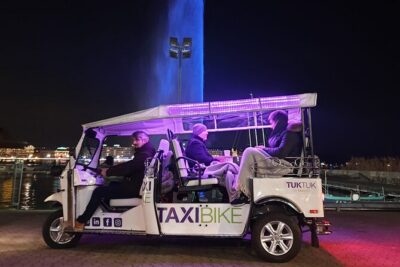
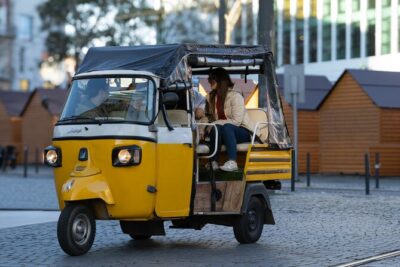
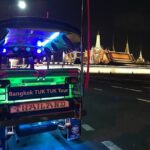
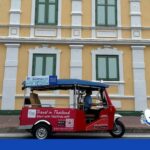
Hear that tuk-tuk buzz. This Bangkok tuk-tuk tour stitches together major sights and street scenes fast, with a licensed English guide and short stops that work well when your time is tight.
I love the mix of temple icons and “real Bangkok” stops, because you get context while you’re moving. I also like the included folding lotus flower activity, which turns the ride into something a bit more memorable than just point-and-shoot sightseeing.
One thing to keep in mind: tuk-tuks are small, and headroom can feel tight while you’re driving, so tall folks may want to use the short stops for better viewing.
In This Review
- Key things to notice before you ride
- Why this 2-hour shared tuk-tuk works in Bangkok
- Start at Museum Siam, finish on Yaowarat Road
- Grand Palace stop: what 15 minutes is really for
- Sao Chingcha and Loha Prasat: free stops that add texture
- Chinatown plus Pak Khlong Talat: Bangkok street life, on schedule
- Wat Arun from across the river: the photo moment you’ll actually get
- Wat Pho and the Thai traditional massage school: a big temple stop with a soft landing
- What the guides add: the difference between seeing and understanding
- Folding lotus activity and the included water: small extras that matter
- Price and value: is $28.70 a good deal
- Small cautions before you say yes
- Should you book this Bangkok tuk-tuk tour?
Key things to notice before you ride
- It’s a tight 2-hour circuit focused on big-name landmarks and a few sensory neighborhoods
- Grand Palace comes with an extra admission cost (your ticket is not included)
- Sao Chingcha and Loha Prasat are quick, free photo stops that add variety without eating your time
- Pak Khlong Talat gets 30 minutes, which is long enough to actually look around
- Wat Arun is viewed across the Chao Phraya, built for photos with minimal time pressure
- Your guide can make it click, with English-speaking hosts like Anna, Paul, Enjoy, Ken, Pu, Bella, Johann, and Annie showing up in recent tours
Why this 2-hour shared tuk-tuk works in Bangkok
Bangkok traffic can be its own event. A shared tuk-tuk ride cuts through the “what should I do first” problem by grouping top stops into a manageable 2 hours.
You’re not doing a slow, single-site visit marathon. Instead, you’re getting a guided loop with quick moments at each place, then moving on before you lose momentum to heat, crowds, or getting stuck in transit.
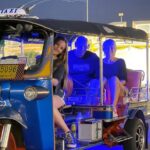
This is also a “shared” format in the real-world sense. The tour runs with up to 30 people, and the tuk-tuks are limited to max two passengers per tuk-tuk. That keeps it from feeling like a long bus tour, but it also means your group may be split if there’s a larger party.
It runs rain or shine, so bring a light rain layer even if the morning looks fine. I like that the tour doesn’t treat weather like an automatic cancellation. You can still have a good time with the right expectations.
You can also read our reviews of more tours and experiences in Bangkok.

Start at Museum Siam, finish on Yaowarat Road
Your tour begins at Museum Siam in Phra Nakhon. That’s a good starting point because it’s not out on the far edges where you’d burn time just getting to the first stop.
You finish on Yaowarat Road (Chinatown). This is handy if you want to keep the energy going after the tour. If you’d rather get back to your hotel quickly, you can take a taxi or metro, and the MRT station listed is Wat Mangkon.
I like the practical flow here: you start near a cultural anchor and end where you can keep eating and walking without extra planning. It’s a smart way to end a “first look at Bangkok” day.
Grand Palace stop: what 15 minutes is really for
The Grand Palace is the big visual anchor people come for. It was built in 1782 by Rama I, and even with short time on the clock, the setting gives you instant context for why Bangkok’s royal and temple culture feels so central.
Here’s the key detail: admission is not included. So the value of this stop isn’t that you get unlimited access—it’s that you arrive, see the highlights, and understand what you’re looking at before you decide if you want to go deeper later.
With a 15-minute stop, you’ll likely do the classic “get your bearings, take the main photos, absorb the atmosphere” routine. If you want long wandering time inside, this is not the format for that. But if you want a quick, guided taste, it’s a solid payoff.
Also, the tour is designed so you can keep moving through Bangkok rather than getting stuck in one place. That’s a big deal when heat and crowding start to drain your energy.
Sao Chingcha and Loha Prasat: free stops that add texture
Between big-ticket icons, the tour adds two free structures that change the mood.
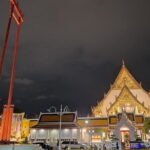
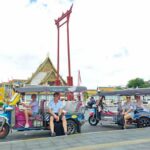
First is Sao Chingcha, also known as the Giant Swing. It’s a religious structure and was used in an old Brahmin ceremony. In a short stop, it’s ideal for photos because you can frame it as a landmark while still learning what it represents.
Next comes Wat Ratchanatdaram Worawihan with Loha Prasat, often called the Metal Castle. This one is especially interesting because it’s described as being inspired by other similar temples in India and built in 1846 under King Rama III. That’s the kind of connection a guide can turn into meaning fast, so you don’t just see a tower—you understand why it exists.
Both stops are listed as free, and each gets about 15 minutes. I like these as “breathers” in a tight itinerary: you get variety without paying extra admissions or spending your whole tour waiting in one queue.
Chinatown plus Pak Khlong Talat: Bangkok street life, on schedule
Then you hit two very different “street Bangkok” experiences back to back: Chinatown and the flower market.
Chinatown on the tour is set aside for about 20 minutes. The focus here is on atmosphere and texture—one of the biggest Chinatowns in the world, and described as authentic and comparatively unchanged. That short window works well when you want to feel the neighborhood without trying to master every street.
Next is Pak Khlong Talat Flower Market, with 30 minutes. This is where the tour gives you more time than just a drive-by. Pak Khlong Talat is Thailand’s largest wholesale flower market and it’s open 24 hours a day, 7 days a week. I love that detail because it means you’re not stuck imagining what it looks like later; the market concept is built for constant motion.
The tour’s timing here is useful: you get to see flowers as part of everyday city life, not only as a photo prop. If you like color, smell, and that “everyone is doing something” energy, this stop is often the one people remember later.

Wat Arun from across the river: the photo moment you’ll actually get
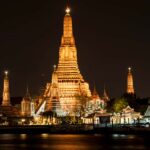
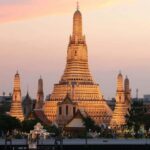
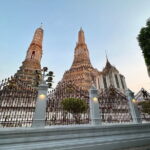
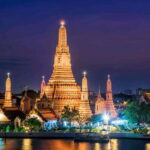
After the markets and neighborhoods, the tour pivots to one of Bangkok’s most photogenic temple scenes: Wat Arun, also called Wat Chaeng.
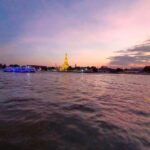
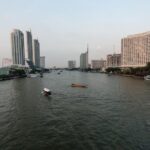
You get a short 10-minute viewing focused on photos, and the setup is important: Wat Arun is on the Thonburi side of the Chao Phraya River, so you view it from across the river. That means your best views are already built in, and you’re not spending your limited time on long walking detours.
Wat Arun is described as one of the Thai capital’s most beautiful temples and a major landmark. With only ten minutes, you’re not meant to become an expert. You’re meant to catch the silhouette, understand why it’s iconic, and keep your energy for the next stop.
This is one of those stops where a guide helps you notice what matters. Even in a quick photo session, they can point out what makes the temple significant, so the images stay tied to meaning.
Wat Pho and the Thai traditional massage school: a big temple stop with a soft landing
The tour finishes with a visit in the Wat Pho area, listed as “WatPo Thai Traditional Massage School.” Wat Pho is described as one of the oldest temple complexes in Bangkok, and it’s also noted for being one of the largest, with the largest collection of Buddha images in Thailand.
You get about 15 minutes here. That’s enough time to understand the scale and see major highlights, without pretending you’ll cover the whole complex in one stop. This is a smart choice in a tour like this: the itinerary is designed to sample, not to drain you.
There’s also a practical angle. Wat Pho isn’t just another temple name on a map. It’s connected to the Thai tradition of massage, and that can add a slightly different flavor to your temple time compared to the more purely “architecture and ceremony” stops.
If you’re doing Bangkok as a quick intro day, this stop helps the tour feel more rounded. You end with something culturally big, not just loud street energy.
What the guides add: the difference between seeing and understanding
The tour’s core promise is that you won’t just get transportation and landmarks. You get a licensed English-speaking tour guide, and the guide shares insights about Bangkok’s past and present—often framed as the City of Angels.
That matters because many of these sights can feel intimidating if you only have names and photos. A good guide turns those names into simple explanations, and you walk away with mental hooks instead of just images.
I also like that the included “human time” shows up in the reviews. People mention guides like Anna, Paul, Enjoy, Ken, Pu, Bella, Johann, and Annie being friendly, attentive, and informative. When a guide takes a group from stop to stop, that personality is half the experience.
If you’re traveling with kids, this tour format can be a win. In recent comments, families praised the relaxed pace and the fun additions like picture moments and the lotus activity. It’s not an hour of lectures. It’s movement plus short, understandable stops.
Folding lotus activity and the included water: small extras that matter
You don’t just get “drive to sights.” The tour includes 1 bottle of drinking water and a folding lotus flower activity.
These are small items, but they fix common problems. In Bangkok, hydration is not optional. And a short craft activity helps break up the physical rhythm of sitting and riding.
The lotus folding also gives you something physical to bring home. You remember the feel of doing it, not only what you saw. In my experience, that’s what separates a basic tour from a “I’ll tell a friend about this” tour.
Price and value: is $28.70 a good deal
At $28.70 per person, this is priced like an efficient intro tour. That might sound low next to private tours, and that’s because it’s a shared format with a quick route.
Here’s what you’re paying for:
- A typical Thai tuk-tuk ride
- A licensed English-speaking guide
- A bottle of water
- Folding lotus flower activity
- Access to multiple stops where entry isn’t listed as required
Your main extra cost is the Grand Palace admission, which is not included. There are also optional gratuities for the tuk-tuk driver and guide.
To me, this adds up as good value if you fit the tour’s purpose: you want to see a lot quickly, learn the basics, and keep moving. If you want long time at one complex, or if you’re hoping admission is fully covered across every stop, then this isn’t the cheapest way to do Bangkok. It’s the best way to get oriented.
Small cautions before you say yes
A few real-world considerations can shape how much you enjoy the ride.
Tuk-tuks are tight. The headroom can be limited while you’re driving, and tall people may struggle to see the sights from their seat. The fix is simple: use the short stops to get your best views.
Bigger groups may split. Because each tuk-tuk holds max two passengers, a family or group larger than that may end up in multiple tuk-tuks. That’s not a deal-breaker, but it can change the group vibe.
Arrive on time. Traffic is notorious, but the tour still expects you to be at the meeting point. The tour notes a grace period of up to 10 minutes after the scheduled start, then the guide begins.
And yes, it runs rain or shine, so pack for weather. Bangkok showers can be quick, and you’ll want to stay comfortable rather than regret not bringing a light rain layer.
Should you book this Bangkok tuk-tuk tour?
Book it if you want a fast, guided orientation to Bangkok’s top sights in about two hours. This tour is especially smart when it’s your first day, you have limited time, or you want a mix of temples plus market and neighborhood scenes without overthinking routes.
Skip it or consider another format if you know you want lots of time inside the Grand Palace. The palace stop is short and admission is extra, so plan to pay and treat it as a guided taste, not a full exploration.
If you do book, I’d prioritize two things on the day: arrive at the start point on time and plan to use each stop for your best photos and viewing. That way, the short timetable becomes a strength, not a frustration.