REVIEW · BANGKOK
Bangkok Tuk-Tuk Tour by Night with Chinatown Street Food Meal
Book on Viator →Operated by WanderSiam · Bookable on Viator
Bangkok at night has a way of speeding up your pulse. This tour strings together Wat Arun, the Grand Palace area, Wat Pho, flower market lights, and a tuk-tuk hop into Chinatown on Yaowarat Road. You get multiple transport styles in one evening, so you’re not stuck watching the same street from the same seat.
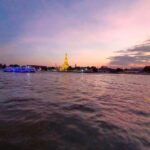
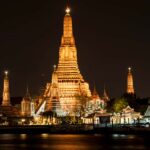
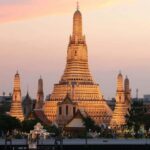
I love the easy visual payoff: the Chao Phraya Express Boat ride gives you a smooth, scenic angle on Wat Arun (Temple of Dawn) lit up after dark. I also like that the route uses short stops plus walking, which works well if it’s your first night and you want the highlights without planning a full day. The main drawback to consider is the food: it’s not a full street-food tour, and the Chinatown meal can be more restaurant-style than the all-stall sampling you might be picturing.
In This Review
- Key things to know before you go
- Why this Bangkok by Night route works at 5:30 pm
- From Saphan Taksin to Wat Arun: the night cruise payoff
- Wat Arun compound rules, plus what to budget for at the Grand Palace and Wat Pho
- Pak Khlong Flower Market after dark: the best place to slow down
- Sao Chingcha (Giant Swing): a quick landmark moment that fits the pace
- Tuk-tuks at night: fun transport with some real-world tradeoffs
- Chinatown’s end stop: what the meal really feels like
- Price and value: is $40.76 a good deal for this mix?
- How to avoid the two biggest problems: getting there and staying patient
- Monday nights: Chinatown may feel less active
- Who should book this tour, and who might want a different plan
- Should you book this Bangkok Tuk-Tuk Tour by Night?
- FAQ
- What time does the Bangkok Tuk-Tuk Tour by Night start, and how long is it?
- Where does the tour start and where does it end?
- What transportation is included?
- Is the Grand Palace ticket included in the price?
- Is this a food tour focused on street-food sampling?
- Do I need to dress respectfully for Wat Arun?
- What if it rains?
Key things to know before you go
- Wat Arun first, by boat: you start with a night cruise for quick, dramatic photos.
- Respectful temple-area entry: Wat Arun compound access is part of the route, with clothing rules.
- Pak Khlong Flower Market timing: it’s open 24 hours, so night visits still feel like a living market.
- Giant Swing (Sao Chingcha) in the old town: a fast look at a landmark tied to Wat Suthat.
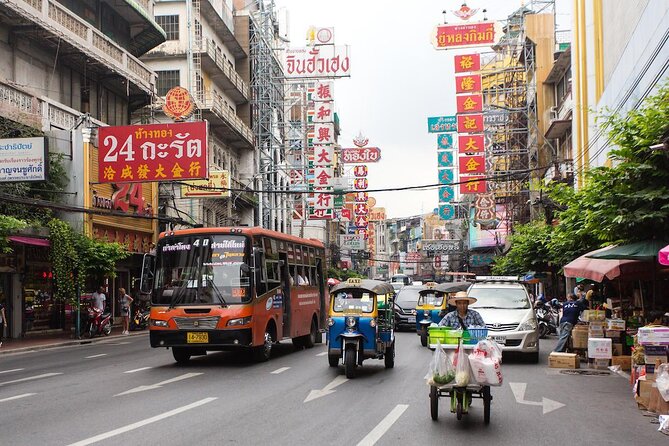
- Shared tuk-tuks (two per ride): fun factor is high, but expect short legs between stops.
- Chinatown meal at the end: you’ll eat near the finish, and Monday can be quieter for street stalls.
Why this Bangkok by Night route works at 5:30 pm
This starts at 5:30 pm and runs about 3–4 hours. That timing matters. Bangkok’s big sights look best once the heat drops and the lighting turns temples and monuments into photo magnets, without you losing half the evening to planning.
The route is also built for motion. You go from river to land fast: express boat to Wat Arun, then a mix of landmark viewing and short tuk-tuk hops, and finally Chinatown on foot. If you’re trying to get your bearings fast after landing, this is the kind of itinerary that helps you understand where things are.
Still, keep expectations realistic. It’s a “see-and-go” evening. If you want long, slow wandering in every neighborhood, you’ll probably feel the pace.
You can also read our reviews of more tours and experiences in Bangkok.
From Saphan Taksin to Wat Arun: the night cruise payoff
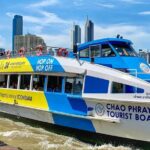
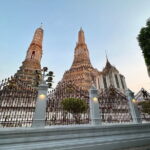
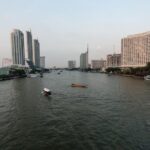
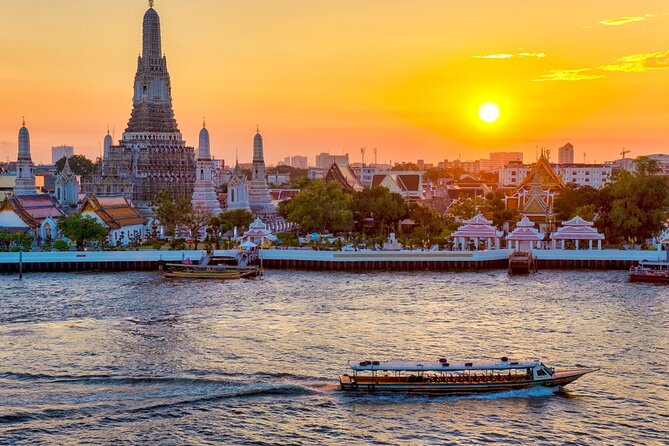
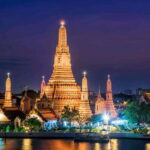
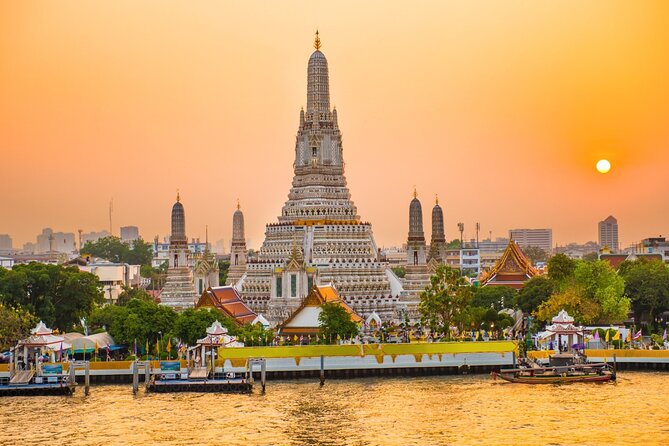
Your evening starts at Saphan Taksin (Yan Nawa, Sathon). From there, you take the Chao Phraya Express Boat for a short, scenic river ride. The selling point here is simple: the river turns Wat Arun into a skyline moment instead of just a temple you pass in daylight.
Wat Arun is also called the Temple of Dawn and locals refer to it as Wat Chaeng. On this route, you’re visiting the temple area (the compound), not doing a long, inside-only temple mission. That makes the boat-and-land sequence feel efficient and keeps you from spending your whole evening standing in lines.
Practical photo tip: if you care about reflections, aim for seats that face the temple as the boat approaches. The boat ride is included, so you don’t need to figure out ferry routes yourself.
Wat Arun compound rules, plus what to budget for at the Grand Palace and Wat Pho
Wat Arun is the first major landmark stop. You’ll enter the temple compound (the actual temple isn’t the focus of this visit). Clothing matters here: plan for longer shorts that cover the knees and covered shoulders. If you show up in tank tops and short shorts, you may get turned back.
Next comes the Grand Palace. It’s Bangkok’s headline sight, built in 1782 as the royal residence for more than 150 years, and it’s famous for its Thai-style architecture. On this tour, the Grand Palace admission is not included, so you’ll either need to pay separately if you want more than the outside look, or accept a quicker viewpoint.
Then you move to Wat Pho, one of the oldest temples in Bangkok and part of the large temple complex in the city. It’s world-famous for its Reclining Buddha. The tour info provided doesn’t clearly state whether Wat Pho entry is included, so treat this as a “plan for possible ticketing” stop rather than a guaranteed all-access ticket.
Why this matters for you: if you’re the type who hates surprise add-ons, look up likely temple ticket costs before you go. If you’re flexible and just want to see the illuminated sites at night, you’ll be fine.
Pak Khlong Flower Market after dark: the best place to slow down
After the temples and landmark glimpses, you’ll hit Pak Khlong Flower Talat Original. This is Thailand’s best-known flower market, and the schedule is a big deal: it’s open 24 hours a day, 7 days a week. So even though you’re doing this at night, you’re not stuck with a “closed and dead” market.
This stop is worth your attention because the market is chaotic in a good way. You’re not just seeing flowers; you’re watching how Bangkok sells and moves daily life. The name means market at the mouth of a canal, which hints at how old trade routes shaped this area.
Time on this stop is relatively short, about 15 minutes, so don’t plan to browse like you’re shopping for a wedding centerpiece. Instead, use it to collect sensory impressions: colors, lighting, and that night-market smell. If you want one keepsake moment, this is usually the best bet on the whole route.
Sao Chingcha (Giant Swing): a quick landmark moment that fits the pace
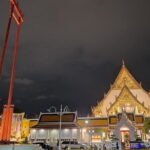
You also stop at Sao Chingcha, also known as the Giant Swing. It’s a major old-town landmark and a symbol of Bangkok, located near the impressive Wat Suthat.
This is a short stop (around 10 minutes). That’s not a flaw; it’s the kind of timing that keeps the tour moving. The goal is a photo and a quick orientation: you see the scale of the swing in the night air and you get a sense of where you are in Bangkok’s historic district.
If you’re the type who likes to read plaques and take notes, you might wish you had longer. But if you’re thinking “I want the big hits and then dinner,” this timing fits.
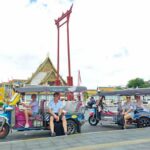
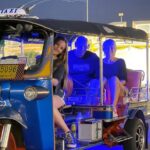
Tuk-tuks at night: fun transport with some real-world tradeoffs
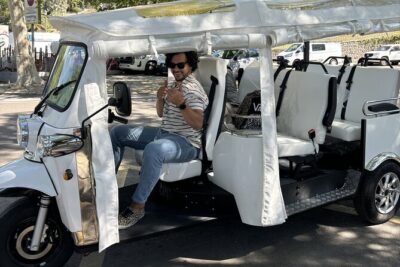
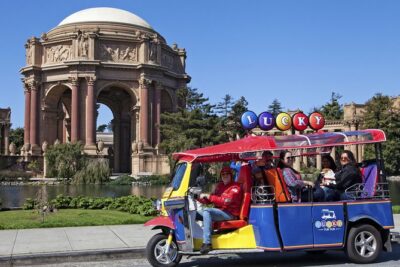
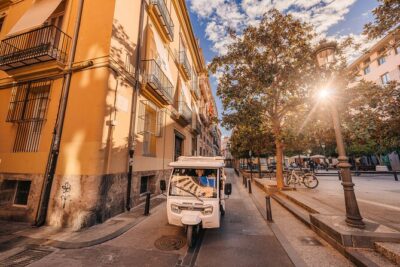
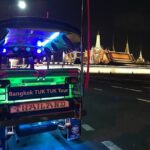
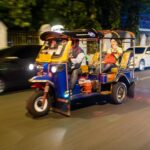
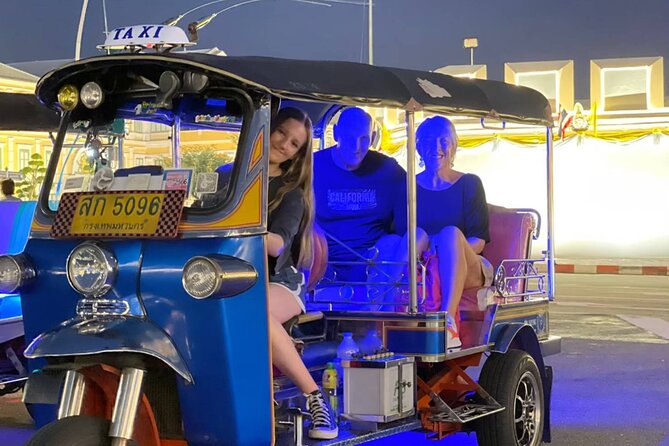
The tuk-tuk part is shared, typically two persons per tuk-tuk. That keeps costs down, but it also means you’ll be sharing space and bumping through Bangkok’s traffic rhythms.
The biggest advantage is energy. You’re moving under night lights, and the quick turns make it feel like a street-level show instead of a museum circuit. In practice, it also helps you cover distance that would otherwise eat time on Bangkok roads.
The tradeoff is that the ride segments are shorter than you may expect. A couple of people in feedback describe the tuk-tuk rides as quick, and the overall flow can feel fast. You’ll still get a proper tuk-tuk experience, but don’t expect long, meandering cruising the way a private driver might do.
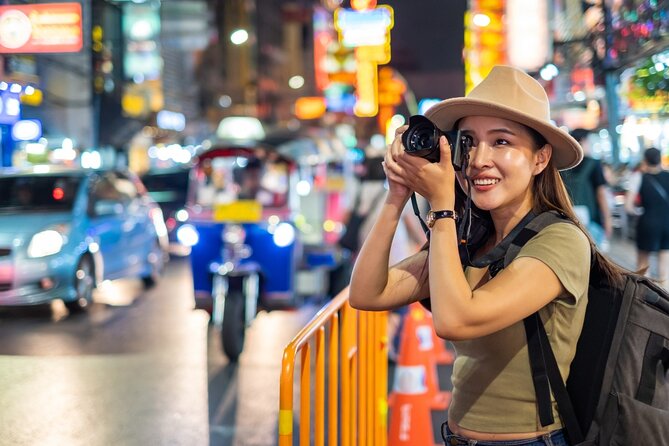
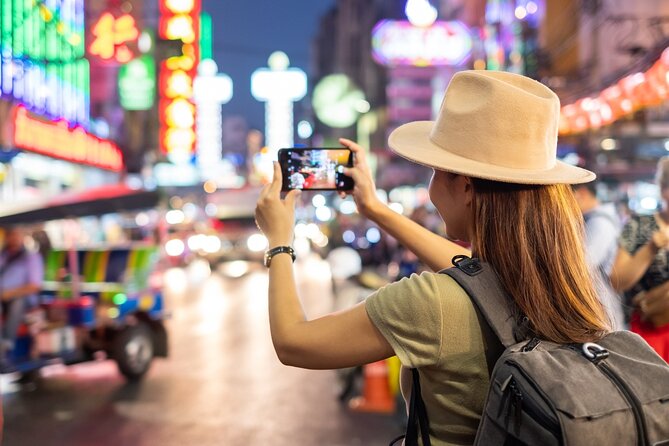
Photo tip: bring your phone with a strap or keep it secure. Night photos often take longer than you plan, and you don’t want to scramble while the tuk-tuk is rolling.
Chinatown’s end stop: what the meal really feels like
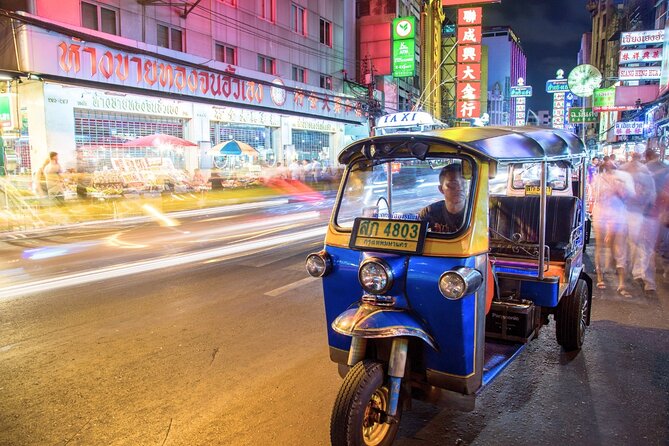
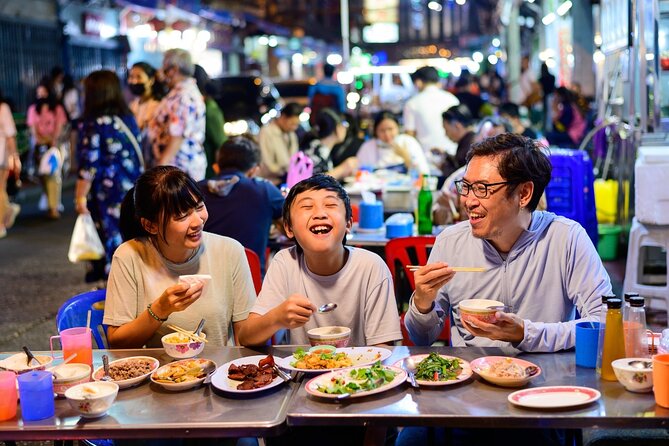
The tour ends in Chinatown on Yaowarat Road. The idea is to wrap up the night with street-food-style eating plus dessert, after you’ve seen the flower market and old-town landmarks.
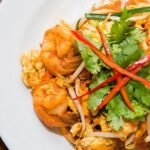
Here’s the honest part: the tour is described as a Chinatown street-food meal, but it’s also clearly not a full food tour. You get a simple street food meal and dessert at the end, and the meal is served late in the experience. The guidance is straightforward: eat a light snack before you go, because waiting until the finish may be tough if you’re hungry.
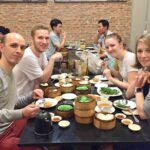
Also, street-food expectations can vary. The tour plan allows for a street-food vibe, but sometimes the guide may choose a restaurant instead of an open stall, depending on crowd levels and timing. That doesn’t automatically mean the food is bad. It can mean quicker service and less standing around. But if you’re picturing eating as a group at multiple hot stalls, your outcome might be different.
Dessert is included, and coconut ice cream is specifically called out as something not to miss by people who loved the ending. If it shows up when you go, take it.
Price and value: is $40.76 a good deal for this mix?
At $40.76 per person, you’re paying for a packaged night route that would be a hassle to stitch together on your own. The included transportation is the core value: Chao Phraya Express Boat, plus tuk-tuk, plus walking between sights.
You also get an English-speaking guide, plus one bottle of drinking water per person. For many first-timers, the guide’s job is more than facts. It’s timing. It’s knowing how to move through temple rules, where to stand for best night views, and how to keep you from getting stuck behind slow foot traffic.
Where value can feel weaker is exactly where the pacing and food expectations collide. A few people felt the first chunk of the itinerary didn’t connect smoothly, and some felt the final meal was small or more restaurant-like than they expected. If your #1 goal is to eat your way through Chinatown, this probably won’t satisfy like a dedicated Chinatown food tour would.
But if your goal is a fast, fun overview of Bangkok’s nighttime icons—river sights, illuminated temples, flower market color, then Chinatown—this price often feels fair.
How to avoid the two biggest problems: getting there and staying patient
Two issues pop up repeatedly in practical terms: meeting point confusion and pacing.
Start with logistics. The meeting point is Saphan Taksin and it’s near public transportation. Still, you need to arrive on time because the guide can wait only 10 minutes past the set meeting time. After that grace period, the tour starts. Bangkok traffic is notorious, so plan extra buffer time.
If you’re coming from the BTS, make it easy on yourself. Even just taking a moment before the meeting to confirm your route to Saphan Taksin helps. And once you find the group, stay put.
Now pacing. Some people say the tour feels rushed. If you’re the kind of visitor who wants time to sit and absorb a temple, pick your moments. Use the river and flower market for your slow brain. Treat the rest as quick orientation so you still get the big sights.
Monday nights: Chinatown may feel less active
One useful detail: on Mondays, food stalls are not allowed on the streets. That means the Chinatown atmosphere you expect from street-level eating may be quieter. The good news is you still end in Chinatown and dessert is included, but the street-stall energy could be toned down.
If you’re traveling specifically for street food, check the day of the week before booking. Another day may feel more like the Chinatown you’ve seen in videos.
Who should book this tour, and who might want a different plan
This is a strong fit if you:
- want a first-night overview of Wat Arun, the old-town sights, and Chinatown
- like variety in transportation (river boat, walking, tuk-tuk)
- have limited time and want a structured route starting at 5:30 pm
It might not be your best match if you:
- only care about deep temple time (you’ll be on a tight schedule)
- want a full Chinatown street-food crawl with many tastings
- get stressed by group pacing and quick stops
If you’re traveling as a family, the structure can help. One big upside of this kind of night tour is momentum. It’s easier to keep younger travelers engaged when the scenery changes every 10–20 minutes.
Should you book this Bangkok Tuk-Tuk Tour by Night?
I’d book it if you want the highlights of Bangkok lighting up at night without doing logistics from scratch. The Chao Phraya Express Boat to Wat Arun is the standout, and the mix of landmarks plus tuk-tuk plus Chinatown dinner gives you a complete evening arc.
Skip or adjust expectations if you’re coming for a pure street-food experience. The meal is included, but it’s simple and served at the end, and street-stall style may vary. Also, temple tickets for some sites (like the Grand Palace) aren’t included, so budget extra if you plan to go inside more than you can from the outside.
If you do book, show up early to Saphan Taksin, dress for temple-area rules, and come hungry enough for a late dinner. Do that, and this tour can be a fun, efficient first look at Bangkok after dark.
FAQ
What time does the Bangkok Tuk-Tuk Tour by Night start, and how long is it?
It starts at 5:30 pm and lasts about 3 to 4 hours.
Where does the tour start and where does it end?
It starts at Saphan Taksin (Yan Nawa, Sathon, Bangkok) and ends on Yaowarat Road in Chinatown. Your guide can assist you finding a taxi back to your hotel.
What transportation is included?
You’ll use the Chao Phraya Express Boat, a river ferry, and tuk-tuk during the tour.
Is the Grand Palace ticket included in the price?
No. The Grand Palace admission ticket is not included. (Wat Arun access is listed as free, and Wat Pho ticket details aren’t clearly stated in the provided info.)
Is this a food tour focused on street-food sampling?
No. It’s a cultural night tour. You get a simple street-food meal and dessert at the end, but the focus isn’t on repeated food tastings throughout.
Do I need to dress respectfully for Wat Arun?
Yes. You’ll enter the Wat Arun temple compound, so wear longer shorts that cover the knees and cover your shoulders.
What if it rains?
The tour runs rain or shine, so weather cancellations are not eligible for a refund.