REVIEW · VALENCIA
Private TukTuk Tour 2 Hours of Valencia
Book on Viator →Operated by Funtuktuk · Bookable on Viator
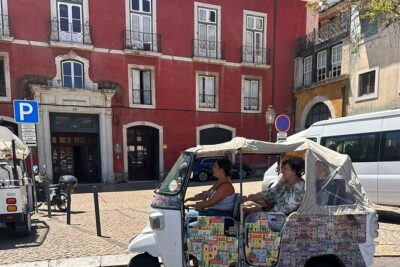
A 2-hour Valencia starter pack with a twist. You’ll zip between the city’s biggest sights in a private tuk-tuk, then hop out for short looks and photos in places most people only rush past. I like the mix of medieval walls, market culture, and the futuristic City of Arts stop, all without turning it into a long walking day. I also really like that many key sights are free to enter on this route. One thing to keep in mind: with only two hours, you’re not getting deep time inside every building—you’re choosing highlights.
In this tour, the guide makes the ride feel personal, and names like Nacho (often with an architecture background), Luda, David, and Roberto show up repeatedly in the experience. Expect the route to feel efficient, with time set aside for photos and quick wandering rather than a nonstop lecture. Still, the biggest drawback is simply timing: you’ll be moving a lot, so if you love lingering, you may want extra time on your own afterward.
In This Review
- Key Things That Make This 2-Hour Tuk-Tuk Tour Work
- Meeting Point to Morning-of-Adventure Energy
- Torres de Serranos: The Fortified Gate That Still Feels Alive
- Mercado Colón: Modernism from 1916 (With a National Monument Title)
- Valencia Cathedral and the Holy Grail Claim: Big Faith Meets Big Stone
- Palacio del Marqués de Dos Aguas: The Palace With the Loud Facade
- Central Market of Valencia: Your Best Food-Theater Stop
- La Lonja de la Seda (Silk Market): Power, Not Just Pretty Views
- Torres de Quart: A Medieval Gate With Personality
- City of Arts and Sciences: A Quick Look at Valencia’s Future Face
- La Marina de Valencia: Beach Time Without the Full-Day Commitment
- Ruzafa Neighborhood Finish: A Local-Living Slice
- What You’re Paying For: Value Beyond the Attractions
- Timing, Comfort, and How to Make the Most of It
- Who Should Book This Tuk-Tuk Tour
- Should You Book the Private 2-Hour Tuk-Tuk Tour?
- FAQ
- How long is the Private TukTuk Tour 2 Hours of Valencia?
- Is the tour private, or shared with other groups?
- What language is the tour offered in?
- Are tickets and entry fees included for all stops?
- What if the weather is bad?
- Can I cancel for a refund?
Key Things That Make This 2-Hour Tuk-Tuk Tour Work
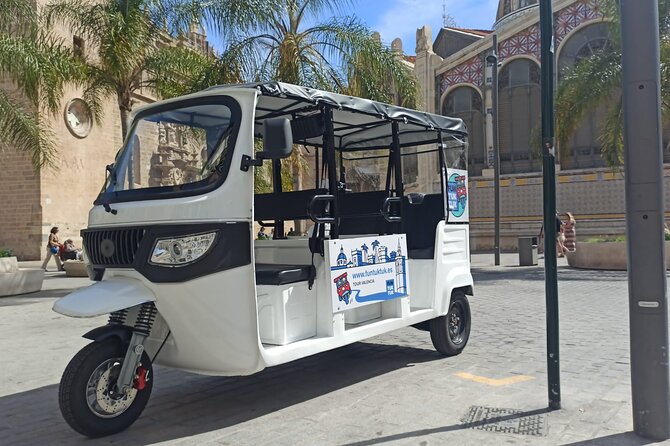
- Private tuk-tuk, just your group: less waiting, more flexibility with pacing.
- Free-entry stops at multiple major landmarks, so you’re paying for time and transport more than ticket fees.
- A smart route across Old Town to the new City of Arts without the hassle of planning transit.
- Short photo-and-stroll windows at each highlight, which is perfect for first-timers.
- Beach + Marina stop so Valencia doesn’t stay purely historic.
- English-speaking guide options and a guide who can tailor the flow to what you’ve already seen.
Meeting Point to Morning-of-Adventure Energy
The tour starts at C. de la Blanqueria, 3 in Ciutat Vella, and you return to that same meeting point at the end. That loop matters more than you might think: you don’t have to worry about getting stranded across town if your feet are tired or you’re juggling plans for the rest of your day.
From there, the format is simple: ride by tuk-tuk through traffic, then pause for focused stops. You’ll get that sweet spot between “too far to walk” and “too crowded to manage alone.” The guides keep things moving, but the best part is that the ride doesn’t feel like a bus tour where you’re stuck watching from one angle.
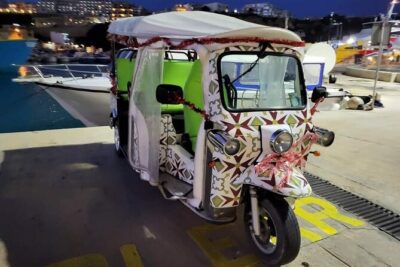
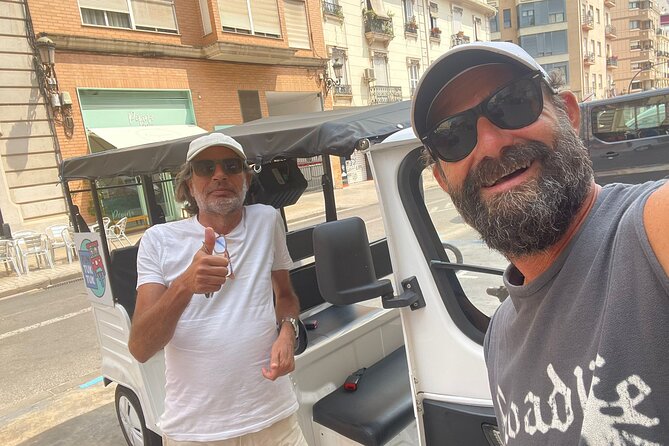
A typical vibe: newer tuk-tuks, punctual starts, and guides who bring the facts in a way that doesn’t kill your sightseeing momentum. Some guides also add small personal touches—like music, a quick coffee/croissant detour when it makes sense, or explaining neighborhood life alongside monuments.
You can also read our reviews of more tours and experiences in Valencia.



Torres de Serranos: The Fortified Gate That Still Feels Alive
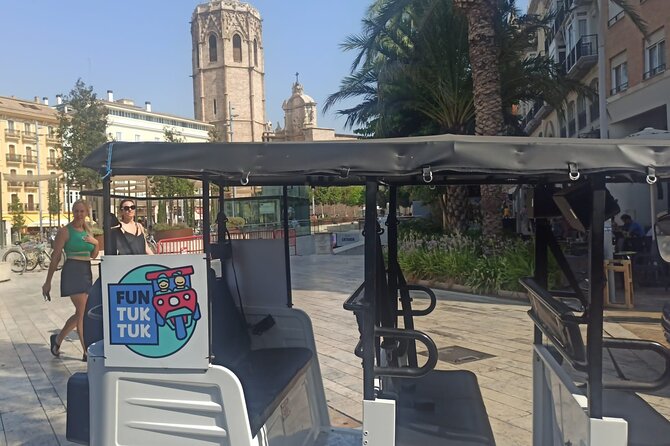
Your first stop is Torres de Serranos (the Towers of Serranos). These towers are built between 1392 and 1398, and they’re among the best-preserved wonders of Valencia. If you’ve never had a city wall explained to you before, this is a strong “oh, that’s why this city looks the way it does” moment.
Here’s what makes this stop valuable on a tight schedule: the towers aren’t just pretty. They anchor Valencia’s medieval defensive layout in a way you can actually picture. You get to stand in front of something that has been watching the same streets for centuries, then connect that feeling to the rest of the old-town sights you’ll see later.
Admission is free, so you’re not paying extra to get the impact. Plan to take a few minutes for photos from different angles. The shape of the towers is dramatic up close, and the surrounding streets help you understand scale fast.
Mercado Colón: Modernism from 1916 (With a National Monument Title)
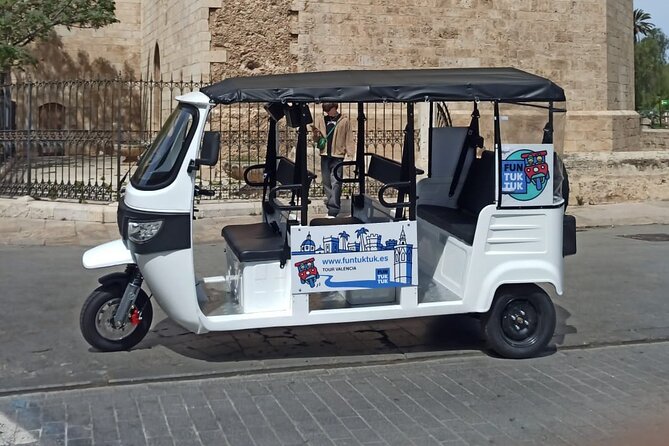
Next you roll to Mercado Colón. It opened on Christmas Eve 1916 and is declared a national monument. This is where the tour subtly shifts from medieval Valencia into early 20th-century style.
What I like about this stop for your first visit: it trains your eye. Many people treat markets as just places to buy food; Mercado Colón shows that markets can also be architecture—big statements in small spaces. The building covers about 4,337 m², and it sits on a plot that previously held a former gas works. That layer-by-layer story is one reason Valencia feels like it’s always been “under construction,” even when it looks finished from the street.
Admission is free, and the stop fits the “see it, understand it, move on” rhythm of a two-hour tour.
Valencia Cathedral and the Holy Grail Claim: Big Faith Meets Big Stone
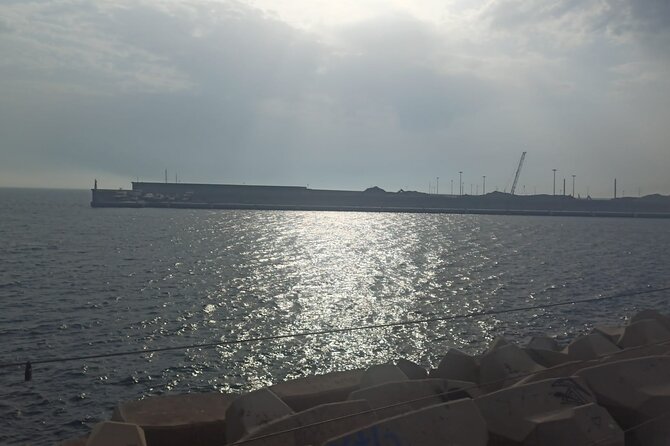
Then it’s Valencia Cathedral—and yes, the stop centers on a very specific claim: the cathedral is said to keep what’s known as the Holy Grail of Christ. The Chapel of the Holy Chalice is the part you can visit, and the cathedral is described as an overlay of constructions, meaning it’s not one single “pure” building story.
Why this stop makes sense on a tuk-tuk itinerary: the cathedral is a gravitational point. Once you’ve seen it, you get a mental map of where the Gothic quarter energy sits, and it helps the rest of the old-town stops feel connected instead of random.
Admission is free as part of this route, which is a nice bonus. If your group likes to hear quick context, this is one of the best times to ask your guide what to notice first—because cathedral interiors can feel overwhelming if you don’t know what you’re looking at.
Palacio del Marqués de Dos Aguas: The Palace With the Loud Facade
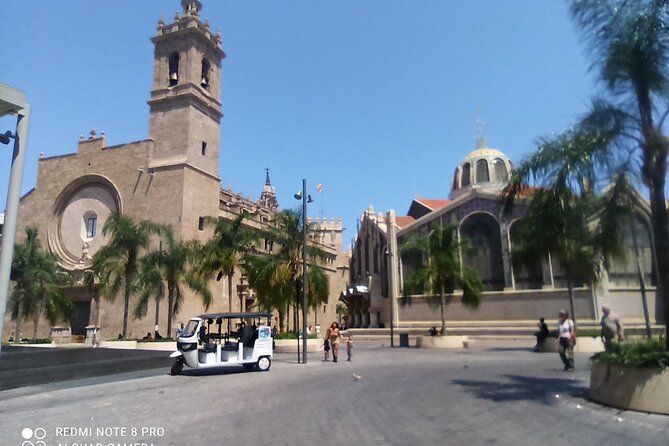
Next up: Palacio del Marqués de Dos Aguas. It’s a historical-artistic monument declared in 1941, and its origin reaches back to the 15th century. This palace is known for a strange, dramatic facade and original decorative detail that keeps people leaning closer even if they only have a few minutes.
On a tour like this, the palace does something smart: it gives you a taste of how wealth and style were displayed in Valencia. You’re not just seeing churches and walls; you’re seeing how power looked when it wanted to be noticed.
The tour also notes the location sits over a part of the city linked to a suspected Roman necropolis from the 1st to 3rd centuries BC. That’s the kind of timeline overlap that makes Valencia feel layered rather than linear.
Admission is free for this stop, so you’re paying mainly for the route and the guide’s interpretation, not extra entry fees.





Central Market of Valencia: Your Best Food-Theater Stop
Then you hit Central Market of Valencia. This is where the tour becomes a feast for the senses. The building is a little over 100 years old, but the site’s food tradition goes back to Valencia under Muslim rule—so you’re standing in a place that has served the city for a very long time.
The market is described as the largest supply plaza in Europe at over 8,000 square meters. It’s also on a list of the most beautiful markets in the world according to the BBC.
On this tour, you only have 10 minutes, but that’s usually enough if your expectations are right: you’re not shopping for a grocery haul. You’re sampling the vibe—colors, smells, and the steady motion of vendors.
Here’s my practical advice: use your 10 minutes to pick one area to focus on, take photos from a wide angle (ceiling and layout), then walk until you see a stall that pulls you in. If you want to eat, you can do that with your day still intact afterward—this stop is your “food mood” moment.
Admission is free here too.
La Lonja de la Seda (Silk Market): Power, Not Just Pretty Views

After Central Market, you’re nearby again, heading to La Lonja de la Seda, the Silk Market. This building is one of Valencia’s most emblematic landmarks and has been important for over five centuries.
Why silk matters here: this is the old economy of Valencia made visible. The Silk Market isn’t just a background building for photos. It’s a snapshot of how trade shaped the city’s wealth and the way communities organized around commerce.
Admission is free, so you’re not “spending” your limited time on ticket entry. You’re spending it on the structure and the story. If your guide adds trade context—how Valencia grew through its economy—this stop becomes more than architecture, it becomes a sense of place.
Torres de Quart: A Medieval Gate With Personality

Next: Torres de Quart (the Quart Gate). This is one of two fortified gates of Valencia’s medieval wall that still stand. The stop describes the towers as two semi-cylindrical towers joined by a central body, with the gate shaped like a half-pointed arch.
In a walking-heavy city, this stop is a win because it gives you a “medieval structure” view without requiring a long trek. It also pairs well with Serranos earlier in the tour: you see how different parts of the wall system look, and you start to understand how the city funneling points worked.
Admission is free for this stop.
City of Arts and Sciences: A Quick Look at Valencia’s Future Face
Then you head to Ciudad de las Artes y las Ciencias. You’ll stop for about 10 minutes for photos, and admission isn’t included for this segment.
This is a smart scheduling choice. Even if you don’t pay for any internal attractions, the exterior alone tells you a lot about Valencia’s modern identity. The shapes, the waterways, and the overall “designed city” feel make it a great contrast to the old stones you saw earlier.
Practical tip: if you’re going to spend money later, decide now what you want. This tour gives you the visual anchor, but it doesn’t promise a full museum day. If your interests lean strongly toward one specific museum inside the complex, you’ll likely want a separate plan after the tour.
La Marina de Valencia: Beach Time Without the Full-Day Commitment
After the futuristic stop, you go toward the sea. You’ll make a 10-minute stop at La Marina de Valencia for views of the beach and the Marina. Unlike the City of Arts segment, the tour lists admission ticket included for this part.
This beach interruption is more than a cute finale. It gives you a reset after centuries of stone and arches. Also, Valencia’s coastline is part of why the city has such an outdoor lifestyle. Even a short look can help you understand why locals spend so much time outside.
If the weather is good, this is where you’ll feel the biggest mood shift. Cold or rainy days can dampen the “beach vibe,” and the experience notes that it requires good weather—so check conditions before you settle into your day.
Ruzafa Neighborhood Finish: A Local-Living Slice
The last segment brings you to Ruzafa, described as a genuine, lively neighborhood full of options for visitors. The tour doesn’t frame this as a museum stop. It’s more like a guided intro to a part of Valencia that you can keep exploring after the tuk-tuk ride ends.
This matters because most highlight tours end by dropping you back in a tourist hotspot. Ruzafa gives you a direction for how to spend the rest of your day: cafés, streets to browse, and the feeling that you’re in a real neighborhood rather than a themed zone.
What You’re Paying For: Value Beyond the Attractions
At $47.93 per person for about 2 hours, this isn’t the cheapest way to see Valencia. But it’s also not trying to be.
You’re paying for:
- fast transport across a spread-out city,
- a private format (only your group),
- and guide interpretation that turns disconnected landmarks into a single story.
For first-timers with limited time, the value is real. Valencia is big, and walking everything can eat your day. The tuk-tuk keeps the pace lively while still giving you short windows to step out for photos and a quick look.
For repeat visitors, it’s still useful as a “route refresh,” especially if you want to revisit old-town icons and add a modern contrast plus the beach without managing transit.
Timing, Comfort, and How to Make the Most of It
This is best thought of as a high-impact overview, not a slow-craft sightseeing day. To get the most from it:
- Wear comfortable shoes even if you only step out briefly.
- Bring a phone with enough battery for quick photo bursts.
- Use the guide’s questions time wisely—ask for what you should prioritize if you only have one extra afternoon.
Because the tour is private, you can also pace how “photo-heavy” you want it to be. The experience is described as allowing time at vantage spots and walkaround moments, and guides like Nacho have been noted for adjusting based on what guests already saw.
Also, keep an eye on weather. This tour requires good weather, and that’s not a random detail—it directly affects the beach stop and the overall enjoyment of moving around outdoors.
Who Should Book This Tuk-Tuk Tour
This fits best if you:
- have limited time in Valencia and want the biggest hits,
- prefer a more personal ride than a bus tour,
- like city history but also want frequent breaks for photos,
- want a quick introduction to both Old Town and modern Valencia.
It may not fit if you want long stays inside major attractions. This route is built for highlights and quick orientation. If that’s your style, you’ll probably love it. If you want deep museum time, pair this with a longer follow-up plan.
Should You Book the Private 2-Hour Tuk-Tuk Tour?
Yes—if you want a fast, friendly way to get your bearings fast and see Valencia’s key contrasts in one go. The combination of old gates (Serranos and Quart), major landmarks (cathedral and the Holy Chalice chapel), and the food-and-trade focus of Central Market plus La Lonja is a strong mix for the time you have.
Book it especially if you like tours where the guide adds local context and keeps things moving without feeling rushed. If your schedule allows, plan one extra block afterward for whatever you loved most—whether that’s the market atmosphere, cathedral details, or spending longer by the Marina.
FAQ
How long is the Private TukTuk Tour 2 Hours of Valencia?
The tour runs for about 2 hours.
Is the tour private, or shared with other groups?
It’s a private tour/activity, so only your group participates.
What language is the tour offered in?
The tour is offered in English.
Are tickets and entry fees included for all stops?
Most stops on the route list free admission, but the Ciudad de las Artes y las Ciencias stop lists admission ticket not included. The La Marina de Valencia stop lists admission ticket included.
What if the weather is bad?
This experience requires good weather. If it’s canceled due to poor weather, you’ll be offered a different date or a full refund.
Can I cancel for a refund?
Yes. You can cancel up to 24 hours in advance for a full refund. If you cancel less than 24 hours before the start time, the amount paid will not be refunded.