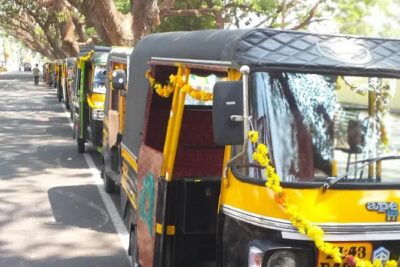
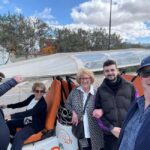
A tuk-tuk ride can feel like a shortcut. This Valencia tour strings together major sights across old walls, the waterfront, and futuristic architecture, with a friendly driver/guide at the wheel. It’s built for a short stay, so you get real context fast without doing a full-day slog.
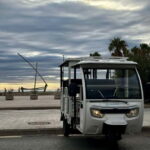
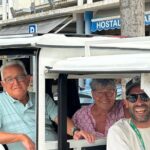
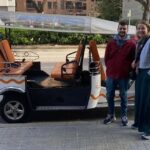
I especially liked the pace: in about 90 minutes to 2 hours, you cover enough landmarks to understand how Valencia fits together—medieval gates, football culture, and the sea. I also like the small-group feel (up to 12 people), which makes it easier to ask questions and get help with photos; guides like Tony and Salvador are singled out for being personable and picture-friendly.
One thing to keep in mind: the open structure can mean noise from traffic and some sights high up may be harder to see depending on your height and the vehicle setup.
In This Review
- Quick hits
- Open-Air Highlights in 1 to 2 Hours: How the Tuk Tuk Tour Works
- Price and What Makes It Feel Like a Deal
- Starting in Ciutat Vella: Find the Meeting Point Like a Local
- Serrano Towers and Quart Towers: Medieval Gates, Real Views
- Serrano Towers
- Quart Towers
- Sea Gate and the Turia Flower Bridge: Memory and Seasonal Color
- Sea Gate (rebuilt as a memorial)
- The Turia Gardens bridge that changes every four months
- Mestalla Stadium: Football Culture in Plain Sight
- Old Port, Veles e Vents, and the Shipyard World
- Malvarrosa and Las Arenas Beaches: Art, Food, and Night Energy
- Malvarrosa: the classic favorite
- Las Arenas (and why locals still use that name)
- City of Arts and Sciences: Calatrava and Félix Candela’s Future Valencia
- Central Market of Valencia and the Bullring: Where Daily Life Becomes Culture
- Central Market: modernist design turned food hall
- Bullring: neoclassical shape and ongoing events
- Estación del Norte: The Modernist Station You Will Want to Photograph
- When the Tour Feels Smooth: The Role of the Guide and Driver
- Open-Air Comfort Tips for Summer and Windy Days
- Should You Book This Valencia Tuk Tuk Tour?
- FAQ
- How long is the Valencia tuk tuk tour?
- How much does the tour cost?
- What is included in the price?
- Is tipping included?
- What languages are available for the guide?
- How many people are on the tour at once?
- Where does the tour start and end?
- What major sights are on the route?
- Is free cancellation available?
- Is the tour suitable for everyone, and are service animals allowed?
Quick hits
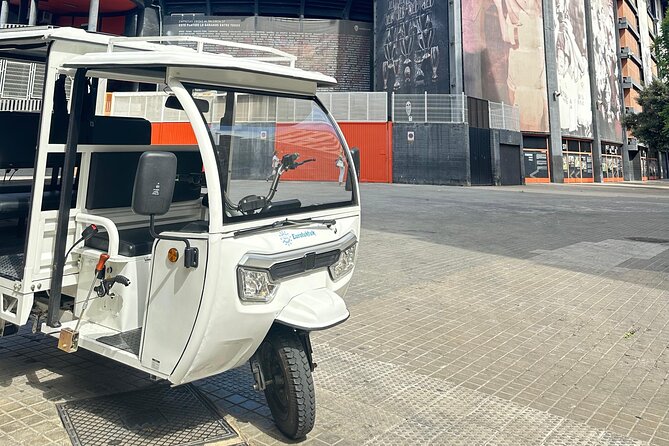
- Open-air sightseeing that gets you into areas bigger vehicles can’t reach
- 1 bottle of bottled water per person included, which helps on warmer days
- Top landmarks packed in: Serrano and Quart Towers, City of Arts and Sciences, Central Market, and more
- Multiple guides and drivers called out by name, including Tony, Salvador, Silvio, Francisco, Sebastian, and others
- Fast overview style: great for getting oriented, not for slow, museum-level wandering
- August heat tip from the experience pattern: morning or late timing is easier on the body
Open-Air Highlights in 1 to 2 Hours: How the Tuk Tuk Tour Works
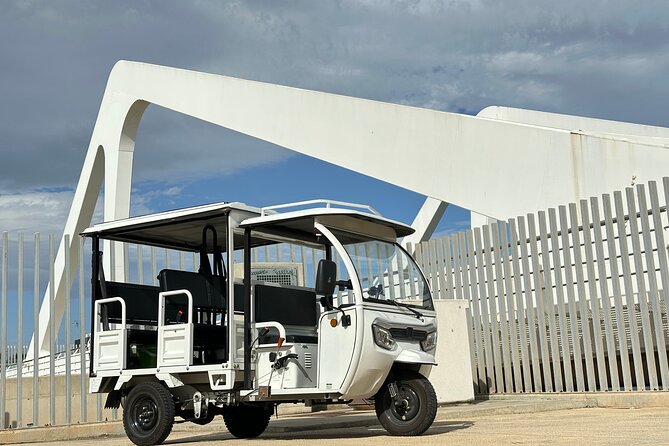
This is the kind of tour I recommend when you want to understand a city quickly. Valencia is spread out, and on foot you’d spend a lot of time crossing neighborhoods just to reach the next “must-see.” On the tuk tuk, you’re moving through Ciutat Vella, sliding toward the Turia area, then pushing out to the City of Arts and Sciences and over to the port and beaches.
The ride is open-air, so you feel the city as you go: the sound of streets, the change in neighborhoods, and the quick shifts from stone-and-tiles Valencia to the modern forms by Santiago Calatrava and Félix Candela. It’s also a good match for people who want a low-effort way to see a lot.
The small-group size (maximum 12) matters more than you might think. When you’re not packed in with a giant crowd, it’s easier to hear your guide and react to the route. That’s the difference between a “transport ride” and a tour that actually gives you meaning for what you’re seeing.
You can also read our reviews of more tours and experiences in Valencia.



Price and What Makes It Feel Like a Deal
At $32.44 per person for about 1–2 hours, the value is in how much ground you cover and how many recognizable landmarks get stitched into one story.
If you’re doing Valencia in 3–4 days, this pricing makes sense because it replaces several longer taxi/ride hops or the time-consuming process of navigating buses. In other words, you’re paying for orientation. And good orientation helps the rest of your trip: you’ll know where the medieval gates sit, where the modernist architecture hits, and which areas are best for an easy return later.
It also helps that water is included (1 bottle per person). That’s a small detail, but in summer it can decide whether you feel good enough to explore afterward.
Starting in Ciutat Vella: Find the Meeting Point Like a Local
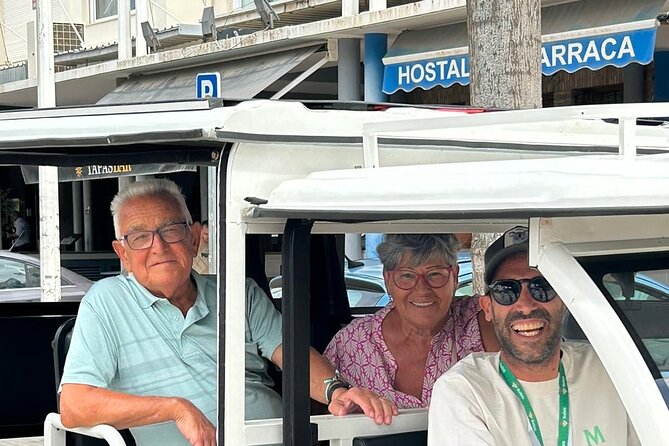
The meeting point is C. de la Blanqueria, 3, in Ciutat Vella (46003). This is a handy central spot, but it’s also the kind of address where “close to everything” can still mean “easy to miss.”
My practical advice: show up a little early and check your map twice before you walk in circles. Some people in the feedback pattern sounded like they had trouble locating the exact spot, and when you’re on a tight schedule, a few minutes of confusion can feel bigger than it is.
Serrano Towers and Quart Towers: Medieval Gates, Real Views
Valencia’s medieval walls aren’t just background scenery. They’re part of how the city protected itself—and the towers are the physical proof.
Serrano Towers
The Serrano Towers are Gothic, built between 1392 and 1398 by architect Pere Balaguer. They originally served as a defensive gate in the medieval city walls. What I like about this stop is the shape: two large polygonal towers flanking a central arch. It’s strong and simple, because it was designed to do a job, not to look pretty.
You can explore the interior and climb for views. That’s the best way to connect the street-level Valencia you’re seeing from the tuk tuk with the bigger geometry of the old city. If you like understanding a city’s “logic,” this stop delivers.



Quart Towers
The Quart Towers are another set of city gates, built between 1441 and 1460. Located on the road to Quart, they helped connect Valencia to the west and north. These towers are brick with Gothic elements—robust, defensive in tone—and they were damaged during the War of Independence before being restored in the 19th century.
If Serrano is about the classic gate experience, Quart adds contrast: more of the sturdy wall-and-arch feeling, with the sense of a city that grew along routes, not just around landmarks.
Reality check: you’re seeing these from a ride and then from short, guided moments on site. If your goal is a deep architectural study, pair the towers with a return visit later. If your goal is to get the big picture fast, you’ll be happy.
Sea Gate and the Turia Flower Bridge: Memory and Seasonal Color
Sea Gate (rebuilt as a memorial)
The Sea Gate might look ancient, but it’s a modern reconstruction. It was rebuilt in 1946 to honor those who fell in the Spanish Civil War. The gate is made of white stone and has three arches, with the central arch the largest.
What I like about this stop is how it shows Valencia’s layers: medieval walls gave way to later rebuilding, and the city keeps memory built into stone. It’s not just architecture; it’s civic remembrance.
The Turia Gardens bridge that changes every four months
This bridge opened in 2002 and was built as an extra step over the Turia Gardens. Every four months, the flowers change. That’s why some people call it the most expensive bridge in Valencia—because the look is constantly refreshed as part of the design concept.
Timing matters. September is described as a tougher month for seeing the full flower look because the flowers shift again. If you’re visiting around then, don’t expect everything to be perfectly timed to your date. If you want the strongest photo results, try to avoid being right in the middle of the switch.
Mestalla Stadium: Football Culture in Plain Sight

Mestalla is home to Valencia CF and it’s one of Spain’s emblematic stadiums. It opened in 1923 and was designed by Santiago Calatrava. The seating capacity is about 50,000, and the stands are steep, which brings fans closer to the pitch.
Even if you’re not a die-hard football person, this stop works because you see how Valencia’s identity isn’t locked in museums. It’s also in stadium energy—everyday culture, not just sightseeing.
What you should expect: you’re not touring the inside like a match-day experience. You’re getting the architectural and cultural context from the outside and nearby areas, which is exactly the job of a highlights ride.
Old Port, Veles e Vents, and the Shipyard World
Valencia’s old port covers about a million square meters and is packed with activities—culture, innovation, business, and a lot of movement tied to sports and boating.
Veles e Vents is highlighted for its unique architecture. It hosts exhibitions, dance events, and other arts. Nearby are the Tinglados and the old shipyard, and there are over 800 private moorings for boats. Service companies and sports clubs operate here, with sailing, diving, and kayaking among the activities mentioned.
This is a stop that helps you understand Valencia as a working city. The port isn’t only about tourism. It’s a place where people store boats, organize clubs, and run real activities.
Malvarrosa and Las Arenas Beaches: Art, Food, and Night Energy
Valencia’s coastline is more usable than it looks on postcards. The beaches are close to the city, and that makes them practical on a real trip schedule.
Malvarrosa: the classic favorite
Malvarrosa is described as Valencia’s most famous beach and one that has inspired artists. In the mid-19th century, it shifted from being a flower area into the beach you know today. You get wide fine golden sand and easy access from the city, which explains why it’s popular with locals.
Las Arenas (and why locals still use that name)
Las Arenas gets its name from the old fishing quarter. Locals still call it Las Arenas after the old spa, now a luxury hotel complex. This beach also has plenty of restaurants and entertainment options.
Some seaside spots turn into nightlife areas. Marina Beach Club is mentioned as one example of that evening energy.
My take: this is a good “see it and decide” stop. If you’re hot or tired, you’ll have enough sense of the coastline from the ride to choose where to walk later. If you want beach time right away, you may want to plan a separate longer break on your own.
City of Arts and Sciences: Calatrava and Félix Candela’s Future Valencia
If Valencia had a single visual symbol of the 21st century, it would be this complex. The City of Arts and Sciences is a spectacular architectural and cultural center designed by Santiago Calatrava and Félix Candela. Construction began in 1996 and finished in 2009, with the goal of turning Valencia into a worldwide center for cultural, scientific, and leisure activities.
What I like here is the contrast with everything earlier: medieval towers and memorial gates give way to smooth modern forms. Even if you’re not into architecture, it’s the kind of place that helps you feel the city’s ambition.
Because the tour is short, you’ll get the highlights rather than a full walkthrough. But that’s still useful. After this stop, you’ll know whether you want to return for a longer visit.
Central Market of Valencia and the Bullring: Where Daily Life Becomes Culture
Central Market: modernist design turned food hall
The Central Market opened in 1928 as part of a project to modernize commerce and revitalize the city center. Designed by Francisco Mora, it features colorful mosaics, ornate columns, and a large glass dome.
In 2003 it was renovated into a space with restaurants, cafes, and gourmet offerings. It’s described as a symbol of Valencia’s architectural heritage plus modern function. It’s also said to be close to landmarks such as La Lonja and Plaza del Ayuntamiento, so it fits nicely into a broader sightseeing loop.
If you like markets, this stop is one of the easiest ways to understand Valencia’s “today” alongside its “then.”
Bullring: neoclassical shape and ongoing events
Valencia’s Bullring opened in 1859 and is a major example of neoclassical architecture. It seats around 10,000 and was designed by Sebastián Monleon. The structure is circular brick with Doric columns, inspired by the Roman Colosseum.
It also serves modern uses: beyond bullfighting, it currently hosts cultural events and concerts. So it’s not only a historic monument. It’s a venue.
Estación del Norte: The Modernist Station You Will Want to Photograph
Estación del Norte opened in 1917 and is one of Spain’s standout examples of modernist railway architecture. Designed by Demetrio Ribes, it’s known for colorful ceramics and Valencian-style tiles with ornamental details that reflect regional cultural richness.
One detail that people love is the lobby and waiting area. It’s often compared to a Harry Potter-style atmosphere, and even if you don’t care about that reference, the space looks dramatic for a train station.
In a short highlights tour, this is a smart stop because a station is usually a dead zone for sightseeing. Here, it becomes the attraction.
When the Tour Feels Smooth: The Role of the Guide and Driver
A tuk tuk tour rises or falls on the people at the controls and the people giving the story.
Names that show up repeatedly in the feedback include Tony, Salvador, Silvio, Francisco, and Sebastian. People praise drivers for being friendly, quick with answers, and good at helping with photos. You’ll also notice that guides seem to adjust when schedules get messy—at least in many cases—so you still get a meaningful version of the route.
That said, you should also expect some normal urban variation. Valencia traffic can be unpredictable, and there are a few comments that point to timing confusion or difficulty finding the meeting spot. Nothing about this type of city ride is perfectly clockwork every day. If you build in a little buffer, the experience stays stress-free.
Open-Air Comfort Tips for Summer and Windy Days
This ride is open. That’s part of the fun, but it affects comfort.
- Wear sunglasses and plan for sun exposure in warmer months.
- If you’re sensitive to noise, know that traffic can make hearing a bit harder at times.
- In very hot weather, morning or late-day timing is the kinder choice. The pattern from the experience is that people appreciate the cooler slots when August heat hits.
If you’re someone who likes getting photos with clear views up high, a heads-up: the vehicle setup can limit how much you see above street level, depending on where you sit and what’s covering the tuk tuk at that moment.
Should You Book This Valencia Tuk Tuk Tour?
Book it if you want a fast, low-effort orientation to Valencia. This is the right choice for a short visit where you need to see medieval gates, the coast, and the big modern architectural moment in one go. The included water and the small-group limit help it feel practical, not rushed-for-the-sake-of-it.
Skip it (or pair it with other plans) if you want deep, slow exploring inside lots of buildings. This is highlights-first. You’ll likely want follow-up visits to the places that catch your eye—especially the towers and the market areas.
If you’re deciding between time and detail, this tour leans toward time. For most people, that’s exactly what makes it worth the price.
FAQ
How long is the Valencia tuk tuk tour?
It runs about 1 to 2 hours.
How much does the tour cost?
The price is listed as $32.44 per person.
What is included in the price?
Bottled water is included (1 bottle of water per person), and you get a guide.
Is tipping included?
No. Tips are not included.
What languages are available for the guide?
The guide is offered in English, Spanish, Portuguese, Italian, and German.
How many people are on the tour at once?
The maximum group size is 12 travelers.
Where does the tour start and end?
It starts at C. de la Blanqueria, 3, Ciutat Vella, 46003 València, and ends back at the meeting point.
What major sights are on the route?
Key stops include Serrano Towers, the Sea Gate, the Turia Gardens flower bridge, Mestalla Stadium, the Old Port area (including Veles e Vents), Malvarrosa and Las Arenas beaches, the City of Arts and Sciences, the Central Market, the Bullring, Estación del Norte, and the Quart Towers.
Is free cancellation available?
Yes. You can cancel for a full refund up to 24 hours before the experience starts.
Is the tour suitable for everyone, and are service animals allowed?
Service animals are allowed, and the tour is described as near public transportation and suitable for most people.