REVIEW · JAIPUR
Jaipur Tour by Tuk-Tuk
Book on Viator →Operated by Marigold Tuktuk and Car Tours · Bookable on Viator
A tuk-tuk tour turns Jaipur into a moving photo story. You cover big-ticket sights in one day, with hotel pickup and an English-speaking driver who also acts as your guide. I like this setup because you’re not stuck on a slow bus loop, and you can ask questions in real time instead of guessing your way around.
The two best parts are how much ground you cover and how flexible the route feels with your guide. The one catch to plan for is that monument entry fees and camera fees cost extra, so your final spend depends on which tickets you want for each stop.
In This Review
- Key highlights at a glance
- Why a tuk-tuk day makes Jaipur easier (and more fun)
- Price and value: what $5 gets you, and what costs extra
- The day’s flow: from hilltop forts to the Pink City
- Albert Hall Museum: an Indo-Saracenic way to close the day
- Hawa Mahal: the Palace of Breeze and its pink façade
- Jantar Mantar: reading the giant instruments
- City Palace: royal spaces with practical context
- Amber Fort (Amber Palace): hilltop grandeur and a real walk
- Panna Meena ka Kund and Jal Mahal: stepwell + water palace in quick hits
- Panna Meena ka Kund (stepwell)
- Jal Mahal (water palace)
- Gaitore Ki Chhatriyan: royal tombs with marble domes
- Pink City bazaars: shopping with time, not stress
- The English-speaking driver-guide: what makes it feel personal
- Practical tips for your tuk-tuk day in Jaipur
- Should you book the Jaipur Tour by Tuk-Tuk?
- FAQ
- What does the Jaipur tuk-tuk tour include?
- How long is the tour?
- Is this tour private or shared?
- Are monument entry fees included?
- Do I need to pay for camera fees?
- Does the tour offer pickup from my location in Jaipur?
- Can the itinerary be customized?
- What’s the cancellation policy?
Key highlights at a glance
- Tuk-tuk sightseeing: faster than walking, more fun than a bus ride
- English-speaking driver-guide: practical context while you travel
- Major Jaipur icons in one day: Hawa Mahal, Jantar Mantar, City Palace, Amber
- Late-day museum option: Albert Hall Museum at the calmer end of the trip
- Small, manageable stops: stepwell, water palace, royal memorials, then bazaars
- Water and tea included: simple comfort during a long day
Why a tuk-tuk day makes Jaipur easier (and more fun)
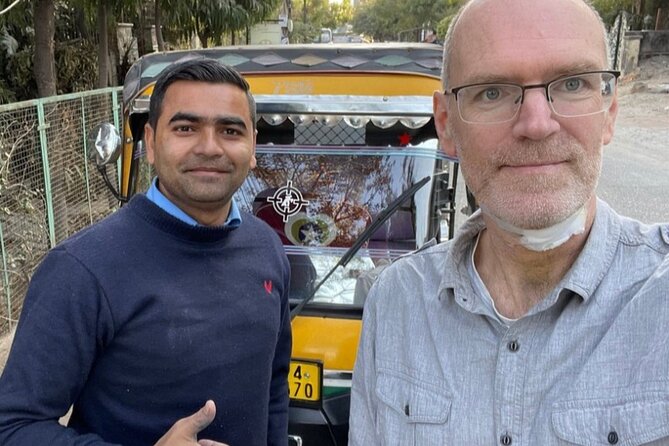
Jaipur can feel big on your first day. The streets are active, the sights are spread out, and it’s easy to lose time trying to figure out how to get from one landmark to the next. This tour solves that by using a private tuk-tuk with an English-speaking driver-guide, so you’re always in motion and always learning something as you go.
I also like the vibe. A tuk-tuk is part of the experience here, not just transportation. You’ll get that quick, local feeling of being out in the city, but with a route that hits the essentials instead of spinning in circles.
One more practical win: since it’s private, your guide can adjust timing. You can spend more time where you’re most interested and move on when something has started to feel like a long line and a fast photo.
You can also read our reviews of more tours and experiences in Jaipur.


Price and value: what $5 gets you, and what costs extra
The headline price shown is very low, but your spending picture depends on what’s included versus what you pay on-site. The tour includes pickup and drop from your hotel (or airport/railway/bus station), a private tuk-tuk, and basic refreshment support: a bottle of water and a cup of tea.
What’s not included is the big-ticket line item: admission tickets for monuments. Based on the listed prices, you should budget for:
- Albert Hall Museum: $3.62
- Hawa Mahal: $2.41
- Jantar Mantar: $2.41
- City Palace and Amer (Amber Fort): $6.64 (sold as a combined option)
If you do the standard set above, you’re looking at about $15.08 in monument entry fees, plus camera fees (where applicable) and tips. That’s the real tradeoff: the tour is an excellent value for transport and guided routing, and it becomes even better when you plan your ticket list ahead of time so you’re not surprised later.
The day’s flow: from hilltop forts to the Pink City
This is a 9 to 10 hour plan, which is long enough to feel productive but short enough to keep energy for photos, stairs, and the occasional chai stop. The itinerary mixes major monuments with quick, high-impact scenes, so you’re not stuck doing only indoor museums or only outdoor forts.
A good thing to know is that some stops are intentionally brief—like the stepwell at Panna Meena ka Kund and the water palace Jal Mahal—so your time doesn’t get swallowed by any single location. Then, you get bigger chunks for the places most visitors care about most: Amber Fort, Hawa Mahal, Jantar Mantar, and City Palace.
Your guide will also likely place the Albert Hall Museum toward the calmer end of the day, since it’s described as a gentle stroll-style finish. That’s smart, because museum time can feel slower after you’ve already climbed fort steps and walked busy lanes.
Albert Hall Museum: an Indo-Saracenic way to close the day
Albert Hall Museum is the kind of stop that works best when you’re not rushing. It runs about 1 hour 30 minutes, and the building itself is a standout example of Indo-Saracenic architecture, so even if you move through galleries quickly, the structure still delivers.
I like it as an end-of-day stop because the pace feels more relaxed than the hilltop forts. You get a break from intense outdoor heat and crowds, and you can slow down enough to actually look at details instead of treating everything like a checklist.
The admission ticket is not included, and camera fees may apply at monuments. Still, if you want at least one cultural stop that doesn’t require you to climb, this is a solid choice.
Hawa Mahal: the Palace of Breeze and its pink façade
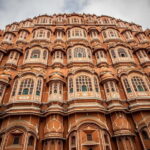
Hawa Mahal is famous for a reason. Expect about 1 hour here, focused on that iconic pink pyramid-shaped frontage—often called the Palace of Breeze—and the story behind it. It was constructed by Maharaja Sawai Pratap Singh to house ladies of the royal court, which adds meaning to what you’re seeing.
A practical approach helps at Hawa Mahal:
- Arrive ready to take photos first, since the façade is the big visual moment
- Then spend a bit of time reading the context so it doesn’t turn into only picture-taking
The entry fee is listed as $2.41 per person, and you’ll want to factor in possible camera charges. If you’re short on time, you can still get the core experience without over-staying, since the main value is in the exterior experience.





Jantar Mantar: reading the giant instruments
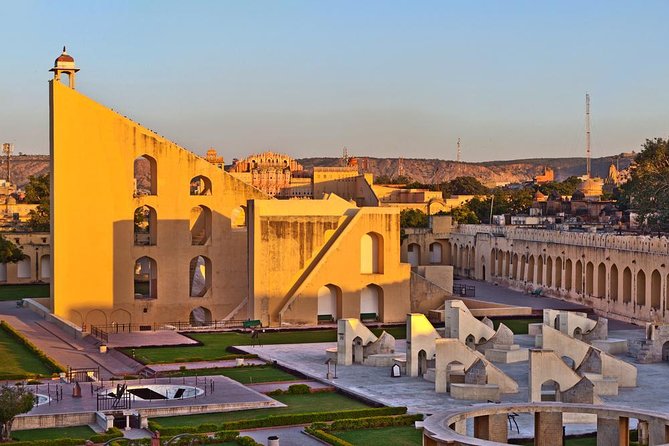
Jantar Mantar is one of those places where you’ll either love the weirdness—or at least appreciate how clever it is. You get about 1 hour, and it’s described as a huge astronomical observatory built by Maharaja Jai Singh. It’s also a World Heritage Site and full of large sundials and angular instruments used by royal astronomers.
The best way to enjoy it is to go slowly enough to track what the instruments are for. If you’re used to modern clocks and screens, this site offers a different way of thinking about measurement and the sky.
Entry is not included, listed at $2.41 per person. If you’re the type who enjoys “how did they figure this out?” details, this is often the emotional highlight of the day.
City Palace: royal spaces with practical context
City Palace is scheduled for about 1 hour 30 minutes, and it’s right near Jantar Mantar, which keeps logistics easy. The complex includes the Chandra Mahal and Mubarak Mahal, plus other buildings, and it remains connected to the royal legacy of the city.
What I like about City Palace is that it doesn’t feel like a single room. It’s more of a complex, so even if you’re not staying for every exhibit, you still get that sense of how royal power was expressed through architecture.
The entry fee listed is $6.64 per person for City Palace (not included). Also note the camera fee detail: camera rules can be strict at some heritage sites, and the tour notes mention camera fees at monuments, so plan to check when you arrive.
Amber Fort (Amber Palace): hilltop grandeur and a real walk
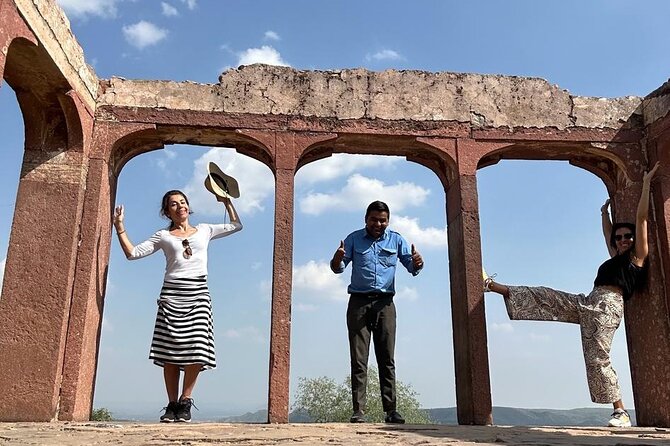
Amber Fort is the big one, and you’ll want the time. You have about 2 hours here, plus the drive out to the hilltop. It’s approximately 11 km outside the Pink City, and the fort is open from 8:00 am to 5:30 pm, which matters because timing can affect both heat and crowds.
Even though you’re in a tuk-tuk, you still do a short walk from the car to the entrance. That’s normal here, but it’s also why good shoes help. If you’re traveling in warm months, you’ll feel it.
I also like that Amber isn’t just a single photo angle. It has multiple visual layers and views from different points, so even if you have a short attention span for museum labels, you can still enjoy the fort through the architecture and the setting.
Entry is not included, and it’s listed under the City Palace & Amer ticket option for $6.64 per person. If you want maximum bang for your day, this is the fort to prioritize.
Panna Meena ka Kund and Jal Mahal: stepwell + water palace in quick hits
This part of the tour works because it’s short and different. After Amber Fort, you get quick stops nearby, each offering a distinct visual payoff.
Panna Meena ka Kund (stepwell)
Panna Meena ka Kund is about 15 minutes and free to enter. It’s a 16th-century stepwell with 8 levels of steps descending to the water. It’s no longer in use, but you can follow the steps down if you want.
It’s the kind of place where I enjoy slowing down for a minute and looking at how the geometry controls your view. Just remember: stepwells involve stairs, so take care if the ground feels slippery.
Jal Mahal (water palace)
Jal Mahal is also about 15 minutes and free. This Rajput-style water palace dates from the 17th century and sits near the surface of the Man Sagar Lake, which creates that float-on-the-water effect.
You don’t need a long time here, because the visual idea is immediate. What helps is having context: once you know it was a favorite of the Jaipur royal family, the structure starts to feel more like an artifact of lifestyle, not just a pretty lakeside view.
Gaitore Ki Chhatriyan: royal tombs with marble domes
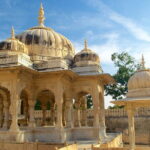
Gaitore Ki Chhatriyan takes about 1 hour. It’s located at Royal Gator near Nahagarh Fort, and it features tombs and mausoleums of Jaipur’s Maharajas and royal family, including the tomb of Jai Singh, the city’s founder.
I like stops like this because they’re quieter than the headline monuments. The marble domes and columns also give you a different kind of photo experience—less “iconic postcard” and more “architecture you can study.”
Entry is not included for this stop. Still, if you’re the sort of person who enjoys how different royal spaces function across a city, this is a meaningful addition.
Pink City bazaars: shopping with time, not stress
The Pink City segment is about 1 hour 30 minutes, and it’s free to access as you explore. The tour frames it as essential: visit one of the bazaars so you can experience the busy shopping streets and stalls.
This is where you’ll see a mix of spices, fruit, jewellery, clothes, and traditional handmade items (the description cuts off, but that range is clearly the goal). The value of having this time with a guide is that you’ll spend less energy figuring out where to start and more time browsing what you actually want.
My practical advice: decide in advance what you’re shopping for. Jaipur is fun to wander, but it can also lead to impulse buys when everything looks interesting.
The English-speaking driver-guide: what makes it feel personal
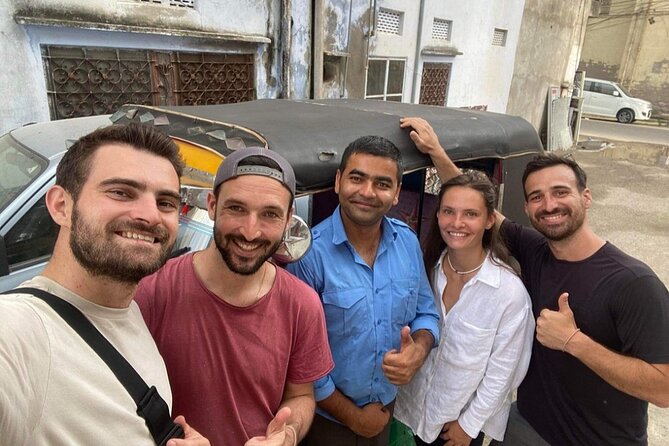
This tour isn’t just transport. The driver is an English-speaking guide, and that changes the experience in real ways.
First, you get context as you travel. That helps you understand what you’re seeing at places like Jantar Mantar, where the instruments only make sense once someone points you in the right direction. Second, you can ask for adjustments based on your pace. Some days you’ll want more time at forts and less at quick stops; other days you might prefer pacing that avoids too many stair moments.
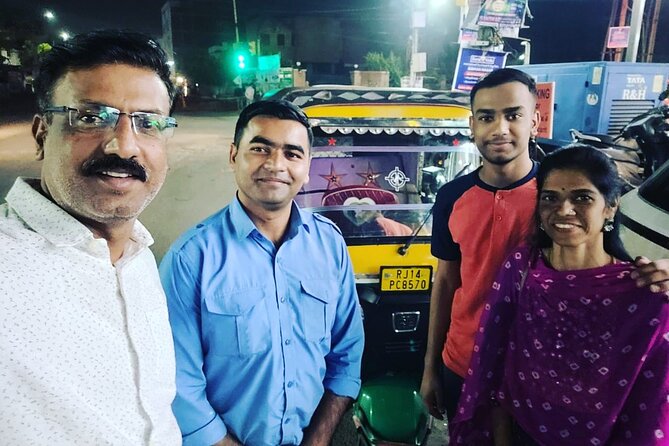
In the names that show up repeatedly, Naresh is praised for being friendly, organized, and flexible, and Rauf is praised for strong local knowledge. You shouldn’t expect the same guide every time, but you should expect the role: safe driving, clear site instructions, and an itinerary that can be tuned.
One more nice detail: the tour includes a bottle of water and a cup of tea. That sounds small, but on a long day across multiple monuments, it keeps your energy from crashing before the last stops.
Practical tips for your tuk-tuk day in Jaipur
A few small choices can make your day easier:
- Wear comfortable shoes. You’ll do short walks at major sites, including the fort approach.
- Expect heat and plan for it. You’ll be outdoors for a lot of the day, even if some stops are quicker.
- Bring a camera-ready mindset, but also expect camera fees at monuments where applicable.
- Use the guide for buying decisions. When you’re in a place like the Pink City, it helps to have someone steer you away from wasted time and toward better priorities.
- If you have a special interest, say it early. The tour is described as customizable, and that’s how you turn a standard day into your day.
Also, the tuk-tuk ride itself is described as clean and comfortable, with suspension mentioned. That matters when you’re riding for hours instead of minutes.
Should you book the Jaipur Tour by Tuk-Tuk?
Book it if you’re a first-time visitor who wants to hit the major sights without the stress of figuring out transport between them. It’s also a great fit if you value guided context, since the driver is there to explain what you’re seeing and help shape your time.
Skip it—or at least rethink it—if you dislike paying on top for entry tickets. The tour price looks small, but the monuments add up, and camera fees and tips can also move the final total. If you’re strict about budgets, map out exactly which paid sites you truly want before you go.
If you want a day that’s efficient, flexible, and very Jaipur in the way it moves through the city, this is the kind of tour that makes your trip feel organized from the start.
FAQ
What does the Jaipur tuk-tuk tour include?
It includes hotel/airport/railway station/bus station pickup and drop-off, a private tuk-tuk with an English-speaking driver, plus a bottle of water and a cup of tea. Fuel, parking, and taxes are also included.
How long is the tour?
The duration is approximately 9 to 10 hours.
Is this tour private or shared?
It’s a private tour/activity, so only your group will participate.
Are monument entry fees included?
No. Admission fees for places like Albert Hall Museum, Hawa Mahal, City Palace, Amer (Amber Fort), and Jantar Mantar are not included.
Do I need to pay for camera fees?
Camera fees at the monuments are listed as not included, so you may be asked to pay on-site depending on the site rules.
Does the tour offer pickup from my location in Jaipur?
Yes. Pickup is offered from your hotel or other Jaipur locations, including the airport, railway station, or bus station.
Can the itinerary be customized?
Yes. The private tour can be customized to suit your needs, and you can visit many Jaipur highlights throughout the day.
What’s the cancellation policy?
Free cancellation is available up to 24 hours in advance for a full refund.