REVIEW · JAIPUR
Jaipur Full Day Heritage of Pink City Tour By Tuk Tuk With Chai
Book on Viator →Operated by Jaipur City Tuk Tuk Tours · Bookable on Viator
Jaipur’s Pink City hits different from a tuk tuk. This full-day private route strings together the big sights and a few quieter stops, with hotel pickup, bottled water, and timed visits across forts, temples, and palaces.
I really like the logistics: you’re picked up around 8:30 am, driven door-to-door, and you don’t have to fight traffic or figure out which auto-rickshaw can handle your day. I also like the mix of architecture, from the latticework of Hawa Mahal to the mirror-work atmosphere inside Amber Palace, plus a stepwell and an astronomy stop.
One thing to plan for: monument entry fees are not included. The tour price is low, but the listed monument entrance fees can add a big chunk to your total for the day.
In This Review
- Key highlights to know before you go
- Getting your bearings: how this tuk tuk route works in Jaipur
- Price and logistics: what $7.66 covers (and what it doesn’t)
- The day starts around 8:30 am: from hotel pickup to Hawa Mahal
- Amber Palace’s courtyards and the Sheesh Mahal effect
- Panna Meena ka Kund: the stepwell math that makes great photos
- Jagat Shiromani Ji Temple: carvings, Krishna devotion, and a breather
- Jal Mahal on Man Sagar Lake: what you’ll see in 20 minutes
- Royal Gaitor Tumbas and City Palace: marble, memory, and collections
- Jantar Mantar and Galta Ji: science sights then monkeys and springs
- Pace, timing, and practical tips for a smoother day
- Should you book this heritage day by tuk tuk?
- FAQ
- What time does the tour start?
- How long is the Jaipur heritage tour?
- Is hotel pickup and drop-off included?
- What’s included in the tour price?
- Are monument entrance fees included?
- Which stops have free admission?
- Does the tour include a guide?
- Is it a private tour?
- Can I cancel for a full refund?
- Are service animals allowed?
Key highlights to know before you go
- Hotel pickup and drop-off make the day feel low-stress from minute one.
- Private tuk tuk means your group keeps control of the pace, instead of being squeezed into a larger bus plan.
- Amber Palace + Sheesh Mahal mirror work gives you that classic Jaipur “wow,” with time to wander.
- Panna Meena ka Kund offers geometry-heavy photo spots that look great at any light.
- Jal Mahal from the shoreline is short and sweet, with a calm break from walking.
- Galta Ji (Monkey Temple) adds spirituality and natural springs, plus plenty of chances to watch real-life temple routines.
Getting your bearings: how this tuk tuk route works in Jaipur
Jaipur can feel like two cities at once: grand palaces and forts, then neighborhoods where everyday life continues right beside tourism. This tour is built to connect those worlds in a single day. You start with the “wow factor” sights early, then work your way through viewpoints, temples, and royal sites, ending in the hills area for Galta Ji.
The tuk tuk matters more than you might think. On a day like this, you’re constantly switching between places that are close on a map but far in real-world driving and walking time. With a private tuk tuk, you keep momentum. You also get a practical rhythm: short stops for quick sights, then longer blocks for the places where you’ll actually want to slow down.
The day is listed as about 8 to 9 hours, so it’s long enough to feel like a full heritage circuit, but not so long that you’re stuck in constant crowds all day. You should still expect a steady pace—comfortable shoes help, and you’ll want to hydrate, especially if you’re going in warmer months.
You can also read our reviews of more tours and experiences in Jaipur.



Price and logistics: what $7.66 covers (and what it doesn’t)
The headline price is $7.66 per person, and that’s unusually low for a day that includes pickup, a private vehicle, and government taxes. What you’re paying for here is the transport and handling: the tuk tuk, fuel, parking, tolls, and transfers from your hotel or station.
What’s not included is where your budget can jump. The tour lists monument entrance fees of ₹2,600 per person as separate. It also notes that guide fees at monuments are not included. Translation: if you want a guided explanation inside the bigger-ticket sites, you’ll either need to hire on-site or use your own device and signage.
The good news is that several stops are marked as free admission in the itinerary. For example, Jagat Shiromani Ji Temple is listed as free, Jal Mahal is free, and Monkey Temple is free. You’re still likely to spend most of the entry fee day on the major palaces and complexes like Amber Palace, Panna Meena ka Kund, Royal Gaitor Tumbas, and City Palace.
My practical take: this tour can be great value if you treat it as a transportation plan plus a route through multiple “must-sees.” If you also want deep interpretation at every stop, plan for extra spending for guides or audio.
The day starts around 8:30 am: from hotel pickup to Hawa Mahal
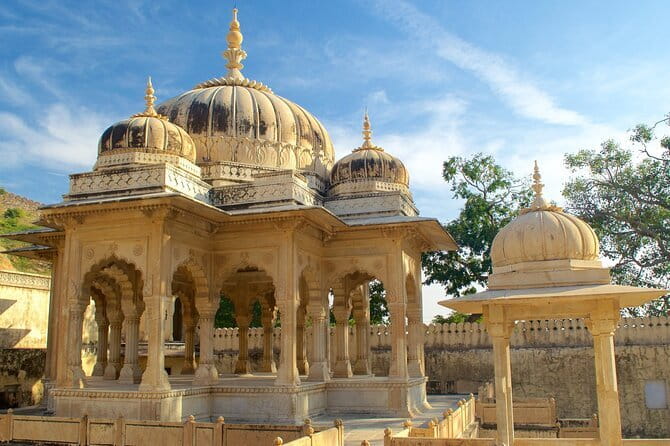
Your day begins at about 8:30 am, when your tuk tuk driver meets you at your hotel. That early start is helpful in Jaipur because light changes fast and crowds can build later in the morning, especially around the most famous facades.
Hawa Mahal is next on the itinerary. You’ll see the Palace of Breeze façade with its famous pink sandstone look and lattice windows. Historically, the structure was designed so royal women could observe street activity from behind those openings. Even if you don’t go inside, the front view gives you a quick sense of how royal architecture mixed with everyday life.
Plan for about 30 minutes at Hawa Mahal. That’s usually enough for photos and a slow look at the details, but not enough to turn it into a full research session. Also note the itinerary says entry is not included here, so you’ll want to budget for the monument fee portion if you plan to go in.
Amber Palace’s courtyards and the Sheesh Mahal effect
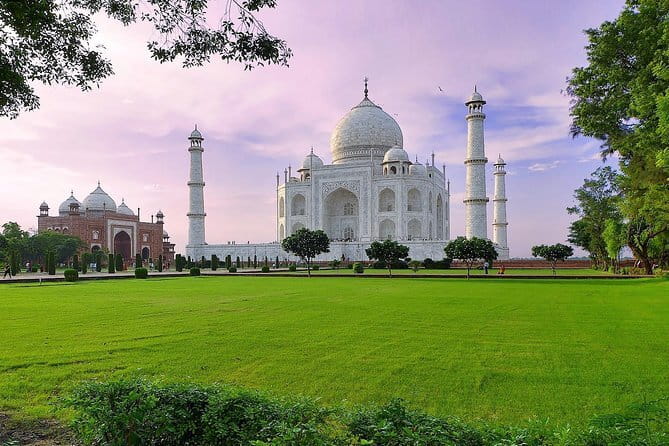
Amber Palace is the heart of the first half of the day. You’ll have about 1 hour 30 minutes there, with admission marked as not included. This is where you should expect the longer walking loops: courtyards, ornate halls, and lots of visual detail to process.
One highlight mentioned in the plan is Sheesh Mahal, the Hall of Mirrors. If you’ve seen mirror-work before, you know it’s not just decorative—it changes the atmosphere. Even with daylight, it tends to make interiors feel brighter and busier, because the surfaces reflect and multiply light.
Amber is also a great place to slow down for perspective. The palace sits in a setting that makes you feel the “fortress” idea behind Rajput architecture. If you want photos, aim for early or later angles when the light behaves better. If you want quiet, pick a time window after the first rush and let a few groups pass.
A practical note: because the entry fee isn’t included, make sure you have a plan for paying on arrival. You’ll likely be less stressed if you keep some cash or know how payment is handled at the entrance.
Panna Meena ka Kund: the stepwell math that makes great photos
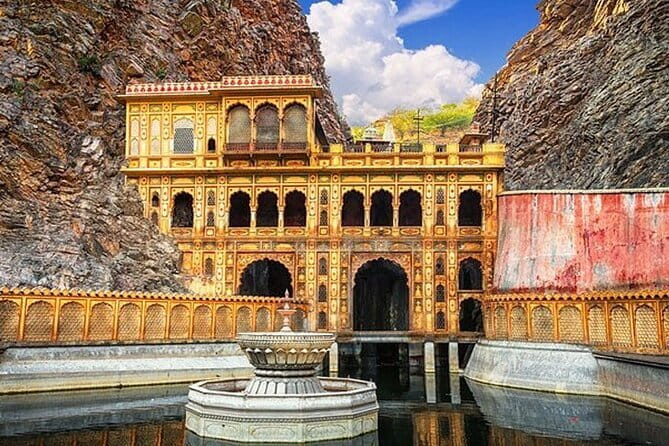
Next up is Panna Meena ka Kund, one of Jaipur’s most photogenic structures. The itinerary frames it as an ancient stepwell with geometric staircases and an eight-story design. That kind of symmetry is exactly why people love it: your photos come out looking architectural, not accidental.
You get about 30 minutes here, with admission marked as not included. That time is enough to walk the edges, look down at the layout, and grab photos from a few angles. If you’re a photo person, this is one of the stops where you’ll want to move a little slower—stepwells aren’t just a backdrop. The stair patterns reward careful looking.
Then, you shift from the “wow geometry” world to a more calm spiritual stop.





Jagat Shiromani Ji Temple: carvings, Krishna devotion, and a breather
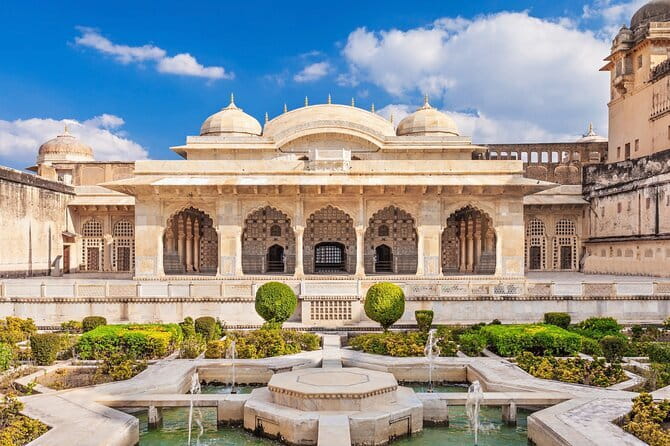
Jagat Shiromani Ji Temple is listed near Amber Fort and dedicated to Lord Krishna. It’s on the schedule for about 20 minutes, and admission is listed as free.
This is the kind of stop that balances the day. After palaces and forts, you get a quieter setting with intricate carvings and a more still feel. Even if you don’t know the stories behind every detail, the atmosphere helps reset your attention, and you can take your time without feeling like you’re racing to the next photo spot.
Jal Mahal on Man Sagar Lake: what you’ll see in 20 minutes
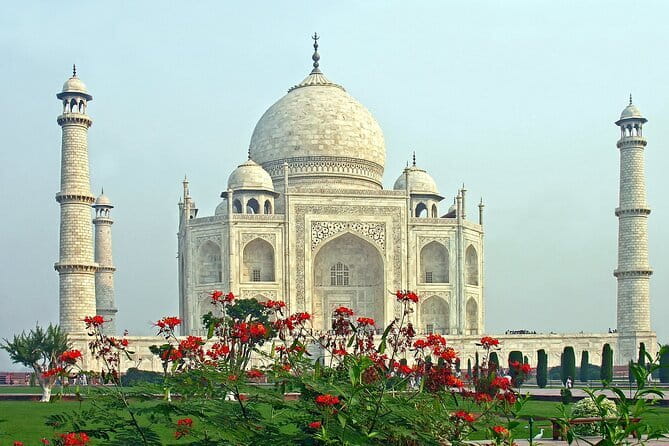
Jal Mahal, the Water Palace, is one of those Jaipur icons that looks best with the right expectation. The itinerary says you’ll stop for about 20 minutes, with free admission, and that the palace is best appreciated from the shoreline.
That means you’re not going to get the kind of close-up interior visit you might expect from other palaces. Instead, the charm is the visual idea: the building appears to float on Man Sagar Lake. Your photos will come from where you stand, and the day’s light will play a big role in how the colors show up.
If you’re short on time, this stop still does its job. It gives you a scenic break, a chance to breathe, and a different side of Jaipur beyond forts and courtyards.
Royal Gaitor Tumbas and City Palace: marble, memory, and collections
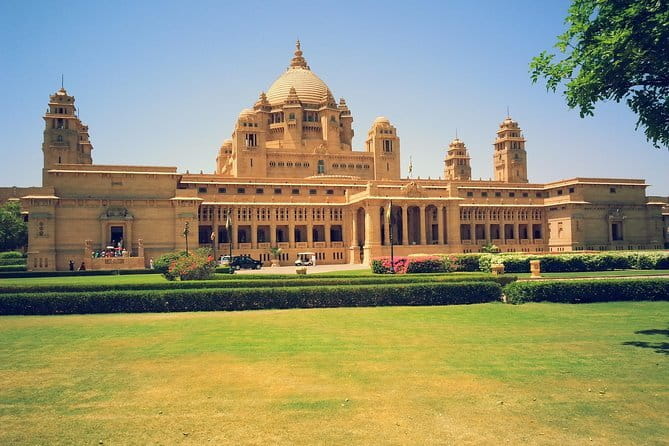
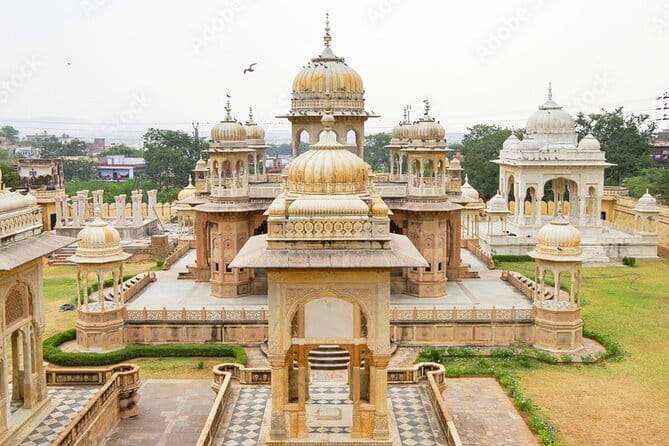
After the lake break, the itinerary moves to Royal Gaitor Tumbas, the royal cremation grounds of Jaipur’s Maharajas. This stop is about 40 minutes, and admission is listed as not included.
The key thing here is the marble work on the cenotaphs—ornate, detailed markers honoring rulers who came before. It’s also a calmer contrast to the busier palace sites. If you’re the type who likes places where you can walk and look without being pushed through lines, this can be a rewarding stop.
Then you head into City Palace, which is about 1 hour 15 minutes. Admission is not included here as well. City Palace is described as a blend of Rajasthani and Mughal architecture, and it houses collections of royal artifacts, textiles, and costumes. This is where the day shifts from buildings-as-symbols to buildings-as-museums.
Give yourself enough time to wander through the collections at your own pace. If you skim, you’ll miss the best part, which is how the palace’s displays connect clothing, craft, and status. If you’re interested in textiles and costume history, you’ll likely spend longer inside than you planned.
Jantar Mantar and Galta Ji: science sights then monkeys and springs
This route is designed to include Jantar Mantar, the astronomical instruments complex. It’s mentioned as an impressive sight within the day, even though the detailed stop order doesn’t specify exactly where it falls. Plan your attention for it like you would for a science museum: look, then pause, then look again.
After that, you finish at Monkey Temple (Galta Ji) in the hills area. The itinerary calls for about 40 minutes, with free admission.
Galta Ji stands out for two reasons listed in the plan: natural springs and resident monkeys. That combination turns the temple visit into something more than a quick monument stop. There’s a sense of everyday sacred routine happening, and the monkeys make it feel alive (and a little chaotic, depending on the moment).
If you’re uncomfortable around animals, take a cautious approach: keep your distance and avoid sudden movements. If you’re fine with them, you’ll likely enjoy the energy and the ongoing temple life.
Pace, timing, and practical tips for a smoother day
This is a full-day circuit, and the schedule reflects that. Some stops are designed for quick hits (like Hawa Mahal and Jal Mahal), while others give you time to actually walk and look (Amber Palace, City Palace, and Galta Ji).
If you want the best experience, aim to treat the day like three parts:
- Morning focus on big sights (Hawa Mahal, then Amber Palace)
- Midday on structure and scenes (stepwell and lake views)
- Afternoon into evening on royal sites and spirituality (Gaitor, City Palace, Jantar Mantar area, then Galta Ji)
Bring essentials that make you comfortable outdoors: water habits matter since bottled water is included, but you’ll still want to sip consistently. Comfortable shoes also help because you’re moving across different compounds and viewpoints.
And one small strategy: keep your expectations aligned with what’s included. Monument entry fees aren’t included for major sites, so you won’t want to arrive assuming everything is covered. If you plan for that from the start, the day feels like good value instead of a surprise bill.
Should you book this heritage day by tuk tuk?
Book it if you want a single-day itinerary that covers Jaipur’s must-see heritage sites with a private tuk tuk plan, plus free-admission temple stops. The value makes sense when you treat it as transportation + a route through several key landmarks, and you budget separately for monument tickets.
Skip it or choose a different option if you want a tightly guided, explain-every-detail kind of experience. The plan doesn’t include guide fees at monuments, and some of the stops are brief. You’ll get the sights, but you might need to supplement your learning if you’re the kind of traveler who wants deep context at every building.
Overall, this tour fits best for first-timers who want coverage without logistics stress, and for anyone who likes architecture and photo-friendly stops like Panna Meena ka Kund and the mirror-work feeling inside Amber.
FAQ
What time does the tour start?
Pickup is scheduled for 8:30 am, with your tuk tuk driver meeting you at your hotel.
How long is the Jaipur heritage tour?
It runs for about 8 to 9 hours.
Is hotel pickup and drop-off included?
Yes. Hotel/Airport/Railway Station pickup & drop-off is included.
What’s included in the tour price?
Included items are the private tuk tuk for sightseeing, fuel, parking, tolls, bottled water, and GST.
Are monument entrance fees included?
No. The tour lists entrance fees of ₹2,600 per person as not included.
Which stops have free admission?
From the itinerary, Jagat Shiromani Ji Temple, Jal Mahal, and Monkey Temple (Galta Ji) are marked as admission free.
Does the tour include a guide?
Guide fees at monuments are listed as not included. The tour includes a private tuk tuk vehicle, but monument guide fees are separate.
Is it a private tour?
Yes. It’s listed as private, meaning only your group participates.
Can I cancel for a full refund?
Yes. You can cancel up to 24 hours in advance for a full refund.
Are service animals allowed?
Yes. Service animals are allowed, and most travelers can participate.
If you tell me your travel month and whether you care most about photos, temples, or museum-style stops, I can help you decide how to prioritize this day and whether the entry-fee budget fits your style.